

When that tell-tale squeal starts up every time you tap the brakes, your first thought is probably about your wallet. "How much is this going to cost me?" It’s a fair question, and getting a clear idea of the average brake pad replacement cost is the best way to plan ahead and avoid any nasty surprises on the final bill.
So, let's get right to it. On average, you can expect a brake pad replacement to cost between $320 and $379 per axle. Think of this as a smart investment in your safety, especially if you’re a regular on busy roads like the 401.
Your Quick Guide to Brake Pad Replacement Costs
For drivers here in Whitby and across the GTA, that final price tag really comes down to a few key things. The type of vehicle you drive is a big one—a set of pads for a hefty SUV will naturally cost more than for a small commuter car. The quality of the pads you choose also makes a difference, impacting not just the upfront cost but also how long they'll last you.
Estimated Costs in 2026
To give you a more detailed picture, let's break down the numbers based on recent 2026 data. For a typical vehicle, like a Toyota Camry or a Ford F-150, the labour alone often runs between $120 and $177 per axle. The pads themselves usually add another $199 to $203.
Put it all together, and you’re looking at a total cost of $320 to $379 per axle. That means doing a full brake job (front and back) on an SUV could cost anywhere from $640 to $758. That might sound like a lot, but it’s far better than the $1,500+ bill you could be facing if you ignore the warning signs and end up with more serious damage. If you want to see a full breakdown of what goes into these repairs, check out our comprehensive guide to brake service.
Key Takeaway: Being proactive about replacing your brake pads isn't just a repair—it's a money-saving strategy. When you catch worn pads early, you prevent them from grinding into your rotors and damaging the calipers. Fixing those components can easily double your repair bill.
Here’s a handy table that lays out what you can generally expect to pay for a brake pad replacement in the Whitby area.
2026 Estimated Brake Pad Replacement Costs in Whitby (Per Axle)
| Cost Component | Average Cost Range (Car) | Average Cost Range (SUV/Truck) |
|---|---|---|
| Parts (Per Axle) | $180 – $220 | $200 – $250 |
| Labour (Per Axle) | $120 – $160 | $140 – $180 |
| Total Job (Per Axle) | $300 – $380 | $340 – $430 |
As you can see, the final cost can vary, but these figures give you a solid baseline for budgeting your next brake service.
Breaking Down Your Brake Repair Bill
Ever get a repair bill and feel like you’re trying to read a foreign language? It happens. A brake repair invoice might look a little intimidating at first, but it almost always boils down to two simple things: parts and labour. Getting a handle on what these mean shows you exactly where your money is going.
Think of it like this: the parts—your new brake pads and maybe rotors—are the high-quality ingredients. The labour is the skilled mechanic’s time and expertise, carefully putting everything together to ensure your car stops safely and reliably every single time.
Ultimately, your total cost is a combination of the physical components and the technician's hands-on service.
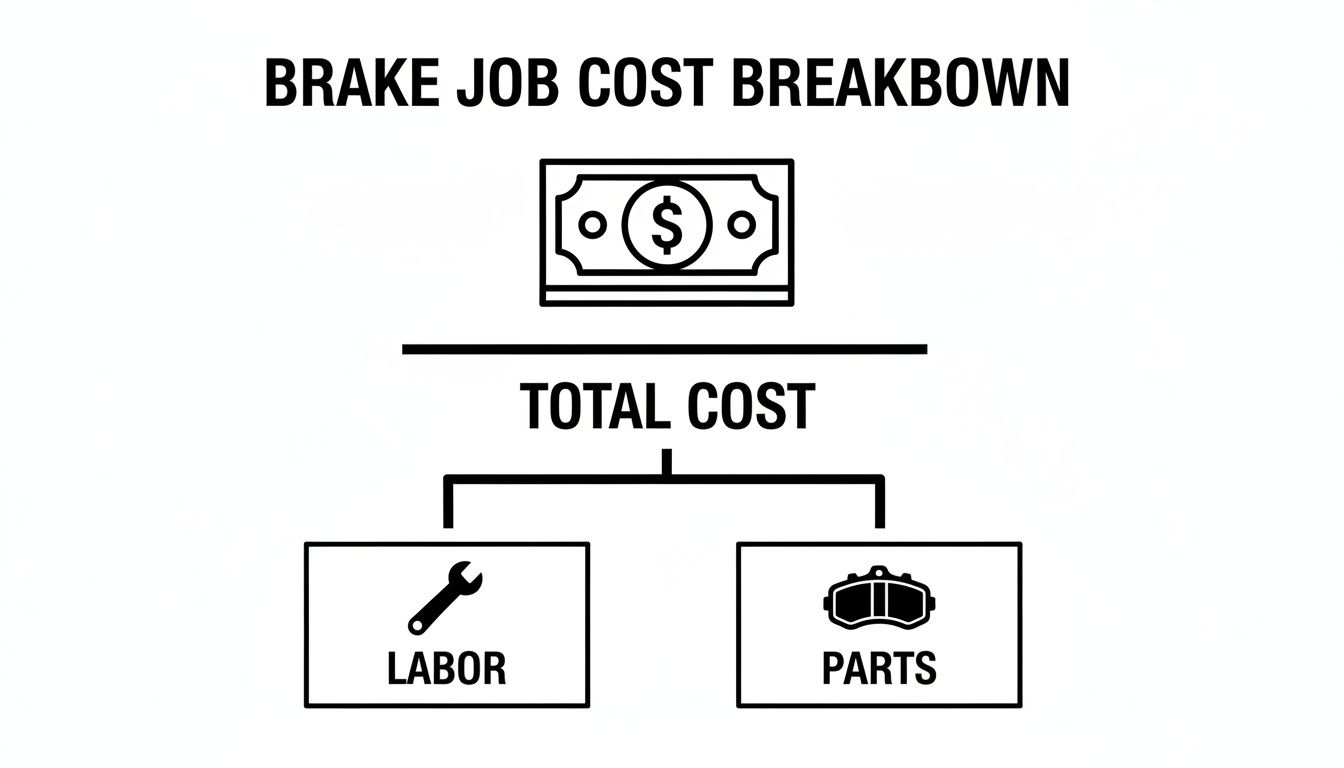
As you can see, both sides of the equation make up a big piece of the pie. It’s a good idea to get familiar with a standard auto repair shop receipt template so you know what to expect when you see your own bill.
The Ingredients: The Parts in Your Brake Job
The most obvious part getting replaced is the brake pads. But here's something a lot of people don't realise: not all brake pads are the same. The type you pick has a direct impact on the final brake pad replacement cost, how your car feels when you hit the pedal, and even how much brake dust ends up on your wheels.
You'll typically run into three main kinds of brake pads:
- Organic Pads: These are made with a mix of non-metallic stuff like glass, rubber, and even Kevlar. They’re known for being quiet and are usually the most affordable option. The trade-off? They tend to wear out quicker and create more dust.
- Semi-Metallic Pads: Blending metals like steel, copper, and iron gives these pads great durability and stopping power, as they handle heat really well. They can be a bit noisier than other types, though, and might be a little harder on your rotors over time.
- Ceramic Pads: Think of these as the premium choice. Made from dense ceramic materials and fine copper fibres, they give you incredible stopping power with almost no noise. They also last the longest and produce very little dust, which is great for keeping your rims looking sharp.
Your choice of pads really comes down to balancing your budget with the performance you want. Ceramic pads cost more upfront, but their longer life and smoother, quieter operation often make them a better value in the long run—especially if you value a clean and responsive feel.
Beyond the Pads: Other Potential Costs
Sometimes, a brake job is more than just a simple pad swap. A good technician will inspect the whole system, and they might find other parts that need attention. It's important to understand why.
Brake Rotors
These are the heavy metal discs that your brake pads squeeze to stop the car. If you've been driving on worn-out pads for too long, they can grind into the rotors and cause damage. You might feel it as a pulsating or shaking in the brake pedal, or you might see deep grooves on the rotor's surface.
When this happens, your mechanic might suggest:
- Resurfacing: This involves shaving a very thin layer off the rotor's surface to make it perfectly smooth again. It’s a great option, but only if the rotor is still thick enough to be safe.
- Replacement: If the rotors are too thin, warped from heat, or cracked, they can't be resurfaced safely. In that case, they have to be replaced with a new set.
Brake Calipers
The calipers are the hydraulic clamps that physically press the brake pads against the rotors. They're built to last, but they aren't invincible. Over time, they can seize up from rust and corrosion or develop leaks. A stuck caliper is a major safety hazard, often causing the car to pull hard to one side when you brake.
When replacing major components like these, understanding the difference between factory-spec parts and aftermarket alternatives is crucial. You can dive deeper into the pros and cons of OEM vs. aftermarket parts in our detailed guide.
Key Factors That Drive Your Final Price
It’s one of the most common questions we hear: why did your neighbour's brake job cost so much less than the quote for your own vehicle? The truth is, the brake pad replacement cost isn't a fixed number. It’s a flexible figure that shifts based on a few critical factors, and knowing what they are gives you a much clearer picture of what to expect.
Think of it like ordering a pizza. A basic cheese pizza has a set price, but the cost changes once you start adding premium toppings like prosciutto or extra cheese. Your vehicle’s brake service works the same way. The car you drive and the parts you choose are the "toppings" that determine the final bill.
Your Vehicle's Make and Model
The single biggest influence on your brake repair cost is, without a doubt, the car you drive. Brake systems aren't universal parts that fit any car; they are specifically engineered for a vehicle's weight, performance capabilities, and expected stopping power. This is where the price can really start to climb.
- Luxury & Performance Vehicles (e.g., BMW, Audi, Porsche): These cars are designed for high-speed performance and demand sophisticated braking systems to match. Their parts are often larger, made from more advanced materials, and sourced from specialized manufacturers, all of which carries a premium price.
- SUVs & Trucks (e.g., Ford F-150, Dodge Ram): Their sheer weight requires bigger, more robust brakes to stop safely and effectively. Simply put, more material in the brake pads and rotors means a higher cost for the parts.
- Economy & Compact Cars (e.g., Honda Civic, Toyota Corolla): As these vehicles are much lighter, they can rely on smaller, more standardized brake components. The parts are produced in huge volumes and are widely available, which keeps their brake service costs the most affordable.
Your Unique Driving Habits
How you drive has a direct and measurable impact on how long your brake pads last. We’ve seen two people with the exact same car come in for service, but their replacement schedules can be off by tens of thousands of kilometres. It all comes down to their daily routine.
Someone who spends most of their time cruising on the highway, for instance, will barely touch their brakes compared to a person navigating downtown stop-and-go traffic. Aggressive driving habits with frequent hard stops generate a massive amount of heat and friction, grinding down brake pads far more quickly than smooth, gradual braking. You can learn more about how your driving style affects wear in our guide on how often you should change your brake pads.
We see this right here in the Durham Region. Local data from 2026 shows that 55% of SUV owners who battle daily stop-and-go traffic on roads like Taunton Road only get about 50,000 km from their brake pads. In contrast, drivers with a straight shot on the highway often push past 70,000 km. You can find out more about how Canadian driving conditions impact repair costs on owl-let.com.
Quality of Parts and Local Labour Rates
Finally, the specific parts you decide on and the shop you choose to do the work will always play a major role in the final cost. When it comes to brake pads, you typically have three quality tiers: budget-friendly aftermarket, OEM-equivalent (matching original factory specs), and high-performance premium pads. While economy pads are tempting for their low upfront price, they often wear out faster and can be noisier, which might mean you end up paying for another brake job sooner than you’d like.
On top of that, local labour rates are influenced by the area's economy. A shop in a major centre within the Greater Toronto Area will have different overhead costs for rent and wages than a shop in a smaller town, and that's reflected in the hourly rate. It's also important to remember that all repairs must meet safety standards; a quick look at the federal DOT brake regulations can help you understand what's required and avoid any non-compliance issues.
Smart Ways to Lower Your Brake Replacement Costs
Keeping your car safe shouldn't feel like a choice between your security and your savings account. The good news is, you can absolutely manage your brake pad replacement cost without cutting corners on quality or safety. It all comes down to being proactive and making smart choices.
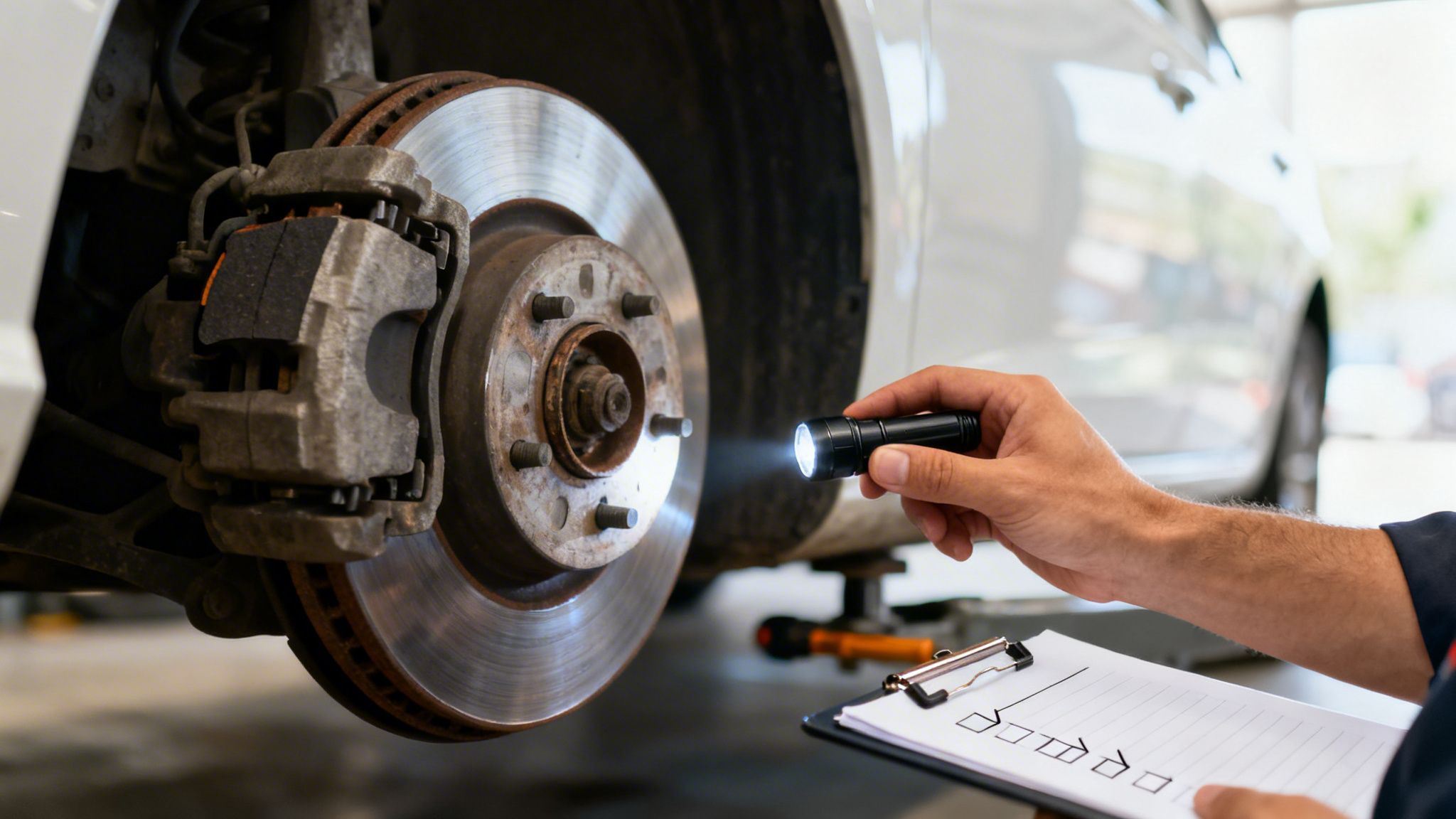
The single most effective strategy? Catching wear and tear early. A quick brake inspection can spot thinning pads long before they start grinding into your rotors and damaging other expensive parts. A little bit of prevention here is genuinely worth a pound of cure—and can save you several hundred dollars down the road.
Adjust Your Driving for Longer Brake Life
One of the easiest ways to lower your long-term costs has nothing to do with a shop and everything to do with how you drive. Your habits behind the wheel have a huge impact on how fast your brake pads wear out. Aggressive driving is, without a doubt, the number one enemy of your brakes.
Think of your brake pads as having a limited budget of stopping power. Every hard, sudden stop “spends” way more of that budget than a gentle, gradual slowdown. By making a few simple tweaks, you can stretch that budget and dramatically extend the time between replacements.
- Increase Your Following Distance: Leaving more room between you and the car ahead is the best defense against panic stops. It gives you time to react smoothly instead of slamming on the brakes, which generates a ton of heat and wear.
- Anticipate Stops: Look down the road for red lights, stop signs, and traffic jams. If you see one coming, ease off the gas and let your car's natural momentum do some of the work before you even touch the brake pedal.
- Avoid "Two-Footed" Driving: Resting your left foot on the brake pedal, even lightly, creates constant friction. We call this "riding the brakes," and it's a surefire way to burn through a brand-new set of pads in record time.
Choose the Right Parts and the Right Place
When it's finally time for a replacement, your choices in both parts and service providers make a massive difference. It's tempting to just ask for the cheapest option available, but that can easily turn into a costly mistake.
Expert Tip: The cheapest brake pads are almost never the best value. Economy pads tend to wear out 30-50% faster and often create more noise and dust. Spending a bit more upfront on a quality set of OEM-equivalent or ceramic pads pays off with a longer lifespan and better performance, meaning you'll be back at the shop less often.
On top of that, where you get the work done matters. Dealerships are a common choice, but they usually come with the highest labour rates and parts markups. An independent, certified auto shop can offer the exact same level of expertise—often with more personalized service—at a much more competitive price. They can also help you find the best parts for your specific vehicle and driving style, without being locked into one brand.
Exploring a trusted local car repair shop near you can uncover significant savings and help you build a relationship with a mechanic you can rely on for years to come.
DIY vs. Professional Service: The True Cost of Savings
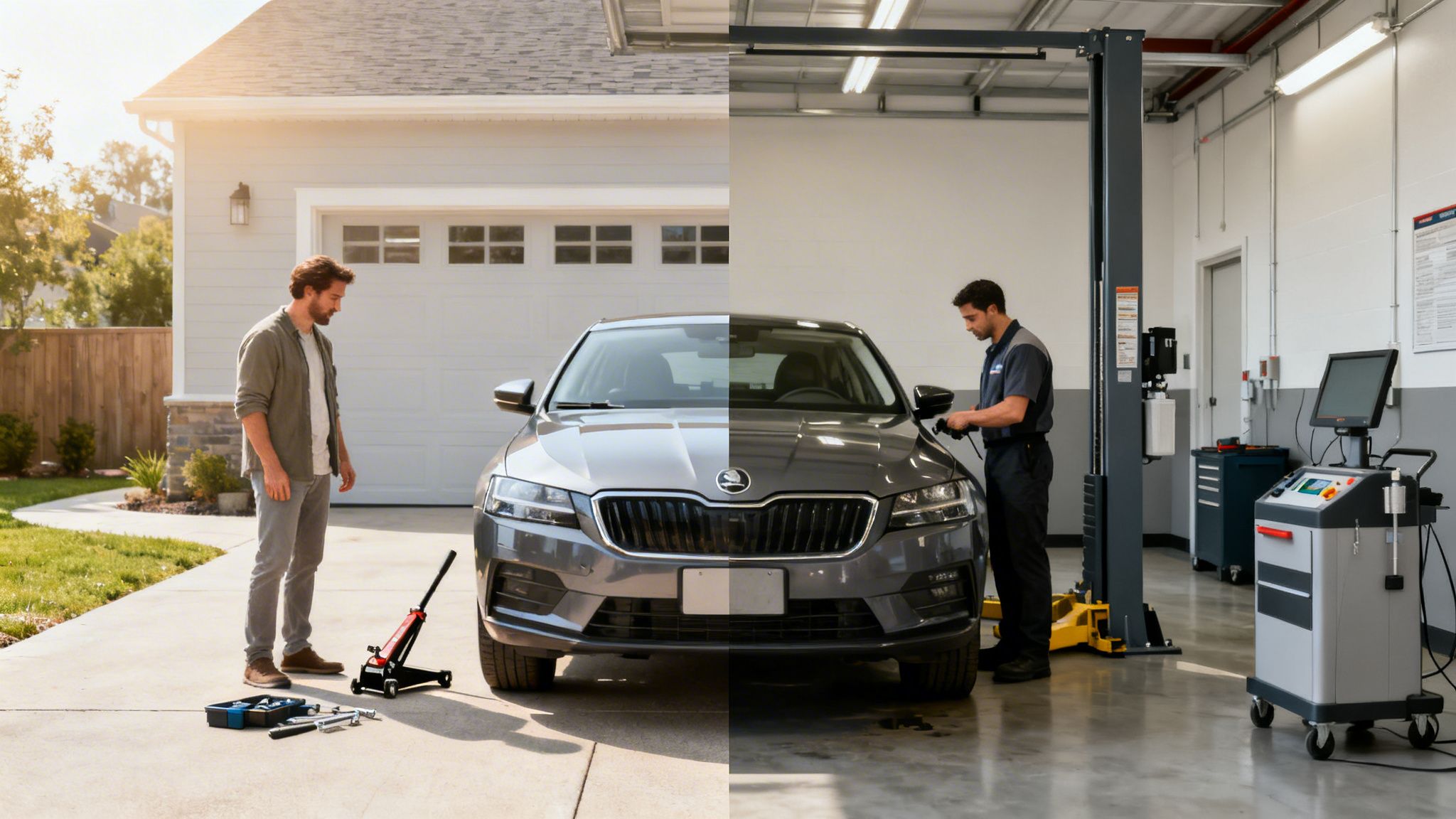
It’s tempting, isn’t it? You look at a quote for a brake job, see the labour charge, and think, "I could save a bundle doing that myself." For mechanically inclined people with a well-stocked garage, that can definitely be true.
But before you start pulling off your wheels, it’s worth taking a hard look at what that "savings" really costs. The choice between DIY and a professional shop isn't just about money—it's a trade-off between your tools, your time, and your tolerance for risk. Brakes are the most important safety system on your car, and a simple job can get complicated fast.
The Upfront Cost of Doing It Yourself
If you're starting from scratch, the money you save on labour can get eaten up pretty quickly by the cost of tools. A proper, safe brake job requires more than a basic socket set.
To do the job right, you’ll need a few key pieces of equipment:
- A Quality Floor Jack: For safely lifting the vehicle.
- Jack Stands: These are absolutely non-negotiable for securing the car. Never work under a car supported only by a jack.
- Brake Caliper Tool: You'll need this to push the caliper piston back in to make room for the new, thicker pads.
- Torque Wrench: Essential for tightening your wheel's lug nuts and caliper bolts to the exact specs required by the manufacturer.
Just getting this basic setup can easily run you $200 to $400 or more. These are great tools to own for the long run, but it's a hefty initial investment for a single brake job.
The Hidden Risks of a DIY Job
Beyond the tools, you have to consider your time and the very real possibility of making a costly mistake. A seasoned technician can usually swap the pads on an axle in about an hour. For a first-timer, that can easily turn into a whole afternoon of watching tutorials, fighting with a stubborn bolt, and second-guessing every step.
More importantly, a small error here can have huge consequences. Forgetting to lubricate the caliper slide pins, not tightening a bolt correctly, or seating the pads improperly can lead to annoying squeals, rapid wear, or—in the worst-case scenario—total brake failure. If you are hearing noises, it’s best to know the cause, which you can learn about in our guide on how to fix squeaky brakes.
A professional service isn't just paying for labour; you're paying for expertise, specialized equipment, and peace of mind. A certified technician has the experience to spot potential issues—like a leaking brake line or a seized caliper—that a DIYer might miss.
The Value of Professional Service
When you bring your vehicle to a shop, you’re getting a lot more than just new pads. You’re buying a guarantee of safety and quality from someone who does this work every single day.
Here’s what that professional brake pad replacement cost truly covers:
- Expertise and Efficiency: A certified tech has done hundreds of brake jobs. They know the quirks of your specific vehicle and can do the work quickly and safely.
- Specialized Tools: Professional shops have hydraulic lifts, precision tools, and diagnostic equipment to ensure every part is installed perfectly.
- Warranty on Parts and Labour: Reputable shops stand by their work. If an issue pops up because of a faulty part or the installation, they'll fix it at no cost to you.
- Peace of Mind: This one is priceless. Knowing your brakes were serviced by a trained, accountable professional lets you drive with confidence.
Ultimately, the choice is yours. If you’re a skilled home mechanic with the right gear and a solid understanding of how brake systems work, DIY can be a great way to save some cash. For most drivers, however, the expertise, warranty, and guaranteed safety you get from a professional service offer value that goes far beyond the cost of labour.
Got Questions About Your Brakes? We’ve Got Answers.
When it comes to brakes, a little bit of knowledge goes a long way. To help you feel more confident about your car's most crucial safety feature, we're tackling the questions we hear most often from drivers.
How Often Should I Replace My Brake Pads?
This is the number one question, but the answer isn't a simple mileage number. You’ll often see a guideline like every 50,000 to 70,000 kilometres, but that’s just a ballpark. Your real-world mileage will depend on your vehicle, the quality of your pads, and how you drive.
Your car will usually tell you when it's time. Brake pads are designed with a tiny metal tab called a wear indicator. When the pads wear down, this tab scrapes against the rotor and creates a distinct, high-pitched squealing or squeaking sound when you press the pedal. That’s your signal to get them checked. If you hear grinding, you’ve waited too long and are likely damaging your rotors.
Can I Just Replace the Pads and Not the Rotors?
You sure can, but only if your rotors are in good condition. Think of your rotors as the smooth, flat disc your pads squeeze to stop the car. If that disc is warped, heavily grooved, or worn too thin, new pads won't have a proper surface to grip.
A good technician will measure your rotor’s thickness and check for any imperfections. If they’re still thick enough and only have minor wear, they can often be resurfaced—a process that machines them back to a perfectly smooth finish for much less than the cost of new ones. But if they're below the minimum safe thickness, they absolutely must be replaced.
Pro Tip: Replacing your pads before they're completely gone is the best way to save your rotors from damage and avoid the much higher cost of a full pad-and-rotor job.
Why Are My New Brakes Squeaking?
Hearing a squeak from brand-new brakes can be unsettling, but it’s usually normal. New pads need to go through a "bedding-in" period. During this time, a very thin, even layer of the pad's friction material transfers onto the rotor. This creates a perfectly matched surface for maximum stopping power.
This bedding-in process can sometimes cause a temporary squeak, especially with harder semi-metallic pads. The noise should go away on its own after a few hundred kilometres of driving. However, if you hear a persistent, loud squeal or grinding, that’s not normal—it could point to an installation problem, and you should have them inspected right away.
Should I Replace Brakes Per Axle or All Four at Once?
You almost never need to replace all four at once. In most cars, your front brakes do the heavy lifting, handling anywhere from 60-70% of the braking force. As a result, they wear out significantly faster than the rears.
It's completely normal to replace your front pads two, or even three, times for every one time you replace the rear ones. A trustworthy shop will inspect all four corners of your vehicle and only recommend what’s necessary. This saves you money and ensures you’re only paying for the work you actually need.
At Carmedics Autowerks Inc, our certified technicians pride themselves on giving honest advice and expert brake service to drivers in Whitby and across the Durham Region. From a simple pad swap to a full brake system overhaul, we’ll make sure your vehicle stops safely every single time. Schedule your free brake inspection today and drive with confidence.