

If you're typing "vehicle inspection stations near me" into your phone, chances are you've hit a key moment in your car ownership journey here in Whitby. In Ontario, this process isn't just a simple check-up; it revolves around getting a Safety Standards Certificate (SSC). This is the official document that proves your car is road-safe, and it’s issued by licenced inspection stations like our shop, Carmedics Autowerks.
Your Guide to Whitby Vehicle Inspection Stations
Unlike some other provinces, Ontario doesn't make you get an inspection every single year. Instead, a safety certificate is required at very specific times.
Think of it less like a yearly chore and more like a crucial snapshot in time. It’s the province's way of ensuring a vehicle meets minimum safety requirements right before it changes hands or gets put on Ontario roads for the first time. The whole point is to catch worn-out brakes, failing steering components, or other safety hazards before they can cause a problem.
When Is a Safety Certificate Required?
So, when do you actually need one? Most drivers will encounter this need during a few common scenarios. The system is set up to protect both buyers and sellers, as well as the general public.
To make it simple, here is a quick guide to when an SSC is legally required.
When You Need an Ontario Safety Standards Certificate
| Situation | Safety Certificate Required? | Key Detail |
|---|---|---|
| Selling a used vehicle privately | Yes | You, as the seller, must provide a valid SSC to the buyer for them to register the car. |
| Registering a vehicle from out-of-province | Yes | If you've moved to Ontario, you need an SSC to get Ontario plates for your car. |
| Rebuilding a "salvage" branded vehicle | Yes | To get a "rebuilt" title and put the car back on the road, it must pass a safety inspection. |
| Transferring plates to a new vehicle | No | You don't need a new certificate just to move your existing plates to another car. |
| Transferring ownership between spouses | No | A certificate is not required for transfers between spouses, as it's considered a family transaction. |
Ultimately, a Safety Standards Certificate is a professional mechanic's assessment of your vehicle's condition on the day of the inspection. It's our job to confirm that it meets the non-negotiable safety standards set by the Ministry of Transportation of Ontario.
This flowchart gives you a quick visual of the most common triggers.
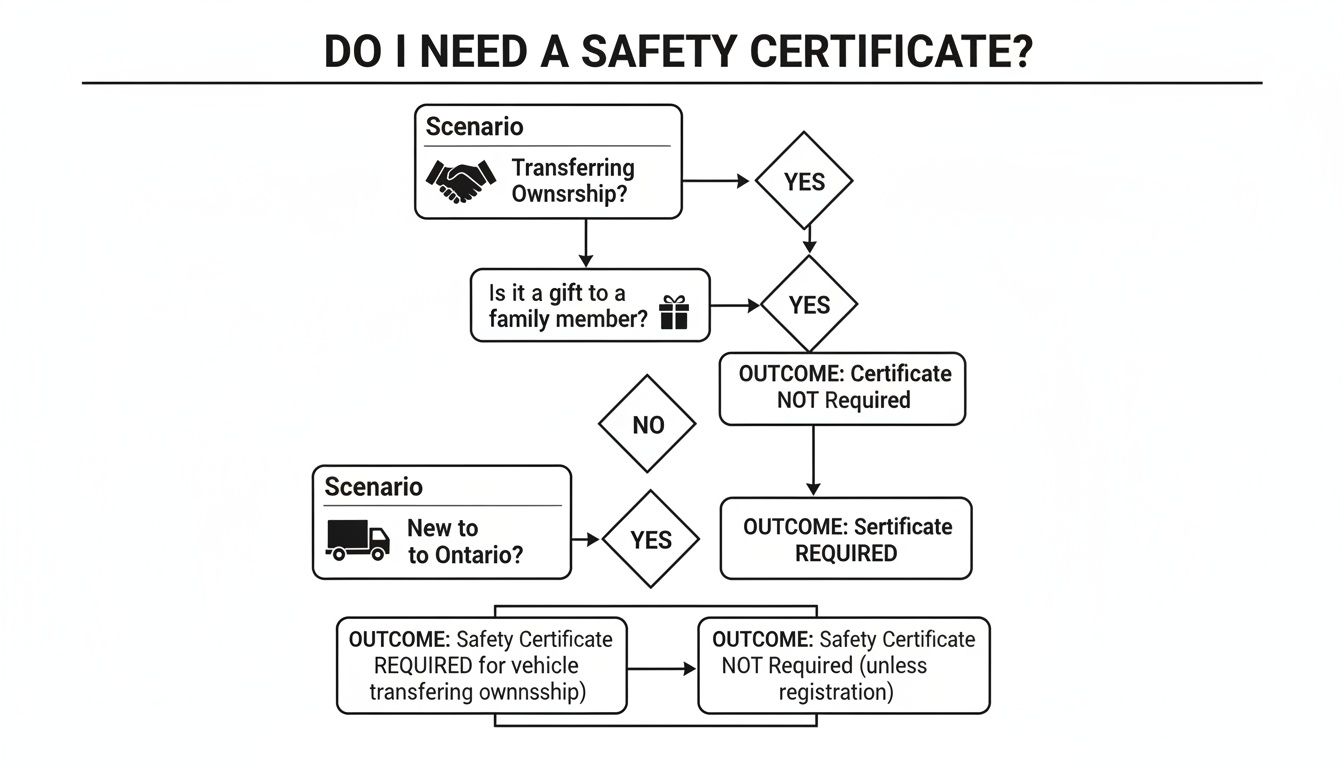
As you can see, the two big ones are transferring ownership to someone who isn't your spouse and bringing a car into the province.
While the fundamental safety checks are the same for most cars, it's interesting to see how general car inspection processes for specific vehicle types can sometimes vary for unique models, like a vintage camper. The core principles of mechanical fitness always apply, but experience with different vehicles definitely helps. And if you’re looking beyond inspections, we also offer expert auto repair in Whitby, Ontario for all your maintenance needs.
Decoding the Ontario Safety Standards Certificate
If you’re searching for "vehicle inspection stations near me," you’ve likely come across the term “Safety Standards Certificate.” So, what exactly is it? Let's break it down in plain English.
The Safety Standards Certificate, or SSC, is a mandatory inspection required by the province. It's designed to do one thing: confirm that a vehicle meets the absolute minimum safety requirements before it can be sold to a new owner or registered in Ontario after coming from another province or country.
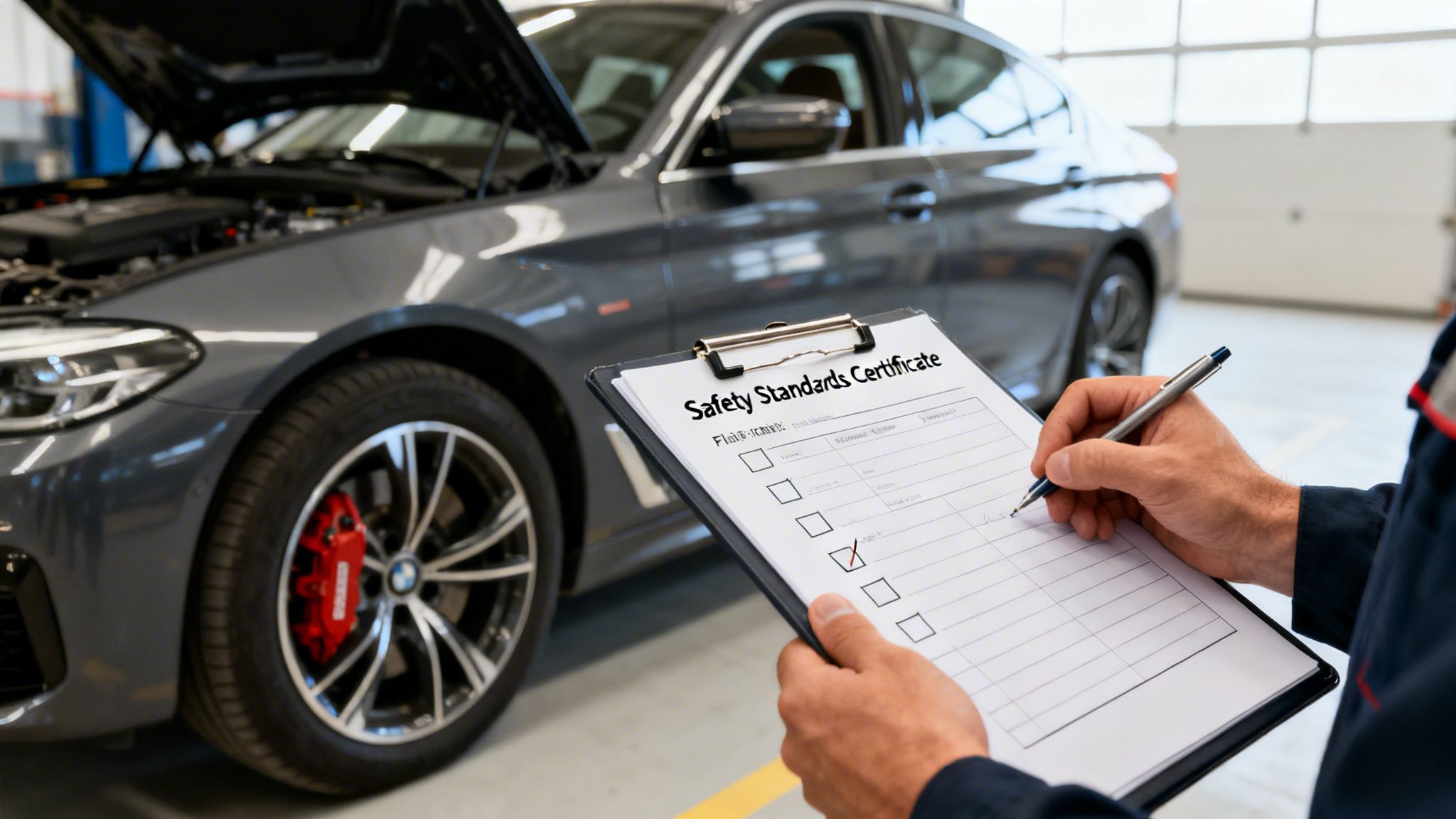
Think of it like an airplane’s pre-flight check. Before taking off, every critical system is meticulously examined to ensure the plane is safe for its journey. An SSC inspection does the same for a vehicle before it begins its new "journey" with you or another driver.
What the Inspection Covers
When you bring your car to Carmedics Autowerks, our licenced technicians follow a strict checklist mandated by the Ministry of Transportation. This isn't just a quick peek under the hood; it's a comprehensive review of all the components that keep you safe on the road.
We’re looking for any existing issues that could put you, your passengers, or other drivers at risk. The main areas we focus on include:
- Braking System: We measure the pads and rotors, check calipers for proper function, and inspect all brake lines to ensure your vehicle can stop on a dime.
- Steering and Suspension: This involves a close look at ball joints, tie rods, shocks, and struts. Any excessive wear here could compromise your control of the vehicle.
- Tires and Wheels: We check that your tires have adequate tread depth, are free of damage, and that the wheels are fastened securely.
- Lights and Electrical System: Every single light has to work—from your headlights and brake lights to your turn signals and licence plate light.
- Structural Integrity: The technician will thoroughly inspect the vehicle's frame and body for any significant rust or damage that could weaken its structure.
This detailed process guarantees that any vehicle getting a certificate from us meets Ontario's safety laws. For a complete breakdown of the checklist, our guide on the annual safety inspection sticker in Ontario provides even more detail.
A Snapshot in Time, Not a Warranty
Now, here’s something that trips a lot of people up: understanding what an SSC is not. It’s easy to mistake it for a guarantee of a car's overall health or a warranty against future repairs, but it isn’t either of those things.
An SSC is a professional assessment of a vehicle's condition on the specific day of the inspection. It confirms that the vehicle met the minimum legal safety standards at that exact moment in time.
This means a car can pass its inspection on a Tuesday, but a part could still wear out and fail by Friday. The certificate simply provides a crucial safety baseline for the moment of sale, giving everyone involved peace of mind that the car was road-legal when it changed hands. It’s a vital piece of consumer protection in Ontario’s vehicle market.
Common Issues That Cause Inspection Failures
Knowing what a technician is looking for can make all the difference when you bring your car in for a safety inspection. After years of doing these inspections here at Carmedics Autowerks, we’ve seen it all, and honestly, most failures come down to just a handful of common, predictable issues.
Think of this as getting the inside scoop. By understanding the typical trouble spots, you can do a quick check of your own vehicle beforehand. It’s the best way to avoid the headache and extra cost of a surprise failure.
Most of the time, the culprits are simply parts that wear down with everyday driving. Brakes are a classic example. A technician will physically measure your brake pads and rotors to make sure they're thick enough to stop you safely in an emergency. If they fall below the legal minimum, it's an automatic fail, no questions asked.
Worn Brakes and Tired Treads
When it comes to safety, nothing's more fundamental than your ability to stop and your tires' ability to grip the road. It’s no surprise, then, that these two systems are the top reasons for a failed inspection. They take a beating every time you drive.
Worn-out brakes are a huge red flag. As the pads thin out, they can't create the friction needed to stop your car effectively, which means you'll need more distance to come to a halt. If you’ve started hearing a high-pitched squeal or a low grinding sound when you press the pedal, that's your car telling you it's time for a check-up. You can see how we diagnose and fix these problems by checking out our guide on expert brake repair in Whitby.
Your tires are just as critical. The inspection looks for adequate tread depth to ensure your tires can push water away and keep you planted on wet pavement. A good way to picture it is to think of the grooves on your tires as tiny channels designed to prevent hydroplaning. When they get too shallow, the water has nowhere to go. We check for:
- Tread Depth: The tread must be over the legal minimum of 2/32 of an inch.
- Tire Damage: Any visible bulges, cracks, or exposed cords are an immediate fail.
- Matching Tires: All four tires need to be the right size and type specified for your vehicle.
Electrical and Exhaust System Problems
Beyond brakes and tires, a few other systems can trip you up during a safety inspection. These might feel like minor annoyances in daily driving, but the Ministry of Transportation considers them serious safety flaws.
One of the simplest yet most common failures is a burnt-out bulb. Every single exterior light has to work perfectly—headlights, high beams, turn signals, brake lights, and even the little bulb over your licence plate. A turn signal that’s out isn’t just a ticketable offence; it’s a recipe for a collision.
An exhaust leak is another instant failure. If there's a leak, dangerous carbon monoxide gas can find its way into your car's cabin, creating a major health hazard for you and your passengers. A technician will check the entire system for any leaks, significant rust, or cracks.
Finally, worn-out suspension components are a big one. Things like tired ball joints or leaking shock absorbers will get your vehicle flagged. These parts are what keep your tires firmly on the road, giving you stability and control. When they're worn, the car can feel unpredictable, especially when you need to swerve or drive over bumpy roads. Knowing about these key areas gives you a real head start on passing your inspection.
How to Prepare Your Car for a Successful Inspection
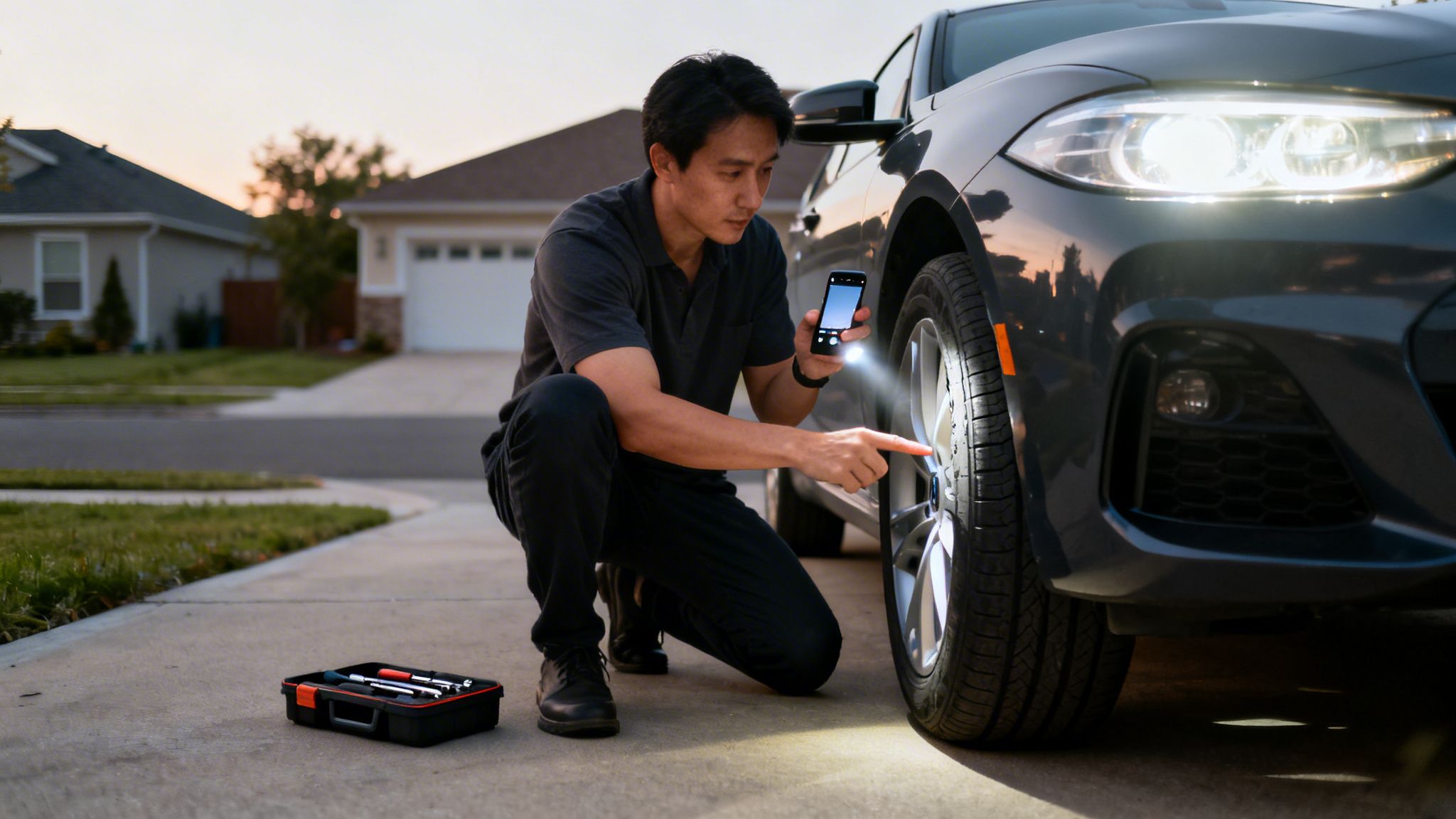
Heading into your Safety Standards Certificate inspection can feel a bit like a pop quiz. The good news? You can study for this one. A quick pre-inspection in your own driveway can make a world of difference, helping you pass the first time around.
This isn't about doing a full mechanical teardown. It’s simply about catching the easy-to-spot problems that are responsible for so many failed inspections. Spending a few minutes now can save you the time, money, and headache of a re-test.
Your Pre-Inspection Checklist
Before you book your appointment, run through this simple checklist. It covers the most common failure points we see and gives you a solid idea of where your vehicle stands.
| Component | What to Check | Pass/Fail Indicator |
|---|---|---|
| Lights | Check all exterior lights: headlights (high & low beams), turn signals, brake lights, and licence plate light. | All lights must be working. A single burnt-out bulb is an automatic fail. |
| Windshield | Look for cracks, chips, or damage. Pay close attention to the area cleared by your wipers. | Small stone chips are usually fine. Any crack in the driver's direct line of sight is a fail. |
| Wipers & Fluid | Test your wipers and ensure they clear the glass effectively. Check your washer fluid level. | Wipers must not be torn or skipping. You must have washer fluid. |
| Horn | Give it a quick press. | The horn must be clearly audible. |
| Tires | Check for obvious wear, bulges, or cracks. Use a toonie to check tread depth. | If the tread doesn't cover the silver border up to the bear's paws, your tires are likely too worn. |
| Brakes | Listen for squealing or grinding noises when you apply the brakes in a quiet area. | Squealing means the pads are low; grinding is a serious issue and a definite fail. |
Doing this quick walk-around puts you in a much better position. You can either fix the minor issues yourself (like a bulb or topping up fluid) or come to us with a clear idea of what needs attention.
Lights and Glass: The First Things a Technician Checks
It might seem small, but a burnt-out bulb is one of the most frequent reasons a car fails its safety. Technicians have to check every single light, so it’s the best place for you to start. Have a friend help you run through the list.
They can stand outside while you cycle through the controls:
- Headlights: Check both the low and high beams.
- Turn Signals: Make sure front and rear signals flash, and check the dashboard indicators, too.
- Brake Lights: Have your friend watch as you press the brake pedal—all three lights (left, right, and centre) must work.
- Licence Plate Light: This one is easy to forget, but it’s on the checklist.
Next, take a good look at your windshield. While small stone chips are generally acceptable, any crack that enters the driver's field of view—basically, the path your wipers cover—is an automatic fail. That needs to be repaired before the inspection.
Brakes and Tires: Listen and Look
Your car has ways of telling you something is wrong, especially with the brakes. Your ears are often the best tool here. On a quiet street, pay close attention to the sounds your car makes as you slow down.
A high-pitched squeal is often the first warning sign that your brake pads are getting thin. If you hear a deep, metallic grinding, that’s a much more serious problem. It means the pads are gone and you have metal-on-metal contact—a major safety hazard and a guaranteed fail.
Finally, give your tires a once-over. The key factor is tread depth. A quick way to check is with a toonie: stick it into a tread groove, and if the tread doesn't at least reach the bear's paws, your tires are probably below the legal limit. Also, scan the sidewalls for any noticeable bulges, cuts, or cracks.
Keeping on top of your car's condition is the best way to avoid surprise failures. You might even be causing wear without realizing it; these Ten Ways You're Destroying Your Car Without Knowing are worth a read. By tackling these common issues beforehand, the official inspection becomes less of a test and more of a final confirmation that your vehicle is safe and ready for the road.
What to Expect at Carmedics Autowerks
When you search for "vehicle inspection stations near me," you're really looking for a shop you can trust. Here at Carmedics Autowerks, we’ve earned our reputation in Whitby by making the safety inspection process refreshingly clear and honest. Our goal is simple: we want you to feel confident and in the loop from start to finish.
From the moment you walk through our doors, you’ll notice we do things a bit differently. We see the inspection not as a test, but as a partnership. It's about working with you to ensure your vehicle is truly safe for you and your family on Ontario’s roads—not about finding excuses to fail a car.
The Inspection Process: A Partnership
Our certified technicians carry out every inspection by the book, strictly following the provincially mandated checklist. This isn’t about guesswork or opinion; it’s a meticulous, step-by-step review of your car’s most critical safety systems. We check everything from brake pad thickness to the structural integrity of the frame, making sure each component meets the legal standard set by the Ministry of Transportation.
If your car passes with flying colours, we’ll get the Safety Standards Certificate processed right away so you can complete your vehicle transfer or registration without a hitch. But what happens if it doesn't pass? That’s where our commitment to you really shines.
We won’t just hand you a confusing report filled with technical jargon and send you on your way. Our service advisors sit down with you and walk through the details, explaining exactly what needs attention and, more importantly, why it's a safety issue.
Clear Communication After the Inspection
A failed inspection can feel stressful, but it shouldn't be a mystery. We believe in arming you with clear information so you can make the right decision for your vehicle and your budget. After explaining the required repairs, we provide a straightforward, no-pressure quote that details the costs to bring your vehicle up to code.
Here’s our promise to you:
- Detailed Explanations: We’ll show you the problem on your vehicle whenever possible. Seeing is believing, and it helps you understand the issue firsthand.
- Prioritized Recommendations: We’ll clearly separate what is legally required for the safety certificate from any other maintenance we might suggest for down the road.
- No-Pressure Quotes: You’ll get a detailed estimate for all necessary repairs. The decision to move forward is always yours—no surprises, no hidden fees.
We want to be your trusted partner for all things automotive. It’s a commitment that goes far beyond a single inspection. You can learn more about our local team and the values we stand for by reading about Carmedics Autowerks in Whitby. Our mission is to make sure your vehicle is not just road-legal, but genuinely safe, giving you total peace of mind.
Your Top Inspection Questions, Answered
When it comes to vehicle safety inspections, a bit of confusion is totally normal. If you've been searching for "vehicle inspection stations near me," you've probably got a few questions. We hear the same ones all the time from drivers here in Whitby, so let's clear the air and give you the straightforward answers you need.
Think of this as your go-to FAQ for getting your car ready and understanding the process from start to finish.
How Long Is a Safety Certificate Valid in Ontario?
This is, without a doubt, the number one question we get. The answer is critical for anyone buying or selling a used vehicle.
An Ontario Safety Standards Certificate (SSC) is valid for exactly 36 days from the day we sign off on it. This isn't a random number; it's your specific window to go to ServiceOntario and officially transfer the vehicle's ownership. If you miss that 36-day deadline, the certificate is void, and you'll have to start over with a brand-new inspection.
What Happens if My Vehicle Fails the Inspection?
First off, don't panic. A failed inspection simply means your vehicle needs a bit of work to meet the province's minimum safety requirements. It's a roadmap for what needs fixing, not a final judgment.
When a vehicle fails, we'll give you a detailed report that clearly lists every single issue. From there, you have a couple of choices:
- You're free to take that report to any licensed technician you trust to have the repairs done.
- Most people have us handle it right here. We'll give you a transparent, no-pressure quote to fix only what's needed to pass.
The key thing to remember is the 10-day window. You have 10 days to get the repairs done and bring the vehicle back to us for a re-inspection. If you're within that window, we often only need to check the specific items that were repaired, which saves you time and hassle.
Does a Safety Certificate Affect My Car Insurance?
Yes, it can, though it’s more of an indirect relationship. Your insurance company operates on the fundamental assumption that the car they’re insuring is legally roadworthy.
Think of it this way: if you get into an accident caused by a major mechanical failure—like worn-out brakes that would have been flagged during an inspection—your insurer could have grounds to challenge or even deny your claim. Keeping your vehicle in pass-worthy condition is simply part of holding up your end of the insurance agreement. Wondering about the financial side? We break it all down in our guide to understanding auto inspection costs.
Is an Emissions Test the Same as a Safety Inspection?
This is another common mix-up. The short answer is no, they are two completely different things.
Ontario's Drive Clean emissions testing program was largely discontinued for passenger vehicles back in 2019. The Safety Standards Certificate (SSC), however, is still very much a requirement for transferring ownership and other specific situations. The SSC is a mechanical fitness inspection. It's all about ensuring the core safety systems—brakes, steering, suspension, tires, lights, and frame—are in good working order and won't put you or others at risk.
At Carmedics Autowerks Inc., our job is to make your vehicle inspection simple and stress-free. If you still have questions or you’re ready to get your safety certificate, just give our Whitby shop a call. We’re here to help you get on the road safely and with total confidence. You can book your appointment online at https://www.carmedicsautowerks.com.