Your Saturday disappears faster than the work itself.
You book an oil change with one shop. A week later, you call a tint installer. Then you notice a scrape on the bumper and start chasing collision quotes. Winter is coming, so now you also need rust prevention, tire service, and a check on the locks because the vehicle is parked outside half the week. None of these shops share notes. None of them sees the whole vehicle. You end up carrying the service history in your head.
That fragmented routine costs more than the invoice total. It costs time, repeat diagnostics, extra driving, and small risks that build up when one provider does not know what the last provider touched.
For drivers who care about how their vehicles run and how they hold value, One-stop auto service Whitby is not about convenience alone. It is about having one place that understands the vehicle as a system. In Whitby, that matters even more because local conditions are hard on cars. Salt, slush, highway debris, and rising security concerns all hit the same investment.
The End of the Endless Car Care Juggle
A lot of Whitby owners are stuck in the same pattern. The daily driver needs routine maintenance. The newer SUV needs paint protection before another winter. The family vehicle has a parking sensor issue after a light bump. The business van is due for service, but downtime is expensive. So the owner starts calling around.
One specialist handles repairs. Another does tint. A third will look at bodywork next Thursday. By the time the work is scheduled, approved, and completed, the vehicle has already made multiple trips across town. If one issue overlaps another, the advice can conflict. One shop says the warning light is electrical. Another says it is related to a prior repair. The owner is left sorting out who is responsible.
That problem has become more serious because security is no longer a side topic. Auto theft in Ontario increased by 48.2% between 2021 and 2023, and the Insurance Bureau of Canada has called car theft a “national crisis” (arXiv summary). For Whitby drivers, that changes the standard of care. Locks, alarms, access points, and general vehicle condition need regular attention, not afterthought attention.
A one-stop shop solves the practical mess first. One visit. One record. One team that can connect maintenance, protection, repairs, and appearance work. It also gives you a place that can keep an eye on emerging issues before they turn into larger ones.
If you are already searching for a car repair shop near me, the better question is broader. You do not just need a shop that can fix today’s problem. You need one that can manage the whole vehicle over time.
Key takeaway: The hidden cost of using multiple shops is not only money. It is lost time, broken continuity, and uncertainty when something goes wrong.
What a One-stop Auto Service Means
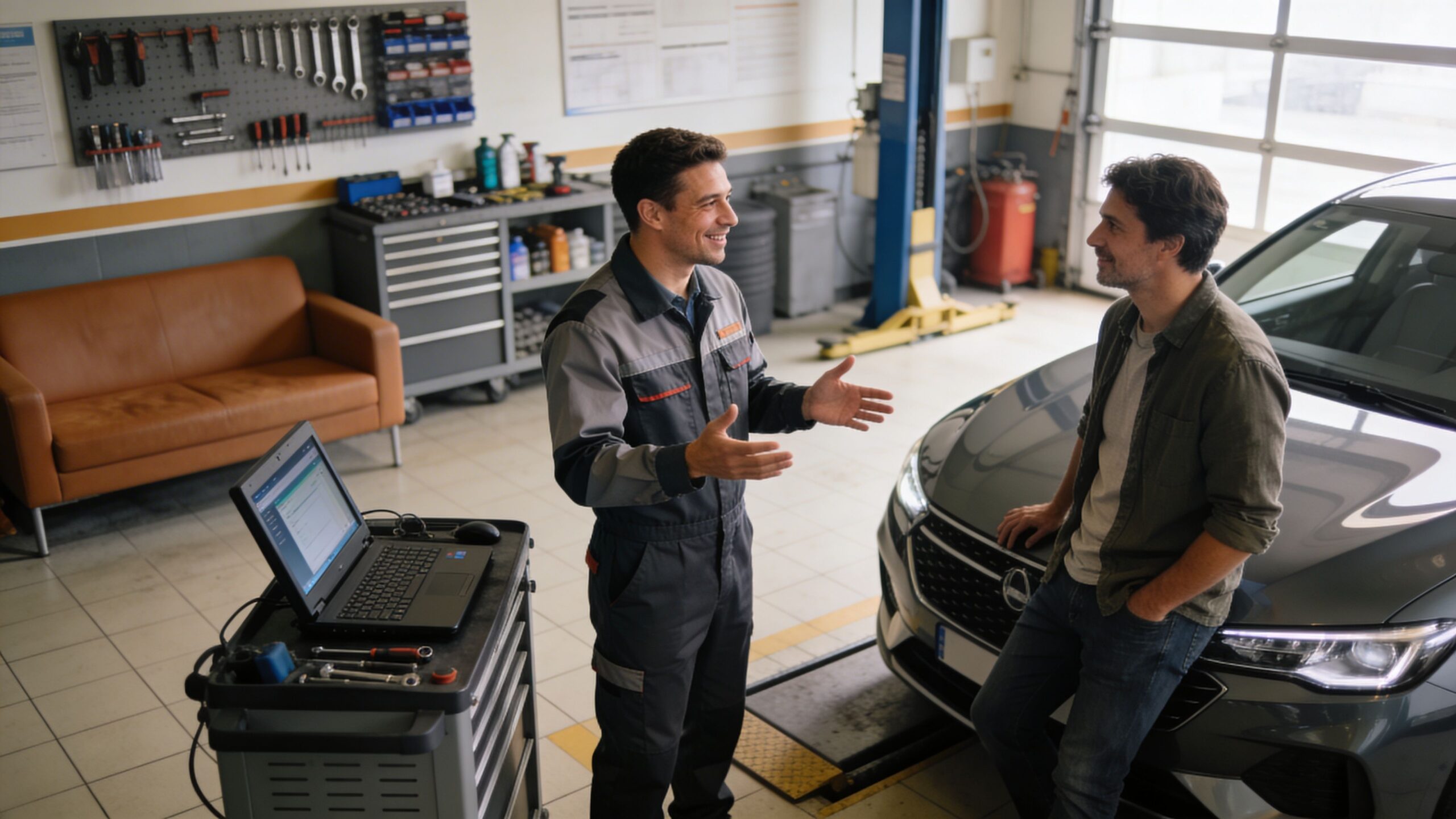
A genuine one-stop service centre works like a family doctor for your vehicle. You may still need occasional specialised input in rare cases, but your main provider should know the vehicle’s history, patterns, and priorities.
It is not just a long service menu
Any website can list ten services. That does not mean those services are integrated well.
A one-stop operation does three things consistently:
- Tracks the whole vehicle: The team knows what was repaired, what was protected, and what should be checked next.
- Applies one quality standard: Mechanical work, appearance work, and protection work should reflect the same level of care.
- Keeps responsibility clear: If a concern comes up, you are not chasing three different businesses for answers.
That matters because cars do not separate themselves into clean categories. A collision repair can affect sensors. A neglected seal can affect interior condition. Poor alignment can shorten tire life and change how the vehicle feels on the road. Paint damage that seems cosmetic can become a long-term corrosion problem after enough winter exposure.
Continuity is the key value
The biggest advantage is continuity.
When one shop has serviced your brakes, inspected your suspension, documented prior bodywork, and applied film or tint, it sees patterns faster. It can tell whether a sound is new or recurring. It can notice whether the front end is taking repeated highway impact. It can spot wear that suggests your use has changed, such as more commuting, more towing, or more commercial mileage.
That continuity also helps with planning. Instead of reacting to problems one at a time, you can bundle work logically. Seasonal prep can happen with maintenance. Appearance protection can be scheduled before harsh weather. Small issues can be fixed while the vehicle is already in the bay.
Practical tip: Ask a shop how it records service history across different departments. If the mechanical side and protection side work in separate silos, you are not getting the full one-stop benefit.
Trust is built through fewer handoffs
Every handoff creates room for delay, misunderstanding, or uneven workmanship. The fewer handoffs your vehicle goes through, the easier it is to maintain standards.
That is what One-stop auto service Whitby should mean in practice. Not more marketing terms. Better coordination, clearer accountability, and a complete view of your vehicle.
The Pillars of Full Vehicle Care
One-stop care has to stand on real capability. If a shop cannot handle the major categories of ownership well, the “all under one roof” idea becomes a shortcut instead of a benefit.
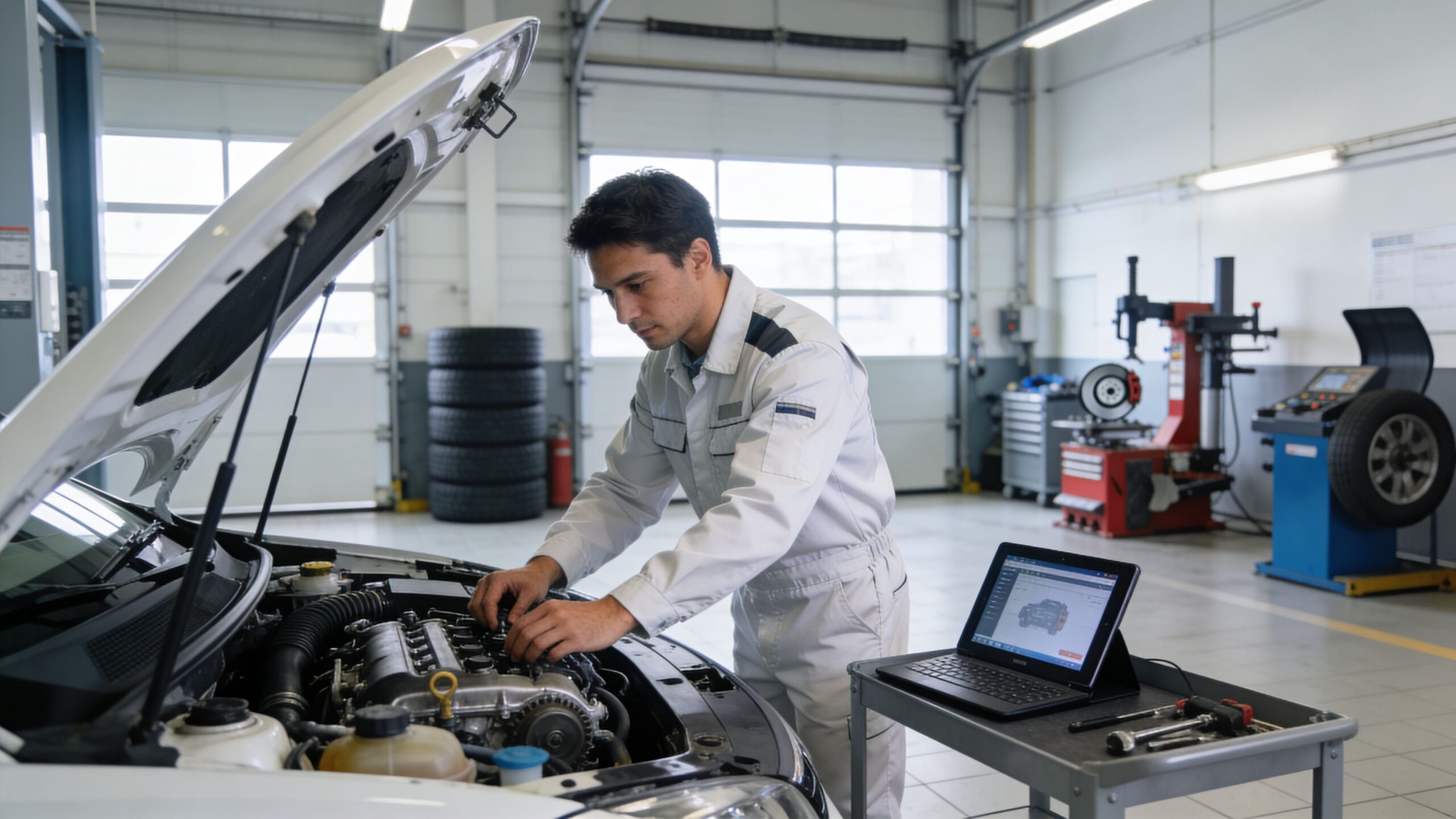
General repairs and preventive maintenance
This is the foundation. Without strong mechanical work, everything else is cosmetic.
Good general service covers diagnostics, brake work, suspension concerns, fluid service, drivability issues, and routine inspections. The best shops do not treat these as isolated jobs. They look for connections. A vibration might involve tires, alignment, suspension wear, or brakes. A warning light might be simple, or it might point to a pattern in how the vehicle has been driven and maintained.
Preventive work is what keeps owners out of the expensive cycle of delayed repairs. That includes scheduled inspections, fluid condition checks, belt and hose reviews, and catching wear before it turns into a breakdown. For people serious about maintaining your vehicle, that mindset matters more than any single repair order.
For a practical overview of planned service, this guide to preventive maintenance for vehicles is a useful starting point.
Fuel system care fits here too. A professional fuel injection service typically takes one to two hours when it is done properly, with inspection, cleaning, and final verification rather than a rushed add-on (fuel injection service details). That timeframe says something important. Good work takes process.
Fleet maintenance for local business use
Fleet service is where a lot of shops fall short. They can repair a vehicle, but they are not structured to keep several vehicles organised and on the road.
Whitby and Durham Region businesses need something more disciplined. Scheduling has to be repeatable. Records have to be clear. The shop has to understand that a work vehicle sitting idle affects revenue and customer commitments.
The local gap is real. The Ontario Trucking Association reports that 68% of small fleets in the GTA, including Durham Region, face downtime costs averaging $500 per vehicle per unplanned repair in 2025 (referenced fleet report summary). Even without Whitby-specific providers publishing detailed fleet structures, the lesson is obvious. Reactive servicing is expensive.
Shops serving fleets also need proper diagnostic depth. One verified source notes use of CAN-bus OBD-II scanners with 98% fault code accuracy for post-2018 diesel SUVs, and that neglected EGR soot buildup is common in 25% of GTA fleets, contributing to 15-20% fuel efficiency loss when ignored (fleet maintenance reference). Those details matter because fleet work is not just oil changes on repeat. It is uptime management.
Vehicle protection and appearance work
A complete shop also protects what the mechanical work is preserving.
For Whitby drivers, that often means window tinting and paint protection film. Tint improves comfort and privacy, but film is the bigger long-term defence if you drive the 401 often or park outside through winter. Good PPF work is technical. One verified source describes self-healing thermoplastic polyurethane films at 8-12 mils (0.2-0.3 mm), applied with infrared heat guns at 120-140°C and installed to conform to body lines without messy seams (PPF process reference).
The benefit is not only visual. Protection work should reduce the wear that pushes owners toward repainting or panel correction later.
Collision and body repair
Collision repair is where fragmented service can become a serious problem.
A bumper scrape or front-end hit often affects more than paint. Mounting points, sensors, trim fit, and finish quality all matter. If one shop does bodywork and another has to sort out the related mechanical or sensor issues later, costs and confusion multiply.
A proper one-stop provider can manage the job as one event. Estimate, repair path, parts coordination, finish work, and post-repair checks stay connected. That lowers the chance of missed details and makes follow-up easier if anything needs adjustment.
Shop-owner view: The best repair plan is usually the one that avoids duplicate labour, duplicate diagnostics, and duplicate conversations. That is where integrated service pays off.
The Unified Advantage Over a Multi-Shop Approach
The strongest case for a one-stop model is simple. It reduces friction.
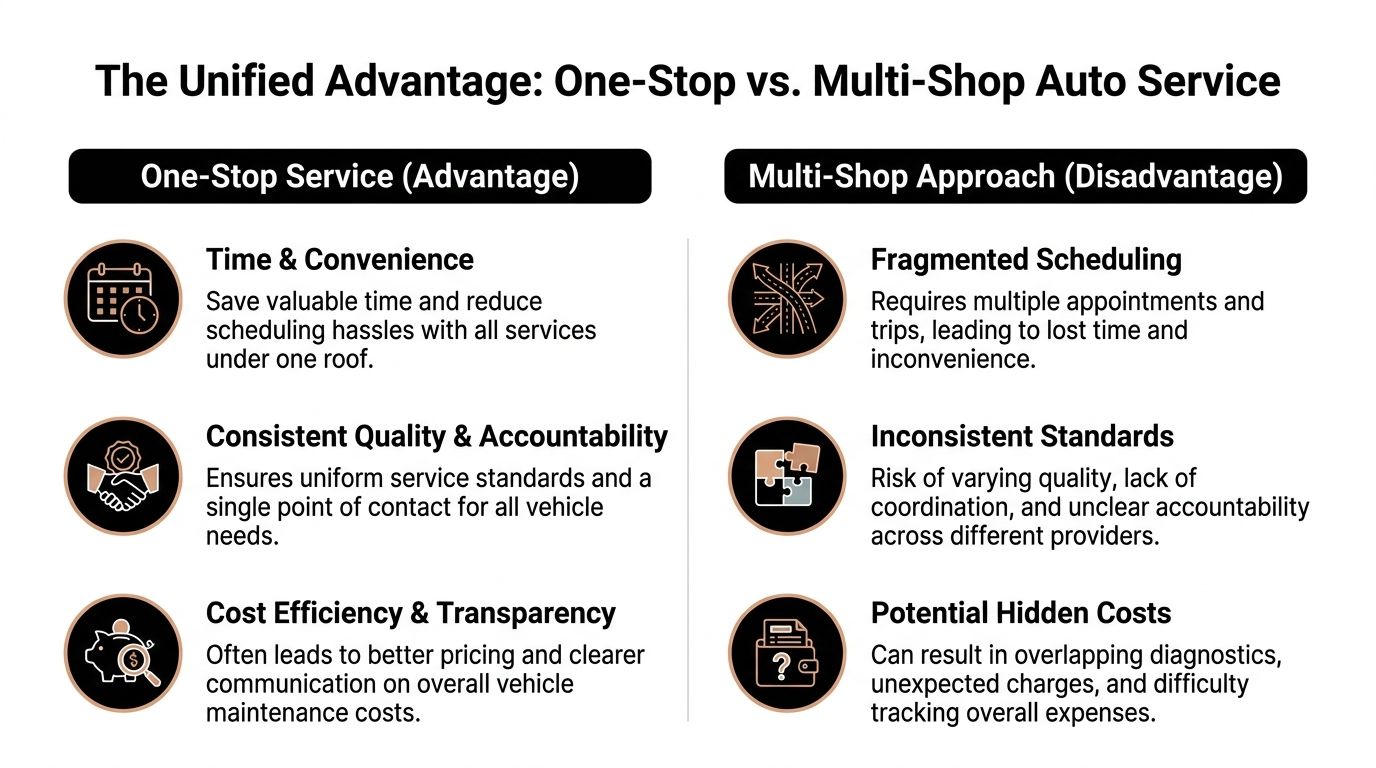
A multi-shop approach sounds smart on paper because every provider appears specialised. In practice, owners often end up managing the gaps between those specialists. They repeat the vehicle story several times. They approve overlapping inspections. They lose days to scheduling. If something is not right afterward, the responsibility can become blurry fast.
Where the hidden costs show up
The invoice at each shop may look reasonable. The overall ownership experience often does not.
Common hidden costs include:
- Repeat diagnostics: One shop checks an issue, another shop re-checks it because it has no baseline.
- Extra travel and waiting: Pickup, drop-off, calls, and rescheduling add up quickly.
- Uneven recommendations: One provider focuses narrowly on its service area and may miss the broader picture.
- Scattered records: Years later, you may not know when key work was done or by whom.
A unified provider creates a cleaner chain of responsibility. If your service record, bodywork history, and protection plan live in one place, decisions get easier. So do warranty conversations and resale conversations.
One-stop service vs. multi-shop juggle
| Factor | One-Stop Auto Service | Multiple Specialized Shops |
|---|---|---|
| Service history | Centralised and easier to review | Split across invoices, emails, and memory |
| Scheduling | Fewer appointments, better bundling | More trips and more calendar juggling |
| Accountability | One main point of contact | Responsibility can be unclear |
| Recommendations | Based on the full vehicle picture | Often limited to one shop’s scope |
| Long-term planning | Easier to prioritise work by season and budget | Usually reactive and fragmented |
Value is not only about price
Owners sometimes assume one-stop care must cost more. That is not necessarily the right frame.
If one coordinated visit prevents repeated labour, catches an issue early, or lets you combine services while the vehicle is already in the shop, the value improves even if the line items look similar. Time matters. Consistency matters. Fewer mistakes matter.
For enthusiasts and busy owners alike, the unified model wins because it removes operational chaos from car ownership.
How to Evaluate a Whitby Auto Service Partner
Choosing a shop is easier when you stop looking at marketing first and start looking at operating habits.
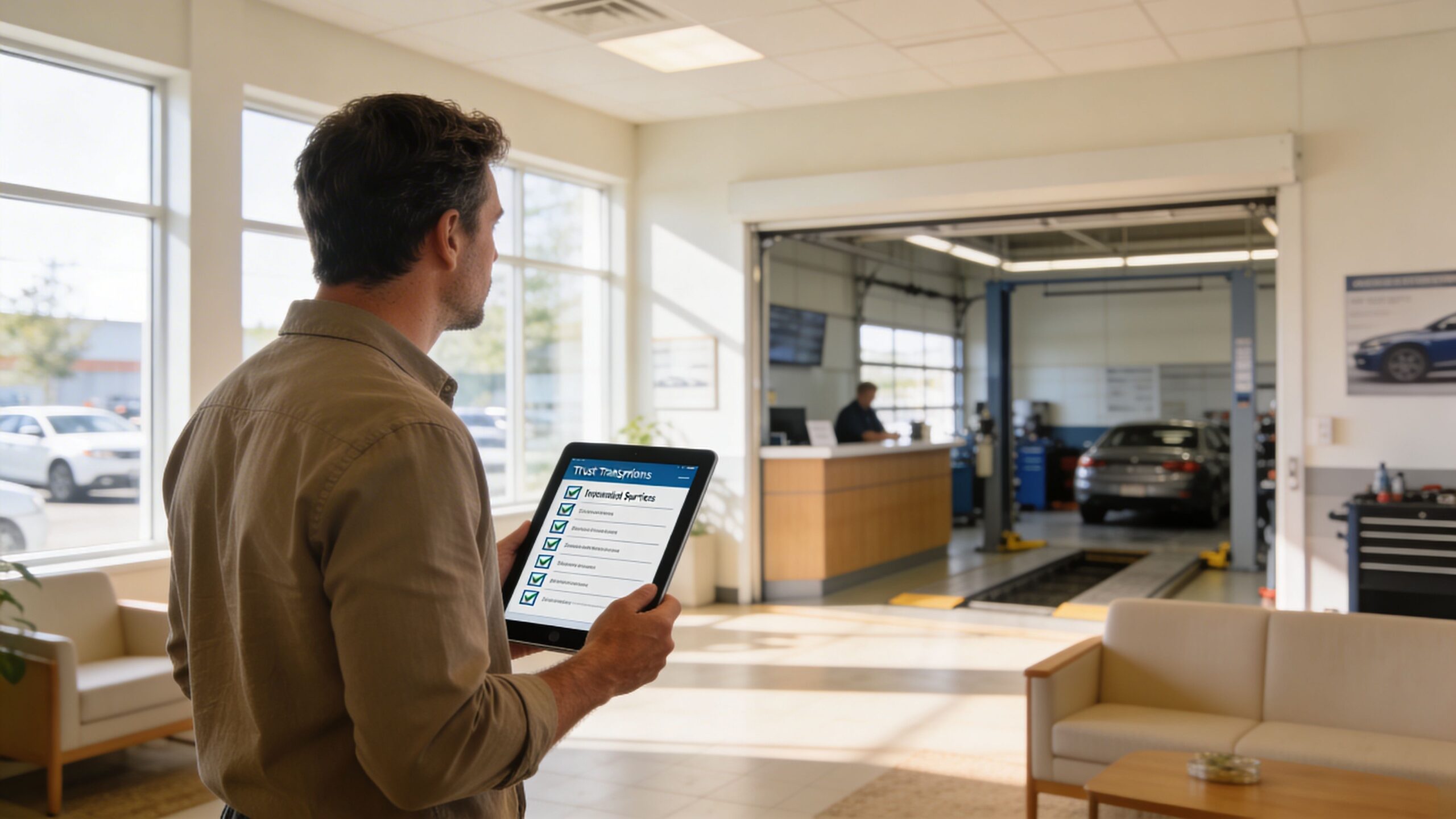
Start with questions that reveal process
A solid shop should answer practical questions without becoming vague or defensive.
Ask things like:
- Who will inspect the vehicle first: You want to know whether the initial assessment is organised or rushed.
- How are estimates written: Detailed estimates show thinking. Generic totals do not.
- What happens if new issues are found: Good shops contact you with context before adding work.
- How is service history tracked: One-stop care depends on records, not memory.
If you are comparing local options, reviewing a shop’s stated services and repair approach on pages like this car mechanic overview can help you see whether the business is broad in capability or narrow in scope.
Look for signs of mechanical depth
Do not judge a shop by the waiting room alone.
Mechanical depth shows up in how the team talks about diagnostics, inspections, and follow-up. A capable shop explains why a repair is needed, what else should be checked around it, and whether the issue is urgent, monitor-only, or worth bundling with future work.
That kind of communication matters more than polished slogans.
Check protection and bodywork standards separately
Many shops are decent mechanically but weak on protection or finish work.
If you want tint, PPF, or collision repair from the same provider, ask to see examples of edges, panel alignment, film fitment, and finish quality. The details matter. A neat install and a properly managed repair age better than flashy sales language.
Practical tip: Ask what the shop does when a job crosses categories, such as a bumper repair that also affects parking sensors. The answer tells you whether departments work together.
Review policies, not just promises
A few final checks help separate dependable providers from opportunistic ones:
- Warranty clarity: Parts and labour terms should be explained plainly.
- Turnaround expectations: Shops should give realistic windows, not optimistic guesses.
- Communication habits: You should know who updates you and when.
- Community reputation: Read reviews for patterns. Look for mentions of honesty, consistency, and problem resolution.
A Whitby service partner should make ownership easier. If the estimate is confusing, the answers are vague, or the process feels improvised, keep looking.
The Carmedics Autowerks Difference in Whitby
For local drivers who want repairs, protection, and appearance work coordinated in one place, Carmedics Autowerks in Whitby is one example of a shop structured around that integrated model.
The local context matters. Durham Region winters are hard on paint and underbodies, especially for owners who drive the 401 regularly or keep newer vehicles for the long term. Verified data tied to local weather impacts notes that Durham Region salt-induced corrosion claims rose 22% in 2025 after record freeze-thaw cycles, and that advanced PPF offers 5-10 year protection while reducing potential repaint costs by up to 40% (Ontario weather and protection summary). That is the kind of condition-specific issue a Whitby shop should be prepared to address with more than a generic wash-and-wax answer.
A practical one-stop operation also needs to understand different ownership patterns. The enthusiast with a new SUV does not have the same priorities as the contractor with several work vehicles. One wants long-term finish preservation, clean installs, and careful maintenance history. The other wants predictable scheduling, fewer interruptions, and vehicles that stay ready for the next job.
That is where integrated service has an advantage. General repair, fleet maintenance, tint, PPF, and collision work support each other when the same team can see the whole vehicle and the owner’s actual use.
For Whitby drivers, the difference is not abstract. It shows up in fewer loose ends, less running around, and better decisions made before weather, wear, or minor damage become costly.
Simplify Your Car Care and Protect Your Investment
Most owners do not need more shop visits. They need better coordination.
A one-stop model cuts down the wasted hours, duplicate inspections, and uncertainty that come with splitting your vehicle across multiple providers. It also gives you a clearer maintenance history and a better plan for protection, repairs, and long-term ownership.
If paint preservation is part of that plan, it helps to understand your options before damage sets in. This overview of paint protection film is a good place to start.
Your vehicle is one of the biggest investments you use every day. Treating it with a connected service strategy is usually the simplest way to protect both its condition and your time.
Frequently Asked Questions
Will using an independent one-stop shop affect my warranty
Routine maintenance and repair work should be documented properly and carried out to the correct standard. The key is clear records, quality parts where appropriate, and service that matches the vehicle’s requirements. Ask the shop how it documents work and what information appears on your invoice.
Can one shop really handle both performance-minded care and cosmetic protection
Yes, if the shop is set up for both mechanical and appearance work and can explain its process in each area. The important part is not the claim. It is whether the team can show consistent repair quality, clean installs, and organised records across categories.
Is one-stop service only for newer vehicles
No. New vehicles benefit from early protection and disciplined maintenance. Older vehicles benefit from continuity, especially when the owner is trying to prioritise repairs and avoid wasting money on duplicated labour or conflicting recommendations.
How do I get a quote for multiple services at once
Start with a full inspection and a clear list of priorities. Tell the shop what is urgent, what is seasonal, and what is cosmetic. A good provider can separate immediate needs from planned work so you can bundle services intelligently instead of approving everything at once.
What should business owners ask about fleet service
Ask how scheduling is handled, how records are tracked, and how the shop manages repairs that could interrupt operations. Fleet support is not just mechanical skill. It is organisation, communication, and the ability to keep multiple vehicles moving with fewer surprises.
If you want one place to handle repairs, fleet needs, tint, PPF, and collision-related vehicle care in Whitby, contact Carmedics Autowerks Inc to discuss your vehicle, your priorities, and the most sensible next service step.