Let's get one thing straight: just because Ontario's mandatory Drive Clean program is a thing of the past doesn't mean vehicle safety checks are. For drivers in Whitby, searching for a reliable "auto inspection station near me" is more important now than it has ever been. This isn't about passing a test anymore; it's about making sure the car you drive is safe for you, your passengers, and everyone else sharing the road.
Why Proactive Car Inspections Are Essential in Whitby
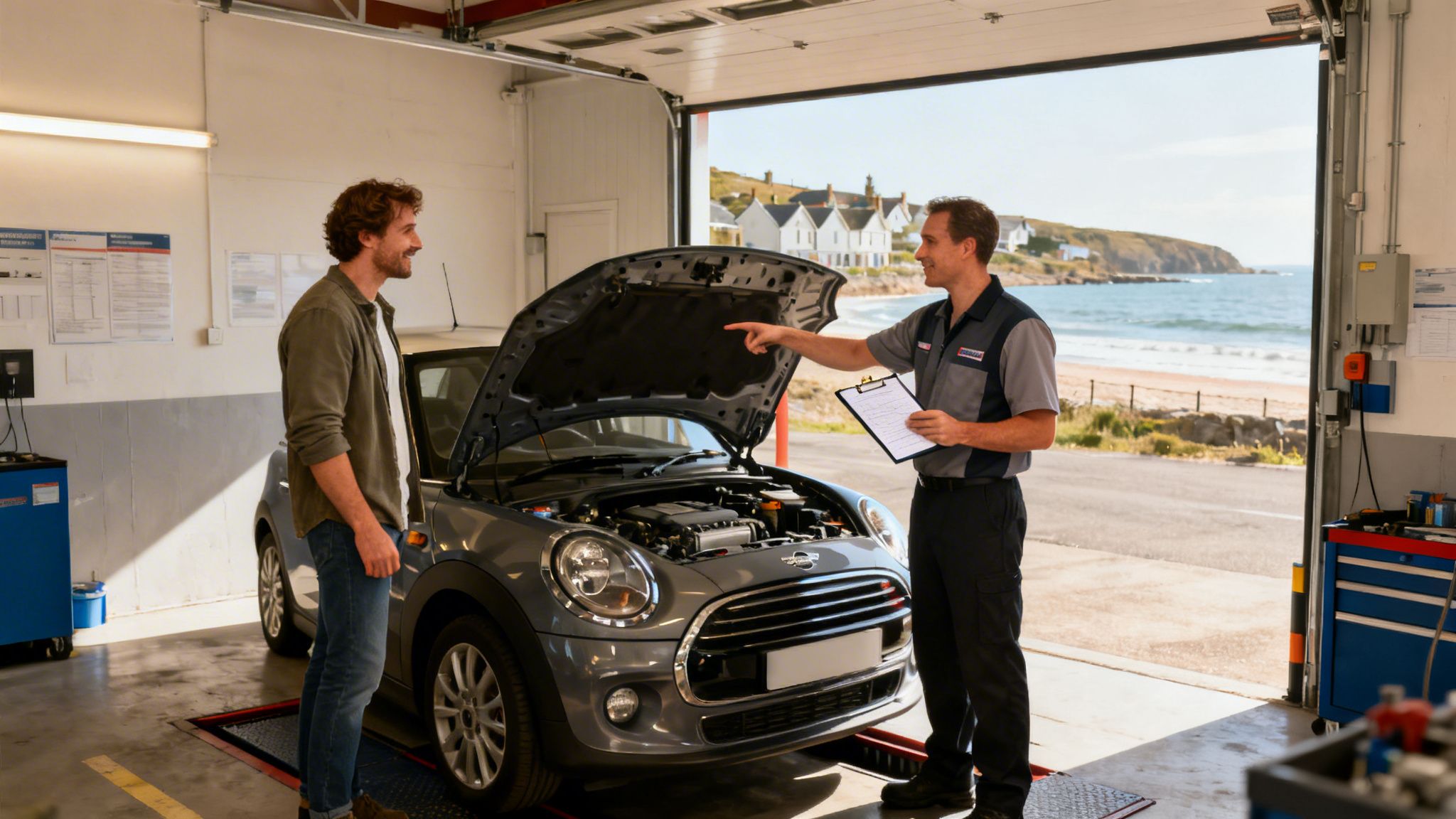
When the Drive Clean program ended, the responsibility for vehicle safety shifted entirely to us, the owners. This calls for a change in how we think about our cars—moving away from a reactive, "I just need this to pass" mentality to a proactive, "I need to know this is safe" approach. Being proactive is your single best defence against sudden breakdowns, wallet-draining repairs, and, most importantly, serious accidents.
Even if you're driving a newer car packed with advanced safety features and complex computers, it's not invincible. Wear and tear is a reality for every vehicle. Problems with sensors, brake systems, and other electronic parts can creep up silently, giving you no warning signs until it’s far too late. It takes an expert eye to spot these hidden issues before they turn into genuine safety hazards.
The Shift from Mandatory to Preventative
Back before 2019, the Drive Clean program served as a regular, if sometimes inconvenient, safety net. The data from that time shows it caught a lot of real problems. In Durham Region alone, for example, 8.3% of the 250,000+ vehicles tested failed on their first try. That number gives us a clear baseline of how many cars on the road had underlying safety issues.
Now that the mandate is gone, a worrying trend has emerged.
According to province-wide OPP data, accidents tied to mechanical failure saw a 7% increase between 2019 and 2023, accounting for 9,800 incidents. What's truly concerning is that brake-related failures were a factor in 35% of those cases—that's 3,430 accidents that could have been prevented.
This isn't just about statistics; it's about understanding the real-world risk. A regular, thorough inspection is just as fundamental to responsible car ownership as getting your oil changed or rotating your tires.
The Benefits of a Preventative Mindset
Looking at your vehicle's health proactively gives Whitby drivers some very real advantages. It goes way beyond just avoiding a potential fine; it’s about being a smart car owner.
- Enhanced Safety: It means catching those worn-out brake pads, failing suspension components, or dangerously bald tires before they fail on the 401.
- Improved Reliability: You can head off a surprise breakdown on your morning commute or, worse, in the middle of a family road trip.
- Long-Term Savings: It’s always cheaper to fix a small issue, like a minor fluid leak, than to deal with a catastrophic engine or transmission failure down the line.
- Higher Resale Value: Nothing tells a potential buyer your car has been well-cared-for like a documented history of regular, professional inspections.
This preventative philosophy is the foundation of everything we do at Carmedics Autowerks. We see an inspection as a conversation about your vehicle's health, not just a pass/fail checklist. Our goal is to arm you with knowledge so you can drive away with total confidence. You can learn more about this approach by reading our guide on the importance of preventive maintenance for vehicles.
How to Find a Reputable Inspection Station in Whitby
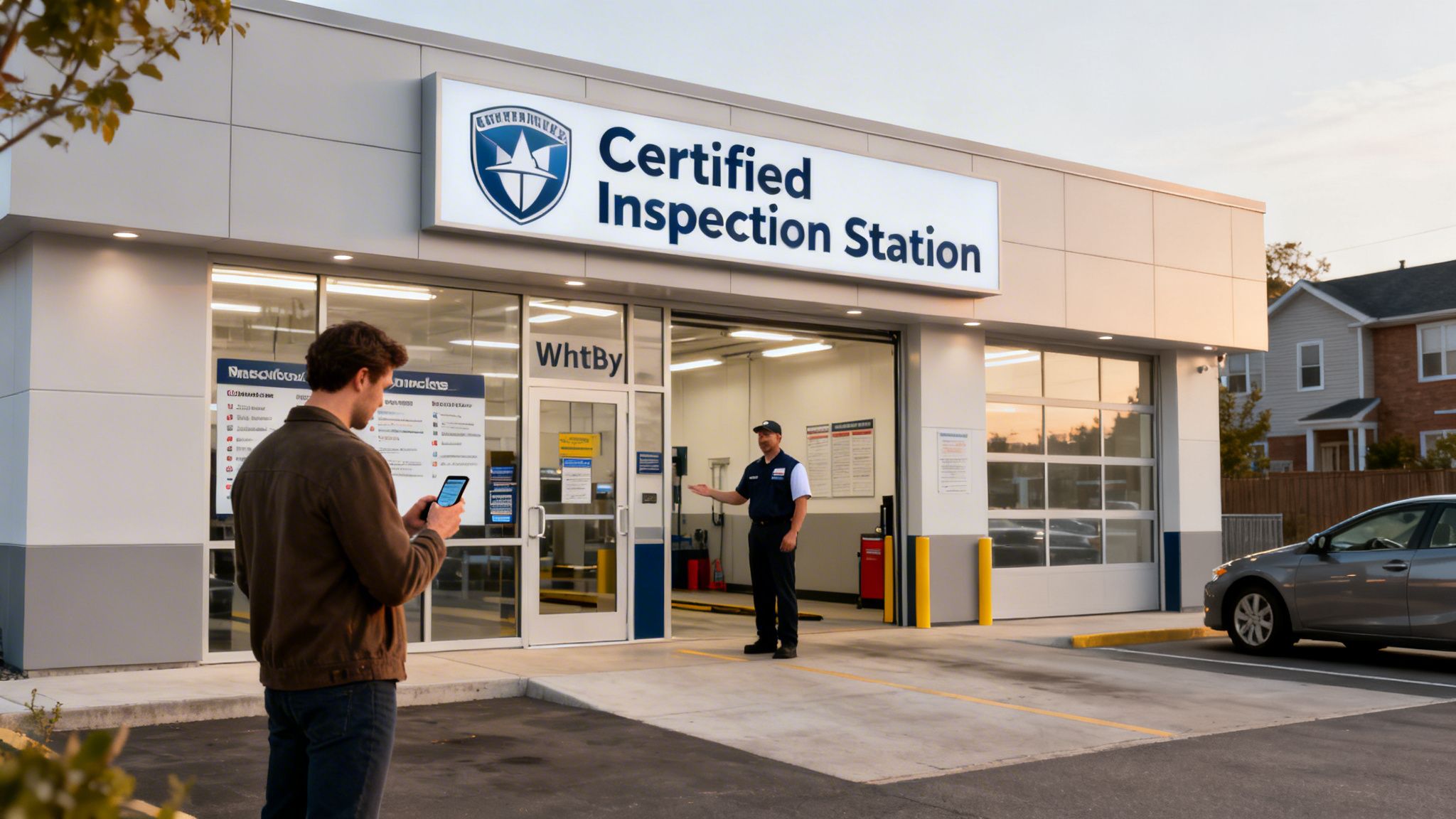
When you need a safety certificate, your first move is probably typing "auto inspection station near me" into your phone. But that simple search is just the beginning. How can you be sure the shop you pick is actually trustworthy and not just good at online marketing? Finding a reliable facility in Whitby means doing a little bit of homework to separate the pros from the rest.
The most important first step is checking for official credentials. In Ontario, any legitimate inspection facility must be licensed under the province's DriveON program. This system is how the Ministry of Transportation (MTO) ensures shops meet strict standards for both safety and emissions testing. You can easily verify a shop's licence on the official DriveON registry, giving you immediate peace of mind.
Just to give you an idea, the Durham Region has about 450 licensed auto inspection stations listed in the 2023 DriveON registry. But here’s the catch: only about 60% of those are actually set up to handle the comprehensive Safety Standards Certificate (SSC) inspections. Knowing this helps you filter out the shops that can't even perform the service you need. If you're curious about how these programs evolve, you can find some interesting insights on state inspection programs and their history.
Evaluating Reviews and Asking the Right Questions
Once you've shortlisted a few licensed shops, it's time to see what their customers have to say. Don't just glance at the star rating on Google or Yelp; dive into the actual comments. You're looking for a story.
Look for recurring themes in reviews. Are customers mentioning honesty, thoroughness, and good communication? Or are there complaints about upselling and surprise charges? A few negative reviews are normal, but a consistent pattern is a major red flag.
When you call a shop or drop by, don't hesitate to ask some direct questions. It’s a great way to gauge their professionalism and expertise before you commit. Here are a few things I always tell people to ask:
- "Are your technicians 310S certified?" This is the mandatory license for auto mechanics in Ontario. If they can't answer "yes" immediately, that's a problem.
- "Can you walk me through what your safety inspection covers?" A good technician will be happy to explain their checklist and process.
- "Will I get a detailed report even if my car passes?" Transparency is crucial. You want a clear breakdown of your vehicle’s condition, not just a pass/fail slip.
At the end of the day, you're not just looking for a one-time service; you're looking for a trusted partner for your vehicle’s long-term health. You need a team that takes your safety as seriously as you do. For more advice on what to look for, check out our guide on choosing an automotive service centre near you.
Preparing Your Vehicle for a Smooth Inspection
Nobody enjoys the surprise of a failed safety inspection. You book the time, drive down to the shop, and then get the news that you have to come back because of a burnt-out bulb. It’s frustrating, and honestly, it's often completely avoidable.
As mechanics, we see this all the time. The good news is that a little bit of prep work in your own driveway can catch most of the common, easy-to-fix issues. Think of it as a quick dress rehearsal before the main event. It saves you time, money, and the headache of a re-test.
The 10-Minute Driveway Pre-Check
Before you even think about booking your appointment, grab your keys and spend a few minutes with your vehicle. This simple walkthrough covers the very things that cause the most frequent, and preventable, inspection failures.
Let's start with the lights. It sounds basic, but you’d be amazed how many people miss this. Have a friend or family member help you run through the cycle:
- Headlights (check both your low and high beams)
- Brake lights (make sure they pop on when the pedal is pressed)
- Turn signals (front, rear, and on your mirrors if you have them)
- Reverse lights
- Your license plate light—this is the one everyone forgets! A single burnt-out bulb here is an automatic fail.
Next, give the horn a quick tap. Does it work? Good. Now check your wipers. The rubber blades shouldn’t be cracked, split, or peeling away. Top up your washer fluid and give it a spray to make sure the nozzles aren't clogged and are aimed at the windshield.
A Look at Your Tires, Fluids, and Paperwork
Tires are one of the most critical safety components on your car, and they get a lot of attention during an inspection. You can get a good sense of your tread depth with a toonie. Just slide it into the tread; if the tread doesn't cover the polar bear's paws, your tires are getting dangerously low and likely won't pass. While you're down there, scan the sidewalls for any cracks, bubbles, or bulges.
Under the hood, you don’t need to be a mechanic to spot obvious problems. Simply check your fluid levels—engine oil, brake fluid, coolant, and power steering fluid—using the reservoir markings or dipstick. Low levels can sometimes point to a leak, which is a definite safety issue. Also, take a quick look under the car for any new drips or puddles on your driveway. A fresh leak is a red flag.
To help you keep track, here's a simple checklist of what you can do at home. Catching these things yourself is far better than having us find them during the official inspection.
Your Pre-Inspection Checklist for Success
| Component to Check | What to Look For | Why It Matters |
|---|---|---|
| All Exterior Lights | Burnt-out bulbs, cracked lenses. | All lights must be functional for visibility and signalling. This is a common and easy-to-fix failure point. |
| Tires | Low tread depth (use a toonie), cracks, or bulges. | Worn or damaged tires are a major safety hazard, affecting braking and handling. |
| Horn & Wipers | Horn not working, torn wiper blades, empty washer fluid. | Your horn is a key safety device, and clear visibility through the windshield is non-negotiable. |
| Fluid Levels | Low oil, brake fluid, or coolant. | Drastically low fluids may indicate a leak, which is a serious safety concern that will fail an inspection. |
| Under the Vehicle | Puddles or fresh drips of oil, coolant, or other fluids. | Active leaks are an automatic failure and point to a problem that needs immediate repair. |
| Important Documents | Vehicle Ownership (green slip) and proof of insurance. | The inspection cannot legally begin without these valid documents present. |
By taking these few simple steps, you're not just trying to pass a test; you're taking an active role in your own safety on the road. A simple bulb replacement you do yourself is a five-minute fix. Finding out about it at the inspection station means a failed test, a possible re-test fee, and another trip to the shop.
Doing this prep work helps us focus on the complex systems—the brakes, suspension, and frame—that truly keep you safe on Whitby's roads. For a full breakdown of every item on the official checklist, our guide to the annual safety inspection sticker in Ontario is a great resource.
What a Thorough Vehicle Inspection Actually Involves
So, your car is finally up on the lift, and the technician starts their work. What's really going on under there? A proper vehicle inspection is a lot more than a quick once-over. It’s a meticulous, point-by-point examination of every system that keeps you safe on the road. This isn't just about getting a sticker; it's a comprehensive health check for your car.
The process starts with the very bones of your vehicle: the frame and unibody structure. We're looking for any signs of excessive rust, stress cracks, or hidden collision damage that could compromise the car's integrity. Here in Whitby, where road salt is a reality for months on end, this check is non-negotiable. A weakened frame simply can't protect you the way it was designed to in an accident.
This is a detailed process, and knowing what’s involved helps you understand what you're paying for. If you're curious about how these services are priced, you can learn more about auto inspection costs in our detailed guide.
From Brakes to Ball Joints
With the frame cleared, the focus shifts to the parts that control your car's every move. The braking system is at the top of the list. A technician will measure the thickness of your brake pads and rotors, hunt for any fluid leaks in the lines and calipers, and test the emergency brake. It’s all about making sure you have the stopping power you need for that sudden stop on a busy Durham Region road.
Next up are the steering and suspension systems. This is where we check for any looseness or wear in crucial components like tie rods, ball joints, and control arms. Even a tiny bit of play in these parts can make the steering feel vague or unstable—a huge safety concern when you’re on the 401 in heavy rain or wind. We’ll also inspect your shocks or struts for leaks and check the springs for any cracks.
This chart shows a few simple but vital things you can check yourself before you even come to the shop.
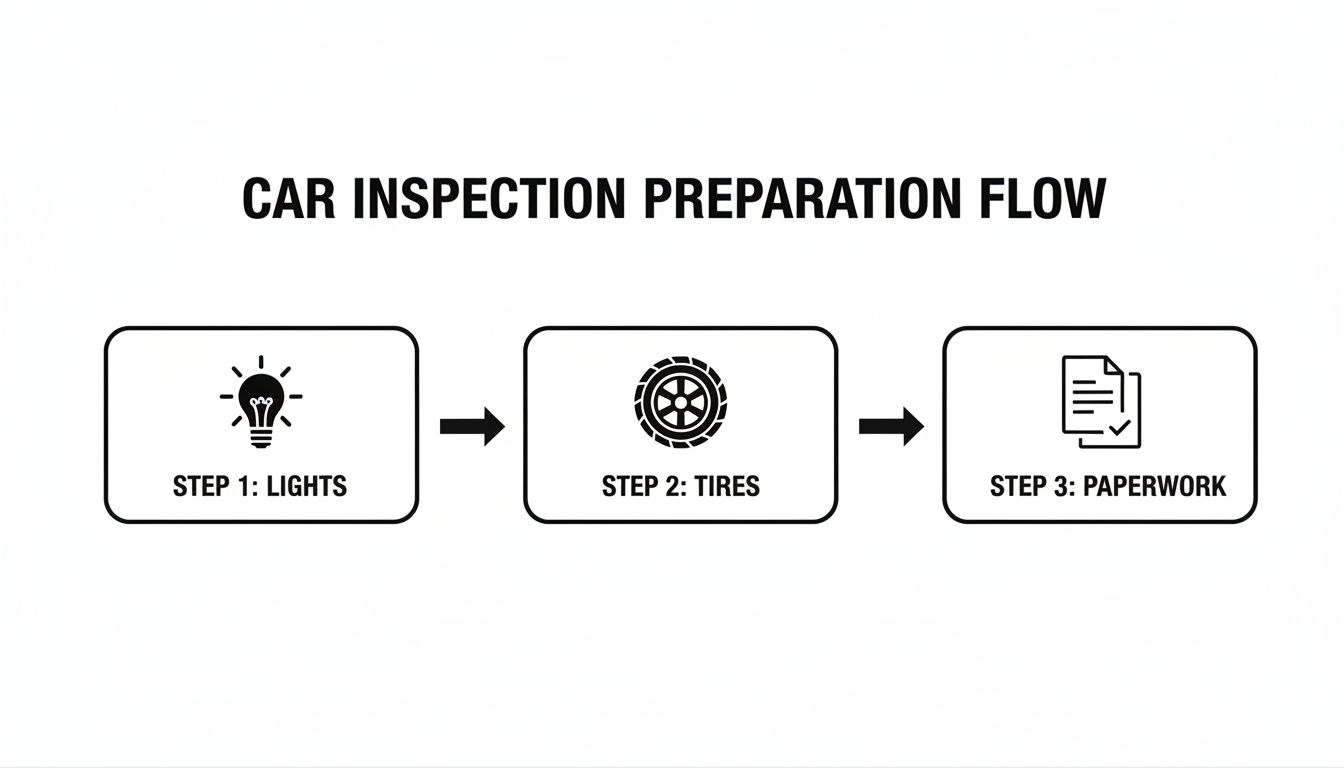
As you can see, taking care of the basics like lights, tires, and your paperwork can save you the time and headache of a failed inspection.
The Final Checks for Roadworthiness
The inspection doesn't stop there. We also give the exhaust system a full rundown, looking for leaks, cracks, or holes from the engine all the way back to the tailpipe. A leak isn't just noisy; it’s a pathway for dangerous carbon monoxide to seep into the car's cabin. The fuel system is also inspected for any leaks, which pose a serious fire hazard.
A proper inspection connects the dots between your car's mechanical condition and your safety on the road. Every single checkpoint, from the tires to the exhaust, answers one question: Is this vehicle truly safe to drive?
Finally, the wheels and tires get a thorough review. A technician confirms the tire pressure is correct, measures tread depth to ensure it's above the legal minimum of 2/32 of an inch, and looks for odd wear patterns that often point to alignment issues. They'll also check the wheel bearings for any looseness and make sure the windshield is clear of major cracks that could block your view.
Knowing what technicians look for can make the whole process feel less mysterious. For a deeper dive, especially if you're buying a used car, this guide on things to look for when inspecting a used vehicle offers some great pointers. It gives you an inside look at the inspection mindset.
Navigating Common Inspection Failures and Fixes
That sinking feeling when you see 'FAIL' on your inspection report is something no driver wants. Your mind probably goes straight to worst-case scenarios: huge repair bills and the headache of rescheduling everything. But a failed test from a good shop isn't a punishment—it's actually a clear, actionable plan to get your vehicle back to being safe and reliable.
Honestly, most failures aren't catastrophic. In my experience, they almost always fall into a few common, predictable categories. Knowing what to look out for, why it matters, and what the fix looks like can take a lot of the stress out of the process.
Think back to the old Drive Clean program. While that was about emissions, the data gives us a good idea of vehicle health in general. Back then, over 2.5 million cars were tested each year in the GTA, and the pass rate was around 92%. Those that failed? The culprits were almost always the same wear-and-tear items we see today: brakes, tires, and exhaust systems. You can even explore government reports on inspection programs to see how common these issues are.
The Most Common Culprits
When a car doesn't pass its safety check, it’s usually for parts that are simply designed to wear out. The whole point of an inspection is to catch these things before they become a real danger on the road.
Here are the top reasons we see vehicles fail day in and day out:
- Brake System Problems: This is, without a doubt, the number one reason. We see everything from brake pads and rotors worn past their minimum thickness to leaky brake lines. Sometimes it's a spongy pedal, which tells us there’s air in the system. Any one of these issues can seriously increase your stopping distance.
- Tire Issues: Your tires need at least 2/32 of an inch of tread to pass—no exceptions. We also fail tires for visible cracks, dangerous bulges in the sidewall, or funky wear patterns that often point to a bigger issue with alignment or suspension.
- Exhaust System Leaks: The road salt we use here in Whitby is absolutely brutal on exhaust systems. We're constantly finding rusted-out pipes, cracked manifolds, and blown muffler gaskets. A leak isn't just loud; it can let deadly carbon monoxide seep into your car's cabin.
- Suspension and Steering Component Wear: Worn-out ball joints, loose tie rods, and leaking shocks or struts are instant fails. These components are what keep your car stable and under control. Any "slop" or excessive play makes the vehicle feel unstable, especially at highway speeds.
From Failure to Fix
So, what’s the next step if we find one of these problems? A trustworthy mechanic won't just hand you a fail slip and wave goodbye. We’ll bring you into the shop, show you the worn-out part on your vehicle, and explain exactly why it’s a safety risk. Then, we'll give you a clear, detailed estimate for the repair.
A good shop's goal isn't to fail you—it's to make sure you're driving a safe vehicle. A failure is just the first step in a transparent repair process that gets you back on the road with confidence.
Let's say your brake pads are worn too thin. The fix is a straightforward replacement. A skilled technician can do the job right, giving you back the stopping power you rely on. You can learn more about what that involves in our comprehensive guide to brake repair in Whitby. In another common scenario, a leaky exhaust often doesn't require a full system replacement—we can typically fix it by replacing just the damaged pipe or component.
Understanding these common failure points helps take the fear out of your annual inspection. When you bring your car to an expert auto inspection station, you’re not just getting a pass or fail grade; you’re gaining a partner in your vehicle’s long-term safety.
Your Ontario Vehicle Inspection Questions, Answered
Getting your head around vehicle safety standards can feel a bit overwhelming, we get it. Even with the basics covered, a few questions always seem to pop up. We hear them all the time from drivers here in Whitby, so let's clear up some of the most common points of confusion.
How Much Does a Safety Inspection Cost in Ontario?
This is usually the first question on everyone's mind. There's no flat fee set by the Ministry of Transportation (MTO), so the price is up to the individual inspection station. Generally speaking, you can expect to pay somewhere between $120 and $150 for the inspection itself here in the Durham Region.
The key thing to remember is that this price only covers the inspection service. If the technician finds issues that need fixing to meet the safety standard, the cost of those repairs—parts and labour—is extra. Always ask what the inspection fee is when you book. No one likes a surprise bill.
How Long Is a Safety Certificate Valid For?
Once your vehicle passes the inspection, the technician will issue a Safety Standards Certificate (SSC). From that moment, the clock starts ticking: the certificate is valid for exactly 36 days.
This is a strict, non-negotiable deadline from the MTO. That 36-day window is your time to complete whatever transaction you need the certificate for, like finalizing the registration of a used car you just bought. If you let it expire, you have to start all over with a brand new, full-price inspection.
Do I Need an Inspection to Sell My Car Privately?
For most private sales, yes. In Ontario, the seller is legally on the hook for providing the buyer with a valid Safety Standards Certificate. It's a required part of the ownership transfer paperwork.
The main exception is if you sell the car "as is." This means the buyer is knowingly taking on the responsibility (and cost) of getting the vehicle inspected and certified themselves. If you go this route, it must be clearly written on the bill of sale to be legally binding.
Are All Mechanic Shops Licensed for MTO Inspections?
Nope, and this is a crucial detail. Your neighbourhood mechanic might be great at oil changes, but they can't issue a safety certificate unless they are an official Motor Vehicle Inspection Station (MVIS). These shops are registered under the government's DriveON program.
Licensed stations are easy to spot—they'll have a prominent green and white sign that says "Motor Vehicle Inspection Station." Before you book anything, double-check that the shop is licensed. It guarantees the certificate is legit and will be accepted by ServiceOntario without any headaches.
When you need an inspection you can count on, the expert technicians at Carmedics Autowerks Inc. are here to help. We believe in transparent, thorough inspections that put your safety first. Book your appointment with us today and get the peace of mind you deserve.