


Transport Canada's winter-driving guidance draws a hard line on one tyre detail many drivers ignore. Winter tyres should have at least 4 mm of tread to maintain traction on snow and ice, and that one measurement tells you how ready your vehicle really is for Ontario cold (Transport Canada winter vehicle prep).
A solid winter car maintenance checklist isn't about doing everything at once. It's about doing the right jobs in the right order, before the first storm exposes a weak battery, worn blades, low tyre pressure, or a cooling system that wasn't ready for a deep freeze. In Whitby, that matters even more because winter usually means slush, salt, freeze-thaw cycles, and mornings where your car has to perform with no excuses.
Use this as a practical sequence, not a vague reminder list. Start with items that can leave you stranded. Then move to traction, visibility, fluids, brakes, and corrosion prevention. If you want a broader AI-generated overview to compare against a shop-floor approach, AutoProv's winter maintenance guide is a useful companion read.
1. Battery Testing and Replacement
A weak battery usually shows itself on the coldest morning of the season, not during a mild afternoon in October. That's why battery testing belongs at the top of any winter car maintenance checklist.
Cold weather makes starting harder on the entire system. The engine resists turning more than it does in warm weather, and short trips make things worse because the alternator may never get enough time to recover what the start just used. That's especially true for commuters who only drive a few kilometres at a time and assume the battery is “fine” because the car still starts.
What to check before winter
If the battery is older, has visible terminal corrosion, or the vehicle has recently cranked slower than usual, test it before the first real freeze. Clean the posts, confirm the connections are tight, and inspect the hold-down so vibration doesn't shorten battery life.
For EV and hybrid owners, short winter commutes create a separate problem. One Ontario-focused checklist points out that many short-distance commuters may never drive long enough in harsh cold to fully recharge the battery after repeated cold starts, especially on very short trips in polar-coaster conditions (winter battery concerns for short-distance commuters).
Practical rule: If the engine cranks slower now than it did in early autumn, don't wait for a no-start situation. Test first, replace second.
Luxury vehicles, vehicles with heavy electronic loads, and anything with aftermarket accessories often need more than a quick glance. They need proper testing under load. If you're pricing the job, battery replacement costs and service details at Carmedics Autowerks give you a starting point.
2. Winter Tyre Installation and Pressure Adjustment
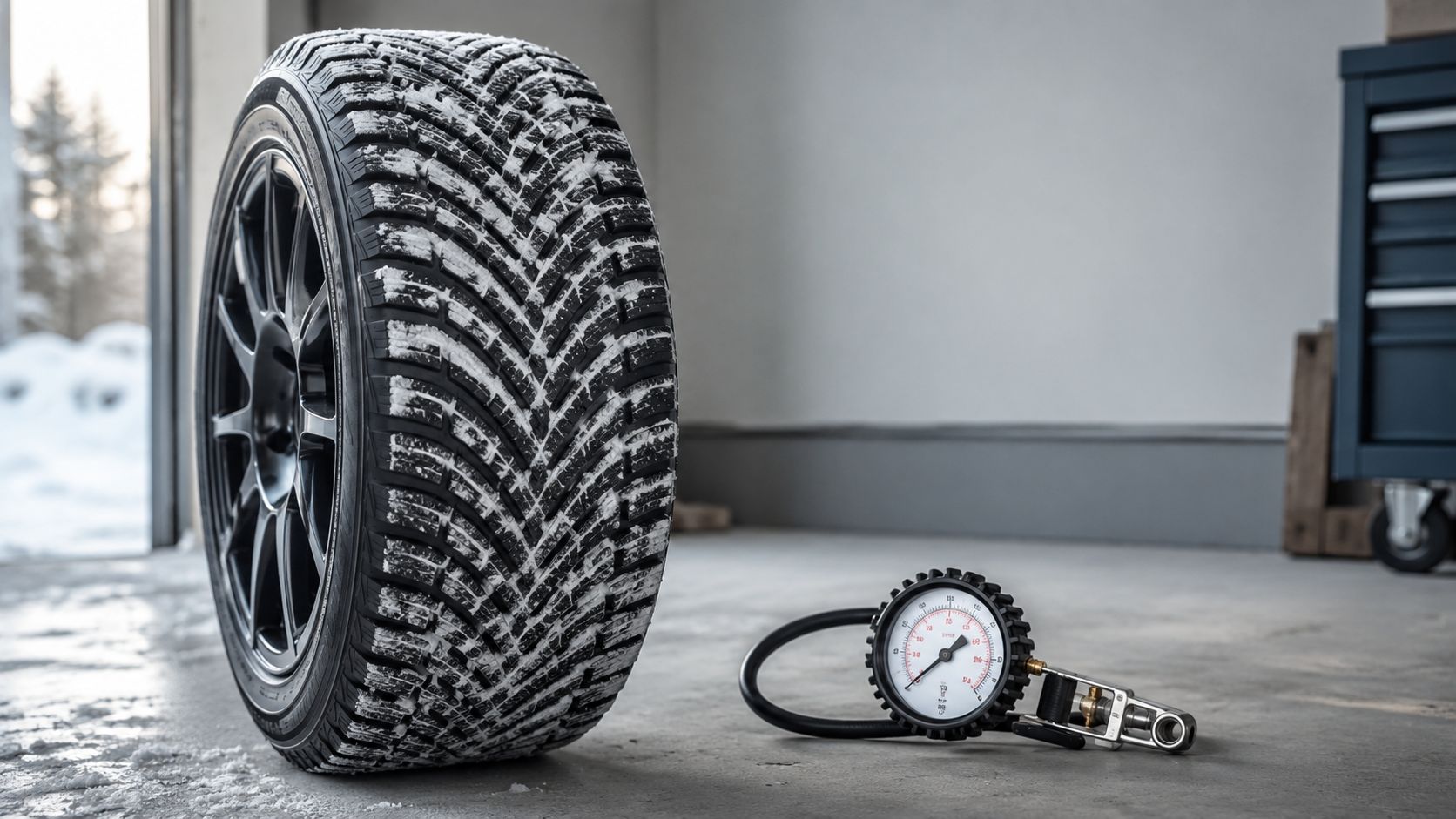
A few PSI can change how a car tracks, brakes, and puts power down on a cold Ontario morning. I see that in the shop every winter. The tyre itself matters, but so does the timing of the swap and the pressure you set after temperatures drop.
In Ontario, winter tyres are not mandatory for most passenger vehicles, but they move high on the priority list as soon as daytime temperatures stay near 7 degrees C or lower. That is the point where winter rubber starts to make sense, even before the first major snowfall. Leave the swap too late and you end up booking during the rush, or driving the first ice event on the wrong compound.
Tyre wear still decides whether a winter set is worth keeping on the car. Once the tread is low, the tyre loses a lot of its ability to clear slush and hold onto packed snow. Drivers usually notice it first at intersections, during lane changes, or when ABS starts working earlier than expected.
What to do, and when to do it
Use this order:
- Late October to early November: Book the winter tyre installation before the first cold snap and before local shops fill up.
- At installation: Measure tread, inspect sidewalls, check bead sealing areas, and set pressures to the door-sticker spec with the tyres cold.
- First week after the swap: Recheck pressure after ambient temperatures settle lower.
- Through winter: Check pressure regularly, especially after sharp temperature swings, because cold weather drops tyre pressure as noted by CAA's winter driving and vehicle preparation guidance.
A few shop-floor trade-offs matter here. All-season tyres can get you through a light winter if tread is strong and you rarely drive outside cleared urban roads. That does not make them equal to a proper winter set in Durham Region slush, black ice, or early-morning highway commuting. If the vehicle leaves before the plows, winter tyres move from “nice to have” to smart risk reduction.
Pressure checks need to be done cold. A reading taken after driving even a short distance can mislead you and leave the tyre underinflated once it cools back down. Underinflation wears the shoulders, hurts braking feel, and can make the car feel slow to respond. Overinflation gives you the opposite problem. Less contact patch, harsher ride, and weaker grip on rough winter pavement.
If you want the seasonal timing right, this winter tyre change timing guide from Carmedics Autowerks lays out when Ontario drivers should book. If your winter service plan also includes mileage-based maintenance, Carmedics Autowerks' guide on how often to change oil is useful for lining up both jobs in one visit.
3. Engine Oil and Filter Change
Cold starts cause a large share of engine wear, and winter is when the wrong oil choice shows up fast. In the shop, I usually see the warning signs as slow cranking, brief valvetrain noise on startup, or an engine that sounds rough for the first few minutes on a cold Ontario morning.
Use the oil grade listed in the owner's manual for your engine and expected winter temperatures. For many Ontario vehicles, that means a lower cold-temperature rating than drivers expect, but the correct answer is always vehicle-specific. Guessing based on another car, a sale rack, or what worked in summer is how engines end up with slow oil flow at startup.
The filter matters just as much.
A cheap filter may still meet the basic fitment spec, but winter puts more pressure on its anti-drainback valve and cold-flow performance. If that filter lets oil drain back while the car sits overnight, the next startup can be harder on internal parts than it needs to be.
A few cases deserve higher priority before the first hard freeze:
- Short-trip driving: Repeated short runs can leave moisture and fuel dilution in the oil because the engine does not stay hot long enough to burn contaminants off.
- Turbocharged engines: Turbos rely on clean oil and quick oil flow. Delayed service raises wear risk.
- Higher-mileage engines: Older seals and minor seepage are easier to catch during a pre-winter oil service than during a January breakdown.
For timing, I'd rank this as an early fall job, ideally before overnight temperatures settle near freezing. If the vehicle is already coming in for tyres or a general inspection, combine the visit and save a second booking. Ontario drivers trying to line up mileage, season, and driving habits can use this oil change interval guide from Carmedics Autowerks to decide whether the service should happen now or before the next cold snap.
If your car is due, book the oil and filter service before winter driving becomes daily driving. It is a simple job, but it directly affects startup protection, engine noise, and how well the vehicle handles months of cold starts and short trips.
4. Coolant System Flush and Inspection
Cooling system problems often show up in winter as weak cabin heat, slow defrost, or an engine that takes too long to reach normal temperature. By the time the car overheats, you missed the early warning signs.
For Ontario drivers, I'd rank coolant service as a mid-fall job. Handle it after the battery and tyres are sorted, but before overnight temperatures stay near freezing. That timing gives you room to deal with a sticky thermostat, a soft upper hose, or a small leak at a clamp before the first real cold snap turns a minor repair into a tow.
What a proper coolant check includes
A useful inspection goes beyond topping up the reservoir. It should include:
- Coolant condition and freeze protection: Check concentration, contamination, and whether the fluid still meets the vehicle's required spec.
- Hoses and clamps: Cold weather hardens weak rubber and exposes clamps that are already losing tension.
- Thermostat operation: A thermostat stuck open can leave you with poor heat and long warm-up times. A thermostat stuck closed can cause a fast overheat.
- Radiator and water pump area: Dried coolant residue, damp spots, or crusting around fittings usually means a leak has started.
Coolant replacement intervals vary by vehicle and fluid type, so a flat two-year rule is too broad. Some cars can go longer with the correct long-life coolant. Some should be serviced sooner because age, contamination, or mixed coolant has already shortened the fluid's life. That is why I tell drivers to treat the maintenance schedule as the starting point, then verify condition in the shop.
If the cabin heat has been inconsistent, the windshield takes too long to clear, or the temperature gauge has started behaving differently, book the inspection now. Those complaints are often cooling-system complaints in disguise. If the heater output is still weak after the coolant system checks out, a separate wiper replacement service at Carmedics Autowerks will not solve visibility by itself, but it is often worth booking at the same visit so the car is ready for slush, salt, and early-dark commutes.
Use only the coolant type specified for the vehicle. Mixing formulas can create sludge, reduce corrosion protection, and damage seals over time. We see that mistake most often on used vehicles and imported models, where prior service history is unclear. If you deal with cross-border parts sourcing or older import platforms, the supply issues described in importing American auto parts to Poland give a good sense of why getting the correct parts and fluids the first time matters.
If your coolant is overdue, the level keeps dropping, or the heater performance changed this fall, book the flush and inspection before winter settles in. This is one of the easier services to schedule ahead, and one of the more frustrating ones to ignore.
5. Wiper Blade and Windshield Washer Fluid Replacement
A dirty windshield can turn a normal Ontario commute into guesswork fast. In winter, visibility usually gets worse one drive at a time. Salt spray, slush, early darkness, and freezing washer lines all stack up before drivers realize how much they are compensating.
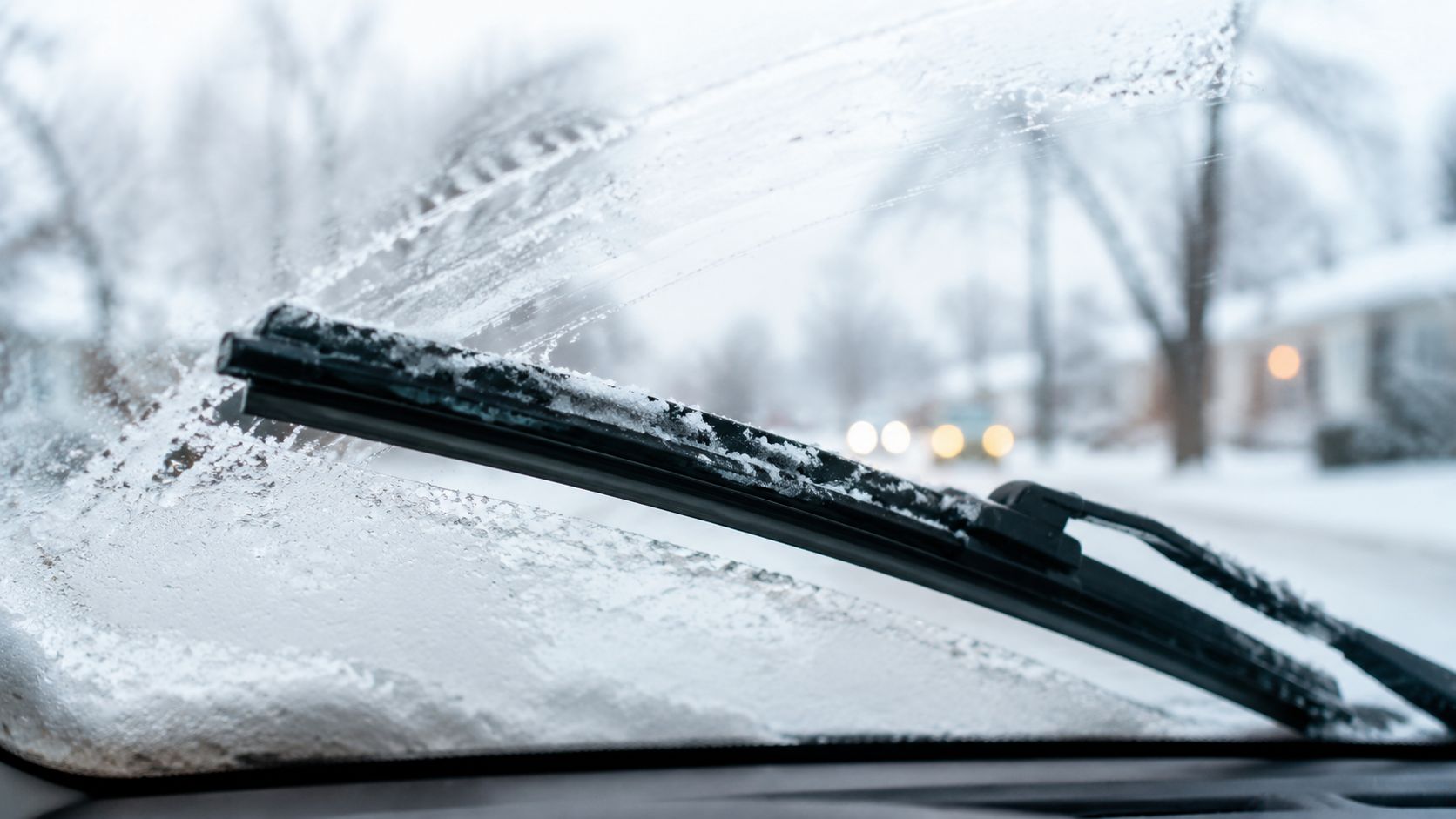
This job belongs on the early winter timeline, not the first snow-day panic list. I tell drivers to check blades and fluid in late fall, then recheck after the first stretch of freezing mornings. If the blades chatter, leave arcs, or smear road film, replace them now. Waiting rarely saves money. It usually buys a few more weeks of poor visibility.
Treat blades and washer fluid as one service
Drivers often replace the rubber and forget the fluid in the tank. That misses half the problem. Summer washer fluid can freeze in Ontario cold snaps, and even a good blade cannot clear a windshield if the nozzles are blocked or the reservoir contains the wrong mix.
A practical inspection takes a few minutes:
- Spray the washers before the weather drops hard: Weak or uneven spray usually points to clogged nozzles, a pinched line, or fluid starting to gel.
- Run a finger along the blade edge: If the rubber feels split, stiff, or rough, the blade is done.
- Lift packed snow and ice off the glass first: Wiper motors and blade frames get damaged when used as ice scrapers.
- Top up with winter-rated washer fluid: Keep an extra jug in the garage or trunk. Ontario roads can empty a reservoir quickly on a wet highway run.
There is a trade-off here. Some drivers try to stretch one more month out of marginal blades because the car is already booked for tires, brakes, or a battery. I get the logic, but visibility parts do not fail gracefully. They tend to become a problem during the exact drive when the windshield is coated in brown spray and the oncoming headlights start reflecting through the smear.
Imported vehicles can add another wrinkle if they use less common blade sizes, specialty beam-style assemblies, or washer components that are not always sitting on every local shelf. If that applies to your car, importing American auto parts to Poland gives a useful look at the supply-chain side of getting the right parts.
If your wipers are leaving streaks, the spray pattern is weak, or the reservoir still has old fluid in it, book a wiper blade replacement service at Carmedics Autowerks before the next cold stretch. This is one of the simplest winter-prep jobs to handle early, and one of the easiest to regret putting off.
6. Brake System Inspection and Servicing
Winter doesn't create brake problems. It exposes the ones already there.
If pads are low, rotors are rusty, slide pins are sticking, or brake fluid has absorbed too much moisture, slick roads magnify every weakness. The car won't forgive delayed service when grip is already limited by slush and ice.
What to inspect before roads get ugly
Listen to the car first. Squealing, grinding, pulling, vibration, or a soft pedal all deserve attention. Then inspect the hardware properly. Pad material, rotor condition, caliper movement, brake hose condition, and fluid quality all matter.
The trade-off is simple. Some drivers want to squeeze one more season out of borderline pads or rotors. That gamble can work in dry summer commuting. In winter, it's the wrong call. Salt, moisture, and repeated stop-and-go driving don't help worn brake parts limp along.
What works in practice:
- Service sticky calipers early: Uneven wear gets worse fast in winter.
- Address rust lips on rotors before they become noise and pulsation issues.
- Flush brake fluid on schedule if the vehicle's due: Moisture and cold don't improve hydraulic performance.
Don't judge winter braking by how the pedal feels in your driveway. Judge it by how the system will respond during one hard stop on a wet, salted road.
If your ABS has been cycling more often lately or the car feels unsettled under light braking, inspect the brakes before blaming the weather alone.
7. Suspension and Undercarriage Protection
Ontario winter is hard on the parts you don't see. Salt spray, wet slush, potholes, and repeated freezing cycles attack the underbody, fasteners, bushings, brake lines, and seams that looked fine in autumn.
Most winter lists tell you to rinse the undercarriage, and that advice is good as far as it goes. The problem is that many drivers don't think about how they wash the vehicle. That detail matters more than people realize.
Cold rinse good, hot water bad
A less-discussed Ontario-specific risk is thermal shock during winter washing. One maintenance source notes that boiling water used for defrosting can shatter glass, and it also raises the broader issue that rapid temperature changes from hot water can crack rubber seals and worsen micro-fractures in paint during the province's wet-salt freeze-thaw cycle (Ontario winter washing and undercarriage risk guidance).
That means the smart move is regular rinsing with appropriate water temperature, not blasting the undercarriage or exterior with very hot water because it “melts everything faster”.
Where rust starts first
Check these zones closely:
- Wheel arches: Salt and packed snow sit here for days.
- Rocker panels: Road spray keeps these wet.
- Suspension mounting points: Early corrosion often hides around brackets and fasteners.
- Underside seams and pinch welds: Small coating failures spread quickly.
If you already own a newer vehicle, this is the point where prevention matters more than repair. Carmedics Autowerks' undercoating service information is worth reviewing if you want local protection before salt season peaks.
8. Emergency Kit Assembly and Vehicle Readiness
An emergency kit isn't mechanical maintenance, but it belongs on every serious winter car maintenance checklist because winter breakdowns rarely happen at a convenient time or in a warm place.
I've seen drivers spend heavily on upgrades and still carry nothing more than an old scraper and a dead flashlight. That's backwards. If the battery dies, a tyre goes flat, or you slide into a snowbank, basic supplies matter more than premium accessories.
Build the kit around actual winter failures
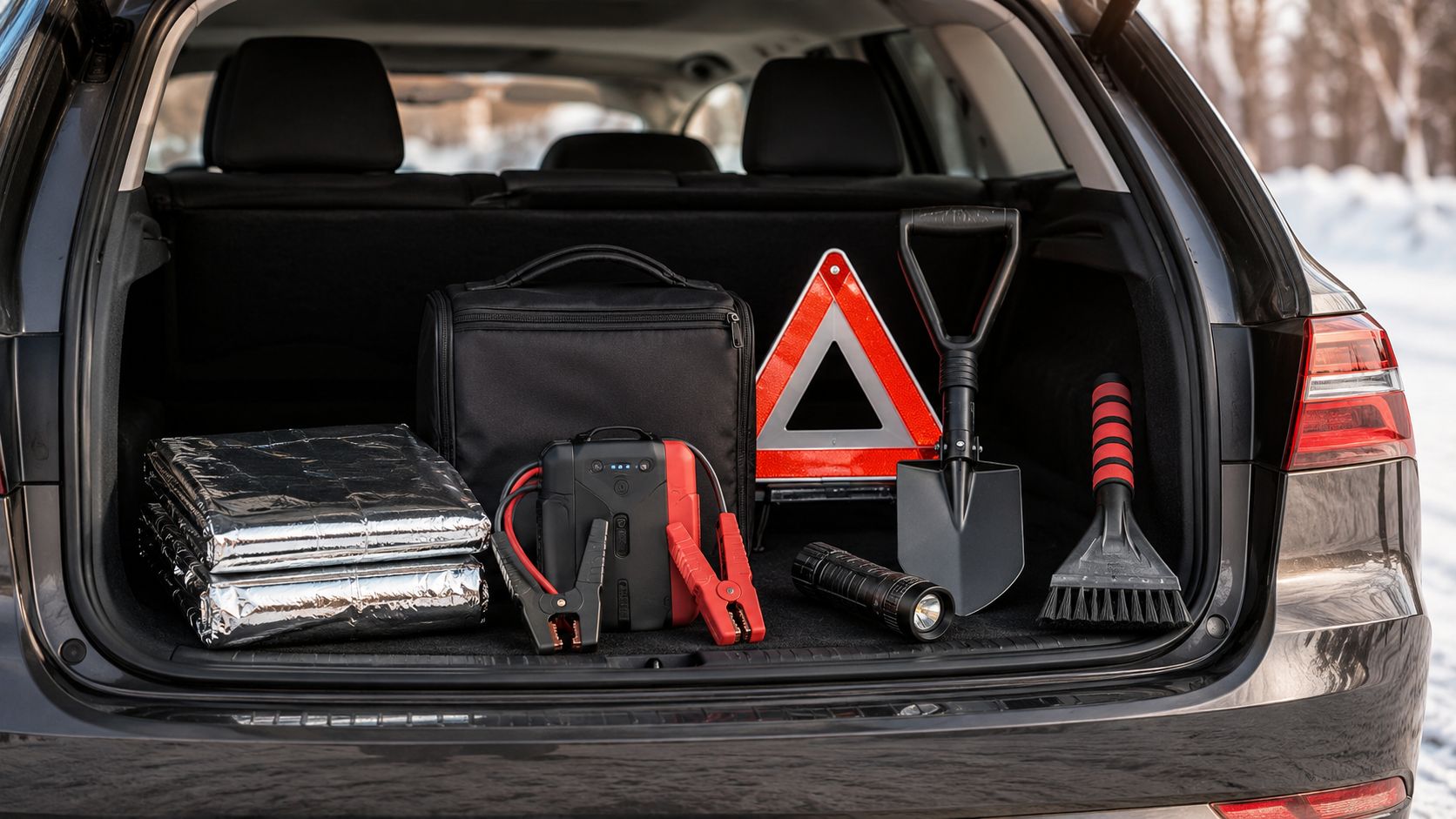
Keep the kit simple and useful:
- Warmth: Blanket, gloves, hat, and extra layers.
- Recovery basics: Small shovel, traction aid, tow strap if you know how to use it.
- Electrical help: Jumper cables or a charged portable booster pack.
- Visibility and safety: Flashlight, reflective markers, and a phone charging cable.
- Waiting it out: Water and shelf-stable snacks.
Also pay attention to where you store the kit. If it's buried under sports gear, tools, and loose cargo, it won't help when you need it on the shoulder in blowing snow.
Vehicle readiness beyond the kit
Keep fuel from getting too low in winter, clear snow fully off the roof and lights, and make sure the heater and defroster work before you need them in traffic. The emergency kit is your backup plan. The primary goal is to make sure you don't need it often.
9. Lighting System Inspection and Upgrade
Winter drives happen in darkness, sleet, road spray, and dirty salt mist. That makes lighting a safety system, not a cosmetic detail.
A lot of drivers only notice lamp problems when a bulb burns out completely. But winter visibility often degrades earlier than that. Cloudy lenses, weak output, moisture inside housings, and poor beam aim all reduce what you can see and how quickly other drivers can read your vehicle.
Do the full walk-around, not just the headlights
Turn everything on and inspect it all. Headlights, tail-lights, brake lights, reverse lights, turn signals, marker lamps, and licence-plate lights all matter in winter because other drivers need to identify your position through spray and darkness.
Pay close attention to:
- Lens haze: Even decent bulbs perform badly behind oxidized plastic.
- Condensation inside housings: Moisture usually means a seal issue.
- Beam alignment: Bright headlights aimed wrong can be as bad as weak ones.
- Salt film on lenses: Clean them often. Winter grime cuts usable light fast.
If you drive rural roads, poorly lit side streets, or early-morning commutes, better bulbs or restored lenses can be a worthwhile upgrade. Just don't install whatever claims the highest output on the box. Use components that suit the housing and maintain a safe beam pattern.
Good winter lighting is less about brightness claims and more about clean lenses, correct aim, and reliable operation every day.
10. Transmission Fluid and Drivetrain Service
Transmission and drivetrain issues usually start as “small” changes. A firmer shift on cold mornings. A slight delay engaging drive. Extra driveline noise in an AWD vehicle. In winter, those symptoms deserve attention sooner, not later.
Cold weather changes how fluids behave, and poor traction puts extra stress on driveline components. If your vehicle already has overdue fluid service, winter tends to make that neglect much more obvious.
What to watch for
Automatic transmissions should shift consistently once the vehicle begins warming. Manual transmissions should engage gears without unusual stiffness beyond normal cold feel. AWD and 4WD systems should operate smoothly and predictably, without binding, clunks, or warning lights.
Good winter habits here are straightforward:
- Check for leaks on the ground where you park.
- Use manufacturer-specified fluids only.
- Don't hammer the throttle on a cold drivetrain.
- Service transfer case and differential fluids on schedule if your vehicle uses them.
This section matters even more for SUVs, performance cars, and anything with all-wheel drive. Drivers often focus on tyres and forget the system sending power to them also needs clean fluid and proper operation.
If shifting has changed recently, don't assume it's “just because it's cold”. Sometimes it is. Sometimes it's early warning.
10-Point Winter Car Maintenance Comparison
| Service | 🔄 Complexity | ⚡ Speed / Efficiency | Resources / Cost | ⭐ Expected outcomes / Key advantages | 💡 Ideal use cases / Tips |
|---|---|---|---|---|---|
| Battery Testing and Replacement | 🔄 Low–Moderate, simple tests; replacement adds steps | ⚡ Fast, testing 10–30 min; replacement 30–60 min | Multimeter, load tester, replacement battery; $100–$300 | ⭐ High, prevents winter no-starts; extends battery lifespan; 📊 reduces roadside failures | 💡 Test vehicles >3 years before winter; clean terminals; consider premium battery |
| Winter Tire Installation and Pressure Adjustment | 🔄 Moderate, mounting, balancing, correct pressure | ⚡ Moderate, full set install 60–120 min | Set of tires $600–$1,500, mounting/balancing, storage | ⭐ Very high, 25–40% shorter braking on snow; 📊 lowers accident rates substantially | 💡 Install by mid-Nov; check pressure weekly; rotate every 8,000–10,000 km |
| Engine Oil and Filter Change | 🔄 Low, routine maintenance | ⚡ Fast, 20–30 min typical | Oil, filter, disposal; $30–$75 (synthetic higher) | ⭐ High, better cold-start protection; extends engine life; 📊 improves fuel efficiency | 💡 Use winter-grade synthetic (e.g., 0W‑xx); follow manufacturer intervals |
| Coolant System Flush and Inspection | 🔄 Moderate, requires proper draining and testing | ⚡ Moderate, 45–90 min depending on system | Coolant, testing tools, proper disposal; $75–$150 service | ⭐ High, prevents freezing and corrosion; 📊 maintains operating temperature | 💡 Maintain 50/50 mix; flush every 2–3 years or per manufacturer |
| Wiper Blade & Windshield Washer Fluid Replacement | 🔄 Low, simple swap and refill | ⚡ Very fast, 5–15 min | Winter blades $20–$50, -40°C washer fluid | ⭐ High, preserves visibility; reduces visibility-related accidents; 📊 quick safety gain | 💡 Replace before winter; use -40°C fluid; keep spare fluid in trunk |
| Brake System Inspection and Servicing | 🔄 Moderate–High, inspection simple, repairs can be complex | ⚡ Variable, inspection 30–60 min; service 1–3+ hrs | Pads/rotors $300–$1,000+, fluid, specialized tools | ⭐ Very high, critical safety; reduces accident risk 35–45%; 📊 prevents catastrophic failures | 💡 Inspect pre-winter; replace pads <3mm; flush fluid every 2–3 years |
| Suspension & Undercarriage Protection | 🔄 Moderate, coating application and detailed inspections | ⚡ Moderate, inspection 30–60 min; coatings take longer | Protective coatings $150–$400, lift/ramp, rust treatments | ⭐ High, reduces corrosion; extends vehicle lifespan; 📊 preserves resale value | 💡 Apply before winter; rinse undercarriage regularly; address corrosion early |
| Emergency Kit Assembly & Vehicle Readiness | 🔄 Low, assemble and maintain supplies | ⚡ Immediate, prep 30–60 min; use when needed | Kit items $75–$150, trunk storage space | ⭐ High, improves survival and self-recovery; 📊 resolves many minor emergencies | 💡 Check monthly; rotate perishables; store kit accessibly in trunk |
| Lighting System Inspection and Upgrade | 🔄 Low–Moderate, inspection easy; upgrades may require install | ⚡ Fast–Moderate, inspection 15–30 min; upgrades 1–3 hrs | Bulbs/LED kits $200–$800, alignment tools | ⭐ High, 40–60% better visibility with modern upgrades; 📊 reduces night-time collisions | 💡 Align beams; clean lenses; keep spare bulbs; consider LED upgrade |
| Transmission Fluid & Drivetrain Service | 🔄 Moderate–High, correct fluid and procedures required | ⚡ Moderate, 30–120 min depending on service depth | Fluid/filter, specialized fluids for AWD; $100–$500+ | ⭐ High, smoother shifting; prevents costly failures; 📊 extends transmission life by large margins | 💡 Use manufacturer-recommended fluid; warm up before heavy use; check fluid condition monthly |
Drive Confidently All Winter Long
A good winter car maintenance checklist is really a sequence of decisions. Handle the no-start risks first. Then deal with traction, visibility, braking, fluid condition, and rust prevention before winter settles in. That order gives you the biggest safety payoff early, and it helps you avoid stacking several small problems into one expensive mid-season repair.
For Ontario drivers, a few points carry extra weight. Keep winter tyres above the tread depth safety benchmark noted earlier. Check tyre pressure regularly during cold spells. Replace wiper blades as soon as they start streaking, skipping, or squeaking. Treat coolant and winter-weight oil as core maintenance, not optional extras. And don't ignore the underside of the vehicle, because Whitby roads can coat a car with wet salt in a single commute.
The trade-offs are real. You can postpone some cosmetic work until spring. You shouldn't postpone battery testing, brake concerns, poor wipers, or worn winter tyres. Those are the jobs that affect whether the car starts, stops, turns, and lets you see.
For newer vehicles, winter prep also protects long-term value. Corrosion control, proper fluid service, and early attention to minor faults keep a good vehicle from aging fast in a harsh climate. That matters whether you plan to keep the car for years or want to preserve its condition from season to season.
If you drive short trips, own a hybrid or EV, or keep a performance or luxury vehicle through winter, don't rely on generic advice alone. Those vehicles often need closer attention to charging behaviour, battery condition, tyre choice, and fluid quality. A quick, informed inspection before serious cold arrives is usually cheaper and easier than diagnosing a roadside failure later.
Carmedics Autowerks Inc is one local option in Whitby for drivers who want winter prep, general repairs, fleet maintenance, corrosion protection, and appearance-related services handled under one roof. If your vehicle still needs a battery check, winter tyre swap, oil service, wiper replacement, undercoating, or a broader pre-winter inspection, booking it before the next cold snap is the practical move.
Winter driving in Ontario is demanding, but it doesn't have to be unpredictable. Prep the car early, keep up with the small checks that matter, and fix weak points while they're still minor. That's how you get through the season with fewer surprises and a vehicle that feels ready every morning.
Book a winter service visit with Carmedics Autowerks Inc if you want a Whitby shop to inspect the essentials before the weather gets worse. They handle general auto repair, fleet maintenance, rust protection, paint protection film, collision repair, and appearance services for cars and SUVs, which makes them a practical local choice when your winter car maintenance checklist turns into real work.