

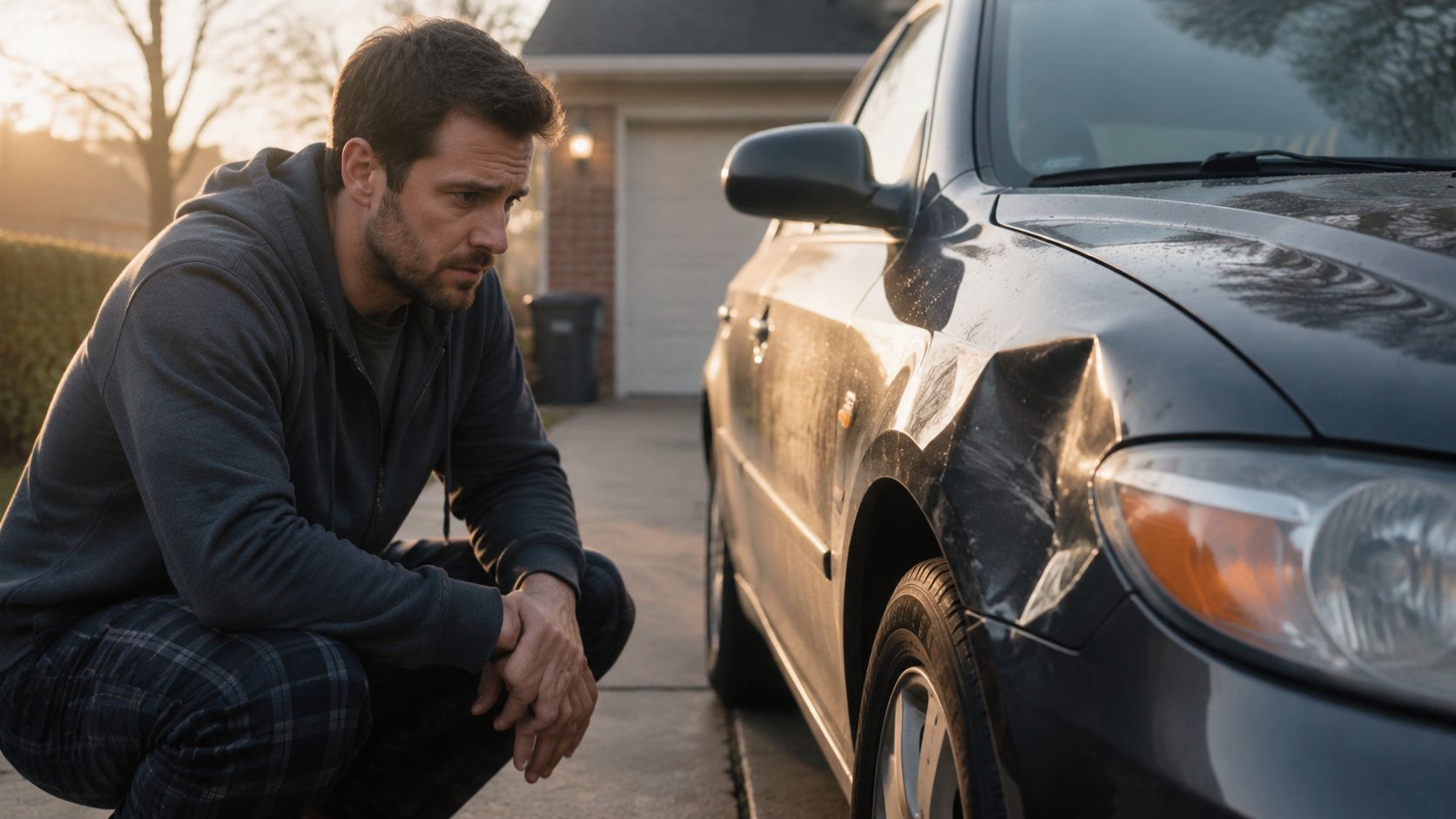
You walk out to your car, coffee in hand, and spot it immediately. A crease in the rear door. A scraped bumper corner. Maybe worse, a front end that looks “mostly fine” until the bonnet gap on one side tells you something moved underneath. That sinking feeling hits fast, especially when the car isn't just transportation. It's something you chose carefully, maintain properly, and enjoy driving.
That moment is why people ask what is auto body repair, and why the usual answer misses the point. It isn't just dent removal or repainting. Done properly, it's the craft of restoring a vehicle's shape, finish, fit, structural integrity, and safety systems after damage. On older cars, that often meant metal, filler, primer, paint, and alignment. On newer cars, it also means sensor positioning, camera targets, radar brackets, substrate-specific repair methods, and knowing when a panel shouldn't be repaired at all.
The Moment Every Car Owner Dreads
A lot of damage looks cosmetic until the car is stripped and measured. That's the part many owners don't see. A bumper cover can spring back and hide a shifted absorber. A quarter panel can hold a sharp line and still have stretched metal. A bonnet can latch and still sit wrong because the support underneath moved in the impact.
That's why auto body repair today sits in a much bigger lane than is commonly assumed. The U.S. collision repair market was valued at roughly USD 207 billion in 2025, with projected growth tied to more complex repairs, higher material costs, and the spread of advanced safety systems on modern vehicles, according to the U.S. Bureau of Labor Statistics data referenced here. Bigger market, yes. More important for owners, the work itself has become far more technical.
It's not only about how the car looks
A proper repair has three jobs:
- Restore appearance so panel gaps, paint finish, gloss, and colour match make sense in daylight, shade, and artificial light.
- Restore structure so the car tracks correctly and damaged areas don't keep stress locked into the shell.
- Restore function so everything behind the outer skin works as intended, from parking sensors to crash-related hardware.
If you've just had a collision and are still working through the immediate aftermath, a practical guide to post-car accident procedures can help you sort the steps before the repair process even starts.
Practical rule: If the damage changed a panel gap, wheel position, boot alignment, bonnet fit, or bumper mounting, assume the repair is more than cosmetic until a shop proves otherwise.
From Dings to Damage A Look at Common Repair Types
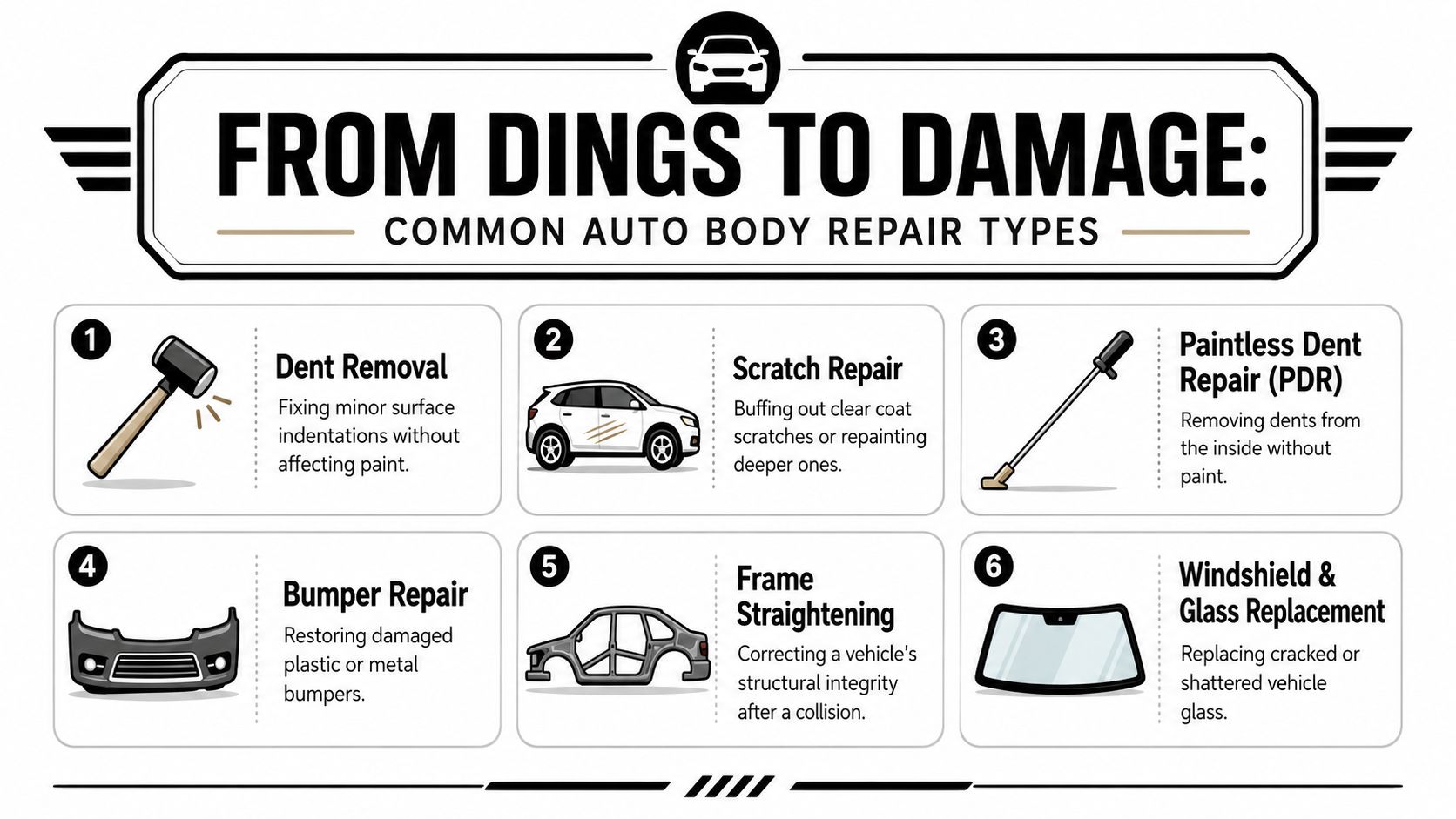
When people ask what is auto body repair, they're usually trying to figure out which category their damage falls into. That matters because the right method saves time, preserves original material where possible, and avoids bad repairs that look fine for six months and fail later.
Minor dents and paintless dent repair
Small dents from doors, shopping trolleys, or light hail often suit paintless dent repair, usually called PDR. Think of it as outpatient surgery. The technician works the metal from behind with rods and picks, or pulls from the outside with glue tabs, without disturbing the factory finish.
PDR works best when the paint film is intact and the metal hasn't stretched too far. Sharp creases, edge damage, and impacts across body lines get trickier fast. A good PDR technician knows when to stop before turning a repairable dent into a high spot and fractured clear coat.
Scratch repair and refinishing
Not every scratch needs paint. Some marks live in the clear coat and can be corrected with polishing. Others cut into the basecoat or primer and need refinishing. For these, a clean prep process matters more than people realise.
A proper refinish job isn't “spray and pray.” It's substrate prep, feather-edging, primer choice, blocking, colour matching, blending, and controlling how the clear lays down. If you want a better sense of what careful paint correction and refinishing involve, this overview of automotive paint repair services is useful.
Panel repair versus panel replacement
The complexity of trade-offs becomes evident. Saving an original panel is often worth doing, but only if the panel still has enough integrity to justify the labour. Industry guidance notes that if dent depth exceeds 25 to 30% of the panel radius, or if metal thinning exceeds 3 to 5% of original thickness, replacement is often the safer call to maintain strength and proper repair standards, as outlined in this automotive body repair technician reference.
That's the difference between metal finishing and wishful thinking.
| Repair type | Best use | What can go wrong |
|---|---|---|
| PDR | Shallow dents with intact paint | Overworking the metal, cracked paint, visible highs |
| Conventional panel repair | Moderate damage where the panel still holds integrity | Excess filler, poor contour, future cracking |
| Panel replacement | Deep damage, stretched metal, compromised structure | Cheap fitment parts, poor weld prep, bad corrosion protection |
Bumper repair and plastic work
Bumpers deserve their own category because they're not just cosmetic covers anymore. They can house parking sensors, radar components, mounting tabs, absorbers, grilles, and trim pieces that affect fit and function.
Plastic repair can work very well on the right damage. But torn tabs, distorted mounting points, and hidden sensor bracket movement can turn a “small bumper job” into a more involved repair.
Structural and frame-related work
If PDR is outpatient surgery, frame straightening is setting a broken bone. You don't eyeball it. You measure it, pull it in sequence, relieve the stress, and verify the shape again.
That applies to unibody cars just as much as full-frame vehicles. Rails, aprons, floor sections, core supports, and suspension pick-up points all matter. Once those move, everything downstream does too.
A car can drive straight and still be dimensionally wrong. Straight on the road isn't the same as straight on a measuring system.
Your Car's Journey Through the Repair Process
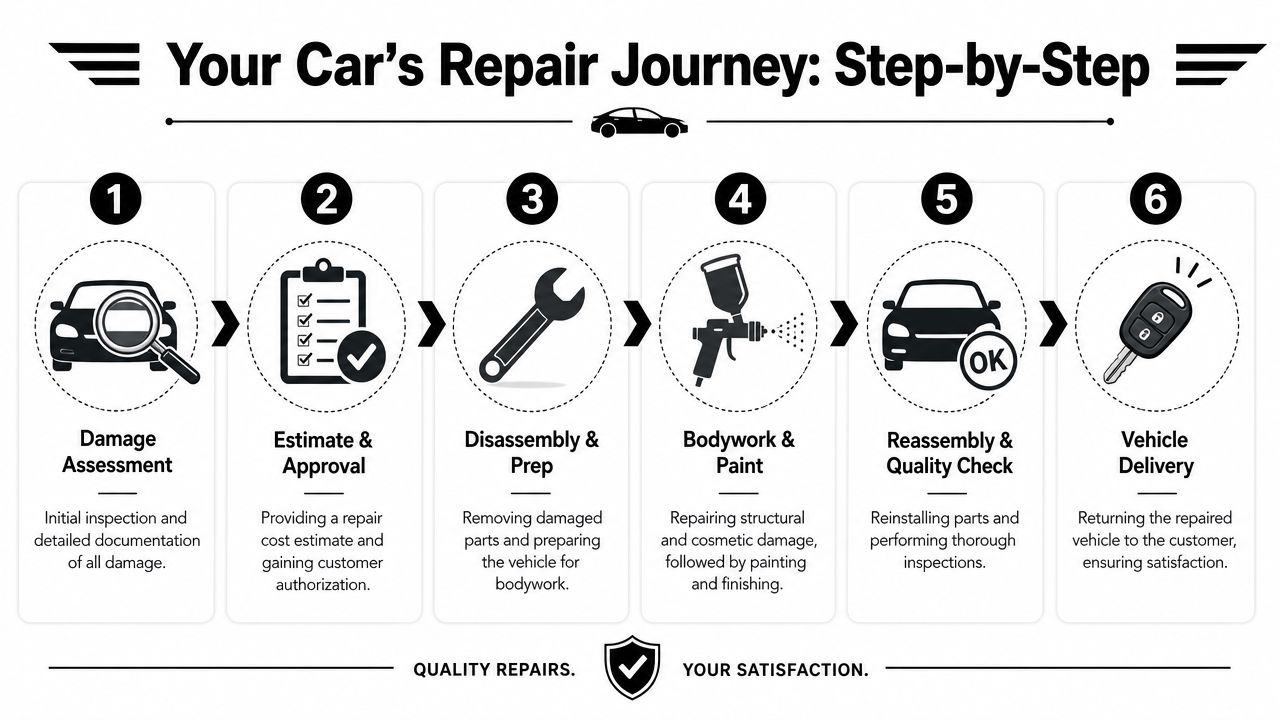
A good shop doesn't just “take the car in and fix it.” The repair moves through a sequence, and each phase exists for a reason. When that sequence gets rushed, corners show up later as paint mismatch, wind noise, poor fitment, or warning lights.
Assessment, estimate, and teardown
The first look is never the whole story. The estimator documents visible damage, checks panel fit, notes warning lights, and builds a preliminary plan. After approval, the car is disassembled enough to expose hidden damage.
That teardown stage is where surprises live. Broken retainers, bent brackets, damaged absorber foam, shifted supports, wiring issues, and concealed panel deformation often don't show until trims and covers come off.
Structural correction before cosmetics
If the shell is out, bodywork waits. Structure comes first. Modern shops rely on computerised 3D measuring systems because dimensional accuracy isn't optional. Shops using those systems for frame straightening can reduce alignment-related rework by 37 to 45% compared with manual methods, while verifying alignment within the essential ±3 mm manufacturer tolerance, as described in this repair process reference from Car-O-Liner.
Due to metal's memory, pulling a rail once and calling it done isn't sufficient. Good technicians measure, pull in stages, let the structure settle, and recheck it across multiple loading cycles to confirm the deformation is entirely gone.
Metal, filler, primer, and paint
Once the structure is right, the repair moves to panel work. That might mean reshaping metal, replacing a panel, test-fitting new parts, and establishing clean body lines before any primer goes on.
Painting is its own controlled process. Panels get prepped, sealed where required, sprayed in a clean environment, and baked or cured according to the product system. Then comes denibbing, polishing if needed, and rechecking the finish under different light sources.
For owners who understand boats, the mindset is similar to keeping your vessel seaworthy. You don't just cover visible damage. You repair the substrate properly so the finish has something sound underneath it.
Reassembly and final checks
Quality reassembly distinguishes disciplined shops from careless ones. Reassembly means clips, seals, liners, undertrays, trims, lamps, sensors, and fasteners all go back where they belong, without forcing fitment to hide a problem.
A typical professional workflow looks like this:
- Initial documentation with photos, notes, and visible damage mapping.
- Authorisation and parts planning so the job doesn't stall halfway through.
- Disassembly to reveal the full scope.
- Structural correction if the shell or support sections moved.
- Body repair and refinishing after fit is verified.
- Reassembly, scan, and quality control before handover.
If you're comparing repair providers, it helps to look beyond bodywork alone and understand the broader auto repair capabilities a shop offers, especially when collision damage overlaps with mechanical or electronic concerns.
Workshop reality: The fastest repair isn't the one delivered first. It's the one that doesn't come back for wind noise, sensor faults, paint defects, or fitment issues.
The Hidden Complexities of Modern Auto Body Work
The old definition of body repair was simple. Fix the metal, paint the panel, line up the gaps, and send it out. That definition doesn't survive contact with modern cars.
PPF changes the repair plan
Paint Protection Film, or PPF, changes how a technician approaches damage long before paint gets mixed. Film edges, wrapped sections, trimmed seams, and adhesive residue all affect disassembly and refinishing. If a coated or filmed panel is partially repaired, the shop has to decide whether to remove the film entirely, preserve adjacent sections, or refinish and reapply so the finish doesn't look patched.
That's why the presence of PPF should be discussed early, not after the estimate is written. If your car has film on the bonnet, wings, bumper, mirror caps, rocker sections, or behind the arches, the repair sequence changes. So does the final bill.
ADAS makes small repairs bigger than they look
The second hidden layer is ADAS, short for Advanced Driver-Assistance Systems. Cameras, radar units, ultrasonic sensors, and related modules often sit behind bumpers, grilles, mirrors, and windscreens. A minor impact can shift a bracket, alter a mounting angle, or disturb a sensor's relationship to the road.
Properly calibrated ADAS can reduce certain collision types by up to 20 to 30%, and consumer guides often miss why a bumper repair may also require a $400 to $600 recalibration, as noted in this Lincoln Tech discussion of modern auto body work. That's not fluff on the invoice. It's part of restoring function after the body repair is complete.
If a repair touches electrical connectors, sensor mounts, harnesses, or modules, the work often overlaps with diagnostic and electrical repair considerations. On newer vehicles, body and electrical work are tied together far more often than owners expect.
- A bumper cover isn't just plastic anymore. It may be a mounting face for safety hardware.
- A clean paint finish isn't the end of the job. The car also has to interpret the world correctly through its sensors.
- A warning-free dash doesn't always prove calibration. Some systems need proper post-repair procedures even when no obvious fault appears.
Decoding the Bill Repair Costs and Insurance Basics
The estimate usually shocks people for one reason. They think they're paying for a dent and some paint. In reality, they're paying for labour hours, materials, disassembly, fitting, corrosion protection, possible calibrations, and sometimes the cost of restoring add-ons the car had before the impact.
What drives the cost
A repair bill changes based on several real-world factors:
- Labour intensity. A shallow scrape and a crushed panel might occupy the same area but require very different amounts of teardown, reshaping, prep, and refit.
- Parts choice. OEM parts, aftermarket parts, recycled parts, and repair-versus-replace decisions all affect fit, finish, and cost.
- Material stack. Primer, seam sealer, basecoat, clear, blending materials, masking supplies, and corrosion protection products add up quickly.
- Vehicle extras. Cameras, sensors, trim packages, textured finishes, and coated surfaces complicate the job.
One overlooked cost driver is PPF. Consumer explanations of collision repair often fail to explain how film complicates panel removal and refinishing, even though PPF-friendly body repair has become a bigger issue in high-value vehicle markets, as discussed in this auto collision glossary entry. If your car had protection before the impact, restoring the car properly may include restoring that protection too.
A smart way to prepare is to ask the shop to separate the estimate into categories such as repair labour, refinish labour, parts, materials, calibrations, and protective film or coating restoration. That makes the trade-offs visible.
Where insurance fits
Insurance adds another layer, but the basics are straightforward. The insurer may inspect the damage, review the estimate, and approve or negotiate repair items. Your deductible affects what you pay directly, and the insurer may suggest a preferred network shop.
That suggestion isn't the same as a command. Vehicle owners generally focus on where the repair quality, communication, and repair method make sense for their car. If you're also trying to understand the bigger financial side of a claim, this guide to Haddad & Associates P.A. car accident valuation helps explain how people think through the value side after a crash.
If you're weighing replacement parts, fitment, and long-term finish quality, this breakdown of OEM vs aftermarket body parts is one of the most useful conversations to have before authorising repairs.
The cheapest estimate often assumes the most favourable version of the job. The truest estimate usually appears after teardown.
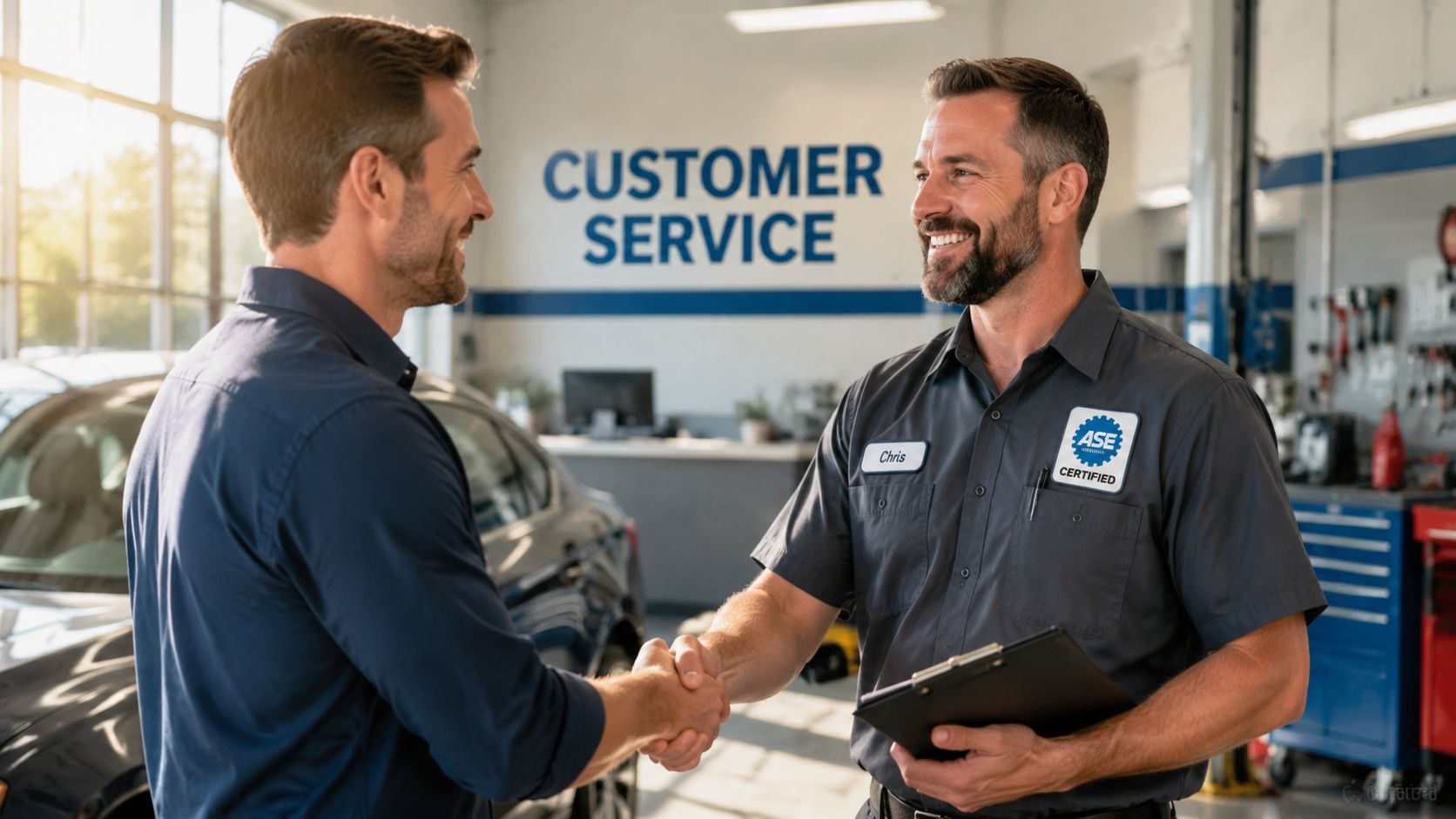
Choosing Your Repair Partner in Whitby and the GTA
The right shop protects you from two bad outcomes. The obvious one is a poor repair. The less obvious one is a repair that looks good on delivery day but starts showing its shortcuts later through mismatched texture, rust at the edge of a repair, failed trim clips, uneven gaps, or unresolved electronic issues.
What to look for in a serious shop
Clean floors don't prove good workmanship, but organisation matters. So does how the shop talks about your car. A solid repair partner should be comfortable discussing measuring systems, repair documentation, panel repair limits, refinish process, corrosion protection, and post-repair calibration needs.
Ask practical questions, not marketing questions.
- How do you verify structural accuracy after a collision repair?
- When do you repair a panel and when do you replace it?
- What happens if hidden damage appears after disassembly?
- How do you handle PPF or ceramic-coated surfaces during refinishing?
- What is your process for ADAS checks and calibration when sensors are involved?
- What workmanship or paint warranty do you provide, and what does it cover?
Signs the answers are weak
Some red flags are easy to miss because they sound confident.
| If they say this | Read it this way |
|---|---|
| “We'll make it look like new.” | They may be focused on appearance, not structure or system function. |
| “It's only a bumper job.” | They may be ignoring sensors, brackets, absorbers, or fitment checks. |
| “We hardly ever need calibration.” | That can mean they're skipping procedure, not saving you money. |
| “Aftermarket fits the same.” | Sometimes it does. Sometimes it absolutely doesn't. |
A local option for owners who care about the details
In Whitby and the GTA, owners of newer or enthusiast-kept vehicles usually want a shop that understands both collision work and modern finish protection. One local option is Carmedics Autowerks' auto body repair service, which aligns with the kind of mixed workflow many newer vehicles need, including body repair, refinishing, and PPF-related considerations.
That matters because the best repair partner for a modern car isn't just a body shop in the old sense. It's a shop that understands how paint, substrates, trim systems, sensors, and post-repair finishing all intersect.
Good body repair restores confidence in the car. Great body repair restores confidence in the people who touched it.
Restoring More Than Just a Car
So, what is auto body repair? On a modern vehicle, it's the disciplined process of bringing back fit, finish, structure, and safety function after damage. That includes the visible work everyone notices and the invisible work that determines whether the car is right.
For today's cars, that definition has expanded. PPF changes how panels are removed and refinished. ADAS changes what “finished” now means. Materials, sensors, coatings, and calibration have turned body repair into a craft that sits somewhere between metalwork, refinishing, diagnostics, and quality control.
Owners who understand that usually make better decisions. They ask better questions, read estimates more clearly, and choose repairers who don't treat the car like a simple dent-and-paint job. That's the difference between covering damage and restoring the vehicle properly.
If your vehicle needs collision repair, refinishing, PPF-aware bodywork, or a second opinion on what a proper repair should include, Carmedics Autowerks Inc in Whitby offers services for cars and SUVs with a focus on practical, modern repair needs.