

Full front-end PPF in Canada usually lands around $1,500 to $3,000, while a full-vehicle wrap commonly falls around $4,000 to $9,000+. The biggest reason the price moves is coverage. Protecting a bumper, hood, fenders, and mirrors is a very different job from wrapping every painted panel on the vehicle.
If you're in Whitby and you've just bought a new car, you already know the feeling. You wash it, park far away from everyone else, and then the first trip on the 401 puts a chip in the front bumper. That's when you might stop asking whether PPF is worth considering and start asking a simpler question. How much does PPF cost, and why do quotes vary so much?
The short answer is that package size matters, but it's not the whole story. In Durham Region, the gap between a basic quote and a premium quote usually comes down to three things: how much of the car is being covered, how much prep the paint needs before film goes on, and how skilled the installer is at making the film disappear instead of just sticking it on.
Your Guide to Paint Protection Film Pricing
Most owners don't start by wanting “a package.” They start by wanting to stop the damage on the front of the car. That makes sense. The bumper, front edge of the hood, mirrors, and front fenders take the worst of road debris, salt, and daily highway driving around Whitby, Oshawa, Ajax, and the GTA.
Neutral installer guidance puts a full front-end PPF package at about $1,500 to $3,000, and a full-body PPF wrap at about $3,000 to $9,000+, depending on the vehicle, its condition, and the scope of coverage, as outlined in this paint protection film cost breakdown. That range is broad for a reason. PPF pricing isn't standardised across shops, and it shouldn't be. A clean, straightforward sedan takes less effort than a vehicle with aggressive curves, deep vents, sharp panel edges, or paint that needs correction before installation.
Practical rule: If two quotes are far apart, don't assume one shop has the same process at a better deal. Ask what prep work, edge wrapping, panel coverage, and installation method are actually included.
A lot of generic guides talk about price as if film were a commodity. It isn't. In a real shop environment, the invoice covers surface preparation, fitment, trimming strategy, alignment, contamination control, and how much time the installer spends refining the finish. That's why a local owner comparing options should focus less on the cheapest number and more on what the finished job will look like six months later.
If you want to compare package expectations against another regional perspective, this overview on PPF for car owners in North Atlanta gives a useful outside-market frame of reference. For Durham drivers who want to see what local service options look like, paint protection near Whitby is a practical place to start.
PPF Packages Explained From Bumper to Full Vehicle
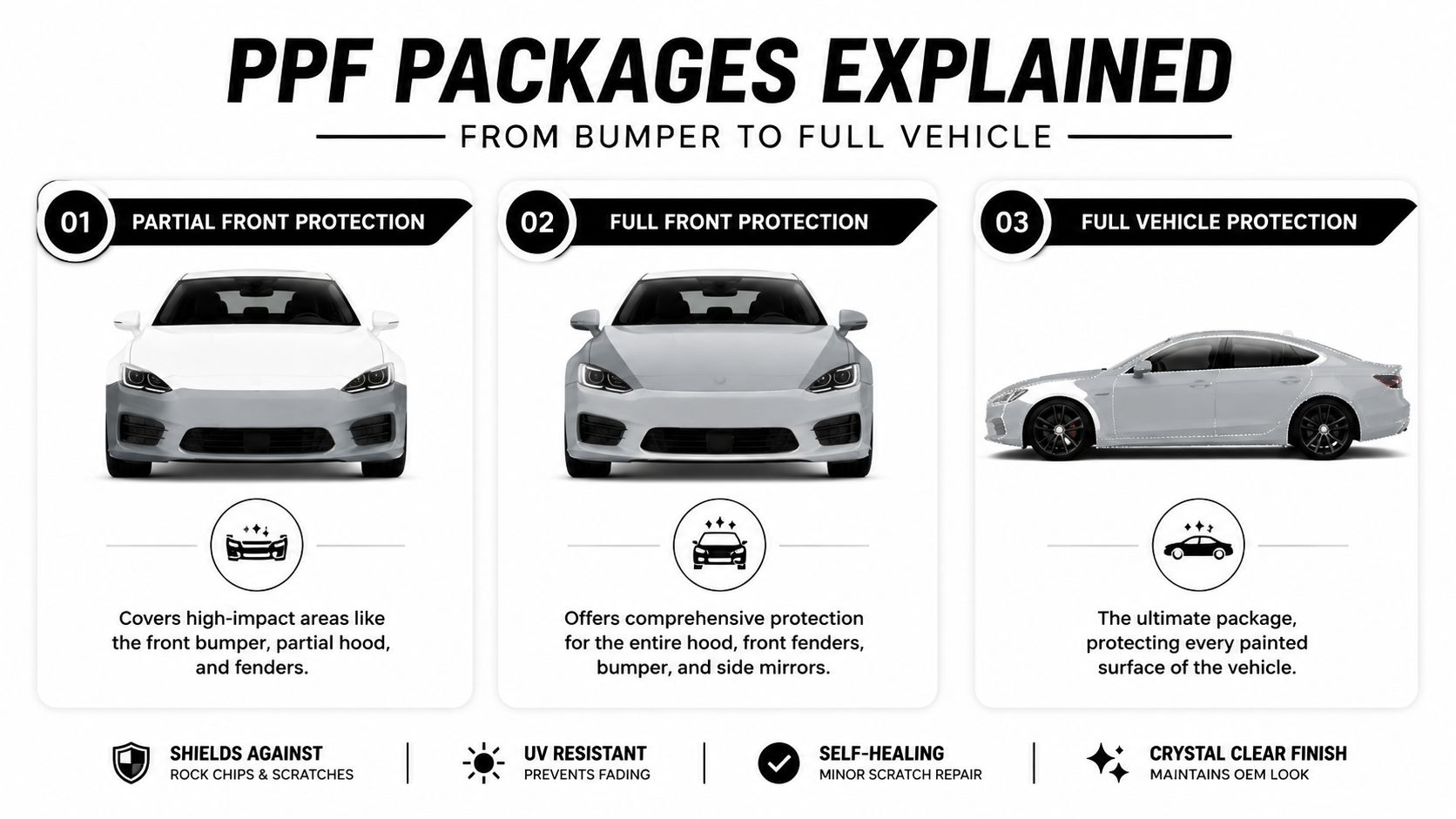
People often ask about PPF cost as if there's one price. There isn't. There are usually three common buying decisions. Protect the high-impact areas only, protect the whole front clip, or protect the entire painted vehicle.
What each package usually includes
A partial front package is the entry point. It typically covers the front bumper, part of the hood, and part of the fenders. Some shops and owners call this a track pack or high-impact package. It's aimed at drivers who want some chip protection without committing to a full-front spend.
A full front package is what most enthusiasts choose. It usually includes the full hood, full front bumper, both front fenders, and side mirrors. This is the package that removes the visible line you get on a partial hood install, and it protects the panels that take the most abuse in daily driving.
A full vehicle package extends that logic to every painted panel. It's the right fit for owners who want maximum preservation, have a higher-value vehicle, or hate the idea of leaving the doors, quarters, or rear bumper exposed after protecting the front.
Independent Canadian market guidance places partial-front installs around $800 to $1,500, full-front packages around $1,500 to $2,500, and full-vehicle coverage around $4,000 to $8,000+, based on package size and labour intensity in this Canadian PPF pricing guide.
PPF Coverage Packages and 2026 Cost Estimates
| Package | Typical Coverage | Estimated Cost (CAD) | Best For |
|---|---|---|---|
| Partial Front | Front bumper, partial hood, partial fenders | $800 to $1,500 | Daily drivers on a tighter budget |
| Full Front | Full hood, full fenders, front bumper, mirrors | $1,500 to $2,500 | Most new car owners and highway drivers |
| Full Vehicle | All painted exterior panels | $4,000 to $8,000+ | Long-term ownership, performance cars, high-value vehicles |
Which package makes sense in Whitby
If your car sees regular highway driving, a full front usually offers the most balanced spend. It covers the areas that get hit. For many Durham Region drivers, that's the sweet spot because it protects the front clip without moving into full-wrap pricing.
If the car is leased, a commuter, or older, partial front can still make sense. You just need to be comfortable with the visible transition line on the hood or fenders, because that's the trade-off.
For owners of newer luxury, performance, or rare vehicles, full vehicle coverage changes the ownership experience. You stop worrying about every wash, every gravel lot, and every passenger brushing a bag against the door.
If you want to compare coverage options and service details locally, paint protection film services in Whitby lays out the kinds of applications drivers usually consider.
The Key Factors That Determine Your Final PPF Cost
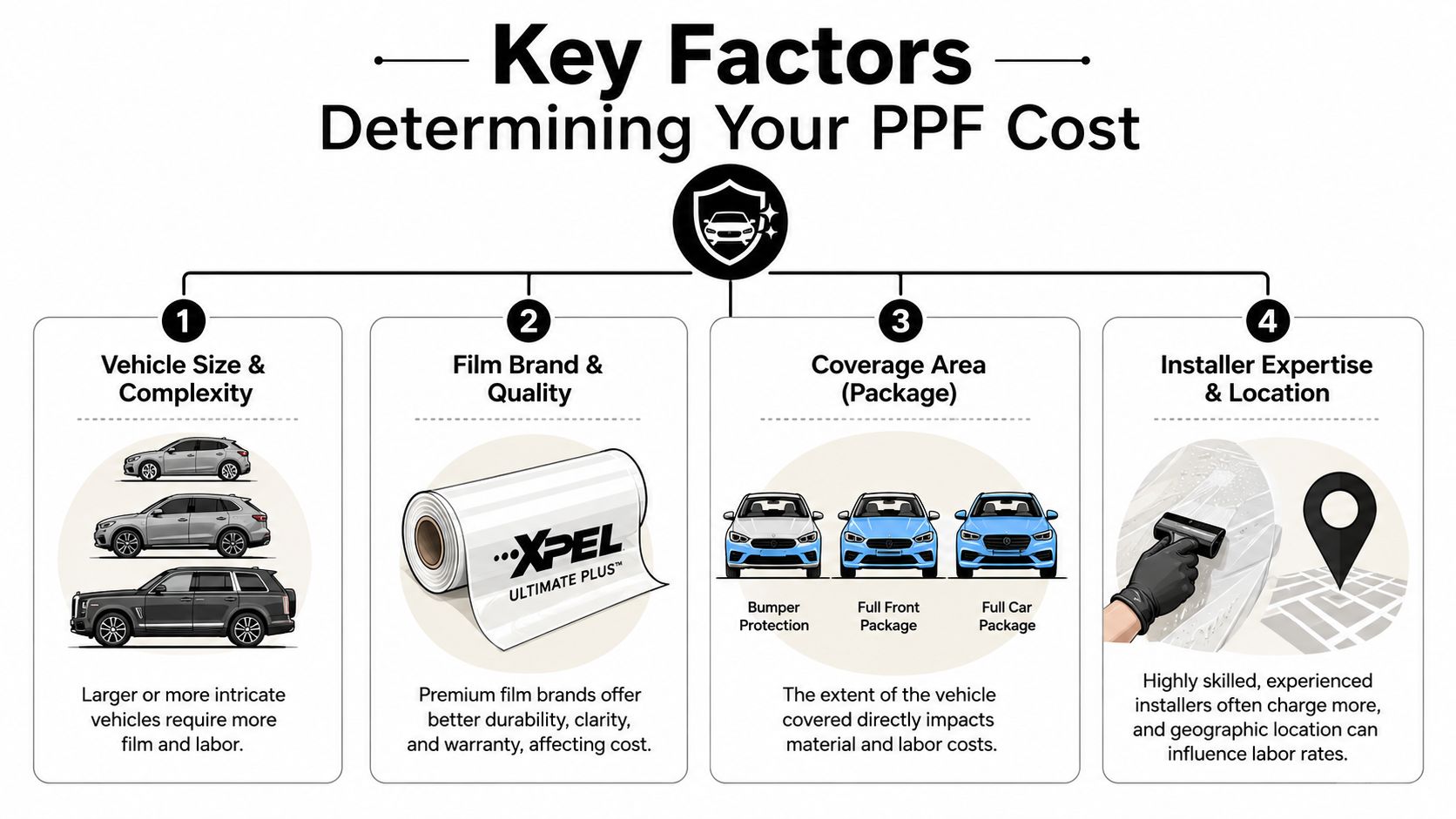
Most quote differences make sense once you stop thinking about film as the main expense. Material matters, but labour, prep, and vehicle complexity often decide where your final number lands.
Material cost is only one part of the bill
Independent cost analysis puts standard film at $2 to $5 per square foot, with premium films at $7 to $10 per square foot, and notes that installation labour commonly adds $50 to $100 per hour in this PPF cost factor analysis. That's why two vehicles with the same package can price differently even before you get into custom work or paint condition.
Film price alone doesn't explain a quote. A customer sees clear film and assumes the product is the cost. A shop sees square footage, stretch behaviour, panel shape, edge work, contamination control, and install time.
Vehicle shape changes the job
A flat, simple panel is easier to wrap cleanly than a bumper with deep recesses, sharp corners, parking sensor openings, and complex curves. That's where skilled labour shows up on the invoice.
Here's what pushes cost upward:
- Larger panels: More film, more alignment time, and more chances for contamination during install.
- Aggressive body lines: Curves, vents, and sharp transitions increase tension in the film and make clean placement harder.
- Tight edges and tucked areas: Good installers spend extra time wrapping edges where possible so the result looks finished.
- Panel count: A full vehicle isn't just more area. It's more pieces, more seams to manage, and more opportunities to make mistakes.
Prep work is where cheap installs usually cut corners
Even perfect film won't hide poor paint prep. If the surface has embedded contamination, swirls, old wax residue, or previous damage, the film can lock those issues underneath. Once it's installed, you're looking at them every day.
A separate pricing guide notes that labour and prep are often overlooked by consumers, with installer labour cited at $75 to $150 per hour, labour totals of $1,875 to $6,000, and paint correction often adding $300 to $800 before extras, as detailed in this PPF pricing guide focused on labour and prep.
A low quote often means the shop spent less time preparing the paint, less time refining edges, or less time correcting problems before they became visible under the film.
In a high-end install, the customer isn't only paying for film on the car. They're paying for the hours no one sees. Washing, decontaminating, polishing where needed, checking panel alignment, and making sure the finished result looks right in direct light.
Why Quality Installation Matters More Than Film Alone
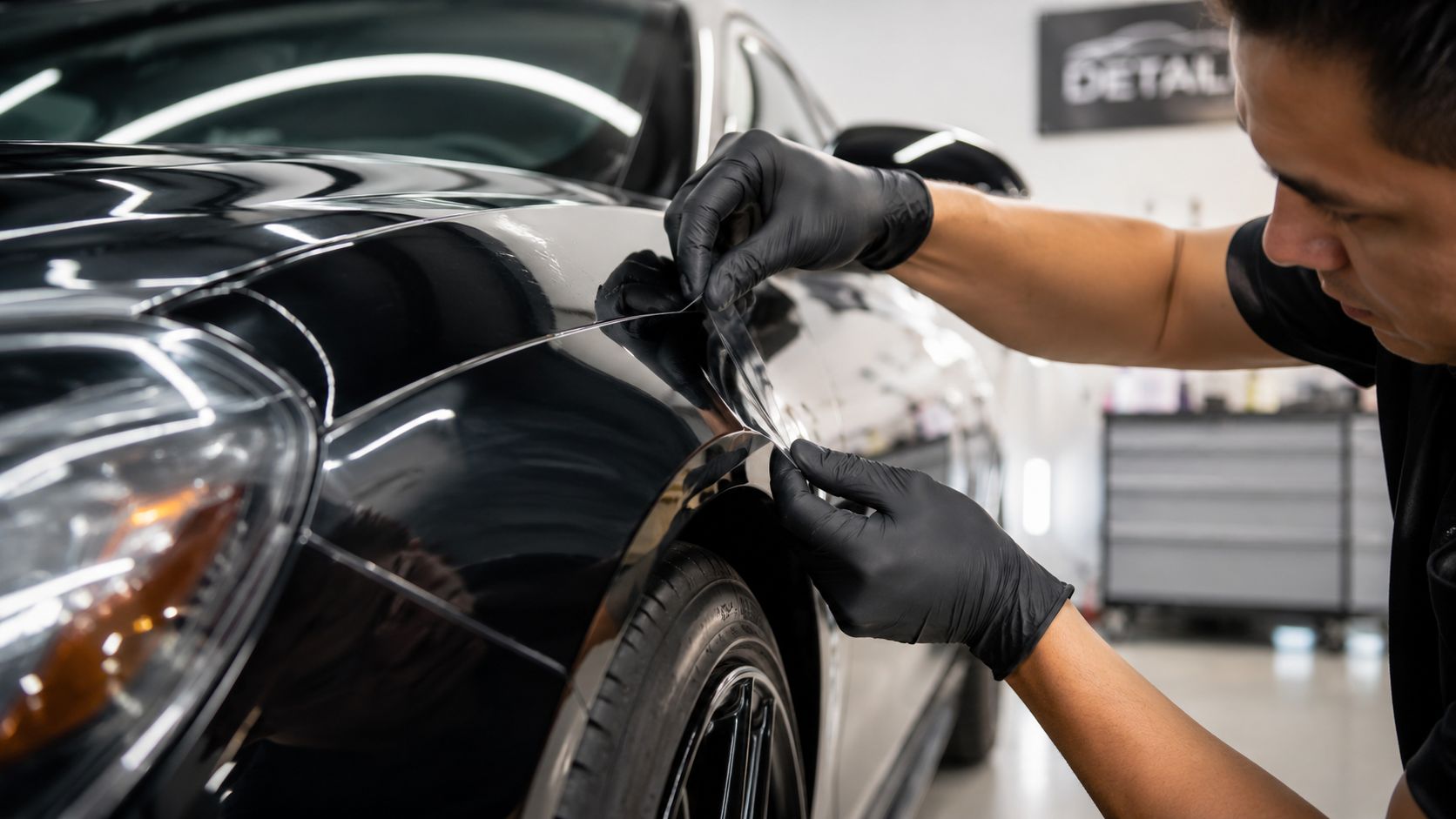
A lot of buyers focus on brand first. That's understandable, but it misses the bigger issue. A premium film installed poorly still looks poor. Dust under the film, lifted edges, fingers around tight curves, and exposed cut lines will ruin the result long before the material itself becomes the issue.
Cheap installs usually show up fast
Expert installers report that full-front PPF below about $1,300 often lines up with lower-quality work or pattern-based installs, while $1,400 to $1,800+ is where workmanship commonly improves. The same installer guidance gives examples of a Tesla Model 3 full front at about $1,800 and a Ford Mustang at about $2,150, showing how panel complexity changes labour needs in this installer pricing discussion with vehicle examples.
That doesn't mean every lower quote is bad. It means you should ask hard questions. Are edges wrapped? Is the pattern bulk-installed or fully pre-cut? How much paint prep is included? What happens if an edge lifts?
What you're actually paying for at a high-end shop
A proper install is craftsmanship. The goal is an end result that doesn't draw your eye to the film at all. On darker colours especially, poor alignment and contamination stand out immediately.
Look for these signs of care:
- Clean edge management: The film should look intentional, not like a sticker sitting on the panel.
- Consistent stretch and placement: Overstretched film can fail earlier and fit poorly around curves.
- Good panel-to-panel symmetry: Nothing looks worse than one side sitting tighter than the other.
- Controlled trimming strategy: The installer should protect the paint while still achieving coverage that looks finished.
For local owners comparing shops, the Whitby location page for Carmedics Autowerks is one example of a local service option. The point isn't the brand name on the door. It's whether the shop treats PPF like precision work instead of a volume add-on.
If you're shopping on price alone, you're often buying the install twice. Once for the cheap job, then again to remove and redo it.
PPF vs Ceramic Coating vs Vinyl Wrap
These products get mixed together all the time, but they solve different problems. If you choose the wrong one, you can spend good money and still not get what you wanted.
PPF protects against impact
PPF is the closest thing your paint gets to a sacrificial barrier. If your main concern is rock chips, road rash, and physical abuse on the front end, PPF is the right category to look at.
It is similar to a screen protector on a phone. It's there to take the hit first.
Ceramic coating protects finish and makes maintenance easier
Ceramic coating is not the same as PPF. It doesn't give the same chip resistance. What it does well is help with cleaning, gloss, water behaviour, and resistance to everyday grime and environmental fallout.
If someone wants easier washing and a slicker surface, ceramic coating makes sense. If someone wants to stop stones from peppering the bumper on the 401, ceramic coating isn't the answer by itself.
Vinyl wrap changes appearance first
Vinyl wrap is primarily cosmetic. It changes the look of the car, whether that means gloss, satin, matte, colour shift, or something more custom. It offers some surface coverage, but it's not a substitute for proper paint protection film if impact protection is the goal.
Which one should you choose
Use this simple decision filter:
- Choose PPF if you want to prevent chips and protect painted panels from physical damage.
- Choose ceramic coating if you care most about easier maintenance, gloss, and environmental resistance.
- Choose vinyl wrap if the main goal is changing the vehicle's appearance.
Some owners combine them. For example, they protect the front end with PPF and then coat the protected surfaces for easier cleaning. That can work well if the budget allows and the installer understands how the products interact.
If you're weighing the difference between these options in more detail, this overview of car paint protection choices gives a practical local comparison.
Lifespan Warranty and Removal
PPF isn't just an install-day decision. You also need to think about how it ages, what the warranty means, and how removal works later.
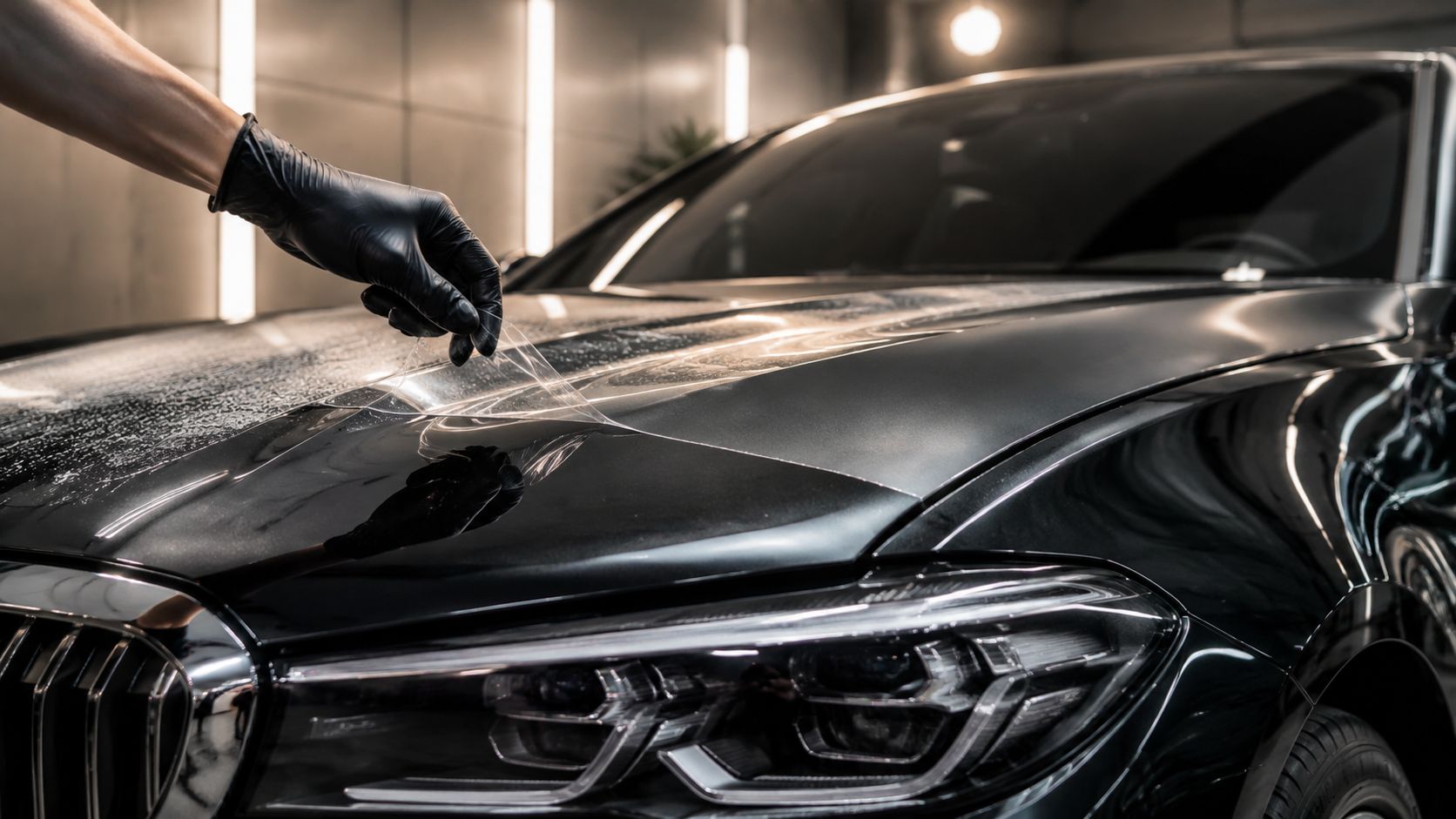
Lifespan depends on care and conditions
Quality film can last for years when it's maintained properly, but lifespan isn't the same as “looks perfect forever.” Sun exposure, winter road grime, washing habits, storage, and the amount of highway driving all affect how the film ages.
What matters more than chasing a perfect timeline is understanding that premium film on well-prepped paint tends to age better than bargain film installed in a rush. The condition of the paint underneath also matters. If a car goes in with issues, those issues don't improve under film.
Warranty means two different things
Owners often hear “warranty” and assume everything is covered. Usually, there are two separate ideas:
- Manufacturer warranty: This generally relates to the film itself, such as defects in the product.
- Workmanship warranty: This usually applies to the installation. Think edge lift, fitment issues, or application-related problems.
Ask who handles what before the job starts. If something goes wrong, you don't want finger-pointing between the film brand and the installer.
Removal should be done professionally
PPF removal isn't something to treat casually, especially on older paint, repainted panels, or film that has been on the car for a long time. Proper removal relies on controlled heat, the right angle, patience, and knowing when the panel underneath needs extra caution.
Done properly, removal is routine. Done poorly, it can create unnecessary risk for the finish underneath.
Film removal is part of the ownership cycle, not a failure. Good shops plan for it from the beginning and install with that future process in mind.
If you want a practical look at what affects service life and maintenance expectations, this guide on how long PPF lasts is worth reading.
Frequently Asked Questions About PPF
Can PPF go on a used car
Yes, but the paint condition matters. If the vehicle already has chips, scratches, staining, or swirl marks, the installer should assess that first. PPF protects what's there. It doesn't hide defects well, especially on darker paint.
Does PPF need special washing
It doesn't need complicated care, but it does need sensible care. Wash it properly, avoid harsh abrasion, and don't ignore contamination that sits on the film for long periods. If you treat it like any neglected daily driver, the finish will show it.
Is self-healing film real
Many modern premium films do have self-healing characteristics for light surface marring. That doesn't mean every mark disappears and it doesn't mean the film is indestructible. Deep impacts, hard gouges, and edge damage still need realistic expectations.
Will PPF damage factory paint when removed
On healthy original paint, professional removal is generally straightforward. The risk rises when the panel has previous bodywork, weak respray, or existing paint failure. A good installer will tell you that before applying film, not after.
Should you wrap the whole car or just the front
It depends on how you drive and how long you're keeping the vehicle. For many Whitby drivers, the front end is the logical place to start because that's where most impact damage happens. Full-body coverage makes more sense when the owner wants near-complete preservation or owns a vehicle where cosmetic condition matters more long term.
Why do two shops quote the same package differently
Because the package name doesn't tell you the whole process. One shop may include more prep, better edge work, and more install time. Another may be using a faster pattern strategy with less correction and less refinement. The final appearance usually reflects that difference.
If you're comparing options for your own car in Whitby, Carmedics Autowerks Inc offers auto repair, window tinting, collision repair, and paint protection film installation for local drivers who want clear answers on coverage, prep, and what's included in the job. The smart move is to get a quote, ask how the install is done, and compare the workmanship behind the number, not just the number itself.