

You know the feeling. You start the car, glance at the dash, and there it is. A warning light that wasn't there yesterday. Or maybe the engine sounds a little rough, the brakes feel different, or the A/C suddenly blows warm air on a humid Whitby afternoon.
At that moment, most drivers aren't only worried about the car. They're worried about the next step. Who do you trust to tell you what's wrong? Who's going to diagnose the problem instead of guessing, swapping parts, and handing you a bill for trial and error?
That's where the idea of a certified auto mechanic stops being a label and starts becoming a practical tool for protecting your vehicle, your time, and your money. If you drive a newer car packed with sensors, warning systems, and computer controls, certification matters even more. Modern diagnosis isn't just about listening to a noise under the bonnet. It's about reading data, following a process, and knowing which system is talking to which.
That Sinking Feeling When the Check Engine Light Comes On
A lot of repair stories start the same way. The check engine light comes on during the commute, nothing feels terribly wrong, and you tell yourself you'll deal with it later. Then the mind starts racing. Is it a loose gas cap, a sensor, an emissions problem, or something that could leave you stuck on the side of the road?
If you've been there, you're not alone. The hard part usually isn't the light itself. It's deciding who should inspect the car.
A neighbour might say, “My guy can fix anything.” A friend might recommend a shop because it's cheap. Someone online might tell you to buy a scan tool and clear the code yourself. That's where many drivers get tripped up. A code reader can point to a system, but it doesn't replace proper diagnosis. A fault code is more like a breadcrumb than a full map.
If you're already dealing with that warning light, this guide on what to do when your engine light is on is a useful starting point. It helps you separate “drive carefully and book service” from “stop and get it checked now.”
Why this feels worse with newer vehicles
On an older car, a rough idle or hard start often pointed to a shorter list of likely causes. On a newer vehicle, one issue can ripple through several systems. A sensor fault can affect fuel delivery, emissions, transmission behaviour, and dashboard warnings all at once.
A modern car doesn't just have parts. It has conversations happening between modules, sensors, and software.
That's why the difference between an amateur and a professional shows up fast. The amateur chases symptoms. The pro asks what system created the symptom, what data supports it, and what test confirms it.
The trust question behind every repair
Customers typically don't walk into a shop asking for a lesson in credentials. They want confidence. They want to know the person touching their car understands today's vehicles, not just the cars they worked on years ago.
That's what certification helps answer. It's not magic. It doesn't mean every certified technician knows every make and model equally well. But it does tell you the technician has met a recognised standard and learned to approach repairs with discipline instead of guesswork.
What Certified Auto Mechanic Really Means
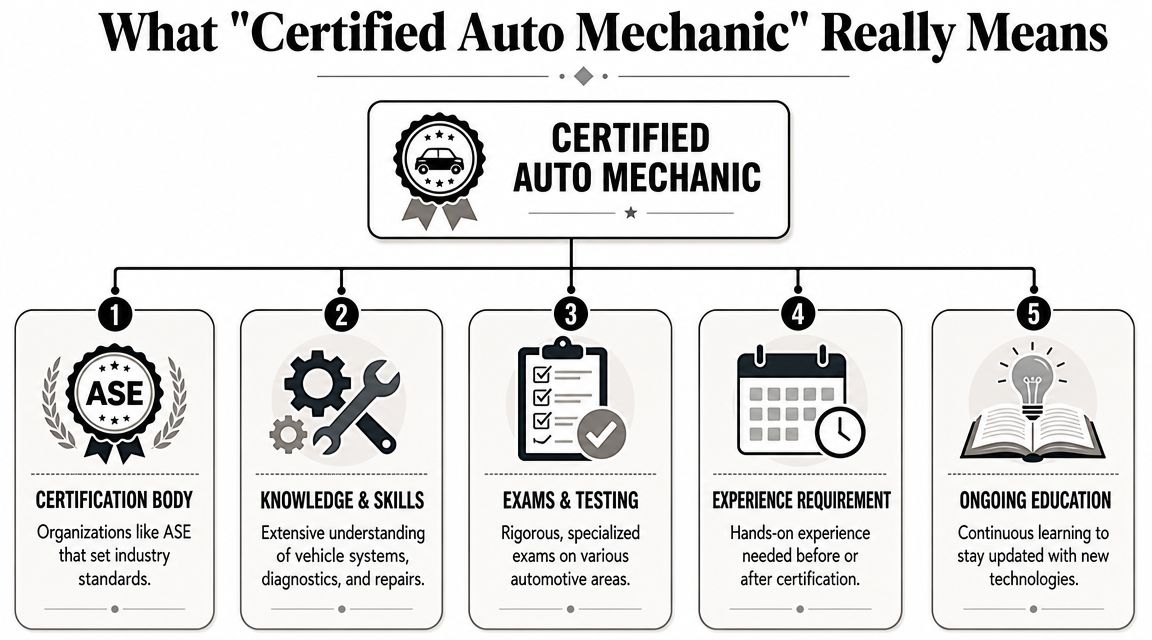
A certified auto mechanic is not just someone who has turned wrenches for a long time. Experience matters, but certification adds proof. It shows a technician has been tested against a recognised standard and has built their skills through both hands-on work and written evaluation.
In practical terms, a certified technician in Canada is typically expected to show ASE-level competency in computerized diagnostics, and that credential path is built around hands-on experience plus written testing. ASE credentials are valid for 5 years and require recertification, which matters because modern vehicles rely more and more on scan-tool-based fault isolation instead of purely mechanical troubleshooting, according to ASE's certification information.
Certification is like a trade licence for trust
Think of it this way. You might know someone who's “good with numbers,” but that's not the same as hiring a professional accountant. In the same way, someone can be handy with cars without meeting the standard you want for diagnosing a complex fault in a late-model vehicle.
Certification gives you a better baseline. It says this person didn't just learn a few tricks. They learned a structured way to inspect, test, and verify.
A shop such as Carmedics Autowerks in Whitby presents itself around that professional standard, which is exactly what drivers should be looking for when they want more than casual mechanical ability.
What certification actually signals
Here's what people often misunderstand. Certification does not mean a mechanic knows every repair on every car by instinct. It means the mechanic has demonstrated competence in defined areas and keeps that knowledge current.
That matters because vehicle technology doesn't sit still. Dashboards now talk to camera systems. Engine performance issues can involve software logic. A/C work can touch regulated refrigerant handling. You need a technician who can think in systems, not just parts.
A certified mechanic usually brings a different workflow to the job:
- They verify the complaint first. They don't jump straight to replacing a part because a customer mentioned a symptom.
- They use scan tools and test procedures. They look at codes, live data, and system behaviour before making a call.
- They document what they find. A proper repair should have a logic trail, not a shrug.
- They keep learning. Because certification expires, staying current isn't optional.
Practical rule: If a technician can explain the testing process in plain language, that's usually a good sign you're dealing with a professional, not a guesser.
Why recertification matters
A credential earned years ago doesn't automatically prove current skill. Recertification is important for the same reason you'd want a pilot, electrician, or medical professional to stay sharp. The tools change. The systems change. The failure patterns change.
That's especially relevant now, when many vehicle problems can't be solved with old-school “replace what usually fails” thinking. The certified mechanic has to adapt, and recertification is part of that discipline.
Key Benefits of Hiring a Certified Professional
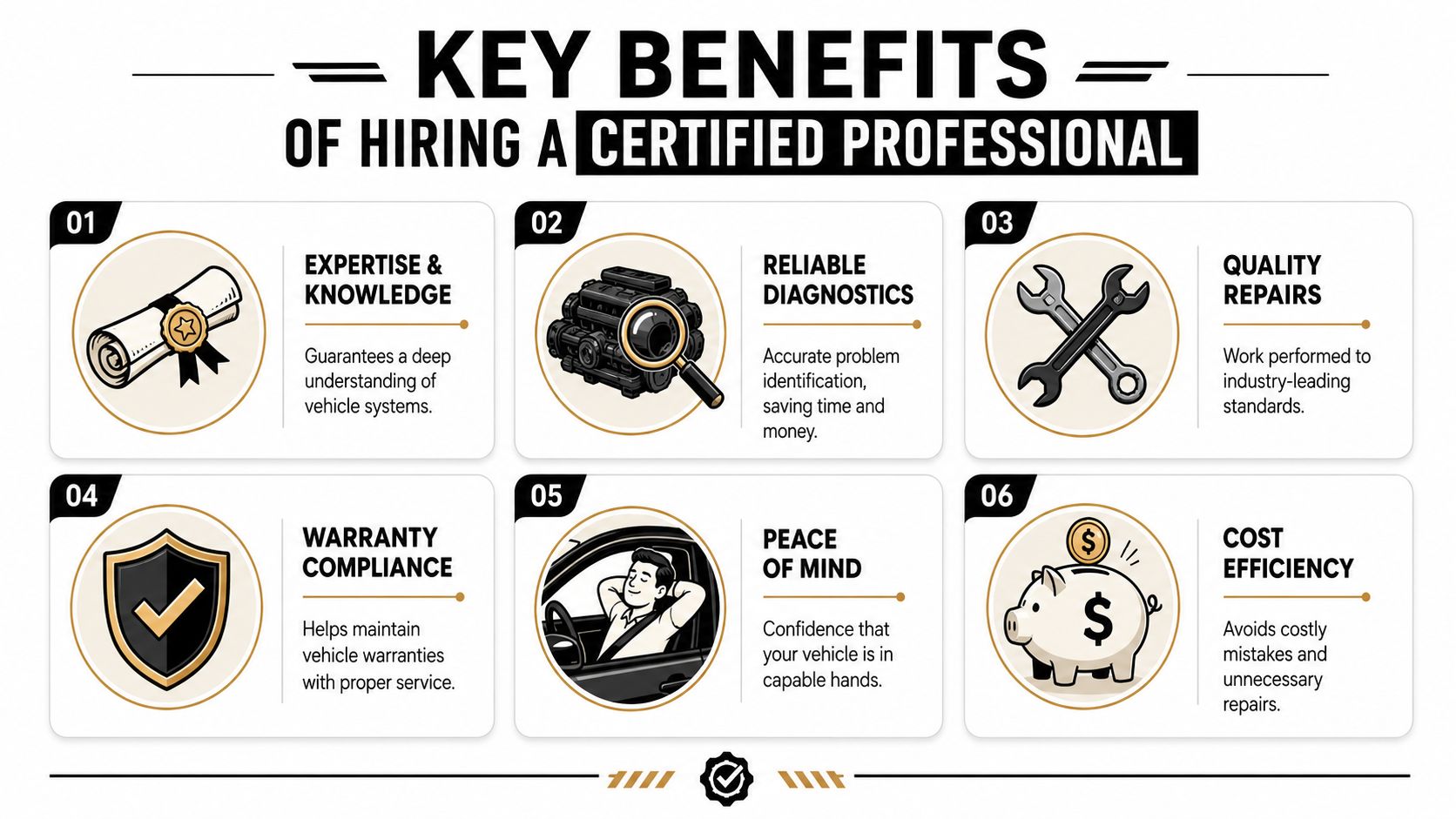
The biggest benefit of hiring a certified professional is simple. You reduce repair risk. Not every problem is expensive when it starts, but many get expensive when someone misdiagnoses them.
Certified technicians are trained to diagnose faults across brakes, drivetrains, electrical systems, and emissions-related components using structured inspection steps and OBD-style diagnostic tools. That reduces misdiagnosis risk because symptom-based repair isn't enough for late-model cars with engine codes, sensor networks, and driver-assist systems, as explained by J-Tech's overview of certified auto technician training.
Better diagnosis beats parts swapping
A car owner often sees the repair only at the end. New sensor installed. Brakes serviced. Module reset. But the quality difference often happens before any part is touched.
An amateur may treat diagnosis like darts in the dark. The check engine light is on, so maybe it needs plugs. Still on? Maybe a coil. Still on? Maybe an oxygen sensor. That's how bills climb without confidence improving.
A certified pro works more like a doctor reading symptoms, test results, and history together. They don't ask only, “What part failed?” They ask, “What evidence proves this part failed?”
The benefits you actually feel as an owner
Here's where certification becomes tangible.
- Fewer wrong repairs: When the technician follows a process, you're less likely to pay for parts that weren't needed.
- Safer work on critical systems: Brakes, steering, drivetrains, and electrical faults need more than guesswork.
- Stronger confidence with modern electronics: Late-model cars are rolling networks. A proper diagnostic approach matters.
- More useful maintenance advice: A trained technician can spot patterns before they become bigger failures.
If you want to keep problems from piling up, regular service matters too. This guide to preventive maintenance for vehicles fits that mindset well, because a good mechanic doesn't just react to breakdowns. They help you stay ahead of them.
Certification helps with decision quality
Not every repair decision is black and white. Sometimes you're choosing between fixing the immediate issue, handling related wear items at the same time, or monitoring a condition for later. A professional mechanic should help you sort those choices clearly.
A solid mechanic doesn't pressure you with mystery. They narrow the problem, explain the options, and tell you what matters now versus what can wait.
What a certified pro does differently in the bay
| Situation | Amateur approach | Professional approach |
|---|---|---|
| Check engine light | Reads the code and guesses | Reads codes, checks data, confirms cause |
| Brake complaint | Replaces visible worn parts only | Inspects the full brake system and related components |
| Electrical fault | Tries the most common fix | Tests circuits, inputs, outputs, and module response |
| Intermittent issue | Says “couldn't duplicate” and stops | Looks for conditions, patterns, and supporting evidence |
That difference is why certification works as risk management. You're not buying a badge. You're buying a more reliable process.
How to Easily Verify a Mechanic's Credentials
A lot of shops say the right things. Verification is where confidence gets real.
You don't need special knowledge to check a mechanic's credentials. You only need a few simple habits and the willingness to ask direct questions before leaving your keys on the counter.
What to look for in person
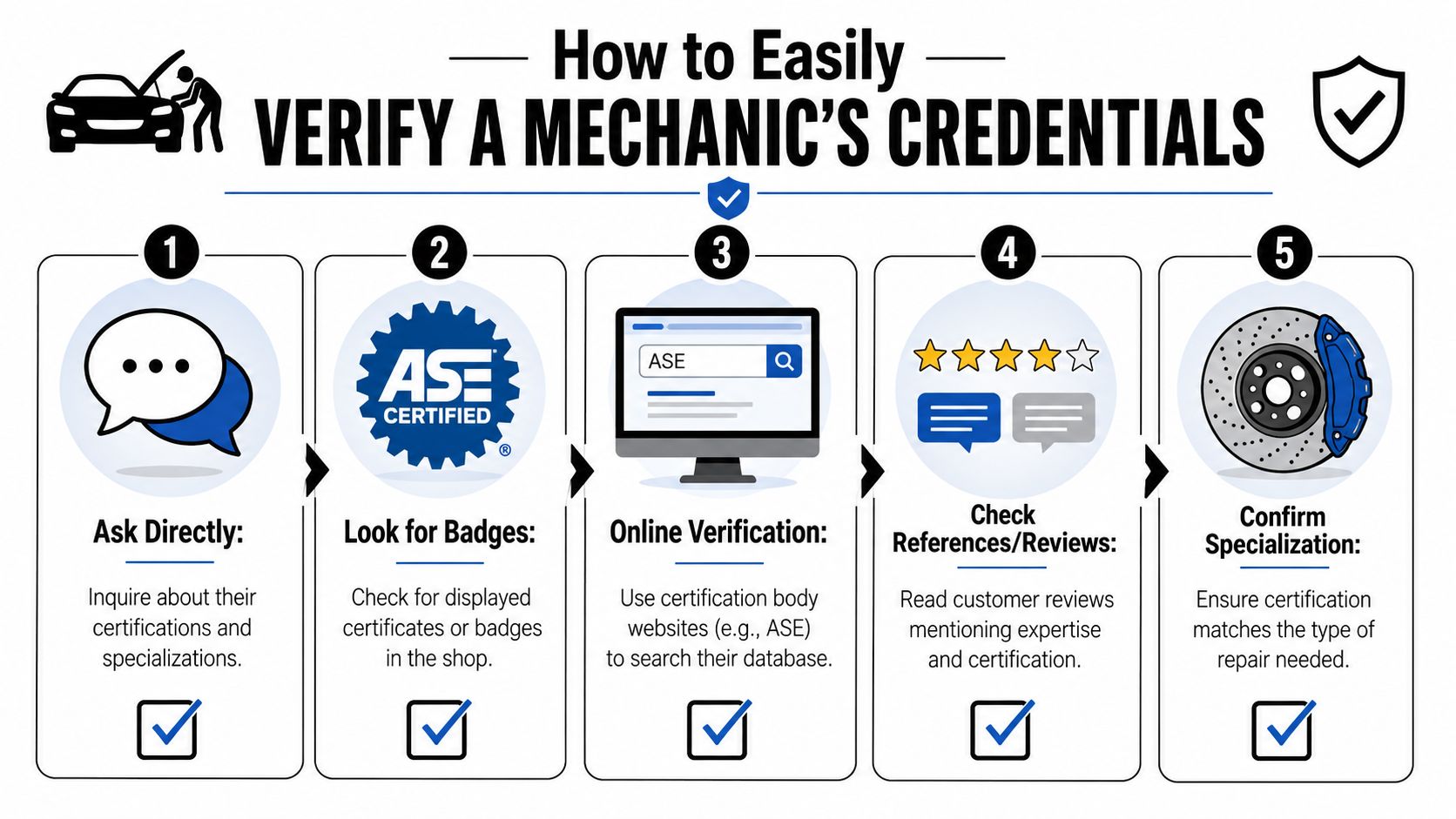
Start with your eyes. Professional shops often display technician credentials in the reception area, service office, or customer waiting space. You may also see badges or patches on uniforms.
Then ask a plain question: “Who will diagnose my car, and what certifications do they hold?” That question matters because a shop's reputation and an individual technician's qualifications are not the same thing.
If you're comparing local options, it also helps to read through a shop profile like this page on choosing the best automotive repair shop. It gives you a practical lens for judging the whole operation, not just the marketing.
A quick verification checklist
Use this short list before booking major work:
- Ask for specifics: Don't stop at “yes, we're certified.” Ask which technician is certified and in what area.
- Look for visible proof: Certificates, plaques, and technician identifiers should be easy to show.
- Check the certification body online: If a credential is important to your decision, confirm it through the relevant organisation's lookup tools.
- Match the credential to the job: Engine diagnosis, A/C service, and advanced electronics don't all call for the same expertise.
- Notice how they answer: Clear, calm answers usually signal confidence. Evasive answers usually signal the opposite.
The easiest red flag to spot is vagueness. A real professional can usually tell you what they're qualified to do without dancing around the question.
Shop credentials versus technician credentials
Many drivers get confused. A shop can present itself professionally, but the repair still depends on the person doing the work. The front desk doesn't diagnose your car. The technician does.
That doesn't mean a polished shop is a bad sign. It means you should verify both. Look at the business, then look at the individual capability behind the repair order.
Smart Questions to Ask Your Auto Mechanic
“Are you certified?” is a decent starting point. It's not enough on its own.
The better question is whether the mechanic's certification matches the work your vehicle needs. That distinction matters because “certified” can sound broad, while real repair competence is often very specific.
A major question many drivers still don't get answered is whether a credential guarantees modern repair capability for newer cars with ADAS, EV, and refrigerant-related systems. ASE itself has 58 tests across 13 specialties, while some work, such as A/C service involving refrigerants, requires specific credentials. That means certification is task-specific, not a generic quality signal, as outlined in this mechanic certification explainer from Indeed.
Questions that reveal real competence
When you call or visit a shop, try questions like these:
For my exact issue, who handles this type of diagnosis most often?
That helps you learn whether the job goes to the most suitable technician or the next available one.Have you worked on this make and model with this kind of symptom before?
Experience with your vehicle platform can matter a lot, especially for recurring electronic or drivability faults.How do you confirm the root cause before replacing parts?
Listen for process words like scan data, inspection steps, circuit testing, system checks, and verification.If my vehicle has driver-assist features, do you handle related calibration or sublet it to a specialist?
There's nothing wrong with a shop using a specialist. The key is honesty and proper procedure.Does this repair involve any special licensing or credentials, such as refrigerant-related A/C work?
For such repairs, a “certified auto mechanic” label may not tell the full story.
If you're choosing who to trust locally, it also helps to compare how a shop talks about diagnostics and repairs on a page like this one about working with a car mechanic. You can often tell whether the language reflects real process or just sales talk.
Answers that should make you pause
Some replies sound confident but aren't reassuring.
- “We've seen it a thousand times.” That may be true, but it's not a diagnosis.
- “We'll start with the usual part.” That's another way of saying guess first.
- “Certified is certified.” Not always. The repair type matters.
- “Don't worry about the details.” You should worry when someone doesn't want to explain the basics.
Good questions don't challenge a professional mechanic. They give the mechanic a chance to show you how they think.
A strong technician doesn't need to drown you in jargon. They should be able to translate the repair path into plain language and explain why their qualification fits your car and the job.
Finding Your Trusted Certified Mechanic in Whitby
Whitby drivers don't need a flashy pitch. They need a shop that treats certification as part of a real repair process, not a sticker on the door.
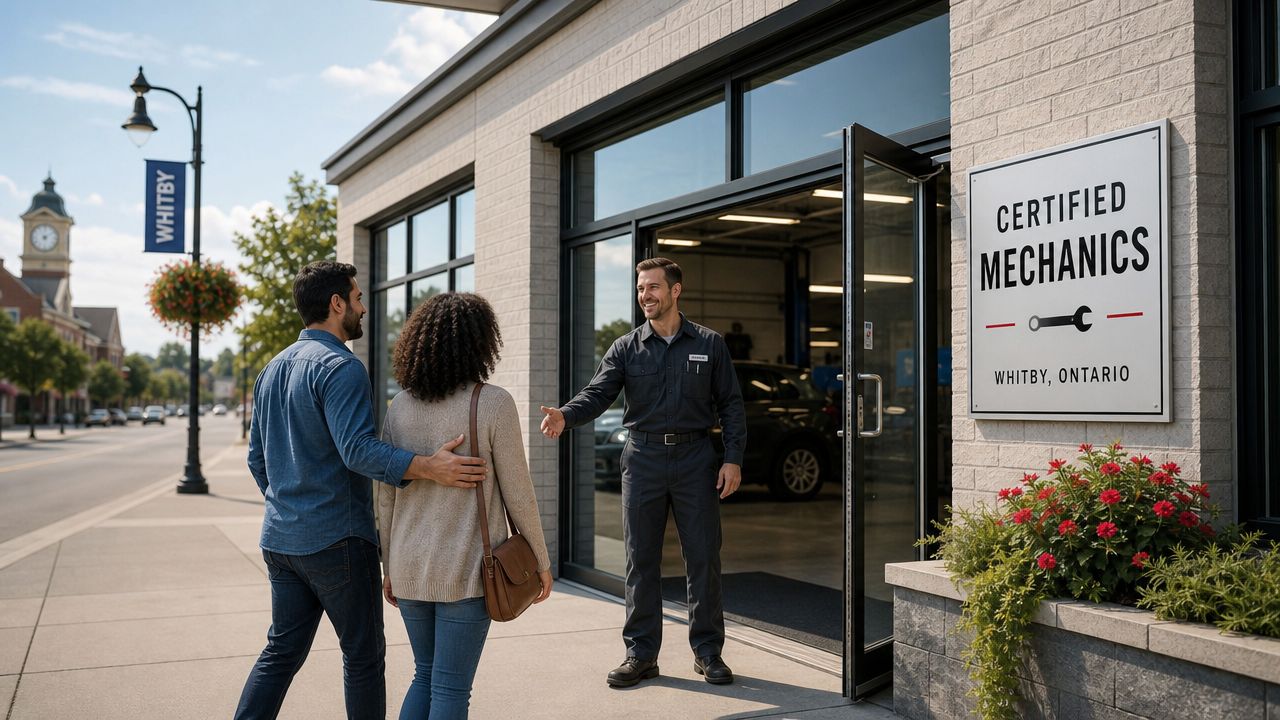
That means looking for a team that can handle routine maintenance, electrical diagnosis, drivability issues, and the cosmetic and protective work many enthusiasts care about as much as mechanical reliability. For local owners, one option is Carmedics Autowerks Inc, which offers general auto repairs, fleet maintenance, collision repair, window tinting, and paint protection film services for cars and SUVs in Whitby.
A simple local action plan
If you live in Whitby and want to lower your risk on your next repair, keep it simple:
- Start with the problem type: Is this a warning light, brake concern, A/C issue, collision damage, or appearance protection job?
- Match the shop to the task: Ask who handles that exact kind of work and what qualifications support it.
- Verify before approving major work: A short conversation now can prevent a frustrating repair cycle later.
- Choose clear communication: The right shop should explain the diagnosis path and your options without hedging.
That's how certification becomes useful in practice. Not as a buzzword, but as a filter. It helps you separate “someone who works on cars” from “someone who can competently diagnose and repair this car.”
When your vehicle is newer, more complex, or just important to you, that distinction matters.
If you're in Whitby and want a clearer, more professional approach to vehicle care, Carmedics Autowerks Inc offers repair, maintenance, collision, tint, and PPF services for drivers who want informed answers before work begins.