


A cold Whitby morning will tell you very quickly whether your car is set up for winter or just surviving it. You open the door, the seat feels like stone, the windshield is fogged on the inside, and the steering wheel bites your hands before the heater has even started to help.
That’s why so many drivers look into how to install car remote starter systems the moment the temperature drops. The idea is simple. Start the vehicle before you step outside, let the cabin warm up, and take the edge off those brutal first few minutes of every drive. The install itself is not simple.
Modern vehicles hide that simplicity behind immobilizers, data networks, push-button start logic, factory security, and trim panels that don’t forgive rough hands. If you like working on your own car, this is a satisfying project. If you rush it, it can also become the kind of under-dash electrical mess that keeps a shop busy fixing someone else’s weekend plan.
Escape the Cold Your Introduction to Remote Starters
At 6:30 on a Whitby winter morning, the difference is obvious. One car is idling long enough to take the bite out of the cabin and start clearing the glass. The one beside it still has a frozen windshield, a stiff shifter, and a steering wheel cold enough to make you want gloves on for the drive.
That daily use case is why remote starters have stayed popular in colder parts of Canada. They are less about novelty and more about comfort, visibility, and getting into a car that is already starting to work with you instead of against you.
For a DIY owner, that appeal is real. So is the risk. A remote starter install can be a satisfying job on the right vehicle, but the work is tied directly into ignition, brake input, door status, security logic, and in many cases the immobilizer system. One bad connection under the dash can leave you with an intermittent no-start, a battery drain, or a security light that sends you chasing problems you created yourself.
Check compatibility before you buy anything
The first decision is not brand. It is vehicle fitment.
A keyed ignition vehicle is usually more forgiving than a push-button-start platform. An automatic is usually simpler than a manual because manual-transmission remote start needs strict safety programming to prevent a start-in-gear event. If the car relies heavily on CAN-bus communication, the module choice and programming path matter as much as the wire connections.
Get those answers before you buy a kit. If you are guessing, stop and confirm the platform first.
Good installs are built on clean electrical work
Remote starters fail for predictable reasons. Poor grounds, loose T-taps, weak crimp joints, wrong wire identification, or a bypass module that was never programmed correctly. In the shop, I would rather see a properly soldered and insulated connection or a high-quality OEM-style crimp than a rushed splice hidden under tape. The goal is a connection that stays stable through vibration, temperature swings, and years of use.
That is also why many owners decide the DIY route is not worth the comeback risk. A clean install saves time later.
If you want a local shop to handle the wiring, programming, and final testing, Carmedics Autowerks in Whitby is a practical option for drivers who want the system integrated properly the first time.
Pre-Installation Checklist What You Need Before Starting
A remote starter install usually goes wrong before the wiring starts. It goes wrong when the vehicle wasn’t identified properly, the installer bought a universal kit for a data-heavy platform, or the tool bench was missing half the gear needed to test circuits safely.
Know what vehicle you’re dealing with
Start with the exact year, make, model, trim, engine, and ignition type. That matters because one trim level may use a simple keyed ignition while another uses push-button start, proximity key authentication, and a different immobilizer routine.
A few compatibility checks matter more than the rest:
- Automatic or manual transmission. Manual vehicles need reservation mode logic and strict shutdown procedures. If that setup is wrong, the system becomes a safety risk.
- Keyed ignition or push-button start. Push-button systems often need more involved bypass and programming steps.
- Factory alarm and immobilizer presence. Most late-model vehicles won’t allow the engine to run without proper key recognition.
- Available T-harness support. Some vehicles have cleaner harness options. Others still require more direct wire work under the dash.
Be honest about your skill level
You don’t need to be a master technician to install car remote starter systems on some older vehicles. You do need to be comfortable reading wiring diagrams, removing interior panels without breaking clips, and testing wires instead of guessing.
If your normal electrical work is limited to swapping a battery or replacing a light bulb, this is a big jump. If you already handle relay logic, continuity checks, and low-voltage accessory installs, the learning curve is more manageable.
A remote starter install rewards precision. It punishes assumptions.
Gather the right tools before the first panel comes off
A proper bench setup should include more than hand tools. At minimum, have:
- Digital multimeter. This is how you verify constant power, ignition, accessory, starter, and parking light circuits. A test light can be too crude for modern electronics.
- Trim removal tools. Plastic panel tools prevent gouged bezels and broken clips.
- Wire strippers and flush cutters. Clean prep matters when you’re making tight harness connections.
- Temperature-controlled soldering iron. You need stable heat for repeatable joints.
- Rosin-core solder and heat shrink. Not electrical tape by itself.
- Vehicle-specific wiring diagrams. Generic colour charts are not enough.
- Tesa tape or quality harness tape. This keeps the final loom tidy and reduces rattles.
- Zip ties in multiple lengths. Use them to secure modules and keep harnesses away from pedals and steering shafts.
- A compatible bypass module and firmware. The remote starter brain alone usually won’t be enough on a modern vehicle.
Don’t treat battery condition as an afterthought
Weak batteries create ugly diagnostics. A tired battery can make a good remote starter install look faulty because the vehicle may crank poorly, drop voltage during programming, or reject the start sequence when temperatures fall.
Before blaming the starter system, make sure the vehicle’s charging and battery condition are solid. If the battery is already questionable, review what affects car battery replacement cost and deal with that first.
Plan your install area like a workshop job
Do the work indoors if possible. Cold plastic breaks more easily, cold hands make poor solder joints, and cramped lighting leads to misidentified wires. Keep a magnetic tray for hardware and label any trim screws if the dash has mixed fasteners.
A simple prep routine helps:
- Scan for existing faults if you have access to a diagnostic tool.
- Confirm all factory functions work first so you don’t inherit a pre-existing issue.
- Lay out modules and harnesses on a bench and identify each connector.
- Read the programming procedure fully before touching the vehicle.
Expect the install to involve trade-offs
DIY saves labour, but the main cost is risk and time. Professional installation removes much of the troubleshooting burden, especially on newer vehicles. Some shops, including Carmedics Autowerks, handle remote starter installation as a shop service option for drivers who want the system fitted without dealing with module programming, trim disassembly, and under-dash wiring decisions.
That doesn’t mean DIY is impossible. It means the prep phase determines whether the project feels organised or chaotic.
Mastering the Connections A Guide to Safe Wiring
The wiring stage is where most confidence disappears. You remove the lower dash, see a packed harness, and realise the install depends on choosing the right wire every time. Discipline is paramount.
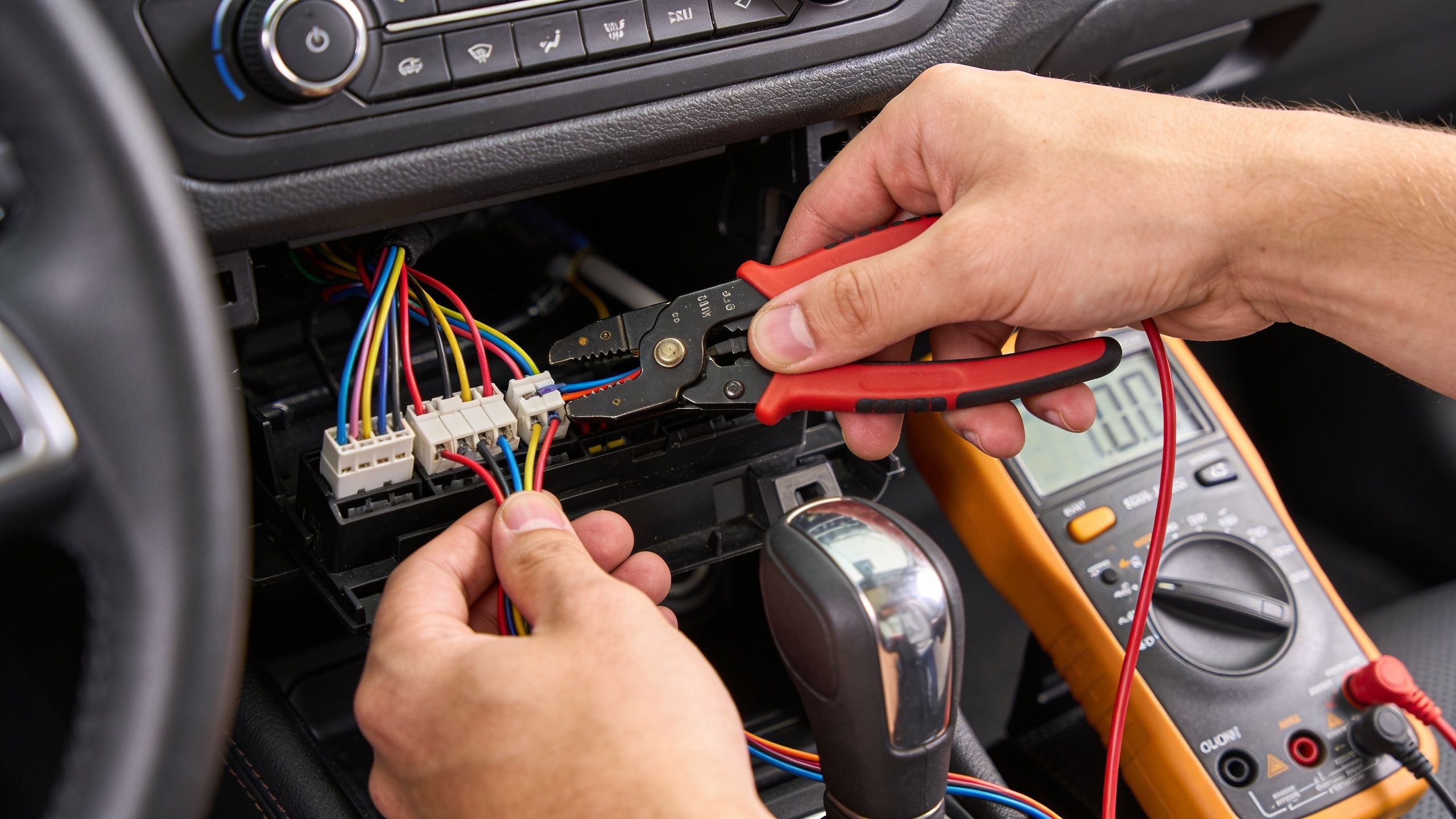
Disconnect the battery first
Before you expose ignition harnesses or probe anything, disconnect the negative battery terminal. That prevents accidental shorts and reduces the chance of upsetting sensitive electronics while you’re working around the steering column area.
Don’t skip this because you’re “just checking one wire.” A moment of carelessness under the dash can turn a straightforward install into a blown fuse hunt or something worse.
Expose the work area carefully
Lower dash panels and steering column shrouds come apart in a specific order. Use trim tools, not a flat screwdriver wrapped in hope. Modern plastics mark easily, and replacement trim isn’t cheap.
Once the panels are off, identify a few things before routing any harness:
- Ignition harness location
- Safe module mounting space
- A clean path for the antenna lead
- Pedal movement zones and steering shaft clearance
Keep every added wire away from moving parts. A clean install isn’t just cosmetic. It prevents future rub-through and noise complaints.
Verify every circuit with a multimeter
DIY installs separate into two groups. One group tests. The other guesses by wire colour and internet forum screenshots.
You need to verify the main circuits required by the remote starter:
| Connection | What you’re checking for | Common mistake |
|---|---|---|
| Constant 12V | Voltage present at all times | Tapping a retained accessory feed instead |
| Ignition | Live during run and crank as required by platform | Confusing it with accessory |
| Accessory | Powers climate or secondary circuits | Using an ignition wire and affecting HVAC behaviour |
| Starter | Active only during crank | Misreading a data-controlled start circuit |
| Parking lights | Output for visual confirmation | Using the wrong polarity or wrong lighting circuit |
Check each wire under the conditions specified by the diagram. Key off, accessory, run, and crank states all matter. If a wire doesn’t behave exactly as expected, don’t use it.
If you’re not testing the wire in front of you, you’re not installing. You’re gambling.
Soldering beats quick connectors
A remote starter lives in a harsh environment. Vibration, temperature swings, and tight spaces work against every connection. That’s why joint quality matters so much.
Proper soldering reduces vibration-induced wiring issues by 70% compared to standard crimp connectors, as noted earlier in the cited Carmedics Autowerks source. That lines up with what many technicians see in failed installs. Loose or poorly crimped joints don’t always fail immediately. They fail later, after enough movement and seasonal temperature change.
For reliable connections:
- Strip only the insulation you need. Too much exposed conductor invites shorts.
- Wrap the added wire mechanically before soldering when the joint style allows it.
- Heat the wire, not just the solder. Let the solder flow into the strands.
- Seal with heat shrink whenever possible.
- Re-loom the harness so the repair looks and behaves like part of the factory wiring.
Crimp taps and quick-splice connectors are fast. They’re also a common source of intermittent faults, no-start complaints, and parking light issues.
Route and secure like you expect to service it later
Mount the control module securely. Don’t leave it dangling inside the dash. Position it where it won’t rattle, get kicked, or pull tension on the harness.
The same goes for antenna leads and optional connections such as door triggers or rear defrost outputs. If you’re already opening panels for this install, it’s also a good time to think about other in-car electronics. Anyone considering upgrading your car's stereo should plan wire routing and dash disassembly in a way that avoids doubling the labour later.
Handle core outputs methodically
Work one circuit at a time. Finish and insulate one connection before starting the next. The most common under-dash mess starts when installers strip five wires, lose track of orientation, and then trust memory.
A practical sequence looks like this:
- Constant power first so you establish the primary feed requirements.
- Ignition and accessory next because these determine run-state behaviour.
- Starter output after that so crank logic is isolated and clear.
- Parking light and convenience outputs last because they’re not mission-critical for first engine start testing.
If the system needs tach input, brake input, hood pin, or door status connections, do those exactly according to the module instructions. Safety shutdown circuits are not optional. A missing hood pin input, for example, can create a dangerous service situation later.
Keep the finish factory-looking
When the electrical work is done, inspect it like another technician will have to service the vehicle next year. Bundle wires cleanly. Avoid giant tape blobs. Leave enough service slack without creating loops that hang into the footwell.
If the vehicle comes in with existing electrical concerns, automotive electrical repair may need to happen before a remote starter goes in. Bad grounds, prior alarm-system hacks, and damaged ignition wiring make every new accessory harder to integrate properly.
Bypassing the Factory Immobilizer System
The immobilizer is the part that confuses most first-time installers because the vehicle may crank but still refuse to run. That’s not a wiring failure in the usual sense. It’s the car doing exactly what it was designed to do.
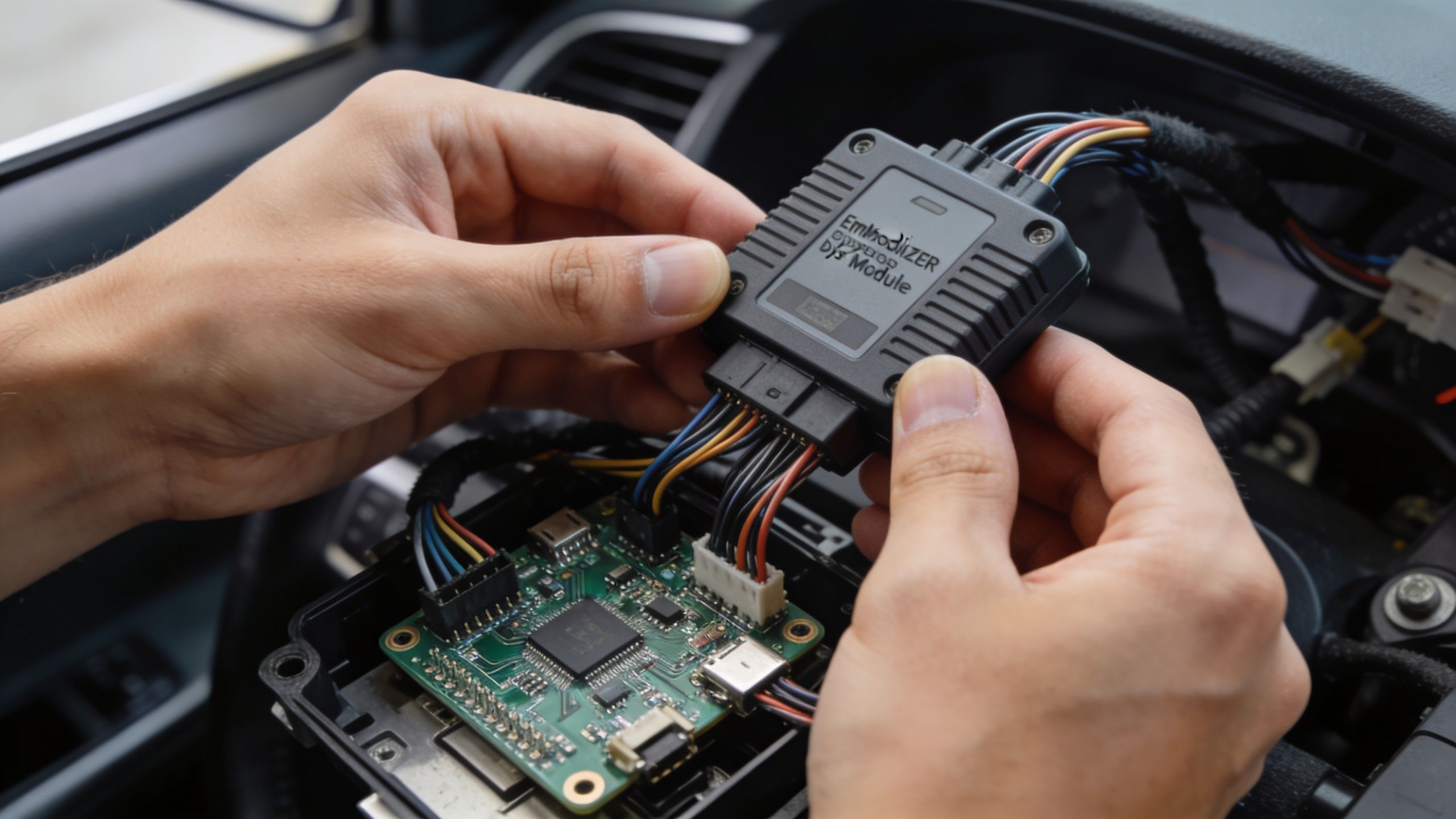
What the immobilizer actually does
A factory immobilizer checks for authorised key data before allowing the engine to stay running. In a normal start, the key or fob is present, the car sees valid credentials, and the engine starts normally.
During remote start, no driver is sitting in the vehicle with the key in the expected position. The remote starter has to work with a bypass module that tells the vehicle a valid start request is taking place without defeating the anti-theft system outright.
That distinction matters. You’re not removing security. You’re integrating with it.
Old-style bypass versus modern data modules
Older systems often relied on what techs sometimes call a “key-in-a-box” approach. A spare key or transponder chip sat inside a bypass enclosure near the ignition area. It worked, but it was clumsy and vehicle security logic has moved on.
Modern installs typically use a data-bus bypass module. These modules communicate over the vehicle network, learn the required key data, and coordinate with the remote starter brain. They’re cleaner, but they also require exact firmware selection and correct programming steps.
Programming is usually the real hurdle
The wiring can be perfect and the system can still fail if the bypass module isn’t programmed correctly. Programming sequences vary by platform, but the usual pattern includes:
- Powering the module in the correct order
- Cycling the ignition or start button at specific moments
- Waiting for LED status changes
- Teaching the module the vehicle’s key data
- Synchronising the bypass with the remote starter controller
Rushing often leads to complications. Read the module instructions line by line before beginning. Some systems are very particular about door state, brake input, hood status, or whether a key is inside the cabin during learning mode.
Shop habit: If the module’s LED behaviour doesn’t match the guide exactly, stop and verify power, ground, data, and firmware before trying the learn procedure again.
Test handoff and takeover functions
Once the immobilizer bypass has learned correctly, don’t just celebrate the first remote start. Test the transition points.
Check whether the vehicle:
- Starts and idles correctly by remote command
- Allows driver takeover when you enter, and press the brake or start button as required
- Shuts down properly when a safety input is triggered
- Maintains factory security behaviour after the install
A system that starts but stalls during takeover is not finished. A system that starts but throws warning lights or disables convenience features is not finished either.
Respect the anti-theft side of the car
If your vehicle already has a factory security issue, key recognition fault, or intermittent no-start condition, sort that out before adding a remote starter. Remote start hardware won’t fix an underlying anti-theft problem. It usually makes the diagnosis more tangled.
If you want a better sense of how these systems interact, review common anti-theft device options for cars. It helps to understand what the vehicle is trying to protect before you ask another module to share that job.
DIY Dilemma or Professional Peace of Mind
You finish the wiring, bolt the trim back in place, hit the remote start button, and the car fires up. Then the dash lights up with a warning, the heater never comes on, or the engine shuts off the moment you try driver takeover. That is the point where a remote starter install stops being a fun garage project and turns into electrical diagnosis.
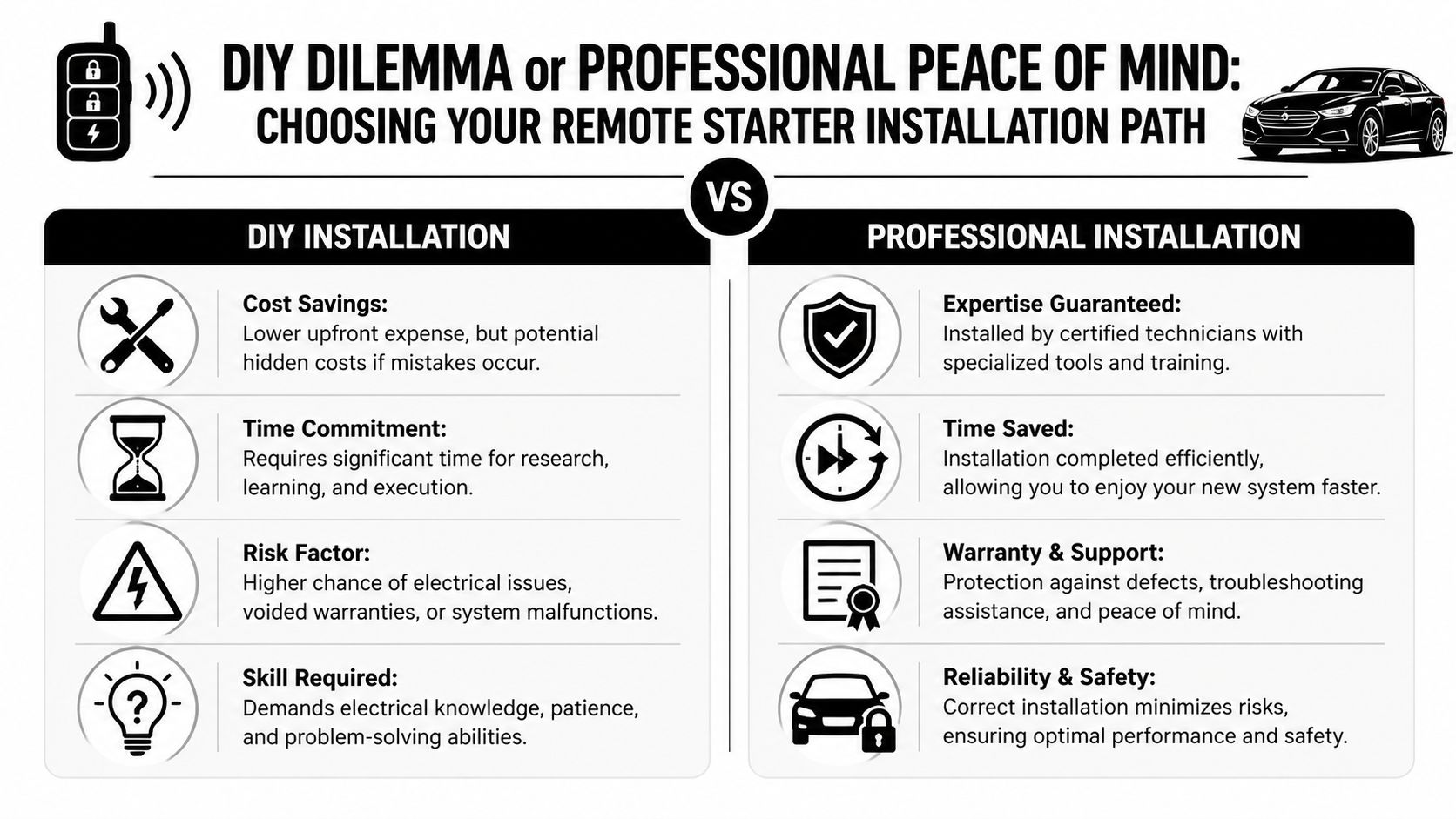
I have seen plenty of owners get through the basic wiring and still lose half a day chasing one missed status input, one bad ground, or one data setting buried in the programming menu. On older analog vehicles, DIY is often realistic if you work carefully and verify every circuit with a meter. On newer push-button or CAN-bus vehicles, the margin for error gets much smaller.
Where DIY makes sense
DIY can still be the right call for the right vehicle and the right person.
It usually works best if:
- The vehicle has straightforward wiring information available
- You own proper tools, including a digital multimeter, soldering tools, heat shrink, and trim tools
- You are comfortable reading diagrams, not just matching wire colours
- You have time for testing and rework, not just the install itself
- You can accept the risk of troubleshooting your own mistakes
A major benefit is control. You choose how the harness is built, whether connections are soldered or made with high-quality crimp joints, and how cleanly everything is loomed and secured. There is also genuine satisfaction in getting a system to behave exactly as intended.
Where DIY usually gets expensive
The hidden cost is not always the module or extra relay. It is the second teardown.
One poor splice can create intermittent crank, erratic parking light output, battery drain, or a no-start that only shows up after the car sits overnight. Cheap T-taps and hurried crimps cause a lot of these problems. In the shop, I would rather see a properly executed solder-and-seal connection on low-current data and control circuits, or an OEM-grade crimp done with the correct tool, than a fast connector buried in the harness. The trade-off is time. Good connections take longer, but redoing a failed one takes longer still.
Trim damage also adds up fast. Broken clips, scratched panels, and loose knee bolsters are common signs of a first install that fought back.
What a professional install actually buys you
Professional installation is not just paying someone to connect wires. It is paying for platform knowledge, repeatable process, and accountability if the vehicle does something strange after the job is done.
That matters on vehicles with:
- Push-button start systems
- Integrated security and immobilizer logic
- Heavily networked body control modules
- Aftermarket alarms, audio equipment, or previous electrical repairs
- Limited under-dash space where poor harness routing can create noise or future failures
At Carmedics Autowerks in Whitby, that usually means identifying the right firmware path before the dash comes apart, confirming which circuits should be hardwired and which should stay on data, and testing the install enough times to catch the faults that DIY jobs often miss on the first evening.
Side-by-side comparison
| Factor | DIY Installation | Professional Installation (Carmedics Autowerks) |
|---|---|---|
| Vehicle research | You confirm compatibility, wiring locations, and programming steps yourself | The shop matches the hardware and install method to the vehicle |
| Connection quality | Depends on your tools, technique, and patience | Built around repeatable wiring practices and cleaner harness integration |
| Time | Often a full day, sometimes longer if diagnosis starts | Usually more predictable because the platform is familiar |
| Troubleshooting | You trace every fault and decide whether the issue is wiring, programming, or the vehicle itself | The installer can isolate installation-related faults and correct them |
| Risk | Higher if the vehicle uses complex data communication or start authorization logic | Lower because testing, rework, and known platform quirks are part of the process |
| Finish | Varies with skill level and panel handling | Usually cleaner behind the dash and during trim reassembly |
Reliability has a price. So does redoing the job
A lot of owners start with the labour number and stop there. That is incomplete math. A remote starter install should behave like factory equipment every cold morning, not just work once in the driveway. If you are comparing DIY against shop labour, review the factors that affect the cost to install autostart and weigh that against your tools, your time, and your tolerance for electrical troubleshooting.
For a simple vehicle, DIY can be a rewarding weekend project. For a newer daily driver that you need to trust in January, professional installation is often the better decision. That is not sales talk. It is what repeated comebacks, damaged trim, and intermittent no-start complaints have taught the trade.
Final Steps and Frequently Asked Questions
The job is only finished after the system behaves properly through repeated tests. A remote starter can look fine on the first cycle and still fail on the second or third once voltage changes, the bypass times out, or a shutdown input gets missed. That is why I tell DIY owners to leave the panels off until the vehicle passes every check more than once.
Run the system cold if you can. Then test it again after the vehicle has been driven. Confirm lock and door operation, parking light output, runtime, shutdown behavior, and driver takeover with the key or authorized fob present. On newer vehicles, watch the dash closely for warning messages, delayed accessory power issues, or a crank that feels longer than normal.
Final checks before the trim goes back on
Use this closing checklist:
- Confirm the hood pin works so the vehicle cannot remote start while someone is under the hood.
- Check brake shutdown to make sure takeover logic works the way it should.
- Cycle the system several times and verify no warning lights stay on.
- Secure each module and harness so nothing drops into the driver footwell or rubs on sharp brackets.
- Listen for rattles and panel tension before locking the trim back into place.
Good testing saves rework. It also tells you whether the install is ready for winter use or just barely functioning in the driveway.
Frequently asked questions
Will a remote starter void my warranty
Usually no. The bigger issue is whether the installation caused a fault, damaged a circuit, or left evidence of poor wiring. If an installer taps the wrong wire, overloads an output, or damages a connector, that specific damage can become the problem.
Can a remote starter drain my battery
Yes. Battery drain usually comes from poor programming, a module that does not go to sleep properly, or a wiring mistake that keeps part of the vehicle awake. Push-button start vehicles can be less forgiving because they rely on more data communication and key authorization logic, so a small mistake can turn into a repeated parasitic draw complaint.
Are remote starters secure
They can be, if the system is integrated properly. The vehicle should still require normal authorization for takeover and drive-away. Security problems usually show up when the bypass is installed carelessly, the wrong firmware is loaded, or a convenience feature is added without understanding how the factory theft system behaves.
Is manual transmission remote start a good DIY project
Only for someone who fully understands reservation mode and shutdown logic. A manual-transmission remote starter has to prove the vehicle was left in neutral before it will allow a start sequence. If you are not fully confident in that setup, hand it to a shop.
Do I need to solder every connection
For hardwired connections, solder and proper insulation usually give the most durable result. A clean mechanical crimp with the correct tool can also hold up well in the right spot. The problem is not crimping itself. The problem is cheap tap connectors and rushed joins hidden behind the dash, because those are the ones that come back with intermittent faults.
What if the vehicle remote starts but shuts off right away
Start with the basics. Check bypass programming, tach or voltage sensing, ignition and accessory outputs, and whether the immobilizer handoff completed. Do not keep trying it over and over. Repeated failed starts can create new problems, especially on vehicles that are sensitive to low battery voltage.
Can I add this to a newer car with lots of electronics
Usually yes, but the margin for error is smaller. Newer platforms often need firmware setup, data-network integration, and careful verification after install. That is one reason many owners in Whitby choose a professional install at Carmedics Autowerks Inc instead of troubleshooting a no-start in the driveway after the dash is already back together.
If you want remote start without turning your lower dash into a weekend wiring project, Carmedics Autowerks Inc offers auto services in Whitby for drivers who care about clean installation, proper vehicle integration, and keeping newer cars sorted properly.