


Your car probably doesn’t look its worst in the middle of winter. It looks worst in early spring, after the snow has melted, when the paint still carries the memory of months of salt spray, dirty slush, and repeated freeze-thaw cycles. That’s when a lot of Whitby drivers realise the gloss has gone a bit flat, water no longer beads the way it used to, and the finish feels tired even after a wash.
That’s also when the usual internet advice starts to fall apart. Generic waxing guides are written for generic climates. Ontario isn’t generic. If you daily drive through Whitby, Oshawa, Ajax, or anywhere across Durham, your paint deals with a different kind of abuse for a big part of the year.
So if you’re asking how often should you wax your car, the honest answer is this: it depends on what you drive, where you park, what product you use, and how much winter exposure the vehicle sees. But for local drivers, there is a practical schedule that works far better than the usual “twice a year” advice.
Why Waxing Your Car Is Non-Negotiable Protection
A Whitby car coming out of February has a different problem than a summer garage queen. The paint has been sprayed with salt brine, coated in road film, hit with freeze-thaw swings, and washed more aggressively than usual just to keep it presentable. In those conditions, wax is maintenance, not decoration.
Wax and paint sealants add a sacrificial layer over the clearcoat. That matters because clearcoat is thin, and once it starts to oxidize, stain, or etch, the fix is polishing or correction work, not another wash. Protection is always cheaper than repair.
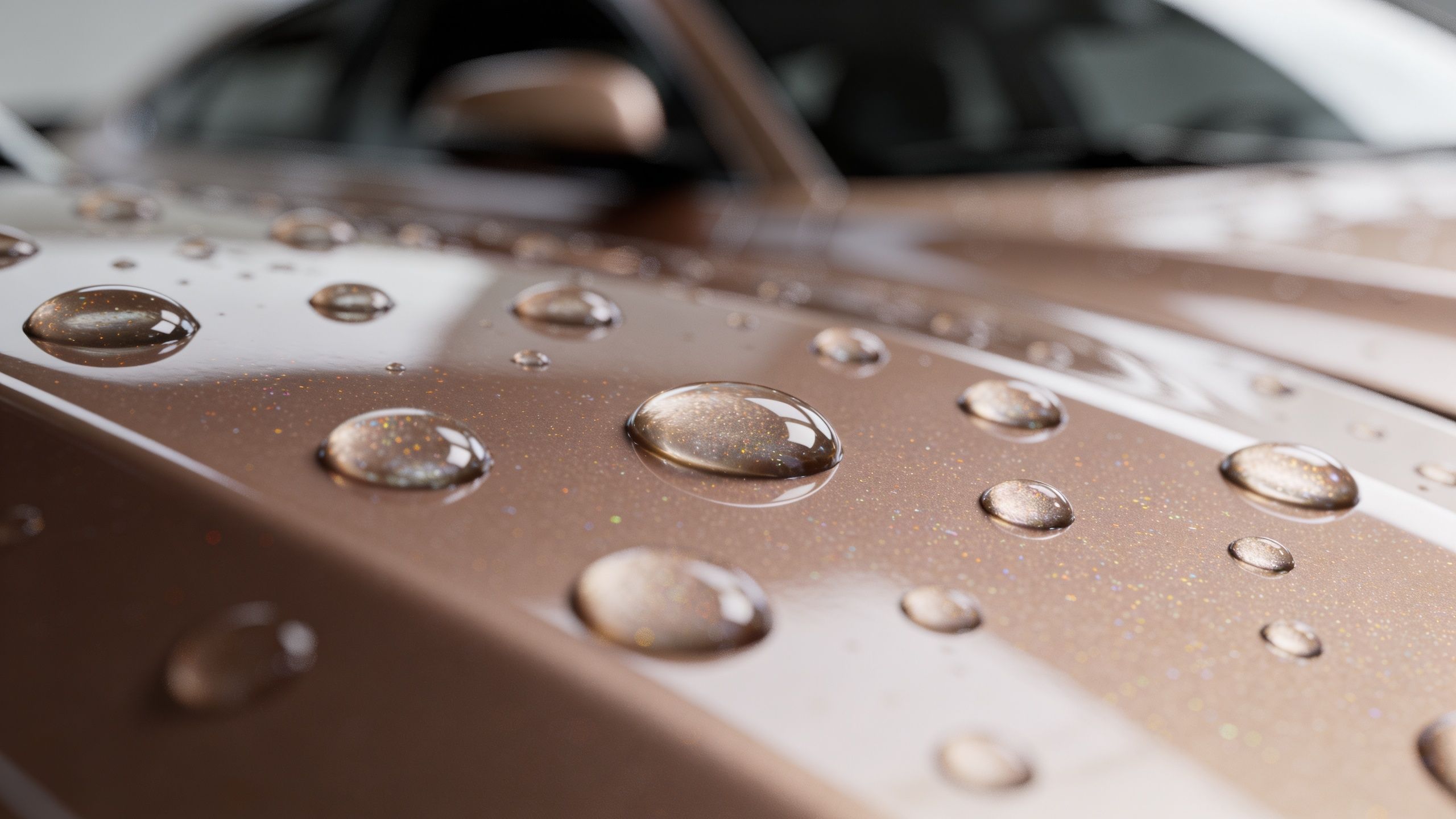
What the wax layer is actually doing
A waxed surface still gets dirty. The difference is that grime, moisture, and contamination are sitting on a layer meant to be replaced instead of working directly on the paint.
The main benefits are practical:
UV wear
Sun exposure slowly dulls gloss and clarity, especially on darker colours parked outside year-round. A maintained wax or sealant layer helps reduce that direct exposure at the surface.Bonding and staining from fallout
Bird droppings, bug residue, tree sap, and industrial fallout are easier to remove from protected paint. Left sitting on bare or weak protection, they can stain or etch much faster.Winter chemical exposure
For Ontario ownership, the schedule changes. Salt brine, slush, and repeated wet-dry cycles break down protection faster than many generic waxing guides account for.
If wax only goes on when the paint already feels rough and looks flat, it went on too late.
Why local winter conditions change the schedule
Ontario uses a lot of road salt. Environment and Climate Change Canada notes that road salts are widely applied for winter maintenance and can affect vehicles, infrastructure, soil, and water through seasonal exposure and runoff. For drivers in Whitby, Oshawa, Ajax, and the rest of Durham Region, that means your paint is regularly exposed to salt residue and contaminated spray for months at a time, not just during a single storm. You can read more in the federal government’s overview of road salts in the environment.
That local reality is why the usual "wax it twice a year" advice falls short here. A car that sees highway commuting, outdoor parking, and regular winter driving will usually need fresh protection more often because salt film, stronger wash routines, and cold-weather grime wear down the layer sooner. In practice, fall protection matters because it gives the paint something to sacrifice before salt season starts. Spring protection matters because winter washing and contamination have usually stripped much of what was left.
Owners often separate paint care from rust control, but Ontario winters do not. Salt attacks exposed metal underneath and it also makes life harder for the finish up top. If you want to cover both sides of that problem, this guide on best rust prevention for cars is worth reading alongside your waxing routine.
Wax protects the ownership experience too
A protected vehicle washes up faster. Drying is easier. Road film does not cling as stubbornly, and the paint usually keeps more gloss between details.
That matters long before resale.
A car with healthy protection feels better to maintain through a Durham winter and looks better when spring finally arrives. That is the primary reason waxing earns a place on the calendar. It helps your clearcoat last longer under conditions that are hard on every daily driver in Ontario.
Your Guide to Different Types of Car Wax
A Whitby daily driver and a summer-only toy should not wear the same kind of protection.
That is where generic waxing advice usually falls apart. Product choice changes how often you need to reapply, how the finish behaves after a salty highway run, and how much effort you need to put into upkeep. In Ontario, those differences show up fast.
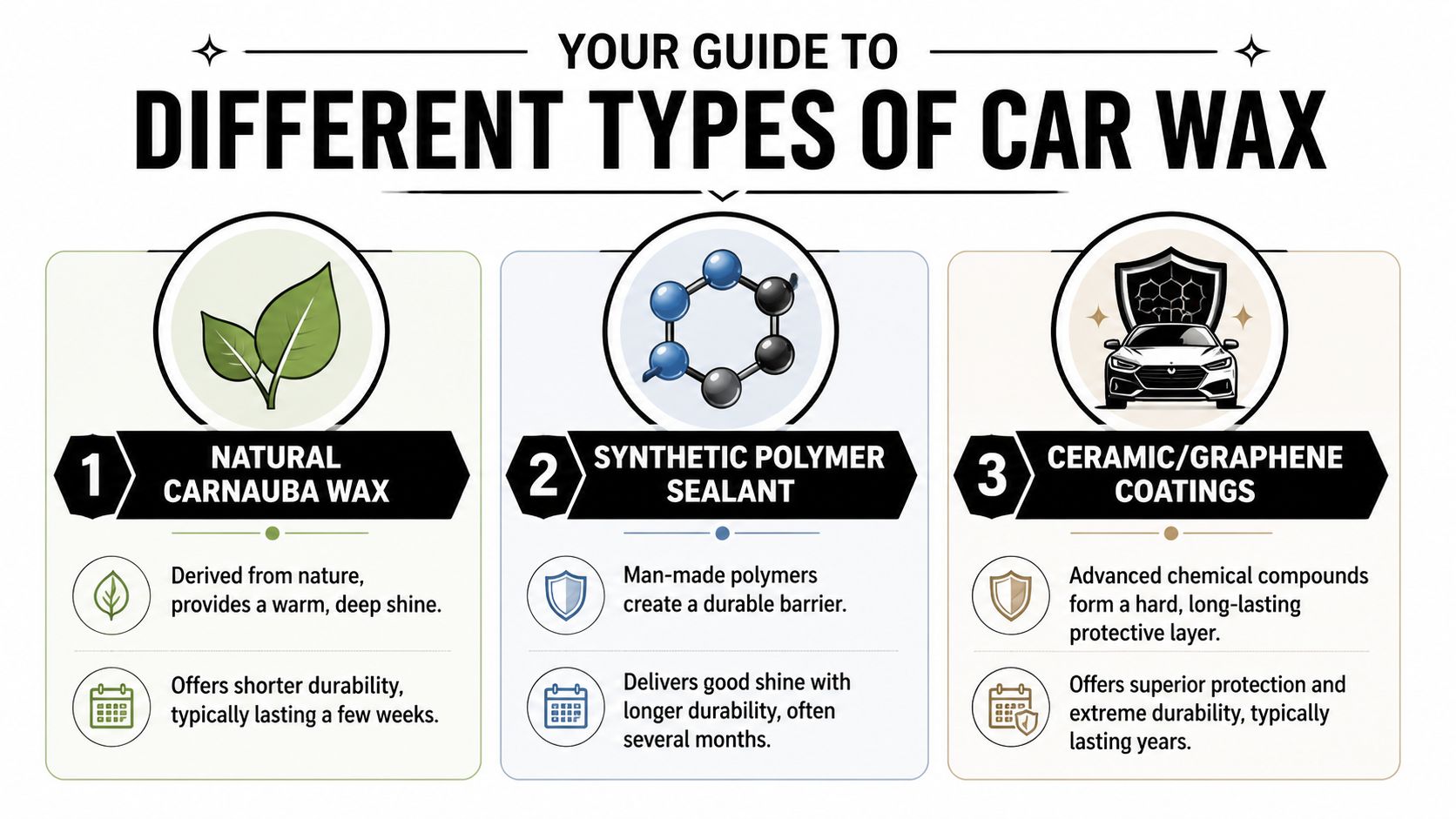
The three main categories
| Product type | What it’s like | Best fit |
|---|---|---|
| Natural carnauba wax | Warm, rich gloss with the classic hand-waxed look | Weekend cars, show cars, owners who enjoy regular upkeep |
| Synthetic polymer sealant | Longer-lasting protection with better resistance to weather and washing | Daily drivers, commuters, vehicles parked outside |
| Hybrid ceramic wax | Slick feel, strong water beading, easy top-up application | Owners who want easier maintenance with better durability than traditional wax |
Carnauba wax for appearance-first owners
Carnauba still earns its place. On darker paint especially, it gives a softer, warmer finish that many enthusiasts prefer over the sharper look of a sealant. If the car is stored indoors, driven lightly, and detailed often, that trade-off makes sense.
Ontario winter use changes the equation. Carnauba looks great, but it does not stay at its best for long once the vehicle is seeing road film, frequent washing, and salt exposure. For an outdoor-driven SUV or commuter sedan, it works better as a beauty layer than as the main line of protection.
Synthetic sealants for cars that see real use
For most vehicles I see around Whitby, synthetic sealant is the practical choice.
It lasts longer than a traditional wax, handles repeated washes better, and gives the kind of protection a daily driver needs through slush, brine, and temperature swings. You may give up a bit of that old-school wax warmth, but you gain consistency. That matters more on a vehicle that has to face Ontario roads every day.
A sealant usually fits best for:
- Commuter cars that rack up highway mileage
- Family SUVs and pickups that live outside
- Newer vehicles where the goal is to preserve the finish with less frequent reapplication
Hybrid ceramic wax for easier upkeep
Hybrid ceramic waxes sit between old-school wax and longer-term coatings. They are simple to apply, they leave the paint slick, and they usually hold up better than a basic paste wax.
They make sense for owners who wash at home and want maintenance to stay manageable. Used on their own, they can be a solid step up from entry-level waxes. Used over a sealant, they are an effective way to keep water behaviour and gloss up between bigger details.
If you want to compare wax, sealant, ceramic coating, and other longer-term options side by side, this guide to car paint protection options for Ontario drivers lays out where each one fits.
What actually works in Ontario
The best product is the one that matches the car’s real life.
Works well
Sealant on a daily-driven SUV. Hybrid ceramic as a maintenance topper. Carnauba on a garaged summer car.Usually disappoints
Carnauba as the only protection on a winter commuter. A single pre-winter wax with no follow-up. Buying based on shine alone and ignoring durability.
The finish on your car does not care what the label promises. It responds to how the product holds up after salt exposure, cold washes, and weeks of outdoor parking. In Ontario, durability usually wins.
Creating Your Ideal Car Waxing Schedule in Ontario
A Whitby daily driver can leave the driveway clean in the morning and come home with a film of brine on the doors, grit behind the wheel arches, and salt starting to dry along the rocker panels. That reality is why the usual advice to wax twice a year falls short here.
For most vehicles in Durham Region, a realistic starting point is every 2 to 3 months. Then tighten or loosen that schedule based on winter exposure, parking conditions, and the product on the paint.
The Ontario winter factor
Ontario winters strip protection faster than many owners expect. Salt, liquid brine, freeze-thaw cycles, and repeated rinseless or coin-op washes all shorten wax life. Durham Region documents its winter road salt use through seasonal operations reporting, and that local context matters far more than generic national advice from milder climates. You can review those conditions in Durham Region's Winter Operations and Road Maintenance information.
In practice, one fall application rarely carries a commuter vehicle through to spring. I see that mistake all the time. The paint still has some gloss, so owners assume protection is still there, but the lower panels and rear bumper usually tell a different story after a few weeks of slush and wash cycles.
A seasonal schedule that fits Whitby driving
The best schedule is built around exposure, not wishful thinking.
Early fall
Get protection on the paint before the first steady round of salt and brine. That gives the surface a clean, intact layer before winter contamination starts bonding to it.
Use this window for:
- A proper wash to remove summer buildup
- Decontamination if the paint feels rough or grabby
- A durable wax or sealant that can handle cold-weather washing
Miss this window, and winter maintenance becomes damage control.
Mid-winter
A full wax job in January is not always practical. Temperature matters, and most products do not like cold panels or damp garages. Still, if you have access to a heated space or a mild stretch, adding protection mid-season helps daily drivers a lot.
The goal is simple. Keep a sacrificial layer on the paint while salt exposure is at its worst.
Early spring
Spring is where Ontario drivers often underestimate residue. The snow is gone, but salt film can still sit in seams, on lower doors, and behind trim. A thorough wash and fresh protection layer make more difference here than a quick rinse followed by wishful thinking.
A good spring reset usually includes:
- A careful wash, with extra attention to lower panels
- A surface check by touch to find bonded contamination
- A fresh coat of protection after the paint is properly cleaned
Mid-summer
Summer is your easiest correction window. If the vehicle lives outside, sees long highway runs, or sits in full sun every day, this is a smart time for another full application. If protection is still performing well, a maintenance topper may be enough.
Adjust the schedule to the vehicle, not just the calendar
Two cars on the same street can need different schedules.
| Vehicle use | Better schedule | Why |
|---|---|---|
| Outdoor daily driver | Every 2 to 3 months | Salt exposure, frequent washing, sun, and constant contamination wear protection down faster |
| Garage-kept weekend car | Every 4 to 6 months, with checks in between | Lower exposure usually means slower breakdown |
| Older commuter with no covered parking | Every 8 to 10 weeks | Aging paint and full weather exposure leave less room for missed maintenance |
Product choice still matters, but Ontario conditions usually decide the ceiling. A short-life wax on a winter commuter needs more attention than the label suggests. A durable sealant or hybrid product gives you a better buffer, but it still needs inspection through the season.
It also helps to line paint care up with the rest of your maintenance routine. If you already book your car around seasonal tire swaps, oil changes, or inspections, this guide on how often you should service your car in Ontario makes it easier to plan both together.
The schedule that works best in Whitby is the one you can keep. For most owners, that means one application before winter, one during or immediately after winter stress, and at least one more during the warmer months.
Visual Signs Your Car Needs a New Coat of Wax
A Whitby daily driver usually shows wax failure long before the calendar says it should. After a few rounds of slush, salt spray, and touchless washes, the paint starts behaving differently. That change is easy to spot if you know where to look.
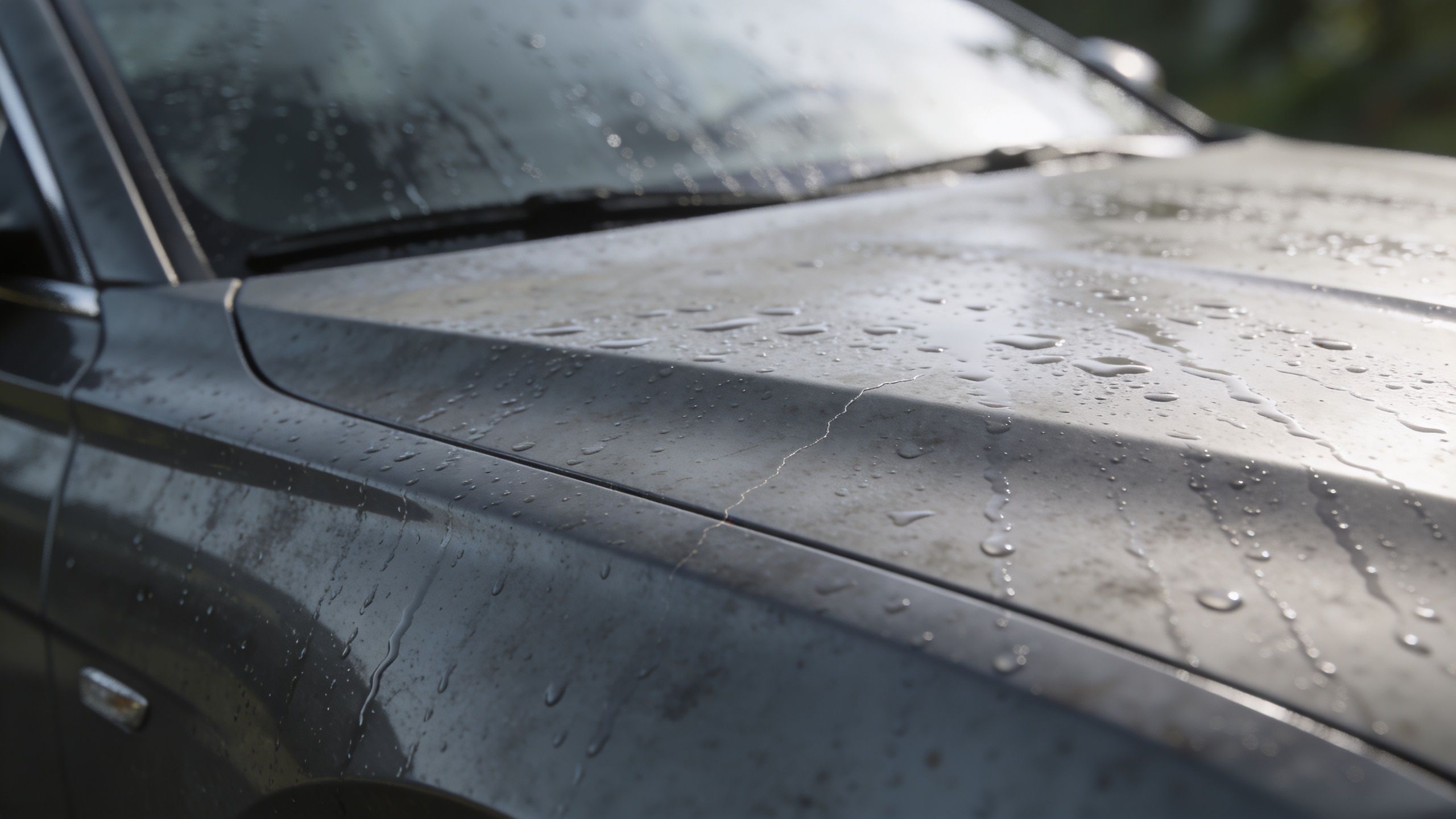
Read the water first
Start after a proper wash, not while the car is still dirty from the road. Salt film, traffic grime, and old soap residue can flatten beading and make a healthy layer look dead.
On protected paint, water either forms small, tight beads or sheets off the panel cleanly, depending on the product. On worn paint, water sits flatter, lingers on horizontal panels, and leaves more behind as it dries. In Ontario, I pay closest attention in late winter and early spring because that is when road salt, repeated rinsing, and freeze-thaw cycles usually expose weak protection fast.
Use your hand after the towel test
Once the surface is washed and fully dried, run clean fingertips lightly across the paint. Touch often reveals more than gloss does.
Here’s what to expect:
Slick and smooth
The wax or sealant is usually still present.Rough or gritty
Bonded contamination is building up. Rail dust, salt residue, and fallout are common culprits on Ontario commuters.Dry and draggy
Protection has likely thinned out enough that the paint is no longer shedding contamination well.
A hood can still look shiny and be underprotected. Dark colours hide that problem until water spotting, staining, or etching starts to stick around longer than it should.
Watch for the small changes in day-to-day cleaning
Owners usually notice wax failure during routine washes. The mitt stops gliding as easily. Rinse water hangs on the panels. Bug residue on the front end takes more passes to remove. Bird droppings leave a mark faster, which matters in summer, but it also matters after winter because salt-heavy grime tends to cling harder to unprotected paint.
Another giveaway is how quickly the car loses its just-washed look. Protected paint releases dirt better. Once that layer fades, the finish starts looking tired again within a day or two of normal driving.
Know the difference between wax wear and paint damage
Wax failure changes how the surface feels and how water behaves. It does not cause chips, peeling, deeper scratches, or clear coat failure. If you’re seeing those issues, you’re past a maintenance problem and into repair territory. This guide to automotive paint repair options helps separate a simple re-wax from damage that needs correction.
If the paint feels flat, grabs at your towel, and stops beading after a clean wash, don’t wait for the next scheduled application. In Ontario conditions, those signs usually mean the protection buffer is already too thin.
Basic DIY Steps for a Flawless Wax Application
DIY waxing isn’t complicated, but bad prep ruins good products. Most disappointing wax jobs fail before the applicator even touches the paint.
Start with a proper wash
Use a pH-safe car shampoo, quality wash mitts, and the two-bucket method. That matters because trapped grit causes swirls, and swirls kill the clean finish you’re trying to protect.
Dry thoroughly with a clean microfibre drying towel. Don’t wax over standing water, damp seams, or hidden runoff.
Decontaminate before you protect
If the paint feels rough after washing, the surface isn’t ready. That roughness usually means bonded contamination. A clay bar or clay mitt removes what normal washing leaves behind and gives the wax a clean surface to bond to.
You don’t need to clay every time, but you do need to check. Waxing over contamination locks in a bad foundation.
Apply thin coats and keep it controlled
Less product works better than too much. Use a foam or microfibre applicator, work one panel at a time, and apply a thin, even coat. Heavy application wastes product, gums up trim edges, and makes removal harder.
A simple DIY flow looks like this:
- Wash carefully so you don’t grind dirt into the paint.
- Inspect by touch and decontaminate if needed.
- Apply lightly in even passes, then buff with a clean microfibre towel.
A flawless finish usually comes from prep, not from piling on more wax.
If you’re driving a dark-coloured vehicle, product choice and technique matter even more. Black paint shows everything, so this guide to the best wax for black cars is useful before you buy your next bottle or tin.
When to Choose Professional Long-Term Protection
Waxing works. For a lot of owners, it’s enough. But there’s a point where the question changes from “how often should you wax your car” to “how much maintenance do you want to keep doing?”
If you want the finish to look better for longer with less frequent hands-on upkeep, wax isn’t the final step. It’s the entry point.
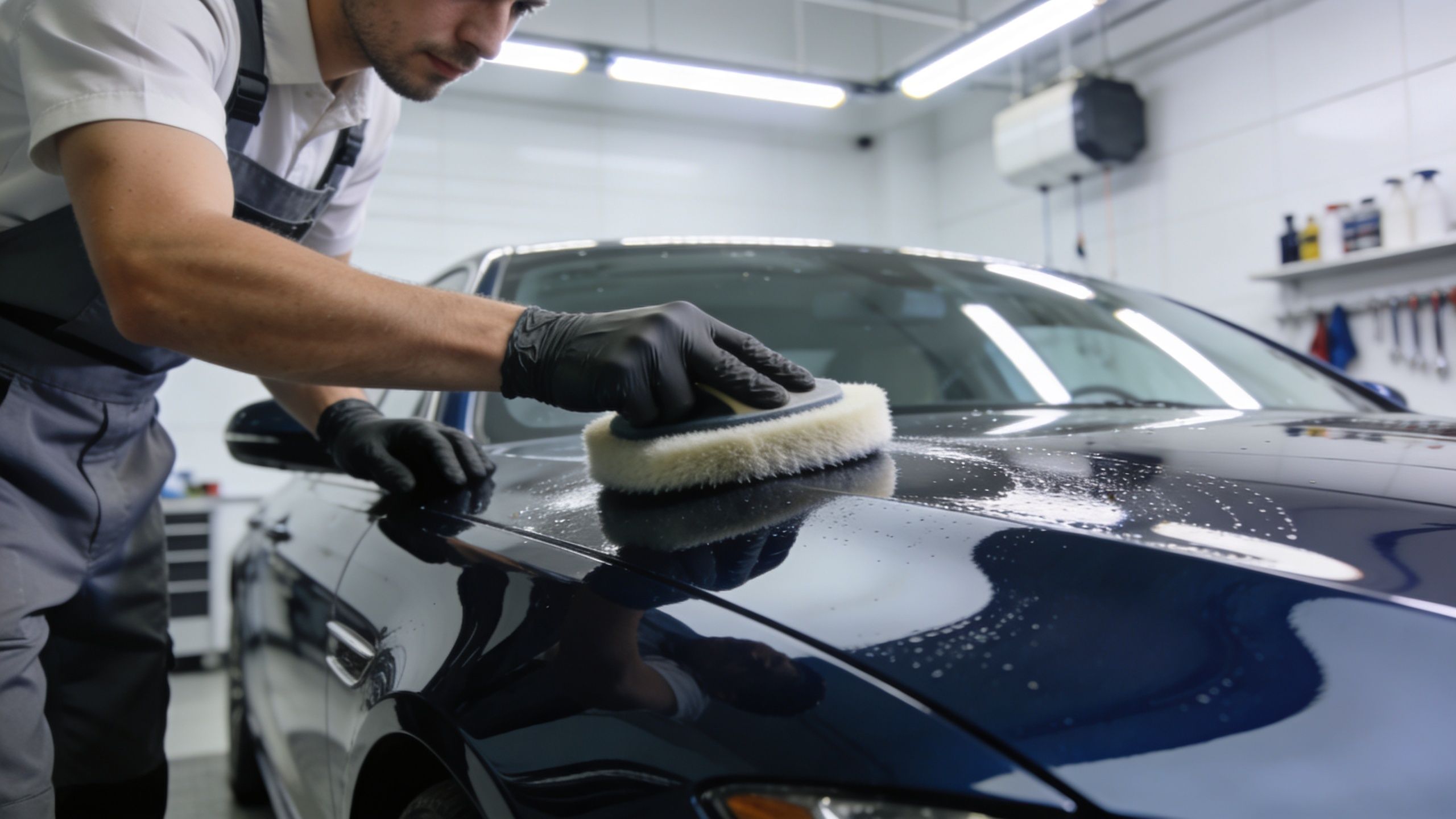
When wax starts to feel like constant catch-up
Some owners enjoy regular detailing. Others don’t mind washing but are tired of reapplying protection every season. If your vehicle is new, expensive, dark-coloured, or parked outside year-round, long-term protection starts to make more sense.
Professional solutions are worth considering when:
- You drive a lot in winter and want less seasonal maintenance
- You’ve bought a newer vehicle and want to protect the finish early
- You’re particular about paint condition and easy cleaning matters
- You don’t want to keep restarting the protection cycle
Ceramic coatings and what they change
A professional ceramic coating isn’t just a stronger wax. It’s a more durable form of surface protection that offers stronger chemical resistance and a very different maintenance experience. The paint tends to stay easier to clean, and the surface keeps that slick, low-adhesion feel much longer than a conventional wax.
That doesn’t mean it replaces washing or makes your vehicle damage-proof. It means the owner spends less time trying to preserve basic surface protection through every season.
Where PPF fits
Paint Protection Film solves a different problem. Wax and coatings help with contamination, weather, and ease of cleaning. PPF helps with physical impact, especially on high-abuse areas like the front bumper, hood edge, mirror caps, and rocker panels.
That makes it a strong option for:
- Highway commuters
- Owners of new cars and SUVs
- Drivers who want front-end protection from stone chips and heavy road rash
The practical decision
If you enjoy the ritual, waxing is still a great habit. It keeps you connected to the condition of the vehicle, and it gives you frequent opportunities to inspect the paint.
If you want to protect the vehicle at a higher level with less repetitive upkeep, professional-grade ceramic coating and PPF are the smarter long-term route. That’s especially true in Whitby, where winter road treatment, slush, and repeated seasonal contamination punish exposed paint year after year.
The right choice comes down to how you use the vehicle, how long you plan to keep it, and whether you want a maintenance hobby or a more durable protection system.
If you want expert help protecting your vehicle in Whitby, Carmedics Autowerks Inc offers professional solutions for drivers who care about keeping their cars and SUVs looking sharp through Ontario’s toughest seasons. Whether you’re ready for paint protection film, long-term surface protection, or want advice suited for how you drive, their team can help you choose the right approach for your vehicle.