

An anti-theft device for your car is more than just a gadget; it's a security system designed to stop a thief in their tracks or, if the worst happens, help you get your vehicle back. These tools range from simple, highly visible physical locks to sophisticated electronic systems that can track your car’s every move. In today's climate, thinking of one as an optional extra is a risk most of us can't afford to take.
Why You Need an Anti-Theft Device for Your Car Now
It’s a gut-wrenching feeling: walking out to an empty parking spot where your car should be. Leaving your vehicle unprotected is an open invitation to trouble. An anti-theft device for a car is that crucial layer of defence that transforms your vehicle from an easy target into a secure asset.
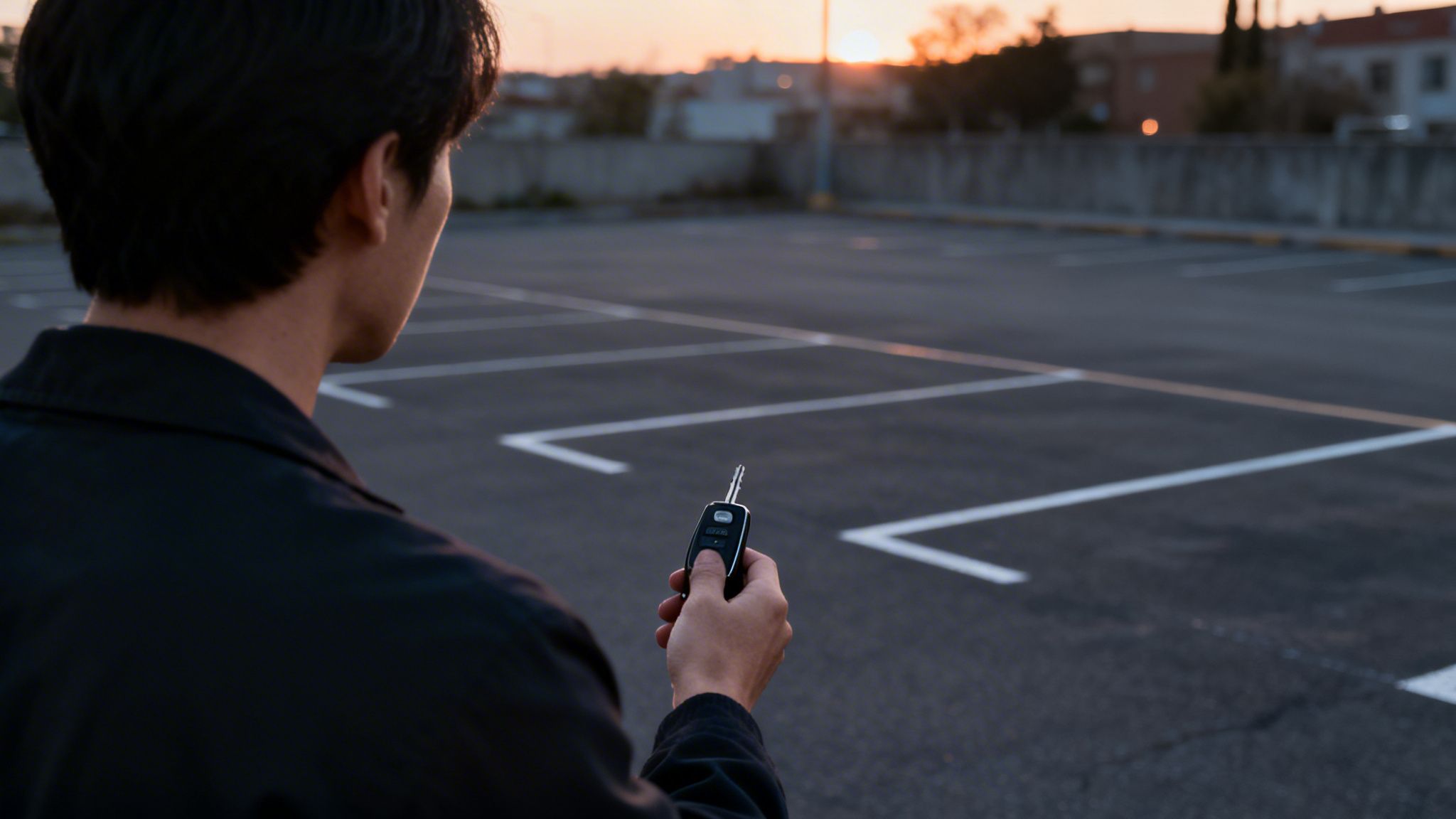
The numbers don't lie. The threat of having your car stolen isn't just a distant worry—it's a very real and expensive problem for thousands of Canadians every single year. This is why being proactive is more critical than ever.
The Hard Reality of Vehicle Theft
Vehicle theft is a persistent, organized crime that hits communities hard, causing not just financial loss but a great deal of stress. The statistics are staggering. For instance, in 2024, California alone saw a shocking 176,230 vehicle thefts, which added up to an estimated $1.56 billion in losses. While that number is actually a slight decrease from the year before, the state's theft rate of 463 per 100,000 people is still a whopping 85% above the national average, making it the worst state for auto theft. You can dig into the details in the 2024 California vehicle theft report.
What this tells us is that thieves are always on the lookout. Simply hoping your factory-installed alarm will be enough often isn't a winning strategy against someone determined to steal your car.
The whole point of an anti-theft device is to make stealing your car more trouble than it's worth. The more time, effort, and risk you add for a thief, the more likely they are to just give up and find an easier target.
Key Benefits of Protecting Your Vehicle
Putting an anti-theft device in your car offers some immediate, real-world benefits that go far beyond just stopping a theft. They work together to create a safety net that protects your investment and, just as importantly, gives you peace of mind. For anyone with a newer vehicle, law enforcement often points to visible deterrents like steering wheel locks as a simple way to drastically cut down your risk.
Here’s a quick breakdown of the main advantages you get from adding a layer of security.
Table: Key Benefits of Car Anti-Theft Devices
| Benefit Type | Primary Function | Example Device |
|---|---|---|
| Deterrence | Discourages a thief before they even try to break in. | Steering Wheel Lock, Blinking LED Light |
| Recovery | Helps you find and get your vehicle back after it’s been stolen. | GPS Tracker |
| Insurance Savings | Can help lower your yearly insurance premiums. | Immobilizer, Advanced Alarm System |
These three pillars—making your car a less attractive target, helping get it back if stolen, and saving you money—are the cornerstones of any smart vehicle security plan.
On top of that, many insurance providers see the value in these devices. We cover this in-depth in our guide on how anti-theft devices affect car insurance. At the end of the day, an anti-theft device for your car is a straightforward investment in your security and certainty.
Exploring Different Types of Car Anti-Theft Devices
When you think about protecting your car, it's easy to get lost in all the options out there. The best way to cut through the noise is to understand what each type of device is actually trying to accomplish. It’s a bit like setting up security for your home—some tools are there to scare off intruders, others stop them in their tracks, and some help you track them down if they get inside.
Car security is built on those same three pillars: deterrence, immobilisation, and recovery. Let's walk through the most common devices, from the simple, classic physical locks to the more advanced electronic systems. You'll quickly get a feel for how they work and which ones are the right fit for your car and your lifestyle.
Mechanical Deterrents: The Visible Guards
Mechanical devices are the old-school muscle of car security. Their biggest advantage is their sheer visibility. A thief sizing up a street for an easy target will often skip a car with an obvious physical lock, because it screams "This won't be quick."
These tools are all about making the physical act of stealing the car a slow, difficult, and noisy process. For the average smash-and-grab thief, that's more than enough reason to move on.
1. Steering Wheel Locks
This is the classic, and for good reason. A steering wheel lock, often known as a "club," is essentially a big, brightly coloured warning sign you place right in the driver's seat. It's a simple concept that works.
It functions by locking across the steering wheel, making it impossible to actually turn the car. Even if a thief manages to hotwire the engine, they can't drive away. Its main job is deterrence; its bright colour and solid presence are meant to be seen from a block away, stopping a break-in before it even starts. They're a fantastic first line of defence for anyone who parks on the street or in large public lots.
The value of a visible deterrent like this can't be overstated, especially in regions hit hard by auto theft. Despite a small dip in 2024, California's auto theft rate is still way up from 2019, making up 22% of all property crimes in 2023. That year, 176,230 vehicles were stolen in the state, a staggering loss of $1.56 billion. It's why law enforcement agencies strongly recommend these locks, particularly as Los Angeles County alone accounts for over 61% of Southern California's thefts. You can see more on California's crime trends on PPIC.org.
2. Wheel Locks or Clamps
If a steering wheel lock stops a thief from steering, a wheel clamp stops them from moving at all. This is a heavy-duty piece of equipment that locks directly onto a tire, physically preventing it from rotating.
You've probably seen parking enforcement use these, and that's a testament to how effective they are.
A wheel clamp is the automotive equivalent of a bank vault door. It’s big, bulky, and sends an unmistakable message that this vehicle is not going anywhere easily.
The clamp is fitted around the tire and secured with a key. Until it's unlocked and removed, the car is completely stuck. Its purpose is both immobilisation and deterrence—it physically stops the car from being driven or even easily towed. This makes it ideal for vehicles left unattended for long stretches, like an RV in storage, a classic car in a shared garage, or a work trailer parked at a job site overnight.
Electronic Systems: The Invisible Guardians
While mechanical locks stand guard out in the open, electronic systems are your covert operatives. They work behind the scenes, using your car's own electrical systems and modern tech to stop a theft in its tracks or help you recover your vehicle.
3. Car Alarms
Most new cars roll off the lot with a basic factory alarm, but a good aftermarket system is a major upgrade. The whole point of an alarm is to create a scene and draw as much unwanted attention to a thief as possible.
These systems use a network of sensors to detect things like a window breaking, motion inside the cabin, or a door being forced open. When triggered, they unleash a piercing siren and flash the car's lights, turning a quiet crime into a public spectacle. This is all about deterrence and alert; the noise is designed to send a thief running and let everyone in the area know something is wrong. A quality alarm is a foundational security layer for just about any vehicle.
4. Engine Immobilizers
Think of an engine immobilizer as a secret digital handshake between your key and your car. Without the correct signal, the engine simply refuses to start, no matter what a thief tries.
Most vehicles built since the late 1990s have one from the factory, but if you have an older car, adding an aftermarket immobilizer is one of the most powerful moves you can make. It works by using a transponder chip in your key fob that sends a unique code to the car's computer. If the code is wrong, the computer shuts down critical components like the fuel pump or ignition. Its goal is pure immobilisation—a silent but incredibly effective defence.
5. GPS Trackers
So, what if the worst happens and a thief gets past your other defences? This is where a GPS tracker becomes your most valuable asset. It's your car's own private investigator, giving you the power to find it.
A small, hidden tracker uses the GPS network to pinpoint your car's exact location in real-time, which you can see on a simple smartphone app. This dramatically increases the odds of getting your car back. Its primary goal is recovery. Many systems also include "geofencing," which sends you an instant alert if your vehicle moves outside a pre-set area, like your neighbourhood or office car park. A tracker gives you the ultimate peace of mind.
For an extra layer of surveillance, many people are also adding dash cams. They're great for recording accidents, but they can also capture crucial video of a break-in or theft, giving police invaluable evidence. For more info, check out our guide on finding a professional dash cam installer near you.
How to Choose the Right Anti-Theft Device for Your Car
Picking the best anti-theft device for your car can feel like a huge task, but it really just comes down to a few key questions about your car, your daily routine, and your budget. Instead of thinking about it as buying one magic gadget, think of it as creating a personalized security plan. The right choice is one that fits into your life without a fuss while giving you real peace of mind.
Let's start with the basics: where does your car live? A vehicle parked on a busy downtown street faces a completely different set of risks than one tucked away in a private, locked garage. Your answer here will point you toward either a loud, visible deterrent or a quiet, hidden recovery tool.
Assess Your Daily Parking Habits
The single biggest factor in your car's risk level is where you park it. A car left overnight in a poorly lit, public car park is a much juicier target than one sitting in a secure, monitored spot. Take a moment to think about the places your car spends most of its time—at home, at the office, and while you're out running errands.
- High-Risk Areas (Street Parking, Public Lots): If your car is frequently out in the open, a visible deterrent is your best friend. A brightly coloured steering wheel lock or wheel clamp screams "this car is a hassle" to any thief just looking for a quick score.
- Low-Risk Areas (Private Garages, Secure Lots): In safer environments, your focus can shift. A silent, hidden device like an engine immobilizer or a GPS tracker offers better protection against more determined, professional thieves who won't be scared off by a simple lock.
Choosing your security strategy is all about making your car more trouble than it's worth. A study of over 5,000 car owners found that 33% of those who had never been victims of theft used multiple layers of protection, compared to only 8% of those who had reported a theft.
Consider Your Vehicle and Lifestyle
The kind of car you drive matters, too. A vintage muscle car with zero modern security needs a totally different game plan than a brand-new SUV that came loaded with factory electronics. Your budget will also play a big part in whether you go for a simple mechanical lock or a more advanced electronic system that might have a subscription fee.
This decision tree can help you visualise your main goal. Are you trying to stop a thief in their tracks, get your car back after it's gone, or a bit of both?
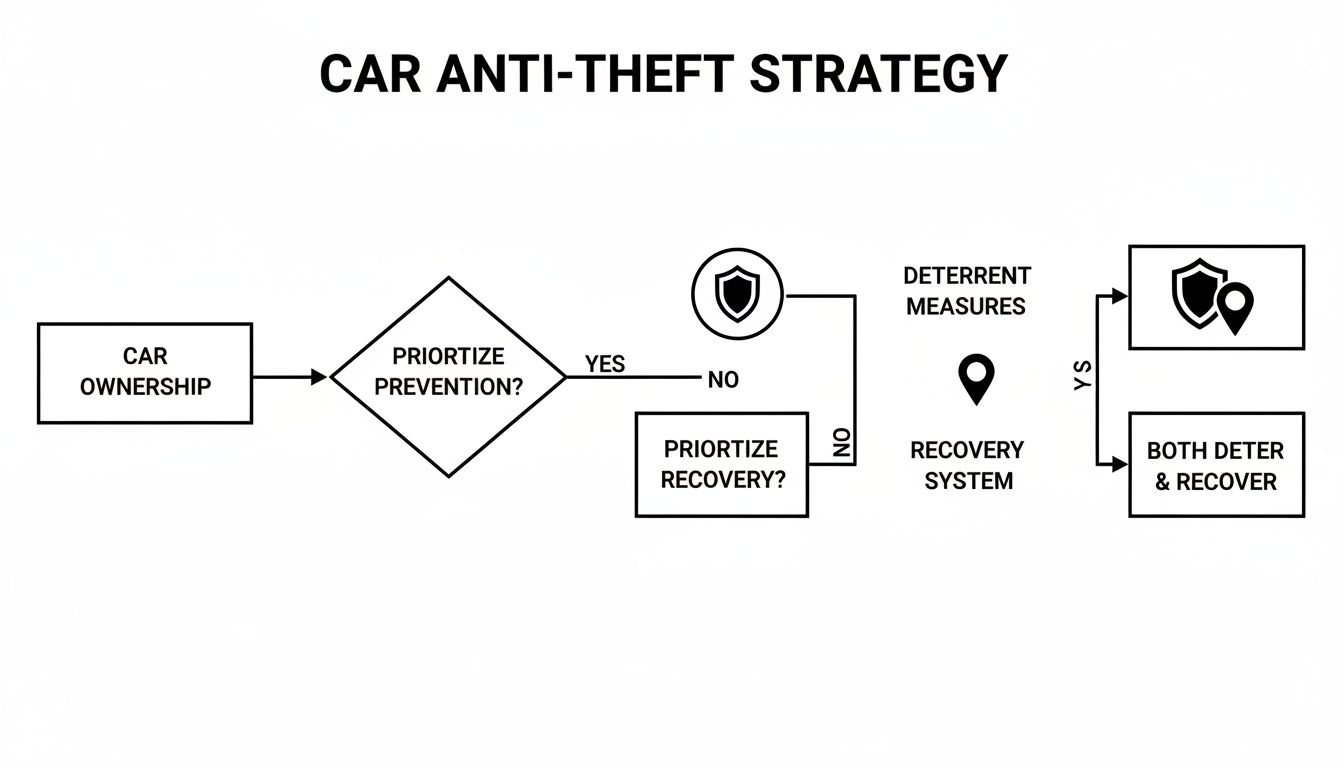
As you can see, the smartest move is often to combine devices. A visible deterrent stops the casual crook, and a hidden tracker ensures you have a fighting chance to get your vehicle back if that first line of defence is breached.
Embrace the Layered Security Approach
At the end of the day, the best way to protect your vehicle isn't with a single, "perfect" anti-theft device, but with several layers of security that work as a team. It’s the same logic we use for our homes: you have a lock on the door, an alarm system, and maybe some security cameras. Each layer tackles a different type of threat.
A fantastic combination for a daily driver could look something like this:
- A Visible Deterrent: A steering wheel lock to make a thief think twice before even trying to break in.
- An Electronic Immobilizer: A kill switch or an aftermarket immobilizer that prevents the engine from starting, even if a thief gets inside and hotwires it.
- A Recovery System: A hidden GPS tracker that can give police the vehicle's real-time location.
This layered approach creates a serious headache for even the most prepared criminals, making them far more likely to give up and move on. The cost of some professional installations, like remote starters with built-in security, can be surprisingly affordable. To get a better idea, you might want to learn more about the cost to install an autostart system, which often comes with these security benefits. By thoughtfully combining devices, you can turn a confusing decision into a confident and effective security strategy.
Installation and Maintenance Best Practices
Picking out the right anti-theft device for your car is a fantastic start, but its real-world effectiveness hinges on two things: proper installation and regular upkeep. A badly installed kill switch or a GPS tracker with a dead battery is worse than having nothing at all—it gives you a false sense of security. This is where you really see the difference between a quick DIY job and a professional installation.
Of course, some devices are made to be simple. A steering wheel lock, for instance, is as straightforward as it gets. You just lock it onto your wheel when you park. Many of the newer plug-and-play GPS trackers are just as easy, connecting right into your car’s OBD-II port in a matter of seconds. These are great, no-fuss options that anyone can handle.
More advanced systems, however, are a different story. Things like engine immobilizers, comprehensive alarm systems, and hardwired kill switches need to be woven directly into your vehicle’s intricate electrical system. This is definitely not a job for a casual weekend warrior.
DIY vs Professional Installation
If you've gone with a simpler device, you can get it up and running yourself. Just follow a few common-sense steps to make sure it’s actually doing its job and you’re not making one of the common mistakes that can render it useless.
DIY Installation Checklist:
- Read the Manual—Really: Don't just glance at the pictures. Take the time to understand every step before you start, especially if you're plugging something into your car's electronics.
- Test It Right Away: Once your alarm or tracker is set up, don't just assume it works. Trigger the alarm or open the app and check the GPS signal to be certain everything is communicating properly.
- Get a Snug Fit: For any kind of physical lock, make sure it’s tight and fully engaged. A loose steering wheel lock can sometimes be jiggled free by a determined thief.
- Hide Your Tracker: If you're using a portable GPS tracker, think like a thief. Tuck it away in a discreet spot where it’s unlikely to be found but can still get a clear signal to the satellites.
For anything that requires messing with wires, splicing into harnesses, or touching your car's computer, professional installation isn't just a good idea—it's essential. One wrong move could trigger a cascade of electrical nightmares, void your vehicle's warranty, or cause the anti-theft system to fail when you need it most. A pro will make sure every connection is solid and the system is integrated seamlessly. For complex jobs like these, it pays to know your options for professional electrical repair.
Keeping Your Defences Strong
Once your anti-theft device is installed, a little routine care will keep it ready for action. It’s just like checking your tire pressure or oil level—a simple habit that prevents huge headaches down the road. After all, an unchecked security system is an unreliable one.
This is especially critical if you live in or travel through a high-risk area. For example, recent data showed that the Bay Area—including Alameda, Santa Clara, and San Francisco counties—accounted for over 25% of all vehicle thefts in California. For car enthusiasts, that makes a reliable anti-theft system essential armour, and visible deterrents like a steering wheel lock send a powerful "keep away" message. You can dig into more of these regional theft trends in the NICB's latest report.
A security device is only as good as its last check-up. Setting a simple reminder every few months to test your system is one of the most effective ways to guarantee it will be ready to protect your vehicle when a threat appears.
To keep your system in fighting shape, just follow a simple maintenance schedule.
Simple Maintenance Routine:
- Test Your Alarm Monthly: Set off your car alarm on purpose once a month. It’s the only way to be sure the siren, sensors, and any mobile alerts are still working.
- Check Tracker Batteries: If you have a battery-powered GPS tracker, pop open the app and check its power level regularly. Set a calendar alert to recharge it or swap the batteries when they get low.
- Inspect Physical Locks: Give your steering or wheel locks a quick look-over now and then. Check for any signs of rust, wear, or damage, and make sure the locking mechanism still operates smoothly.
This proactive mindset ensures your investment continues to deliver the protection you paid for. A few minutes of maintenance every so often can be the difference between a foiled theft attempt and waking up to an empty driveway.
Finding Your Local Partner in Vehicle Protection
Knowing the difference between an immobilizer and a tracker is one thing, but putting together a truly effective security plan often comes down to having an expert in your corner. For car lovers here in Whitby and the wider Durham Region, total vehicle protection is about more than just a single anti-theft device for a car. It’s about creating layers of defence, and that's where having a trusted local partner really pays off.
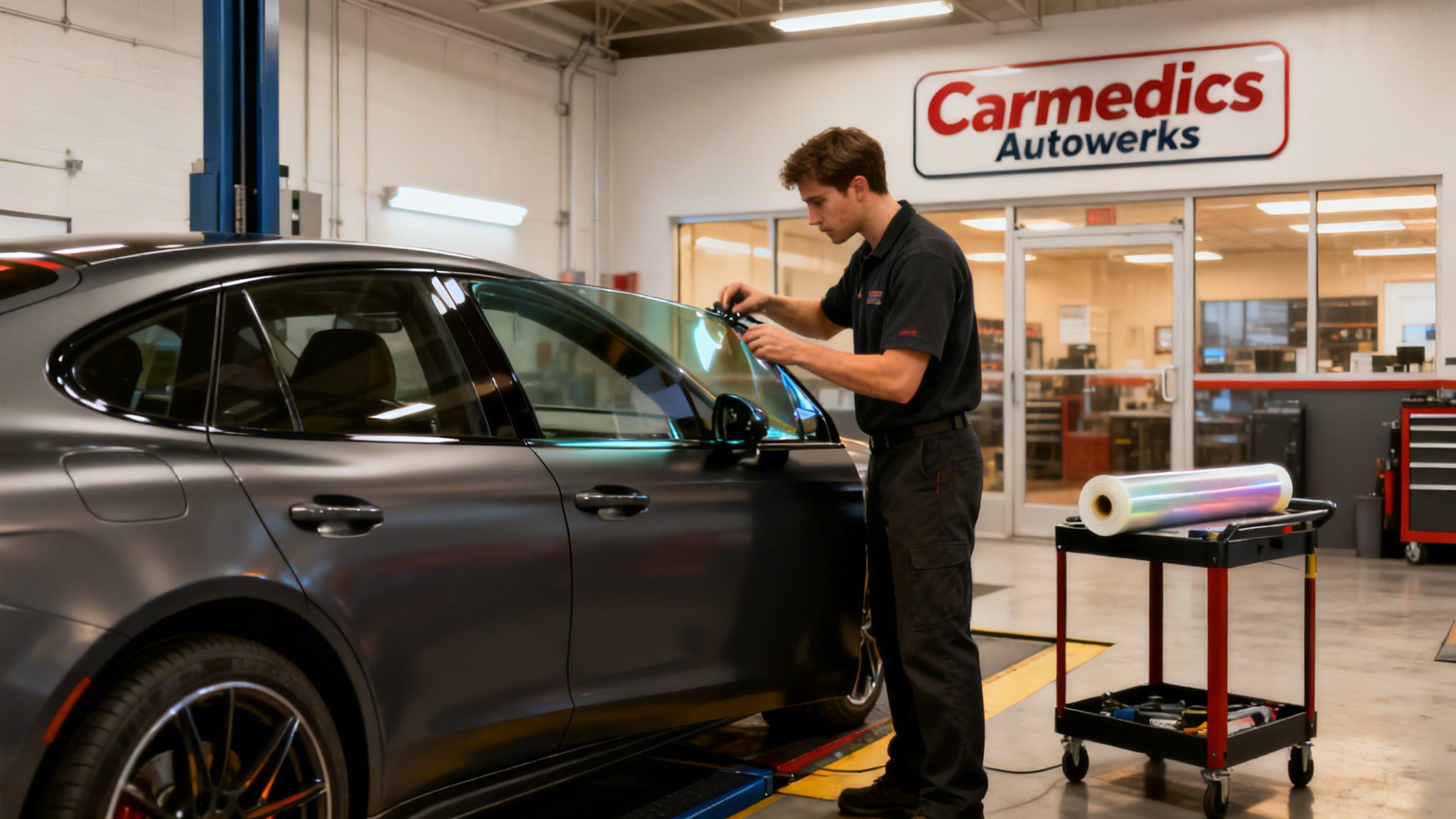
We encourage our clients to think bigger. Securing your vehicle isn't just about stopping a thief from driving off. It's also about protecting the valuables inside and shielding your car’s finish from the ugly damage a break-in attempt can leave behind.
Beyond Alarms to A Holistic Defence
Here at Carmedics Autowerks, we don’t just sell individual products; we build comprehensive protection strategies. Real peace of mind comes from layering different security measures—some electronic, some physical, and some that are purely visual deterrents. It’s a multi-pronged approach that anticipates how thieves actually operate.
One of the simplest and most effective layers you can add is professional window tinting. Its security benefit is two-fold. First and foremost, it keeps prying eyes out. By obscuring the view into your cabin, you make it impossible for a passing thief to spot a laptop bag, a phone, or anything else that might tempt them.
Most "smash-and-grab" thefts are crimes of opportunity. If a crook can’t see anything worth stealing, they're far more likely to simply keep walking. It's a passive but incredibly powerful way to make your car a less appealing target.
Protecting your car is about more than just stopping the engine from starting. It’s about making your vehicle an unattractive target from every angle, from its contents to its paint job.
Defending Against Physical Damage
Another reality of theft is the physical damage left behind. A desperate criminal trying to jimmy a lock or pry open a door can easily cause hundreds, if not thousands, of dollars in paint and body damage.
This is where Paint Protection Film (PPF) becomes an unsung hero in your security setup. While most people get PPF to guard against rock chips and road debris, its tough, self-healing surface also provides a surprisingly resilient barrier against physical attacks.
- Resists Scratches and Scuffs: The durable film can take the brunt of a screwdriver or other tool scraping against the paint, preventing deep, costly gouges.
- Absorbs Minor Impacts: It provides a cushion against bumps and scrapes from a thief trying to force their way in.
- Maintains Resale Value: By keeping your original paint pristine, PPF protects your vehicle's long-term value, even if it becomes a target.
Of course, for complex jobs involving modern key fobs, locking mechanisms, or advanced security system repairs, it's wise to bring in specialists. Consulting with professional automotive locksmith services ensures those intricate electronic components are handled correctly.
Your Whitby-Area Automotive Ally
For drivers in Whitby, Ajax, Pickering, and throughout the Durham Region, Carmedics Autowerks is your one-stop shop for complete vehicle care and protection. We’re not just mechanics; we're enthusiasts who are passionate about safeguarding your investment. Our expertise in high-quality window tinting and PPF installation perfectly complements any electronic anti-theft device for a car you might choose.
We know your vehicle is more than just a way to get from A to B—it's a source of pride. We’re here to help you protect it from every threat. If you’re looking for a team that treats your car with the same care you do, from routine maintenance to specialized protective films, we're ready to help. You can learn more about our commitment to quality service and find a trusted car repair shop near you for all your automotive needs.
A Few Common Questions We Hear at the Shop
After diving into all the different security options, you probably have a few specific questions bouncing around. That’s completely normal. Let’s tackle some of the most common ones we hear from drivers, getting straight to the practical details that matter most.
Will an Anti-Theft Device Actually Lower My Car Insurance?
The short answer is yes, it often can. Insurance companies are all about managing risk, so when you make your vehicle a harder target for thieves, they're usually happy to reward you for it. Many providers offer discounts for cars with approved security systems.
How much you save really depends on your insurance company and the type of device you install. A passive immobilizer or a professionally installed alarm will typically earn you a better discount than a basic steering wheel lock. The biggest savings, though, are almost always for vehicles with GPS recovery systems. These have a proven recovery rate of over 90%, which insurers love to see.
Your best bet? Call your insurance agent before you buy anything. Tell them exactly what device you're considering and ask what kind of premium reduction you can expect.
Can Thieves Really Get Past Modern Factory Security?
Unfortunately, the answer is yes. While the alarms and immobilizers that come standard from the factory are much better than they used to be, professional thieves have kept pace with their own sophisticated techniques.
One of the most widespread methods today is called a relay attack. Criminals use a special device to capture the signal from your key fob—even if it's sitting safely inside your house—and then "relay" it to another device near your car. This tricks your vehicle into thinking the key is right there, allowing them to unlock the doors and start the engine in seconds, all without breaking a window or leaving a scratch. This is exactly why a layered security plan, one that includes a physical lock or a secondary kill switch, is so crucial.
Are GPS Trackers Legal? What About My Privacy?
In Canada, it is completely legal to put a GPS tracker in a car you own. It's your property, and you're simply using the device to protect your asset. Where the lines can get a little blurry is when other people, like family members or employees, drive the vehicle.
Transparency is key. If you're tracking a car that someone else regularly drives, the best practice is always to let them know the device is there. This keeps you on the right side of any legal grey areas and, just as importantly, maintains trust.
Privacy is a valid concern, but reputable GPS tracking companies take data security very seriously. Your location data is encrypted and should only be accessible to you through a password-protected app or website. It's less about surveillance and more about having a private homing beacon for your car in case the worst happens.
Is It Better to Have a Visible Device or a Hidden One?
That's a great question, and it's a bit of a "both is best" situation. Visible and hidden devices serve two completely different but equally vital roles in protecting your car.
- Visible Devices (Deterrence): Think of a bright yellow steering wheel lock or a blinking LED light on the dash. Their job is to be seen. It's a clear signal to a potential thief that your car will be a hassle, encouraging them to move on to an easier target.
- Hidden Devices (Recovery): A concealed GPS tracker or a well-placed kill switch is your secret weapon. If a thief is bold enough to bypass your visible deterrents, they won't know this secondary layer of defence is there. This gives you the crucial upper hand in shutting the car down or helping police recover it.
A multi-layered defence is always the strongest. For comprehensive vehicle care that goes beyond security, partnering with trusted professionals is essential. You might also need reliable local auto repair services in Richardson to keep your vehicle in prime mechanical condition.
At Carmedics Autowerks Inc, we know your vehicle is more than just a way to get around—it's a major investment that deserves serious protection. From professional window tinting that keeps prying eyes out to expert advice on the right security setup for your car and lifestyle, our team is here to help safeguard your ride. Contact us today to build a complete protection plan for your vehicle. Learn more at https://www.carmedicsautowerks.com.com.