

When you see a car with tinted windows, the first thing you probably notice is how dark it is. That darkness is measured by a percentage, and it's the single most important factor when you're choosing a tint for your own vehicle.
This percentage is called Visible Light Transmission, or VLT. Simply put, it tells you how much light is allowed to pass through the tinted window.
What Do Window Tint Percentages Mean?
Think of window tint like a pair of sunglasses for your car. A low VLT percentage, like 5%, is like wearing a very dark pair of shades—it blocks almost all the light. On the other end of the spectrum, a high percentage like 70% is like wearing lightly shaded glasses, letting most of the light through.
A 5% VLT tint is what most people call "limo tint." It offers the ultimate in privacy because it only lets 5% of visible light inside. In contrast, a 70% VLT tint is so light that it's barely noticeable, making it a popular choice for people who want heat and UV protection without dramatically changing their car's look.
Understanding this one number is the key to getting the tint you actually want.
How VLT Affects Your Driving Experience
The tint percentage you choose does a lot more than just change how your car looks. It directly impacts your comfort, privacy, and even your safety on the road.
Here’s a quick breakdown of what that VLT number really controls:
- Privacy and Security: Lower percentages (like 5% or 20%) make it incredibly difficult for anyone to see inside your vehicle. This is great for keeping valuables out of sight and giving you a sense of personal space.
- Heat and UV Protection: While the type of film you choose (like a ceramic tint) is the biggest factor in heat rejection, darker tints naturally block more solar energy. The good news? All quality tints, regardless of how dark they are, block over 99% of harmful UV rays.
- Glare Reduction: This is a big one. A lower VLT dramatically cuts down on blinding sun during the day and the annoying glare from other cars' headlights at night. Your eyes will thank you.
- Driving Visibility: Here’s the trade-off. A super-dark tint provides amazing privacy, but it can also make it harder to see out, especially at night or in poorly lit areas like parking garages.
It's an inverse relationship: the lower the VLT number, the darker the tint. A 5% film is much darker than a 35% film. Getting this straight is the first step to making a smart choice.
Choosing the right VLT is all about finding that perfect balance. You want a look you love, the privacy you need, and the clear visibility that keeps you safe, all while staying within the legal limits here in Ontario.
To see how these different levels look on actual vehicles, our guide on automotive window tint percentages has plenty of examples to help you visualize the final result. This isn't just about aesthetics; it's a functional upgrade that can make every drive more comfortable and secure.
A Visual Guide to Common Tint Levels
Alright, you get the theory behind VLT percentages. But what do those numbers actually look like on a car? Let's bridge the gap between the technical specs and the real-world look and feel. Honestly, picking the right tint is a whole lot easier when you can picture how each level will transform your ride, both from the curb and from behind the wheel.
Think of tint film as a filter for sunlight. The VLT percentage just tells you how much light that filter lets through.
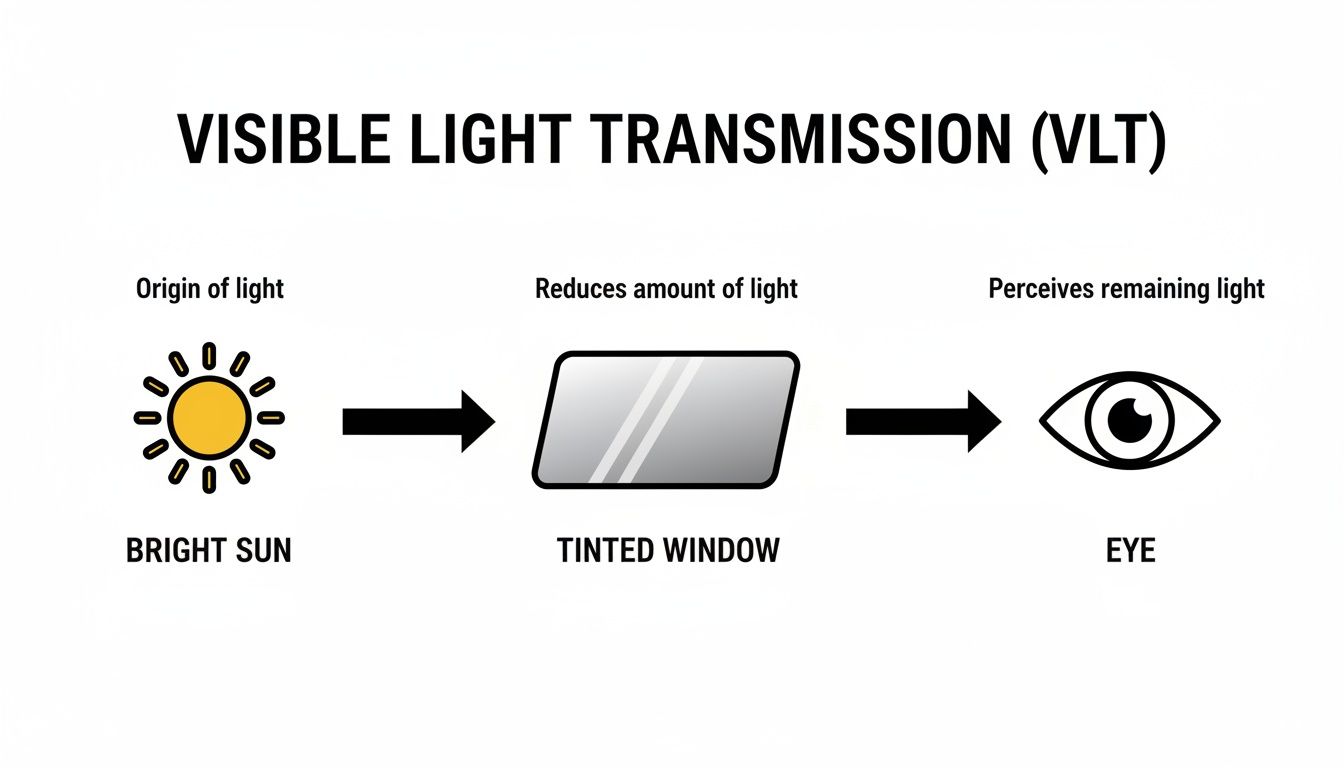
Ultimately, that percentage is what dictates how bright your cabin feels and how clear your view is. Let's walk through the most common shades we install so you can figure out what works for your style and your daily drive.
5% VLT: The Limo Tint
This is as dark as it gets. We call it "limo tint" for a reason—at 5% VLT, the film blocks out a massive 95% of visible light. The result is total privacy and that classic, blacked-out look.
From the outside, you can’t see into the vehicle at all during daylight hours. This is a huge plus if you want to keep your belongings out of sight or just create your own private space on the road.
The trade-off, of course, is visibility. Driving at night with a 5% tint can be a real challenge for most people. Your view is significantly darker, which can be a safety issue on poorly lit roads or when navigating tight parking garages.
20% VLT: Private and Aggressive
A 20% VLT tint is a favourite among car enthusiasts who want a dark, assertive look without going to the extreme of limo tint. It still offers fantastic privacy; anyone looking in will just see faint shadows inside the car during the day.
This level hits a great middle ground between a bold appearance and everyday usability. It does a phenomenal job of cutting down on harsh glare from the sun and from other cars' headlights at night.
While night driving is much clearer than with a 5% film, it still takes some getting used to. Most drivers adapt quickly, but it’s definitely something to keep in mind if you spend a lot of time on the road after sunset.
Expert Insight: Remember that the type of film matters just as much as the shade. A high-quality 20% ceramic tint will often reject more heat than a basic 5% dyed film, proving that darkness alone doesn't determine performance.
35% VLT: The Perfect Balance
For so many drivers, 35% VLT is the sweet spot. It gives the vehicle a sleek, classy look that’s clearly custom but not over-the-top.
- Aesthetics: Your car looks sharp and stylish. The tint is noticeable, giving it a sophisticated, premium feel.
- Privacy: You get a good amount of privacy. Onlookers can tell someone's in the car, but they can't make out faces or details.
- Visibility: This is where 35% really shines. Nighttime visibility is excellent for most drivers, making it a safe and practical choice for a daily driver.
This is one of our most requested shades because it delivers the perfect mix of enhanced looks, functional privacy, and uncompromised safety.
50% VLT: A Subtle Upgrade
If your main goal is blocking heat and UV rays with just a touch of added style, 50% VLT is a fantastic option. It adds a light, smoky effect that’s subtle enough that it doesn't completely change your car's factory appearance.
This tint is perfect for drivers who want to keep their interior cool and protected from sun damage but aren't looking for the privacy of a darker film. With a 50% tint, you can easily see in and out of the vehicle.
It provides good glare reduction without making the cabin feel dark, acting as a functional upgrade that puts comfort first.
70% VLT: The Clear Heat Shield
A 70% VLT tint is so light it's practically clear. You might not even realize it’s on the glass just by looking. So, what’s the point?
Performance. When you choose a 70% ceramic film, you’re getting incredible heat and UV rejection without changing the look of your windows at all. It's the ultimate stealth solution for:
- Protecting your skin and interior by blocking over 99% of harmful UV rays.
- Noticeably reducing infrared heat, keeping your car cooler and taking the strain off your A/C.
- Meeting legal requirements on front windows while still getting the high-performance benefits of ceramic film.
This option is all about function over form. It delivers top-tier comfort and protection without the bold visual statement of the darker tint levels.
Understanding Ontario Window Tinting Laws in 2026
Picking out the perfect tint for your car is one of the most satisfying upgrades you can make. But before you go all-in on that sleek, dark look, we need to talk about what’s actually legal here in Ontario. The rules are laid out in the Highway Traffic Act, and getting it wrong can mean a ticket and the headache of having to strip your brand-new tint off.
So, why are there laws about this? It really boils down to safety. Police officers need to be able to see into a vehicle during a traffic stop for their own protection. Just as important, you need to be able to make eye contact with pedestrians and other drivers—it's a fundamental part of how we communicate on the road.
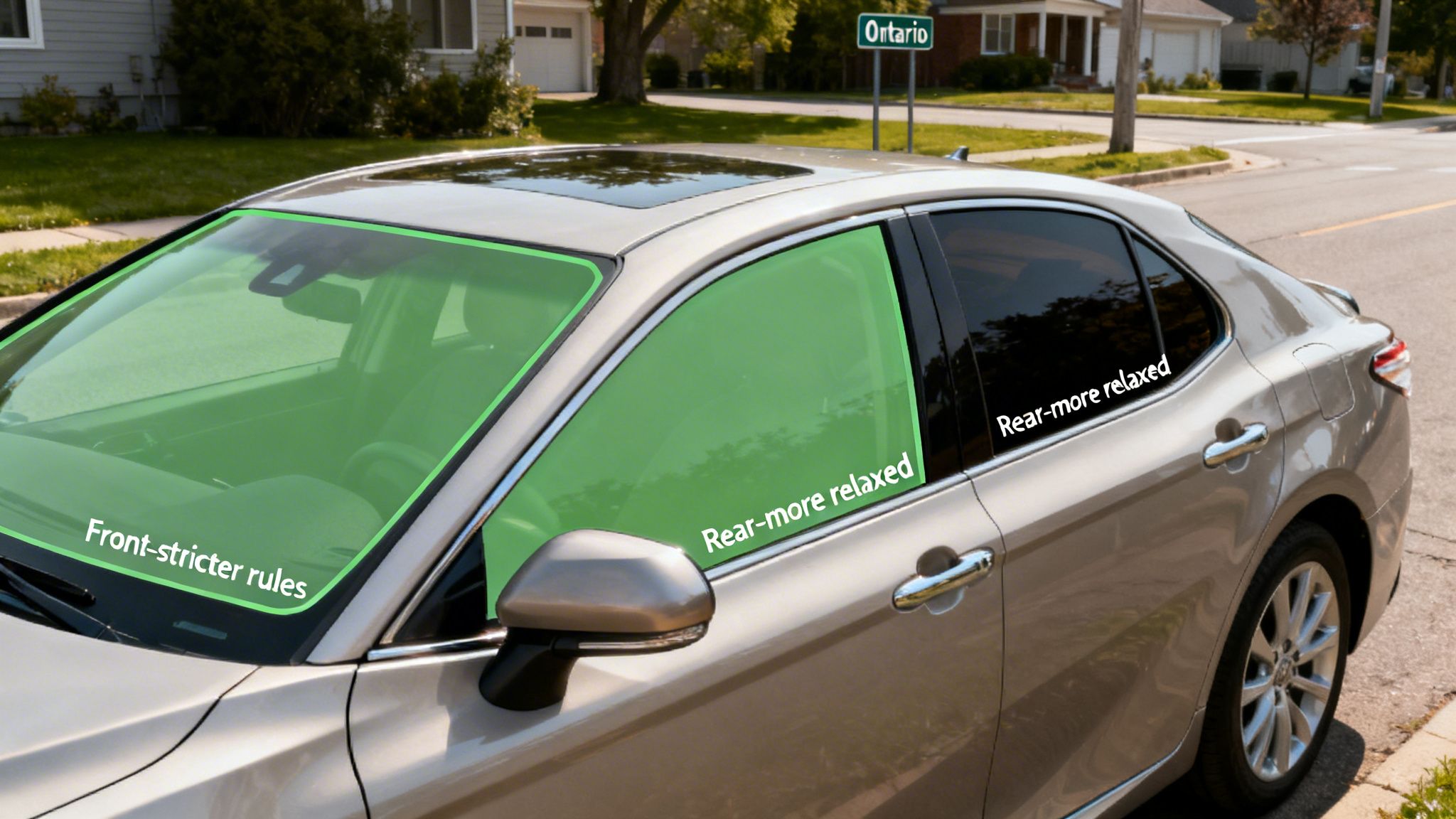
This is why the regulations are most stringent for the windows you rely on most for visibility.
Front Window Regulations
Here in Ontario, the law gets very specific about your front windshield and the two front side windows.
-
Front Windshield: You can’t put any film on the main part of your windshield. The only exception is a thin, non-reflective strip across the top, which can't be more than 15 centimetres (about 6 inches) deep. This is purely to help cut down on sun glare without blocking your view.
-
Front Side Windows: This is where things get a little subjective. The Act doesn't specify an exact VLT percentage. Instead, it says that any film you apply can't prevent someone from seeing inside. This leaves it up to an officer’s discretion. If they pull up alongside you and can't clearly see the driver, your tint is too dark. Based on our experience, sticking to 35% VLT or lighter on the front sides is the safest bet to stay compliant.
Rear Window Regulations
Once you move past the front seats, the rules open up completely. The back half of your vehicle is not considered critical for your direct line of sight or for making eye contact with others on the road.
Here's the good news: For your rear side windows and the back windshield, you’re free to go as dark as you want. Whether you love the look of 20% or want total privacy with 5% "limo tint," it’s all perfectly legal on the back half of your vehicle.
This flexibility is what allows for that popular "factory privacy glass" style, where the rear windows are much darker than the fronts. It’s a fantastic, fully legal setup that gives you a great mix of visibility where you need it and privacy where you want it.
If you want to get into all the fine details, we’ve put together a complete breakdown in our guide to the legal window tint percentage for drivers in Ontario.
The Hidden Benefits of Professional Window Tinting
Picking the right shade of tint is the fun part, but the real value of a professional tint job goes way beyond looks. It’s a high-performance upgrade that you’ll feel every time you drive. This isn't just about style; it's about making your daily drive safer, more comfortable, and a lot more private.
The first thing you’ll notice, especially during a hot Whitby summer, is just how much cooler your car stays inside.
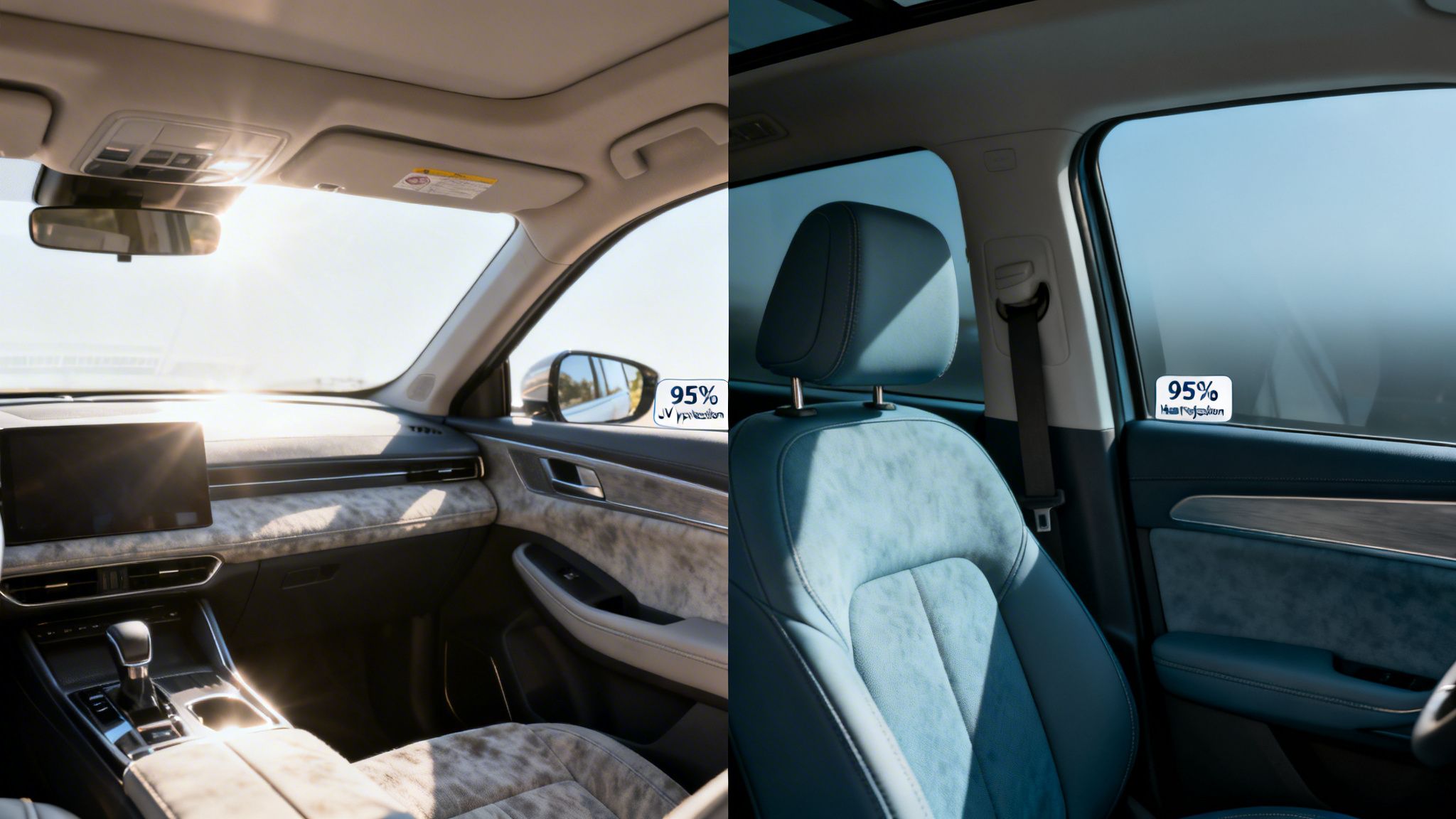
This is where the magic of modern film technology really comes into play. While any dark tint helps a bit, quality films are designed to block a specific type of solar energy that’s responsible for most of the heat.
Blocking Solar Heat
We’ve all felt it—that blast of hot air when you open your car door after it’s been parked in the sun. Much of that intense heat isn’t from the light you see, but from invisible infrared (IR) radiation.
High-quality films, particularly ceramic tints, are engineered to specifically target and reject a huge percentage of this IR energy. This means your car's interior heats up far more slowly, and your A/C doesn't have to fight nearly as hard to cool the cabin down. That can even save a little bit of fuel in the long run.
Unbeatable UV Protection
Just as important as blocking heat is stopping harmful ultraviolet rays. You can think of a good window tint as a powerful, invisible sunscreen for you and your car's interior.
Every professional-grade window film we install at Carmedics Autowerks blocks over 99% of damaging UV rays. This incredible level of protection is always there, whether you choose a dark 20% VLT or a nearly clear 70% film.
This shields your skin on every drive and, just as crucially, prevents your vehicle’s dashboard, seats, and trim from fading, cracking, and looking old before their time. It's one of the best investments you can make to preserve your car’s value. To learn more, check out our deep dive into the 7 benefits of the best window tint for your car.
Reducing Dangerous Glare
Glare isn't just annoying; it’s a real safety hazard. It could be the blinding sun low in the sky on your morning commute or the harsh headlights from oncoming traffic at night. Either way, these sudden bursts of light can leave you temporarily unsighted.
Window tint cuts that glare down dramatically. Your eyes can relax, helping you stay focused on the road ahead. This makes for a much less tiring and far safer drive, no matter the time of day.
Enhancing Privacy and Security
Finally, there’s the peace of mind that comes with privacy. Darker tint levels are a simple but effective deterrent against thieves. If a would-be thief can't easily see what’s inside your vehicle, they’re much more likely to just move on.
This added privacy keeps valuables like a work bag, recent purchases, or tools out of sight and out of mind. It’s a simple layer of security that helps protect your car and its contents wherever you park.
How to Choose the Right Tint Level for You
Okay, so you’ve seen the numbers and know the rules for tinting here in Ontario. Now comes the fun part: picking the right shade for your car. This isn't just about grabbing a number off a chart; it's about finding that sweet spot where the film's performance matches your daily driving habits and personal taste.
The best way to start is to get really clear on your "why." Ask yourself, what’s the number one reason I’m getting my windows tinted? Your answer is the key that unlocks the right choice. Is it all about privacy? Or are you chasing a specific aesthetic or just trying to beat the summer heat?
Nailing Down Your Top Priority
Let's walk through how your main goal points you toward the perfect tint level. Thinking this through helps cut through the noise and zero in on the best one or two options for you.
- If you’re all about privacy: You’ll naturally be looking at the lower VLT percentages. A 20% VLT is a fantastic choice if you want to keep prying eyes out. It gives you that near-blackout privacy without going full limo-dark.
- If you’re focused on style: Are you trying to give your car a sharp, custom look? A 35% VLT is the go-to for that classic, tasteful aftermarket vibe. It’s dark enough to make a statement but still subtle enough to look clean and sophisticated.
- If comfort is your main concern: When your goal is blocking heat and protecting your interior from UV rays, the type of film matters more than its darkness. High-quality 50% or even 70% ceramic tint can outperform a basic dark film at rejecting heat, all while keeping your cabin cool and your view crystal clear.
Once you know your main motivation, you need to be honest about one more thing: night driving. That sleek 20% tint looks incredible during the day, but it definitely cuts down on visibility once the sun goes down. If you spend a lot of time on poorly lit back roads after dark, a 35% or 50% VLT might be a much safer and more practical choice.
Key Takeaway: The perfect tint is always a trade-off between what you want most (privacy, style, or comfort) and what you need for practical, everyday driving. There’s no single "best" VLT—only the one that’s best for you.
For a deeper dive, checking out a comprehensive guide to the levels of window tinting for cars can provide even more perspective.
Ultimately, nothing beats seeing the options in person. Here at Carmedics Autowerks, we always encourage our clients to look at physical film samples held up against their own car’s windows. It takes all the guesswork out of the equation and guarantees the finished product looks exactly how you pictured it. And if you're curious about what makes for the best window tint for cars overall, we've put together a guide on that, too.
Your Window Tinting Questions Answered
Even after getting a handle on VLTs and the local laws, there are always a few lingering questions. To help you feel completely confident in your decision, we're going to tackle the most common ones we hear from drivers right here in our Whitby shop.
Think of this as the final piece of the puzzle. Here’s what people really want to know before they commit.
Is 35% Tint Hard to See Out of at Night?
This is probably the number one question we get. For most drivers, a high-quality 35% tint is the perfect balance for nighttime driving. It does a fantastic job of cutting down on that blinding glare from oncoming headlights without making you feel like you're driving in a cave.
That said, everyone's eyes are different. If you’re a bit worried about visibility or you spend a lot of time on unlit country roads, a lighter 50% VLT might give you more peace of mind. The best way to be sure is to stop by the shop and look at physical samples.
Does Darker Tint Always Block More Heat?
Here’s one of the biggest myths in the tinting world. The answer is a definite no—darker does not automatically mean cooler. A film’s power to reject heat is all about its material technology, not just how dark it looks.
For instance, a modern ceramic tint at a light 70% VLT can actually block much more infrared heat than an old-school, dark 20% dyed film. If keeping your car cool is your main goal, you need to pay more attention to the type of film you're choosing. Ceramic is king for heat rejection.
Can I Install Window Tint Myself?
While you can certainly buy DIY tinting kits, we’d strongly advise against it. Getting a flawless, bubble-free finish is a true skill. It demands a perfectly clean, dust-free space and specific tools to avoid the creases, peeling, and dirt specks that ruin the look. A bad DIY job often ends up needing professional removal, and you can see what that involves in our guide on how to remove auto window film.
A professional installation not only looks infinitely better but also comes with a warranty. It protects your investment and saves you from a really frustrating and potentially expensive weekend project.
How Long Will My New Window Tint Last?
When you have a premium film installed by a pro, your window tint should last for years—often for as long as you own the car. The secret to its long life is all about proper care right after it’s installed.
You’ll need to avoid rolling down your windows for about 3-5 days. This gives the adhesive time to fully cure to the glass. From then on, just be sure to clean your tinted windows with an ammonia-free cleaner and a soft microfibre cloth to prevent any scratches.
Ready to find the perfect tint for your ride? The expert team at Carmedics Autowerks is here to walk you through all the options and guarantee a flawless, legal installation. Visit us online or stop by our Whitby shop to get started! https://www.carmedicsautowerks.com.com