

That weird clunking noise or the sudden shudder you feel when you’re driving? It’s probably not just in your head. More often than not, it's the first sign that your transmission needs attention. A transmission repair can be anything from a simple fix to a complete overhaul, but spotting the problem early is your best bet for avoiding a huge repair bill. If you learn to understand what your car is trying to tell you, you can get it looked at before a small problem forces you off the road entirely.
Is Your Transmission Trying To Tell You Something?
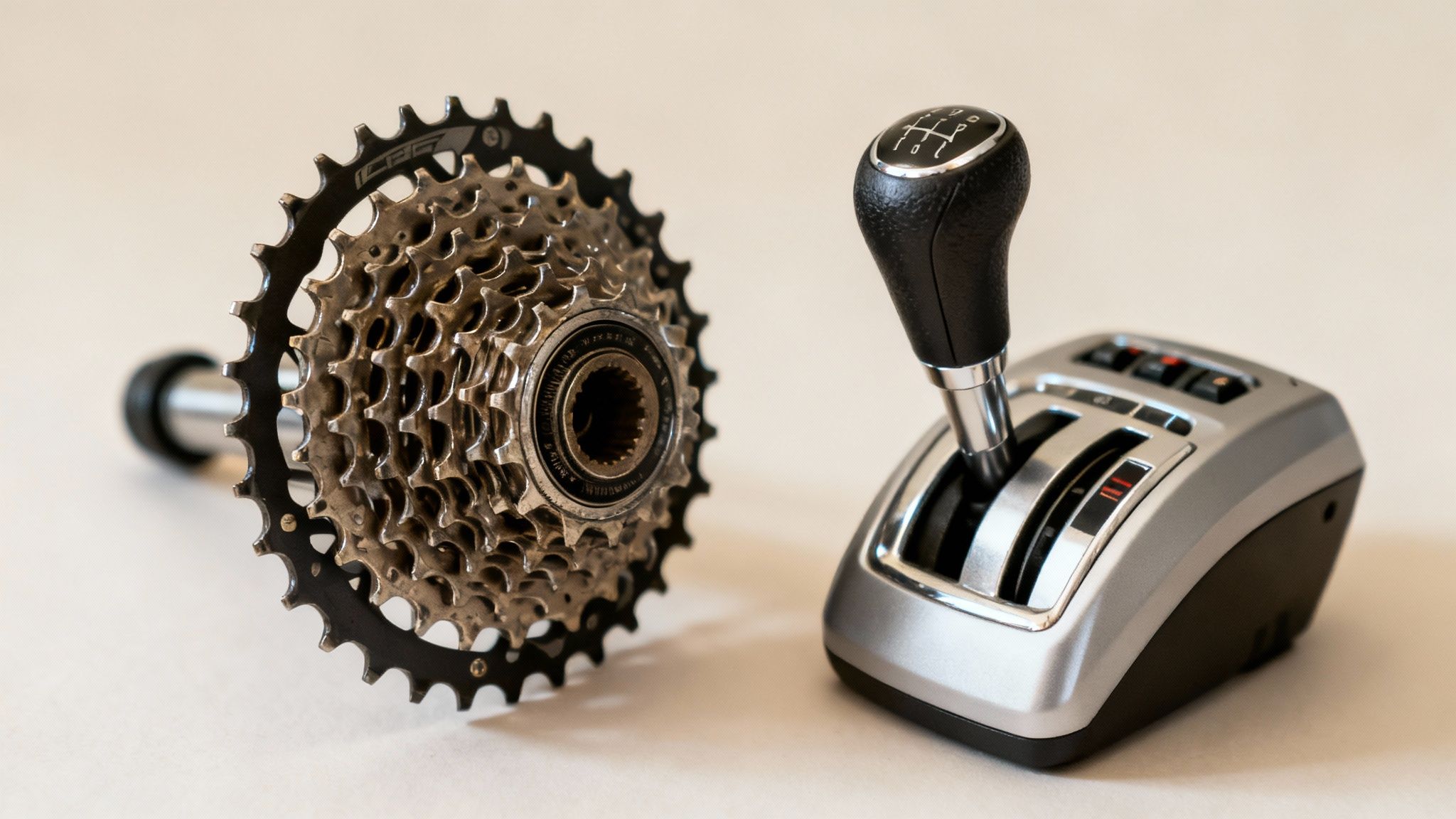
The easiest way to think about your car's transmission is to compare it to the gears on a bicycle. Its entire job is to take the power from your engine and send it to the wheels, giving you control over your speed. A cyclist shifts gears to climb a steep hill or to cruise on a flat road, and your car's transmission does the exact same thing for different driving situations.
When it's all working as it should, you barely even notice it. But when parts start to wear down or your transmission fluid gets low, the whole system starts to have a tough time. That's when it sends out those little warning signs that something’s not right. Ignoring them is a bit like trying to ride a bike with a chain that keeps slipping—sooner or later, you're not going anywhere.
Decoding Your Car’s Warning Signs
Your vehicle has its own way of telling you when it's in trouble. Learning what these symptoms mean is the first real step toward getting a timely and effective transmission repair. Things like hesitation when you accelerate, strange noises, or a noticeable delay when you shift into drive are all clues that you need a professional to take a look.
These aren't just minor quirks; they're direct alerts from one of your vehicle's most essential systems. Knowing what they mean gives you the power to act fast.
Your transmission is a complex piece of machinery where catching a problem early makes all the difference. A symptom that seems small, like a bit of a shudder, could easily lead to a total system failure if you ignore it.
To help you out, we've put together a quick guide to the most common transmission warnings, what they might mean, and what you should do about them.
Common Transmission Warning Signs And What They Mean
| Symptom | Potential Cause | Recommended Action |
|---|---|---|
| Slipping Gears | Worn-out clutch plates, low transmission fluid, or a failing solenoid. | Stop driving immediately and get a professional diagnosis to prevent more serious damage. |
| Delayed Engagement | Low fluid levels, a clogged filter, or internal mechanical problems. | Check your transmission fluid if you can, and book a service appointment. |
| Grinding or Whining Noises | Damaged planetary gears, issues with the torque converter, or low fluid. | Avoid driving. These noises point to serious internal friction or failing parts. |
| Burning Smell | Overheated or old transmission fluid, which can damage internal seals and other components. | Pull over somewhere safe and have your vehicle inspected. Overheating can cause a fast breakdown. |
| Fluid Leaks (Red Fluid) | A cracked seal, gasket, or fluid line is letting vital fluid escape. | Put a piece of cardboard under your car to confirm the leak and see a mechanic right away. |
| Check Engine Light | The car's sensors have found a problem and triggered a specific trouble code. | You'll need a professional scan to read the code and figure out the exact issue. |
Catching these issues early is a game-changer. Being proactive about your car’s health doesn't just save you from wallet-busting repairs; it also keeps your vehicle reliable. You can find out more by reading our guide on 5 essential car maintenance tips every driver needs to know and how our mechanic shop can help. A little vigilance now can prevent a small leak or a faulty sensor from turning into a catastrophic and expensive transmission failure down the road.
So, Why Do Transmissions Actually Fail?
It’s one thing to notice your car is acting up, but it’s another to understand why. Knowing the root cause of a transmission problem can save you a lot of headaches down the road. Your transmission isn't a single part; it's an incredibly complex maze of gears, hydraulics, and electronics working together. When just one piece of that puzzle fails, the whole system can start to unravel.
Let's get under the hood and look at the real culprits behind those weird noises, warning lights, and slipping gears.
The Number One Culprit: Low or Burnt-Out Fluid
Think of transmission fluid as the lifeblood of your gearbox. It does so much more than just lubricate parts. It cools the system, cleans components, and creates the hydraulic pressure that actually makes your gears shift. When that fluid gets low or breaks down, it’s the fast track to a major failure.
Over time, this fluid just gets old and tired. It picks up tiny metal particles and bits of clutch material, turning from a slick lubricant into something more like liquid sandpaper. This gritty fluid scours sensitive internal parts, causing overheating and massive wear and tear.
A leak is just as bad. When fluid levels drop, parts run dry, friction skyrockets, and heat builds up dangerously fast. Here in Whitby, all that stop-and-go driving puts immense strain on a transmission, which makes having clean, full fluid absolutely essential.
According to the Automatic Transmission Rebuilders Association (ATRA), a staggering 90% of all automatic transmission failures are caused by overheating. And what’s the main reason for overheating? Old, worn-out fluid.
That one statistic says it all. Checking and changing your fluid is the single best thing you can do to avoid a catastrophic repair bill.
When the Electronics Go Wrong: Solenoid Failure
In a modern car, the transmission has a brain—the Transmission Control Module (TCM). But that brain needs messengers to carry out its commands. These are small electronic valves called solenoids, and they direct the flow of transmission fluid to engage the right gear at the right time.
When a solenoid goes on the fritz, the message gets scrambled. The valve might get stuck open, jammed shut, or just act sluggishly. The result? You'll feel it as harsh shifting, a delay when you hit the gas, or the car getting stuck in one gear (often called "limp mode").
Solenoids can fail from a simple electrical short or get gummed up by dirty fluid. The good news is that replacing a bad solenoid is usually a much smaller transmission repair than a full rebuild. The key is having a technician who can accurately diagnose which specific one is causing the trouble.
That Shuddering Feeling: Torque Converter Issues
If you drive an automatic, you have a torque converter instead of a clutch pedal. It’s a fluid-filled doughnut-shaped part that connects your engine to your transmission, letting the engine run even when the car is stopped in gear.
When a torque converter starts to fail, you might feel a distinct shuddering or vibrating, especially at certain speeds. You could also hear strange whirring noises or notice the transmission slipping. The real danger is when a failing torque converter starts shedding metal debris into the fluid, which then circulates and poisons the entire transmission. That's why you can't ignore these symptoms.
Slipping and Grinding: Worn-Out Clutches
Inside your transmission are sets of "clutch packs." These are stacks of plates that clamp together and release to shift from one gear to the next. Just like the brake pads on your wheels, the friction material on these clutches wears down over thousands of kilometres.
Once they're worn thin, they can't grip properly anymore. This is the classic cause of gear slipping—you hit the gas, the engine revs high, but the car barely accelerates. That slipping creates a ton of friction and heat, which cooks the fluid and can damage other parts, making a bad situation even worse. It’s a normal wear-and-tear item, but hard driving or towing heavy loads will definitely speed up the process.
What to Expect from a Professional Diagnosis
That sinking feeling when your car starts shuddering or making a strange new noise is something we all dread. The mind immediately jumps to a worst-case scenario and a massive repair bill. But a lot of that anxiety comes from the unknown. Let's pull back the curtain on what a real professional transmission diagnosis looks like, so you know exactly what’s happening with your vehicle.
When you bring your car to a shop like ours, it's not about a quick, five-minute code scan. It's a proper investigation, a systematic process to get to the root of the problem. This is a crucial step that ensures you’re not paying for a repair you don't actually need. It all starts with your story—what you’ve been hearing, feeling, and seeing.
The First Steps: A Road Test and a Good Look Underneath
The first thing a good technician will do is listen to you and then take the car for a drive. They'll want to experience the problem for themselves. This road test is all about feeling for those subtle hesitations, listening for a specific whine or clunk, and noting exactly when it happens. Is it when you accelerate? When shifting from second to third gear? Only when the car is cold? These are the clues that point them in the right direction.
Next, your car goes up on the hoist for a thorough visual inspection. Here's what the technician is looking for:
- Fluid Leaks: Those tell-tale reddish puddles under your car are a dead giveaway. They’ll check for leaking seals, a loose pan, or a bad gasket.
- External Damage: The transmission casing, cooling lines, and mounts are all checked for any cracks or physical damage that could be causing the issue.
- Fluid Condition: The technician will pull the dipstick to check the transmission fluid. If it's dark and smells burnt, that's a red flag for internal overheating and serious friction.
This hands-on assessment provides a surprising amount of information before a single high-tech tool is ever plugged in.
Going Digital: Advanced Scanning Tools
After the physical check, it's time to see what the car's computer has to say. A professional-grade diagnostic scanner is connected to your vehicle, allowing the technician to talk directly to its brain—specifically, the Transmission Control Module (TCM). The TCM is the boss, monitoring and managing everything the transmission does.
When the TCM senses something is wrong, it logs a Diagnostic Trouble Code (DTC). A professional scanner goes way beyond just reading that code. It pulls up live data, showing the technician what the sensors, solenoids, and hydraulic pressures are doing in real-time. This is a world away from the generic code you'd get from a cheap, off-the-shelf reader.
A trouble code doesn't tell a technician which part to replace. It just tells them where to start looking. The real expertise is in interpreting that data to find the root cause.
This combination of electronic data and hands-on inspection creates a complete picture of your transmission's health. You can learn more about how technicians use these tools by exploring our guide on professional engine diagnostics in Whitby. It’s this methodical approach that allows us to pinpoint the real problem and give you an honest, accurate plan for your transmission repair.
Repair, Rebuild, or Replace: Making the Right Choice
Once a professional diagnosis confirms a serious transmission issue, you're at a crossroads. The decision you make next doesn't just affect your wallet—it determines your car's future on the road. You've got three main routes to consider: a targeted repair, a full rebuild, or a complete replacement.
This isn't about simply picking the cheapest option upfront. It's about finding the best long-term value for your car and your specific situation. A tiny leak might just need a new seal, but if the damage runs deep, you'll need a more serious solution. Let's walk through each choice so you can make a call you feel good about.
H3: Option 1: The Targeted Transmission Repair
A targeted transmission repair is the most straightforward and often the least expensive path. Think of it like minor surgery—we go in and fix only the specific part that failed. If a diagnostic scan points to a faulty solenoid or we spot a leaking pan gasket during an inspection, a technician can replace just that single component.
- Best-Case Scenario: This is the perfect fix for isolated, external problems like a bad sensor, a failed seal, or a damaged cooling line.
- Cost-Effectiveness: When the issue is small and contained, this is hands-down the most budget-friendly choice.
- The Catch: A targeted repair doesn't touch any of the underlying wear and tear inside the transmission. If other parts are already on their last legs, you could find yourself back at the shop with a different problem sooner than you'd like.
It's a bit like fixing a single leaky pipe under your sink. You replace the one fitting that's dripping, and the problem stops. But if all the plumbing is old and corroded, that one fix is just a temporary patch.
H3: Option 2: The Comprehensive Rebuild
A transmission rebuild is a much deeper dive. This is where a skilled technician removes the entire transmission from your vehicle, disassembles it piece by piece on the workbench, and meticulously inspects every single gear, clutch, and seal.
During a rebuild, any worn or damaged parts get swapped out for new or refurbished components that meet—or even exceed—the original manufacturer's standards. Once everything is up to spec, the transmission is carefully put back together, tested, and reinstalled in your car. It’s a complete restoration of your car's original unit.
The whole point of a rebuild isn’t just to fix what broke; it’s to restore the entire unit to factory specifications. You're essentially giving it a new lease on life by addressing both the symptom and the root cause of the failure.
This option strikes a fantastic balance between cost and quality. You often get the reliability of a brand-new unit but for a significantly lower price.
H3: Option 3: The Full Replacement
The final option is to replace the entire transmission with a different unit altogether. This usually means installing a remanufactured transmission, which is a unit that has been completely rebuilt in a factory setting. A used transmission from a salvage yard is another possibility, but it's often a riskier bet.
- Remanufactured Units: These are restored in a controlled factory environment and usually come with a solid warranty, offering excellent quality you can depend on.
- Used Units: A used transmission might be the cheapest way to go, but it's a real gamble. You often have no idea about its history or what condition it's in internally.
- Time Savings: A replacement is almost always the fastest of the three major solutions. Since it’s a simple swap, it gets your vehicle back on the road with minimal downtime.
When rebuilding or replacing, you also have to decide between OEM and aftermarket parts. That's a whole other conversation, but you can learn more by checking out our guide on OEM vs. Aftermarket Parts.
The diagnostic process is what really guides this decision. A good technician won't guess; they'll use a clear process to figure out exactly how bad the damage is. This flowchart shows the typical steps a pro takes to get to the bottom of things.
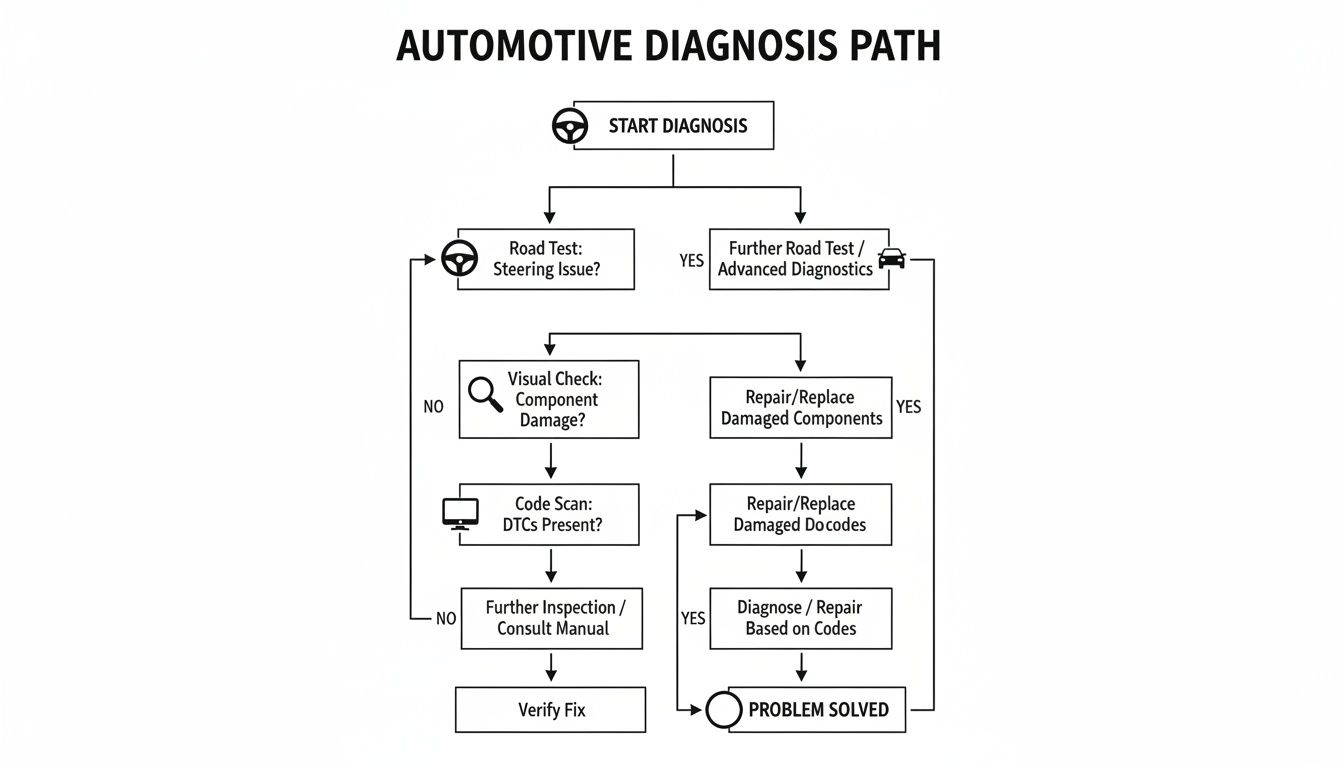
This systematic approach—combining a road test, a hands-on inspection, and advanced computer scans—ensures the final recommendation is built on solid evidence.
H3: Making the Smart Financial Choice
Let's be honest: cost is a huge factor. A simple repair might only set you back a few hundred dollars, but major transmission work can be one of the biggest expenses you'll ever face as a car owner.
To put it in perspective, a full rebuild can easily run $3,000-$5,000 in some areas, and that price is shaped by local labour rates and even environmental fees. And did you know that the constant stop-and-go traffic we see around Whitby and the GTA can accelerate transmission wear by as much as 20-30%? It really shows how important proactive maintenance is.
To help you see how the options stack up, we've put together this quick comparison table.
H3: Comparing Transmission Solutions: Repair vs. Rebuild vs. Replace
This chart breaks down the key differences to help you weigh the costs and benefits of each path.
| Solution | Average Cost Range | Pros | Cons | Best For |
|---|---|---|---|---|
| Repair | $400 – $1,200 | Least expensive, quick turnaround for minor issues. | Doesn't address internal wear; may be a temporary fix. | Single, easily identified external part failures (e.g., sensor, gasket). |
| Rebuild | $2,500 – $5,000+ | Addresses all worn parts, high reliability, often keeps original unit. | More expensive than a repair, takes several days. | Widespread internal wear on a vehicle you plan to keep long-term. |
| Replace | $3,000 – $7,000+ | Fastest solution, often comes with a strong warranty (remanufactured). | Can be the most expensive option; used units are a gamble. | Catastrophic damage where the original unit is not salvageable. |
Ultimately, the best choice depends on your vehicle's age, its overall condition, your budget, and how much longer you plan on driving it. A thorough, honest diagnosis from a shop you trust is the first and most critical step toward making a decision you can feel confident about.
How to Find a Trustworthy Repair Shop in Whitby

Figuring out your transmission is on the fritz is one thing. Finding the right person to fix it? That’s a whole different ball game.
Handing your keys over for a major job like a transmission repair requires a lot of trust. You’ve got options here in Whitby, but let’s be honest—not all auto shops are built the same. You need to know what to look for to separate the pros from the rest.
A truly trustworthy shop does more than just fix cars; they build relationships. They should be upfront and clear from the moment you call, ready to walk you through their process without a bunch of confusing jargon. That kind of open communication is usually the first sign you’ve found a good one.
The Non-Negotiables of a Quality Shop
When you’re checking out potential shops, a few things should be deal-breakers. Think of this as your quality checklist. If a shop can't tick these boxes, it's best to keep looking.
First up: certification. In Ontario, you want a shop that employs licensed 310S Automotive Service Technicians. This isn’t just a fancy title on a certificate; it’s proof that the mechanics have passed tough provincial standards for their skills and knowledge.
Next, always ask about the warranty. Any shop worth its salt will stand behind its work with a solid guarantee on both the parts and the labour they put in. It’s your protection and their vote of confidence in their own repairs.
Finally, do a little digging for real-world reviews. Go beyond the glowing testimonials on their website and check out independent places like Google Reviews. A consistent pattern of positive feedback on honesty, quality, and fair pricing tells you a lot about how they do business. You can learn more about our own standards by reading about what makes a great mechanic in Whitby.
Asking the Right Questions
Once you have a short list, it’s time to make some calls. How a shop answers your questions tells you a lot. Here are a few to get you started:
- Do you specialize in transmission work? A good general mechanic is great, but a complex transmission rebuild often needs a specialist’s touch.
- Can I get a detailed, written estimate before you start? This is all about transparency and making sure there are no nasty surprises on the final bill.
- What’s your diagnostic process look like? They should be able to clearly explain how they'll find the root of the problem, not just guess.
A great mechanic will never pressure you into a snap decision. They’ll lay out the facts, explain your options, and give you the breathing room to make a choice that you’re comfortable with.
When looking for a reliable shop, remember that real expertise is everything. It takes years to become one of the highly skilled automotive technicians working at the highest levels, and that same dedication is what you should be looking for in your local mechanic.
With more cars on the road needing transmission work, finding a true professional is critical. It's shocking, but some studies show that around 73% of drivers might not handle serious transmission issues correctly, often opting for a quick patch instead of a proper fix. This is why partnering with experts like Carmedics Autowerks, who focus on doing the job right the first time, is so important. Taking the time to find the right team means your car gets the care it deserves.
Proactive Care to Extend Your Transmission’s Life
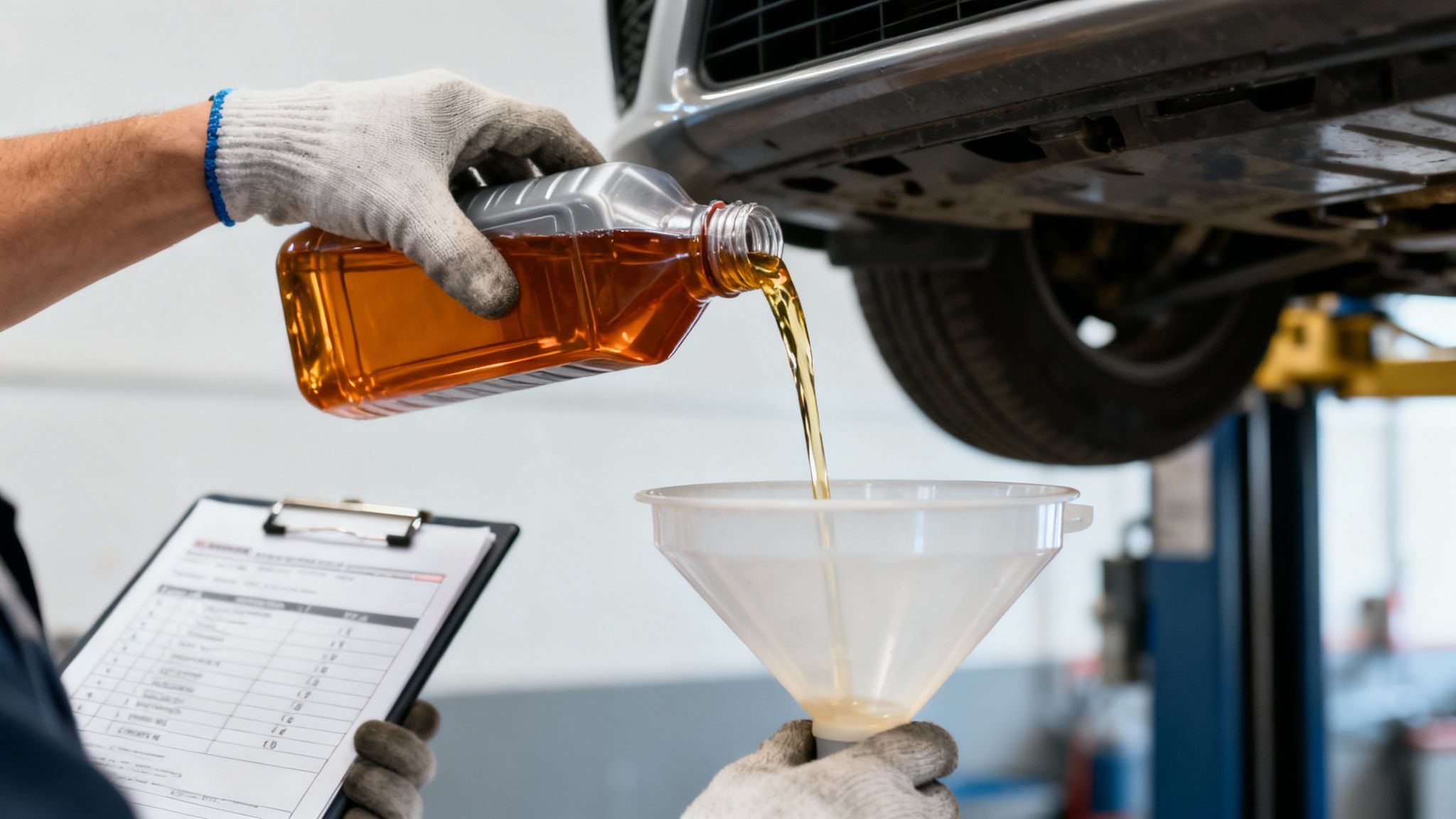
Let's be honest, the best kind of transmission repair is the one you never have to make. While it’s good to know your options when things go sideways, the smartest strategy is to focus on proactive maintenance. Think of it as a health and wellness plan for your gearbox.
A little preventative care goes a long way. It helps you catch minor issues before they spiral into catastrophic failures, saving you a world of stress and a massive repair bill. Good, consistent upkeep is what keeps your car reliable and performing its best for years.
Your Essential Maintenance Checklist
You don't need a complex plan to get ahead of transmission trouble. It really just boils down to a few key habits that protect this intricate system from unnecessary strain.
Here are the absolute fundamentals of proactive transmission care:
- Regular Fluid Checks: Transmission fluid is the lifeblood of your gearbox. It cools, lubricates, and provides the hydraulic pressure needed for smooth shifts. Low or dirty fluid is the #1 cause of transmission failure, bar none.
- Scheduled Fluid Changes: Over time, this fluid breaks down and gets contaminated with tiny metal shavings and clutch material. Sticking to your vehicle manufacturer's recommended service intervals for fluid and filter changes is critical.
- Use the Right Fluid: Not all transmission fluids are the same. Using the exact type your manufacturer specifies is non-negotiable—the wrong stuff can quickly damage sensitive internal components.
Staying on top of these simple tasks gives your transmission its best shot at a long, healthy life. If you want to learn more, check out our guide on how to check transmission fluid.
Think of transmission fluid like engine oil for your gearbox. You wouldn't drive 50,000 kilometres without an oil change, right? The same logic applies here. Clean, high-quality fluid is your best insurance policy against a costly breakdown.
Smart Driving Habits That Save Your Gearbox
The way you drive every day has a huge impact on your transmission’s lifespan. Aggressive habits put immense stress on clutches, gears, and solenoids, which speeds up wear and tear.
Making a few small adjustments can add years to its life. For instance, always come to a complete stop before shifting from reverse to drive (or vice versa). This simple action prevents a "shock load"—a jarring force that slams internal parts together.
You should also avoid towing loads that exceed your vehicle’s capacity, as this creates excessive heat, the ultimate enemy of any transmission. Industry data even shows that constant stop-and-go city driving can reduce a transmission’s durability by 20-30%. Following these simple rules reduces strain and keeps your transmission running smoothly.
Your Transmission Repair Questions Answered
Even after getting the rundown on transmission work, you probably still have a few questions floating around. That’s completely normal. Getting straight answers is the best way to feel good about the work being done, so here are a few of the most common things we get asked by drivers.
How Long Does a Typical Transmission Repair Take?
This really depends on what needs to be done. A simple fix, like replacing a leaky seal or a faulty sensor, might only take a few hours.
On the other hand, a full rebuild is a much bigger job. We have to remove the entire transmission, take it apart piece by piece, replace worn parts, and then put it all back together. That process can easily take three to five days, especially if we need to order specific parts.
Is It Worth Repairing the Transmission on an Older Car?
More often than not, yes—but it comes down to the car's overall health and value. If the engine is still running strong and the body is in decent shape, a transmission rebuild can buy you several more years of dependable driving for a fraction of the cost of a new car.
A thorough inspection is the only way to know for sure. We'll help you weigh the cost of the repair against the value and extra life you'll get out of your vehicle.
Will My Car Drive Differently After a Transmission Rebuild?
Absolutely, and for the better! A proper rebuild brings your transmission back to its original factory standards. You'll notice much smoother shifting, better acceleration, and no more of that annoying slipping or jerking. It should feel like you're driving it off the lot again.
Can I Keep Driving If I Suspect a Transmission Problem?
We can't stress this enough: please don't. Pushing a failing transmission can turn a relatively minor problem into a complete, catastrophic failure very quickly. That's the difference between a manageable repair bill and a massive one.
If you're dealing with serious symptoms like gears slipping, loud whining, or clunking noises, the smartest and safest thing to do is pull over and call for a tow.
For an honest assessment and expert transmission repair in Whitby, trust the team at Carmedics Autowerks Inc. We’re here to get you back on the road safely and with complete confidence. Book your diagnostic appointment with us today!