

Think of a windshield film protector as a high-tech, invisible shield for your car's glass. It's a transparent, multi-layered film that gets applied to the outside of your windshield, taking the hit so your glass doesn't have to.
The best way to picture it is like the screen protector on your smartphone. It’s a sacrificial layer designed to absorb the nicks, scratches, and impacts from everyday hazards, keeping the expensive screen underneath pristine.
An Invisible Shield for Your Windshield
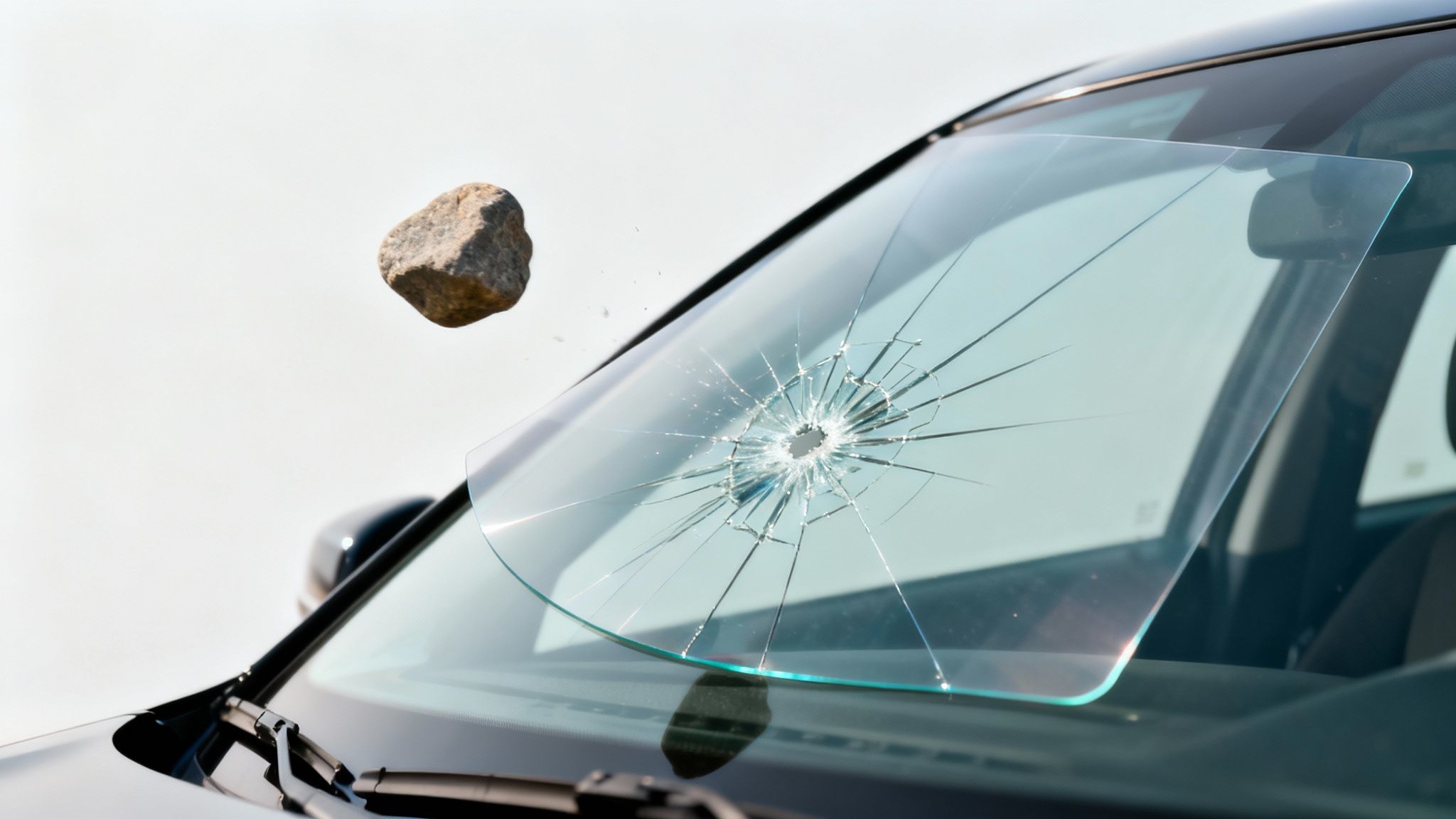
Imagine this film as a suit of armour for your windshield. It adheres directly to the glass, creating a frontline defence against the constant barrage of road debris. Anyone who's driven on the highway knows the sound of gravel and stones kicking up—that's exactly what this film is engineered to handle.
When a small rock hits the protected glass, the film's specialized layers immediately go to work. Instead of the impact being focused on one tiny point, the film absorbs and disperses that kinetic energy over a much wider area. This is what stops a chip from forming in the first place.
And stopping that initial chip is key. A tiny starburst might not seem like a big deal, but with the stress of daily driving and changes in temperature, it can easily spiderweb into a massive crack that obstructs your view.
Why Is This Protection So Important Now?
The need for windshield protection has never been greater, and it all comes down to modern vehicle technology. A few decades ago, a windshield was just a piece of glass. Today, it’s a sophisticated hub for your car's most important safety systems.
A windshield replacement on a modern vehicle can cost anywhere from $500 to over $1,800. This dramatic increase is due to the cameras and sensors for Advanced Driver-Assistance Systems (ADAS) embedded within the glass, which require complex and expensive recalibration after a replacement.
This is why a protective film is such a smart investment, especially if your vehicle has features like:
- Lane-keep assist systems
- Adaptive cruise control sensors
- Heads-up displays (HUDs)
- Rain-sensing wipers
By preventing that initial damage, you’re not just saving yourself from the staggering cost of a new windshield. You’re also avoiding the hassle and downtime of getting those critical safety systems recalibrated.
Plus, you get to keep the original factory seal on your windshield, which is crucial for the structural integrity of your vehicle. It’s a simple case of investing a little in prevention now to avoid a much bigger, more complicated, and far more expensive problem later on.
A Look at the Tech Inside Modern Windshield Films
It's easy to think all protective films are the same, but the truth is, the magic is in the engineering packed into those transparent layers. A modern windshield film protector isn't just a simple sheet of plastic. It's a high-tech composite material, meticulously designed to be incredibly tough while remaining optically perfect.
At the heart of today’s best films is a material called thermoplastic polyurethane (TPU). This isn't your average plastic. It’s an amazing polymer known for its elasticity, clarity, and impressive resistance to scrapes and impacts. You can think of it as a kind of liquid armour that, once applied and cured, forms a tough, shock-absorbing barrier without distorting your view of the road one bit.
The proof is in the numbers. The global market for paint protection film is projected to reach an incredible $838.1 million by 2032, which tells you just how much car owners trust this technology. Back in 2022, windshield protection made up over 40% of the entire automotive tinting market. Why? Because the laminated technology in these films can block 99% of harmful UV rays and drastically reduce the risk of the glass shattering—a huge safety benefit.
So, How Does "Self-Healing" Actually Work?
One of the most mind-blowing features of a high-quality TPU film is its ability to "self-heal." This isn't some sci-fi gimmick; it's a real property that comes from the material's unique molecular structure.
Picture the film’s surface as a tightly woven net of flexible polymer chains. When a light scratch happens—say, from a dirty wiper blade or a bit of road grit—it doesn't actually cut through those chains. It just pushes them out of place.
When the film gets warm, either from the sun or even just the heat coming off your engine, those polymer chains get a jolt of energy. This allows them to naturally snap back into their original formation, and just like that, the scratch disappears. It’s a completely passive repair system that works around the clock to keep your windshield looking pristine.
More Than Just Protection: Advanced Coatings
The best windshield films don’t stop at impact resistance. They also layer in other technologies to make your drive safer and more comfortable. These aren't just nice-to-haves; they are genuinely useful features.
Here are a few of the key advancements:
- Hydrophobic Coatings: This is a fancy way of saying the film's surface is so slick that water can't stick to it. Rain, sleet, and road spray bead up instantly and roll right off. The result is a dramatic improvement in visibility when you’re driving through a downpour.
- Ceramic and IR Blocking: Top-tier films are often infused with microscopic ceramic nanoparticles. These tiny particles are phenomenal at rejecting infrared (IR) radiation, which is the part of sunlight that you feel as heat. By blocking over 99% of UV rays and a huge amount of IR heat, these films act like a powerful sunscreen for your vehicle. We go into more detail on how this works in our guide on automotive window tint films. This not only keeps the cabin significantly cooler on a sunny day but also protects your dashboard and interior from fading and cracking over time.
The Real Payoff: What Windshield Protection Film Actually Does For You
Let's be honest, installing a windshield film protector isn't just about dodging the odd rock chip. It's a smart upgrade that delivers real, tangible benefits, protecting everything from your wallet to your car's structural integrity.
We've all been there—stuck behind a dump truck on the highway, wincing at every ping of gravel hitting the glass. You're just waiting for that sickening starburst crack to appear. A quality protective film is like a shock absorber for your windshield, taking the brunt of that impact and spreading the force out so the glass beneath stays intact. It’s the single best defense against damage that leads to an expensive replacement.
This little flowchart breaks down the science that makes it all work.
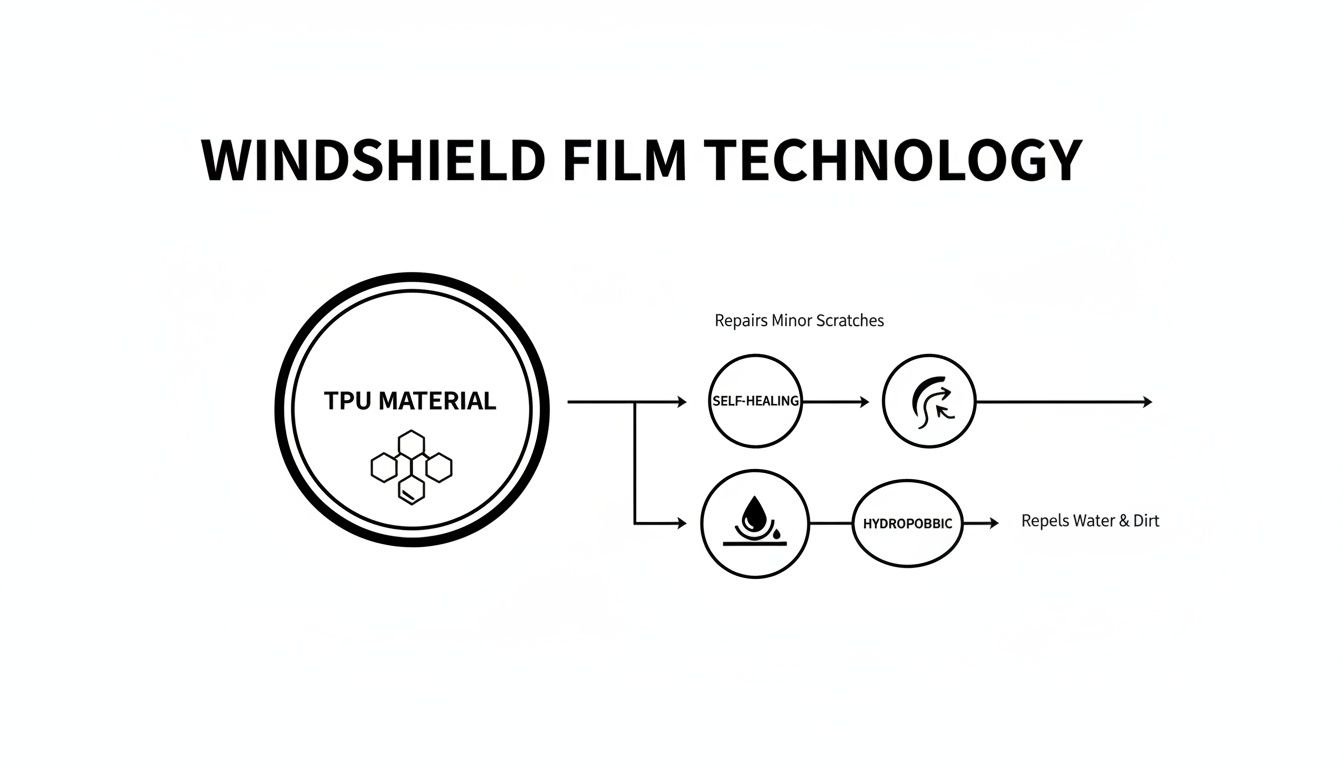
As you can see, the magic is in the advanced TPU material, which gives the film its impressive self-healing and water-shedding abilities.
Keep Your Factory Glass Where It Belongs
Beyond stopping immediate breaks, one of the most underrated benefits is preserving your car's original, factory-installed windshield. That piece of glass is far more than just a window—it's a critical structural part of your vehicle's frame, essential for maintaining rigidity and protecting you in a rollover.
The seal applied at the factory is also second to none. By keeping that original glass in place, you’re not just avoiding a replacement bill; you’re maintaining your car's structural integrity and steering clear of common aftermarket problems like leaks or annoying wind noise. This is a huge deal for resale value, too, as savvy buyers always look for original factory parts.
When you protect the factory windshield, you’re not just avoiding a repair bill. You're safeguarding the engineering, safety, and value that was built into your car from day one.
Your Car's Personal Sunscreen and Heat Shield
Think of a top-tier windshield film as a powerful, invisible layer of sunscreen for your car's interior. It’s designed to block over 99% of harmful ultraviolet (UV) radiation—the same rays that cause your dashboard to fade, crack, and slowly disintegrate over the years.
This protection is for you and your passengers, too, helping shield your skin on long, sunny drives. But it gets better. Many modern films are infused with ceramic particles that are fantastic at rejecting infrared heat. This means your cabin stays noticeably cooler on hot days, putting less strain on your air conditioner and making your ride much more comfortable.
It’s a comprehensive defense system that keeps you safe, comfortable, and preserves your vehicle's interior for the long haul. The numbers back it up: with millions of chip-related claims every year, drivers with protective films save an average of over $1,200 per incident by avoiding a full replacement. As the market for protective films grows, especially in North America, more owners are realizing it's a worthwhile investment. Discover more insights on the growing paint protection film market.
Film Protection Versus Full Windshield Replacement

So, the inevitable happens. You're driving down the highway, hear that awful thwack, and now you're staring at a new crack in your windshield. This is where a critical decision comes into play: was it better to be proactive with protection, or is it time for a reactive—and expensive—replacement?
For owners of modern vehicles, the answer is becoming clearer every day. A new windshield isn't just a piece of glass anymore. It’s the nerve centre for your car’s Advanced Driver-Assistance Systems (ADAS), housing a complex array of cameras and sensors.
That small rock chip doesn't just mean a simple glass swap. It requires a full replacement and a mandatory, painstaking recalibration of your car's entire ADAS suite. The bill for that kind of job can easily climb past $1,500, and you could be without your car for days. A protective film, on the other hand, is a simple, one-time investment designed to stop that disaster before it even starts.
A Head-to-Head Financial Breakdown
Let's lay it out plainly. One option is a strategic investment in prevention. The other is a costly, inconvenient cure. When you look at the long-term numbers, the savings from choosing protection add up fast.
Choosing a windshield film protector is like buying insurance that actually prevents the disaster. It’s an upfront cost that actively works to eliminate a much larger, future expense, saving you both money and significant hassle down the road.
We dive deep into the numbers in our guide on windshield protection film vs. replacement—which saves you more time and money?. But for a quick overview, this table breaks down exactly what you're looking at.
Windshield Film Protector vs. Windshield Replacement
Here's a side-by-side look at how a proactive film installation stacks up against a reactive glass replacement, covering everything from initial cost to long-term value.
| Factor | Windshield Film Protector | Windshield Replacement |
|---|---|---|
| Initial Cost | A moderate one-time investment for proactive, long-term defence. | A high, unexpected expense, often exceeding $1,500 with ADAS recalibration. |
| Long-Term Savings | Significant savings by preventing multiple potential replacements. | No savings; costs can accumulate with each instance of damage. |
| Vehicle Downtime | Minimal, typically just a few hours for a professional installation. | Can take several days, factoring in glass delivery and ADAS recalibration. |
| Resale Value | Preserves the original factory windshield and seal, boosting vehicle value. | An aftermarket windshield can potentially lower the vehicle’s resale value. |
While a film is the best defense against major impacts, it's also good to know about options for glass polishing and restoration for dealing with minor surface scuffs that can happen over time.
Ultimately, investing in a film protector is a calculated move. It’s about preserving your vehicle’s integrity, keeping its advanced safety systems working perfectly, and protecting its value. For any modern car owner, it’s simply the smarter financial choice.
Choosing Between DIY and Professional Installation
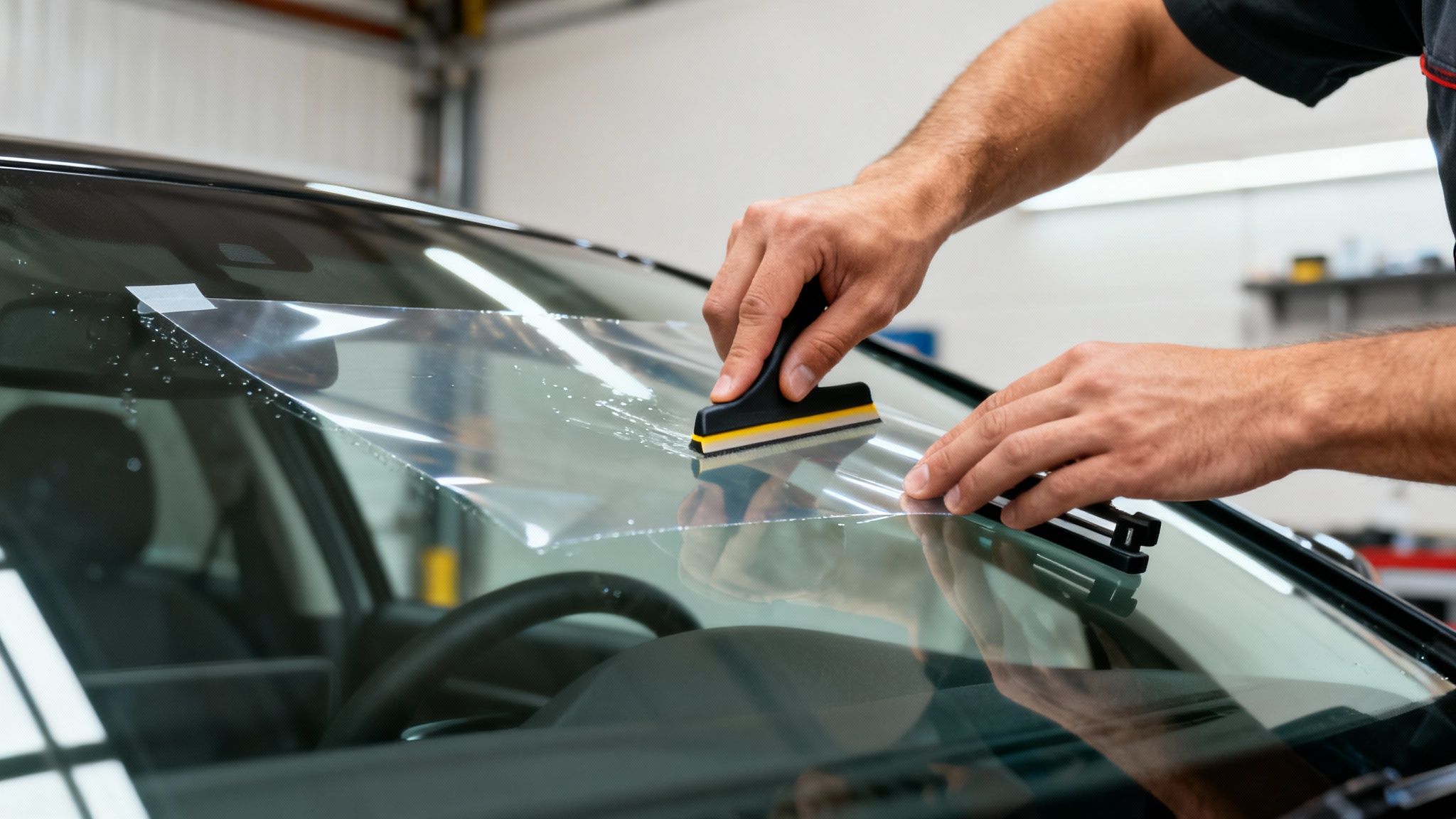
Your new windshield film protector is only as good as its installation. While tackling a DIY project can be tempting, this is one area where the potential savings rarely outweigh the risks. A flawless application isn't just about peeling and sticking; it's a game of precision that demands a seasoned hand.
Applying the film correctly involves carefully heat-shrinking it to match the complex curves of your windshield. This is a delicate process where one slip-up can ruin the entire sheet of film. After that comes the squeegee work, which requires perfect pressure and technique to push out every last bit of moisture without leaving a mark.
Any mistake during these steps can lead to a whole host of problems.
The Risks of a DIY Installation
Going the DIY route might look like a good way to save money, but it can quickly turn into a more expensive headache if things go wrong. Without the right tools and a perfectly clean, dust-free environment, you’re setting yourself up for issues that ruin both the look and the function of the film.
Here are some of the most common DIY pitfalls:
- Air Bubbles and Lifts: Trapped air or moisture creates ugly blemishes and weak spots where the film can start to peel.
- Dust and Debris Contamination: Even a single speck of dust caught underneath can create a permanent, distracting bubble.
- Improper Alignment: Misaligning the film can leave edges exposed, making them vulnerable to lifting and peeling over time.
- Creases and Wrinkles: Mishandling the film during the crucial heat-shrinking stage can cause damage that simply can't be fixed.
A professional installation isn't just about applying a film; it's about guaranteeing performance. The controlled environment, specialized tools, and expert technique ensure the film is optically perfect and ready to do its job from day one.
Especially in areas with rough roads and intense sun, a pro-level installation is practically the standard. Many new vehicles come with advanced films for UV and heat rejection installed right at the factory, and a professional installer replicates that quality. This is your best defence against the rock chips that plague our highways. You can read more about current PPF market trends and quality standards to see how the industry is evolving.
Ultimately, investing in a professional ensures perfect adhesion, invisible edge work, and a warranty that gives you real peace of mind. When it comes to a critical safety component like your windshield, that guarantee is priceless.
Why Trust a Professional for Your Windshield Protection
When it comes to something as vital as your windshield, you want the job done right. A professional installation isn't just about sticking a film on your glass; it's a precision process that ensures the windshield film protector works exactly the way it was designed to. This is about more than just dodging a few air bubbles—it’s about guaranteeing flawless clarity, long-term durability, and real-world protection.
Here at Carmedics Autowerks, our technicians know the specific challenges Whitby drivers deal with every day, from loose gravel on the highway to our tough Canadian seasons. That local experience guides every installation. We work in a controlled, dust-free bay, using premium films and specialized tools to get an absolutely perfect, invisible finish. The film is carefully heat-shrunk to hug every single curve of your windshield, creating a seamless bond with securely sealed edges.
It's this level of detail and technique that makes a professional job worlds apart from a DIY kit. It’s what prevents the film from peeling, getting contaminated, and distorting your view down the road.
The Peace of Mind from a Flawless Finish
At the end of the day, going with a pro is an investment in your own peace of mind. A proper installation is backed by a warranty, which protects you from any product defects or application mistakes. You can drive away confident that your vehicle is shielded by a film that's perfectly bonded and ready to take a hit from the moment you leave our shop.
You're not just buying a piece of film; you're partnering with experts dedicated to preserving your vehicle's integrity and value. The flawless finish and long-term performance are a direct result of that professional commitment.
Instead of taking a chance on a frustrating and potentially costly mistake, you get the assurance that the job is done correctly the first time. Learn more about how our specialized installation of XPEL windshield protection film offers invisible armour for your drive. It’s the smart way to protect your investment.
Got Questions? We've Got Answers
It's smart to have a few questions before you commit to protecting your windshield. Let's tackle some of the most common ones we hear from drivers, covering everything from how long the film lasts to whether it's truly worth the investment.
How Long Does a Windshield Film Protector Last?
You can count on a professionally installed, top-tier windshield film to last a good while. For most drivers, that means anywhere from 3 to 5 years of solid protection.
Of course, this can shift a bit depending on where you live, your driving habits, and how you care for it. But the films used by serious professionals are built tough. Plus, you’ll get straightforward care instructions and often a manufacturer's warranty that covers issues like bubbling or yellowing, giving you extra peace of mind.
Will the Film Affect My Visibility or Car Sensors?
This is a big one, and the answer is a clear no. A common myth is that the film will make your view wavy or distorted. When you go with a professional-grade film and a skilled installer, it’s optically clear and essentially disappears once it’s on the glass.
These films are engineered to be completely neutral, so your vision stays crystal clear, day or night. They're also designed to work seamlessly with all the modern tech in today's cars—that includes ADAS sensors, cameras, and even heads-up displays (HUDs). Everything will function exactly as it should.
How Do I Clean and Maintain the Film?
Keeping your film in top shape is easier than you think. The most crucial rule is to wait 48-72 hours after installation before washing your car. This gives the adhesive time to fully cure and bond to the glass.
Once that curing window is over, it’s simple:
- Wash your car normally with a gentle, pH-neutral car soap.
- Stick to a soft microfiber cloth or mitt when cleaning the windshield.
- Steer clear of abrasive brushes, harsh chemical cleaners, or blasting the edges of the film with a pressure washer.
That’s really it. A little bit of gentle care is all it takes to keep the film looking and performing its best for years.
Is a Windshield Film Protector Really Worth the Cost?
If you own a newer vehicle or a high-end car, the answer is almost always a resounding yes. Think about it this way: replacing a modern windshield, especially one with built-in sensors, can easily cost over $1,000. And that's before you factor in the hassle and downtime.
A windshield protection film is a fraction of that cost. It's a proactive measure that prevents that expensive, reactive repair down the road. You’re not just saving money; you’re preserving your vehicle’s original factory windshield, which is a huge plus for structural integrity and resale value.
Ready to give your vehicle the invisible armour it deserves? The expert team at Carmedics Autowerks provides flawless, professional installations using premium films designed to withstand the toughest road conditions. Protect your investment and drive with confidence. Contact us today to get a quote.