

You know that screen protector you put on your phone the second you take it out of the box? Windshield protection film is basically that, but for your car. It’s a super tough, optically clear polymer film that gets applied to the outside of your windshield, acting as a sacrificial barrier against all the nasty stuff the road throws at you.
We're talking about a shield that absorbs the impact from flying gravel and road debris, all while blocking nearly 99% of the sun's damaging UV rays.
The Invisible Shield for Your Windshield
At the end of the day, windshield film is all about preservation. Your windshield isn't just a piece of glass anymore; it's a vital part of your car's structural integrity. It's also where many of the expensive sensors and cameras for modern driver-assist systems live. One unlucky rock chip can quickly spider into a full-blown crack, forcing a replacement and a complicated, costly recalibration of those systems.
This is where the film comes in. It creates a durable, transparent layer that takes the hit. When a rock strikes the glass, the film disperses the impact energy across its surface instead of letting it concentrate on one tiny point. This dramatically cuts down the risk of getting those frustrating pits, chips, and cracks you pick up on the highway.
More Than Just Impact Resistance
While stopping rock chips is its main claim to fame, the benefits don't stop there. Modern windshield films are packed with advanced UV inhibitors that pull double duty.
- Protecting Your Interior: Think of it as sunscreen for your dashboard. It blocks the harsh UV radiation that fades and cracks your dash, leather, and other interior surfaces over time.
- Protecting You and Your Passengers: That same UV filtering helps shield you and your family from prolonged sun exposure on long drives and daily commutes.
Here's the key takeaway: The film is designed to be the sacrificial layer. It takes the damage so your expensive, factory-installed windshield doesn't. Swapping out a damaged film is worlds cheaper and faster than replacing the entire windshield.
A Smart Analogy for Modern Car Care
It really is like the smartphone screen protector. You make a small, smart investment to protect a much more valuable piece of technology. Windshield film brings that same common-sense logic to your vehicle. It’s not just a fancy add-on; it’s a practical, frontline defence that preserves your car's safety features, structural integrity, and even its resale value.
By taking the daily beating from road debris, this invisible shield keeps your original glass in factory-fresh condition. This means your view stays perfectly clear, and you avoid the potential headaches of leaks or bad seals that can sometimes come with an aftermarket windshield replacement. It’s simply proactive care for one of your car's most important components.
Comparing the Different Types of Windshield Films
Not all windshield film is created equal. The market offers a few distinct technologies, and each one is designed to solve a slightly different problem. Choosing the right one really comes down to what you’re trying to protect against—are you worried about hardcore impacts from flying rocks, or is easier cleaning and better visibility your main goal? Let's break down the main contenders you'll come across.
This diagram helps visualize how a protective film acts as a shield for your windshield, deflecting common road hazards and environmental threats before they can cause damage.
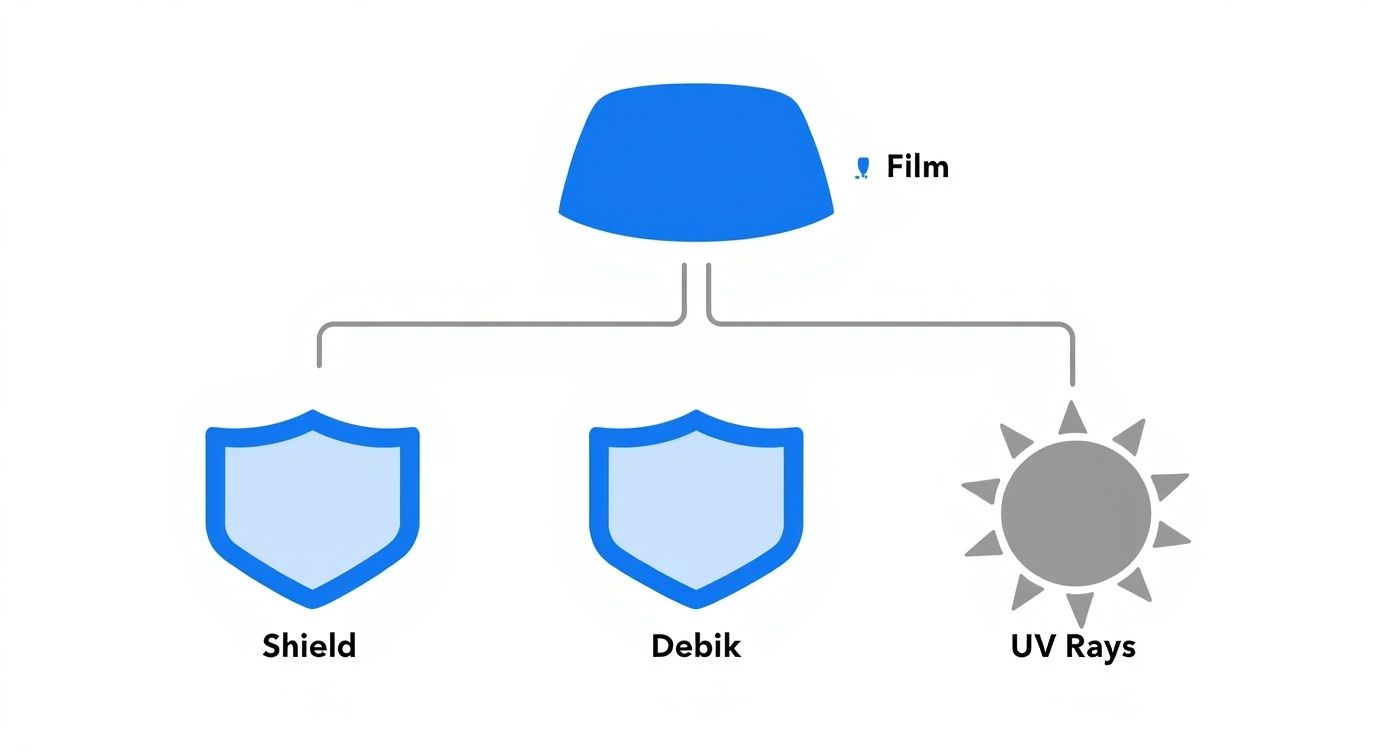
As you can see, the film serves as a critical sacrificial layer. It takes the hit from debris and blocks harmful UV rays, preserving the glass underneath.
Dedicated Anti-Chip Films
Think of these as the heavy-duty bodyguards for your windshield. Dedicated anti-chip films are engineered with one primary mission: to absorb and disperse the kinetic energy from an impact. They are typically thicker than other films and are built with multiple, specialized layers that work together to stop a flying rock from causing a chip or crack.
Their real strength is in their construction. You'll find a tough, scratch-resistant hard coat on top, but beneath that are softer, more pliable layers designed to cushion the blow. If your daily commute involves gravel roads, highways, or navigating through construction zones, this type of film offers the highest level of physical protection you can get.
Paint Protection Film for Windshields
You've probably heard of Paint Protection Film (PPF) as the "clear bra" that guards your car's paint. Well, the best brands have adapted that same incredible technology for glass. Windshield PPF strikes a fantastic balance between durability, impact resistance, and a game-changing feature known as self-healing.
This means that minor scratches and swirl marks that appear on the film’s surface can actually vanish with a bit of heat from the sun or a heat gun. It’s an amazing property that keeps the film looking crystal clear for much longer. It gives you robust protection from everyday road hazards while maintaining perfect optical clarity. For a closer look at one of the top products in this category, you can learn more about the specifics of a leading windshield protection film.
The key difference is specialization. While both Anti-Chip films and Windshield PPF are excellent at stopping rocks, PPF adds that self-healing benefit for minor surface wear, making it a brilliant all-around choice for keeping your glass looking pristine.
Ceramic Coatings for Glass
Ceramic coatings are a whole different beast. Instead of a physical film, a ceramic coating is a liquid polymer that chemically bonds directly with the pores of your windshield. This process creates an incredibly slick, durable, and hydrophobic layer of protection right on the glass itself.
The main benefit here isn't impact resistance, but maintenance and visibility. The hydrophobic effect is so powerful that water beads up and flies right off the glass at driving speeds, often making your wipers unnecessary in light rain. It also makes it a breeze to clean off bugs, dirt, and ice. While it adds some minor scratch resistance (think micro-scratches from dirty wipers), it won't do a thing to stop a rock chip.
Making the Right Choice for Your Vehicle
To help you decide, we've laid out the core differences between each type of windshield protection. This table should make it easier to match your needs with the right technology.
Comparison of Windshield Protection Film Types
This table breaks down the key features of the most common windshield protection options, helping you see at a glance which one is the best fit for your car and driving habits.
| Film Type | Primary Protection | Durability | Self-Healing | Ideal For |
|---|---|---|---|---|
| Anti-Chip Film | High-impact absorption from rocks and debris. | Very high; designed as a sacrificial layer. | No | Drivers frequently on highways, gravel roads, or in construction zones. |
| Windshield PPF | Excellent impact resistance with added scratch defence. | High; balances impact absorption with surface resilience. | Yes | The daily driver seeking a robust, all-around solution that stays looking new. |
| Ceramic Coating | Hydrophobicity, easy cleaning, minor scratch resistance. | Good; creates a hard, slick surface but offers no impact defence. | No | Car enthusiasts who prioritize pristine clarity and effortless maintenance. |
At the end of the day, the best choice is the one that solves your biggest problem. If you need maximum defence against physical damage, an anti-chip film or a specialized windshield PPF is the clear winner. But if your main goal is to keep your glass impeccably clean and improve visibility in the rain, a ceramic coating is an outstanding investment.
The Benefits and Limitations of Windshield Film

When you're thinking about investing in windshield film, it's smart to look at the whole picture. There's a fantastic list of reasons to get it done, but like any protective product, it has its limits. Understanding both sides of the coin helps you appreciate the real value it brings to your daily drive.
The number one reason people choose this film is for its incredible defence against common road hazards. Let's be honest, that cringe-worthy thwack of a rock hitting your glass is a sound we all dread. A quality film acts like a shock absorber. Its specialized polymer layers are engineered to spread out the force of an impact, dissipating the energy so it doesn't concentrate on one tiny spot. This is what stops a chip or crack from ever starting. It’s the difference between a small mark on the film and a trip to the auto glass shop for a full replacement.
More Than Just a Rock Stopper
While fending off stone chips is its primary job, the other perks of windshield film are just as compelling. They really elevate your driving experience and help keep your vehicle in top shape.
One of the biggest unsung benefits is its powerful UV-filtering ability. Most high-end windshield films are designed to block over 99% of harmful UV radiation. This constant protection pays off in two major ways:
- Protecting Your Interior: Think of it as sunscreen for your car. It shields your dashboard, steering wheel, and seats from the sun's relentless rays, preventing the fading, drying, and cracking that makes an interior look old before its time.
- Keeping You Comfortable: That UV shield also protects you and your passengers from prolonged sun exposure on long trips. It’s a layer of health-conscious comfort you'll appreciate every time you get behind the wheel.
On top of all that, the film keeps your original factory glass in mint condition. This is a bigger deal than you might think. Factory-installed windshields usually have the best optical clarity and are sealed perfectly to your car's frame. Preserving that original component is great for your car’s structural integrity and its resale value down the road.
Knowing the Limits: Setting Realistic Expectations
It’s important to have the right mindset about windshield film. At its core, it's a sacrificial barrier. It’s incredibly tough, but it isn't indestructible. The whole point is for the film to take the hit so your expensive glass doesn’t.
A severe impact from a large object—say, a big piece of metal debris or a heavy rock at highway speeds—can still be too much for the film to handle. It might penetrate the film and damage the glass underneath. The film massively improves your odds, but it can't offer a 100% guarantee against every possible hazard out there.
The key thing to remember is that the film is a wearable part. If it takes a major hit that would have easily shattered your windshield, the film itself might get gouged or torn. When that happens, it means the film did its job perfectly. You'll just need to have that section replaced to keep the protection going.
The technology behind windshield film protection is actually a close cousin to what you’ll find in paint protection film. Both are made to absorb impacts and even self-heal from minor scuffs, extending the life of the surface they cover. If you're interested, you can learn more in our complete guide to the benefits and costs of paint protection film.
Ultimately, the best way to think of windshield film is as a crucial piece of safety gear, much like a helmet for a cyclist. It gives you a massive defensive upgrade against the most common threats on the road, saving you from the hassle and cost of frequent glass repairs. By understanding both its amazing strengths and its practical limits, you can make a smart decision and enjoy the peace of mind that comes with it.
Choosing Between Professional and DIY Installation
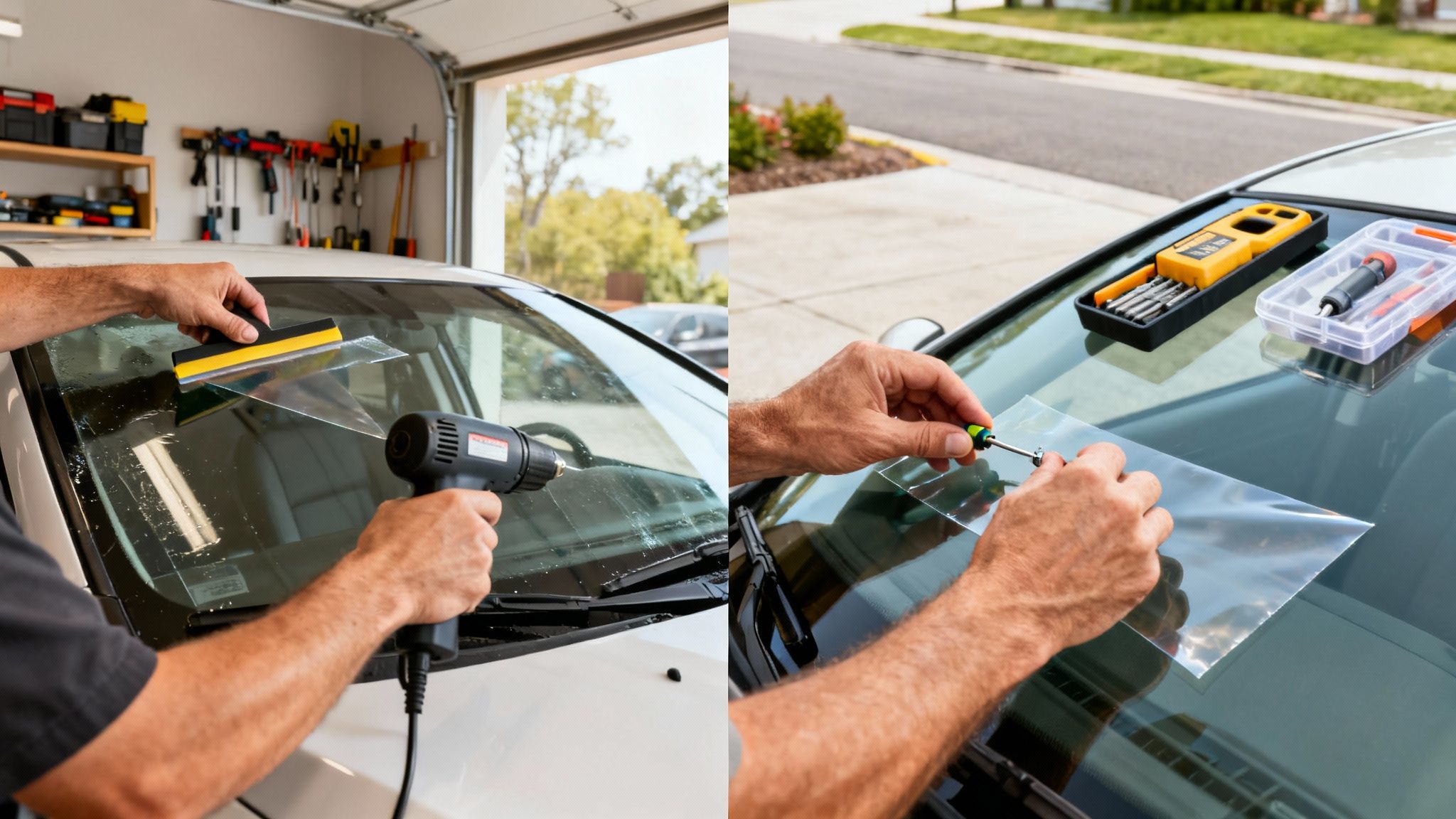
Once you’ve settled on the right kind of windshield film protection, you’re faced with another big decision: how to get it on your car. This step is every bit as crucial as the film you picked, because a shoddy installation can ruin even the best product. Really, you have two options—tackle it yourself (DIY) or bring in an experienced professional.
It all boils down to a classic trade-off between cost and quality. A DIY kit might look like the cheaper way to go, but the precision and peace of mind a pro provides is something you just can't replicate in your driveway. Let's break down what each path really looks like.
The Professional Installation Advantage
Hiring an expert is about more than just convenience; it’s an investment in a perfect, long-lasting result. Professionals work in dedicated, controlled spaces specifically designed to prevent the very things that sabotage a good film application, like dust, lint, and other airborne particles.
A trusted shop like Carmedics Autowerks delivers where it counts:
- A Controlled, Dust-Free Environment: This is non-negotiable. A clean bay ensures that no tiny specks of dust get trapped under the film, which would create permanent, annoying bubbles.
- Specialized Tools and Techniques: Pros have an arsenal of specific tools, from custom slip solutions and squeegees of different hardness levels to heat guns with precise temperature controls. They know the exact amount of heat needed to mould the film to your windshield’s unique curves without damaging it.
- Guaranteed Results: This might be the biggest perk. Professional work is almost always backed by a warranty. If you spot any lifting, bubbling, or other flaws from the installation, they'll make it right. It’s your guarantee of a flawless finish.
The whole process is incredibly detailed. It starts with an intensive, multi-stage cleaning of the glass, followed by precise film cutting (often using a digital plotter for an exact fit). The real magic happens during the skilled heat-shrinking and squeegeeing that flawlessly bonds the film to the glass.
The Realities of a DIY Attempt
The thought of saving some cash with a DIY windshield film kit is definitely tempting, but this is a high-stakes project with a massive learning curve. A windshield isn't a simple flat piece of glass like a side window; its complex curves make applying a flat sheet of film a serious challenge.
The biggest hurdle by far is heat-shrinking. This is the technique of carefully heating the film to shape it to the windshield's contours before you actually stick it on. It demands a steady hand and a lot of finesse. Too little heat and you’ll get ugly creases called "fingers." Too much, and you can burn or warp the film, making it completely useless.
Attempting a DIY installation without prior experience often leads to frustration and a wasted product. The money saved on a kit is quickly lost if you have to buy a second one or end up paying a professional to remove a botched job and install a new film anyway.
On top of that, getting a surface perfectly clean in a home garage is next to impossible. No matter how much you prep, static electricity can pull a rogue dust particle from the air onto the glass right at the critical moment. Before you go the DIY route, you have to ask yourself if the potential savings are worth the very real risk of ending up with a bubbly, distracting mess on your most important window.
How to Maintain Your Windshield Film
Getting windshield film protection is a smart move, but keeping it in top shape is what truly protects your investment. Proper care ensures the film stays crystal clear and does its job for years to come.
The most crucial time is right after the film is installed. You need to give it a full week to cure before its first wash. This lets any lingering moisture evaporate and allows the adhesive to bond completely to the glass.
The Do's of Windshield Film Care
Once that initial curing period is up, a gentle cleaning routine is all it takes. Think of it less as a chore and more as preserving the invisible shield protecting your glass.
- Wait Before Washing: Be patient. Let the film fully cure for at least one week before washing your vehicle.
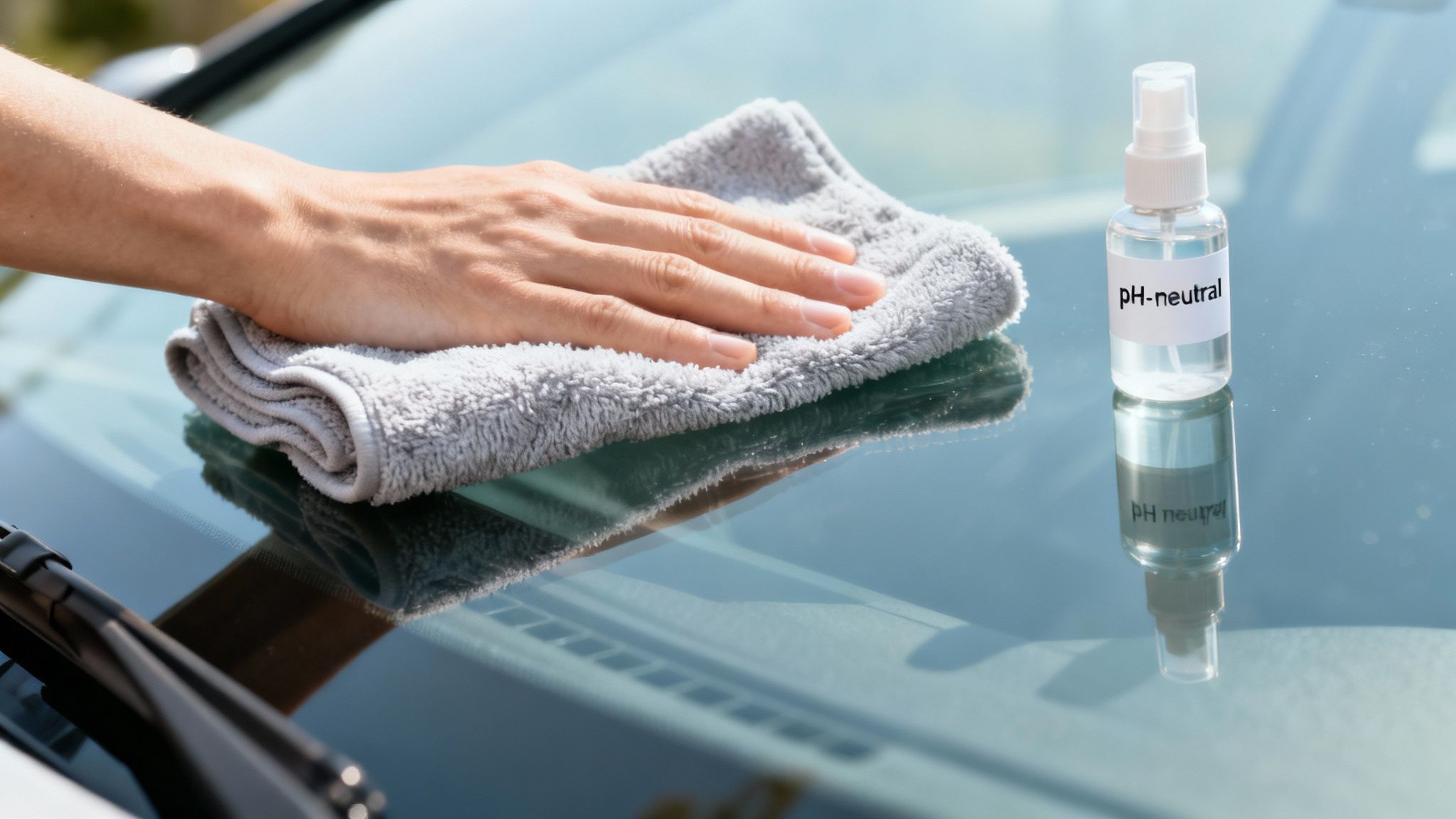
- Use Gentle Soaps: Stick with pH-neutral car wash soaps. Anything too acidic or alkaline can slowly eat away at the film's top coat.
- Opt for Soft Microfibre Towels: Always use clean, plush microfibre towels for washing and drying. They're your best defense against creating tiny scratches that dull the finish over time.
Following these simple rules will keep your film looking flawless and working as intended. The key is to avoid harsh chemicals and anything abrasive.
The Don'ts That Can Ruin Your Film
Knowing what not to do is just as important. Some common habits can accidentally cause serious damage to your film, forcing you to replace it sooner than you'd like.
The biggest mistake we see is people using ammonia-based glass cleaners, like many household brands. These harsh chemicals attack the film’s adhesive, which can lead to bubbling, peeling, or a cloudy appearance. Always check the label for an "ammonia-free" formula.
- Avoid Harsh Car Washes: The high-pressure jets and stiff, spinning brushes at some automatic car washes can be too much for the film. They can lift the edges and ruin the seamless installation.
- Never Use Sharp Objects: When winter hits, don't even think about using a sharp plastic or metal ice scraper. It will gouge and permanently scratch the film. Your vehicle’s defroster is the only safe way to go.
Knowing When It's Time for a Replacement
Even the best-maintained film won't last forever—after all, it's a sacrificial layer designed to take a beating so your windshield doesn't have to. Eventually, it will show its age.
Keep an eye out for signs like yellowing, peeling edges, or a collection of deep scratches and pits that start to affect your view of the road. When you see these signs, the film has done its duty. It’s time for a fresh layer. For a clean slate, it's worth checking out the proper steps for tinted window film removal, which is a professional process that gets the glass perfectly ready for a new application.
2. Cost, Legality, and Safety: The Big Questions
When you’re thinking about windshield film protection, the practical stuff usually comes up first. How much does it cost? Is it even legal? Is it safe? These are great questions, and the answers really help paint a full picture of the film’s value beyond just stopping a few rock chips.
Let’s dig into what you can expect.
Breaking Down the Cost
The price for a professional installation isn’t a flat rate, and that’s a good thing. It means you're paying for a service that's specific to your vehicle, not a generic, one-size-fits-all solution.
So, what moves the needle on price? A few key things. The size and shape of your windshield are big factors. A massive, heavily curved windshield on a modern sports car or luxury SUV is a lot trickier—and takes more material—than the simple, flat glass on a small commuter car.
The quality of the film itself is another major factor. Top-tier films with advanced tech like self-healing properties or enhanced hydrophobic coatings will naturally have a higher price tag than basic, entry-level options.
- Vehicle Type: Complex curves on sports cars and large SUVs mean more labour and precision are needed.
- Film Quality: Premium films from respected brands like XPEL deliver superior durability, clarity, and performance.
- Installer Expertise: You're paying for the skill, clean installation environment, and warranty that a professional shop provides.
Thinking about the investment in windshield film is a great time to also brush up on your insurance. It's helpful to have a baseline for understanding comprehensive auto insurance coverage and how it might factor into your decisions.
Is Windshield Film Legal?
This is probably one of the most common—and important—questions we get. The short answer is: yes, absolutely. High-quality windshield protection films are completely legal here in Ontario and throughout Canada.
The confusion usually stems from window tinting laws, which have strict rules about how dark your front windows can be. But protective films are a different beast entirely. They are designed to be 100% optically clear.
Once installed properly, the film is virtually invisible. It doesn't obstruct your view, create distortion, or alter the glass in any way that would get you in trouble with traffic laws. A professional job guarantees your vision of the road remains perfectly clear and unimpaired.
The Hidden Safety Benefit
Here’s something most people don’t even consider. Beyond just saving your glass from chips and cracks, windshield film adds a serious layer of safety.
Think about what happens in a severe accident. Your windshield is engineered to shatter into thousands of small, dull-edged pieces to prevent serious injury. The film, with its strong adhesive and tough construction, acts like a membrane that holds all those shattered pieces together.
This dramatically reduces the risk of dangerous glass shards flying into the cabin toward you and your passengers. It’s an extra layer of protection when you need it most, making the film a true safety feature, not just a cosmetic or preventative one.
Got Questions? We've Got Answers
It's completely normal to have a few questions before you commit to putting a film on your windshield. After all, your view of the road is pretty important! Let's clear up some of the most common things we get asked by drivers just like you.
The whole point of these films is to be an invisible shield, adding a layer of toughness without you even knowing it’s there.
Will This Film Mess With My Vision?
Not a chance. A top-tier windshield film is optically clear, meaning it’s designed to be completely transparent. When it's put on by a pro, you won't even notice it. There’s no haze, no distortion, and nothing that will get in the way of seeing the road ahead.
And for all the tech in modern cars, don't worry. These films play nice with your advanced driver-assist systems (ADAS). The cameras and sensors that rely on a clear view through the glass will work just as they're supposed to.
What About My Wipers and Defroster?
They'll work perfectly. The film is applied to the outside of your windshield, so it never even comes into contact with your interior defroster vents. Go ahead and blast the heat on a frosty morning—it won't affect the film one bit.
As for the wipers, the film actually has a super slick topcoat. This smooth surface lets your wiper blades glide effortlessly, just like they do on glass. You won't see any extra wear and tear on your blades, and the wipers won't damage the film.
Can I Take the Film Off Later On?
Absolutely. That’s one of the best parts about it. Think of it as a temporary, sacrificial layer for your glass. If it takes a big hit from a rock or just gets worn out after a few years of service, it can be professionally removed without leaving a trace.
A trained technician uses a specific process with a bit of heat and the right solutions to gently lift the film and all its adhesive. This leaves your windshield looking exactly as it did the day it left the factory, ready for a fresh layer of protection if you want.
This is what makes it such a smart investment. The film takes the daily beating from road debris so your expensive, factory-installed windshield doesn't have to. When it's done its job, it comes off clean, and the pristine glass underneath is preserved.
Ready to give your vehicle the ultimate defense against road debris and UV rays? Trust the experts at Carmedics Autowerks to provide a flawless, professional installation that protects your investment. Visit our website to learn more about our windshield protection services and book your appointment today. Learn more at https://carmedicsautowerks.com.com.