

So, you're thinking about getting your windows tinted but have one big question: what's it going to cost? For a typical sedan, you can expect window tinting prices to land anywhere between a few hundred to over a thousand dollars. The final number on the invoice really comes down to a few key things: the type of film you pick, the size of your vehicle, and the skill of the person installing it.
Your Quick Guide to Car Window Tinting Prices
Let's get right to it. You need to know how much to budget for car window tinting. That price isn't just about making your windows darker; it's a direct reflection of the film's technology, the installer's craftsmanship, and the warranty standing behind the work.
Think of it like buying a winter coat. A simple fleece will keep you warm on a cool day, but a high-performance, insulated jacket is what you need for a real Canadian winter. Window films work the same way—you get the performance you pay for.
To give you a solid idea of what to expect, we've laid out the typical price ranges below. This should give you a quick, at-a-glance look at the costs before we dig into what makes one film better—and more expensive—than another.
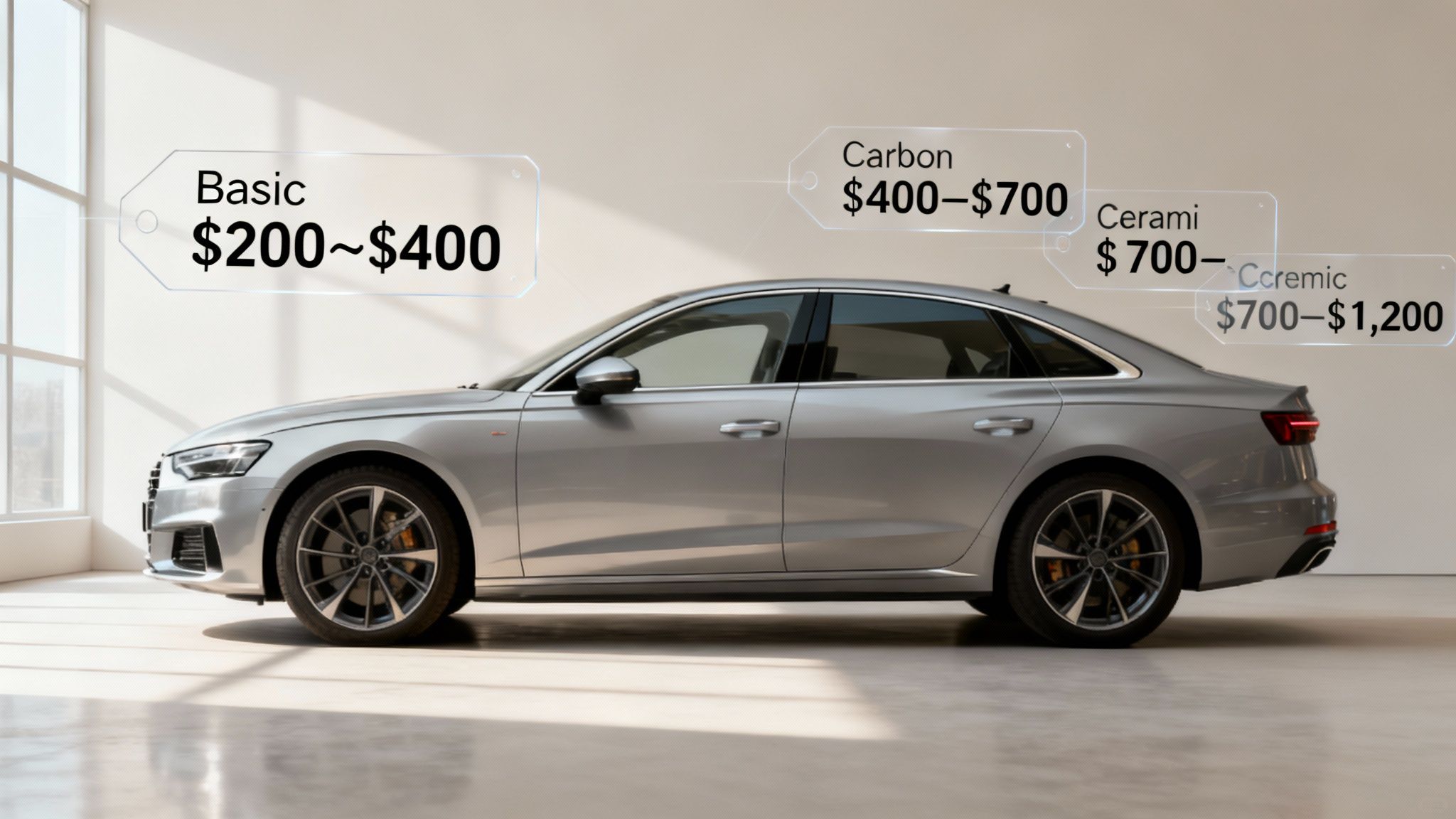
Here's a quick overview of typical starting prices for tinting a standard sedan with different qualities of window film.
Estimated Window Tinting Price Ranges by Film Type
| Film Type | Key Benefit | Estimated Price Range (Sedan) | Best For |
|---|---|---|---|
| Dyed Film | Most Affordable Privacy | $250 – $400 | Budget-conscious owners wanting a basic tinted look. |
| Carbon Film | Great Heat Rejection & No Fade | $400 – $600 | Drivers wanting better performance and longevity without electronic interference. |
| Ceramic Film | Superior Heat & UV Rejection | $600 – $900+ | Owners seeking the highest level of comfort, protection, and clarity. |
Just remember, these are ballpark figures. If you're driving an SUV or a truck, expect the price to be higher simply because there's more window real estate to cover, which means more material and more time.
Prices can also shift based on your location and the specific shop doing the work. For example, while it's tough to nail down exact pricing trends across different regions, local laws play a huge role. In places like California, the rules are very strict, requiring front side windows to allow at least 70% of light through. You can find more info on California's specific tinting laws to see how regulations can influence what's available.
At the end of the day, the only way to get a firm price is to talk to a pro. A good installer will walk you through the options, look at your vehicle, and help you land on the perfect film that meets your needs and fits your budget.
Here is the rewritten section, crafted to sound like an experienced human expert:
What Really Determines Your Tinting Cost
Ever wondered why one window tinting quote can be double the price of another? It’s not just a number pulled out of thin air. The final cost is a blend of several key factors, and understanding them helps you see exactly what you’re paying for.
Think of it like getting a custom suit versus buying one off the rack. Both will get you dressed, but the materials, the craftsmanship, and the final fit are worlds apart—and so is the price. Car window tinting is no different; there’s a lot more to it than just how dark the film looks.
The Single Biggest Factor: Your Film Choice
By far, the biggest driver of the final price is the type of film you choose. This is the difference between a basic cotton t-shirt and high-performance athletic gear designed to block UV rays and keep you cool. Each type of film technology brings a different level of performance, durability, and clarity to the table.
- Dyed Film: This is your basic, entry-level option. It’s the most affordable way to get that darker, private look, but it offers very little in the way of heat rejection and can fade over time, sometimes turning a bit purplish.
- Carbon Film: A fantastic middle-of-the-road choice. Carbon film is made without dyes, so you never have to worry about it fading. It does a good job of rejecting heat and UV rays, and it won’t interfere with your phone or GPS signals.
- Ceramic & Infrared (IR) Film: Welcome to the top tier. Premium ceramic films use advanced, non-metallic particles to block an incredible amount of solar heat and up to 99% of harmful UV rays. The real magic here is they deliver superior clarity and performance without needing to be super dark.
Jumping from a basic dyed film to a quality ceramic film can easily double the cost, but for most people, the payoff in daily comfort, protection for your car's interior, and sheer longevity is well worth it.
How Your Vehicle's DNA Affects the Price
Not all cars are created equal, especially when it comes to the tinting process. The size and shape of your vehicle play a huge part in how much time and material the job will take, which directly impacts the price.
A small two-door coupe with flat, easy-to-reach windows is a relatively straightforward job. On the other hand, a big SUV or a minivan with lots of large, curved windows is a different beast entirely. It demands more film and a much higher level of skill to get right.
An installer has to meticulously heat-shrink the film to conform to complex curves, especially on rear windshields. Some cars, like a Porsche Panamera or even a classic VW Beetle, are notorious for their difficult-to-tint glass. Those jobs simply require more time and expertise, which is reflected in the labour cost.
Labour and Skill: The Unseen Value
You’re not just paying for a sheet of film; you’re paying for the installer's experience. That flawless, bubble-free finish that lasts for years doesn’t happen by accident. It's the result of patience, a steady hand, and knowing the craft inside and out.
Here’s what goes into a professional job:
- Preparation: The glass has to be surgically clean. Even one speck of dust can ruin the final look.
- Precision Cutting: Whether using computer-guided plotters or old-school hand-cutting techniques, the film has to fit perfectly.
- Flawless Application: This is where the skill really shows—applying the film smoothly without a single crease, bubble, or piece of contamination getting trapped underneath.
- Old Tint Removal: If your car already has old, failing tint, it needs to be carefully steamed and scraped off. This is a sticky, time-consuming process that adds to the overall cost.
While it can be tough to find historical pricing data for specific areas, the core principle never changes: you get what you pay for in installation quality. The rules and regulations in different regions also shape the industry. For a deeper dive into how laws impact tinting, resources covering things like California's window tinting regulations offer some good insight.
Finally, any reputable shop will stand behind their work with a solid warranty. A lifetime warranty against bubbling, peeling, and fading is the standard for premium films and professional installation. That guarantee is part of the price, giving you peace of mind that your investment is protected for as long as you own your car.
Choosing the Right Tint Film for Your Needs
Not all window films are created equal. The technology packed into that thin layer is what really determines how comfortable your ride will be, how protected your interior is, and of course, what you'll pay for the job. Think of it like buying a good pair of sunglasses: a cheap pair just makes things dark, but a quality pair cuts glare, enhances clarity, and provides real UV protection for your eyes.
Let's walk through the main options you'll encounter in the world of automotive window tinting.
This flowchart breaks down how different factors come together to determine the final price, with the film you choose being a major piece of the puzzle.
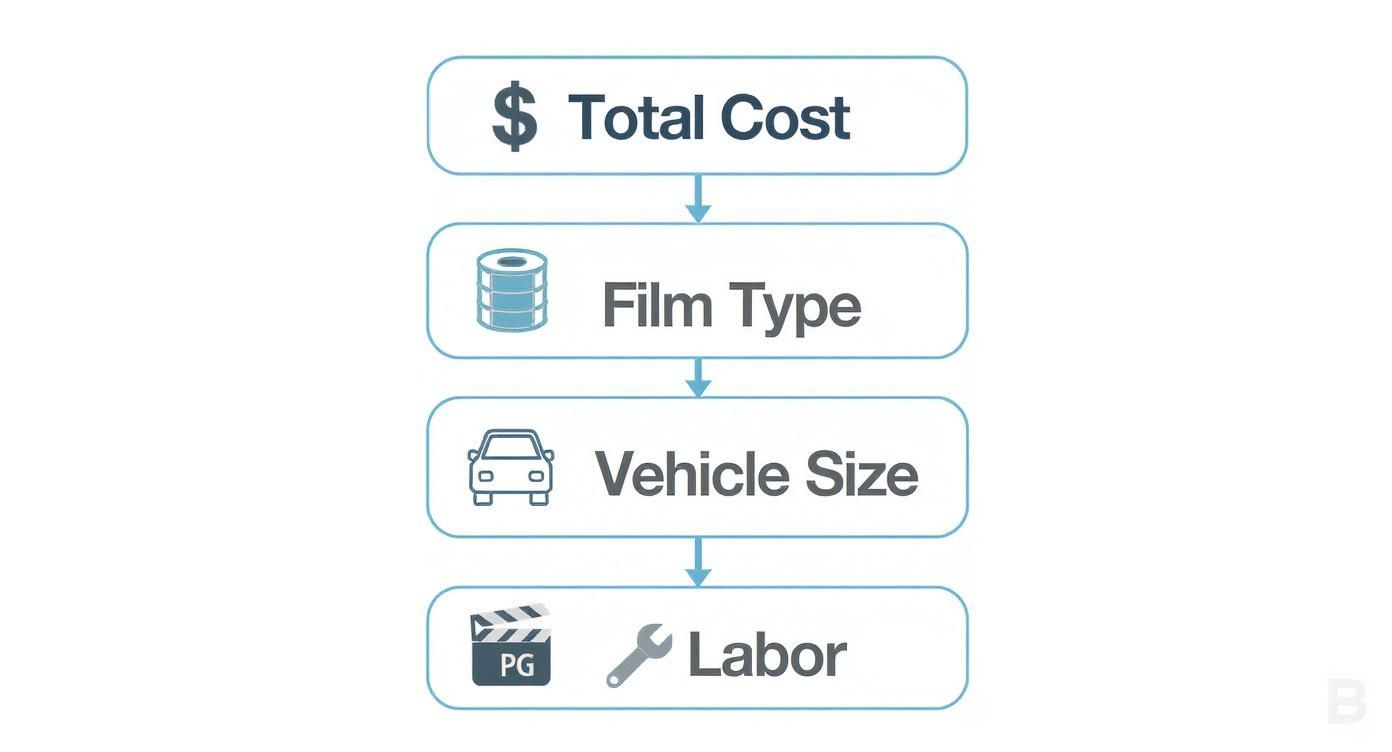
As you can see, the type of film you pick is one of the biggest factors in the final cost, right alongside the size of your vehicle and the hands-on labour required for a flawless installation.
Dyed Window Film: The Budget-Friendly Starter
This is the classic, entry-level choice. Dyed film is made from layers of polyester that have been dyed to absorb sunlight, which is what gives it that dark, private look.
It’s a great starting point if you're mainly focused on aesthetics and privacy on a tight budget. However, its heat-blocking power is pretty minimal, and over the years, the dye can fade and sometimes take on a purplish hue. It's more of a cosmetic touch than a performance upgrade.
Carbon Film: The Smart Mid-Range Performer
Taking a big leap forward, we have carbon film. This film gets its colour and performance from microscopic carbon particles embedded within the material. The result is a deep, true-black matte finish that’s incredibly stable—it will never fade or change colour.
But the real win with carbon film is its heat rejection. It does a fantastic job of blocking infrared light (the rays that make you feel the heat) without any metal in the film. That’s a huge plus because it means you get excellent UV protection and a cooler cabin without any interference with your phone, GPS, or radio signals.
For many drivers, carbon film hits that perfect sweet spot. It delivers a real, noticeable difference in comfort and guarantees long-lasting colour, all at a price that offers fantastic value.
Ceramic and Infrared Film: The Ultimate in Protection and Clarity
At the top of the line are ceramic and infrared (IR) films. This is where the real magic happens. These films are engineered with advanced, non-conductive ceramic nanoparticles that are invisible to the eye but work incredibly hard to block heat and radiation.
What’s truly amazing about ceramic film is its ability to reject a massive amount of solar heat and up to 99.9% of harmful UV rays without having to be super dark. You can opt for a lighter, more transparent shade and still get protection that blows other films out of the water.
- Superior Heat Rejection: Your car stays dramatically cooler, which means your A/C doesn't have to work nearly as hard.
- Maximum UV Protection: It’s like a powerful, invisible sunscreen for your car's interior and everyone inside.
- Signal-Friendly: Being 100% metal-free, it guarantees zero interference with any of your electronic devices.
- Crystal Clear Views: It offers the best optical clarity available, cutting harsh glare without distorting your view.
This level of technology comes with a higher price tag, but for good reason. It completely transforms your driving experience, making the cabin a more comfortable, safer, and better-protected space.
To get a clearer picture of how these films stack up, here’s a detailed comparison.
Detailed Comparison of Window Tint Film Technologies
| Feature | Dyed Film | Carbon Film | Ceramic Film | Infrared (IR) Film |
|---|---|---|---|---|
| Heat Rejection | Low | Good | Excellent | Superior |
| UV Protection | Good (Up to 99%) | Excellent (Up to 99%) | Superior (Up to 99.9%) | Superior (Up to 99.9%) |
| Glare Reduction | Good | Very Good | Excellent | Excellent |
| Colour Stability | Fair (can fade/purple) | Excellent (will not fade) | Excellent (will not fade) | Excellent (will not fade) |
| Signal Interference | None | None | None | None |
| Optical Clarity | Good | Very Good | Excellent | Excellent |
| Cost Level | $ | $$ | $$$ | $$$$ |
Ultimately, the right choice comes down to what you value most—whether it's budget, long-term durability, or creating the most comfortable cabin possible. You can dive deeper into the different high-performance automotive window tint films we offer to see which technology is the perfect match for your car and your needs.
Navigating Local Window Tinting Laws
https://www.youtube.com/embed/ekN64GZLu7Y
Before you pull the trigger on that sleek, dark tint you’ve been picturing, it’s smart to hit the brakes and talk about the law. The last thing you want is for your brand-new tint to get you pulled over. Understanding the rules isn't just about dodging a fine—it's about keeping yourself, and everyone else on the road, safe.
These regulations aren't just red tape; they exist for very practical safety reasons. Tints that are too dark can make it incredibly difficult to see, especially at night or in a downpour. From a law enforcement perspective, they also need to be able to see the driver during a traffic stop, and that’s a crucial part of their safety procedure.
Every province sets its own rules, but here in Ontario, everything revolves around something called Visible Light Transmission, or VLT.
What Do VLT Percentages Actually Mean?
So, what’s VLT? It’s simply a measure of how much light can pass through your window. A window with 70% VLT lets 70% of the light through while blocking the other 30%. The lower the VLT number, the darker the tint. Simple as that.
This number is what it all comes down to. If an officer thinks your windows are too dark, they can pull out a VLT meter and test them on the spot. If you’re below the legal limit, you could be facing a penalty right then and there.
Ontario's Specific Tinting Rules
In Ontario, the law is pretty clear and changes depending on which window you're tinting. It’s a smart balance, giving you privacy and comfort where it makes sense while ensuring you have a clear view of the road.
Here’s a quick rundown of what’s allowed on your vehicle:
- Front Side Windows: This is for the driver and front passenger windows. The rules are strict here. While the Highway Traffic Act doesn't list an exact number, the unwritten rule enforced on the road is 30% VLT after the film has been installed.
- Rear Side Windows & Rear Windshield: This is where you get all the freedom. For any window behind the driver, you can go as dark as you want. There are no VLT limits for these windows.
- Front Windshield: Tinting your entire front windshield is a definite no-go. However, you are allowed a non-reflective strip across the top—usually no more than 15 centimetres down—to cut down on sun glare.
It’s important to know that your car's factory glass isn't perfectly clear to begin with; it has a slight built-in tint. Any good installer knows this and will factor it in, making sure the combination of the film and the glass doesn’t drop your front windows below the legal VLT.
The colour of the film matters, too. Ontario law forbids any tint that has a reflective, mirror-like finish, which can create a dangerous glare for other drivers.
Ignoring these rules can turn into an expensive headache. Fines for illegal tint are common, and you could even be ordered to remove it, completely wasting your money. For a full breakdown, make sure to read our detailed guide on Ontario's window tinting laws so your car can look its best without breaking the rules.
Is Car Window Tinting a Worthwhile Investment
It’s easy to look at window tinting prices for a car and see just another expense. But let's reframe that thinking. Is window tinting just a cosmetic add-on, or is it an investment that actually pays you back? From my experience, the answer is a definite yes—a quality tint job is one of the smartest, most functional upgrades you can make to your vehicle.
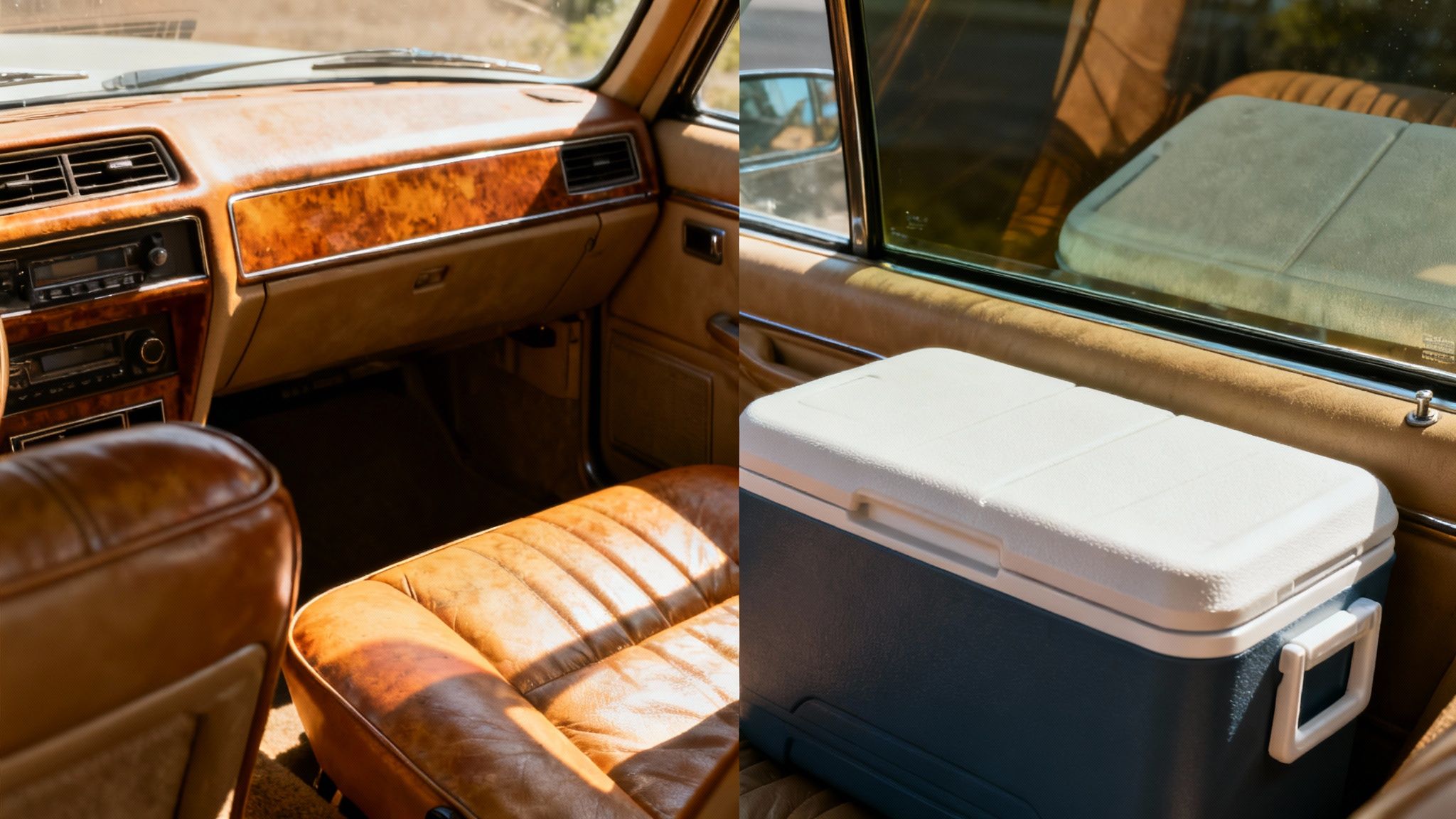
Think of professional window tint as a protective shield for your car's interior. The sun's UV rays are relentless, slowly but surely causing your dashboard to crack, your leather seats to fade, and your plastic trim to become brittle. A high-quality film stops this process cold, blocking up to 99.9% of those damaging UV rays. It’s a simple step that preserves your car's cabin and helps protect its resale value down the road.
More Than Just a Pretty Face
Beyond just saving your interior from sun damage, a good tint brings a whole host of benefits to your daily drive—and even your wallet. A cooler cabin isn't just about being comfortable; it's about being efficient.
Modern films with superior heat rejection technology make a huge difference in how hot your car gets on a summer day. This means your air conditioning doesn't have to blast on full just to keep you cool. An A/C system that isn't working overtime can lead to better fuel efficiency, saving you a little bit at the pump every time you fill up. It really adds up, especially on those long summer road trips.
The real value of a professional tint lies in its multifaceted benefits. It simultaneously enhances comfort, boosts safety, preserves your car's interior, and even contributes to fuel economy. It’s an investment that pays you back every time you get behind the wheel.
When you’re weighing whether tinting is right for you, it helps to understand the bigger picture. Gaining insights into the automotive industry shows just how important it is to pick a reputable shop. A quality job from a trusted installer is what ensures you actually get all these long-term benefits.
The Practical Perks of Privacy and Safety
The advantages don't stop there. Tinted windows also give you a serious boost in privacy and safety, which brings a lot of peace of mind.
- Enhanced Privacy: Tint keeps wandering eyes from seeing what's inside your car, making it a much less attractive target for break-ins.
- Reduced Glare: By cutting down on blinding sun during the day and annoying headlight glare at night, tint makes driving safer and reduces strain on your eyes.
- Shatter Resistance: If you're ever in an accident or someone tries to smash a window, the film actually helps hold the shattered glass together, which can prevent injuries from flying shards.
At the end of the day, premium films like ceramic deliver the best all-around performance. If you're curious, you can learn more about if ceramic tint is worth the investment for what you need. When you add everything up—the preserved interior, the increased comfort, the better fuel economy, and the added safety—it’s clear that window tinting is so much more than a cost. It's a truly valuable upgrade that enhances your vehicle for years to come.
Common Questions About Car Tinting Costs
Even after breaking down all the factors that go into window tinting prices for a car, you probably still have a few questions. That’s perfectly normal. Let's tackle some of the most common things we hear from drivers to make sure you have the full picture before you book an appointment.
Think of it as the final once-over before hitting the road—we're covering those last-minute details to guarantee a smooth ride.
How Long Does a Professional Tint Job Take?
For a typical sedan, you can expect the actual installation to take anywhere from two to four hours. Of course, this can change depending on the vehicle. Cars with tricky, curved rear windows or big SUVs with a lot more glass to cover will naturally take the installer more time to get just right.
Another big variable is whether we need to remove old, failing tint first. That process is painstaking and can easily add a couple of hours to the job. And don't forget about the curing time after the install—you'll need to keep your windows rolled up for three to five days to let the adhesive set perfectly.
Can I Legally Tint My Entire Front Windshield?
In a word: no. Here in Ontario, tinting the entire front windshield is against the law, and for good reason—it’s a major safety hazard that kills your visibility, especially when driving at night.
What you can do is get a non-reflective tint strip applied across the top. This is often called a "visor strip," and it’s a great way to cut down on sun glare. The law allows this strip to extend down a maximum of 15 centimetres from the top of the glass. Any professional installer worth their salt will know these rules inside and out, ensuring you get the glare reduction without any legal headaches.
What Is the Real Difference Between Cheap and Expensive Tint?
Honestly, the difference is night and day. It all comes down to the technology, how long it lasts, and how well it actually performs.
Inexpensive tints are almost always a basic dyed film. Sure, they'll give you some privacy and a darker look, but they offer very little heat rejection and are notorious for bubbling, fading, and turning that dreaded shade of purple after a couple of years.
Premium films, like the ceramic and infrared options we use, are a genuine investment in your car and your comfort. They use sophisticated, non-metallic particles to block huge amounts of solar heat and damaging UV rays, and they don't even have to be super dark to do it. They're built to last, won't mess with your phone signal or GPS, and are almost always backed by a solid lifetime warranty.
Ready to enhance your vehicle with a flawless, high-performance window tint? The team at Carmedics autowerks inc has the expertise and premium films to deliver the comfort, protection, and style you’re looking for. Get your personalized quote today!