

When you're looking into tinting your car's windows, you'll immediately run into a bunch of numbers and percentages. The most important one to understand is Visible Light Transmission, or VLT.
Simply put, VLT is the percentage of light the window film lets pass through into your car. The lower the number, the darker the tint. So, a 5% VLT film is a very dark, "limo" style tint, while a 70% VLT film is much lighter and almost unnoticeable.
Decoding VLT: What Window Tinting Levels Really Mean
Think of it like buying sunglasses. A low VLT percentage is like a pair of dark, mirrored shades that offer complete privacy. On the other hand, a high VLT is like a lightly shaded lens that just takes the edge off the sun's glare without making everything dark.
Getting a handle on this basic concept is the key to picking the right tint. The VLT number tells you exactly how dark the window will be. For example, a 35% VLT film allows 35% of visible light to pass through, blocking the other 65%. This is one of the most popular choices out there because it strikes a great balance between a sleek, custom look and solid visibility, even when driving at night.
This diagram shows exactly how the tint film works as a filter against the sun.
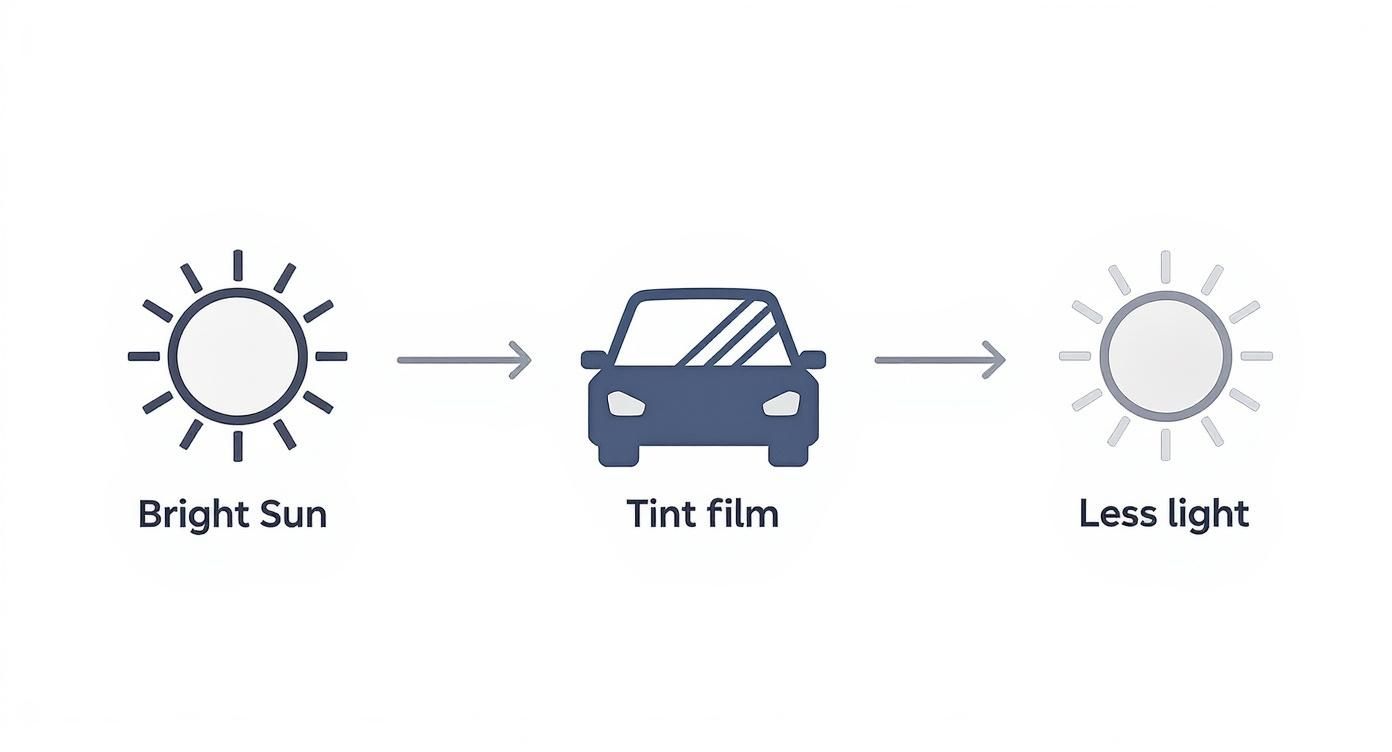
As you can see, the film reduces the amount and intensity of light that gets inside your car. To make this even clearer, let's break down the common tinting levels you'll come across.
A Quick Guide to Window Tint VLT Percentages
This table gives you a quick snapshot of the most common tint percentages you'll find. We've included their common names and what they're best for, giving you a handy reference before we get into the nitty-gritty of legal limits and performance.
| VLT Percentage | Common Name | Appearance | Primary Benefit |
|---|---|---|---|
| 5% | Limo Tint | Nearly Opaque | Maximum Privacy & Heat Rejection |
| 20% | Dark Tint | Dark, Aggressive Look | Excellent Privacy & Glare Reduction |
| 35% | Medium Tint | Stylish & Balanced | Good Privacy & Comfortable Visibility |
| 50% | Light Tint | Subtle, Classy Shade | Glare Reduction & UV Protection |
| 70%+ | Factory/Clear Tint | Almost Unnoticeable | Heat & UV Rejection without Darkness |
Choosing the right tint is all about finding that sweet spot where looks, privacy, and performance meet your needs. It’s about more than just aesthetics; it's about making your drive more comfortable and protecting your car's interior from sun damage.
Ultimately, the perfect VLT level comes down to your personal taste, what's legal in your area, and what you want the tint to do for you. Whether you need maximum privacy for a work vehicle or just want to cut down on glare during your daily commute, there’s a tint percentage that’s just right.
To see the premium materials and options we work with, you can learn more about our automotive window tint films and find the perfect fit for your ride.
Navigating Ontario's Window Tinting Laws
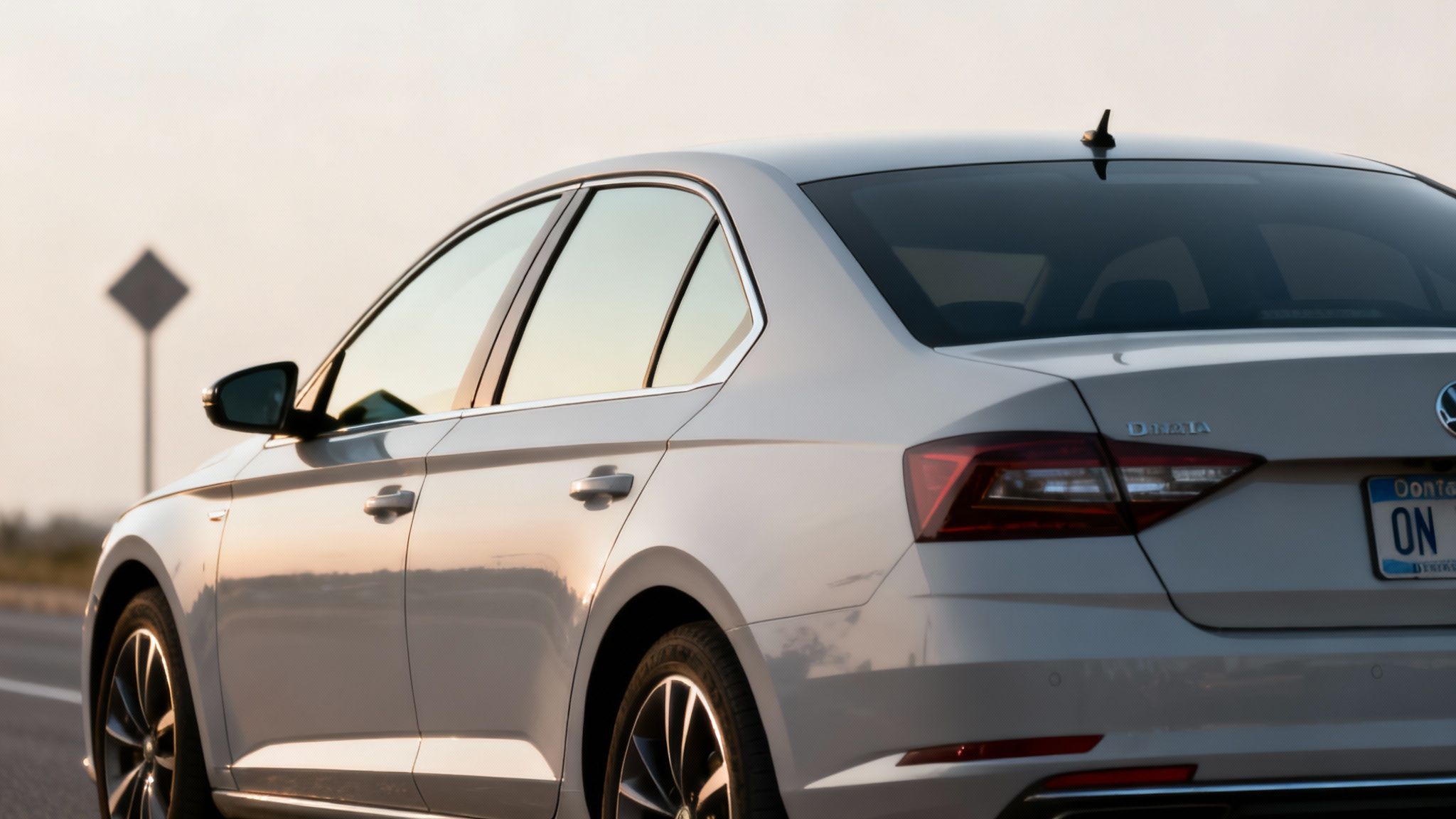
Before you go all-in on that sleek, dark tint you’ve been eyeing, let's talk about the rules of the road. Here in Ontario, window tinting is regulated by the Highway Traffic Act, and getting it wrong can mean fines and the headache of having to strip off your brand-new film. The laws aren't there to kill your style; they're all about keeping everyone safe.
Think of it as a balancing act. The law lets you boost your car’s comfort and privacy, but not if it compromises safety. It all comes down to making sure the driver can see out clearly and law enforcement can see in. Let’s break down what that means for the different windows on your car.
The Front Windshield Rules
Your front windshield is your most important window, period. The law is very strict here for obvious reasons. You can't have any tint on the main part of the windshield where you look through.
The only exception is a small, non-reflective strip at the very top. This sun strip can’t be more than 15 centimetres (about 6 inches) deep and is meant to cut down on sun glare, much like your car's built-in visor. Anything below that line is illegal and a serious safety hazard.
Front Side Windows: The Driver and Passenger
This is where things get a bit more detailed and often misunderstood. The windows right beside the driver and front passenger are treated much differently than the ones in the back. According to the Highway Traffic Act, these windows must allow at least 70% of light to pass through them.
Now, here's the catch: that 70% applies to the total light transmission, including the factory glass and any film you add. Most new cars already have a slight tint in the glass from the factory, often sitting around 70-85% VLT. So, if you apply even a very light film, you're almost guaranteed to drop below the legal 70% limit. For this reason, it's generally understood that no aftermarket tint is permitted on the front side windows in Ontario.
Key Takeaway: The law measures the combined light passing through the glass and the film. For front side windows, adding any aftermarket tint will almost certainly make your vehicle non-compliant in Ontario.
Rear Windows: Where You Have More Freedom
Once you move past the driver's seat, the rules relax significantly. For all windows behind the driver—that includes the rear passenger windows and the back windshield—there are no specific VLT restrictions. This is your chance to get the look and performance you really want.
You can legally go with popular choices like 35%, 20%, or even a dark 5% "limo tint" on these windows. This flexibility is great for unlocking the biggest benefits of tinting:
- Serious Privacy: Keep your belongings out of sight and give your passengers a more private, comfortable space.
- Maximum Heat Rejection: Darker films are champs at blocking solar heat, which makes a huge difference in keeping the back of your car cool on hot days.
- Ultimate UV Protection: You can shield passengers, especially kids, from over 99% of harmful UV rays.
There is one important condition, though. If your rear window is tinted, your vehicle must have two working exterior side mirrors. This is to make sure you always have a clear view behind you, making up for the darker view through the back glass. Luckily, this is standard on virtually every modern car, so it’s an easy box to tick.
How Tint Levels Really Affect Your Drive
Picking a window tint isn't just about looks—it completely changes how you experience your drive. The percentage you land on will dictate everything from how comfortable you feel on a scorching afternoon to how clearly you can see on a dark, rainy night. It’s a balancing act between style, privacy, and most importantly, safety.
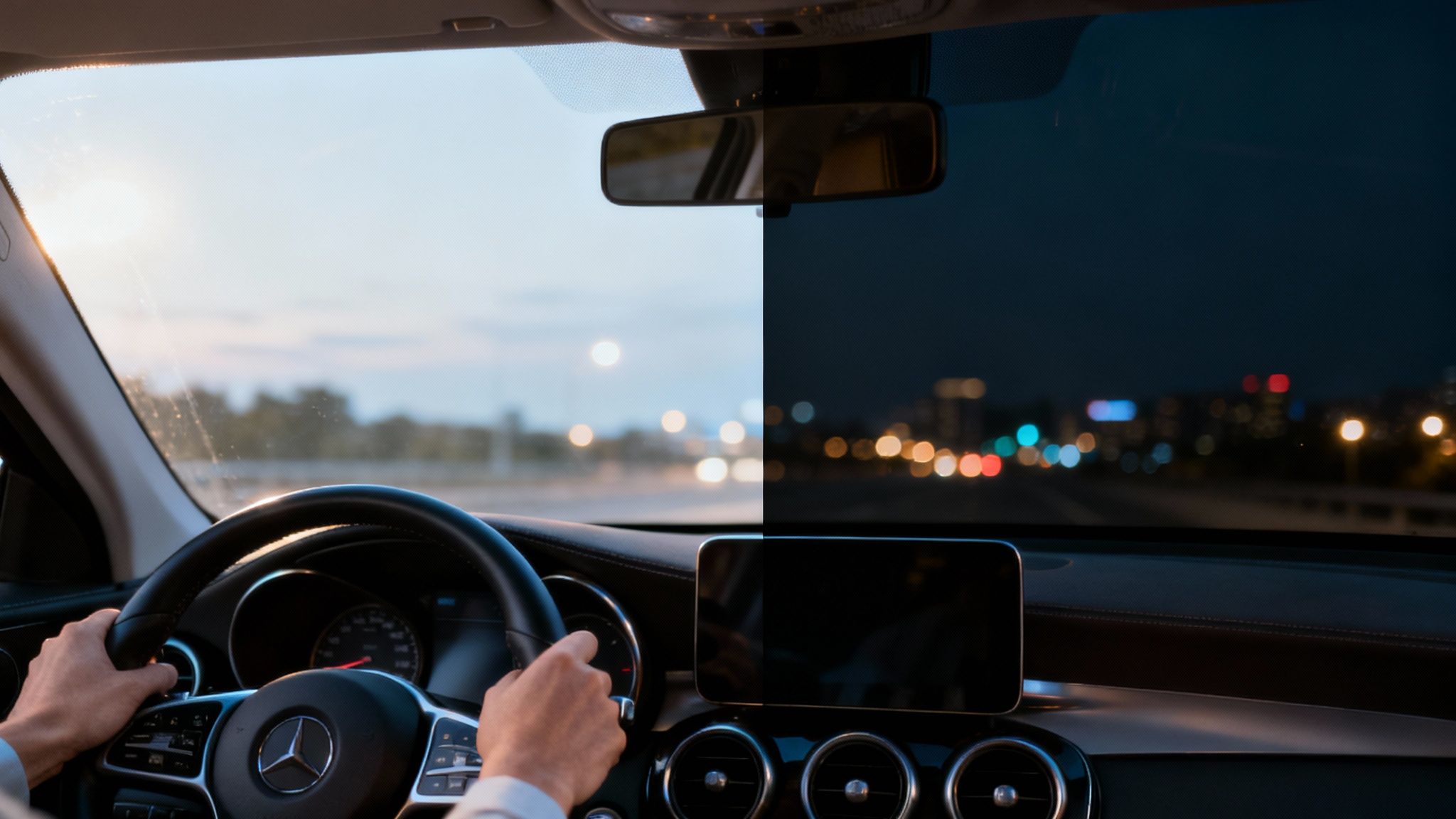
Let's get past the numbers and talk about what these different tint levels actually feel like when you're behind the wheel.
Daytime Driving: Comfort and Glare Reduction
The first thing you’ll notice on a sunny day is the immediate relief a good tint provides. Driving straight into the sun is draining and, frankly, dangerous. A lower VLT film acts like a premium pair of sunglasses for your entire car.
- 5% to 20% VLT: These are the heavy hitters for glare. They drastically cut down on eye strain, making bright days far more pleasant. Your car’s interior transforms into a calm, shaded space, shielded from the harsh outside world.
- 35% to 50% VLT: A medium tint like 35% hits a sweet spot for many drivers. It effectively reduces glare and heat without making you feel like you're in a cave. You get a crisp, clear view of the road, just with the sharp edges of the sun softened.
And it’s not just about glare. You'll feel the difference in temperature, too. Quality films with high infrared rejection block a huge amount of solar heat, keeping your car significantly cooler. That means your AC doesn't have to work as hard, which can even give you a slight boost in fuel economy on those long summer road trips.
Your Personal Bubble: Privacy and Security
Another huge benefit is privacy. The tint level you choose directly impacts how much people can see into your vehicle, which is a big deal for both peace of mind and the security of anything you leave inside.
A 5% "limo tint" is the undisputed king of privacy. From the outside during the day, the glass looks almost solid black, making it impossible to see in. This is a great choice if you carry expensive tools or equipment for work, or if you just really value your own space.
As you go up in VLT percentage, you trade some of that privacy for more visibility. A 35% tint still provides great privacy; someone would have to press their face against the glass to make out details inside. Once you get to 50% or lighter, the privacy effect is much more subtle, and the focus shifts almost entirely to UV and heat rejection.
The Big Trade-Off: Seeing Clearly at Night
This is where your choice becomes absolutely critical for safety. As amazing as a dark tint is during the day, it poses a real challenge when the sun goes down. At night, your eyes need all the light they can get to spot potential hazards, and a dark film can seriously limit what you see.
Think about pulling out of a dimly lit parking spot or driving down a country road with no streetlights. With a 5% or 20% tint on your side windows, spotting a cyclist or a pedestrian in your mirrors becomes incredibly difficult.
Picture This: You’re making a right turn at night on a poorly lit street. A cyclist in dark clothes is coming up on your right. With a very dark tint, that cyclist could be completely invisible until it's too late. That's a risk no one wants to take.
This is the most important trade-off to consider. The incredible privacy and comfort of a dark tint come at the direct expense of your night-time vision.
For most people, a 35% tint strikes the perfect balance. It delivers a sleek look and good daytime privacy while still letting enough light in for you to drive safely and confidently after dark. Lighter tints, like 50%, have almost no impact on night vision, making them the go-to for anyone who puts visibility above all else.
Choosing the Right Tint for Your Car and Lifestyle
https://www.youtube.com/embed/Bk5ToThgxOE
Picking the perfect window tint isn't about finding a one-size-fits-all solution, because one doesn't exist. It's a personal choice that really comes down to your car, your daily routine, and what you care about most. Is it privacy? A sleek look? Or maybe top-tier heat rejection?
A dark, aggressive tint might look incredible on a sports car, but it could be a real pain for someone who often drives down poorly lit country roads. To find your ideal match, we have to look past the VLT numbers and think about real-world situations.
Let's connect specific tint levels to different types of drivers and vehicles. This way, you can see how each percentage actually performs day-to-day and pick a tint that not only looks great but genuinely makes your drive better.
Recommendations for Every Driver
Let's break down a few common scenarios. We’ll suggest tint levels tailored to specific needs to help you lock in the best option for your car and lifestyle.
1. The Family SUV: Putting Safety and Comfort First
For most parents, the big goals are shielding the kids from the sun's harsh rays and keeping the cabin cool on long drives. That makes the back seats the top priority.
- Recommended Rear Tint: A 20% VLT is an outstanding choice for rear windows. It knocks out a huge amount of heat and more than 99% of UV radiation, keeping your little passengers comfortable and protected. It also adds a ton of privacy, which is perfect for napping kids or keeping valuables out of sight.
- Why it Works: This level is dark enough to deliver serious performance benefits without making the car feel like a limo, which some people find a bit too isolating. It also slashes glare, making it much easier for kids to read or watch a tablet in the back.
2. The Luxury Sedan: A Mix of Style and Sophistication
If you own a luxury sedan, you probably want a tint that complements the car's clean lines. The aim here is a subtle, factory-plus look that adds a touch of class without screaming for attention.
- Recommended Rear Tint: A 35% VLT is the gold standard in this category. It creates a noticeable darkening effect that sharpens the car's appearance, striking that perfect balance between style and practical function.
- Why it Works: This medium tint gives you good heat and UV rejection while keeping your visibility crystal clear. It offers a respectable amount of privacy—enough to obscure the view for a casual glance—but without the total blackout of darker films. It’s the tint that says "custom" and "classy."
3. The Work Truck: When Security is Everything
For contractors or anyone carrying valuable tools and equipment, security is job number one. The main goal is to prevent prying eyes from seeing into the truck bed (if it's covered) and the back seat.
- Recommended Rear Tint: A 5% VLT, often called "limo tint," is the obvious choice here. In Ontario, this is the darkest you can legally go on rear windows, and it provides the absolute maximum in privacy and security.
- Why it Works: During the daytime, it's pretty much impossible to see inside a vehicle with 5% tint. It’s the ultimate visual deterrent for opportunistic thieves. As a bonus, it also delivers the highest level of heat rejection, which is great for keeping the cab cooler when you're parked at a job site all day.
4. The Daily Commuter: Beating Glare and Heat
Spending hours on the road every day? Your main battles are against blinding sun glare and a sweltering interior. Comfort is everything, but so is maintaining a clear view to navigate traffic safely.
- Recommended Rear Tint: A 35% or 50% VLT both work wonders. A 35% tint will give you a significant reduction in glare and heat. For those who put visibility above all else, a 50% tint is a more subtle but still effective option.
- Why it Works: These lighter tints take the harsh edge off the sun without messing with your night-time visibility. You’d be surprised how much heat even a 50% tint can block, especially if you go for a high-performance film. If you're curious about how different materials stack up, our detailed guide explains exactly is ceramic tint worth it.
Comparing Window Tint Levels Pros and Cons
Still weighing your options? This table breaks down the key advantages and disadvantages of the most popular tint levels to help you make that final call.
| VLT Level | Key Pros | Key Cons | Best For |
|---|---|---|---|
| 5% | Maximum privacy and security; Superior heat and glare rejection. | Severely reduced night-time visibility; Can feel isolating. | Work vehicles, limousines, or anyone needing ultimate privacy. |
| 20% | Excellent privacy; Great heat and UV protection; Aggressive, bold look. | Can still be challenging for night driving in unlit areas. | Family SUVs, drivers wanting strong privacy with a stylish edge. |
| 35% | Balanced look; Good privacy and heat rejection; Clear night visibility. | Less private than darker tints; May not be dark enough for some. | The all-rounder; perfect for daily drivers and luxury sedans. |
| 50% | Noticeable heat and glare reduction; Minimal impact on night vision. | Offers only minimal privacy; Subtle appearance. | Drivers who prioritize visibility and heat rejection over privacy. |
At the end of the day, picking the right window tint levels means balancing these factors against what matters most to you. Think about how you use your vehicle every day, and you'll be able to confidently choose a VLT that gives you the perfect blend of form and function.
More Than Just Shade: UV Protection and Keeping Your Interior Like New
Everyone talks about how dark their tint is, but the biggest benefits are the ones you can't even see. Modern window films are engineered to be way more than just shade. They're a powerful shield against the sun's most damaging element: ultraviolet (UV) radiation. This protection is a game-changer for your health and for keeping your car in top shape.
Think of a quality window tint as high-performance sunscreen for your vehicle's interior. It’s a common myth that darker tints automatically mean better protection, but it’s the technology baked into the film that really does the heavy lifting.
Believe it or not, top-tier films—even the lighter shades—can block over 99% of harmful UVA and UVB rays. This is huge. It means you don’t have to go with a super-dark "limo tint" to get maximum protection. A subtle 50% VLT film can offer the exact same UV defence, protecting you and your passengers without compromising visibility.
Shielding Your Skin on Every Drive
That daily commute adds up. Constant sun exposure through your car windows, especially on your left arm and the left side of your face, can cause serious long-term damage.
Putting a quality window tint on your car creates a genuine barrier. It dramatically cuts down your daily UV dose, which is one of the best things you can do to prevent premature skin aging and reduce the risk of skin cancer. It literally makes your car a safer space, especially for kids with their more sensitive skin.
For drivers in Whitby who spend a lot of time on the road, professional window tinting isn't just a cosmetic choice. It's a smart, proactive investment in your health.
Stopping Your Interior from Fading and Cracking
Those same UV rays are brutal on your car's interior. Over time, the sun will bleach, crack, and break down just about every surface inside your vehicle. Your dashboard, leather seats, and plastic trim don't stand a chance against constant exposure.
A high-quality window film acts as a guardian for your interior, preserving the colour and feel of the materials. By blocking nearly all UV radiation, it stops that faded, worn-out look that tanks a car's appearance and hurts its resale value.
This protection keeps your interior looking factory-fresh for years, maintaining the rich colours and textures you loved when you first bought it. It’s a simple step to protect your investment and keep your car looking pristine. Choosing the right window tinting level is really about safeguarding your vehicle from the inside out.
Your Tint Installation and Aftercare Guide
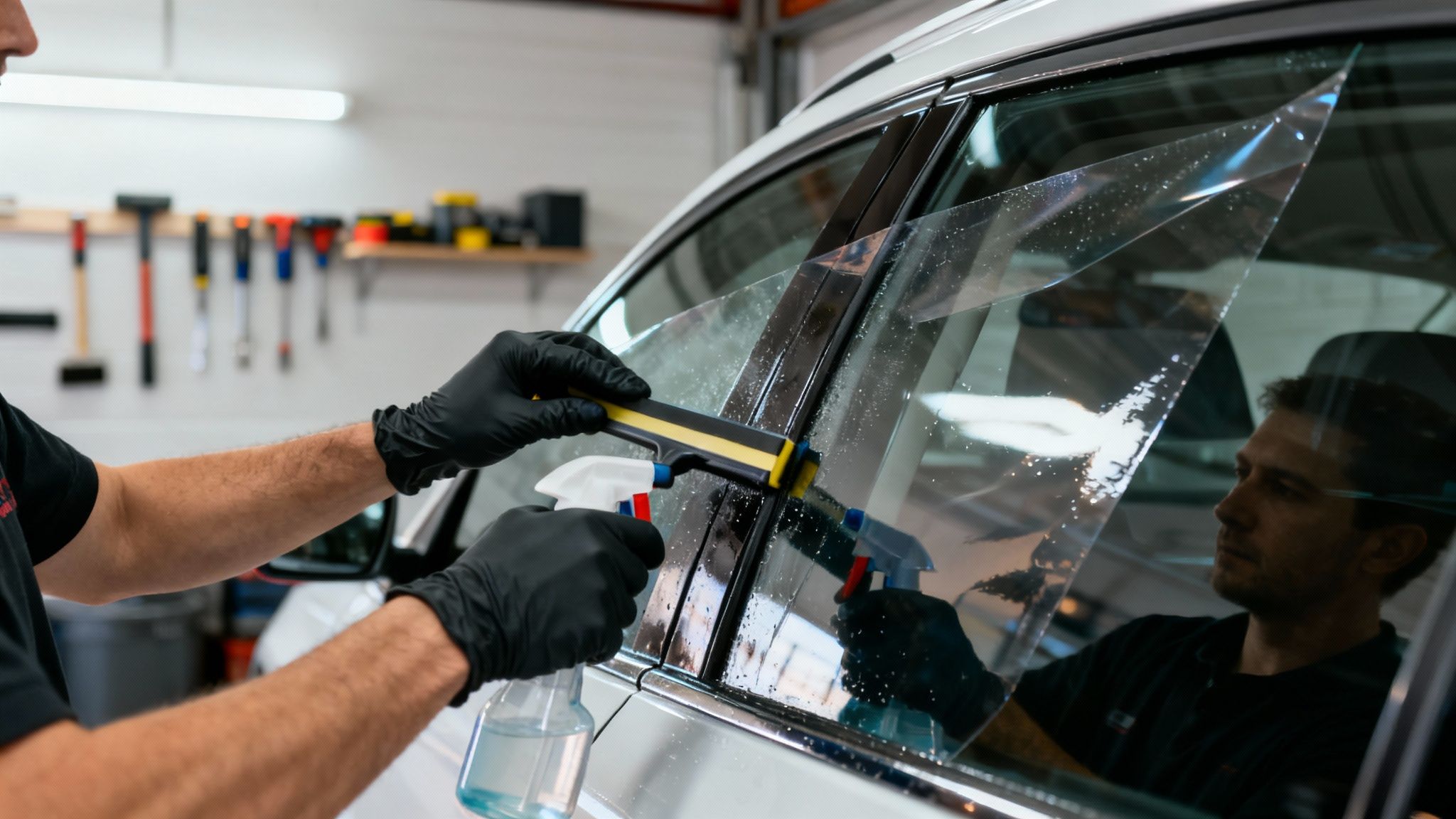
Choosing the right tint is only the first step. To make sure your investment looks incredible for years to come, a professional installation and a bit of aftercare are non-negotiable. It’s what separates a flawless, factory-like finish from a tint job plagued by bubbles, peeling, and trapped dust.
Here's a pro tip: give your car a good wash before your appointment. This simple move creates a cleaner work environment, drastically cutting down the risk of tiny bits of dirt getting caught under the film.
Preparing for a Perfect Installation
When you drop off your vehicle, this is your chance to get all the details straight. A truly professional shop will be more than happy to walk you through everything.
- Confirm the Film Type: Chat about whether ceramic or carbon film makes more sense for what you want to achieve.
- Verify the VLT: Double-check the VLT percentages you've chosen to make sure they're what you want and, just as importantly, that they comply with Ontario's laws.
- Ask About Warranty: Get the full scoop on the warranty—what it covers, for how long, and any fine print.
An installer who answers your questions confidently is a great sign your car is in the right hands.
A professional installation is the foundation of a long-lasting tint job. It’s the difference between a sleek, durable finish and one that fails within a year.
Aftercare: Your Key to Longevity
Once the new film is on, a little care goes a long way. The first few days are the most important, as this is when the tint needs to fully "cure" and bond to the glass.
The number one rule is to keep your windows rolled up for at least 3 to 5 days. No exceptions! Rolling them down too early can easily snag the edge of the fresh film, causing it to peel up before the adhesive has fully hardened.
As for cleaning, patience is your friend. You'll want to wait about a week before touching the inside of your windows. When it's time, stick to a soft microfibre cloth and an ammonia-free cleaner. Harsh chemicals like ammonia will eat away at the tint's adhesive and can lead to ugly discolouration.
Protecting your investment is pretty straightforward when you know what to do. If you’re looking for expert guidance on choosing the best car tinting near me, our team at Carmedics Autowerks is ready to help you nail every detail, from picking the perfect shade to flawless installation.
Your Window Tinting Questions, Answered
Even after covering the basics, you might still have a few questions floating around. That’s perfectly normal. To help you feel completely confident in your decision, we’ve put together answers to some of the most common questions we hear from drivers right here in Whitby.
Will Tint Damage My Rear Defroster?
Not a chance—as long as it’s done by a pro. High-quality window film is designed to work perfectly with your rear defroster. A skilled technician knows exactly how to apply the film over the delicate heating lines without causing any damage, so you can count on it working just like it did before.
How Long Does Professional Window Tint Last?
This really comes down to the quality of the film and the installation. A top-tier ceramic or carbon tint from a trusted shop can easily last for 10 years or more, with no bubbling, fading, or peeling. Cheaper dyed films, on the other hand, might start to look purple and fail within just a few years.
Can I Tint a Leased Car?
Absolutely. Most lease agreements allow for window tinting because it's considered a completely reversible modification. When your lease is up, the film can be professionally removed without leaving a trace. It’s always smart to double-check your specific lease agreement, but it's rarely an issue.
A Quick Note on Curing: Don't be alarmed if you see small water pockets or a slightly hazy look for a few days after installation. This is just leftover moisture from the application process, and it will evaporate as the film fully cures to the glass.
Are Small Bubbles Normal After Installation?
This is an important distinction: tiny water pockets are normal, but actual air bubbles are not. The moisture we just mentioned will disappear on its own as the tint cures. If you see trapped air bubbles right after the job is done, that points to an installation error and you should have your installer fix it.
Ready to give your vehicle the perfect blend of style and protection? The team at Carmedics Autowerks offers expert advice and flawless installations using the best films in the business. Visit us online to book your appointment today!