

When people talk about "window tint percentage," there's one key thing to remember: the lower the number, the darker the tint. It seems backward, but it's the most important concept to grasp.
A 5% window tint, for instance, is what you'd call "limo tint"—it's almost completely blacked out. On the flip side, a 70% tint is so light you might not even notice it's there. The percentage isn't measuring darkness; it’s measuring how much light makes it through the window.
What Window Tint Percentage Actually Means
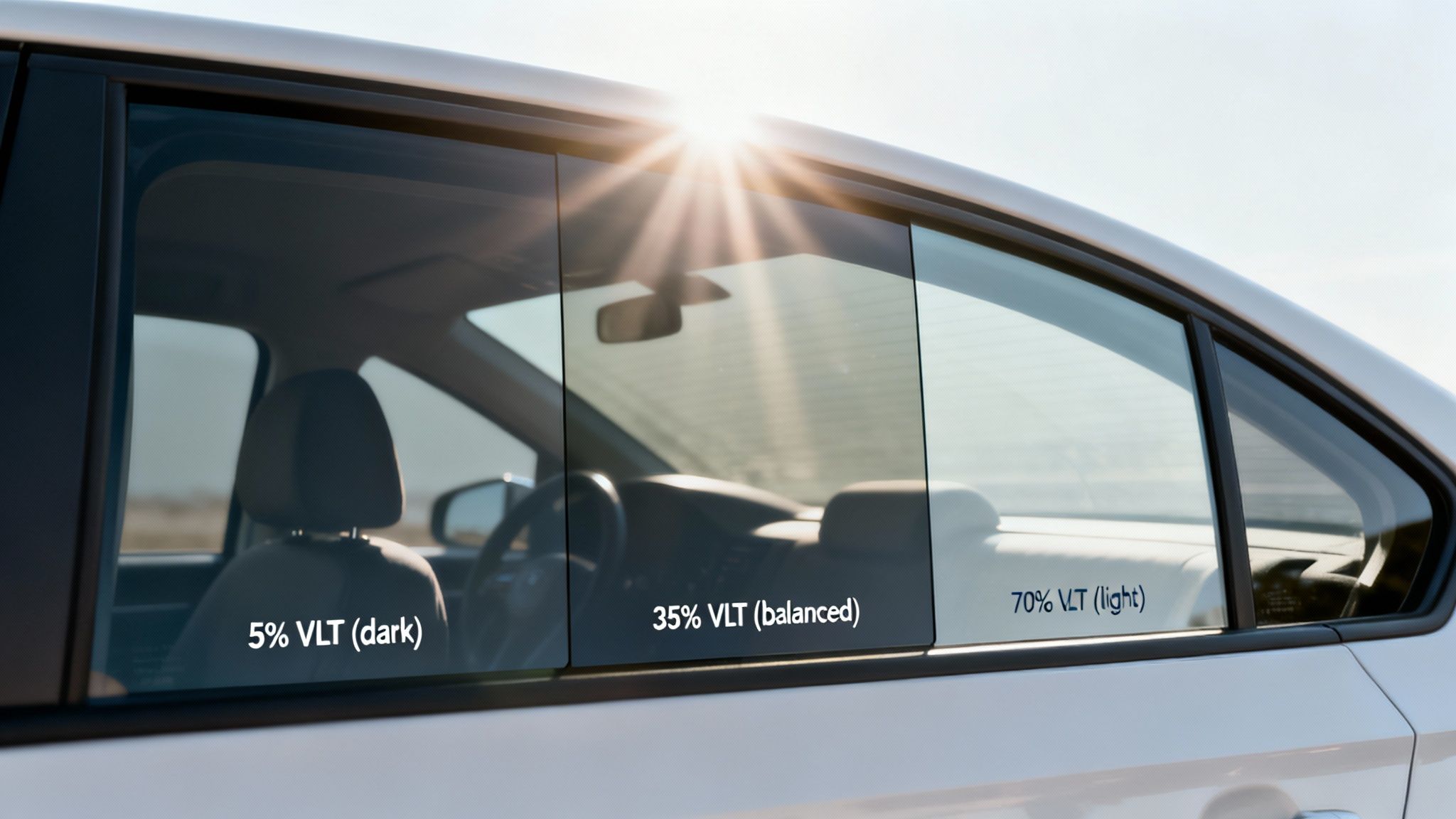
Let's clear the air on the biggest point of confusion in the tinting world. That percentage you see isn't some random grade for darkness. It’s a technical measurement called Visible Light Transmission, or VLT.
Simply put, VLT is the exact percentage of visible light that can pass through the window film and into your car. Think of it as a bouncer for sunlight.
A window with a 20% VLT tint only lets 20% of the sun's visible light into your car. That means it’s blocking the other 80%. In contrast, a 70% VLT film is much more permissive, allowing 70% of the light through while only blocking 30%.
Once you get your head around that, everything else about choosing a tint—from the look you want to the legal limits here in Ontario—starts to make a lot more sense.
Breaking Down the Numbers
The inverse relationship—low number, dark tint—is what trips most people up at first. It’s easier if you think of them in simple categories.
- Low VLT (5% to 20%): This is the darkest stuff on the market. We're talking "limo tint" territory, offering maximum privacy and a sleek, blacked-out appearance. It's a fantastic choice for rear passenger windows where you want to keep prying eyes out.
- Medium VLT (25% to 50%): Here's the sweet spot for most drivers. This range strikes a perfect balance between a stylish, factory-plus look, serious heat and UV reduction, and great visibility for the driver. A 35% tint is probably the most common choice for a reason.
- High VLT (50% to 70%): These lighter films are for people who care more about the functional benefits than a dark look. They still block nearly 99% of harmful UV rays and cut down on cabin heat, but they do it without making a huge visual change. Your visibility, especially at night, remains crystal clear.
This quick table breaks down how each VLT range looks and what it’s best used for.
Window Tint Percentage (VLT) at a Glance
| VLT Percentage | Appearance | Primary Use Case | Visibility from Inside |
|---|---|---|---|
| 5% – 20% | Very Dark / "Limo Tint" | Maximum privacy, security | Difficult at night |
| 25% – 50% | Stylish & Dark | Balanced look, heat/UV control | Good, slightly reduced at night |
| 50% – 70% | Very Light / Factory Look | UV/heat reduction without the dark look | Excellent, day and night |
Choosing the right tint is all about finding that perfect blend of style, privacy, and performance that works for you. Understanding VLT is the first step.
If you want to get into the nitty-gritty of the different film technologies available, from ceramic to carbon, our guide to automotive window tint films has all the details you need to make a confident decision. Knowing the difference empowers you to pick a shade that fits your goals, your car, and our local laws.
Exploring the Most Popular Tint Percentages
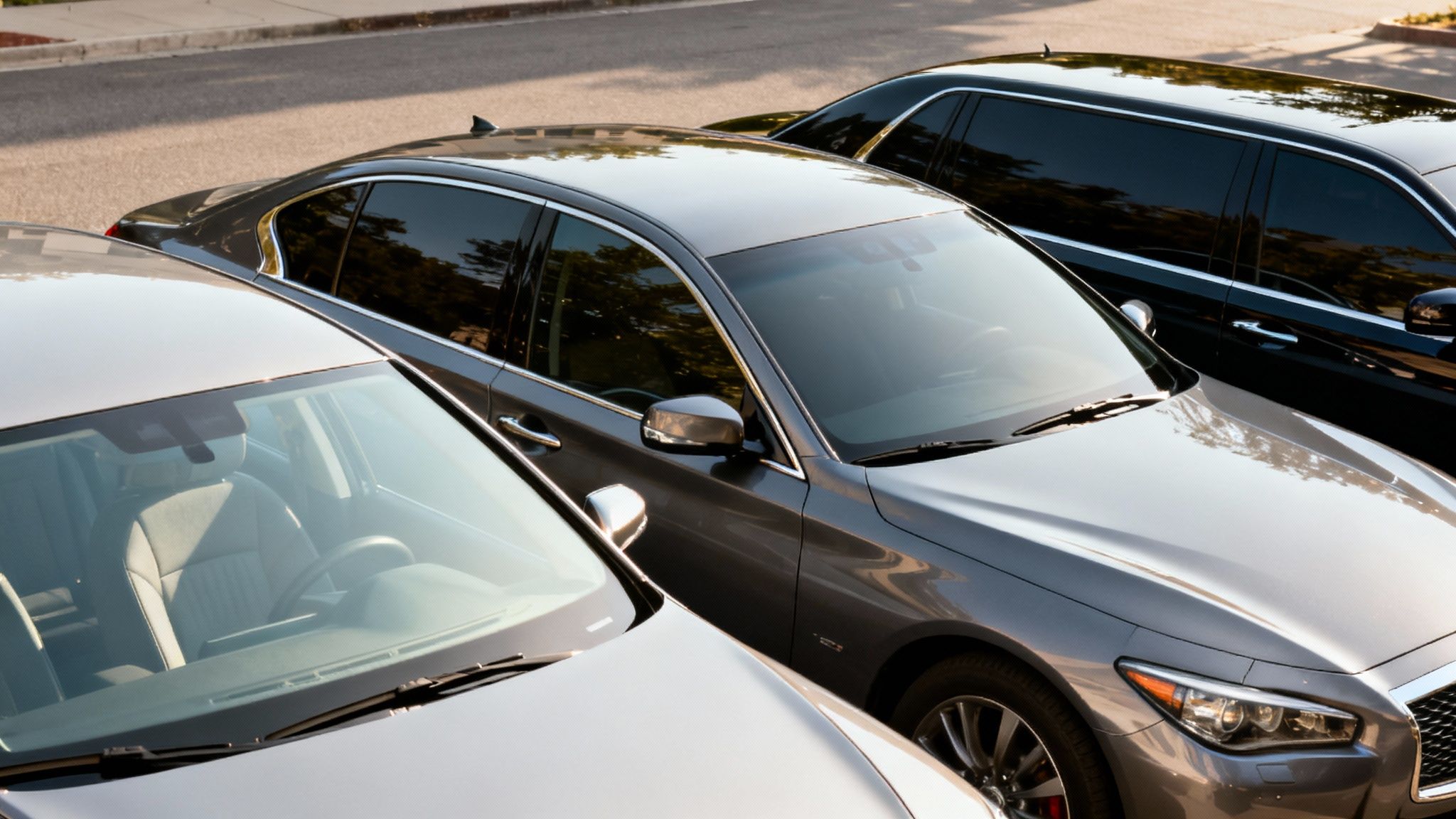
Now that you've got the hang of what VLT means, let's get into the fun part: picking a shade. Each tint percentage offers a different mix of looks, privacy, and performance. Think of it like choosing the right pair of sunglasses—some are for style, some are purely for function, and some hit that perfect balance in between.
Let’s break down the most common choices to see how they actually look and feel on the road.
The Darkest of the Dark: 5% VLT "Limo Tint"
If you want maximum privacy, 5% VLT is where you'll land. This is what's known as "limo tint," and for good reason—it’s so dark that it’s nearly impossible for anyone to see inside your vehicle. It's the ultimate choice for privacy and security.
The trade-off? Visibility. While limo tint is fantastic at blocking heat and glare, it seriously cuts down on how much you can see out, especially at night. That’s why you’ll almost always see it on rear passenger windows and back windscreens, not on the front doors where clear vision is critical.
The Sweet Spot: 20% to 35% VLT
This is, by far, the most popular range for most drivers. Tints between 20% and 35% VLT hit that perfect sweet spot where style, privacy, and everyday practicality come together.
A 35% tint gives your vehicle a sleek, custom look that's noticeable without being too aggressive. It adds a good amount of privacy during the day but still lets you see clearly at night. Stepping down to a 20% tint gives you an even darker, more private look that many car enthusiasts love. Both options are superstars when it comes to rejecting heat and UV rays, making every drive more comfortable.
This balanced approach is popular everywhere. We often see drivers mix and match, putting a lighter, legal tint on the front windows and a darker 20% or 35% on the back. It’s a smart way to get the privacy you want while staying on the right side of the law.
The Subtle Performers: 50% to 70% VLT
What if you care more about comfort than a dark, blacked-out look? That's where the lighter films come in. A 50% or 70% window tint might only subtly change your car’s appearance, but it still packs a massive punch in performance.
These nearly-clear films are incredible at rejecting heat and blocking over 99% of harmful UV rays, all without affecting your view of the road. They are the perfect choice for front side windows, giving you a clear line of sight while protecting your skin and preventing your dashboard from fading and cracking.
This strategy of mixing tints is incredibly common. Many of our clients opt for a light 70% VLT on the front doors and go with something darker like 20%–35% VLT on the rear windows, where the rules are often more relaxed. To see how these rules vary by region, check out this complete guide to legal tint limits.
Navigating Window Tint Laws in Ontario
Choosing a window tint isn't just about looks or comfort—you've got to play by the rules. Here in Ontario, the laws can feel a little grey at first, but figuring them out is essential for staying safe and avoiding a ticket.
Unlike some places with a hard-and-fast VLT number, Ontario's Highway Traffic Act is more focused on practicality. Section 73(3) of the act says you can't have a film on your windows that "substantially obstructs" your view of the road or other cars. There's no specific percentage mentioned, which means it’s all about maintaining safe visibility.
The Unofficial Rule for Your Front Side Windows
So, what does "substantially obstructs" actually mean when you're on the road? While the law doesn't give a number, the unwritten rule accepted by installers and law enforcement is that 35% VLT on the front driver and passenger windows is the sweet spot.
Dipping below 35% on your front windows is asking for trouble. It’s widely seen as the perfect balance—you get a real reduction in heat and UV rays, but you can still see clearly, especially when driving at night. It also allows police officers to see into your vehicle during a traffic stop, which is a big deal for their safety.
Stick to a 35% window tint percentage (or lighter) for your front side windows. It's the smartest way to get the benefits of tinting without the headache of a fine.
Strict Rules for the Windshield, More Freedom for the Back
The rules for the rest of your vehicle's glass are a lot more black and white.
- Front Windshield: This one is non-negotiable. You are not allowed to put any tint on the main part of your windshield. The only thing you can do is add a non-reflective strip across the top, usually no wider than 15 cm (about 6 inches), to help cut down on sun glare.
- Rear Windows: Once you get behind the driver, things open up. For the rear side windows and the back windshield, you can pretty much go as dark as you want. This is where you can use a darker 20% or even a 5% "limo tint" if you're looking for maximum privacy.
This is exactly why combination tinting is so common in Ontario. Drivers will often go with a legal 35% or 50% on the front windows and then something much darker on the back. This setup keeps the driver's view clear while giving passengers privacy and hiding valuables in the back seat. To see how these different shades look together, you can check out some examples of window tinting levels and find the perfect mix for your car.
How to Choose the Right Tint for Your Vehicle

Picking the right window tint percentage isn't a simple choice—it's about figuring out what matters most to you. There's no single "best" option. The perfect tint for a family van focused on keeping the kids comfortable is going to be worlds apart from what a sports car owner wants for a sharp, aggressive look.
To cut through the noise, start with one simple question: What’s my main reason for getting tints? Your answer is the key to balancing looks, performance, and what’s legal on the road.
Define Your Primary Goal
Let’s get to the heart of what you're trying to accomplish. Most drivers have one of these three goals in mind, and each one points toward a different tint level.
- Maximum Privacy and Security: If your number one priority is to keep prying eyes out—whether it's for your passengers or valuables you've left inside—then you need to go dark. A 20% VLT or even a 5% "limo tint" on the rear windows creates a serious privacy barrier.
- Balanced Aesthetics and Comfort: Looking for that perfect sweet spot? You want a tint that looks clean and stylish but also makes a real difference in blocking heat and UV rays. The 35% VLT is the go-to for a reason; it delivers a sleek appearance and tangible comfort without making night driving difficult.
- Heat and UV Rejection Above All: Maybe a dark look isn't for you, but protecting your skin and your car's interior from the sun is. Lighter tints are the perfect solution. A 50% or 70% VLT film might look subtle, but it still blocks over 99% of damaging UV rays and cuts down on that greenhouse effect inside your car.
The Power of Combination Tinting
Here’s a pro tip: you don't have to choose just one percentage for your entire vehicle. In fact, one of the most practical and popular setups is what we call "combination tinting." This just means using a lighter, legally compliant tint on the front side windows and going darker on the back windows.
This approach really does give you the best of both worlds. You keep clear, safe visibility where you need it most (out the front sides) while getting maximum privacy and heat rejection for everyone in the back. A classic setup here in Ontario is a 35% tint on the front doors paired with 20% on all the rear glass.
This graphic gives a great visual of how the rules apply to different windows in Ontario.
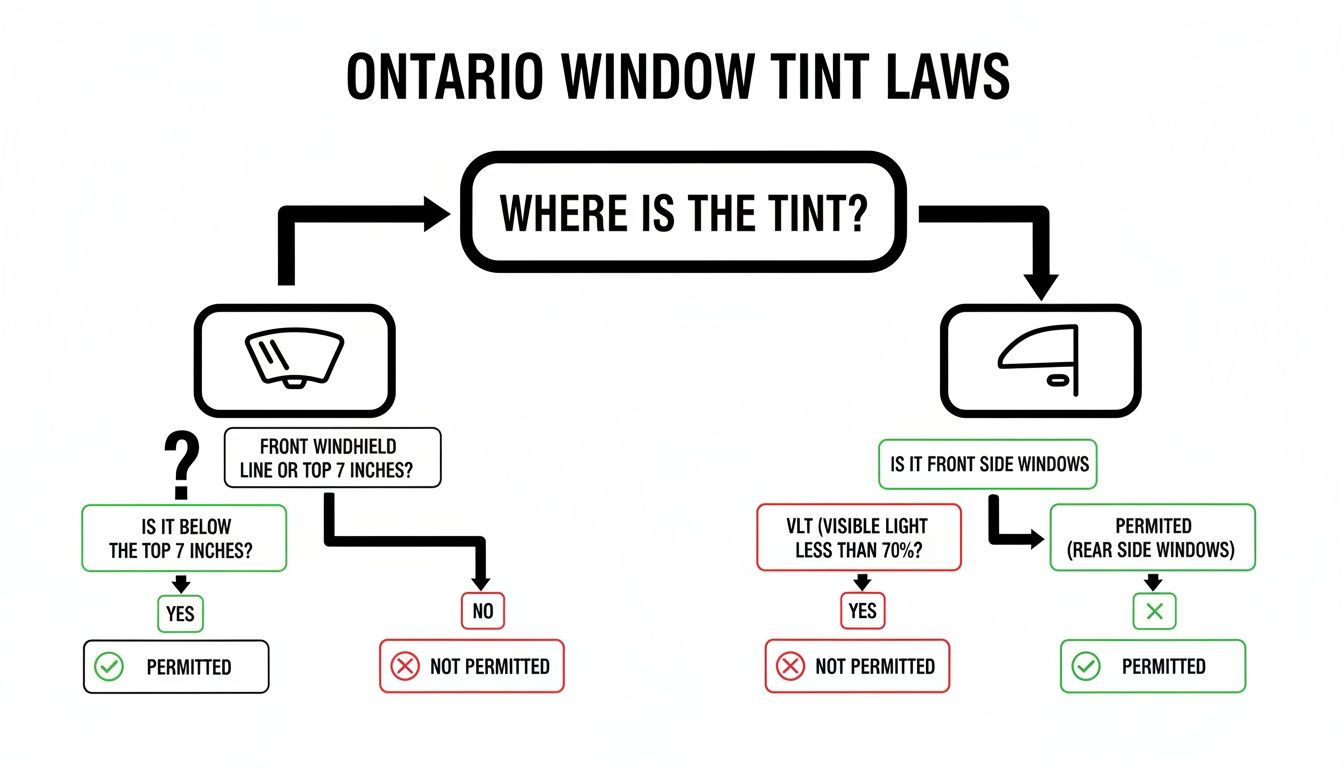
As you can see, the law is focused on the driver's direct line of sight, which leaves a lot more freedom for the rear half of the vehicle.
Other Factors to Consider
Before you make your final call, there are a couple of other things to keep in mind. First, the colour of your car's interior can have a big impact on how dark a tint looks from the outside. A black or dark grey interior will make a 35% tint appear much darker than the exact same film on a car with a tan or beige interior.
The type of film you choose is also a major factor. Not all tints are created equal, and different materials offer different levels of heat rejection and clarity. If you're ready to get into the details, you can learn more about the differences between colour-stable and ceramic window tints in our guide. Thinking through these points will help you land on a choice you'll be happy with for years to come.
Protecting Your Investment with Proper Tint Care
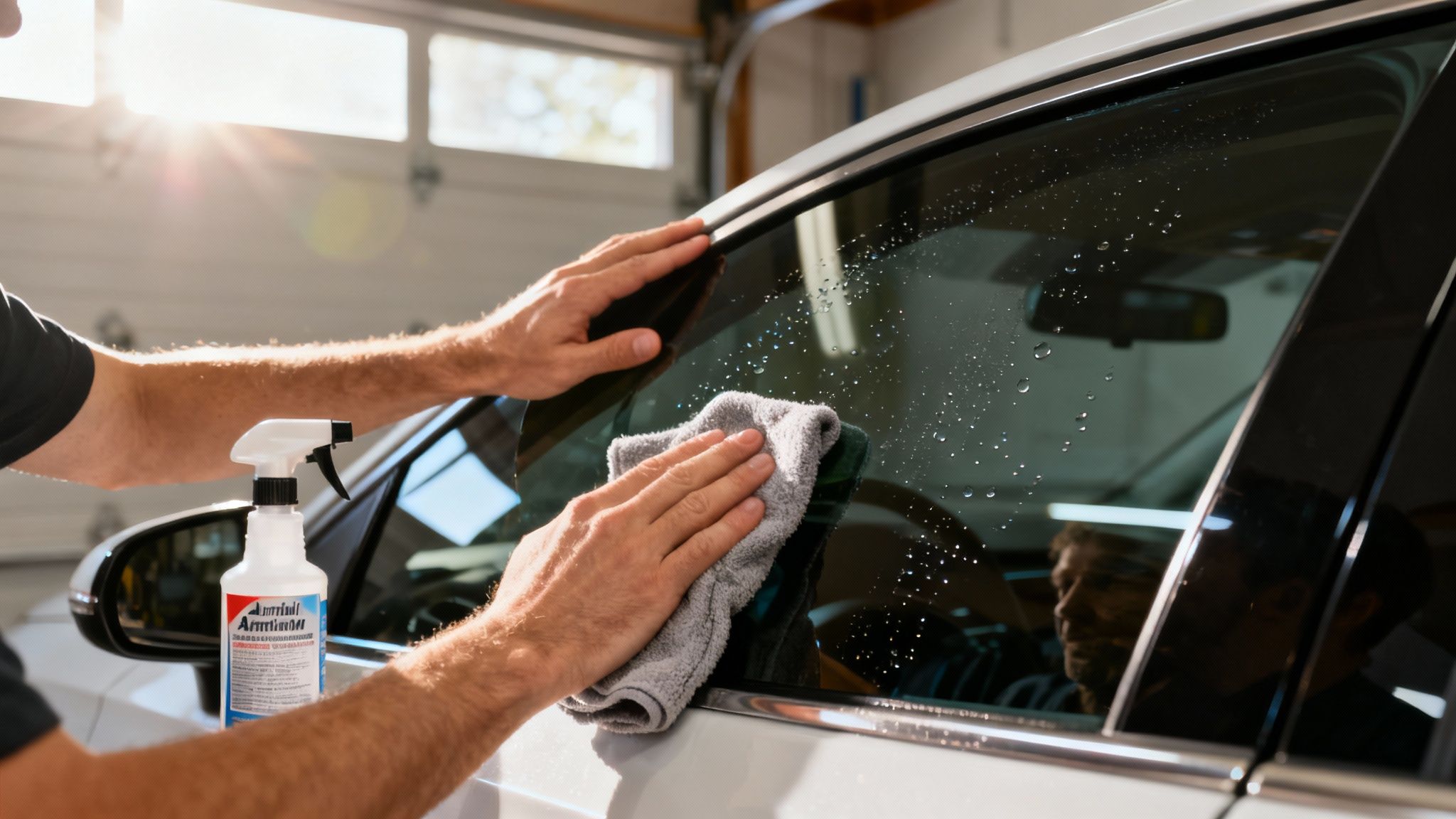
So you've chosen the perfect tint percentage—now what? Getting that film to last and look great for years comes down to proper care, especially right after it's installed. A professional tint job needs a little time to settle in, and a bit of patience now will pay off big time.
The most important part is the curing process. This is when the adhesive fully bonds to the glass and all the leftover moisture from the installation evaporates. Depending on the weather and humidity, this usually takes about three to five days.
During this initial curing period, it is essential to keep your windows rolled up. Seriously, don't touch that button. Rolling them down too soon can make the film peel or shift before it's set, which means you're coming right back to the shop for a fix.
Simple Rules for Tint Maintenance
Once your tint is fully cured, keeping it clean is a breeze. The key is knowing what not to do, as the wrong products can cause permanent scratches, discolouration, or peeling.
Here are the dos and don'ts to keep that tint looking brand new:
- DO use a soft microfiber cloth. Paper towels or scrubby sponges are way too abrasive and will leave tiny scratches on the film.
- DON'T use any cleaner that contains ammonia. This is a big one. Common household glass cleaners with ammonia will slowly eat away at the tint's adhesive, causing it to bubble up or turn a nasty purple colour.
- DO stick to a simple soap and water solution or an ammonia-free window cleaner. That's all you need to get rid of dirt and fingerprints without causing any harm.
- DON'T ever use a razor blade or any sharp object to scrape gunk off the window. You’ll slice right through the film, and there’s no coming back from that.
Knowing how to care for the tint is just as important as choosing it. For more detailed tips, you can learn about effectively removing stubborn water spots from your windows to keep your view crystal clear. Following these simple rules will help you avoid the most common problems and keep your tint looking fantastic.
Got Questions About Window Tint? We've Got Answers.
To wrap things up, let's tackle a few of the most common questions we hear from drivers every day. Getting these details straight can make all the difference in choosing the right tint for your car.
Is it hard to see out of dark tint at night?
It can be, and this is a major safety point to consider. A very dark tint, like a 5% or even a 20% VLT, will definitely reduce how much you can see in low-light situations.
That's why many people strike a balance. They might go for a lighter 35% or 50% on the front side windows for clear visibility, while keeping a darker tint on the back for privacy. It’s all about what you’re comfortable with and what keeps you safe on the road.
How long will a professional tint job actually last?
When you invest in a high-quality film installed by a skilled technician, it’s designed to last the life of your vehicle. Good films won't fade, bubble, crack, or turn that ugly purple colour you sometimes see on older cars.
A reputable shop will stand behind their work with a lifetime warranty that covers both the film itself and the installation labour. This isn't just a purchase; it's a long-term upgrade for your vehicle.
A professional installation is more than just a service; it's a guarantee that your tint will perform as intended for years to come. The initial investment pays off through durability and a flawless finish that DIY kits simply can't match.
Can I just tint my own windows and save some cash?
You can try, but we almost always advise against it. Achieving that perfect, bubble-free finish is much harder than it looks. It requires a spotless environment, the right tools, and a ton of practice to avoid contamination like dust and hair getting trapped under the film.
A pro ensures the film is applied perfectly, trimmed with precision, and fully backed by a warranty. One mistake with a DIY kit and you’re back to square one, often out more money than you tried to save.
Does window tint really make a difference in how hot my car gets?
Absolutely. It’s one of the biggest benefits. Modern films, especially the ceramic and carbon options, are engineered to block a huge amount of infrared radiation—the kind of light that you feel as heat.
Even a lighter tint can make a noticeable difference in your car's interior temperature on a sunny day. Your car will be more comfortable, and your air conditioning won't have to work nearly as hard.
Ready to find the perfect window tint percentage for your vehicle? The expert team at Carmedics Autowerks in Whitby is here to help you choose the ideal film for your needs, ensuring a perfect, legal, and long-lasting installation.