


Ask any seasoned driver in Whitby, and they'll tell you the same thing: timing is everything when it comes to winter tires. The golden rule isn't waiting for the first big snowfall. It's all about temperature.
The moment the average daily temperature consistently dips to 7°C (45°F) or below, it's time to make the switch. This isn't just a suggestion; it's a safety benchmark based on pure tire science.
The Right Time to Switch to Winter Tires in Ontario
Here in Ontario, we know how fast the weather can turn. That’s why the 7°C rule is your most reliable guide. It focuses on the one thing that impacts your tires before a single snowflake falls: the cold itself.
Once the mercury drops, the rubber compound in your summer or all-season tires starts to get hard and lose its elasticity. Think of it like a running shoe versus a dress shoe on a slick floor. The flexible rubber of the running shoe grabs the surface, while the hard sole of the dress shoe slides. Your all-season tires become like that dress shoe in the cold.
This stiffening effect drastically reduces their ability to grip the pavement, even when the roads are perfectly dry. The result? Your stopping distance gets longer, and your car feels less responsive when you steer. It's a subtle change, but one that makes a huge difference in an emergency.
Why Acting Early Matters
Every year, the first real snowfall causes chaos on the roads, and it’s often because people waited too long to change their tires. By then, they've already been driving on less-than-safe rubber for weeks. Getting ahead of the game and swapping your tires when the temperature hits that 7°C mark means you're ready for anything. You're prepared for that sudden cold snap, the unexpected black ice on your morning commute, or that first dusting of snow.
The switch to winter tires is less about reacting to a snowstorm and more about anticipating the change in seasons. Your safety depends on having the right equipment for the conditions before they become dangerous.
Making the change proactively pays off in a big way:
- Better Safety All Around: You'll have superior grip on cold roads, whether they're dry, wet, or icy. Winter tires are for winter, not just for snow.
- Confident Performance: Your car will brake shorter and handle more predictably in all cold-weather conditions.
- Total Peace of Mind: Drive knowing you're fully prepared for whatever a Canadian winter decides to throw at you. No last-minute panic or slipping and sliding.
To make it even clearer, here’s a quick breakdown of the signals telling you it's time to book that tire swap appointment.
Quick Guide to Your Winter Tire Swap
| Key Signal | What It Means | Why You Should Act |
|---|---|---|
| Consistent 7°C Temps | The rubber in your all-season/summer tires is hardening and losing grip. | Your braking distance is increasing, and handling is compromised, even on dry roads. |
| Seeing Your Breath | Morning frosts and chilly evenings are becoming the norm. | Black ice can form unexpectedly overnight, and your tires aren't ready for it. |
| The Calendar Hits Mid-October | Historically, this is when Durham Region's weather starts to turn for good. | Acting now helps you beat the pre-winter rush at the auto shop and ensures you're prepared. |
Ultimately, being prepared isn't just smart; it's the responsible thing to do for yourself and everyone else on the road.
Why the 7°C Rule Is Your Most Important Safety Metric
Ever left a plastic toy outside in the fall? You know how stiff and brittle it gets overnight. That’s exactly what happens to your all-season tires in cold weather. They harden up and lose their grip.
Winter tires, on the other hand, are made from a completely different recipe. Their special rubber compounds are designed to stay soft and pliable, even when the temperature plummets. Think of them like a high-end rubber ball that stays bouncy and flexible no matter how cold it gets. This is the secret to staying in control on a freezing road.
Don't Wait for the First Snowfall
It’s a classic mistake we see every year: people wait for the first big snowstorm to think about their tires. But here's the thing—a lot of our winter driving in Whitby happens on cold, bare pavement. And that's where the danger is hiding in plain sight.
The moment the temperature consistently dips below 7°C, your all-season tires are already out of their element. They just can't grip the cold asphalt properly. This means your braking distance gets longer and your steering feels less responsive, even on a perfectly dry road. Getting ahead of this is the key to avoiding a preventable accident.
Your tires are the only part of your vehicle that actually touches the road. Below 7°C, all-seasons lose the flexibility they need for a solid grip, making every stop and turn a gamble.
By following the 7°C rule, you're preparing your car for what winter feels like, not just what it looks like. The difference is night and day.
- Better Grip on Cold Pavement: Winter tires are designed to bite into cold asphalt, giving you the stability all-seasons just can't deliver.
- Shorter Stopping Distances: That flexible rubber can easily be the difference of several metres in an emergency stop.
- Tighter Control in Corners: Your car will feel grounded and predictable when navigating turns on those frosty mornings.
Wondering what's involved in making the switch? You can learn about the whole process by reading up on a professional seasonal tire change to see how the pros get it done right. Don't let a clear, cold road fool you—it's the first real test of your winter readiness.
Winter Tires vs. All-Seasons: A Real-World Performance Breakdown
Choosing between winter and all-season tires isn't about marketing hype—it's a matter of physics and safety, measured in the critical feet and seconds that can prevent an accident. While it's easy to talk theory, real-world data shows just how massive the performance gap gets when the temperature plummets. It’s the difference between stopping safely for a red light and sliding right through the intersection.
Think of all-season tires as a jack-of-all-trades. They're designed to handle a little bit of everything but they don't truly excel at anything, especially not a real Canadian winter. Once it gets cold, their harder rubber compound stiffens up and simply can't provide the grip you need on icy or snow-dusted roads.
The Numbers Don't Lie
Controlled tests reveal a stark reality. In one acceleration test on a slippery surface, a car with winter tires covered 18 metres in just 4.5 seconds. The exact same car on all-seasons took 6.5 seconds, and on summer tires, it was a sluggish 7.4 seconds. The message is clear: winter tires get you moving faster and more securely from a standstill.
The "why" behind this comes down to how temperature affects the tire's rubber compound.
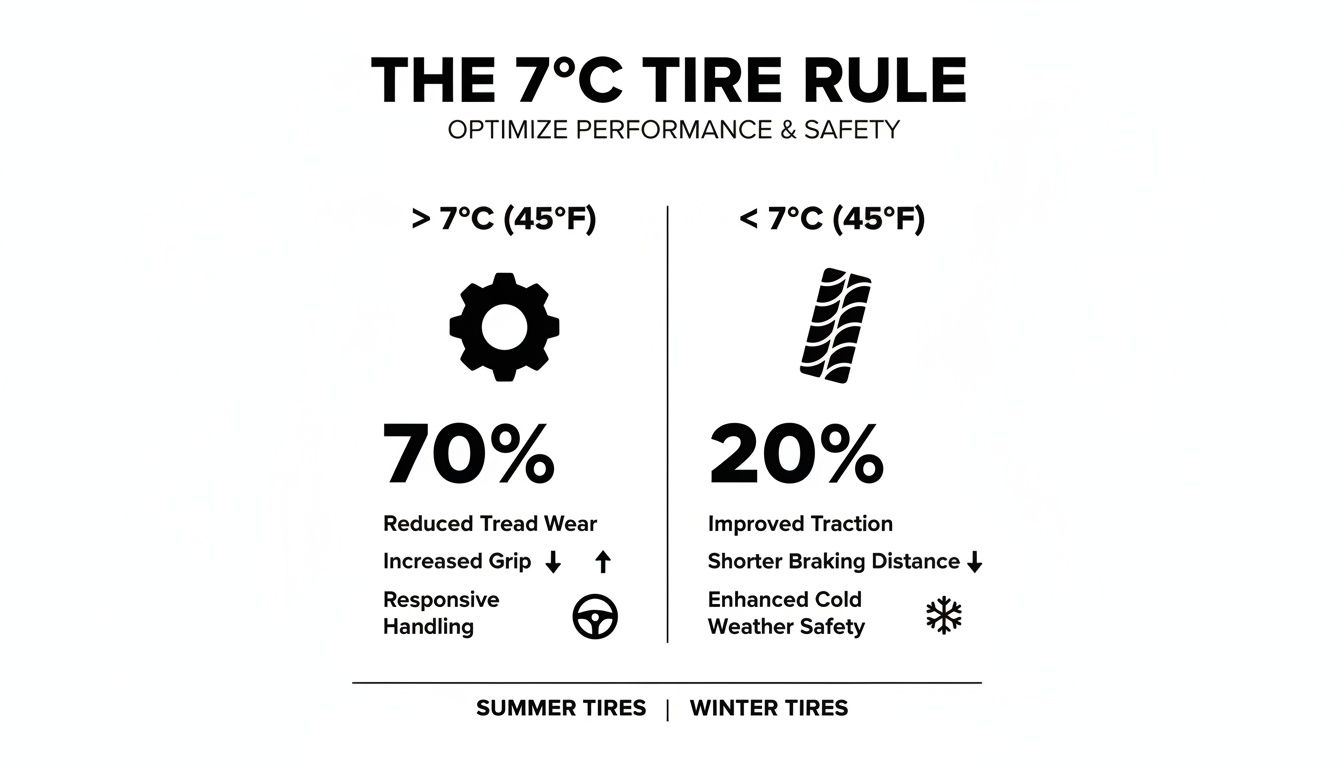
As you can see, winter tire rubber is specifically engineered to stay soft and flexible below 7°C. This pliability is what allows it to maintain its grip, while all-season compounds harden and start to lose their bite.
Braking Distance Is Where It Matters Most
Acceleration is one thing, but braking is where the difference becomes life or death. Those extra seconds to get going are an inconvenience; those extra feet needed to stop can be catastrophic.
Winter tires consistently deliver dramatically shorter stopping distances on both snow and ice. This isn't a small improvement. On ice, winter tires can reduce braking distance by up to 50% compared to all-seasons. That’s an entire car length, or even more.
This is exactly why knowing when to change tires for winter is so critical. It’s not just about getting through deep snowdrifts. It’s about maintaining control during everyday winter driving on cold, slick pavement.
The specialized sipes (tiny slits) and deep treads of winter tires are built to bite into ice and channel away slush, giving you the confidence and control you need. For a deeper look at the fundamental differences, you can compare summer tires vs winter tires in our detailed guide. This specialized design isn't just a purchase—it's an investment in your safety.
Insurance Discounts and Legal Insights for Ontario Drivers
Aside from the obvious safety advantages on icy roads, making the switch to winter tires can actually put money back in your pocket. Here in Ontario, while winter tires aren't mandatory province-wide like they are in Quebec, insurance companies absolutely recognize how effective they are at preventing collisions.
This recognition often translates into a nice little discount on your premium. Most insurers offer a savings of 2% to 5% for drivers who equip their vehicles with a full set of four winter tires.
Getting the discount is usually as simple as calling your provider and letting them know you've made the swap. They might ask for a receipt for the tires or an invoice from the shop that installed them, but it’s a straightforward process for a tangible reward.
A Growing Standard for Safety
This financial incentive is part of a larger, Canada-wide trend. More and more, drivers are seeing winter tires not as an option, but as a fundamental part of responsible winter driving.
A 2022 study revealed that winter tire usage has hit 70% across Canada. Even in provinces where they aren't legally required, voluntary adoption has reached a solid 63%. This isn't just a small uptick; it's a clear shift in how we approach winter safety.
These numbers tell a story: Canadian drivers get it. They understand that these tires are essential for navigating our harsh winter conditions. Opting for winter tires is more than just a smart personal choice; it’s becoming a community standard for keeping our roads safe.
This is also a great time to take a quick look at your overall policy. While you're on the phone about your winter tire discount, it never hurts to compare various auto insurance companies and coverage to make sure you're getting the best possible protection and value. Ultimately, making the switch is a smart move for both your safety and your wallet.
Checking Your Tread Depth Before The Season Starts
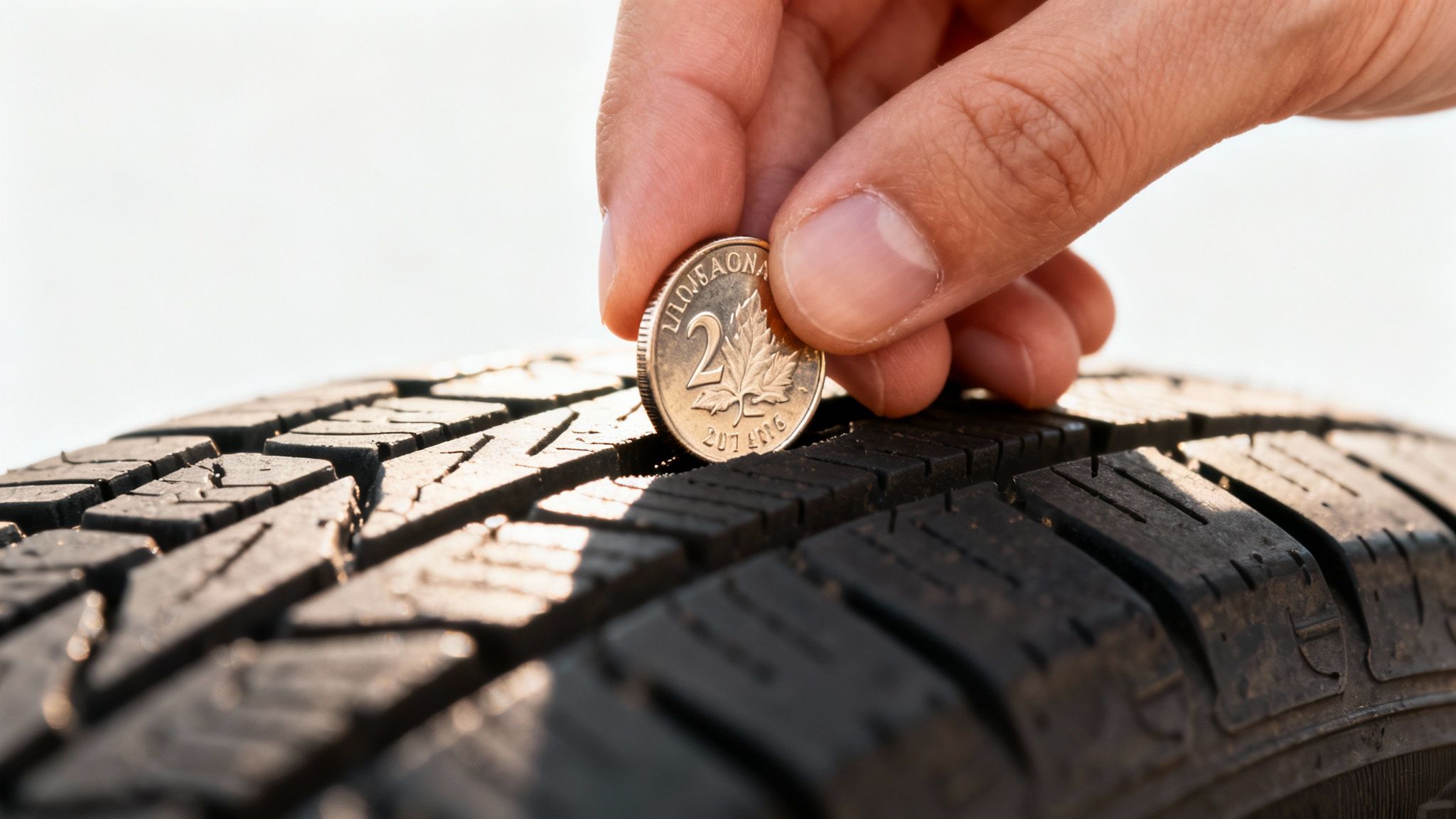
Simply mounting your winter tires is a great first step, but it’s only half the battle. A tire’s ability to grip slick ice and push away slush depends entirely on having enough tread. An old, worn-down winter tire can be just as treacherous as an all-season tire in the middle of a blizzard.
Before you go through the effort of installing them, you need to be sure your tires are actually up for another demanding Ontario winter. Luckily, you don't need any special equipment for a quick check—just a coin from your pocket.
How To Use The Toonie Test
The Toonie Test is a classic Canadian trick for a reason: it's simple, fast, and surprisingly effective. It gives you a reliable snapshot of your tire's remaining life.
Here's how it works:
- Grab a Toonie: Find a toonie and hold it so the Queen is facing you.
- Insert the Coin: Stick the coin into one of your tire’s main tread grooves, with the polar bear standing upright.
- Check the Paws: Can you see the top of the silver? If the tread reaches the bear's paws, your tires likely have enough depth to get you through the season safely.
- Time for New Tires: If you can clearly see the top of the polar bear's paws, your tread is getting dangerously low. It's time to start shopping for a new set.
This easy check ensures your tires have what it takes to bite into deep snow and prevent you from hydroplaning on those slushy, unpredictable roads.
Why The Legal Minimum Isn't Good Enough For Winter
You might hear about legal minimum tread depths, but for winter driving, you should ignore them completely. Those regulations are designed for basic roadworthiness on dry pavement, not for navigating an icy intersection in Whitby on a freezing January morning.
Safety experts and tire manufacturers agree: you should replace your tires long before they hit the legal minimum. For more on the consequences of inadequate tire maintenance, you can read about the dangers of driving on bald tires on icy roads.
A brand new winter tire typically starts with 10/32" to 12/32" of tread. For winter conditions, the widely accepted replacement point is 6/32", which gives you a crucial safety margin that the bare legal minimums just don't account for.
Trusting the Toonie Test over the legal limit isn’t just a good idea—it’s a proactive step toward keeping yourself and everyone else safe on the road this winter.
Your Guide to a Seamless Seasonal Tire Swap

Okay, so you understand why and when to make the switch. Now, let’s talk about making the actual changeover as painless as possible. The single best piece of advice I can give you is to plan ahead. Don't wait for that first surprise frost, because that’s when every driver in Whitby suddenly remembers their winter tires and the phone lines at the shop start ringing off the hook.
Booking your appointment early isn't just about snagging a convenient time slot; it’s about giving yourself breathing room. You'll have time to get your summer tires properly cleaned and ready for storage, ensuring they’re in great shape come springtime. It also gets you thinking ahead for the next season, and you can learn more about when to switch to summer tires in Ontario while it's fresh in your mind.
The Professional Advantage
Sure, you could wrestle with the tires in your own driveway, but letting a professional service like Carmedics Autowerks handle it offers some serious perks. Our technicians do more than just swap the wheels over; we perform a full mounting and balancing service to make sure everything is perfect.
Proper balancing is crucial. You can't eyeball it. An unbalanced tire creates vibrations you'll feel in the steering wheel, and that shimmy isn't just annoying—it causes uneven tire wear and can even damage your vehicle's suspension over time.
Once the winter tires are on, we run through a final safety checklist:
- Tire Pressure: We inflate your tires to the precise PSI recommended by your vehicle’s manufacturer for optimal safety and performance.
- Torque Check: Every lug nut is tightened to exact torque specifications using a calibrated wrench. This is a critical safety step.
- Tire Storage: We can also take your summer tires off your hands. Our secure, climate-controlled storage saves you the garage space and the hassle of lugging them around.
Handing the job over to an expert not only saves you an afternoon of work but also provides the peace of mind that comes from knowing it was done right. Schedule your appointment with us and head into the winter season with total confidence.
Common Questions We Hear at the Shop
We get a lot of questions about winter tires every autumn. To wrap things up, here are some straight answers to the ones that come up most often here in Ontario.
Can I Just Keep My Winter Tires on All Year?
I know it seems like an easy way to save a bit of cash and hassle, but running winter tires through a warm Ontario summer is a really bad move. The rubber compound on winter tires is incredibly soft so it can stay flexible in the cold. On hot pavement, it wears down shockingly fast.
Not only will you ruin an expensive set of tires in a single season, but that soft rubber gets squishy and vague in the heat. Your car’s handling and braking performance will be seriously compromised. It’s a false economy that actually costs you more and makes your vehicle less safe.
Do I Really Need All Four? Or Can I Get Away With Two?
This is a big one, and the answer is always the same: you absolutely need a full set of four winter tires.
Putting them on just the front or just the back creates a dangerous imbalance in grip. If you only have them on the front, the back end of your car can easily lose traction and spin out in a turn. If they're only on the back, you risk losing steering control. It makes the car dangerously unpredictable when you need it most. Always, always install four.
Think of it this way: a car with only two winter tires is a recipe for disaster. The mismatched grip can cause the rear to fishtail wildly in a corner or the front to plow straight ahead when you try to steer. It drastically increases your chances of losing control.
What About All-Weather Tires vs. Proper Winter Tires?
All-weather tires are a definite improvement over typical all-seasons. They do carry the three-peak mountain snowflake symbol, which means they meet a minimum standard for snow traction, and they can be a decent compromise in areas with milder winters.
But let's be realistic—we're in Ontario. For the kind of heavy snow, slick ice, and biting cold we get, nothing beats a dedicated winter tire. They are specifically engineered for these conditions and offer vastly better stopping power, traction, and control when it matters most. All-weathers are a jack-of-all-trades, but a dedicated winter tire is the master of one.
Ready to face winter with total confidence? The team at Carmedics Autowerks is here to help with professional tire mounting, precision balancing, and secure seasonal storage. Book your tire swap appointment today and ensure you're ready for whatever the season throws at you.