

Wondering if your tinted windows are legal in Ontario? The short answer is a classic: it depends.
While you can definitely have some tint, the rules get incredibly strict for the front windshield. As for your side windows, whether they’re legal often comes down to an officer's on-the-spot judgment, not a specific, hard-and-fast percentage.
Decoding Ontario's Tinted Window Laws
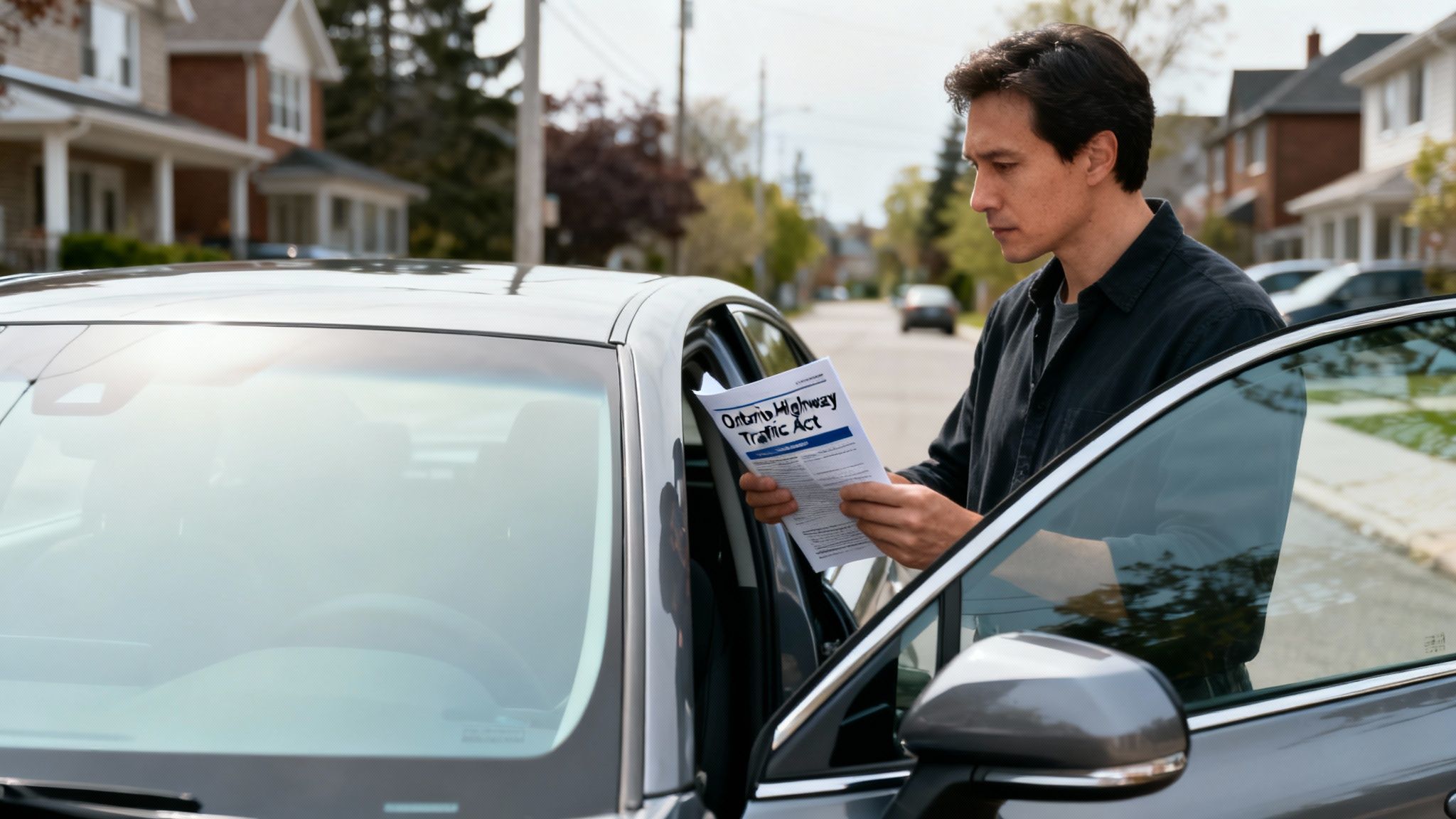
The moment you start looking into window tinting, you'll find the rules can be a bit of a maze. We see it all the time with drivers here in Whitby—there's a lot of uncertainty about what's actually allowed. My goal here is to cut through that noise and give you a straight-up, practical guide to keeping your tint legal and worry-free.
The entire legal framework for window tinting in our province boils down to one specific section of the law: Ontario's Highway Traffic Act, Section 73(3). Unlike many other places that set clear percentage limits, our law is built around a single, guiding principle: the driver must always have a "clear and unobstructed view" through the front windshield and front side windows.
Why Ontario's Law Feels So Subjective
This "clear view" standard is precisely what makes Ontario's rules unique and, frankly, a little frustrating for drivers. It means there isn't a magic number, like a 35% or 50% tint, that automatically makes your front side windows legal. It all hinges on whether a police officer believes they can clearly see into your vehicle, which is a key part of ensuring everyone's safety on the road.
Here’s what that subjectivity really means for you:
- No Fixed Percentage: You won't find a specific VLT (Visible Light Transmission) limit for front side windows in the law. It’s intentionally open to interpretation.
- Officer Discretion: The final call on whether your tint obstructs the view of the driver is up to the individual law enforcement officer.
- Safety First: The whole point of this rule is to allow an officer to make eye contact during a traffic stop and, just as importantly, to ensure your own vision isn't dangerously compromised, especially when driving at night.
The core idea is simple: while you have a lot of freedom for your back windows, the rules for your front windows are much tighter. They demand a careful, compliant approach to avoid any trouble.
What This Means for Your Vehicle
Let's break it down by window. For your front windshield, the rule is crystal clear: no aftermarket tint is allowed. Period. The only exception is a small, non-reflective tint strip across the very top, and even that can't extend more than 15 cm down from the top edge of the glass.
Things change once you move past the driver's seat. Your front driver and passenger side windows are in that grey area governed by the "clear view" rule. This is where getting professional advice is absolutely critical. For your rear side windows and the back windshield, however, you have much more freedom to go darker for that sleek look, added privacy, or serious heat rejection.
Knowing the difference between these zones is the first step to getting the perfect tint without the headache of a potential ticket.
Decoding VLT and Window Tint Percentages
Before we can really get into the weeds of what’s legal and what’s not, we need to talk about one core concept: Visible Light Transmission, or VLT. This is the single most important term in the world of window tint, but don't worry, it's a lot simpler than it sounds.
Think of VLT like a rating for a pair of sunglasses. A high VLT percentage means more light is allowed to pass through, giving you a lighter tint. A low VLT percentage means less light gets in, making the window much darker. It’s the universal standard for a reason—it’s all about driver visibility and safety.
Understanding VLT Percentages
The numbers are pretty straightforward once you get the hang of it. A window film with an 80% VLT is incredibly light, blocking only 20% of the visible light. On the flip side, a 5% VLT—what most people call "limo tint"—is just about as dark as you can get, blocking a whopping 95% of light.
Here’s a quick look at some of the most common tint levels you'll see:
- 70-90% VLT: This is a very light, almost unnoticeable tint. It’s perfect for people who just want UV protection without changing the look of their car.
- 35-50% VLT: The sweet spot for many drivers. This medium shade gives you a nice balance of privacy, style, and good visibility.
- 5-20% VLT: A seriously dark tint, usually reserved for rear windows where privacy is the top priority and visibility from the inside out isn't as critical.
Even though Ontario’s laws for front side windows are famously vague and don’t specify a number, understanding VLT is still key. It helps you have a smarter conversation with your installer, so you can find that perfect balance between the look you want and what will keep you out of trouble. To get a better feel for how these numbers look in the real world, check out this visual guide to different tint levels.
Key Takeaway: VLT isn't just a technical term—it's a simple scale of darkness. The lower the VLT number, the darker the tint.
Why This Matters in Other Regions
Grasping the concept of VLT becomes even more critical when you drive outside of Ontario. In a place like California, for example, the rules are much more black and white. There, the law requires the front driver and passenger side windows to have a minimum 70% VLT, meaning the tint can't block more than 30% of the light. The windshield is even more restricted, only allowing a tint band on the top 4 inches.
This just goes to show how different places use precise VLT numbers to set clear safety standards. While our main focus here is on cars, it’s interesting to see how manipulating light with tints applies in other areas, like with colored eyeglass lenses. At the end of the day, a solid understanding of VLT empowers you to make a choice that’s not just stylish, but smart and legal.
A Practical Guide to Ontario's Tint Rules
Now that we've covered what VLT actually means, let's get down to the brass tacks: what does this mean for your car here in Ontario? The rules aren't a one-size-fits-all deal; they change depending on which window we're talking about. This breakdown will give you the window-by-window details you need to keep your car looking sharp and, more importantly, street-legal.
Let’s start with the easiest one: the front windshield. The Highway Traffic Act is crystal clear on this point. You are not allowed to apply any aftermarket tint film across the main part of your windshield. Period. The law prioritizes maximum, unaltered visibility for the driver, leaving no grey areas. The only exception is that small, non-reflective band you sometimes see at the very top, which is typically installed at the factory and meets specific safety standards.
Front Side Windows: The Subjective Zone
This is where the rules get a bit murky and where most of the confusion comes from. For the windows right next to the driver and front passenger, the law doesn't give a hard number. There is no specific VLT percentage written in stone.
Instead, the rule is subjective: a police officer must have a clear, unobstructed view of the driver inside the vehicle. What does that mean in the real world? It means a tint that seems perfectly fine on a bright sunny day could get you pulled over at dusk or on a cloudy afternoon. It’s a judgment call.
In practice, most reputable installers will tell you that a tint in the 35% to 50% VLT range is a safer bet, but it's never a guarantee against a ticket. The officer on the road has the final say.
This simple diagram helps visualize the VLT concept. A high percentage lets lots of light through, while a low percentage blocks most of it.
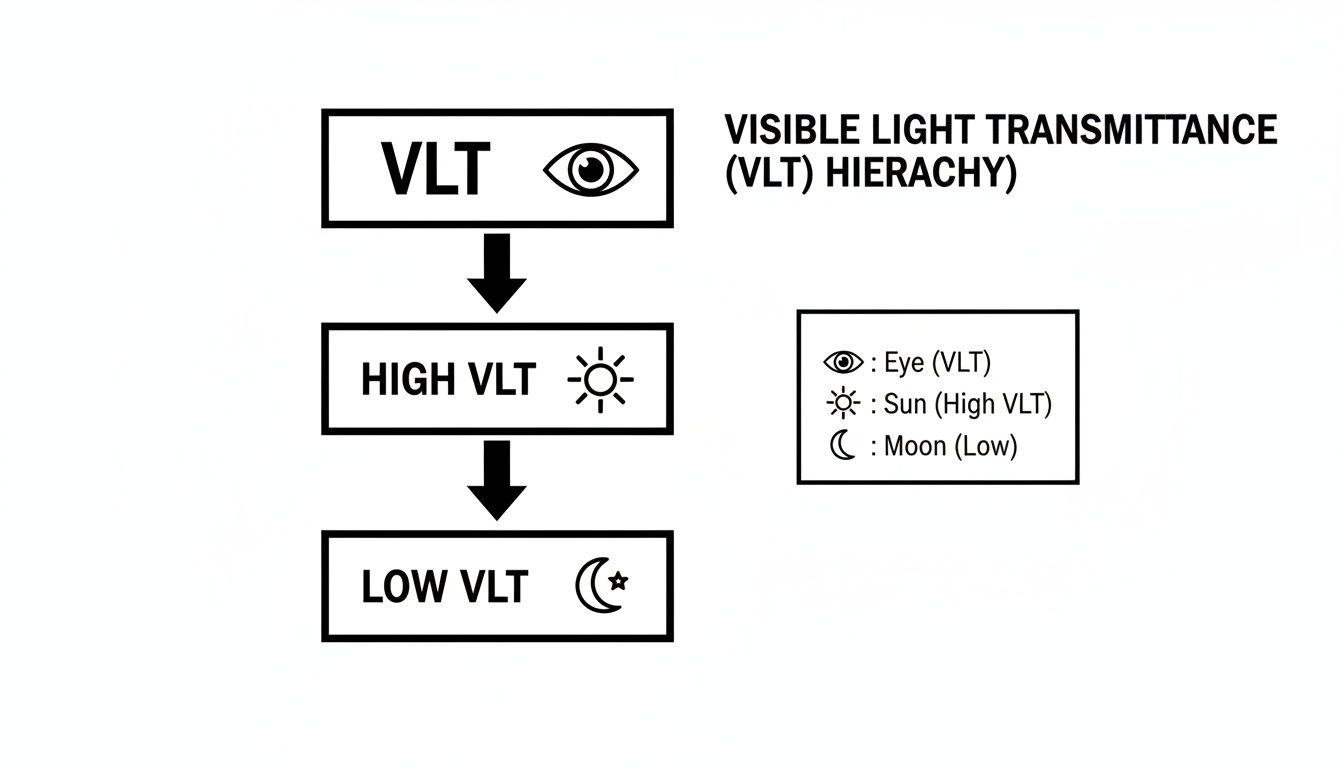
As you can see, higher VLT means better visibility—which is precisely why the rules are so much stricter for the front of your vehicle.
Rear Windows: Where You Have More Freedom
Once you move past the driver's compartment, the rules open up quite a bit. For your rear passenger windows and the back windshield, you have much more leeway to go with darker tints. This is where you can get that sleek, private look, often called "limo tint," which can be as dark as 5% VLT.
There's just one crucial condition you need to be aware of.
Important Note: If your rear window is tinted so dark that you can't see through it with your rearview mirror, the law requires your vehicle to be equipped with dual side mirrors—one on the driver's side and one on the passenger's side—and both must be in perfect working order.
Getting an expert opinion is always the best way to choose a tint that looks great and won't get you into trouble. When you explore your options for the best car tinting near you, a professional can show you film samples and guide you to a compliant, high-quality choice that fits your car perfectly.
Ontario Vehicle Window Tinting Regulations at a Glance
To make it even easier, here's a quick reference table summarizing the rules for tinting your vehicle's windows in Ontario.
| Window Location | Legal Requirement in Ontario | Common Interpretation |
|---|---|---|
| Front Windshield | No aftermarket tint film is allowed on the main portion of the glass. | Forget about it. The only exception is a factory-installed top band. |
| Front Side Windows | Must provide a "clear and unobstructed view" of the driver. | Lighter tints (35-50% VLT) are generally considered less risky, but legality is ultimately at the officer's discretion. |
| Rear Side Windows | No specific VLT limit. | You're free to use darker tints for privacy and heat rejection. |
| Rear Windshield | No specific VLT limit, but with a condition. | Dark tints are fine as long as you have functional dual side mirrors, since your rearview mirror's view will be obstructed. |
This table should help clear up any confusion, but when in doubt, always consult with a professional installer who understands the nuances of the local laws.
The True Cost of an Illegal Window Tint

Thinking of pushing the boundaries with your window tint? It’s a tempting thought, but the ticket you might get is often just the tip of the iceberg. The real penalty for ignoring the tinted windows legal limits goes way beyond a simple fine, starting a domino effect of costs and headaches you really don't need.
Let’s play out a common scenario. You’ve just shelled out good money for a sharp, dark tint that looks fantastic. A few weeks go by, and then you see the flashing lights. An officer hands you a "fix-it" ticket, which is an official order to get that brand-new film removed by a certain date. This is where the real expenses start piling up.
Suddenly, you're not just dealing with a fine. You also have to pay a professional to strip that new tint right off your windows. The removal process can easily cost as much as the installation, which means you've effectively paid double for nothing.
More Than Just a Fine
The financial hit doesn't stop with the ticket and removal. The consequences can spiral into other areas you probably haven't even thought about.
- Wasted Investment: The money you spent on the tint itself? Gone. All you'll have to show for it is a receipt for its removal.
- Professional Removal Costs: You need an expert to get the film off without scratching or damaging your glass, adding another bill to the growing pile.
- Potential Insurance Impact: It’s not a guarantee, but racking up multiple traffic violations—and yes, equipment infractions count—can sometimes lead to a hike in your insurance premiums.
- Time and Inconvenience: Your time is valuable. You'll spend it dealing with the ticket, booking appointments for tint removal, and maybe even getting your vehicle re-inspected.
The real takeaway is that getting it done right the first time isn't just about following the rules—it's about protecting your wallet from unnecessary expenses and your time from avoidable stress.
Enforcement is No Joke
If you think a tint violation is too minor for an officer to bother with, you’d be mistaken. Law enforcement takes vehicle equipment standards seriously because they are directly tied to road safety. While it can be tough to find specific stats for Ontario, data from other jurisdictions shows a very clear picture.
Just look at California, for example. Between January 2015 and August 2017, the California Highway Patrol wrote nearly 200,000 tickets for window tint violations. That breaks down to about 219 citations every single day. It's a stark reminder that officers are actively looking for illegal tints as part of their routine patrols. You can explore more about these enforcement trends to see just how seriously these laws are taken.
At the end of the day, putting your money into a professional, legal tint job is simply the smartest financial move. It saves you from the frustrating loop of fines, removal fees, and the constant risk of being pulled over. It’s the best way to make sure your vehicle looks great without turning into a recurring, expensive problem.
How Professionals Make Sure Your Tint is Legal
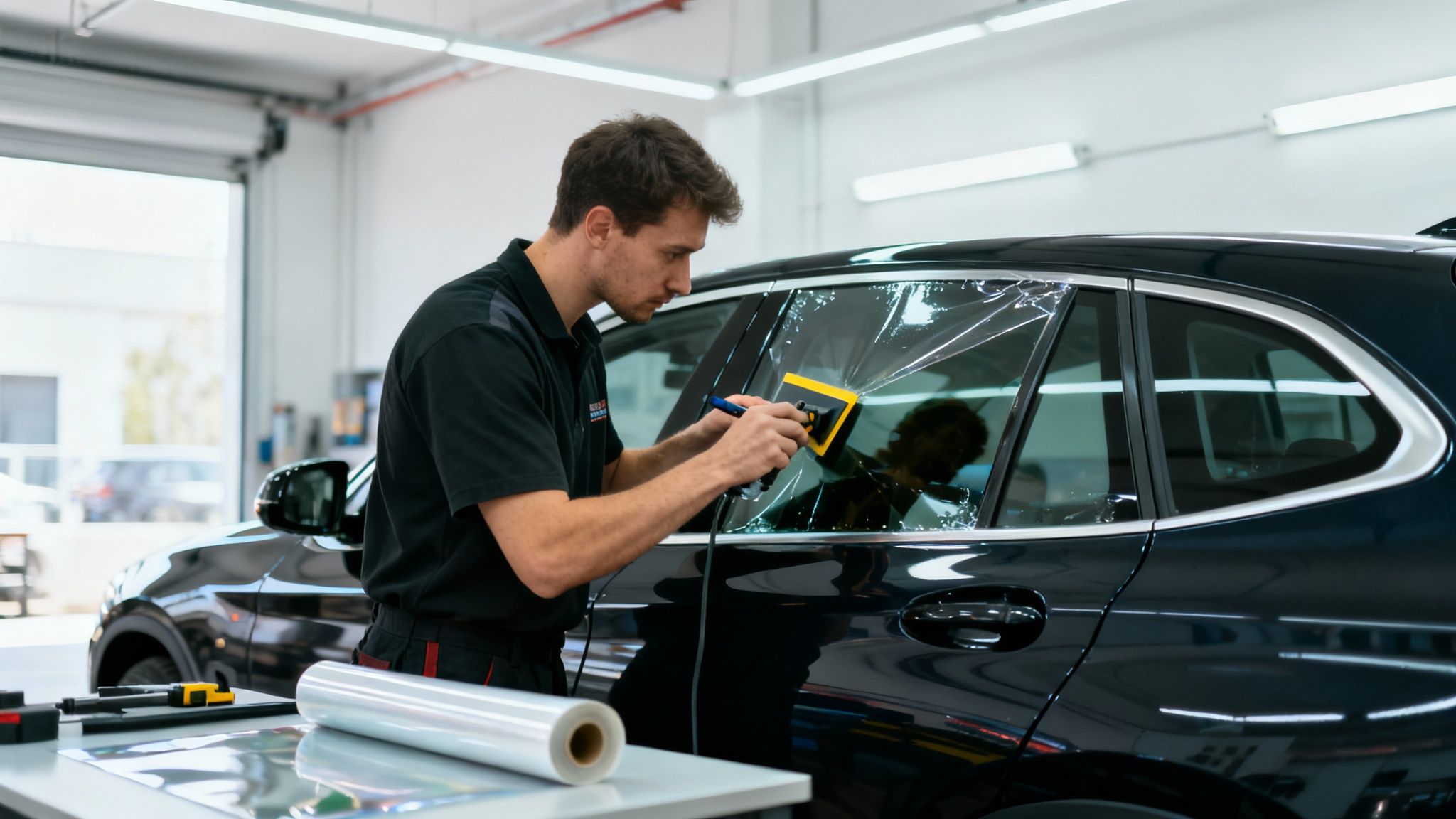
This is where turning to a professional installer becomes your biggest advantage. With Ontario's tint laws being somewhat open to interpretation, an experienced pro doesn't just stick a film on your glass; they act as your guide to make sure your tinted windows are legal and look fantastic.
The whole process kicks off with a simple chat. A real expert will want to know what you're after. Are you looking for more privacy? Trying to beat the summer heat? Or is it all about getting that sleek, custom look? Once they know your goals, they can point you toward films that get the job done without crossing into illegal territory.
Think of them as your first line of defence against a future traffic ticket. Their hands-on experience means they know exactly which tint levels tend to fly under the radar with law enforcement, helping you strike that perfect balance between style and staying compliant.
The Value of a Professional Touch
Going with a professional tint shop brings a lot more to the table than just solid legal advice. The quality of the film and the skill of the application are what separate a great tint job from a disaster waiting to happen.
- Premium Materials: Reputable shops work with high-grade tint films that are built to last. These aren't the cheap films that bubble, peel, or turn a weird shade of purple after a couple of summers.
- Expert Application: Skilled technicians have the right tools and a meticulous process to guarantee a flawless finish—no dust, no bubbles, just clean lines.
- Longevity and Warranty: A professional installation is almost always backed by a warranty. It’s your assurance that the investment you’re making in your vehicle is protected.
The bottom line is this: a professional job gives you all the benefits of window tinting without the legal stress or the letdown of a shoddy application.
Fixing a Tint Job That's Too Dark
So, what if you already have tint that's pushing the limits? If you get a "fix-it" ticket, you’ll have to get that illegal film removed, and that's a job best left to a pro. Trying to peel it off yourself can easily damage the glass or the delicate rear defrost lines.
A professional has the right solvents and techniques to strip the old film safely. If you’re in this spot, learning about professional tinted window film removal is the crucial next step to get your car back in good legal standing.
Ultimately, partnering with an expert from the very beginning is the smartest move. It’s an investment in doing it right the first time, ensuring your vehicle not only looks its best but also stays fully compliant with Ontario’s road safety rules.
Common Questions About Ontario Window Tinting
Even with the rules laid out, there are always those real-world questions that pop up. Let's be honest, when you're dealing with something as subjective as Ontario's tint laws, it’s natural to have a few "what ifs" running through your head. So, let’s tackle some of the most common questions we hear from drivers every day.
Think of this as your go-to guide for those specific worries that make you second-guess whether your tinted windows are legal. We'll clear up the grey areas for you.
Is 35% Tint Legal on Front Windows in Ontario?
This is, without a doubt, the number one question we get. The answer is a classic "it depends." Ontario’s Highway Traffic Act doesn’t give a hard number, so a 35% VLT on your front side windows definitely pushes into a legal grey zone. The bottom line is that a police officer must be able to clearly see the driver.
On a bright, sunny day, 35% tint might not cause any issues at all. But what about on a cloudy afternoon or as the sun goes down? That’s when it can easily be seen as an obstruction. Many experienced installers, including us, often recommend a lighter film, maybe a 50% VLT, just to be on the safe side and avoid attracting unwanted attention. Ultimately, the call is up to the officer on the road, so going with a 35% tint means you're accepting a certain amount of risk.
Expert Insight: It's a trade-off between the look you want and the potential hassle. A good installer will show you different film samples in various lighting conditions. This helps you make a smart choice that balances great style with peace of mind.
Are There Medical Exemptions for Darker Tint?
Yes, absolutely. Ontario law makes allowances for medical exemptions if you have a documented condition that causes light sensitivity, like lupus or certain skin cancers. This isn't a casual thing, though. It requires an official letter from a qualified physician that clearly explains why darker window tint is a medical necessity for you.
You must keep this documentation in your vehicle at all times. If you're pulled over, you’ll need to show it to the officer. It’s also important to let your tint installer know about the exemption beforehand, as they need to be aware of the specific legal allowance before they apply a film that would otherwise be illegal.
Will I Get in Trouble for Factory-Installed Tint?
Nope, not a chance. The tint that comes standard on many SUVs and minivans is often called "privacy glass." This isn't a film applied on top of the window; the dye is actually mixed right into the glass when it's made.
This factory tint is built to comply with all Canadian motor vehicle safety standards before the vehicle even leaves the plant. The laws are specifically aimed at regulating aftermarket films—the kind you get installed after buying the car. Any professional, and certainly any police officer, can easily spot the difference between factory-dyed glass and an aftermarket tint film.
What Should I Do If I Get a Fix-It Ticket?
If an officer decides your tint is too dark, they'll likely issue a "fix-it" ticket, which is an order to comply. This means you have a deadline to get the illegal tint removed from your windows.
Once you have the film professionally removed, you'll need to get an officer to inspect your vehicle and sign off that the correction has been made. You then take that proof to the court to settle the ticket, though you might still have to pay a small administrative fee. Whatever you do, don't ignore the order. That's a sure way to end up with much bigger fines and more serious penalties down the road.
Navigating these rules can feel a bit tricky, but you don't have to figure it out alone. For expert advice and a flawless, legal installation in the Whitby area, trust the team at Carmedics Autowerks. We’ll help you find the perfect tint that looks great, meets your needs, and keeps you on the right side of the law. Explore our professional window tinting services today.