Let's be blunt: paying for rust proofing is one of the smartest financial decisions you can make as a vehicle owner in Whitby, especially with our salt-caked winters. The cost isn't just a line item on a bill; it's a strategic investment in your car's future health and value.
On average, you can expect professional rust proofing in Ontario to cost anywhere from $150 for a basic annual oil spray to over $800 for a top-tier, permanent undercoating, particularly on larger trucks and SUVs. It might feel like just another expense, but it's a tiny fraction of what you'll pay for rust repairs down the road.
Your Quick Guide to 2026 Rust Proofing Costs
It's a familiar story for many in the Greater Toronto Area. You love your car, but after a few brutal Ontario winters, you spot the tell-tale orange creep of rust. Dealing with a few surface spots might only set you back $500 to $1,000.
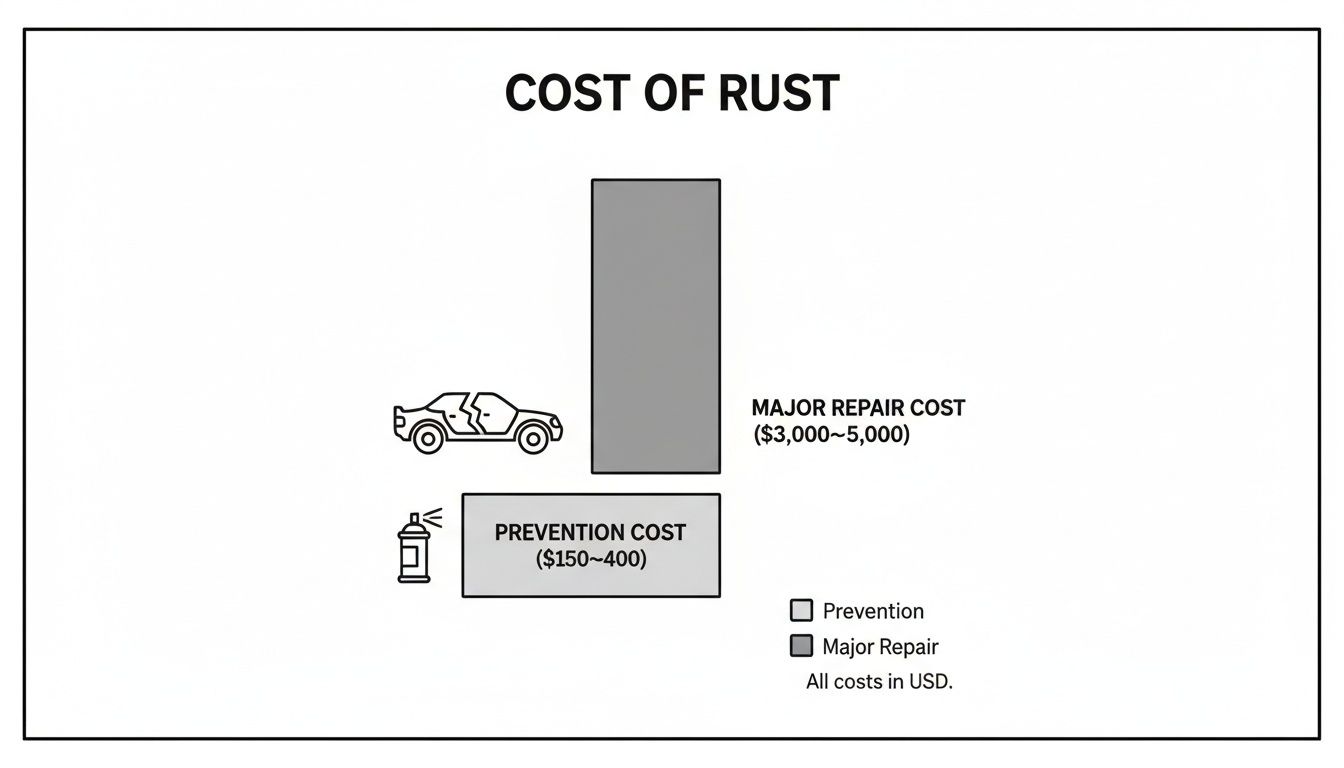
But what happens when that corrosion isn't just skin deep? Once it eats into structural components like your rocker panels, floor pans, or frame, the repair bill skyrockets. You could easily be looking at $3,000 to $5,000 to fix damage that was entirely preventable.
Prevention Investment vs. Repair Expense
When you put the numbers side-by-side, the choice becomes obvious. It’s the classic "pay a little now or a lot later" scenario. A small, planned expense for protection today saves you from a massive, unexpected bill tomorrow.
Think of it as routine maintenance versus emergency surgery for your vehicle. This table breaks down what you can expect to pay for preventative treatments versus common rust repairs in Ontario.
| Expense Type | Average Cost (2026) |
|---|---|
| Annual Oil Spray | $150 – $250 |
| Permanent Undercoating | $400 – $850+ |
| Minor Rust Spot Repair | $500 – $1,000 |
| Rocker Panel Replacement | $2,000 – $4,000 |
| Frame Repair (Major) | $3,000 – $5,000+ |
As you can see, the cost of just one major repair is often more than a decade’s worth of annual rust proofing.
The Real Value of Being Proactive
Ultimately, the money you spend on rust proofing buys you more than just a protective coating; it buys peace of mind. It’s the confidence that the corrosive salt and brine covering our roads aren't silently eating away at your car's frame, brake lines, and underbody.
Protecting your car now is the single best way to keep it safe, reliable, and valuable for many winters to come. If you're wondering which method is right for your vehicle, take a look at our guide on the best rust prevention for cars to explore your options.
Choosing Your Rust Protection Method
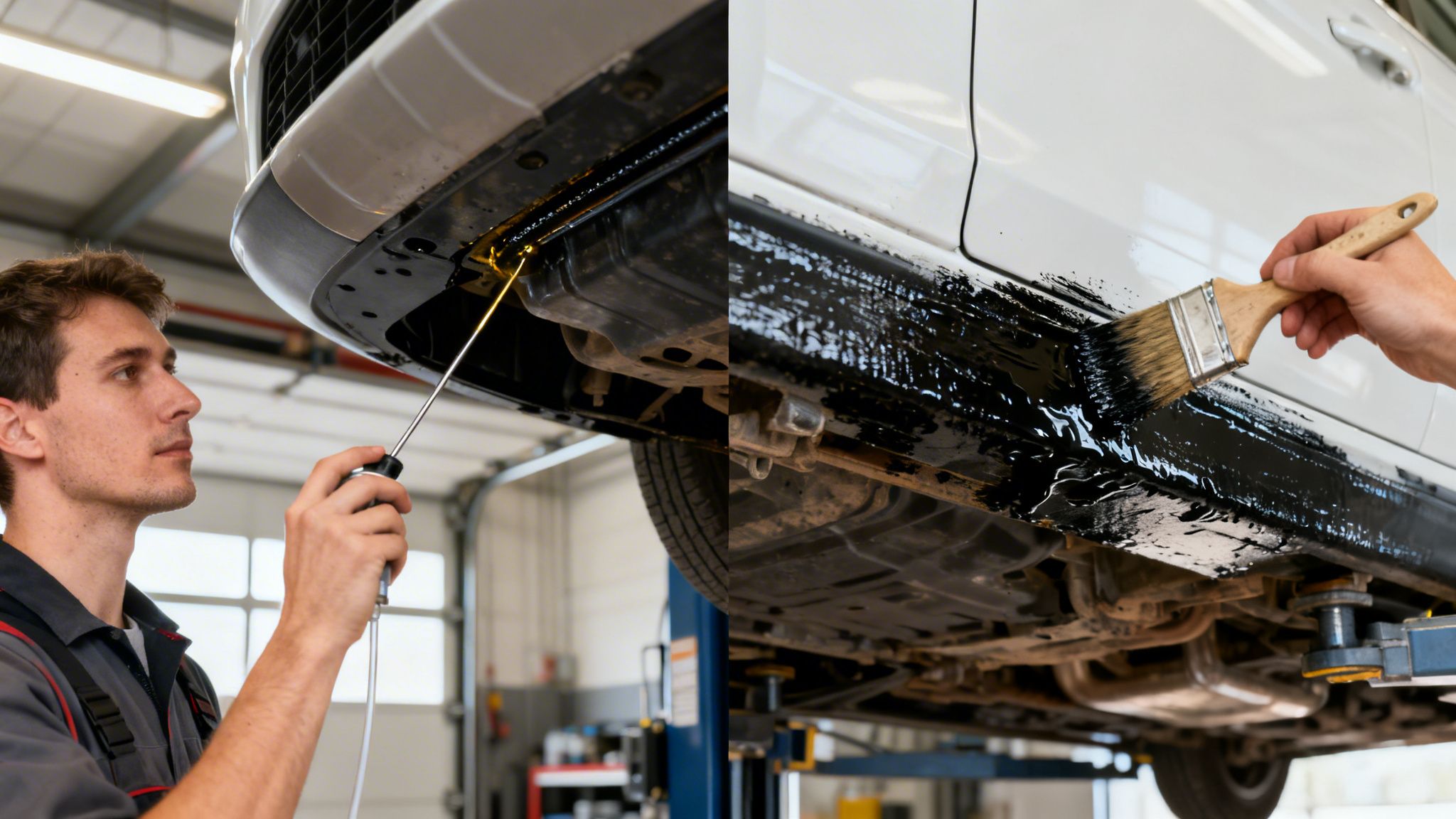
When it comes to rust proofing, there’s no single "best" answer for everyone. The right choice really comes down to your vehicle, your driving habits, and how long you plan to own it. It’s about picking the right kind of protection for your specific situation.
Let's walk through the most common options you'll find, so you can see which approach makes the most sense for you and your car.
Annual Oil-Based Sprays
Think of an annual oil spray as a preventative treatment that needs a yearly top-up. This process involves applying a light, see-through, non-drying oil across your vehicle's entire underbody. Critically, it also gets inside door panels, fenders, and other tight spots where salt-slush loves to sit. You’ve probably heard of brands like Krown or Rust Check that fall into this category.
The real magic of this method is its ability to "creep". The oil seeps into the tightest seams and welds, which are ground zero for rust. It pushes out any existing moisture and forms a self-healing barrier. Because it never fully dries, it can cover up minor nicks that happen from everyday driving.
- Pros: Gets into every nook and cranny, actively displaces water, and the yearly cost is usually more budget-friendly.
- Cons: It's an annual commitment. Skip a year, and your protection is compromised. It can also be a bit messy, with some dripping expected for a day or two after it's applied.
Permanent Tar-Based Undercoating
If an oil spray is an annual treatment, a permanent tar-based undercoating is more like a suit of armour for your car's underside. This involves spraying a thick, black, rubberized coating that hardens into a tough, permanent shield.
This creates a durable physical barrier that deflects rocks, salt, and gravel—all the things that chip away at factory paint and expose bare metal. For many drivers, it's a "one-and-done" solution that’s meant to last for years. For a closer look at the numbers, our guide on auto undercoating cost breaks it down even further.
A high-quality undercoating is designed to seal the underbody components from the elements. It provides a robust defence against the physical and chemical attacks your vehicle endures every winter in Ontario.
Electronic Rust Modules
Now, you might also hear about electronic rust modules. These are small devices wired into your car that pass a very weak electric current through the vehicle's frame. The theory is that this current disrupts the chemical reaction that causes rust.
While some dealerships swear by them, many independent corrosion experts are unconvinced. The technology was originally developed for massive steel structures constantly submerged in water, like ship hulls and bridges. There's still a lot of debate on whether they're truly effective in the open-air environment of a car's body.
What About Paint Protection Film or Powder Coating?
It's important not to mix up structural rust proofing with cosmetic protection. They serve two totally different functions.
- Paint Protection Film (PPF): This is a transparent, tough urethane film applied directly to your car’s paint—think hood, bumpers, and side mirrors. It’s fantastic for stopping rock chips and scratches from ruining your finish, but it does absolutely nothing to protect the underbody or frame from rust.
- Specialized Treatments: For certain parts, you can get even more targeted. Beyond standard rust proofing, options like powder coating for wheels or suspension components offer an incredibly durable, baked-on finish that provides an extra layer of defence against winter's worst.
Ultimately, your decision comes down to your goals. Are you after a deep-penetrating, annual treatment, or would you prefer a one-time, heavy-duty physical barrier? Understanding the pros and cons of each will help you protect your investment from the inevitable salt and slush of an Ontario winter.
What Really Determines Your Final Rust Proofing Cost
It’s easy to get confused when you see two different quotes for what seems like the same rust proofing job. Why does a compact sedan cost less than a full-size pickup? The truth is, several key factors influence the final price, and it goes way beyond just a quick spray.
Once you understand these variables, you can see exactly what you’re paying for. The goal isn't just to find the cheapest option; it’s about recognizing the value in a thorough, professional job. Let’s break down what actually goes into the final cost.
Vehicle Size and Complexity
This one is the most obvious. A bigger vehicle, like a Ford F-150 or a three-row SUV, simply has a lot more metal to cover than a small car like a Honda Civic. More surface area means more product and more time for the technician to do the work.
But it’s not just about sheer size—complexity plays a huge role, too. Some vehicles have intricate frame designs, lots of skid plates, or complex suspension systems that are tricky to work around. Technicians have to take their time to get into every hidden cavity and seam, which naturally adds to the labour cost. A simple, open undercarriage is always going to be quicker and easier to treat than one packed with components.
Type and Quality of Materials
Not all rust proofing products are the same, and this is a major driver of cost. A standard, basic drip oil spray is usually the most budget-friendly choice. It gets the job done but often needs to be reapplied more frequently and can leave a bit of a mess on your driveway.
Moving up the ladder, you’ll find premium drip-less oil formulas. These products are engineered to stick better, creep deep into seams, and, as you'd expect, drip a lot less after application. They offer longer-lasting protection but come at a higher price. At the very top are permanent, wax or tar-based undercoatings. These are the most expensive options but are designed to be a one-time application that creates a tough, physical barrier against the elements.
Think of it as a trade-off between your budget and your desire for long-term, hassle-free protection. A premium product costs more upfront but often delivers better performance and less maintenance down the road.
The Vehicle’s Current Condition
This might be the most overlooked factor of all: the state of your vehicle before any rust proofing is even applied. Is it a brand-new car right off the lot, or a five-year-old daily driver that’s already battled a few salty winters? The amount of prep work required can dramatically change the final bill.
A new vehicle with a clean underbody needs very little prep. A used vehicle, on the other hand, is a different story. It often needs significant work first:
- Thorough Cleaning: The entire underbody has to be degreased and pressure washed to get rid of dirt, grime, and road salt. You simply can’t apply a coating over top of contaminants.
- Rust Treatment: If there’s already surface rust, it has to be dealt with. This could mean wire brushing, grinding, or applying a rust converter to neutralize the corrosion before the new coating goes on. This is a crucial step—spraying over existing rust just traps moisture and lets the cancer spread underneath.
All this prep work is essential to make sure the rust proofing product sticks properly and does its job, but it adds labour hours and cost to the final invoice. You can get a head start on this by reading our complete guide on how to prevent rust on your car.
For a car owner here in Whitby with a daily-driver pickup, seeing these numbers makes the choice clearer. Across Ontario, an annual spray typically starts around $140-$160 for cars, moving up to $160-$180 for SUVs and $170-$200 for light-duty pickups. In contrast, a professional undercoating from a shop like Carmedics Autowerks might run from $250-$400 for an SUV—a solid investment when you consider the hit-or-miss coverage of a DIY kit. You can find more analysis on these price points from Toronto-area specialists who have looked into Krown rust proofing costs.
Calculating the True Return on Your Investment
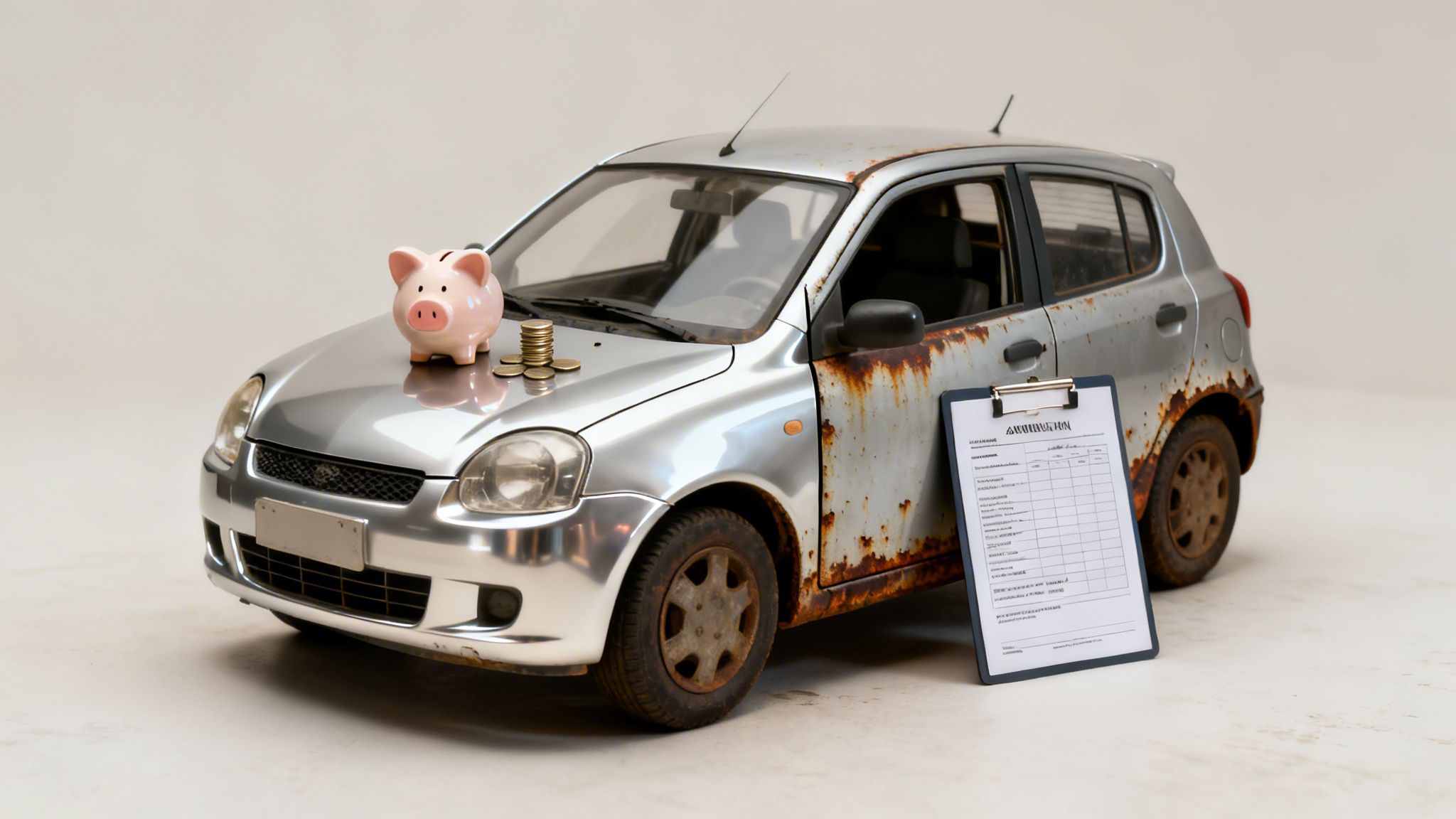
It's the question every car owner asks: is rust proofing actually worth the money? It’s easy to focus on the upfront cost, but the real value isn't just about preventing a few ugly orange spots. The payoff is long-term and financial.
Let’s reframe the conversation. Rust proofing isn't just another expense; it’s one of the smartest investments you can make for your vehicle. That return on investment (ROI) shows up in two critical ways: by protecting your car's future value and helping you dodge devastating repair bills. For anyone driving in a salt-heavy area like Whitby, this isn't a "nice-to-have"—it's an essential part of owning a vehicle.
Boosting Your Resale and Trade-In Value
Here in Ontario, a car’s underbody tells a story. When a potential buyer or a dealership appraiser looks underneath, a clean, solid frame speaks volumes. It’s a clear sign of a well-cared-for vehicle, free of the hidden, creeping decay that brings down the value of unprotected cars.
A rust-free vehicle will always command a higher resale value—often by thousands of dollars—than an identical model showing signs of corrosion. That difference alone can easily cover the entire cost of annual rust proofing treatments over the life of the car. When you go to sell or trade it in, you get that money right back.
Rust proofing is one of the very few maintenance services that directly and significantly increases what your vehicle is worth. It signals to the next owner that the car has been properly protected from our harsh winters, making it a much more valuable and desirable asset.
The Crippling Cost of Doing Nothing
The other side of the ROI coin is the cost of inaction. Ignoring rust doesn't make it go away. It just grows—silently, relentlessly, and exponentially. What starts as a tiny bubble on a rocker panel can spread to compromise critical components, leading to some truly eye-watering repair bills.
Let's look at the real-world financial damage rust can inflict. These aren't just cosmetic fixes; these are repairs needed to keep your vehicle safe and on the road.
- Rusted Brake Lines: All it takes is a tiny pinhole from corrosion to cause total brake failure. A full replacement of the lines can cost anywhere from $500 to $1,200.
- Corroded Fuel Tank: Rust can eat right through the tank or the straps holding it in place, creating a dangerous fuel leak. Swapping it out can run from $800 to $1,500, sometimes more.
- Damaged Rocker Panels and Floor Pans: These are magnets for rust and are part of your vehicle's structure. A proper repair means cutting out the rotted metal and welding in new pieces, a job that easily costs $2,000 to $4,000.
- Frame and Subframe Repair: This is the absolute worst-case scenario. If rust compromises the structural integrity of the frame, you're facing repairs that can top $5,000—if the vehicle isn't written off as unsafe to drive altogether.
The Clear Financial Math
So, let's put the numbers side-by-side. The total cost of an annual, high-quality rust proofing service over five years might add up to around $1,000. In stark contrast, a single major rust repair, like fixing those rocker panels, can cost four times that amount.
The math is simple but powerful. By investing a small, predictable amount each year, you protect yourself from massive, unexpected bills down the road. This preventative strategy also keeps your vehicle safer and significantly extends its usable life.
Of course, protecting the underbody is only half the battle. To learn how to safeguard your paint, check out the benefits of paint protection film cost in our detailed guide. In the end, professional rust proofing isn’t a cost—it’s one of the most effective insurance policies you can buy for your vehicle.
Finding a Trusted Rust Proofing Specialist
Picking the right rust proofing method is a great start, but it's the technician applying it who really makes or breaks the result. Think about it—the best products in the world are useless if they aren’t applied correctly. For anyone driving in Whitby, Ajax, or Oshawa, finding a reputable shop is the key to protecting your vehicle from the salt and slush of an Ontario winter.
A professional job is a world away from a quick, careless spray. It’s a meticulous process that takes experience, the right equipment, and a serious commitment to being thorough. The difference between a rushed job and a professional one can be the difference between years of protection and rust creeping back in, hidden right under a failed coating.
Questions to Ask Before You Commit
Before you hand over your keys, it's time to play detective. A good specialist will be upfront and happy to answer your questions. Here’s what you should be asking to make sure you’re getting the best service for your money.
- What is your application process? Get them to walk you through it, step by step. Do they actually clean the underbody first? Applying rust proofing to a dirty, salty surface is the number one reason these treatments fail. A top-notch shop will always start with a high-pressure wash to get rid of every bit of grime.
- Do you drill holes? This is a big one for oil sprays. To protect hidden areas like the inside of your doors, rocker panels, and frame rails, you need to get the product inside them. Good shops drill small, strategically placed holes to do this, then seal them properly with plugs. If a shop says they don't drill, ask exactly how they plan to protect those internal cavities.
- What specific products do you use? A true pro can tell you why they use a particular product, whether it’s a premium drip-less oil or a tough permanent undercoating. They should be able to explain how its specific properties will benefit your vehicle in our local climate.
- Do you offer a warranty or guarantee? Make sure you understand what's covered. Does it require an annual inspection or touch-up to remain valid? A solid guarantee is a great sign that the shop trusts its products and stands behind its own work.
A technician's willingness to talk you through their process is a huge green flag. They should be able to confidently explain every step, from prep to final inspection, without making you feel like you're being rushed.
Spotting a Quality Job
So, the work is done. How can you tell if you got what you paid for? You just need to know what to look for.
If you got an oil spray, you should see evidence of the product in places like the door jambs and under the hood. This shows the technician was thorough and treated those hard-to-reach spots.
For a permanent undercoating, the finish should look even and consistent. You shouldn't see any thin patches or messy overspray on your exhaust pipes or suspension parts. A clean, meticulous application is a clear sign the technician took their time. If you want more tips on overall vehicle maintenance, check out our guide on finding a great car mechanic.
Making the right choice now will save you from some serious headaches down the road and keep your vehicle protected for many seasons to come.
Common Questions About Rust Proofing Costs and Services
Even with all the options laid out, you probably still have a few questions swirling around. That's perfectly normal. When you're putting money into protecting your vehicle, you want to be sure you're making the right call. Let's clear up some of the most common things we get asked about rust proofing.
Does My New Car Need Rust Proofing?
This is the big one we hear all the time. The short answer is a definite yes, especially if you're driving in a place like Whitby where road salt is practically part of the pavement for half the year.
New cars do come with some basic protection from the factory, but it’s just that—basic. Think of it as a starting point. Those factory coatings are usually thin and can easily get chipped by gravel and road debris, leaving the metal underneath completely exposed.
A good way to look at it is that the factory coating is like a thin, disposable poncho. A professional rust proofing job, on the other hand, is like a full set of heavy-duty, industrial-grade rain gear. Applying a quality coating to a brand-new vehicle is the single best thing you can do to protect its frame and lock in its future resale value. It's always easier, cheaper, and more effective to prevent rust before it even has a chance to start.
How Often Should I Get My Car Rust Proofed?
How often you'll need to reapply protection really comes down to which method you choose. There's no single schedule that fits every car or product, so knowing your specific treatment is key.
Here’s a quick guide:
- Annual Oil-Based Sprays: These dripless oil sprays are designed to be a yearly service. The oil is fantastic at creeping into hidden seams and joints, but it does wear off over 12 months. An annual visit is crucial to keep that protective barrier intact without any gaps.
- Permanent Undercoatings: A quality wax or tar-based undercoating is usually a one-time application meant to last for years. That said, we still recommend having it inspected every couple of years. We can check for any chips from rocks or road debris and do a quick touch-up to ensure the seal isn't compromised.
Can You Rust Proof a Car That Already Has Some Rust?
Absolutely. In fact, you should. The moment you spot rust, that's your cue to get it treated before it spreads and turns into a serious, costly structural issue.
A professional shop won't just spray a new coating over the top of existing rust—that's the worst thing you can do. It just traps moisture against the metal and makes the problem accelerate.
Instead, the proper approach is a careful, multi-step process. A technician will first get the vehicle on a hoist, clean the underbody, and use wire wheels or grinders to remove all the loose, flaky rust. Sometimes, they'll apply a rust converter that chemically stops the corrosion process. Only after the area is properly prepped and neutralized will they apply the new protective coating. This process stops the existing rust cold and seals the metal off from future salt and water exposure.
While we're focused on your vehicle's health, rust can be an issue elsewhere. If you have rust stains on your driveway or concrete from your car, you may need professional rust stain removal services to get things looking new again.
At Carmedics Autowerks, we’re passionate about protecting your vehicle from the harsh realities of Ontario driving. Contact us today for a personalized quote and let's find the perfect rust proofing solution for you at https://www.carmedicsautowerks.com.