


Dealing with bubbling, peeling, or downright illegal window tint is a common headache for car owners. The good news? Removing tinted window film from a car is a totally doable DIY project if you have a bit of patience.
The whole process boils down to three trusted methods: using a fabric steamer, a heat gun, or an ammonia-soak. Each one is designed to loosen the tint's adhesive, letting you peel away the old film without wrecking your car's glass.
Your Roadmap to DIY Tint Removal
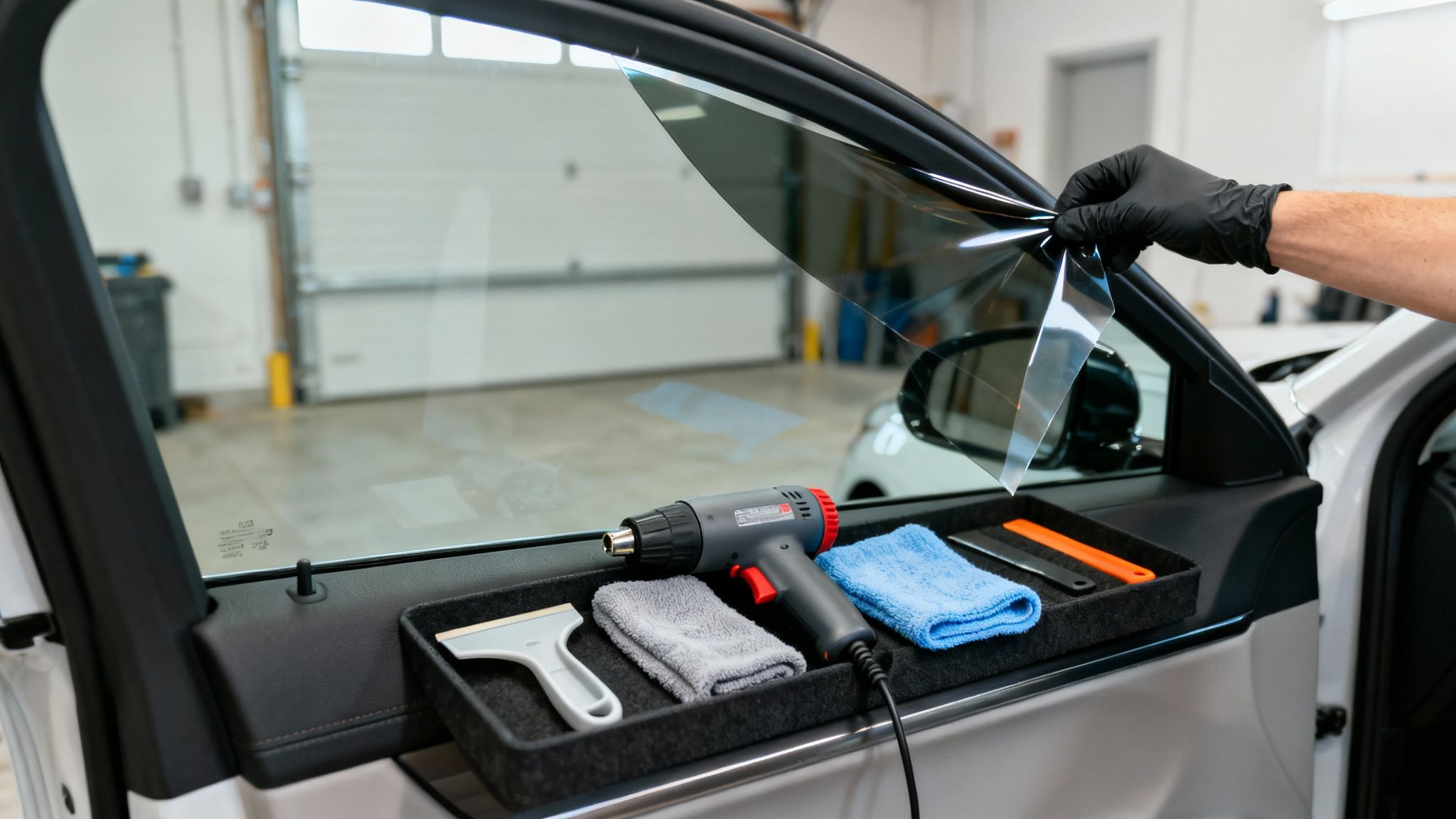
When your car’s window tint starts turning that awful shade of purple, bubbling up, or peeling away at the edges, it’s more than just ugly. It can obstruct your view and even get you a ticket. It might seem like a job strictly for the pros, but trust me, with the right tools and a solid game plan, you can tackle this yourself.
This guide is your project roadmap. We'll walk through the three main methods that DIYers swear by. Each one uses a different approach to break down that stubborn adhesive holding the film to the glass. The best one for you will really depend on what tools you have on hand and how old and baked-on that tint is.
Choosing Your Removal Method
Before you start peeling, you need to understand the pros and cons of each technique. Some are quick but carry a bit of risk, while others are slower but much safer—especially when you're working around the delicate defroster lines on a rear windshield.
Here’s the breakdown of your options:
-
The Steam Method: I usually recommend this one first. It’s widely seen as the safest and most effective way to go. A simple fabric steamer gently heats both the film and the glue, often letting the tint come off in one satisfying piece with very little sticky residue left behind.
-
The Heat Gun Method: This is the faster, more aggressive cousin to the steamer. A heat gun works wonders at loosening the adhesive, but you have to be careful. Keep that gun moving constantly. If you hold it in one spot for too long, you risk overheating and cracking the glass.
-
The Ammonia-Soak Method: This is an old-school trick that still works surprisingly well. It uses basic household ammonia and the sun's natural heat to chemically break down the adhesive. It’s effective, but you absolutely need good ventilation and must protect your car's interior from the strong fumes.
A Word of Advice: The single biggest factor in how easy or hard this job will be is the tint itself. Newer, high-quality films usually peel off cleanly. Old, cheap, or sun-blasted tint, on the other hand, can get incredibly brittle and break into a million tiny, frustrating pieces.
Comparing Window Tint Removal Methods
To help you choose the right path for your project, here’s a quick side-by-side look at the three main approaches.
| Method | Effectiveness | Difficulty Level | Key Tools |
|---|---|---|---|
| Steam Method | Very High | Beginner-Friendly | Fabric Steamer, Plastic Scraper |
| Heat Gun Method | High | Intermediate | Heat Gun, Plastic Scraper |
| Ammonia-Soak Method | Moderate-High | Intermediate | Ammonia, Spray Bottle, Plastic Wrap |
Ultimately, picking your method is about balancing speed, safety, and the tools you have available. For most people, especially first-timers, the steam method is the most foolproof way to get great results.
So, Why and When Should You Remove Your Window Tint?
Let's be honest, deciding to strip the tint off your car's windows usually comes down to a few key reasons. While sometimes it's just about changing up the look, more often than not, it's because the tint is failing, it's become a safety issue, or you've run into legal trouble.
The most in-your-face sign is when the tint just looks awful. You know the look—that once-sleek dark film has faded to a sad, blotchy purple. Or maybe it’s covered in bubbles that make your rear window look like a failed science project. When you see that, it’s a clear signal the film's dyes have broken down from years of sun exposure. It’s not just ugly; it means the tint has stopped doing its job of blocking UV rays and rejecting heat.
Other dead giveaways are peeling edges, cracking, or hazy spots that just won't clean off. These are all signs the adhesive is giving up and the film has gotten brittle. More importantly, these imperfections can seriously mess with your visibility, which is a real safety hazard, especially when you're driving at night or in bad weather.
The Law Can Make the Decision for You
Sometimes, you don't get a choice. Local law enforcement might make the decision for you. Window tinting laws vary wildly depending on where you live, and they all have strict rules about Visible Light Transmission (VLT)—basically, how much light is legally required to pass through your windows.
If your tint is darker than what's allowed, you could be looking at some pretty steep fines or a "fix-it ticket" that legally forces you to remove the problem film. This is a super common reason people find themselves needing to tackle this project, especially if they've recently moved to a place with tougher regulations. To stay on the right side of the law, it’s a good idea to check out a detailed breakdown of local window tinting laws.
- Failed Safety Inspections: In many places, your car won't pass its safety inspection if the tint is too dark. No pass, no registration.
- Poor Visibility: Cops are serious about driver visibility. If your front-side windows are too dark, it's harder to spot pedestrians or other cars in low light.
- Officer Safety: During a traffic stop, officers need to be able to see inside the vehicle. A tint that's too dark is often ticketed for this reason alone.
How Tint Breaks Down Over Time
The need for removal is also tied directly to the age and quality of the film itself. Tint technology has come a long way, and older films were notorious for failing fast. That's why you see so many cars from the '80s and '90s driving around with those hideous purple, bubbling windows.
The whole window tinting game really started back in 1966 with simple dye-based films that just absorbed heat. These early versions fell apart quickly, turning purple and bubbling up in just a few months. Early adopters were stuck in a constant cycle of removing and replacing their tint. Things got better by the 1990s with hybrid metallic-dye films that were more durable, but even they couldn't last forever.
Today, we're working with much better materials. Modern films are typically made from a stable polymer called polyethylene terephthalate (PET), which gives them incredible longevity, clarity, and strength. While even the best modern tints will eventually wear out, they last a whole lot longer, and the process for removing the tinted window film from a car is usually much less of a headache than scraping off the flaky, brittle messes of the past.
When you spot these signs of failure—whether it’s the dreaded purple haze, bubbling, peeling, or a ticket from the police—you know it's time to take action. This turns the job from a simple cosmetic upgrade into something you have to do for safety, legality, and getting your car's clean look back.
Getting Your Tint Removal Toolkit Ready
Before you even touch that peeling corner of window tint, let’s talk about getting prepared. Trust me, trying to tackle this job without the right gear is a one-way ticket to a frustrating afternoon, scratched glass, and a sticky mess that will make you want to give up. A little bit of prep work makes all the difference.
Think of it like a pro chef getting their mise en place ready before they start cooking. Having everything you need laid out and within reach means you can focus on the job at hand instead of running to the auto parts store halfway through. What you’ll need depends on the method you choose, but a few items are absolutely essential for a clean result.
Core Supplies For Any Method
Whether you're going with steam, a heat gun, or the ammonia-and-sunshine trick, you'll need these basics for the scraping and final cleanup. These are your non-negotiables.
-
Plastic Razor Blades: This is probably the single most important tool you'll have. A metal blade will leave permanent scratches on your glass and can instantly slice through the delicate defroster lines on your rear window—a very expensive mistake. Plastic blades are tough enough to scrape away film and gunk but won't damage the glass.
-
A Good Spray Bottle: You'll be using this constantly to apply soapy water or an adhesive remover. A decent one that gives you a nice, even mist is a lifesaver for keeping the glass lubricated while you work.
-
Lots of Microfibre Towels: Don't skimp here. Grab a big stack of clean microfibre towels. You’ll need them for wiping up residue, cleaning the glass as you go, and getting that final streak-free shine.
-
Protective Gear: Safety first, always. A pair of gloves is a must to protect your hands from hot steam or chemicals. And safety glasses are a no-brainer to keep any splashes out of your eyes.
Before we dive into the nitty-gritty of each removal method, let's lay out everything you might need. Having a checklist ensures you won't get stuck mid-job.
Essential Tint Removal Supplies Checklist
| Item | Purpose | Required For Which Method? |
|---|---|---|
| Plastic Razor Blades | Safely scraping film and adhesive without scratching glass. | All Methods |
| Spray Bottle | Applying soapy water or cleaning solutions. | All Methods |
| Microfibre Towels | Cleaning, wiping residue, and drying glass. | All Methods |
| Gloves & Safety Glasses | Protecting hands and eyes from heat and chemicals. | All Methods |
| Fabric/Garment Steamer | Gently heats and loosens film and adhesive. | Steam Method |
| Heat Gun | Provides intense heat to soften adhesive. (Use with care!) | Heat & Peel Method |
| Black Trash Bags | Traps heat and moisture to soften adhesive. | Ammonia/Soak Method |
| Ammonia | Chemical agent that breaks down tint adhesive. | Ammonia/Soak Method |
| Adhesive Remover | Dissolves stubborn leftover glue residue. | Cleanup (All Methods) |
| Isopropyl Alcohol (70%) | Cuts through sticky residue for final cleaning. | Cleanup (All Methods) |
| Dish Soap | Mixed with water for a lubricating and cleaning solution. | All Methods |
| Painter's Tape | Protects interior trim, upholstery, and electronics. | All Methods |
Having these items on hand turns a potentially messy chore into a straightforward, manageable project.
Method-Specific Equipment
Okay, now for the heavy hitters. The main tool you choose will define your approach. You'll need one of these to really break down the bond between the tint and the glass.
For the Steam Method:
A simple fabric steamer or garment steamer is your best friend here. The hot steam is fantastic at gently loosening both the film and the glue at the same time. It’s a favourite among pros and DIYers for a reason—it’s effective and very forgiving.
For the Heat Gun Method:
You'll need a heat gun, but a word of caution: this tool gets hot. While it works fast, you need a steady hand and must keep the gun moving. If you let it linger in one spot for too long, you risk cracking the glass.
Pro Tip: If you're new to this, go with the steamer. It's much safer and more forgiving. A heat gun is faster, but it's really for those who are comfortable with the risk and know how to handle the tool properly.
The Cleanup Crew: Solvents and Adhesives
Peeling the film off is really only half the job. That sticky, stubborn adhesive left behind is the real final boss.
Here’s what you need to win that fight:
- Commercial Adhesive Remover: Products like Goo Gone or 3M Adhesive Remover are made for this exact job and work wonders on stubborn glue.
- Isopropyl Alcohol (Rubbing Alcohol): This is a great, easy-to-find alternative. A 70% isopropyl alcohol solution is usually all you need to cut through the gunk.
- Soapy Water: A simple mix of dish soap and warm water in your spray bottle is perfect for the initial cleanup and for keeping the glass slick while you scrape.
Getting all your gear together beforehand is the key to removing tinted window film from a car without losing your mind. The right tools not only make the job easier but, more importantly, they protect your vehicle from damage. And as you get ready, you might be thinking about what’s next. If you're planning on re-tinting, it pays to know what your options are. You can learn more about if ceramic tint is worth it for your car and local climate.
Alright, with your gear sorted and your car prepped, it's time to actually get that old tint off. This is where a little bit of patience goes a long way. We're going to dive into the three most common DIY methods that actually work.
The real goal here isn't just to tear the film off. It's about doing it cleanly to minimize that sticky mess of adhesive left behind and, crucially, to keep your glass and those delicate rear defroster lines safe.
This process breaks down into three core phases, no matter which technique you end up using.
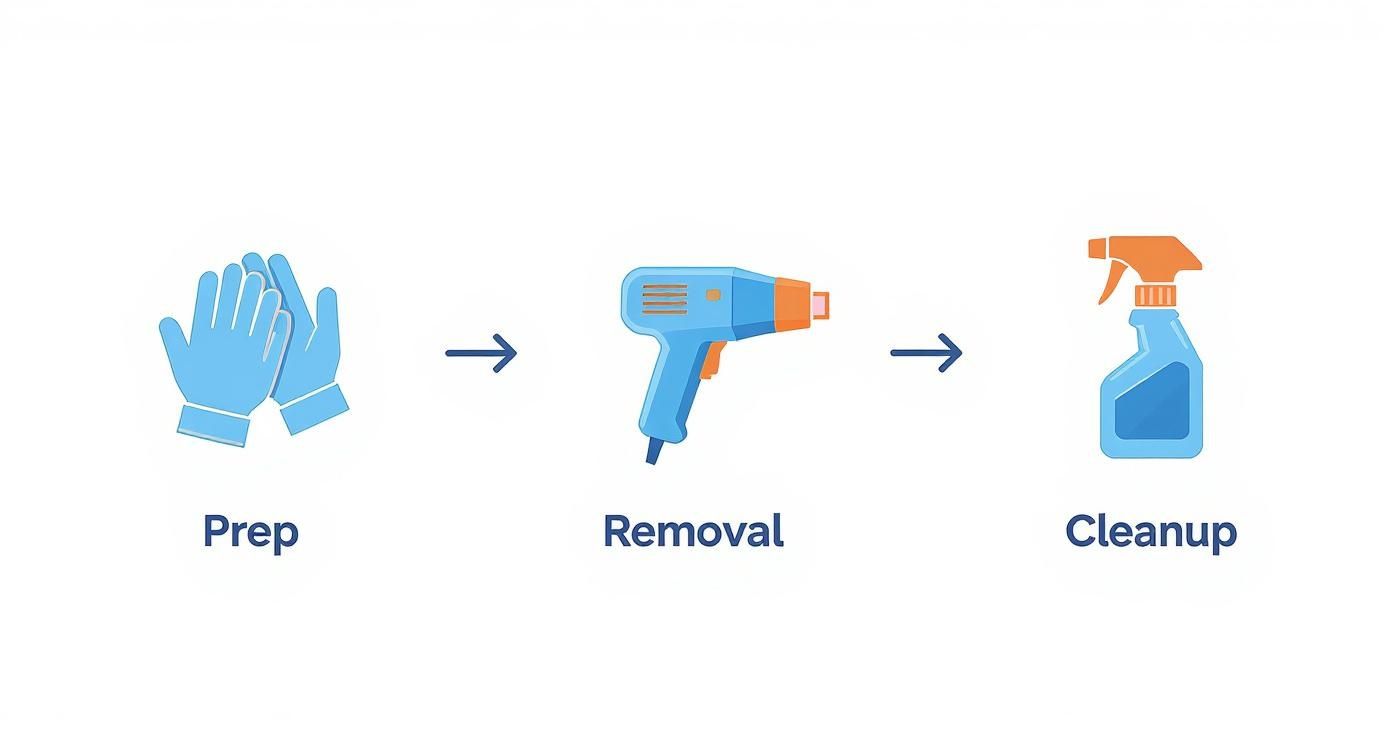
From getting ready to the final wipe-down, these are the fundamental stages you'll work through.
The Steam Method: The Safest Bet
Honestly, for most people, this is the one I recommend. The steam method is the gold standard for a reason—it’s gentle, incredibly effective, and the most forgiving if you're new to this. A simple fabric steamer pushes hot, moist air into the film, loosening both the tint and the adhesive at the same time. Done right, the film often comes off in one big, satisfying piece.
Get your steamer filled with distilled water and let it get up to temperature. Once you have a good, steady cloud of steam, hold the nozzle just a couple of centimetres away from the glass. I always start at a top corner and work my way across the window in slow, even passes. You want to heat the entire surface thoroughly.
You'll see the edges of the film start to curl or lift ever so slightly. That's your signal. Use a fingernail or a plastic razor blade to carefully pick at that corner. Once you get a good grip, start pulling the film downward, slow and steady. As you peel, keep applying steam just ahead of where you're pulling to keep that adhesive nice and soft.
Real-World Tip: Don't get impatient and start yanking. If you feel a lot of resistance or hear that awful tearing sound, just stop. Hit that stubborn spot with more steam for another 30 seconds and then try again. Patience is what separates a clean peel from a frustrating mess of tiny film scraps.
The Heat Gun Method: For Faster Results
If you're pressed for time and have a steady hand, a heat gun can speed things up considerably. The principle is the same—heat softens the adhesive—but a heat gun brings intense, dry heat to the party. This means it's faster, but it also carries a higher risk of damaging your glass if you aren't careful.
Always start your heat gun on its lowest setting. Just like with the steamer, hold it several centimetres from the glass and never stop moving. Use a constant, sweeping motion. If you let the heat gun linger in one spot, you risk creating a hot spot that can cause thermal shock and crack the glass. That's a mistake you can't undo.
Concentrate the heat on a corner until you can get a plastic blade under it. As you peel, aim the heat right at the line where the film is separating from the glass. This targets the adhesive right where it matters, making for a much smoother release.
- Keep It Moving: Always sweep the heat gun across the glass to distribute heat evenly.
- Work in Sections: Don't try to cook the whole window at once. Focus on one area at a time for better control.
- Listen: If you hear any weird popping or ticking sounds from the glass, stop immediately. Let the window cool down completely before you even think about touching it again.
This method takes a bit more feel, but once you get the rhythm down, you can strip a window in no time.
The Ammonia Soak Method: The Classic Approach
This is an old-school trick, but it's surprisingly effective, especially on a hot, sunny day. It uses a chemical reaction between the ammonia and the sun's heat to absolutely destroy the tint's adhesive. The trade-off is that you need great ventilation and have to be meticulous about protecting your car's interior.
First, cut two black bin bags to the rough shape of your window. Spray the outside of the window with soapy water and slap one of the bags on—the water will make it stick. This bag is going to act like a little solar oven.
Now, move inside. Cover every surface—dashboard, door panels, speakers, seats—with towels or plastic. Ammonia fumes can discolour and damage upholstery and plastics. Put on your gloves and safety glasses, then generously spray the inside of the window tint with your ammonia solution. Get it good and soaked.
While it's still wet, press the second bin bag against the inside of the glass, smoothing out any air bubbles. This traps the ammonia right up against the film. Park the car in direct sunlight and walk away for at least an hour. The sun will heat up the window, causing the ammonia to create a gas that eats away at the glue.
After an hour or so, you can peel back the interior bag. The tint film should be soft and almost ready to fall off. It will often peel away in a single sheet. Have your plastic blade handy for any stubborn edges. Because this method is so good at dissolving the adhesive, you'll find there's way less sticky residue to clean up afterwards, which makes removing tinted window film from a car a much less painful job in the final stages.
Conquering Stubborn Adhesive and Residue
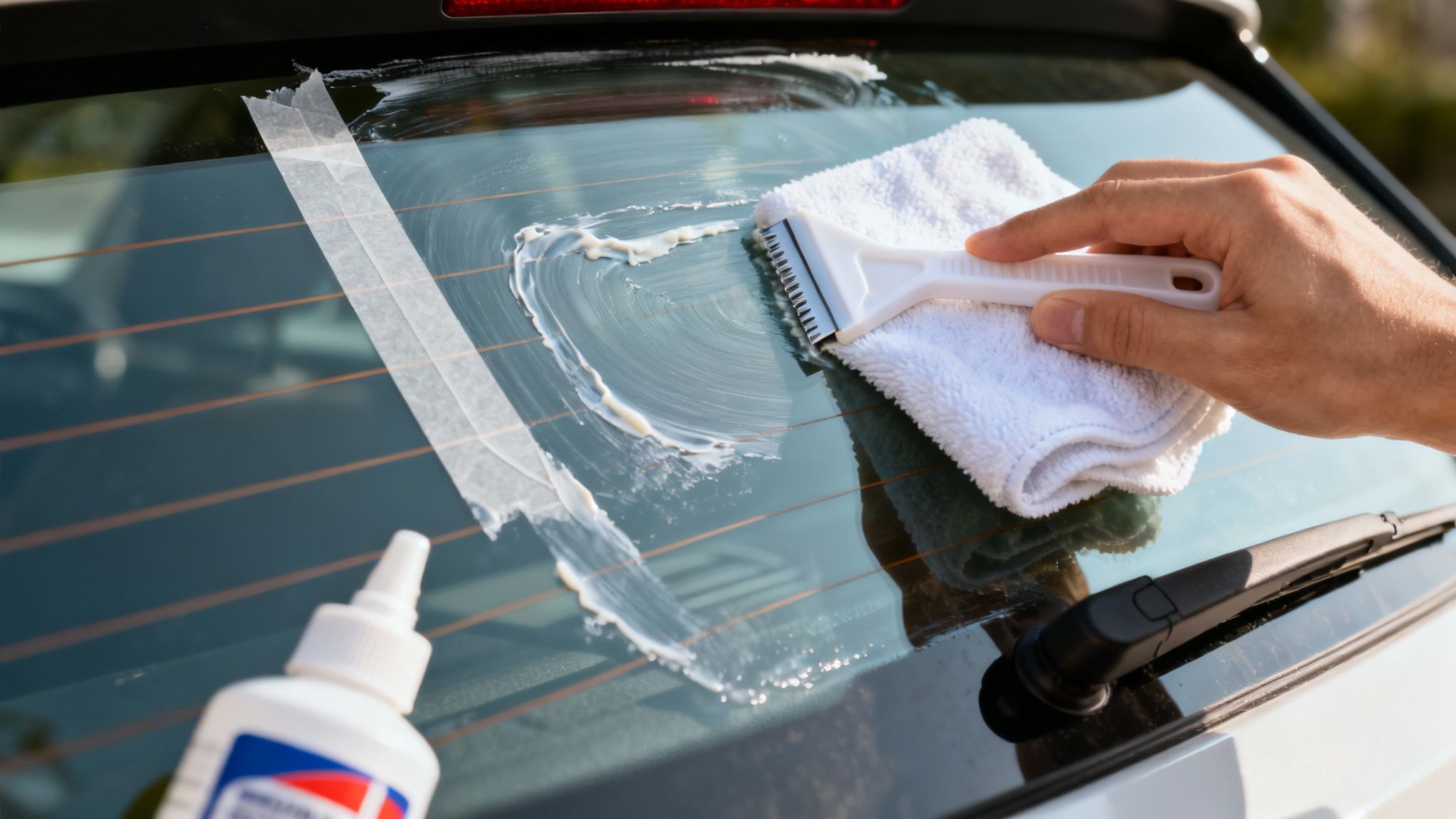
It’s a great feeling when that old tint film finally peels off, but hold the celebration. The job is only half done. Now you’re faced with what’s often the most tedious part of the entire project: a sticky, hazy layer of leftover adhesive.
This is where patience really pays off. Getting this final cleanup right is the difference between a shoddy job and a perfect, factory-fresh finish. If you try to just muscle through it, you’ll end up with a smeared mess that’s even tougher to get clean. The trick is to let your cleaning solution do the hard work for you.
Choosing Your Adhesive-Fighting Weapon
You've got a few solid options for dissolving that glue, from purpose-built commercial products to things you might already have under the sink. What you choose really just depends on how much gunk you're up against.
Here are my go-to solutions for tackling tint residue:
- Commercial Adhesive Removers: You can't go wrong with products like Goo Gone or a 3M specialty adhesive remover. They’re designed for exactly this kind of job and are great at breaking down stubborn glue safely.
- Isopropyl (Rubbing) Alcohol: A simple 70% solution of isopropyl alcohol is a fantastic solvent. It’s cheap, cuts through the goo quickly, and evaporates without leaving streaks.
- Soapy Water and Elbow Grease: For a lighter film of residue, a good mix of warm water and dish soap can work wonders. It takes a bit more scraping, but it's the most gentle method out there.
Expert Insight: Whichever cleaner you pick, don't be stingy with it. The secret is to keep the glass saturated. A wet surface not only helps dissolve the adhesive but also provides the lubrication you need to avoid scratching the glass with your blade.
The Technique for a Flawless Finish
Once you have your cleaner ready, the process is pretty straightforward. Start by generously spraying a small, manageable section of the window. Now, just let it sit for a few minutes. This dwell time is critical—it gives the solution a chance to really penetrate and soften up the glue.
Grab your plastic razor blade and hold it at a low angle, somewhere between 30 and 45 degrees to the glass. Apply firm, even pressure and scrape the gunk away in smooth strokes. You’ll see it start to clump up. Keep a microfibre towel handy to wipe the residue off both your blade and the glass as you go, otherwise, you'll just be spreading the mess around.
Work methodically in small sections, re-spraying any spots that start to dry out. This systematic approach is the best way to make sure you don't miss anything and prevent the dissolved glue from re-sticking elsewhere.
Tackling Extra-Tough Spots
You’re almost guaranteed to hit a few patches where the adhesive seems baked on, especially with older tint. Don't panic. Just hit these stubborn spots with a second application of your cleaning solution and give it even more time to soak—maybe 5 to 10 minutes. Then, go back to scraping gently.
If you're dealing with all sorts of challenging projects, understanding some broad strategies for removing various stubborn coatings from glass can be a real game-changer for any DIYer.
For that final, crystal-clear finish, grab a clean microfibre cloth, give it a light spritz of glass cleaner or more isopropyl alcohol, and give the window one last wipe-down. This last pass gets rid of any remaining oily film or streaks, leaving your glass looking brand new. Don't skip this—it's the most important part of removing tinted window film from a car like a pro.
Knowing When to Call a Professional

While tackling a car project yourself can be rewarding, window tint removal is one of those jobs where a little DIY enthusiasm can quickly turn into a world of frustration. Knowing when to put down the tools and call an expert can save you a ton of time, a major headache, and potentially a lot of money.
Some tint jobs are just not meant for a DIY approach. The biggest warning sign? The tint is ancient, super cheap, or has been baked by the sun for years. This kind of film gets incredibly brittle. Instead of peeling off in a satisfying sheet, it shatters into a million tiny, stubborn flakes. A two-hour project can easily become a weekend-long nightmare spent scraping away microscopic specks of film.
The Rear Window Risk Factor
If there's one area where a DIY job can go south fast, it's the rear window. See those delicate orange or brown lines on the glass? That's your defroster grid, and it is notoriously fragile. One slip of a scraper—even a plastic one with too much force behind it—can slice right through a line. Once that connection is broken, that's it; your defroster is permanently out of commission on that line.
A pro has the right non-metallic tools and, more importantly, the practiced touch to work around these delicate grids without causing any damage. When you think about it, the cost of professional removal is a small price to pay compared to replacing an entire rear windshield. For the rear window alone, calling in an expert is often the smartest financial move.
Key Takeaway: Old, flaky tint on a rear window massively increases the risk of destroying the defroster grid. A professional service like Carmedics Autowerks can guarantee a damage-free result, protecting an expensive and crucial component of your vehicle.
When You're Up Against the Law
Sometimes you’re not removing tint because you want to, but because you have to. Many regions have strict laws about how dark your windows can be, and ensuring your vehicle is compliant is essential to avoid tickets.
California, for example, has some of the toughest regulations in the country. The state's vehicle code mandates that front side windows allow at least 70% visible light transmission (VLT), making many aftermarket tints illegal from the get-go. If you get a "fix-it ticket," you'll need to prove the tint has been properly removed, and a receipt from a professional shop is often the best way to do that. You can get a better sense of California's strict tinting rules from this detailed guide by Prestige Legal.
The Professional Advantage
Let's be realistic: an experienced technician can strip the tint from an entire car in a fraction of the time it takes the average person. They’re not just faster; they have commercial-grade steamers and specialized solvents that dissolve stubborn adhesive much more effectively than anything you can buy off the shelf.
Once you add up the cost of tools and supplies, the value of your own time, and the very real risk of making a costly mistake, hiring a pro starts to look like a bargain. If you're after a guaranteed perfect, residue-free finish without the hassle, looking into the best auto tinting services near you is a wise move. A professional ensures the job is done right the first time, leaving you with nothing but crystal-clear glass.
Common Questions About Removing Window Tint
Even with the best plan, you're bound to have questions once you start peeling back old window film. Let's get into some of the most common things people ask, so you can tackle this project with confidence.
Can I Damage My Rear Defroster Lines?
Absolutely, and this is the single biggest risk of the whole job. Those thin orange or brown lines on your rear glass are incredibly fragile. It doesn't take much to sever one.
The golden rule here is to never, ever use a metal razor blade or any sharp metal tool on the inside of that rear window. Stick with a plastic scraper and apply gentle, steady pressure. If you hit a stubborn patch of adhesive, don't force it. Just re-apply your removal solution, give it more time to soften up, and try again. Patience is far cheaper than replacing a defroster grid.
How Long Does This Actually Take?
If this is your first time, be realistic and block out a good chunk of your afternoon. For a typical sedan, expect to spend anywhere from 2 to 4 hours. The biggest factor by far is the age and quality of the tint you're removing.
Newer, well-made film might come off in a few large, satisfying sheets. But old, cheap tint that's been baked by the sun for years? That stuff can turn into a nightmare, flaking off in a million tiny pieces and significantly adding to your cleanup time. The rear window will almost always be the part that eats up the most time, simply because you have to work so carefully around those defroster lines.
What's the Easiest Method for a First-Timer?
Hands down, the fabric steamer method is the way to go for beginners. It's the safest option for your glass and does a fantastic job of loosening both the film and the sticky glue underneath at the same time. This means less scraping, which directly translates to a lower chance of scratching your glass or damaging that delicate defroster.
When you need a guaranteed perfect, damage-free result, the professional team at Carmedics Autowerks has the expertise to handle any tint removal or installation. Contact us for a professional consultation.