

So, how long does that invisible shield on your car actually last?
If you get a high-quality Paint Protection Film installed by a pro, you can realistically expect it to last anywhere from 7 to 10 years. Think of that as a solid ballpark figure. The final number really comes down to the quality of the film you choose, the climate where you drive, and how you look after it.
Understanding the True Lifespan of PPF
When you invest in PPF, you're buying peace of mind—an invisible suit of armour for your car's paint. But not all armour is made the same. The market is full of different grades of film, and what you pick has a direct impact on how long that protection will hold up.
It’s a bit like buying a phone case. A cheap, basic case might do the job for a little while, but it'll probably start to crack and look worn out pretty quickly. A premium, shock-absorbent case, on the other hand, is built to go the distance. The same logic applies directly to PPF.
Breaking Down Lifespan by Quality
To get a clearer picture, let's break the films down into three general tiers. The budget-friendly options can be tempting upfront, but they often come with shorter warranties and are more likely to yellow or peel after just a few years. In contrast, standard and premium films are made with more advanced materials and adhesives, giving you better clarity, self-healing capabilities, and much more staying power.
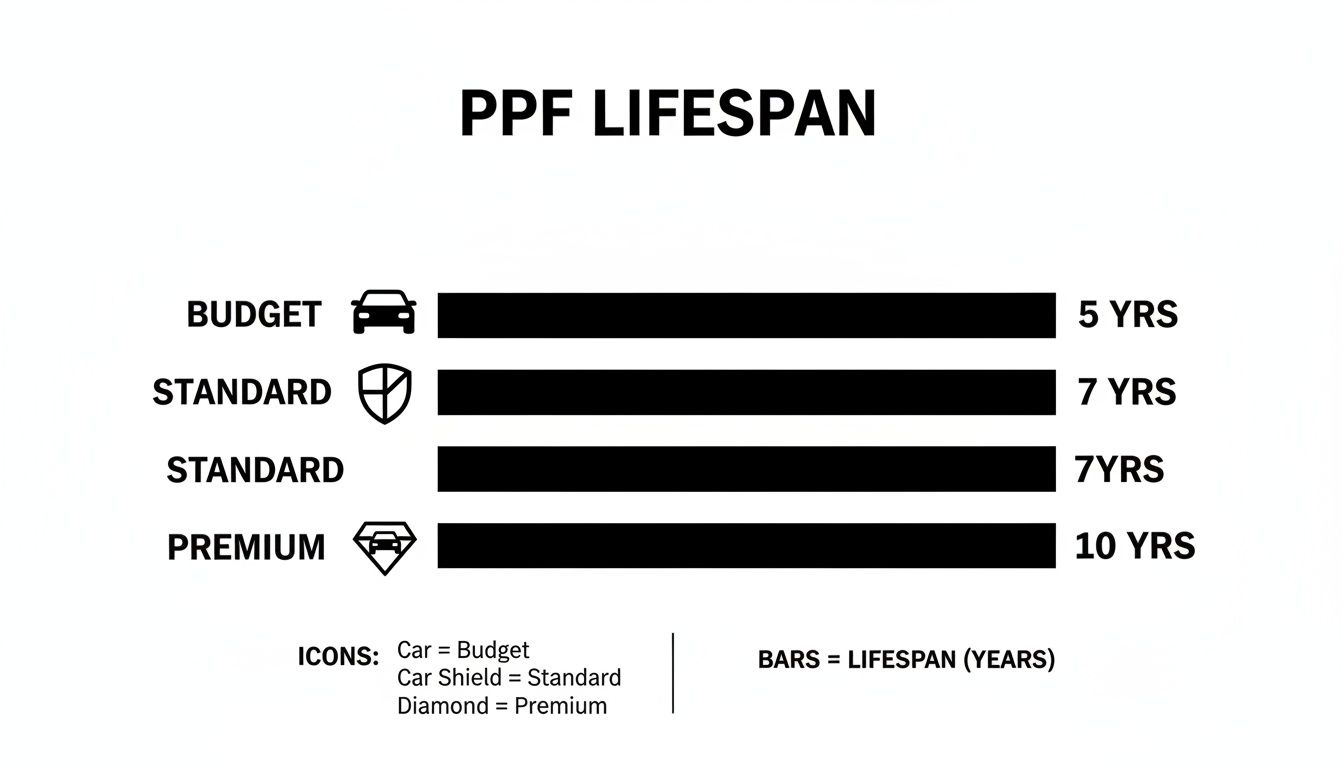
As you can see, spending a bit more on a higher-tier film really does pay off in the long run with years of extra, worry-free protection.
To make this even simpler, here’s a quick breakdown of what you can expect from each quality tier, assuming proper care.
PPF Lifespan at a Glance
| Film Quality Tier | Typical Warranty | Expected Real-World Lifespan |
|---|---|---|
| Budget/Entry-Level | 3–5 Years | 4–6 Years |
| Standard/Mid-Grade | 7–10 Years | 7–9 Years |
| Premium/Top-Tier | 10–12 Years | 10+ Years |
These numbers show a clear link: a better warranty from the manufacturer almost always means a longer, more reliable lifespan for the film on your vehicle.
What the Warranty Tells You
A manufacturer's warranty is one of your best clues to a film's quality and durability. Top-tier brands like XPEL or 3M often back their products with a 10-year warranty. This isn't just a marketing gimmick; it's a promise that the film will stand up to the elements without failing.
This coverage is designed to protect you against specific defects that can cut a film's life short, such as:
- Yellowing: A common issue with lower-quality films as UV rays break down the materials.
- Bubbling: Usually points to a failure in the adhesive or a mistake during installation.
- Cracking or Peeling: This happens when the film gets old and brittle, losing its flexibility.
A strong warranty is the manufacturer's way of saying, "We stand behind our product." It signals that the film has been rigorously tested to endure years of sun, rain, and road debris. It’s your most reliable benchmark for how long your PPF should perform as promised.
What Is Paint Protection Film Anyway?
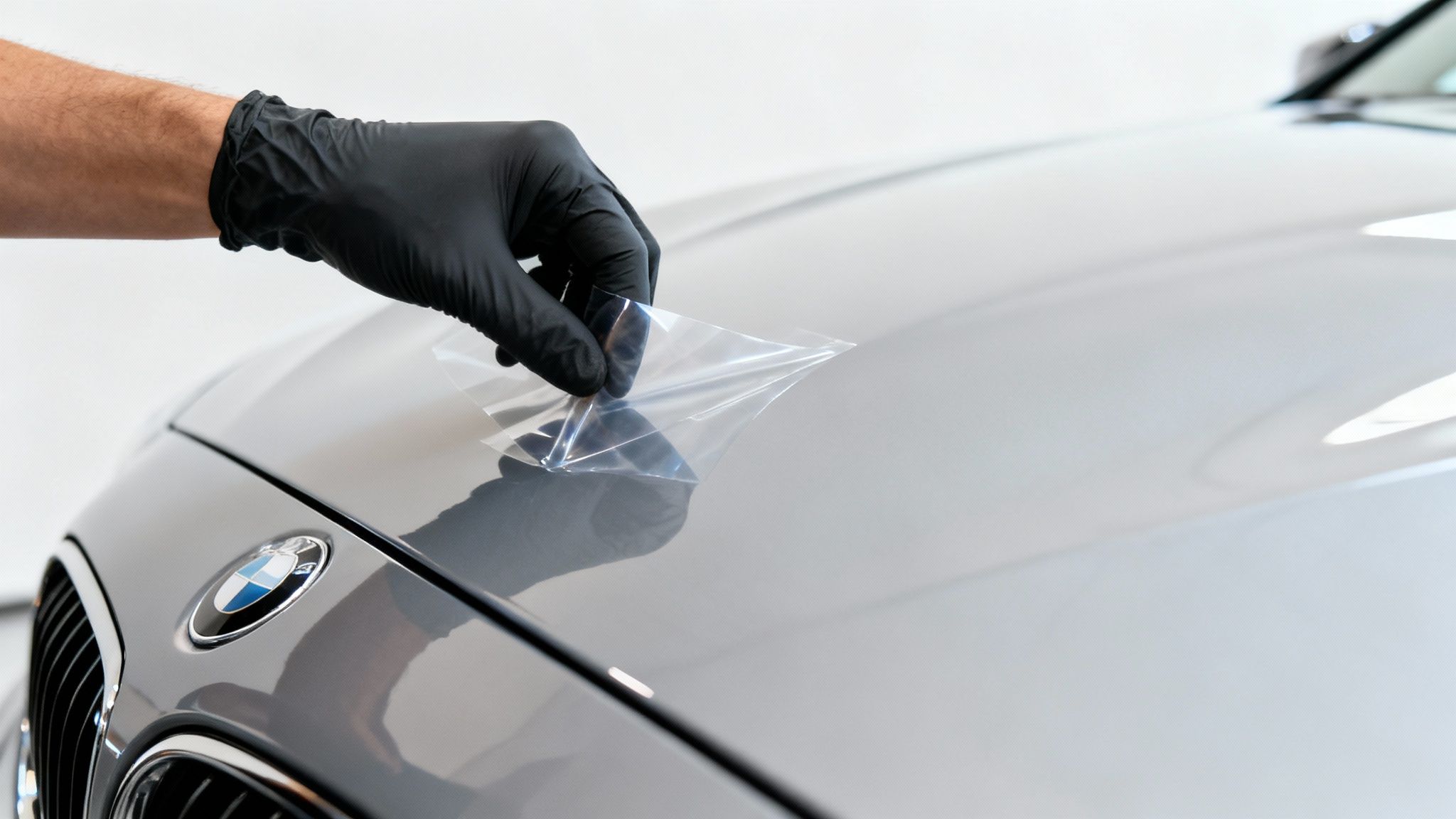
Before we get into how long PPF lasts, let's break down what it actually is. Think of Paint Protection Film as a tough, invisible suit of armour for your car. It's a transparent film made from thermoplastic urethane that a professional carefully applies directly over your vehicle's paint.
The best analogy is a high-quality screen protector for your smartphone, but it's been engineered to handle the much harsher world your car lives in. Its entire purpose is to put a physical shield between your beautiful factory paint and all the things the road throws at it. The film takes the hits, so your paint doesn't have to.
The Science Behind the Shield
PPF is far more than just a sheet of plastic. It's a cleverly engineered, multi-layered material built for serious durability. Each layer has a specific job to do, and they all work together to protect your vehicle.
- Top Coat: This is the layer you see (or rather, don't see). It's often where the self-healing magic happens. Minor scratches and swirls can actually disappear with a little heat from the sun or a heat gun.
- Polyurethane Film: This is the core of the PPF, the thick, impact-resistant layer that absorbs the force from rock chips, road debris, and scuffs.
- Adhesive Layer: A powerful but paint-safe acrylic adhesive is used to bond the film securely to your car's surface without ever harming the paint underneath.
- Liner: This is simply the backing sheet that gets peeled away during installation.
This smart construction is what makes modern PPF so incredibly resilient. If you want to get into even more detail about how it's made and what it can do, our ultimate guide to Paint Protection Film is the perfect place to start.
More Than Just Scratch Resistance
The real genius of today's PPF is in its advanced properties. A quality film does much more than just stop scratches. It's designed to be optically invisible, meaning it won't change the look or colour of your paint, whether you have a high-gloss finish or a satin matte.
But the showstopper feature has to be the "self-healing" topcoat. Picture this: small scratches from a drive-thru car wash or a light brush with a hedge just fade away on a warm, sunny day. This ability to mend itself is a huge part of what keeps PPF looking flawless for years.
The careful, meticulous application by a trained professional is absolutely critical. It ensures the film bonds perfectly and follows every curve of your vehicle, preventing issues like peeling or bubbling down the road. This expert installation is the foundation for getting that decade of protection that top-tier films can deliver.
What Determines How Long Your PPF Will Last?
Not all Paint Protection Film gets to live the same life. While a 10-year warranty sounds like a solid guarantee, the real-world lifespan of your PPF really comes down to two massive factors: your driving environment and the skill of the person who installed it.
Think of it like a high-quality raincoat. It’s designed to keep you dry, but if you wear it through a monsoon every day, it's going to wear out a lot faster than one that only sees occasional showers. The same idea applies to your PPF—its durability is constantly being put to the test by the world around it.
The Impact of Your Environment
Your local climate and daily driving habits are the biggest external forces working against your PPF. The film is a shield, after all, and every shield has its limits.
Several key environmental factors can shorten how long that film lasts:
- UV Exposure: Constant, direct sunlight is the number one enemy. The sun’s ultraviolet rays can slowly break down the film's protective topcoat, causing it to age prematurely and yellow over time.
- Harsh Contaminants: Nasty stuff like bird droppings, tree sap, bug guts, and acid rain aren't just messy—they're corrosive. If you let them sit, they can actually etch into the film’s surface and cause permanent damage.
- Road Debris and Conditions: It’s simple, really. If you’re frequently driving on gravel roads or highways littered with loose stones, your PPF is going to take a much bigger beating than it would with gentle city driving.
For example, a car in Southern California faces a unique set of challenges. The intense desert heat can mess with the adhesive, while coastal air and city pollutants mean you need to wash the car more often to stop the film from breaking down.
Why Professional Installation Is Non-Negotiable
Just as crucial as the environment is the quality of the initial application. A flawless installation is the bedrock of a long-lasting film. You could buy the most expensive, top-of-the-line PPF on the market, but if it’s not put on correctly, it’s going to fail.
A professional installer does so much more than just stick a film on your car. They meticulously prepare the paint, use precise techniques to keep contaminants out, and ensure every single edge is perfectly wrapped. This is what prevents the most common long-term failures.
Shoddy installation work often leads to these common issues:
- Peeling Edges: When the edges aren't sealed properly, moisture and dirt can creep underneath, causing the film to lift right off.
- Bubbling: Those ugly trapped air or water pockets are a dead giveaway of a bad application, and they only get worse over time.
- Wrinkles and Stretch Marks: A skilled technician knows exactly how to handle and stretch the film to fit your car’s complex curves without distorting or damaging it.
This same level of precision is critical for all types of protective films, not just the ones for your paint. You can see how professional application is also vital for products like our XPEL windshield protection film, which keeps your glass safe from chips and cracks.
Simple Care Routines to Maximize PPF Lifespan
You have more influence over your PPF's lifespan than you might realize. While the film is built tough, it's the simple, consistent care routines that really take its durability from good to great. Think of these habits as a force multiplier, making sure you get every last bit of value out of your investment.
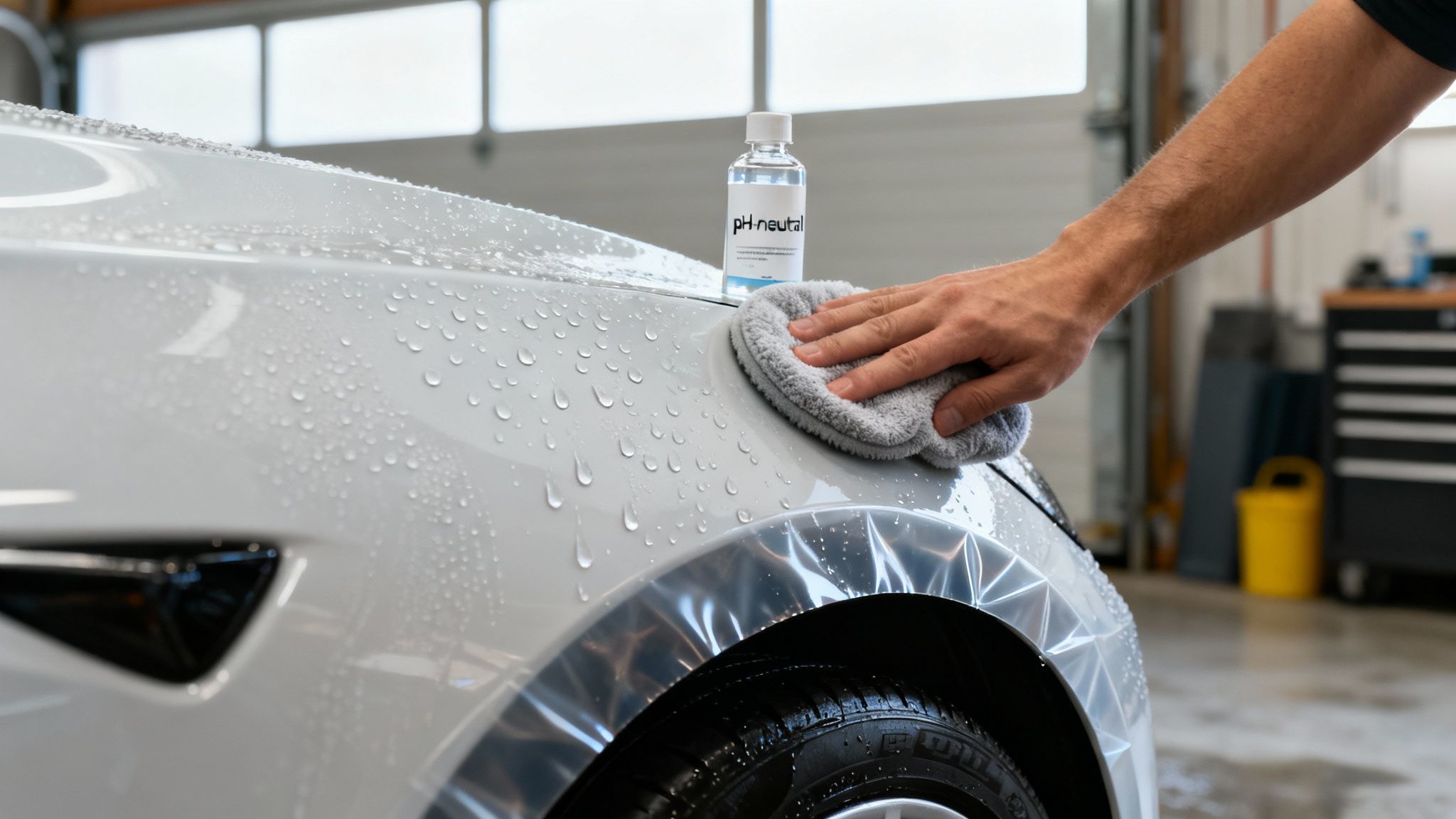
It all starts with smart washing. The goal is simple: be gentle but effective. You want to clear away all the gunk without putting any unnecessary stress on the film itself.
The Dos and Don'ts of Washing
Washing a car with PPF isn't rocket science, but a few small adjustments can make a world of difference. At the end of the day, you're protecting the protector.
- DO stick to a pH-neutral car soap. Aggressive cleaners, whether they're acidic or alkaline, can slowly eat away at the film’s topcoat.
- DO use the two-bucket wash method. A clean microfibre mitt is your best friend here, preventing you from dragging grit and grime across the surface.
- DON'T get too aggressive with a pressure washer, especially near the film's edges. A powerful, direct blast can lift an edge, letting water and dirt sneak underneath.
- DON'T ever use abrasive polishes, stiff brushes, or clay bars directly on the film. They can easily dull the finish and compromise the self-healing layer.
These basic steps are your foundation. But for those of us dealing with harsh sun or tough winters, taking things a step further is always a good idea. Pros will tell you that with the right care, you can expect 5 to 10 years or more of solid protection. Some impeccably maintained films last even longer.
Boost Your Film with Extra Protection
One of the smartest things you can do to extend your PPF's life is to add another protective layer on top of it. It’s like putting a case on your phone case—an extra sacrificial barrier to take the daily abuse.
A dedicated PPF sealant or a quality ceramic coating creates an additional shield against UV rays, chemicals, and contaminants. This makes the surface incredibly slick (hydrophobic), causing water and dirt to bead up and slide right off, which makes your next wash a whole lot easier.
This proactive step doesn't just keep the film looking brand new; it also acts as a buffer against all sorts of environmental fallout. It’s a small effort that pays off big time in the long run, ensuring the film stays clear and effective for years. And while PPF is amazing for your paint, don't forget about other threats; our guide on the best rust prevention for cars can help you protect your vehicle from the inside out.
Choosing the Right Film for Long-Term Protection

It’s a simple truth: not all Paint Protection Film is created equal. The brand and type of film you choose is probably the single biggest factor in determining how long that protection will actually last.
Think of it like buying tires. They're all round and black, but a cheap set won't give you the same grip, durability, or peace of mind as a premium set from a trusted manufacturer. The same principle applies directly to PPF.
Your best bet is to start with a top-tier brand. Companies like XPEL, 3M, and SunTek have poured years of research and development into their products, and it shows. They engineer their films to stand up to whatever the road throws at them, and their confidence is reflected in their warranties—often the clearest indicator of a film's quality.
Decoding Warranties and Film Specs
A solid warranty is your first clue. When a manufacturer offers a warranty for 10 years or more, they're making a bold statement. It means they've tested their film to resist common problems like yellowing from UV rays, cracking from extreme temperatures, and staining from bird droppings or bug guts. This isn't just a piece of paper; it's a promise of durability.
But don't stop at the warranty. To make a truly informed choice, you need to dig into the film's specs.
- Film Thickness: This is measured in mils (a thousandth of an inch). A thicker film, usually around 8 mils, provides a more robust cushion against rock chips and other impacts.
- Self-Healing Capabilities: This is where the magic happens. The best films have a sophisticated top layer that can literally repair itself. Minor scratches and swirl marks vanish with a bit of heat from the sun or a heat gun, keeping your car’s finish looking brand new.
- Hydrophobic Properties: Some of the latest films come with a built-in ceramic-like coating. This makes the surface incredibly slick, causing water to bead up and roll right off, taking dirt and grime with it. It makes washing your car a breeze.
If you're weighing your options, our in-depth look at ceramic coating vs. PPF can help clear things up and guide you to the right choice for your car.
In places with intense sun like California, the quality of the film matters even more. High-quality PPF can last between 5 to 10 years, but premium films with self-healing topcoats often come with warranties extending up to 12 years, offering superior defence against the harsh UV environment.
To give you a better idea of what the top players offer, let's compare them side-by-side.
Comparing Top PPF Brands for Longevity
Here’s a quick snapshot of what you can expect from the leading brands in the industry. While they all offer fantastic protection, the subtle differences in their features might make one a better fit for your specific needs.
| Brand | Film Thickness (mils) | Warranty Period | Key Features |
|---|---|---|---|
| XPEL | ~8.5 mils | 10 Years | Advanced self-healing, stain resistance, and exceptional clarity. |
| 3M | ~8 mils | 10 Years | Strong brand reputation, excellent durability, and UV protection. |
| SunTek | ~8 mils | 10-12 Years | Hydrophobic topcoat and self-healing properties for easy maintenance. |
By looking at these key features, you can find a film that strikes the perfect balance between protection, longevity, and overall value. This ensures your vehicle's paintwork remains in pristine condition for years to come.
When Is It Time to Replace Your PPF?
Even the very best Paint Protection Film won’t last forever. While a top-tier film can easily give you a decade of service, it's a wear-and-tear item. Knowing how to spot the signs that your PPF is getting old is the key to making sure your car's paint stays perfect underneath.
Think of it like the tires on your car. They’re built to handle thousands of tough kilometres, but eventually, the material breaks down and they need to be replaced for safety. The same goes for PPF. Swapping out the film on time is just as important as getting it installed correctly in the first place.
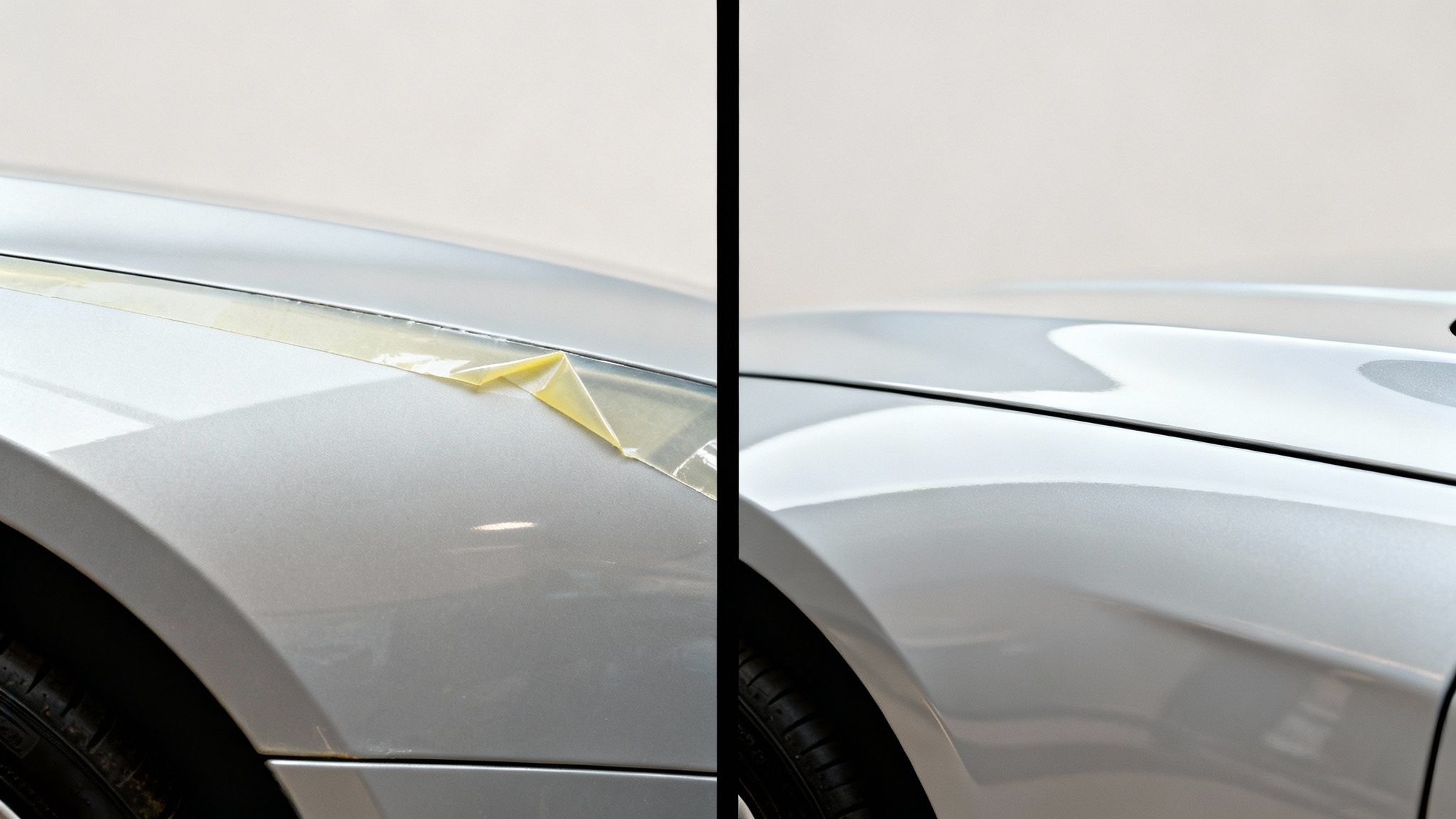
Visual Cues Your Film Is Failing
Your eyes are the best tool you have for checking on your PPF’s health. As the film ages, it will start to show clear signs that it’s reaching the end of the road. If you ignore these, you could be setting yourself up for a much tougher and more expensive removal process later on.
Keep a close watch for these common symptoms of aging PPF:
- Noticeable Yellowing: This is one of the most obvious tells, especially on white or light-coloured cars. Years of UV exposure will eventually degrade the film’s clarity, leaving it with a dingy, yellowish tint.
- Cracking or Brittleness: If you start to see tiny, spiderweb-like cracks or the film feels stiff and brittle, it's a sign it has lost its flexibility. At this point, it’s not protecting much of anything.
- Peeling or Lifted Edges: Always check the edges of the film on each panel. If you see them starting to lift or peel back, moisture and dirt can creep underneath, ruining the adhesive and potentially trapping grit against your paint.
- Bubbling or Blistering: Bubbles that pop up years after the installation aren't a good sign. While early bubbling is usually due to a poor install, new ones suggest the adhesive is finally giving up.
Being proactive about replacing your PPF is about more than just aesthetics. As the film gets older, its adhesive can bond much more strongly to your car’s clear coat. Getting it removed before it becomes brittle ensures the process is clean and won't risk damaging the paint it was meant to protect.
Why Timely Removal Is Crucial
Waiting too long to replace failing PPF can turn a simple job into a real nightmare. As the film breaks down, it gets incredibly difficult to remove. Instead of coming off in large, clean sheets, it can break apart into tiny, stubborn pieces. The old adhesive can also leave behind a sticky residue that takes special chemicals and a lot of elbow grease to clean up properly.
This is where you protect your initial investment. A timely replacement is a huge part of what makes PPF cost vs. repainting your car such a smart financial choice. By swapping out the film when it's due, you ensure it does its job without ever harming the factory finish.
Planning for a replacement around the 8 to 10-year mark is the best way to keep the process smooth and your paint looking brand new.
Got Questions? We’ve Got Answers
Even after breaking down all the details, you might still have a few questions floating around. Let's tackle some of the most common ones we hear from drivers just like you.
Can I Hit My Car With a Pressure Washer if it has PPF?
You can, but you've got to be smart about it. A pressure washer can be a great tool, but it can also be your PPF's worst enemy if you're not careful.
The golden rule? Keep the nozzle at least 36 inches (that's about three feet) away from the surface. And whatever you do, never aim that powerful jet of water directly at the edges of the film. A direct hit can force water underneath, causing the film to lift, bubble, and eventually peel away. Honestly, for most washes, a good old-fashioned hand wash is safer and just as effective.
Will Taking Off Old PPF Wreck My Paint?
This is a big worry for a lot of people, but the answer is almost always no—if it's done right. When you use a top-quality film from a trusted brand and have a professional handle the removal, your original paint will be perfectly preserved underneath.
Problems only really pop up with cheap, no-name films or when a good film is left on way past its expiry date. The adhesive can become brittle and bond too aggressively, potentially pulling up a bit of paint when it's removed. That’s why getting it replaced on time is so important.
Think of it this way: a professional removal within that 10-12 year window is the final step in ensuring the film did its job. It guarantees a clean slate, revealing the flawless paint you were protecting all along.
Is Putting a Ceramic Coating on Top of PPF Worth It?
Absolutely, yes. It's like giving your shield its own shield. A ceramic coating adds a super slick, sacrificial layer over the PPF.
This extra layer boosts UV protection, makes dirt and grime slide right off, and fights back against nasty stuff like water spots and bird droppings. This added defence doesn't just make cleaning easier; it genuinely helps the film stay clear and last longer.
Does the Finish of the PPF (Like Matte vs. Clear) Change How Long It Lasts?
Not really. Whether you go for a glossy clear or a slick matte finish, the top-tier films are all built with the same tough, UV-resistant technology. You can expect similar lifespans from both.
The only small difference is in maintenance. The unique texture of a matte film can sometimes hold onto dirt a little more stubbornly. This just means it might need a gentle wash a bit more often to keep it looking fresh and uniform.
Ready to give your vehicle the ultimate protection it deserves? At Carmedics Autowerks Inc, we specialize in professional PPF installations that stand the test of time. Get in touch with us today to find the perfect solution for your car