


So, you're thinking about getting a remote starter. It's one of those little luxuries that makes a huge difference on a frigid Canadian morning. But what's it actually going to cost?
The honest answer is that a professional autostart installation in Canada will typically land you somewhere between $300 and $700. It’s a bit like getting a new appliance; you've got the cost of the unit itself, plus the essential parts to make it work with your home, and the expert to install it correctly. This range gives you a solid ballpark for budgeting a system that's both safe and reliable.
Your Quick Guide to Autostart Installation Costs
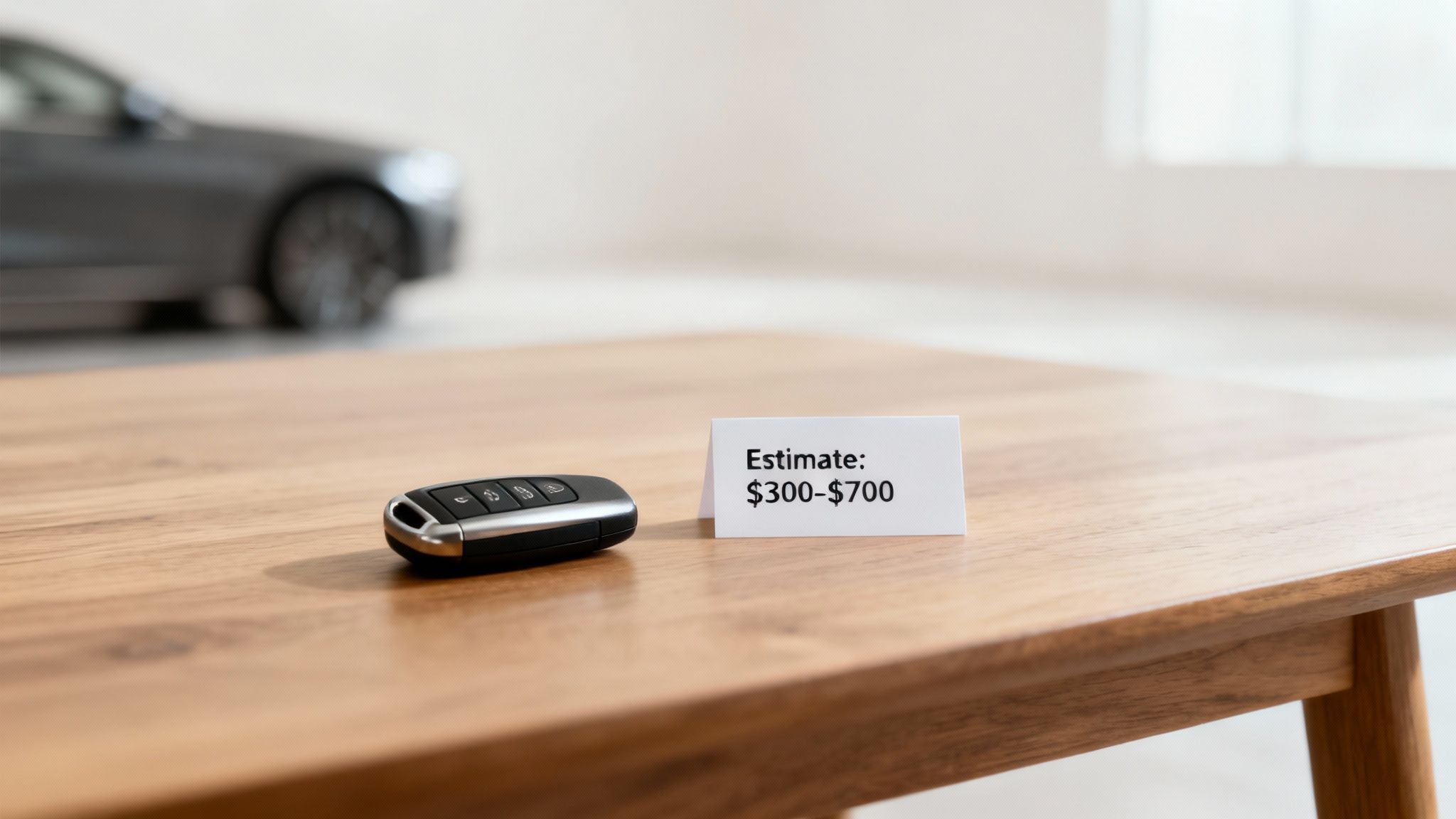
When you see a remote starter advertised, the price on the box is only part of the story. The total investment is really a mix of the hardware, the specific modules needed for your car, and the skilled labour required to tie it all together without a single hiccup. A basic starter kit might look like a great deal, but its true value comes from a professional installation that protects your vehicle’s sensitive electronics.
Let's break down where that $300 to $700 figure comes from.
To give you a clearer picture, here’s how the costs typically break down for a professional installation.
Estimated Autostart Installation Cost Breakdown
This table provides a snapshot of the typical costs for each part of a professional remote starter installation in Canada.
| Component | Typical Price Range (CAD) |
|---|---|
| Remote Starter Unit | $100 – $400+ |
| Bypass/Integration Module | $80 – $150 |
| Professional Labour | $150 – $300+ |
As you can see, the final price is a combination of these key elements, each playing a crucial role in a successful installation.
The Three Core Components of Cost
Every professional installation is built on three key pillars:
- The Remote Starter Unit: This is the core of the system. Costs vary widely, from simple one-way models (just sends a signal) to more advanced two-way systems (confirms the car has started) or even ones you can control with your smartphone.
- The Bypass/Integration Module: If your car was made in the last 20 years, it almost certainly has a factory anti-theft system. This little black box is essential; it safely "talks" to your car's computer, letting the remote starter work without compromising your vehicle's security.
- Professional Labour: This isn't just about connecting a few wires. It's about a technician’s expertise in navigating your specific vehicle’s complex electrical system to ensure a clean, safe, and reliable install that won't leave you with a headache later.
Finding a technician you can trust is paramount. For anyone looking for a dependable automotive service centre near me that handles this kind of specialized work, a professional shop is always the best bet.
Think of a professional installation as an insurance policy. Cutting corners with a cheap install might save a few dollars now, but it can easily lead to much bigger—and more expensive—electrical problems down the road.
What Goes into the Cost of a Remote Starter?

Figuring out the final price for a remote starter installation isn't as simple as picking a box off a shelf. Think of it more like a kitchen reno—the final bill depends on the appliances you choose, the complexity of your kitchen's layout, and the custom work needed to make it all fit perfectly.
Your vehicle's make and model, the features you want, and the specific hardware needed to talk to your car’s computer all play a part. Let's break down the three big factors that determine the total cost.
The Type of System You Choose
The biggest piece of the puzzle is the remote starter unit itself. This is where you decide on the level of convenience and range you need, and it sets the baseline for the price.
- One-Way Systems: These are your straightforward, entry-level options. You press the button, the car starts. Simple as that. The downside? You don't get any confirmation back, so you're left hoping the signal reached your vehicle.
- Two-Way Systems: This is a popular upgrade for a reason. When you start your car, the remote fobs talks back to you with a beep, a flash, or a vibration to confirm the engine is running. It's a huge plus for peace of mind, especially when you can't see your car from your window.
- Smartphone-Controlled Systems: This is the top-tier choice. An app on your phone lets you start your car from literally anywhere you have a data connection—the office, the airport, you name it. These systems often pack in bonus features like GPS tracking but usually come with an annual subscription fee.
Your Car’s Specific Needs
No two vehicles are the same under the hood, especially when it comes to adding new electronics. The age of your car, whether it’s an automatic or manual, and its factory-installed tech all affect how complex the job is. A brand-new SUV with a push-button start is a completely different beast than a 15-year-old sedan with a traditional key.
For instance, installing a remote starter on a manual transmission car is more involved. It needs extra safety sensors to ensure the car can't start while it's in gear. That added complexity means more parts and more time from the technician, which bumps up the cost. The end goal is always to make it look and feel like it was installed at the factory.
The All-Important Bypass Module
Just about every modern car has a factory anti-theft system, often called an immobilizer. It’s a smart little system that won't let the engine start unless it detects the properly coded chip inside your key. To get a remote starter to work, we need a special piece of hardware called a bypass module.
Think of the bypass module as a friendly translator. It safely tells your car's computer, "Hey, this is an authorized remote start command," allowing the engine to turn on without you—or your key—being inside.
This isn't an optional add-on; it's a critical component for almost any car made in the last 15-20 years. For most cars and trucks sold in Canada after 2010, this data module is a must-have, typically adding $80–$200 to the final price. Making sure this module works in harmony with your existing security is a key part of maintaining a strong anti-theft system for your car.
What You're Actually Paying For
When you get a quote for a remote starter, that final number isn't just pulled out of thin air. The total cost to install an autostart is a straightforward sum of two key things: the physical parts (the hardware) and the skilled labour needed to get it working perfectly and safely in your car.
Think of it like getting a custom kitchen countertop installed. You're not just buying the slab of granite; you're paying for the professional who has the tools and know-how to measure, cut, and fit it perfectly without damaging your cabinets. It's the same idea with your vehicle's complex electronics.
The Hardware Components
First up, let's talk about the hardware itself. These are the tangible pieces of equipment that we'll be installing. It's not just the main remote starter brain; it often includes other specialized modules your specific car needs to play nice with the new system.
- The Autostart Kit: This is the core of the system. It includes the control module—the "brain"—and the key fobs you'll be using. The price tag on the kit can swing quite a bit, depending on whether you go for a simple one-way remote or a more advanced system you can control from your smartphone.
- The Bypass Module: This little box is a crucial piece of the puzzle. It acts as a secure translator, allowing the remote starter to communicate with your vehicle's factory anti-theft system. Without it, your car would think it's being hotwired and refuse to start.
It's also worth knowing the difference between parts made by your car's manufacturer and top-notch aftermarket solutions. If you're curious, you can get the full rundown in our guide on OEM vs. aftermarket parts.
The Value of Expert Labour
Now for the labour, which is arguably the most critical part of the equation. This isn't a simple plug-and-play job you can knock out in an afternoon. You're paying for a technician's expertise to protect your vehicle's delicate and expensive electronic systems, like the Body Control Module (BCM) and Engine Control Unit (ECU).
A botched DIY job can easily fry sensitive electronics, leading to thousands in repair bills. Paying for professional labour isn't just a fee—it's your insurance policy against a massive headache, electrical gremlins, and voided warranties.
A skilled installer in Canada typically charges $75–$200 in labour, which covers the 2–4 hours of painstaking work it takes to correctly tap into a modern car's wiring. For any car owner, this is a small price to pay to avoid electrical problems that could easily cost over $1,000 to fix if a critical component gets damaged.
Ultimately, you’re paying for precision, safety, and the confidence that comes from knowing the job was done right the first time.
Comparing Different Autostart System Costs
When you're looking at getting an autostart system, it’s a bit like choosing a new phone. Are you after something simple that just makes calls, or do you want all the bells and whistles with endless connectivity? The cost to install an autostart system really depends on the technology you pick, from straightforward one-way remotes to fancy smartphone-controlled setups.
Let's walk through the options so you can find the right one for your car and your wallet. Each type offers a different level of convenience and feedback, which is what really shapes the final price tag.
Basic One-Way Systems
Think of a one-way system like sending a postcard. You send it off and just hope it arrives. You press the button on your remote, and it zaps a signal to your car to start up. It's the most budget-friendly option out there, but you get what you pay for: limited range and no confirmation. You're left to trust that your car got the message.
These are a great choice if you’re not looking to spend much, usually park your car within sight, and just need a simple way to get it warmed up on a cold morning.
Upgraded Two-Way Systems
Now we’re talking. With a two-way system, you actually get a response from your vehicle. It's more of a conversation. You send the "start" signal, and your car sends a signal right back to your remote to confirm it’s running. This feedback might be a simple beep, a flashing light, or even a vibration, giving you that sweet peace of mind.
A two-way remote is the most popular choice for a good reason. That little confirmation signal takes all the guesswork out of it, which is a lifesaver when you're trying to start your car from deep inside a big office building or a shopping centre.
This image gives you a clear idea of what goes into the cost of any professional installation.
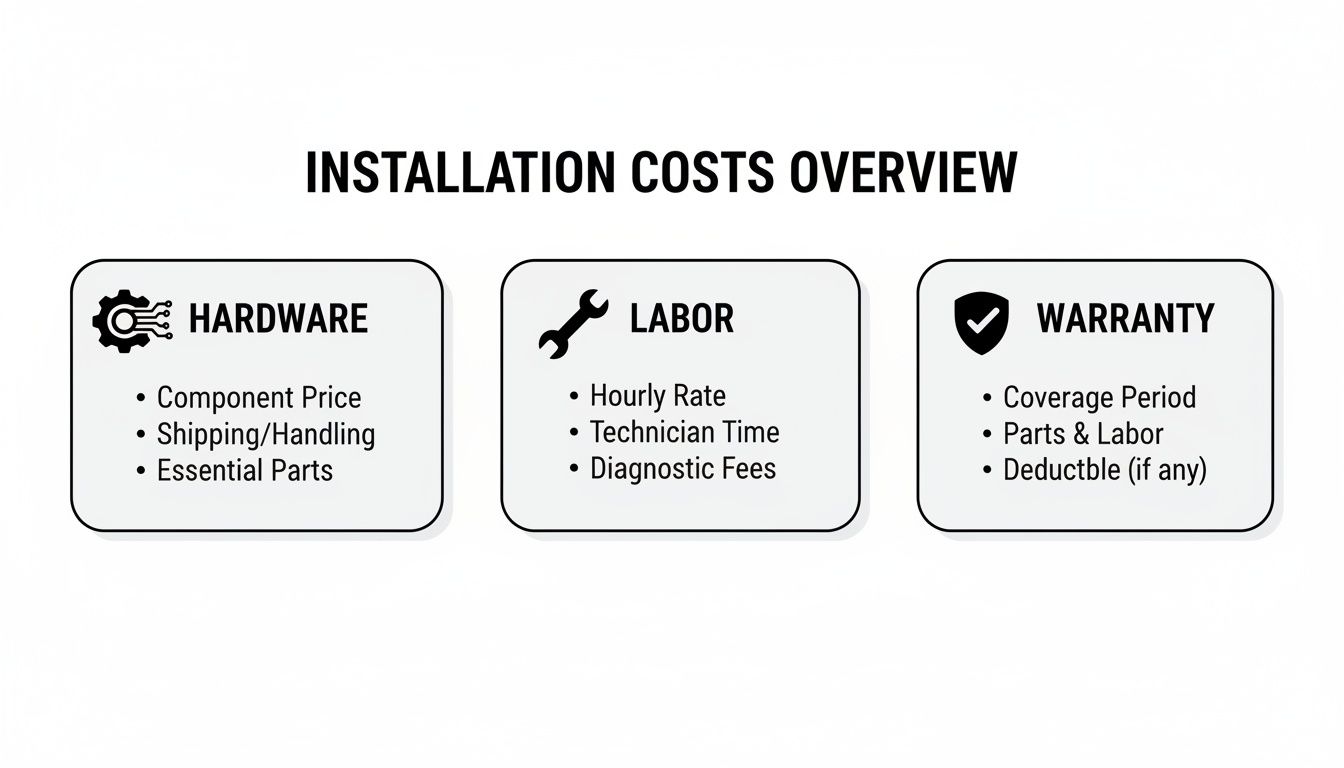
As you can see, your final bill is always a combination of the hardware itself, the expert labour to install it correctly, and the warranty that backs it all up.
Premium Smartphone-Controlled Systems
If you want the absolute best in convenience and control, smartphone systems are the way to go. Using an app on your phone, you can start your car from pretty much anywhere you have a cell signal or Wi-Fi—whether you're at your desk downtown or on vacation across the country.
These top-tier systems often come loaded with extras like GPS tracking and security alerts. The only catch is they usually need an annual subscription fee to keep that cellular connection active. This is the "unlimited data plan" of the remote starter world.
Even cars with a stick shift can get in on the action, though the installation is a bit more involved. You can learn more about the specific needs for a remote car starter for a manual transmission in our other guide.
To help you see the differences at a glance, here’s a quick comparison of the systems.
Remote Starter System Comparison
This table lays out the main options side-by-side, so you can easily compare their features, range, and what you can expect to pay for the hardware.
| System Type | Key Feature | Typical Range | Estimated Hardware Cost (CAD) |
|---|---|---|---|
| One-Way System | Sends a start signal with no confirmation. | Up to 1,500 feet | $100 – $200 |
| Two-Way System | Provides confirmation that the car has started. | Up to 1 mile (5,280 feet) | $200 – $400 |
| Smartphone App | Unlimited range via cellular connection. | Virtually unlimited | $300 – $500+ |
Whether you go for a basic, reliable system or a premium one with all the modern tech, this should give you a solid starting point for figuring out which one fits you best.
Why a Professional Installation Is a Smart Investment
It's tempting to think about a DIY installation to save a few bucks on your new remote starter. I get it. But this is one of those jobs where cutting corners can quickly spiral into a massive, expensive headache. Modern cars are rolling computers, and one wrong connection can create a whole host of electrical nightmares.
Think of your car's wiring as its central nervous system. A professional technician is like a surgeon who knows precisely how to integrate a new part without causing any harm. An amateur attempt, on the other hand, can easily damage critical components like the Body Control Module (BCM) or Engine Control Unit (ECU). Fixing that kind of mistake can cost thousands.
Protecting Your Vehicle and Your Wallet
Going with a professional installation isn't just about making life easier; it's about protecting the vehicle you rely on every day. A good shop makes sure every connection is solid, safe, and ready to stand up to our tough Canadian winters.
Here’s what you’re really paying for with a pro install:
- Warranty Protection: A proper installation won't mess with your vehicle's factory warranty. If a DIY job causes an electrical fault, the dealership has every right to deny your claim, leaving you to foot the bill.
- System Reliability: Experts know exactly which bypass modules and T-harnesses your specific car needs. This guarantees the remote starter "talks" to your car's computer systems correctly, without any glitches.
- Peace of Mind: Professional installers stand behind their work. If something isn't right with the installation, you have a reliable team to call for support.
A professional installation is your best defense against the electrical gremlins that can surface from a botched job. It’s the difference between years of reliable starts and a car that won't turn over on the coldest day of the year.
The True Cost of a Bad Install
The risks that come with a poor installation—whether you did it yourself or hired someone inexperienced—are very real. A simple mistake can lead to a constantly drained battery, a security system that goes haywire, or a car that just won't start at all. Tracing and fixing these problems often takes hours of diagnostic labour, wiping out any money you thought you saved.
Choosing certified and experienced auto remote starter installers near me is the smartest way to ensure your new system works perfectly right from the start. Here at Carmedics Autowerks, our technicians have the specialized training needed for today's complex vehicle electronics. We'll give you a flawless installation that adds comfort and value to your car, without any of the risk.
Got Questions About Autostart? We’ve Got Answers.
It's totally understandable to have a few more questions rattling around. After all, getting any work done on your vehicle is a big decision, and you want to be sure you've got all the facts straight before you pull the trigger.
To make things easier, we've pulled together the most common questions we get from customers right here at the shop. Think of this as your final walkthrough to clear up any last-minute uncertainties, from warranty worries to how the whole process actually plays out.
Will an Autostart Void My Car’s Warranty?
This is easily the number one concern for anyone with a newer car, and the answer is refreshingly simple: no, a professionally installed autostart shouldn't void your vehicle's warranty.
Here in Canada, consumer protection laws are on your side. They prevent a manufacturer from automatically denying warranty coverage just because you've added an aftermarket part. The key word there, of course, is professionally.
If a sloppy installation causes a problem, like damaging your car’s electrical system, the manufacturer would be within their rights to deny a claim for that specific issue. This is exactly why going to a reputable, experienced installer isn't just a suggestion—it's essential.
A pro technician uses quality parts and vehicle-specific T-harnesses that plug in cleanly, meaning they don’t have to butcher your factory wiring. This approach guarantees a safe, reliable installation that keeps your warranty intact and protects your car.
How Long Does the Installation Usually Take?
The time needed for an autostart installation really depends on how complex your vehicle is, but most jobs are wrapped up within 2 to 4 hours.
Modern cars are rolling computers. Things like push-to-start buttons, sophisticated anti-theft systems, and intricate computer networks (known as CAN-bus) mean our technicians need more time to integrate the new system and its bypass module perfectly. An older, more basic car might be on the quicker end of that 2-hour estimate.
When you book with a professional shop, they’ll schedule enough time to do the job right. It’s a meticulous process that should never be rushed—every single connection is critical for the system to work safely and reliably for years to come.
Can You Put an Autostart on a Manual Transmission?
Yes, you absolutely can! But it’s a whole different ball game. Installing a remote starter on a manual vehicle is a specialized task that requires specific hardware and a far more detailed installation process to keep everyone safe.
These systems are built with several layers of safety checks to prevent the nightmare scenario of the car starting in gear. Key features include:
- Parking Brake Sensor: The system won’t even think about starting unless it confirms the parking brake is on tight.
- Neutral Safety Switch: It double-checks that the gear shifter is in neutral.
- Reservation Mode: This is a special shutdown sequence you have to follow every time you park. It essentially "sets" the system, confirming it's safe for the next remote start.
Because of these crucial safety steps, the cost to install an autostart on a manual car is usually higher than for an automatic. This is one job that must be done by a certified technician who has experience with manual transmission systems. It’s definitely not a DIY project—the risk of an accident is just too great.
Ready to step out into a perfectly warmed-up car this winter? The team at Carmedics Autowerks has the know-how to fit your vehicle with a top-quality remote starter that’s safe, dependable, and seamlessly integrated. Book your installation online today and let us take care of the rest.