


So, what's the real cost to get a remote starter installed in your car? All in, you’re typically looking at a range between $300 and $700 for a professionally installed system. While you might see cheaper kits online, this price range covers quality hardware and, just as importantly, the expert labour needed to ensure it works reliably without voiding your vehicle's warranty.
What Is the Real Cost to Install a Remote Starter
When you decide to add the convenience of a remote starter, the final bill breaks down into two main parts: the price of the unit itself (the hardware) and the cost of the skilled labour to install it correctly. It’s not just about buying a product off the shelf; you're investing in the expertise required to safely integrate it with your car’s increasingly complex computer systems.
This chart gives you a great visual of how the total cost is split between the system and the installation.
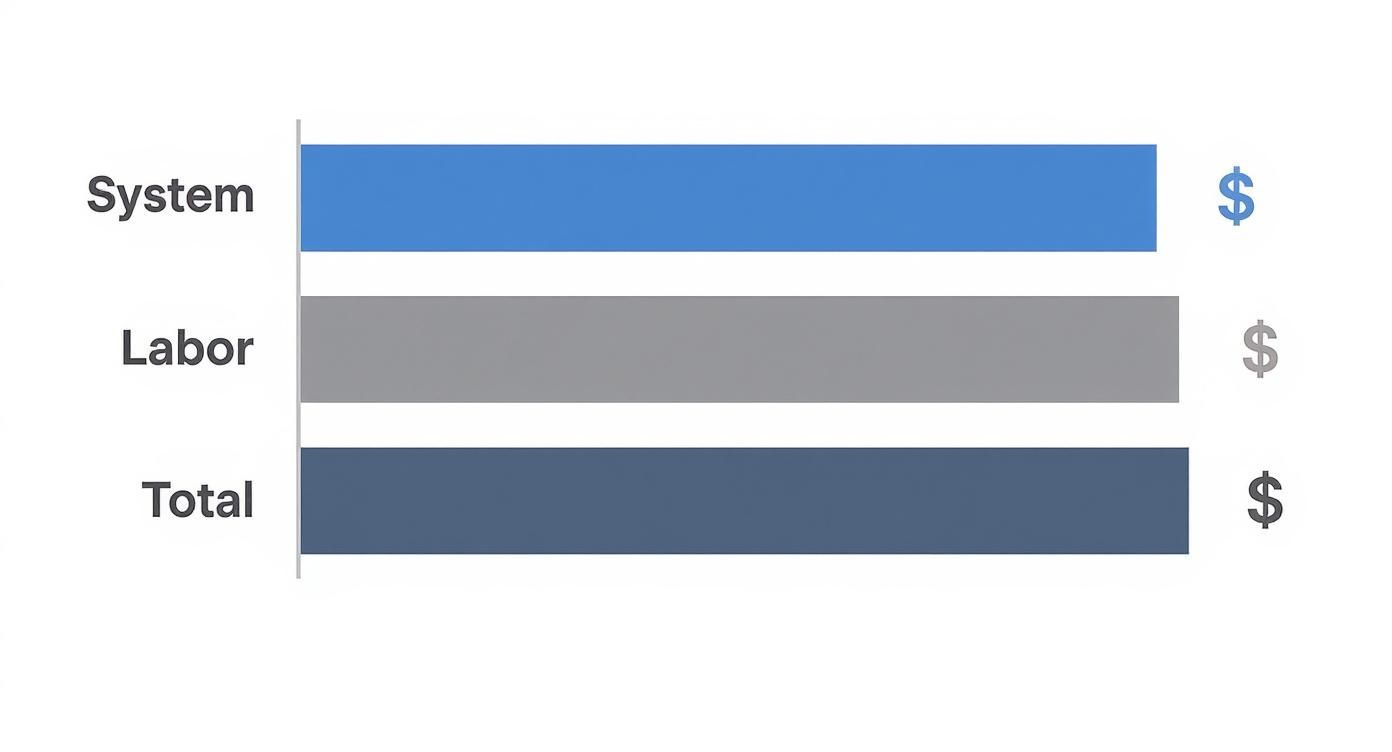
As you can see, labour makes up a big chunk of the total price. That's a direct reflection of the technical skill and time it takes to do the job right, preventing any nasty electrical surprises down the road.
A Breakdown of Typical Price Ranges
The price tag on a remote starter system can vary quite a bit, mostly depending on the features and technology you want. Industry-wide, most professional installations land somewhere between $200 and $500. The starter kit itself can be as low as $50 for a bare-bones model or climb past $200 for a top-tier smart system. On top of that, labour usually adds another $75 to $200 to the final bill, with the exact amount depending on how complex your vehicle's wiring is.
For a clearer picture, here’s a quick overview of what to expect based on the type of remote starter system you're considering.
Estimated Remote Starter Installation Costs at a Glance
| System Type | Average Unit Cost | Estimated Labour Cost | All-In Estimated Total |
|---|---|---|---|
| One-Way System | $50 – $150 | $100 – $200 | $150 – $350 |
| Two-Way System | $100 – $250 | $150 – $250 | $250 – $500 |
| Smartphone System | $150 – $350+ | $150 – $300 | $300 – $650+ |
This table provides a general idea, but keep in mind that every vehicle is different. The best way to get an exact price for your car is to get a personalized quote.
Here’s a closer look at what separates these systems:
-
One-Way Systems: These are your straightforward, entry-level options. You press the button, the signal goes to your car, and it starts. The fob won't tell you if the command was successful, but they get the job done at a great price point.
-
Two-Way Systems: This is a popular upgrade. When you start your car, the system sends a confirmation signal back to your fob—often with a beep or a flashing light—so you know for sure your engine is running. No more guessing from your office window!
-
Smartphone Control Systems: The premium choice for ultimate convenience. These systems use a cellular or Bluetooth connection and an app on your phone to start, lock, unlock, and even locate your car from pretty much anywhere you have a signal.
Key Takeaway: The "cost to install a remote starter" is never a one-size-fits-all number. It's a combination of the system's features and the specific labour your car requires. This is why getting a professional quote is the only way to know your true cost.
Key Factors That Influence Your Final Price
Figuring out the final cost to install a remote starter isn't as straightforward as picking a product off the shelf. The price really depends on your specific vehicle and the kind of tech you want. It's less like buying a standard part and more like getting a custom-tailored suit—every little detail adjusts the final fit and price.
A few key variables can make the cost swing one way or the other. For example, a newer luxury car with a push-to-start ignition demands a much more complex installation than a 10-year-old vehicle with a traditional key. Modern cars are packed with intricate computer networks, and tapping into them correctly requires specialized tools and a deep understanding of vehicle electronics to avoid causing problems down the road.
Your Vehicle's Make, Model, and Year
The single biggest factor shaping the installation cost is, without a doubt, the car itself. The electronic "nervous system" of a 2022 BMW 3 Series is a world apart from a 2015 Honda Civic, and the installation process has to account for that difference.
-
Luxury vs. Economy Models: High-end vehicles from brands like Mercedes-Benz, Audi, or Porsche are built with advanced security systems and tightly integrated electronics. Working with these systems requires more labour and very specific components to ensure everything communicates properly.
-
Manual vs. Automatic Transmission: Putting a remote starter in a manual transmission vehicle is a more involved job. It requires extra safety sensors to prevent the car from starting while it's in gear, which adds to both the parts and labour costs. You can dive deeper into the specific requirements for a remote car starter for manual transmission in our detailed guide.
-
Push-to-Start vs. Traditional Key: A vehicle with a push-button start needs a more sophisticated interface to safely bypass the factory immobilizer system compared to a car that uses a physical key. This complexity naturally adds to the installation time and overall cost.
The Type of Remote Starter System
After your car's specs, the features of the remote starter you select play a huge role in the final price. You aren't just paying for the ability to start the car; you're choosing a certain level of range, feedback, and convenience.
A basic one-way system is your most budget-friendly choice. It sends a signal to your car to start, but you won't get any confirmation back. It's a simple, effective solution if you can usually see your vehicle or are close enough to hear it start.
Key Takeaway: The "cost to install a remote starter" isn't a fixed number. It's built from the ground up, starting with your vehicle's complexity and adding on the features you want, guaranteeing you get a solution that's a perfect match.
Stepping up to a two-way system delivers some valuable peace of mind. Your key fob will get a confirmation signal—often a beep, a vibration, or an LED light—to let you know for sure that your car is running. This is ideal for those times when your car is parked out of sight, like in a big shopping centre parkade or at the office.
Finally, smartphone-controlled systems offer the ultimate in range and control. These let you start, lock, unlock, and even track your vehicle from anywhere using an app. They do come at a premium price and usually require a subscription fee for the cellular service that keeps them connected.
Unpacking Bypass Modules and Other Hidden Costs
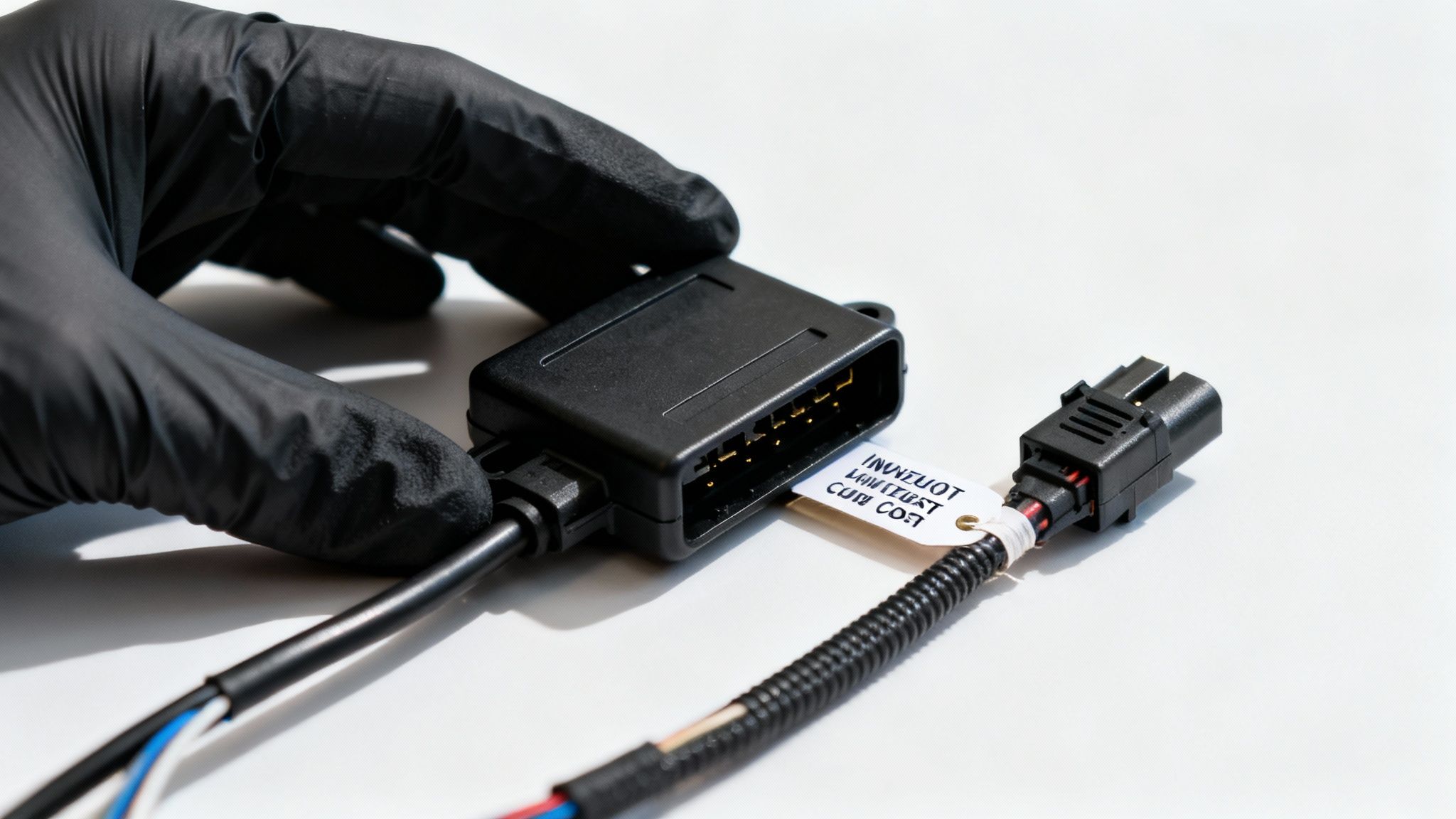
When you're getting a quote for a remote starter, it's easy to fixate on the two big-ticket items: the starter unit itself and the labour to install it. But a proper, safe installation often requires a few other crucial components. If you’re not expecting them, they can feel like surprise charges popping up on the final bill.
The most common—and most important—of these is the immobilizer bypass module. Let's be clear: for almost any vehicle made in the last 20 years, this isn't an optional upgrade. It's an absolute necessity.
Think of your car's factory anti-theft system (the immobilizer) as a stubborn security guard. It's trained to only let the engine start if it recognizes the unique computer chip inside your specific car key. When you use a remote starter, your key isn't anywhere near the ignition. The bypass module acts as a digital diplomat, performing a secure "handshake" with the car's computer to vouch for the remote starter. It essentially tells the security guard, "It's okay, this is an authorized start," allowing your engine to fire up without compromising your vehicle's security.
Why Is a Bypass Module So Important?
This little electronic box is the bridge between your new remote starter and your car's built-in security. Without it, the remote start signal would be sent, but your car's anti-theft system would immediately shut it down, thinking it's a hotwire attempt. The starter simply wouldn't work.
Bypass modules typically add an extra $50 to $100 to the total cost. For some newer luxury or high-tech vehicles, that figure can climb closer to $200 because the car's electronics are that much more complex. It's a perfect example of how the cost of integration rises right alongside vehicle technology.
Other Potential Add-On Costs
Aside from the bypass module, a few other items might show up on your quote, depending entirely on what your vehicle needs for a clean and reliable installation. Knowing what they are ahead of time helps paint a complete picture.
- Vehicle-Specific Harnesses: Often called a T-harness, this is a lifesaver. It’s a pre-made wiring adapter that allows the installer to simply "plug in" the remote starter, rather than cutting and splicing your car's factory wiring. It costs more upfront but often saves on labour time and, more importantly, protects the integrity of your vehicle’s electrical system.
- Extra Key Fob Programming: Need a second or third remote for a spouse or family member? You’ll be looking at a charge for the extra fob itself plus the technician’s time to program it to sync with your system.
- Shop Supplies: It's standard practice for any professional auto shop to include a small fee for consumables. This covers things like zip ties, electrical tape, wiring, and connectors used during the job.
The Professional Difference: To an experienced installer, these aren't "hidden costs" at all—they're just part of doing the job right. A reputable shop will always break down every required part, including the bypass module and any necessary harnesses, in your initial quote. Transparency is key, so you know exactly what you're paying for.
Understanding the parts that go into your car is always a smart move. You can learn more about the cost and quality differences by reading our detailed guide on OEM vs. aftermarket parts.
DIY vs. Professional Installation: Is Saving a Few Dollars Worth the Risk?
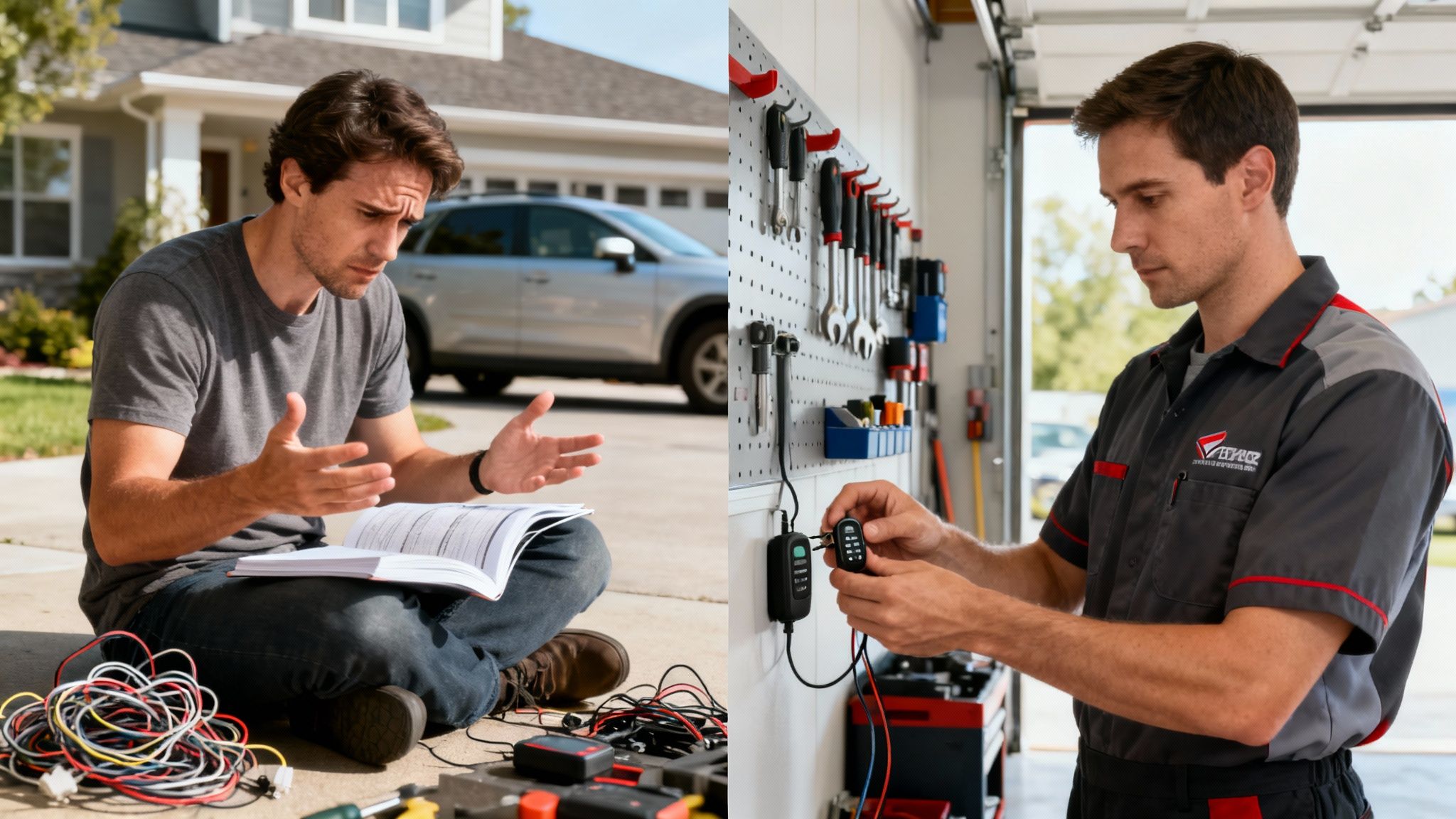
It’s always tempting to try and save some money by tackling a car project yourself. When you look at the cost of a remote starter, cutting out the labour seems like an easy way to slash the price, maybe saving you a couple hundred dollars. But this is one of those jobs where a small mistake can lead to a very big, very expensive problem.
Think of your modern car as a computer on wheels. It’s not just a simple engine and battery anymore; it’s a complex web of sensors, modules, and computer systems all talking to each other. One wrong cut or a misplaced connection during a remote starter install can set off a chain reaction of electrical gremlins. You could be looking at anything from mysterious warning lights to frying a critical computer module that costs thousands to replace.
The Real Cost of a DIY Mistake
When you decide to install the unit yourself, you’re taking on all the liability. There's no warranty on your handiwork, and if something goes haywire, the bill for fixing it lands squarely in your lap.
A seemingly minor slip-up can have serious consequences:
- Voiding Your Vehicle's Warranty: If an electrical problem pops up later, the first thing a dealership will look for is aftermarket wiring. If they find a shoddy DIY installation, they can—and often will—deny warranty coverage for any related damage.
- Creating Security Flaws: The immobilizer bypass is a critical component. If it's installed incorrectly, you could accidentally create a backdoor that makes your vehicle easier for thieves to steal.
- Damaging Expensive Electronics: It is shockingly easy to short out a control module or damage a sensitive circuit board without the right tools and deep knowledge of vehicle electronics.
This isn't just a scare tactic. We're seeing more and more people move away from DIY kits because the risks are just too high. For a deeper dive into why professional know-how is so crucial, these valuable remote starter insights on YouTube are well worth a watch.
Comparing DIY and Professional Remote Starter Installation
To put it all in perspective, let's break down what you're really looking at when you choose between doing it yourself and hiring a pro.
| Factor | DIY Installation | Professional Installation |
|---|---|---|
| Upfront Cost | Lower (parts only) | Higher (parts and labour) |
| Risk of Damage | High (potential for costly electrical damage) | Very Low (technician is trained and insured) |
| Installation Time | Varies widely; can take a full day or more | Predictable; typically 2-4 hours |
| Warranty | Parts warranty only; no coverage for installation errors | Parts and labour warranty for peace of mind |
| Vehicle Warranty | At risk of being voided by improper installation | Protected; work is done to manufacturer standards |
| Tools & Knowledge | Requires specialized tools and vehicle-specific knowledge | All necessary professional tools and expertise provided |
| Peace of Mind | Low; constant worry about potential issues | High; guaranteed to work correctly and safely |
At the end of the day, the choice comes down to your tolerance for risk versus your budget.
The Value of a Professional's Touch
Hiring a professional installer isn't just about paying someone to do the work. It’s an investment in your vehicle and your own peace of mind. A certified technician brings specialized tools, access to the correct vehicle-specific wiring diagrams, and the hands-on experience needed to navigate your car’s electrical maze safely.
A professional installation is your insurance policy against costly electrical nightmares. You're not just buying a service; you're buying the confidence that the job was done correctly, protecting your vehicle's warranty, security, and resale value.
So, while the initial cost to install a remote starter is higher with a professional, it completely eliminates the huge financial risk of a botched DIY job. It guarantees the system works perfectly from day one and is backed by a solid warranty, making it the smarter and safer choice for any modern vehicle.
Why Choose Carmedics Autowerks for Your Whitby Installation?
https://www.youtube.com/embed/UX0GTHraJHU
Figuring out the cost of a remote starter is one thing. Finding an expert in Whitby you can trust with your car’s complex electrical system? That’s the most important part.
Here at Carmedics Autowerks, we’re more than just installers—we're vehicle specialists dedicated to making your car better and more secure. We’ve built our name on trust, deep technical knowledge, and a genuine commitment to doing the job right. We know your car is a huge investment, and we treat it that way.
Our team is made up of certified technicians who live and breathe modern vehicle electronics. We don’t just plug-and-play. We understand the logic behind how your car’s computer networks communicate, which is absolutely essential for a clean, safe installation that works seamlessly with your factory features.
Our Commitment to Quality and Safety
A great installation starts with great products. It's why we only partner with remote starter brands known for their rock-solid reliability and performance. We’ve seen firsthand the electrical nightmares that cheap, off-brand kits can create, and that’s a risk we’ll never pass on to our customers.
Make no mistake, installing a remote starter in a modern vehicle is a highly detailed job. Professional install guides often include a checklist of 90 to 100 specific steps for each make and model to ensure everything integrates perfectly. We follow these exacting standards for every single vehicle that rolls into our bay—no shortcuts, ever.
Your peace of mind is our top priority. We stand behind every installation with a rock-solid guarantee on our workmanship. If you ever run into a problem related to our work, we'll make it right. Simple as that.
Your Local Whitby Experts
Choosing a local shop gives you real accountability and support you can count on. Forget dealing with a faceless online seller or a big-box store. With us, you have a dedicated team right here in Whitby, ready to answer your questions and provide service long after the installation is done. We know Ontario winters, and we can recommend the perfect system for your daily grind.
Ready to add the comfort and security of a professionally installed remote starter to your vehicle? Let's get you a clear, no-obligation quote tailored specifically for your car. As your trusted local shop for auto repair in Whitby, Ontario, we’re here to provide a seamless experience from start to finish.
Give Carmedics Autowerks a call today, and let’s get your car ready for whatever the weather throws at it.
Your Remote Starter Questions Answered
Even with all the numbers laid out, you probably still have a few questions buzzing around. It's totally normal. Most people want to know how this all works and what it means for their car. We hear the same great questions from drivers all over Whitby, so let's clear them up right now.
How Long Will My Car Be in the Shop?
This is usually the first thing people ask. You’ve got places to be, and you need your car. The good news is, for most vehicles, a professional remote starter installation takes between two to four hours.
In that time, our technicians aren't just plugging something in. They're carefully tapping into your car's specific wiring, mounting the control module securely, and running all the necessary tests to make sure every single function works flawlessly. If you drive a newer luxury car with a more complex security system, it might lean toward the longer end of that window, but we’ll always give you a solid time estimate upfront.
A quality installation isn't about speed. That 2-4 hour window is an investment in your vehicle's long-term electrical health and your peace of mind. We make sure every connection is perfect.
Will an Aftermarket Starter Void My Car's Warranty?
This is a huge one, and thankfully, the answer is no. Canadian consumer protection laws ensure that installing an aftermarket part like a remote starter does not automatically void your vehicle’s warranty.
Here’s the important part, though: the warranty can be denied if the aftermarket part or a shoddy installation is the direct cause of a problem. This is exactly why a DIY job can be so risky. One wrong connection could lead to an electrical issue that the manufacturer won't cover.
But when you bring your car to a professional shop like Carmedics Autowerks, you're covered. Our work is guaranteed, so the installation is done right, protecting your warranty and letting you sleep at night.
What's the Real Difference Between a 1-Way and 2-Way System?
This choice comes down to one thing: confirmation. Think of it like sending a text message.
-
A 1-Way System is like sending a text and hoping it went through. You press the button on your remote, a signal goes to your car, and it starts. It’s simple and cost-effective, but you won't know for sure it worked unless you can see or hear the car.
-
A 2-Way System is like getting a "Delivered" notification. You send the command, and your car sends a signal back to your key fob. The fob will then beep, vibrate, or flash a light to let you know the engine is running. This is a game-changer when you're starting your car from inside a grocery store, your office building, or a busy restaurant.
That little bit of feedback from a 2-way system provides a level of confidence that most drivers find is easily worth the extra cost.
Will I Have to Carry Another Fob on My Keychain?
Not always! You've got a few different ways to go, depending on the system you pick and what your car supports.
-
New Fobs are Included: Most remote starter kits come with their own dedicated remotes—usually a pair of them. These are built for the system and give you the best possible range and features.
-
Use Your Factory Fob: Some smart systems can be programmed to work with the key you already have. The most common setup is pressing the "lock" button three times to start the car. It's a fantastic option if you hate keychain clutter.
-
Control it with Your Phone: For the ultimate in range and convenience, you can skip the fob altogether. Smartphone-based systems use an app to let you start, lock, and even find your car from virtually anywhere you have a cell signal.
We can walk you through the pros and cons of each to find the perfect fit for how you use your vehicle.
Ready to stop dreading those cold winter mornings? The team at Carmedics autowerks inc is here to get your vehicle set up with a professional, reliable remote starter. Get your personalized quote today!