

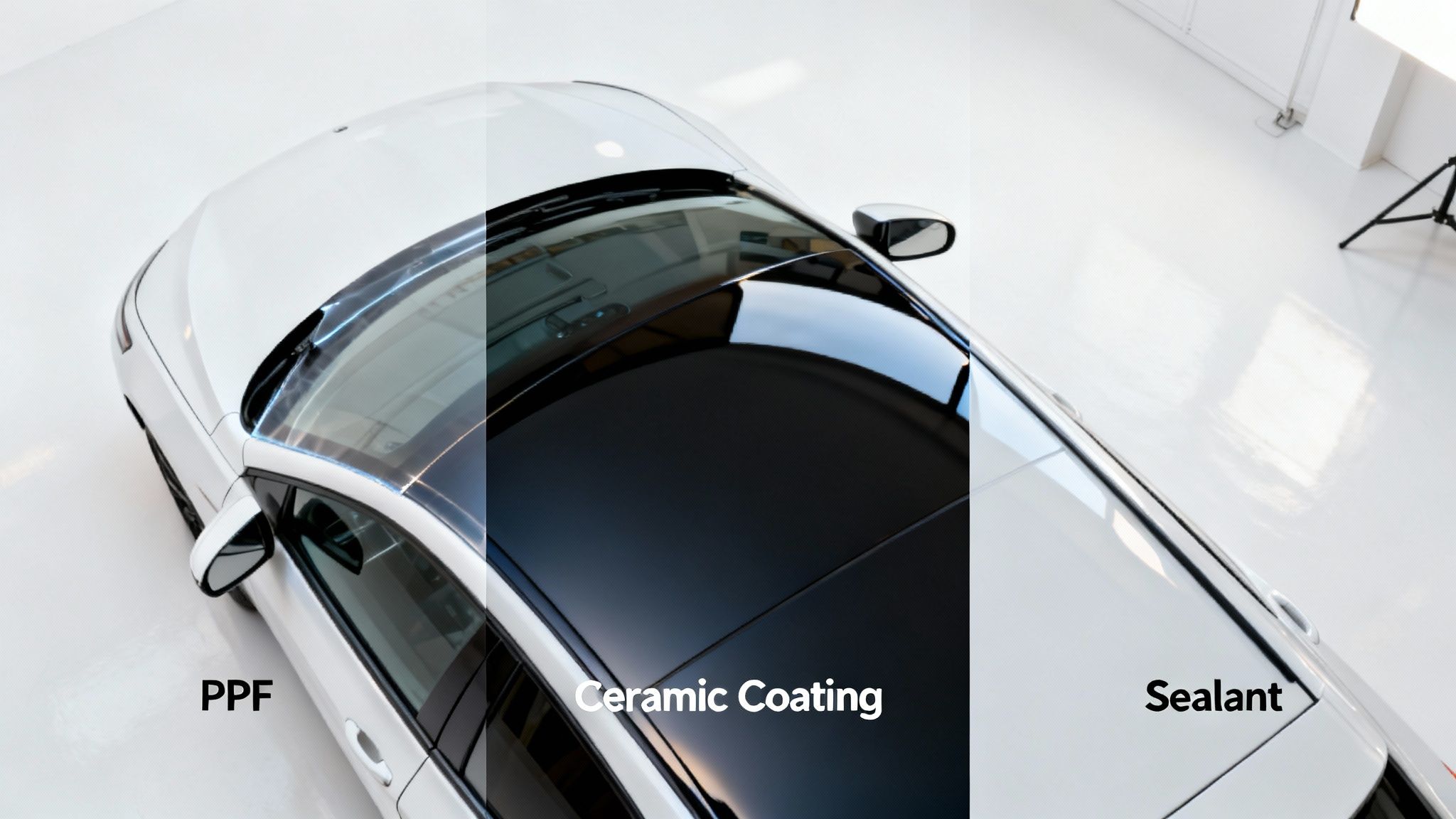
So, what’s the best car paint protection? Honestly, it all comes down to what you’re trying to achieve.
If you’re looking for bulletproof physical defence against rock chips and scratches, nothing beats Paint Protection Film (PPF). But if you’re after that insane, dripping-wet gloss and protection from chemical stains, a professionally installed ceramic coating is the way to go. For a simple, budget-friendly shine that lasts a few months, a paint sealant is a great practical choice.
Your Quick Guide to Paint Protection Options
Stepping into the world of car care can feel a bit overwhelming. You’ve got all these different products promising the moon, and it's hard to tell what’s what. The secret is knowing that each one has a specific job. Think of it like a winter jacket: you have light windbreakers, rain shells, and heavy-duty parkas. They all offer protection, but you grab the one that makes sense for the weather.
It’s the exact same idea here. There’s no single "best" answer that fits everyone. It's all about matching the right product to your car, your driving habits, and what you want for it in the long run.
The Three Main Contenders
To make this simple, let's break down the three main players in the paint protection game. Each one brings something different to the table in terms of durability, looks, and how it defends your paint. Getting a handle on these differences is the first real step to choosing with confidence.
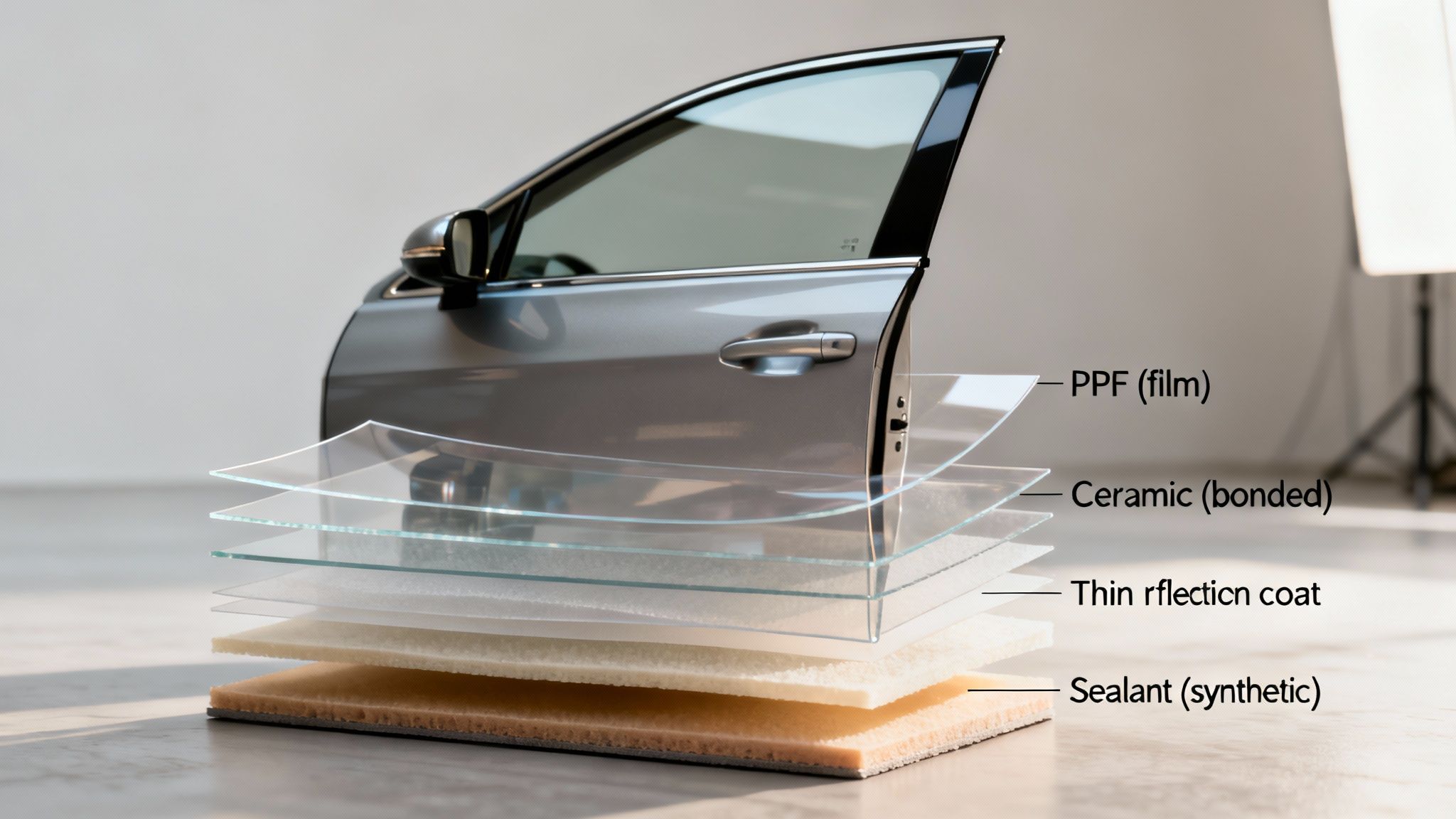
- Paint Protection Film (PPF): This is the heavyweight champion of physical protection. It's a thick, clear urethane film that acts like a suit of armour for your paint. It’s the only thing that will genuinely stop damage from rock chips, road debris, and minor scrapes.
- Ceramic Coating: This is a liquid polymer that gets applied by hand and forms a chemical bond with your car’s clear coat. It hardens into a super-slick, glass-like shell that delivers incredible gloss, UV protection, and makes water bead up and fly right off. This makes your car ridiculously easy to keep clean.
- Paint Sealant: Think of this as a modern, synthetic step-up from old-school wax. It’s a polymer that bonds to the paint, giving you a nice shine and decent protection from the elements for a few months at a time. It’s a solid entry-level option.
Here’s the key takeaway: PPF stops physical impacts. Ceramic coatings defend against chemical damage and make your car look amazing. Sealants are a temporary, low-cost way to get some shine and basic protection.
Car Paint Protection At a Glance
To put it all into perspective, here’s a quick-glance table comparing the big three. This should help you see right away which one lines up best with your priorities and budget.
For anyone who really wants to dive deep into how that physical armour works, check out our ultimate guide to Paint Protection Film.
| Protection Type | Primary Benefit | Durability | Average Cost (CAD) |
|---|---|---|---|
| Paint Protection Film (PPF) | Impact & Scratch Resistance | 8-12 Years | $2,000 – $7,000+ |
| Ceramic Coating | Chemical Resistance & Gloss | 2-7 Years | $900 – $2,500+ |
| Paint Sealant | Affordability & Shine | 4-6 Months | $100 – $300 |
This chart really simplifies things, doesn't it? You can immediately see the trade-offs between cost, how long it lasts, and what kind of protection you're actually getting. Now, let’s dig into the details of each one.
Understanding Your Paint Protection Options
Before you can pick the right shield for your car, you need to know what you’re actually buying. Each type of paint protection uses completely different technology to keep your vehicle's finish looking pristine. Getting a handle on these concepts is the key to figuring out why one might be a perfect fit for your lifestyle while another falls short.
Let's break down the three main players in simple, real-world terms. We'll look at what they are, how they actually work, and what that means for your car out on the road.
Paint Protection Film: The Physical Shield
Paint Protection Film (PPF) is basically a transparent, self-healing urethane layer that acts as a physical barrier. Think of it as a clear, high-tech suit of armour for your car's most vulnerable spots, like the front bumper, hood, and mirrors. Its main job is to take a hit so your paint doesn't have to.
When a rock or bit of road debris gets kicked up, the film's flexible material absorbs and disperses the force, preventing it from chipping the paint underneath. What’s more, its unique self-healing properties mean minor scuffs and swirl marks often vanish with a bit of heat, like a warm, sunny day. This makes PPF the undisputed champion for stopping rock chips.
PPF's entire purpose is impact absorption. It’s the only product out there designed to physically stop projectiles from damaging your paintwork, making it an essential investment for daily commuters and anyone who spends a lot of time on the highway.
And it's a technology that's catching on fast. North America is the biggest player in the global PPF market, which is set to grow at a 6.7% CAGR from 2025-2030. The U.S. market alone was valued at over USD 502 million in 2024. These numbers show just how quickly drivers are turning to PPF for serious protection.
Of course, paint isn't the only thing to protect. While your car is parked, it's worth exploring physical protection options like vehicle covers for an extra layer of defence.
Ceramic Coatings: The Chemical Hard Shell
Unlike a physical film, a ceramic coating starts as a liquid polymer that’s carefully applied by hand. It forms a chemical bond with your car's factory paint, curing into a semi-permanent, hardened layer that feels slick as glass. This creates an incredibly hydrophobic, or water-repellent, surface.
That slickness is the magic behind why coated cars are so easy to clean. Water, dirt, and grime have a tough time sticking and often just slide right off. The hardened layer also provides solid protection against:
- UV rays that cause paint to fade and oxidise
- Chemical stains from bird droppings and bug guts
- Light swirl marks from washing
Ceramic coatings are all about boosting gloss and providing tough chemical resistance, keeping your car looking like it was just detailed with way less effort.
Paint Sealants: The Synthetic Barrier
Finally, we have paint sealants, which are the most accessible option of the three. These are synthetically engineered polymers designed to bond to your paint's surface, creating a protective layer that delivers a brilliant shine and a good dose of protection.
Sealants are much easier to apply than a full ceramic coating and last significantly longer than traditional carnauba waxes—usually for several months. They're a fantastic choice for enthusiasts who enjoy the process of regularly maintaining their car’s finish or for anyone looking for a cost-effective way to get better-than-wax protection and a deep, glossy look.
A Detailed Comparison of PPF, Ceramic Coatings, and Sealants
Alright, let's move past the basics and get into a real head-to-head showdown. To figure out which paint protection is right for you, we need to compare them on the things that actually matter to car owners: defence against physical hits, resistance to chemicals and the environment, how easy they make cleaning, and of course, how they look.
This breakdown will show you exactly where each option shines, helping you weigh the trade-offs. The goal is to make a decision based on your real-world needs, not just some marketing hype.
Round 1: Impact and Scratch Resistance
When it comes to stopping physical damage, this isn't even a fair fight. Paint Protection Film (PPF) is in a league of its own. Its thick, flexible urethane material is literally built to absorb the impact of road debris. That stone kicked up by a truck on the highway? It would easily chip your paint, but a good PPF will stop it cold.
Ceramic coatings and sealants, on the other hand, offer very little help here. A top-tier ceramic coating does harden the paint surface—often rated at a 9H pencil hardness—but it's still just a microscopic layer. It might help fend off super-light swirl marks from a bad car wash, but it won't do a thing against a rock chip or a key scratch. Sealants offer zero protection in this department.
While a ceramic coating offers superior chemical resistance, only PPF can physically stop a rock chip from damaging your paint.
This single difference is often the deal-breaker. If your main worry is preventing chips and dings from daily driving, PPF is the only real answer. This is especially true if you live somewhere with rough roads or lots of construction.
It's no surprise that places like California are hotspots for PPF. The combination of luxury cars and tough environmental factors makes it a no-brainer. In fact, the U.S. PPF market was worth USD 79.6 million back in 2022 and is expected to grow at a 6.4% CAGR through 2030. That kind of growth tells you it works.
Round 2: Chemical and UV Protection
Here's where the tables turn, and ceramic coatings take the crown. A professionally applied coating creates a chemical bond with your car's clear coat, forming a hard, glass-like shield. This surface is incredibly resistant to the acidic gunk that would normally eat right into your paint.
A ceramic coating is your best defence against:
- Bird Droppings: These are highly acidic and can cause permanent damage in just minutes.
- Bug Splatter: The guts contain enzymes that literally eat away at clear coats.
- Tree Sap: A sticky mess that can bond to paint and be a nightmare to remove.
- UV Radiation: It acts like a powerful sunscreen, stopping the sun from fading and oxidizing your car’s colour.
PPF also does a great job of blocking UV rays and chemicals, protecting the paint underneath. The key difference is that the film itself is taking the abuse. A quality ceramic coating is simply harder and more resilient against a wider range of chemical attacks than the top layer of most films.
Paint sealants offer a temporary barrier. They’ll do the job for a few months, but they break down quickly and need to be reapplied constantly to keep up any meaningful protection.
Round 3: Hydrophobics and Ease of Cleaning
That amazing "hydrophobic" effect—where water beads up into tiny, perfect spheres and rolls right off—is the signature move of a ceramic coating. This isn't just for show; it makes keeping your car clean incredibly easy. The slick surface prevents dirt, mud, and grime from getting a good grip.
What this means for you is faster, easier washes. A lot of the time, a simple rinse with a hose is enough to get rid of light dust. This "self-cleaning" property is one of the biggest reasons people fall in love with ceramic coatings.
Modern PPF has come a long way and now often includes a hydrophobic top coat that does a good impression of a ceramic coating. It's effective, for sure, but it might not quite match the extreme slickness and intense water-beading of a premium, standalone ceramic product.
A fresh coat of paint sealant will also make water bead up nicely. The catch? That effect starts to fade fast, often becoming noticeably weaker after just a few weeks on the road.
Round 4: Aesthetics, Gloss, and Colour Depth
If you're chasing that deep, wet, candy-like gloss, a ceramic coating is the undisputed champion. It adds a tangible layer of glass-like clarity that refracts light in a way that dramatically enhances the richness and depth of your paint. The finish often looks even better than it did in the showroom.
You'll really see the difference on dark-coloured cars. If you want to take that mirror-like shine to the next level, our guide on the best wax for black cars has some great tips for maintaining that incredible depth.
PPF is engineered to be optically clear and basically invisible. Today's films do add a nice bit of shine, but their main job is protection, not looks. A sealant will also boost gloss, but it usually gives off a warmer, softer glow compared to the sharp, crystal-clear finish of a ceramic coating.
Head-to-Head Feature Comparison
To make things even simpler, here’s a table that breaks down how each option performs across the most important categories. You can quickly see how they stack up based on what matters most to you.
| Feature | Paint Protection Film (PPF) | Ceramic Coating | Paint Sealant |
|---|---|---|---|
| Impact Resistance | Excellent (Best in class) | Poor | None |
| Chemical Resistance | Very Good | Excellent (Best in class) | Fair |
| Hydrophobic Properties | Good to Very Good | Excellent (Best in class) | Good (Short-term) |
| Enhanced Gloss | Good | Excellent (Best in class) | Good |
| Durability | 8-12 Years | 2-7 Years | 4-6 Months |
| Self-Healing Ability | Yes (With heat) | No | No |
At the end of the day, finding the "best" protection isn't about one product doing everything perfectly. It’s about understanding these key differences and choosing the solution—or maybe even a combination of them—that makes the most sense for your car, your driving habits, and what you want it to look like.
Which Protection Fits Your Lifestyle? Real-World Scenarios
Forget the technical charts for a moment. All the data in the world doesn't tell the full story. The best car paint protection isn't about which product is technically superior on paper; it's about which one is right for you. Your daily drive, where you park, and what you care about most—be it gloss, physical protection, or budget—will point you to the right answer.
Let's put this into practice and look at how these choices play out in the real world. I find that walking through a few common driver profiles helps people see themselves in the examples, making the decision a whole lot clearer.
This simple decision tree is a great starting point to quickly see where your priorities lead.
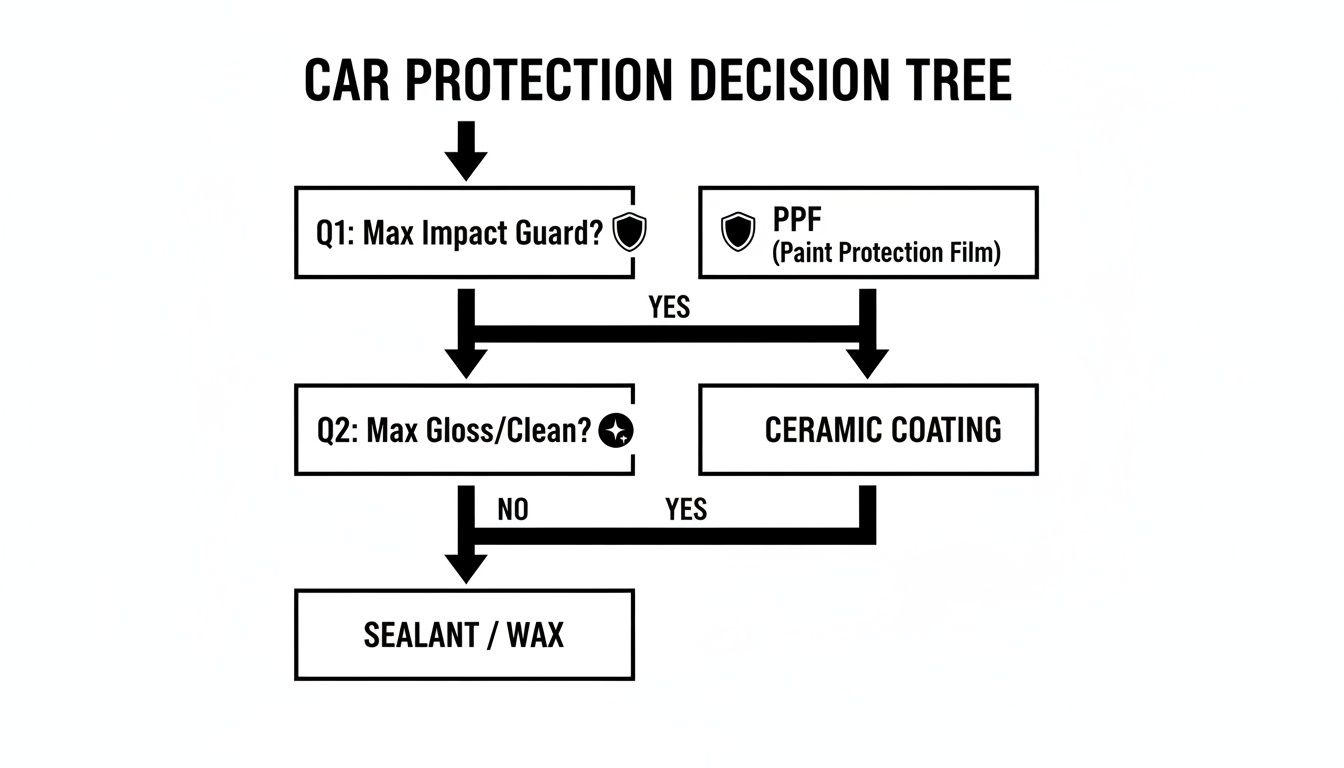
As you can see, if you're trying to stop physical damage, PPF is the only real game in town. But if you're chasing that incredible shine and want cleaning to be a breeze, a ceramic coating is your go-to.
The Daily Highway Commuter
Picture the driver who spends hours on the 401 every week. Their car is in a constant battle with road salt, sand, gravel, and whatever debris gets launched by the transport trucks ahead. The front end of their vehicle is a magnet for rock chips, putting the paint under relentless attack.
For this person, the number one enemy is physical impact. A ceramic coating is great for making road grime slide right off, but it won’t do a thing to stop a flying stone.
Recommendation: Paint Protection Film (PPF) is non-negotiable for a highway warrior. I almost always recommend a "full front" package, which covers the entire hood, front bumper, fenders, and side mirrors. This creates a tough, sacrificial barrier that takes the daily beating, keeping the factory paint underneath pristine.
You can always add a ceramic coating on top of the PPF for even easier cleaning, but the film itself is the essential first line of defence. This is an investment in stopping predictable, daily damage in its tracks.
The Weekend Show Car Enthusiast
This is the owner whose pride and joy only comes out on sunny weekends. It's stored in a garage, kept meticulously clean, and its main job is to look absolutely breathtaking. They are chasing that deep, wet, mirror-like gloss that makes the paint’s colour pop.
Rock chips aren't a huge worry here since the car isn't exposed to harsh daily driving. The focus is purely on aesthetics and protecting the finish from things like bird droppings, tree sap, and UV rays during a weekend cruise.
- Primary Goal: Jaw-dropping gloss and colour depth.
- Secondary Goal: Shielding against chemical etching and contaminants.
- Key Consideration: The car has to be incredibly simple to clean to maintain that show-ready shine.
For this driver, the choice is easy.
Recommendation: A professional-grade ceramic coating is the perfect solution. It adds a hard, candy-like shell that makes the paint look a foot deep. Plus, its incredible hydrophobic properties mean a quick, gentle wash is all it takes to make it look flawless again. The built-in UV and chemical resistance keeps that perfect finish safe for years.
The New Vehicle Owner
So, you've just made a huge investment in a new vehicle. Naturally, you want to keep it looking showroom-new for as long as you possibly can. You’re looking for complete protection that covers all the bases—impacts, chemicals, and environmental fallout—to protect your investment and lock in its future resale value.
This owner needs a balanced strategy. They might commute, but they also take immense pride in their car's appearance. Choosing just one product could leave a major vulnerability. This is where a hybrid approach often provides the best car paint protection.
Recommendation: A hybrid solution offers the ultimate peace of mind. This means installing PPF on high-impact zones—think the front bumper, hood, and mirror caps. After that, a ceramic coating is applied over the entire vehicle, including right over the new film.
This combination truly delivers the best of both worlds:
- Impact Armour: The PPF acts as a shield for the most vulnerable areas, deflecting rock chips and scratches.
- Gloss & Chemical Shield: The ceramic coating blankets the whole car in a slick, easy-to-clean layer, protecting both the PPF and the exposed paint from UV damage and stains.
This dual-layer strategy really is the pinnacle of paint preservation. Of course, protecting the body is just one piece of the puzzle, especially with our Canadian winters. Learning about the best rust prevention for cars is another critical step to ensure your investment is protected from the inside out.
The True Cost and Value of Paint Protection

Let's be honest, when you're looking at different types of paint protection, the price is usually the first thing that jumps out. It's a huge range. You could grab a bottle of paint sealant and spend an afternoon doing it yourself, or you could opt for a professional, full-vehicle Paint Protection Film (PPF) installation, which is a serious financial commitment. It's easy to get sticker shock and focus only on the cost.
But here’s the thing: thinking of it as just a "cost" is missing the bigger picture. This is an investment in your vehicle's future. It’s about protecting its condition and, crucially, its resale value down the line. The real question isn’t what you pay today, but what it’s going to save you tomorrow.
Breaking Down the Investment
The money you'll spend on paint protection varies wildly, and it's important to understand what you're getting at each level. The price is a direct reflection of the technology being used, the skill and time required for the installation, and how long it's going to last.
- Paint Sealants (DIY): This is your entry-level option. You’re looking at $50 to $150 for the materials. It gives you a nice immediate shine and some basic protection for a low price, but you'll be re-applying it every few months to keep it up.
- Ceramic Coatings (Professional): This is a big step up. A professional ceramic coating can run anywhere from $900 to over $2,500. That price usually includes a full paint correction beforehand, which is essential. You want the paint to be perfect before you lock that shine in for years to come.
- Paint Protection Film (PPF): This is the top-tier choice. A "front-end" package covering the most vulnerable areas might cost around $2,000, while a full-body wrap can go north of $7,000. You’re paying for a physical shield that acts like armour for your paint.
The upfront expense for PPF or a high-quality ceramic coating isn't just about looking good. It’s a calculated move to head off much bigger repair bills from rock chips, bird droppings, and all the other things that wreck a car's finish.
The Return on Investment: Resale and Repairs
The real value of paint protection becomes obvious after a few years of ownership, especially with the tough driving conditions we see across Canada. An unprotected car collects damage fast, and fixing it isn't cheap. A single rock chip repair can set you back hundreds, while serious paint correction can easily climb into the thousands.
This is where that initial investment really starts to pay dividends. We’ve seen that cars protected with PPF in harsh environments need 80% fewer rock chip repairs. Those savings add up quickly. More than that, a car with pristine paint is worth a lot more when you go to sell it. Protected vehicles consistently fetch higher prices on the used market because buyers know they've been cared for. You can see a full breakdown of how PPF cost compares to repainting your car in our deep-dive article.
The proof is in the numbers. Some industry studies have shown that vehicles with protection maintain 98% of their paint integrity after 10 years. Compare that to an untreated car, which can lose a noticeable amount of its gloss and clarity in just a few short years. At the end of the day, protecting your paint isn't just about stopping a few scratches—it's about preserving the most visible, and valuable, part of your car.
Common Questions About Protecting Your Car’s Paint
Choosing the right paint protection can feel like a big decision, so it's natural to have a few lingering questions. Let's tackle some of the most common ones we hear from car owners. My goal here is to give you clear, straightforward answers to help you feel confident in your choice.
Can You Put a Ceramic Coating on Top of a Paint Protection Film?
You absolutely can, and honestly, it’s the ultimate combo for total protection. Think of it as the best of both worlds.
When you layer a ceramic coating over PPF, you're adding a super slick, hydrophobic surface to the film. This makes water bead up and roll right off, taking dirt with it. Your car becomes dramatically easier to wash and the gloss factor goes through the roof.
In this setup, the PPF does the heavy lifting, providing that physical barrier against rock chips and scratches. The ceramic coating then acts as a shield for the film itself, protecting it from UV rays, bird droppings, and other environmental gunk. It's a fantastic pairing that we often recommend for anyone who wants zero compromises.
How Long Does Each Type of Protection Actually Last?
This is a big one, because durability is where you really see the value. The lifespan of any protection depends on three things: the quality of the product, the skill of the installer, and how you look after it.
Here’s a realistic breakdown of what to expect:
- Paint Sealant: This is your shortest-term option. A good synthetic sealant will typically give you 4 to 6 months of protection before it starts to fade, especially with frequent washing or harsh weather.
- Ceramic Coating: Here's where we get into long-term territory. A professionally applied ceramic coating can last anywhere from 2 to 7+ years. The exact lifespan depends on the quality of the coating and your commitment to proper maintenance.
- Paint Protection Film (PPF): For the longest-lasting defence, PPF is the clear winner. Top-tier films come with warranties for 10 to 12 years against yellowing, peeling, or cracking.
The bottom line is simple: longevity is tied directly to your investment. A sealant is a temporary fix, while ceramic coatings and PPF are long-term commitments to preserving your vehicle's finish.
If you want to get really deep into this, you can learn more about how long PPF lasts in our detailed guide. It covers all the factors that impact its lifespan and what you can do to get the most out of it.
Is Paint Protection Worth It for an Older Car?
Yes, but there’s a critical first step. You can't just seal in existing scratches and swirls. Before any protection is applied to an older car, the paint needs to be brought back to its best possible condition.
This is done through a process called paint correction. A professional detailer will meticulously polish the paint to remove imperfections like swirl marks, light scratches, and oxidation. This is what restores that deep, glossy shine and makes the colour pop again.
Once the paint looks fantastic, applying a ceramic coating or PPF is the perfect way to lock in that finish. It protects the newly restored paint from getting damaged again, keeping the car looking sharp for years. It’s a brilliant way to breathe new life into a vehicle you love.
What Kind of Maintenance is Required After It's Applied?
Proper maintenance is everything. No paint protection is a "set it and forget it" solution, but they do make keeping your car clean significantly easier.
For both PPF and ceramic coatings, regular hand washing is the way to go. Use the two-bucket method with a pH-neutral car soap and a clean microfibre mitt to avoid creating new swirls. Steer clear of automatic car washes with harsh brushes—they can damage both coatings and films over time.
For ceramic coatings, a silica-based maintenance spray every few months will boost its hydrophobic properties and keep it performing like new. For PPF, the main thing is just keeping it clean. Your installer should always give you a detailed list of aftercare instructions tailored to the specific product on your car.
At Carmedics Autowerks Inc, our passion is providing the highest quality paint protection solutions to keep your vehicle looking incredible for years. Visit us online to explore our PPF and ceramic coating services and find the perfect protection for your car.