That gut-wrenching clunk or sudden grinding noise from your car? We’ve all been there. It’s a sound that immediately brings on a wave of stress. But finding an auto repair service you genuinely trust can turn that anxiety into peace of mind, and it all starts with tapping into your local community.
Starting Your Search for a Trusted Mechanic
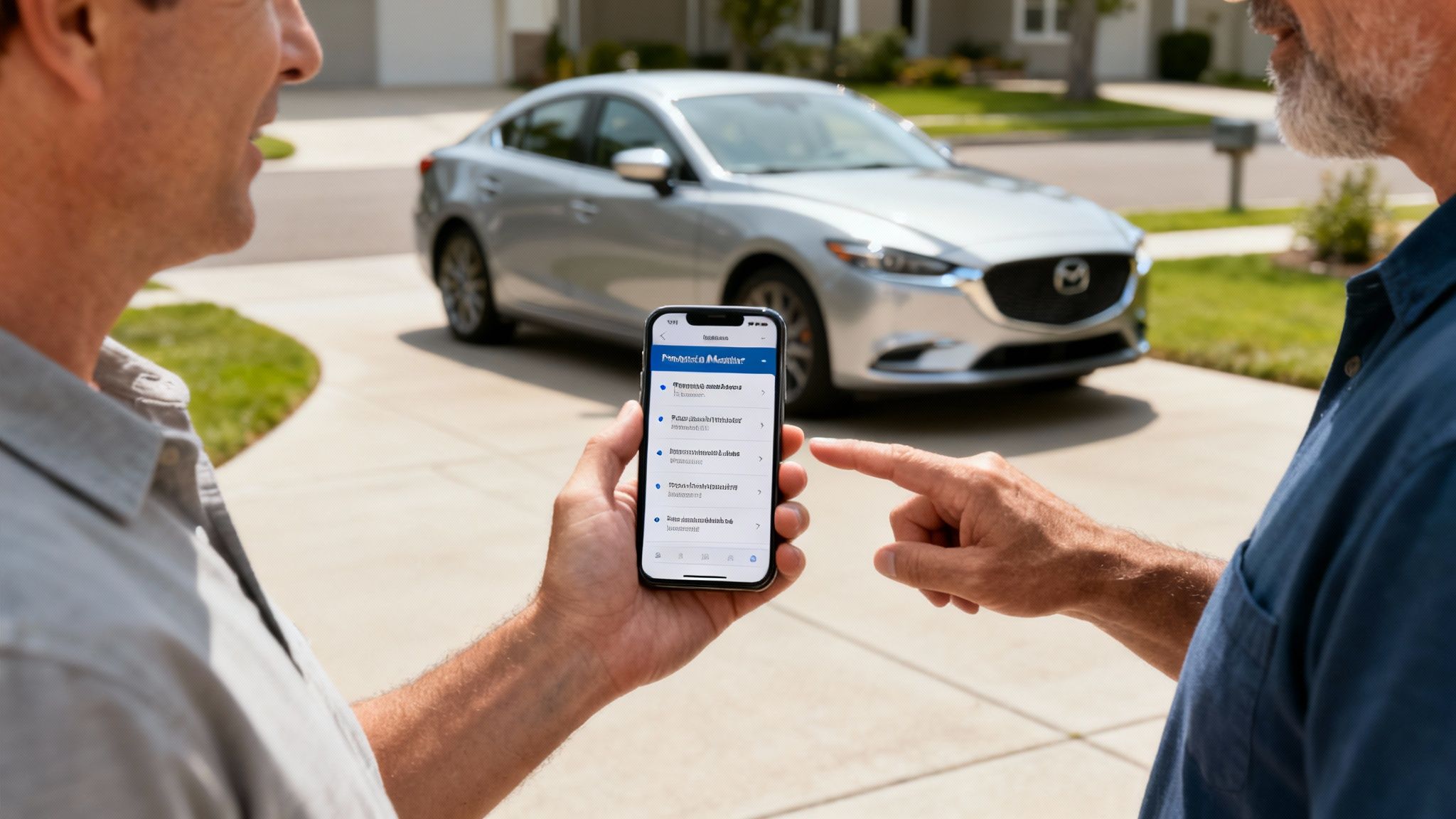
Before you even touch a search engine, your quest for a reliable mechanic should begin much closer to home. Your most powerful tool is your personal network.
Tap into Your Local Network
Start by talking to people you already trust—your neighbours, friends, or coworkers. Ask them who they rely on for car repairs. But don't stop there. The real gold is in the why.
Instead of just getting a name, dig for specifics. Ask about their communication style, how they handled a tricky diagnostic issue, or if they ever felt overcharged.
A truly great referral sounds less like a business card and more like a story:
"You have to try Dave's Auto over on Main. My check engine light was on, and another place quoted me a fortune for a new catalytic converter. I took it to Dave's for a second opinion, and his team found it was just a bad oxygen sensor. Saved me over a grand, and they even showed me the faulty part. Total honesty."
That’s the kind of detailed feedback that separates the good shops from the great ones. This principle applies to more than just mechanics. For instance, the process of finding a trustworthy automotive appraiser relies on the same kind of detailed, experience-based vetting.
Strategically Use Online Resources
With a few names in your pocket, it's time to do some online homework. Use review sites to see if the word-of-mouth recommendations hold up and to discover a few more potential shops. Make sure to filter for recent reviews, as a shop's quality can change over time.
In a place like California, where some counties boast as many as 55.0 repair shops per 100,000 people, you'll have no shortage of options. This abundance makes a solid vetting process absolutely critical.
Once you have a solid shortlist, a quick phone call can often tell you everything you need to know before you even book an appointment. If you want a deeper dive, our guide on what makes a quality auto shop offers a great checklist.
Why Certifications and Specializations Are a Big Deal
So, you've got a handful of potential shops in mind. Great. Now it's time to dig a little deeper into their credentials. This is a step many people skip, but it’s one of the most important for finding the best auto repair services around.
Think about it: automotive technology is evolving at an incredible pace. You wouldn't trust a surgeon who stopped learning 20 years ago, and the same principle applies to the person working on your vehicle's complex computer systems. Certifications prove a shop is serious about staying current.
Decoding the Most Common Credentials
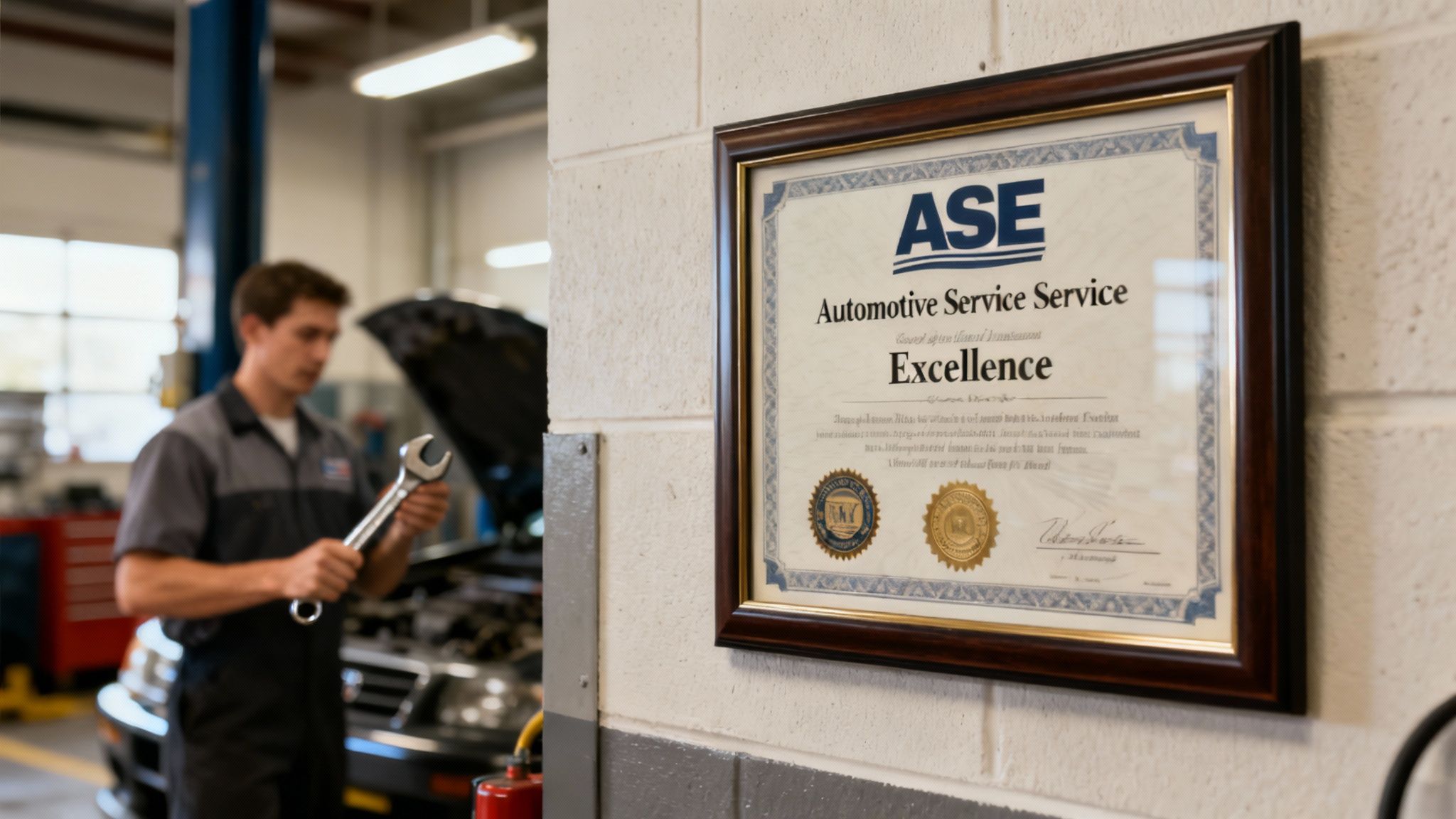
When you're looking at a shop's website or walking into their front office, keep an eye out for logos and certificates. The most respected one in North America is the ASE (Automotive Service Excellence) certification.
This isn't some online course a technician can finish in a weekend. Earning an ASE certification requires passing tough, specialized exams and proving they have real-world, hands-on experience. Seeing that blue and white ASE seal means the shop invests in professionals who know their stuff.
Beyond that, look for shops that have a specific focus. Do they specialize in:
- European Imports: Deep knowledge of brands like BMW, Audi, and Mercedes-Benz.
- Asian Imports: Expertise with manufacturers such as Toyota, Honda, and Subaru.
- Domestic Vehicles: Specialized training for Ford, GM, or Chrysler group vehicles.
This isn't just marketing fluff. A specialist has seen the common issues for your specific make and model hundreds of times. They’ve already invested in the proprietary diagnostic tools and have the experience to get right to the source of the problem.
You might pay a slightly higher hourly rate for a German import specialist, but they’ll diagnose that tricky electrical fault in an hour instead of four. That initial investment almost always saves you money and headaches down the road.
Understanding the most common certifications helps you evaluate a technician's expertise and a shop's commitment to quality standards.
Key Auto Repair Certifications at a Glance
| Certification | What It Means for You | Why It Matters |
|---|---|---|
| ASE (Automotive Service Excellence) | The technician has passed rigorous exams and has proven, hands-on professional experience. | This is the industry-wide benchmark for competence and a strong sign of a qualified professional. |
| Manufacturer-Specific | The technician has been trained directly by a carmaker (e.g., Toyota, Ford) on their vehicles. | They have access to proprietary tools and knowledge, making them ideal for warranty or complex repairs. |
| Specialty Certifications | This indicates expertise in a specific area like transmissions, advanced diagnostics, or hybrids. | Ensures you have an expert working on the most complex systems in your vehicle. |
These certifications are your assurance that the technicians aren't just guessing—they're following industry-best practices and have the verified skills to back it up.
The Specialist Advantage in Action
Let’s say the infotainment system in your new import SUV is on the fritz. A generalist shop might spend hours trying to figure out the problem, swapping parts and charging you for every minute. A specialist, on the other hand, might know it’s a common software bug that requires a simple re-flash they can do in 30 minutes.
This applies to more than just engine work. For example, if you're getting protective paint film installed, you want a shop that’s certified by the manufacturer. Technicians at shops offering products from brands like XPEL often undergo specific training to master the application process.
That specialized training is the difference between a flawless finish and a job full of bubbles and peeling edges. It’s all about getting it done right the first time.
How to Read Online Reviews Like a Pro
Online reviews are a fantastic starting point for finding a great mechanic, but you have to know how to read between the lines. A flawless five-star average can sometimes be too good to be true, and a handful of bad reviews doesn't automatically mean you should run for the hills. The real insights are in the details.
Don't just glance at the overall star rating. Dig into what people are actually saying. A vague comment like "Great service!" doesn't tell you much. What you're looking for are reviews that paint a picture. For example, a customer describing how the technician patiently explained a complex engine problem is far more telling than a simple thumbs-up. Look for reviews that mention names, the specific work done, and whether the final bill matched the initial quote.
The Power of Negative Reviews
This might sound backward, but a shop's one-star reviews can be incredibly revealing. The complaint itself is only half the story; the real gold is in how the owner responds. If the owner gets defensive, makes excuses, or ignores the comment entirely, that's a huge red flag.
On the other hand, a calm, professional response that acknowledges the customer's frustration and tries to make it right? That shows integrity. It tells you they stand behind their work and value their reputation. An owner who handles criticism well is exactly who you want in your corner when your car has a tricky, unexpected issue.
An owner who takes the time to publicly address a bad experience shows they're accountable. That's the kind of problem-solver you want working on your car, not someone who disappears when things go wrong.
Spotting Genuine vs. Fake Feedback
As you scroll, you'll start to notice patterns that separate the real stories from the fakes. Here’s what to look for in authentic reviews:
- Specifics Matter: Genuine customers often mention the make and model of their car, the exact issue they had (e.g., "my 2018 Honda CR-V was making a rattling noise"), and how long the repair took.
- A Balanced View: Even a glowing review might mention a minor hiccup, like the repair taking a bit longer than quoted. This kind of detail actually makes the feedback more credible.
- Unique Wording: If you see multiple reviews that use the exact same phrases over and over, be skeptical. Real customers describe their experiences in their own words.
By approaching online reviews with this critical mindset, you can build a much more accurate picture of a shop's competence and how they treat their customers.
Making Sense of Repair Estimates and Pricing

An auto repair estimate shouldn't read like a foreign language. The key to getting a fair price and finding the best auto repair services is knowing exactly what you're paying for. Before a single wrench is turned, you should have a detailed, written estimate in your hand—no exceptions.
This document needs to be more than just a total; it should clearly separate costs so you can see the full picture. If a shop gives you a vague quote or pressures you to approve the job immediately, take that as a major red flag and walk away.
What to Look for in Your Quote
A proper, professional estimate will always break down the costs into a few core parts. You should be able to clearly identify:
- Parts: This is a list of every single component required for the job, whether it's a simple oil filter or a sophisticated engine sensor. A good shop will even tell you if they're using Original Equipment Manufacturer (OEM) parts or aftermarket alternatives.
- Labour: This is what you're paying for the technician's time and skill. It’s typically calculated using a standard hourly rate multiplied by the estimated time needed for the repair.
- Shop Fees: These are small but necessary charges that cover miscellaneous supplies like lubricants, cleaning solvents, and the environmentally safe disposal of old parts and fluids.
It's also worth knowing the difference between a diagnostic fee and the actual repair estimate. Many shops will charge a flat fee just to figure out what's wrong with your vehicle. Often, this fee is waived or credited toward your final bill if you decide to go ahead with their recommended repairs.
Never give a verbal "okay" to start work without a written estimate first. This piece of paper is your best protection against surprise charges and acts as a clear agreement on what work will be done and at what cost.
This kind of transparency is the bedrock of the entire auto care industry. Just look at California's auto repair market, which is valued at a staggering $10.9 billion as of early 2025. A market that massive depends entirely on drivers trusting that their mechanics are being upfront and honest.
While we're on the topic of costs, many people assume that electric vehicles are automatically cheaper to maintain. It's worth looking into the realities of electric car maintenance costs to get a more complete picture.
Remember, the lowest quote isn't automatically the best deal. A suspiciously cheap estimate might mean the shop is using low-quality parts or rushing the job, which could cost you a lot more down the road. You should always compare quotes based on the detail and quality they promise, not just the final number.
Taking a Look Around the Shop in Person
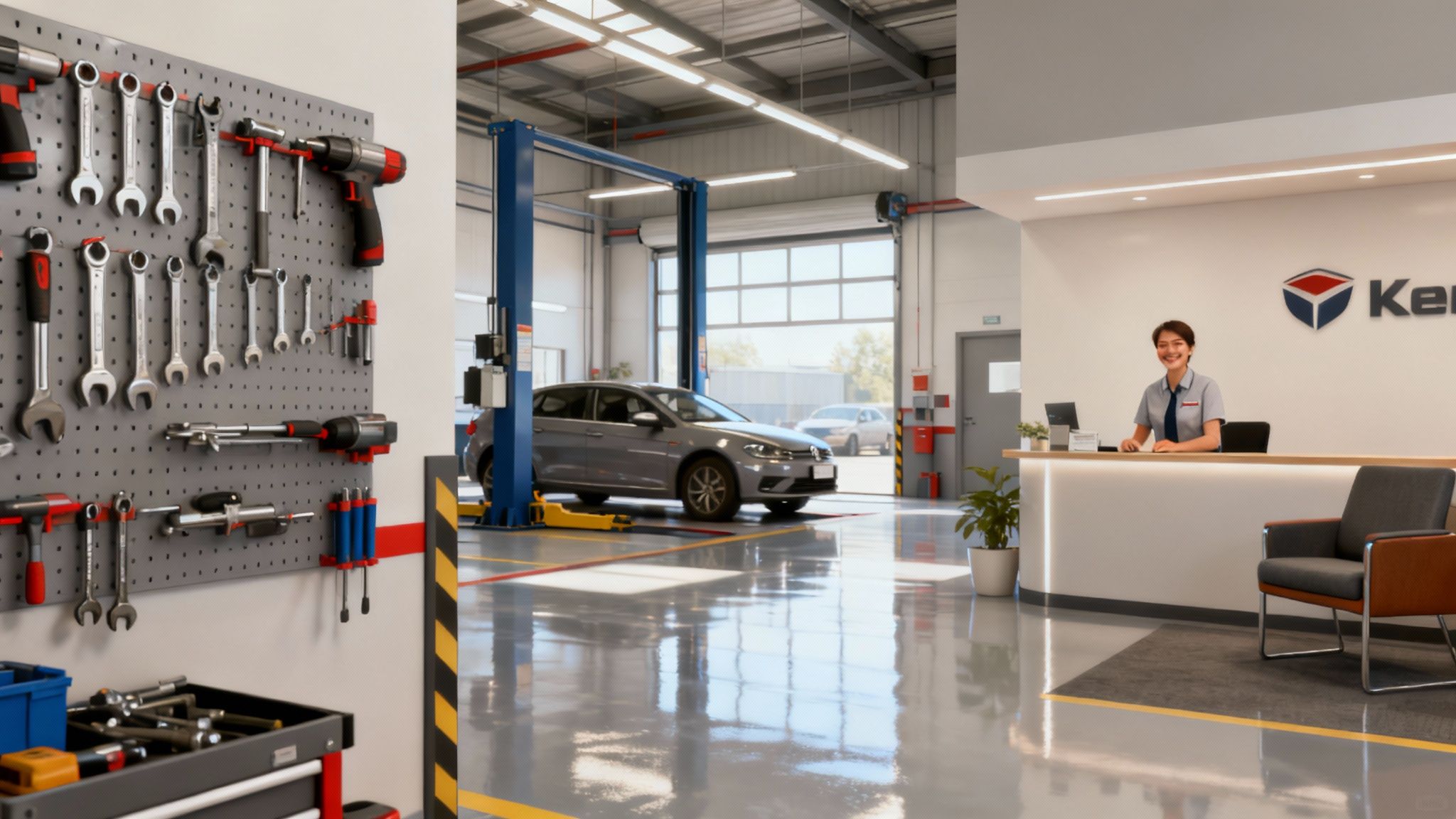
After all the online research, the in-person visit is where you really get a feel for a place. This is your gut-check moment. The way a shop looks, feels, and how the staff treats you can tell you more than a dozen online reviews.
First impressions matter. When you walk in, take a look at the front office and waiting area. It doesn't need to be fancy, but it should be clean and organized. A tidy customer area often reflects a similar level of care and attention to detail back in the service bays, where the real work happens. If the front desk is a chaotic mess, it might be a clue about how they run the rest of their operation.
What to Notice About the Shop and the People
Try to get a peek into the garage itself. You don't have to be a mechanic to get a sense of things. Here's what I always look for:
- Tidy Work Bays: A bit of oil and grease is part of the job, but you're looking for general orderliness. Are tools put away neatly, or are they scattered all over the place?
- Up-to-Date Equipment: Does the diagnostic and repair equipment look like it's from this century? Well-maintained, modern tools show a commitment to quality work.
- Professional Staff: Pay close attention to how the service advisors talk to you and others. Do they make eye contact? Do they actually listen to your concerns without rushing you?
A good service advisor is worth their weight in gold. They'll take the time to break down complicated car problems into plain English, so you understand exactly what needs fixing and why.
At the end of the day, you're building a relationship with the people, not the building. If the person at the counter seems annoyed by your questions or talks down to you, that's a massive red flag. Trust and communication are the foundation of a good mechanic-customer relationship. If you don't feel it, walk away.
Tying It All Together: Making the Final Call
Alright, you've done the legwork. Now it's time to make the final decision. Think of this as more than just a one-off repair; you're potentially choosing a long-term partner to keep your vehicle running smoothly. This is a bigger deal than ever, with more drivers choosing to hang onto their cars for longer.
This trend is really shaking up the industry, creating a huge demand for top-notch shops that can handle the full spectrum of automotive care. If you're curious about the bigger picture, some recent research on auto repair trends offers some great insights into what's happening behind the scenes.
Before you hand over the keys, take a moment for one last mental run-through. It’s a simple gut check to make sure you’re truly comfortable.
- Check the credentials. Did you see those ASE certifications hanging on the wall or mentioned on their site?
- Listen to the locals. What was the overall vibe from the reviews? Did you get a good sense of their reputation from both the glowing and the not-so-great feedback?
- Get it in writing. Is the estimate they provided clear, detailed, and free of vague charges?
- Trust your instincts. How did you feel when you were at the shop? Did the place look professional? Was the staff helpful and easy to talk to?
Going through these final steps is about shifting from a place of uncertainty to one of confidence. You're not just randomly picking a mechanic—you're making a smart investment in your car's future and your own peace of mind.
Common Questions You'll Probably Ask
Even with all the research in the world, a few questions always seem to come up right when you’re about to choose a shop. Let's tackle some of the most common ones I hear from drivers, so you can walk in feeling confident.
Should I Go to the Dealership or an Independent Shop?
This is the classic dilemma, and the right answer really boils down to your car's age, the specific problem, and what you value most.
Dealerships are the specialists for your car's brand. For tricky, model-specific electronics or anything still under warranty, they're often your best bet. They have the factory tools and direct training for your vehicle.
On the other hand, a good independent shop is your go-to for just about everything else, especially once your warranty has expired. You'll typically find more competitive pricing on routine maintenance and common repairs. Plus, you get to build a real relationship with the mechanics who actually work on your car.
My take? For most out-of-warranty work, a well-vetted independent shop delivers the best balance of expertise and value. You'll save money without cutting corners on quality.
How Do I Describe What's Wrong With My Car?
Don't worry, you don't need to know the technical jargon. Just be a good detective. The more specific you are, the easier it is for a technician to pinpoint the problem.
Think about these things before you call or go in:
- When does it happen? Only when you're braking? When you turn left? First thing in the morning?
- What does it sound or feel like? A grinding noise, a high-pitched squeal, a shudder, a vibration in the steering wheel?
- Are there any warning lights on the dash? If so, what do they look like?
Giving them these clues is far more helpful than just saying "it's making a funny noise."
Can I Bring My Own Parts?
This is a big one, and the answer is… it depends.
Many independent shops might agree to install parts you've bought yourself, but they almost certainly won't offer a warranty on the labour. If that part you bought online fails a month later, you'll be paying them to do the job all over again.
Dealerships and larger chain shops? They'll almost always say no. It’s a matter of liability and being able to stand behind their work and the quality of the parts they use. The best advice is to simply call the shop ahead of time and ask about their policy before you buy a thing.
At Carmedics autowerks inc, we believe clear communication is the key to great service. Whether you're coming in for a simple oil change or need specialized care, our team is always ready to answer your questions and provide expert work you can depend on. Learn more about our full range of services and book your appointment today.