

When you hear people talking about window tint percentages, they're really talking about how much light can actually get through the film and into your car. The official term for this is Visible Light Transmission, or VLT.
It's a simple concept once you get the hang of it: the lower the percentage, the darker the tint. So, a 5% tint is almost blacked out, while a 70% tint is so light you might not even notice it's there.
What Do Window Tint Percentages Really Mean?
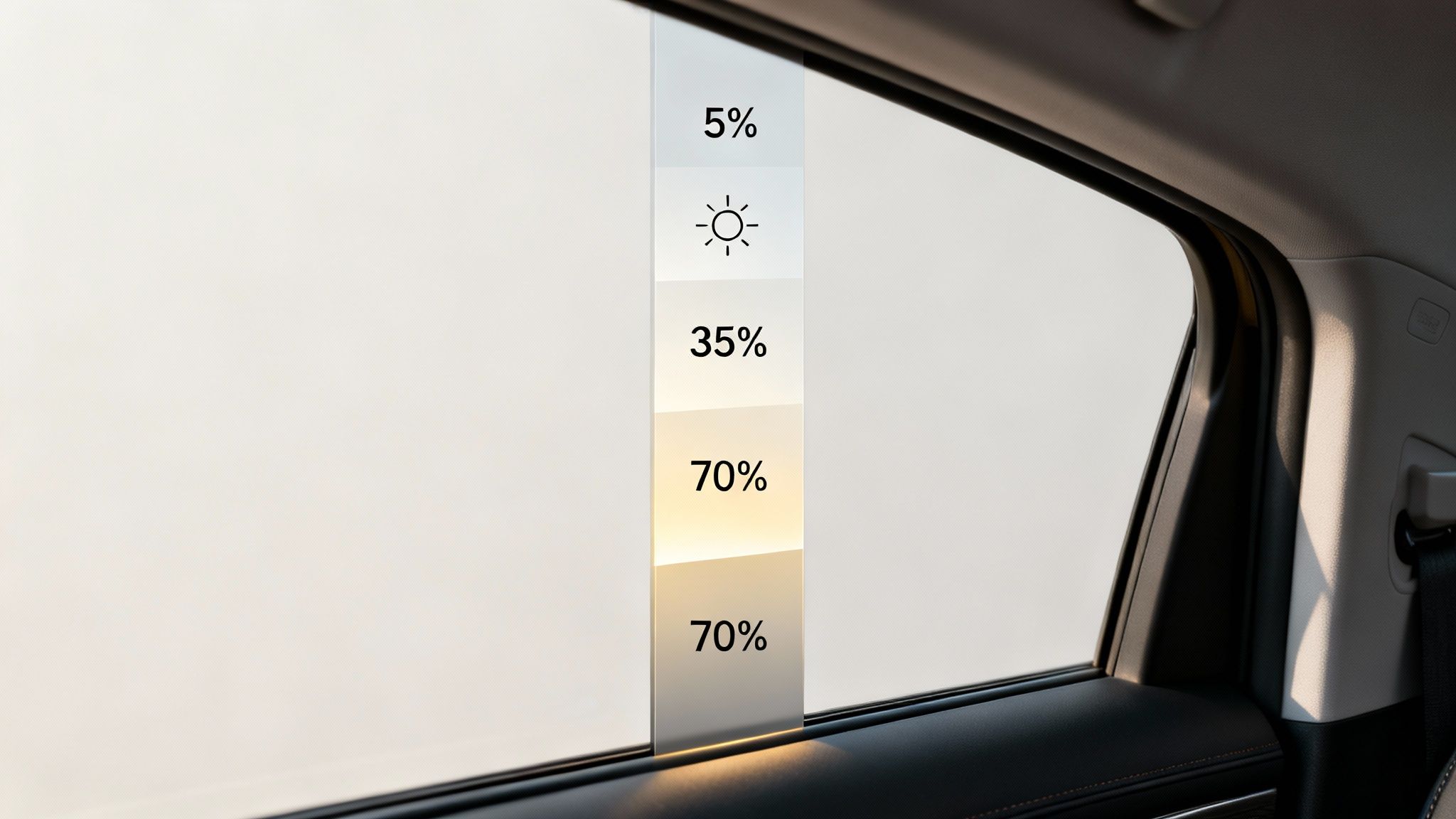
Think of the number—say, 35% or 20%—as a measure of how much light the window film allows in. It’s a bit like putting sunglasses on your car; a lower VLT percentage means darker lenses, which block more of the sun’s glare.
This is where some folks get tripped up. It feels natural to think a higher number would mean a darker tint, but it's the other way around. The percentage tells you how much light makes it through, not how much is blocked out.
Here's an easy way to lock it in: Low VLT percentage = less light = darker tint. Grasping this simple rule is the first step to picking the right tint for your ride.
A Breakdown of Common VLT Levels
To put this into a real-world context, let’s explore the most common percentages you’ll see. Each one strikes a different balance between looks, privacy, and how well you can see out.
Here’s a quick reference to help you visualize the options.
Window Tint VLT Percentages at a Glance
| VLT Percentage | Appearance | Primary Use Case |
|---|---|---|
| 5% VLT | Nearly black, often called "limo tint." | Maximum privacy and glare reduction; ideal for rear passenger windows. |
| 20% VLT | Dark and stylish, offering significant privacy. | A popular "sweet spot" for a sleek look without compromising too much visibility. |
| 35% VLT | A clean, classic tinted look. | Great all-around choice for a custom appearance with good heat rejection. |
| 50% VLT | A subtle, light shade similar to factory privacy glass. | Perfect for drivers who prioritize heat/UV protection over a dark look. |
| 70% VLT | Almost completely clear. | Used on front windshields (where legal) for UV and heat blocking without altering the view. |
Let's dive a little deeper into what these numbers mean on the road.
-
5% VLT: This is the darkest you can go. Known as "limo tint" for a reason, it provides ultimate privacy, making it pretty much impossible to see into the vehicle during the day.
-
20% VLT: This is a favourite for drivers who want that sharp, blacked-out aesthetic without the extreme darkness of limo tint. It gives you a great deal of privacy and cuts down on glare, but you can still see out quite comfortably.
-
35% VLT: If you're looking for the perfect middle ground, this is often it. It gives your car a noticeable, custom look and offers good heat rejection, all while maintaining excellent visibility, even at night.
-
50% VLT: This tint provides a more subtle, factory-style appearance. It’s an excellent option if your main goal is to block heat and UV rays without dramatically changing how your car looks.
-
70% VLT: While it looks almost clear, this film is a powerhouse. It’s often the go-to for front windshields (where local laws permit) because it blocks over 99% of harmful UV rays and a surprising amount of heat without affecting your view.
Getting familiar with these different window tinting levels is crucial for making a choice that fits your style, meets your needs, and keeps you on the right side of the law.
The Real Benefits Behind Your Tint Choice
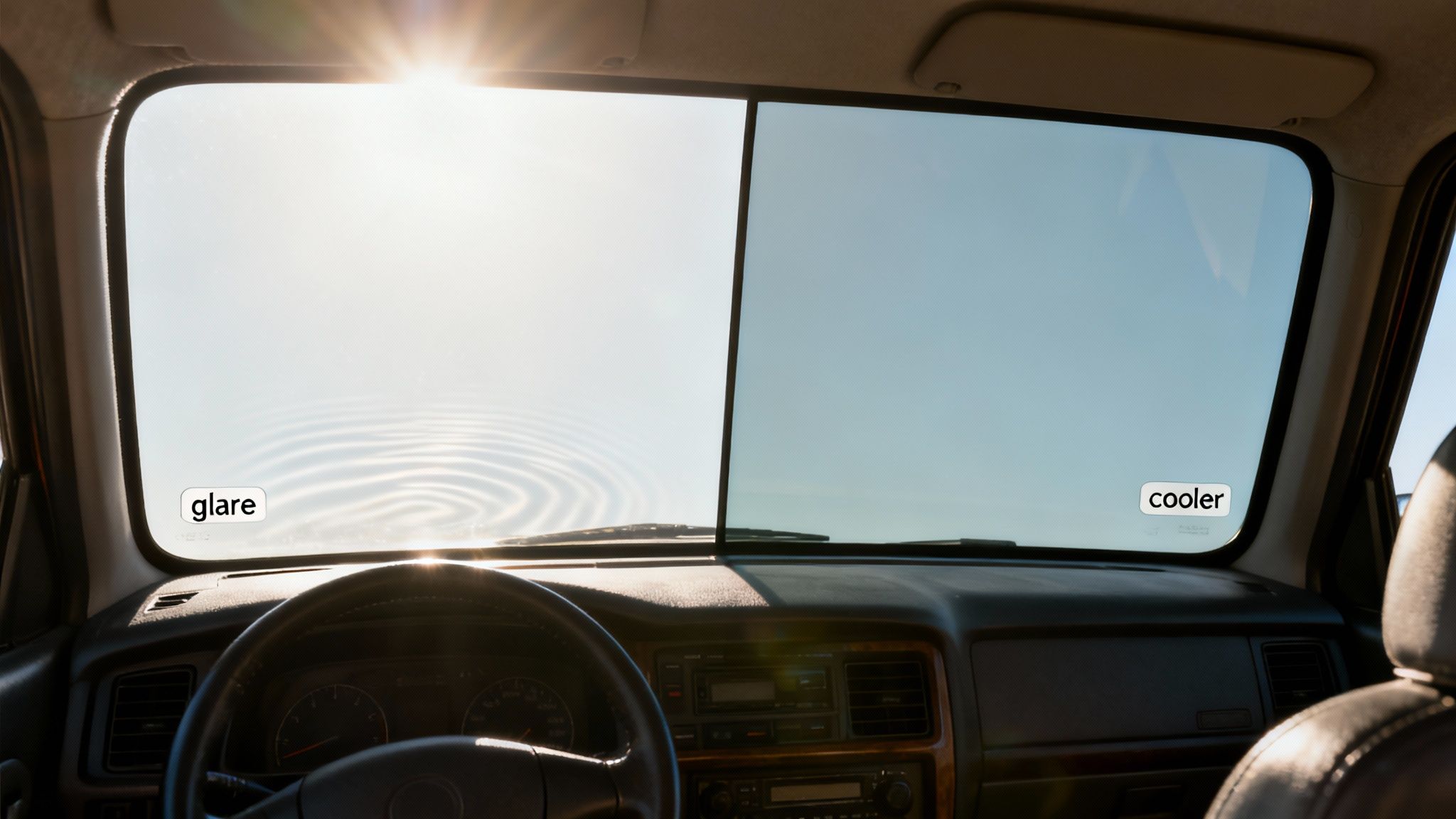
It's one thing to know the VLT numbers, but it’s another thing entirely to understand how they translate to real-world comfort and protection. Choosing the right tint isn't just a style upgrade; it offers some serious advantages that make every drive better.
Think of quality window film as a powerful shield for your vehicle. It directly impacts your comfort, safety, and even how long your car's interior lasts by protecting you and your investment from the sun.
Protection From Harmful UV Rays
One of the biggest wins with window tint is its ability to block nearly all ultraviolet (UV) radiation. No matter how dark or light the film is, a quality product will block over 99% of harmful UV rays.
This is huge for a couple of reasons. First, it protects your skin from exposure on your daily commute, which really adds up over time. Second, it's like sunscreen for your car's interior. The film stops the dashboard, seats, and trim from fading, cracking, and looking worn out from constant sun exposure.
Think of it this way: even a light, almost clear tint can give you the same powerful UV defence as a dark "limo" tint. The magic is in the film's technology, not just its shade.
A Cooler and More Comfortable Cabin
Let's be honest, a major reason most of us want tint is to beat the heat. The right film makes a massive difference on a scorching day by blocking a huge chunk of the sun's heat-producing energy.
This means your car stays cooler, which puts less strain on your air conditioning and can even help you save a bit on fuel. You’ll feel the difference the second you get in after your car’s been parked in the sun—no more burning hot seats or a steering wheel you can barely touch. For a deeper dive into heat rejection, exploring the benefits of ceramic window tinting is a great next step.
Enhanced Privacy and Security
Darker tints, like a 20% or 35% VLT, add an excellent layer of privacy. By making it harder to see inside your vehicle, they can help deter thieves who might be looking for easy targets like laptops, bags, or other valuables left on the seat.
This extra security gives you peace of mind, whether you're in a crowded parking lot or simply want to feel less like you're in a fishbowl while driving. It creates a more private, secure space for you and your passengers.
How Tint Technology and Safety Rules Grew Together
To really get why today’s window films are so impressive, it helps to glance back at how far the technology has come. The early days of tinting were a bit like the wild west—pretty crude, often inconsistent, and not always safe.
Before the advanced films we have now, the only real options were basic spray-on tints or dyes. These early attempts often left you with a distorted, bubbly view that made it tough to see clearly, especially at night. On top of that, they offered next to no heat or UV protection, which created some serious safety issues and eventually pushed governments to step in with the first rules on window darkness.
The Turning Point in Tint Technology
The whole game changed in the 1960s with a major breakthrough. In 1966, the company 3M figured out how to apply metallic coatings to clear polyester, creating the first practical sun-control window film. This was a durable, flexible film that could finally block serious solar heat and UV rays. If you're curious, you can learn more about this historical advancement on Stereo Depot's blog.
This was a massive leap forward. Just three years later, in 1969, the tech expanded again to include clear security films designed to hold shattered glass together in an accident. This safety feature quickly became a staple in high-quality tints, proving that window film could do a lot more than just provide shade—it could offer real protection.
The birth of modern, multi-layered film in 1966 is why we have the options we do today. It shifted the focus from merely darkening glass to engineering a product that delivers tangible benefits like UV protection, heat rejection, and enhanced safety.
Why Laws and Technology Evolved Hand-in-Hand
As tinting technology got better and better, it became obvious that a balance was needed. Lawmakers saw the benefits of tint but also had to deal with the risks of windows that were so dark they could hide criminal activity or make it impossible for a driver to see properly.
This led to specific laws, like Ontario’s Highway Traffic Act, which set clear rules for automotive window tint percentages. These regulations were put in place to make sure that drivers could get the comfort and privacy they wanted without sacrificing a safe, clear view of the road.
This back-and-forth between tint technology and safety rules is still happening today. As films become more advanced—offering incredible heat rejection even in lighter shades—the laws adapt. The professional-grade automotive window tint films we install are a direct result of this journey, giving drivers sophisticated solutions that work great and keep them on the right side of the law. It just goes to show that today's tints aren't just about looks; they’re a piece of engineered performance and safety.
Navigating Ontario's Window Tinting Laws
Before you start picturing that perfect dark shade for your car, you need to get familiar with the rules of the road. In Ontario, window tinting is covered by the Highway Traffic Act, and the laws are all about making sure everyone can see clearly for safety. If you don't follow the rules, you could be looking at fines or even an order to strip the film off your windows. It pays to get it right the first time.
Here’s where it gets a little tricky. Unlike other places that have a hard and fast number for tint percentages, Ontario's law is more about an officer's judgment. The Act says your front side windows—the ones next to the driver and front passenger—can't be so dark that they block your view of the road. This means it’s up to a police officer to decide if your tint is too dark.
At its heart, Ontario's tint law is all about clear visibility. If an officer thinks your front tint stops you from seeing out properly, or stops them from seeing you, it can be flagged as illegal.
A Window-by-Window Breakdown
To keep things simple and stay on the right side of the law, think of your car in three zones. The rules are different for each.
-
Front Windshield: This one is easy—tinting the entire windshield is a definite no-go. The only thing you’re allowed is a small, non-reflective strip at the top, and it can't be more than 15 cm deep.
-
Front Side Windows: This is where you need to be careful. While there isn't an official VLT percentage you have to follow, most professional installers will steer you toward a lighter tint, usually 50% VLT or higher. Going with a darker film like a 20% or 35% on these windows is a big gamble and could easily get you a ticket.
-
Rear and Back Side Windows: Once you're behind the driver's seat, you have a lot more freedom. You can go much darker on the rear passenger windows and the back windshield. This is where you can use popular choices like 20% or even the very dark 5% "limo tint" for ultimate privacy and to block out the sun.
Getting these rules straight is a huge part of the process. For a complete rundown of what's allowed, check out our guide on Ontario's tinted windows law, which takes a deeper dive into all the legal details.
How Ontario Compares to Other Places
Just to show how much these laws can vary, let's look at a place like California. They have incredibly specific rules: front side windows have to let at least 70% of light through, and only the top four inches of the windshield can have a tint. And they take it seriously—the California Highway Patrol handed out nearly 2,000,000 tint-related tickets between January 2015 and August 2017.
This really shows why talking to a local expert is so crucial. A professional installer here in Ontario will know exactly what the local police look for and what they consider acceptable. That way, your tint will look fantastic without getting you into any legal trouble.
How to Choose the Right Tint Percentage for Your Car
Picking the right window tint isn't just about looks—it's about finding that sweet spot where style, function, and the law all meet. The perfect automotive window tint percentages for you really boil down to what you want to get out of it and how you use your car every day.
Think of it as a balancing act. The first step is to figure out what's most important to you. Just ask yourself: what’s the main reason I’m tinting my windows? Once you have that answer, you’ll find the options narrow down pretty quickly, and the right Visible Light Transmission (VLT) level will become much clearer.
What's Your Main Goal?
Every car owner has their own reasons for tinting. Nailing down your top priority is the secret to choosing a tint you'll be happy with for years to come.
-
Maximum Privacy and Security: If keeping prying eyes out is your top concern, you’ll want a darker tint. Anything in the 5% to 20% VLT range is going to offer serious privacy, which is great for protecting valuables you might leave in your car.
-
Beating the Heat and UV Rays: Maybe you're more focused on keeping your car's interior from feeling like an oven in the summer. All quality tints block over 99% of damaging UV rays, but they handle heat differently. High-tech ceramic films, for instance, are amazing at rejecting heat even in lighter shades like 50% or 70%.
-
Just for the Looks: Let's be honest, a lot of us just want our car to look sharp. A 35% VLT tint is often the go-to for that clean, sophisticated look. It’s dark enough to be noticeable but not so dark that it screams for attention.
-
Cutting Down on Glare: If your commute lines up perfectly with sunrise or sunset, you know how blinding the glare can be. Even a lighter tint, like a 35% or 50%, can make a huge difference in reducing eye strain and making your drive safer and more comfortable.
Matching Tint Percentage to Your Needs
Once you’ve figured out your "why," you can start looking at specific tint percentages. To make it easier, I've put together a quick comparison to help you match your main goal with the right VLT range.
| Primary Goal | Recommended VLT Range | Key Benefit | Best For |
|---|---|---|---|
| Maximum Privacy | 5% – 20% | Makes it nearly impossible to see inside the vehicle. | Protecting valuables and ensuring passenger privacy. |
| Heat Rejection | 35% – 70% (Ceramic) | Keeps the cabin significantly cooler without a dark look. | Daily commuters seeking maximum comfort. |
| Balanced Style | 20% – 35% | A sleek, custom appearance with good privacy. | Drivers who want a noticeable but classic tinted look. |
| Glare Reduction | 35% – 50% | Reduces eye strain from sun and headlights. | Anyone with a long daily commute. |
This table should give you a solid starting point for deciding what's best for your vehicle and your lifestyle.
This flowchart breaks down exactly what's allowed here in Ontario, so you can see how the rules apply to different windows on your car.
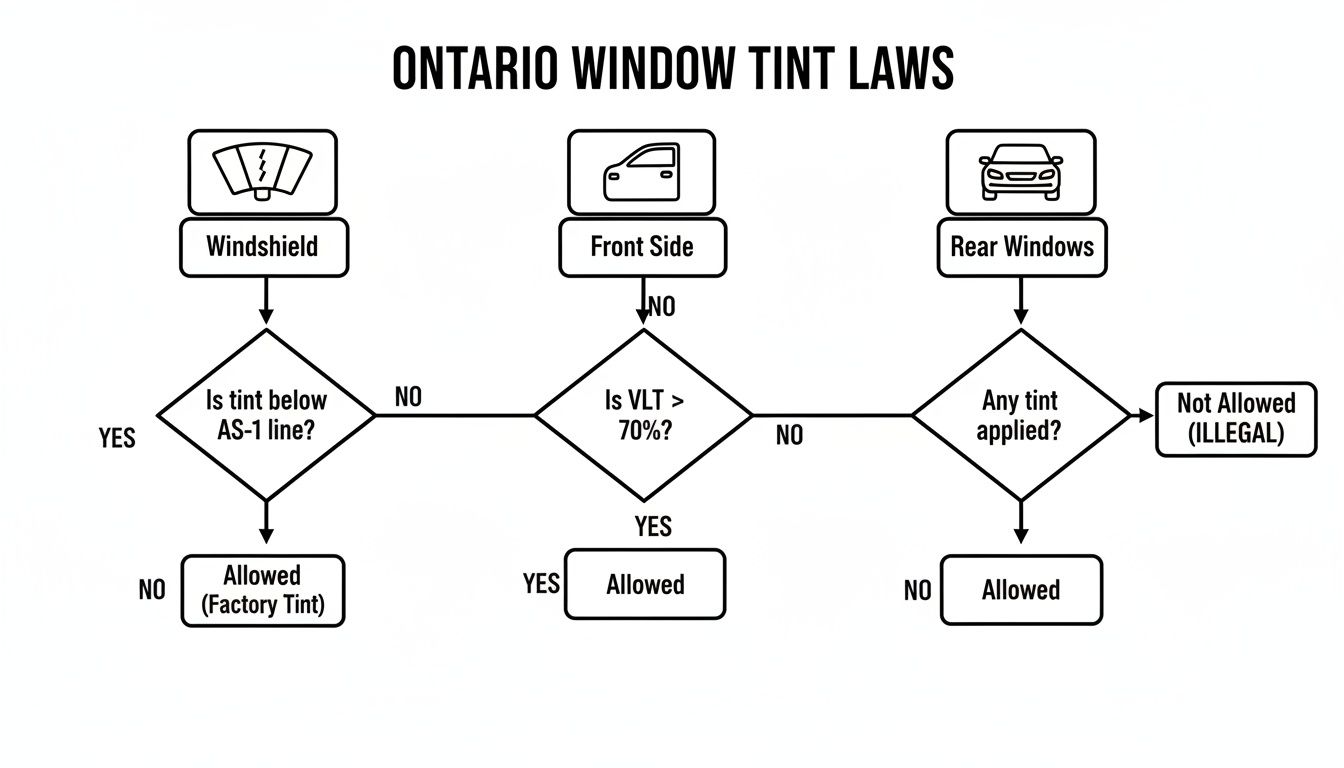
As you can see, the law gives you a lot of freedom for the back half of your car, but it’s much stricter when it comes to the front side windows and the windshield. This is all about ensuring the driver can see clearly. By keeping both your personal goals and these legal limits in mind, you can find that perfect tint that looks fantastic, feels great, and keeps you on the right side of the law.
Why Professional Installation Is Always Worth It
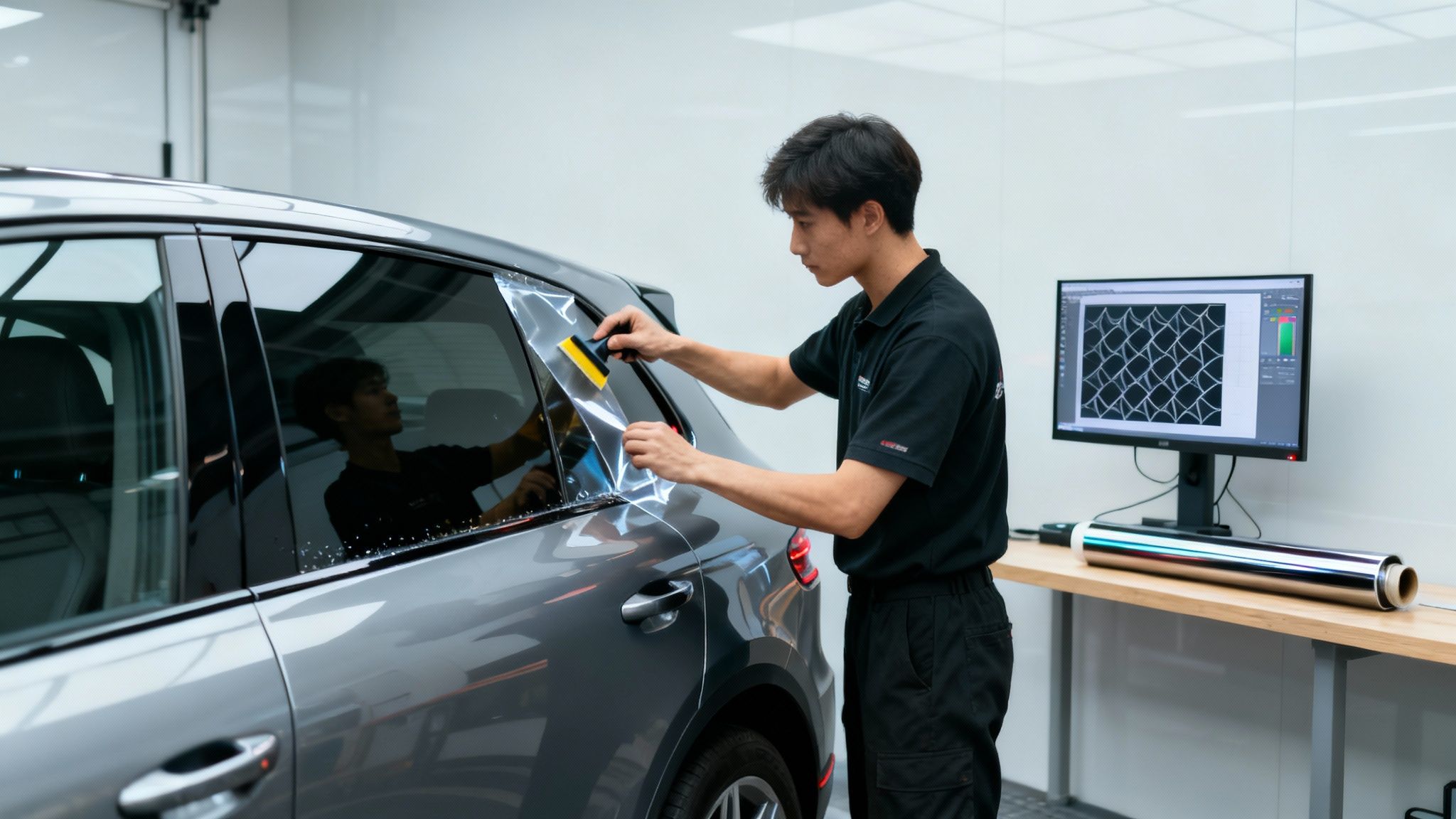
You’ve done the research and picked out the perfect tint film. That’s a great first step, but it's only half the battle. The quality of the installation is just as crucial as the film itself.
While DIY tint kits look tempting on the shelf, they're a fast track to frustration. A botched job can ruin your car's appearance and waste the money you spent on the film. Think of professional tinting not as a cost, but as an investment in getting the job done right the first time.
We’ve all seen it: the purple, bubbling tint on an otherwise decent car. Those DIY jobs often go wrong in a few predictable ways.
Here are the classic DIY disasters:
- Bubbling and Peeling: This is the tell-tale sign of a bad tint job. Air and water get trapped, creating ugly pockets and peeling edges that spread over time.
- Dust and Debris: Your home garage is full of floating dust and lint. Even a single speck trapped under the film will stick out like a sore thumb forever.
- Creases and Wrinkles: Getting a large sheet of film to lay perfectly flat is a skill. Without the right tools and technique, it’s almost impossible to avoid creases that you just can't smooth out.
The Professional Difference
A professional installer's greatest advantage is control. They work in a spotless, dedicated bay, minimizing the chance of any contaminants getting trapped between the film and the glass.
A professional installation guarantees the high-quality film you chose will perform exactly as designed—giving you flawless looks, maximum durability, and enhanced vehicle value.
Forget hand-cutting with a utility knife. Reputable shops use precision computer-cutting technology to create patterns perfectly shaped for your vehicle's make and model. This means a seamless, factory-finish fit right to the edge of the glass.
They also have the specialized squeegees, heat guns, and application solutions to bond the film perfectly. It’s a craft they’ve perfected over thousands of hours, ensuring every last bit of air and moisture is removed for a flawless finish.
This level of expertise is why professional work is backed by a solid warranty. If you want results you can count on, finding trusted experts for car tinting near you ensures your investment looks great and lasts for years, without any of the DIY headaches.
Got Questions About Window Tint Percentages?
Even after getting the full rundown, a few questions might still be swirling around. That’s perfectly normal. Let's tackle some of the most common ones to help you feel 100% certain about your choice.
Here are the quick, clear answers you’re looking for.
Does Darker Tint Mean Better UV Protection?
Not at all. This is probably the biggest misconception out there. The reality is that nearly all quality window films, from the almost-clear to the darkest limo tint, block over 99% of harmful UV rays.
This powerful protection isn't about the shade; it's built right into the film's technology, like the ceramic or carbon layers. A light-coloured film can give you the exact same UV-blocking power as a dark one, keeping your skin safe and preventing your car’s interior from fading.
The bottom line? UV protection is a standard feature in any modern, professional-grade film. You don't have to choose a dark tint to get maximum defence against the sun.
Is a 20% Tint Legal for Front Windows in Ontario?
This one is a common point of confusion. While Ontario's Highway Traffic Act doesn't list a specific percentage, it does say you can't have a tint on the front side windows that obstructs the driver's view. A 20% tint is quite dark, and law enforcement would almost certainly consider it too dark for safe driving.
Your best bet is to chat with a professional installer. They know the local standards and can guide you to a shade for your front windows that looks great without risking a ticket.
How Long Will a Professional Tint Job Last?
A long, long time. When you have a quality film applied by an experienced technician, your window tint can easily last for the entire life of your vehicle.
Most premium films even come with a lifetime warranty. This covers you for any potential issues down the road, like bubbling, peeling, or the colour fading. It’s a solid investment that keeps your car looking sharp and feeling comfortable for years.
Ready to find the perfect tint for your ride? The expert team at Carmedics Autowerks Inc is here to walk you through the options and deliver a flawless installation. Visit us online to learn more and book your appointment!