That first scratch on your car is always the worst. It’s an instant cringe, followed by the immediate search for "quality automotive paint repair near me." But it's about so much more than just a blemish. A proper repair is a critical investment in your vehicle's long-term health and resale value. A cheap, corner-cutting job can actually cause more harm than good, while a professional repair will protect your car for years to come.
Why The Right Local Paint Shop Is Essential
Choosing where to get your paint fixed isn't like picking a place for a car wash; it's about trusting a craftsman with one of your biggest assets. A top-notch repair doesn't just match the colour—it restores the protective barrier that shields the metal from rust and corrosion, which is a massive issue with the salt and moisture we get here in Ontario.
Think about it this way: that scratch is a breach in your vehicle's defences. A quick, cheap patch might look okay from ten feet away, but it won't truly seal the deal. A true professional, on the other hand, rebuilds that protection layer by layer, just like the factory did.
Beyond a Simple Colour Match
There's a world of difference between a professional paint repair and a quick spray-over from a budget shop. The best technicians follow a meticulous process to ensure the fix is both invisible and durable.
- Proper Surface Preparation: This is the foundation of the entire repair. It involves carefully cleaning, sanding, and priming the damaged spot so the new paint has a perfect surface to bond to. Without this, you’ll see peeling and bubbling down the road.
- Precision Colour Blending: Technicians use specialized computer systems to get an exact match for your car's specific paint code. They then artfully blend the new paint into the surrounding panels, which is the secret to avoiding that obvious "patchwork" look.
- Protective Clear Coat Application: The final step is applying a durable clear coat. This isn't just for shine; it's the crucial top layer that provides UV protection and a finish that seamlessly matches the rest of your car.
I've seen it countless times: trying to save a few dollars on a subpar repair almost always costs more in the long run. A bad job can trap moisture and hide developing rust, leading to major, expensive bodywork later. If you care about your vehicle, finding a real artisan is non-negotiable.
Ultimately, your search for "automotive paint repair near me" is the first step in preserving your car’s condition and value. For those in the Durham region looking for a shop that gets it, you can find more on the comprehensive Whitby auto repair and detailing services that always put quality first. Your car deserves a lasting, professional solution, not just a temporary fix.
What Kind of Paint Damage Are You Dealing With?
Before you even start searching for "automotive paint repair near me," it’s crucial to figure out what kind of damage you're looking at. Not all scrapes and scuffs are the same, and knowing the difference will help you have a much more productive conversation with a repair shop—and avoid paying for work you don’t need.
Your vehicle's paint isn't just one layer; it’s a multi-layered system designed for protection and aesthetics. A light brush against a hedge might only touch the top clear coat, but a deep key scratch can slice right down to the bare metal.
Surface Scratches vs. Deep Gouges
Light, superficial damage that’s only sitting in the clear coat can often be handled through a process called paint correction. It's a meticulous job where a skilled technician uses special compounds and polishes to smooth out the clear coat, effectively erasing the scratch without any new paint.
So, how do you know if it's just a surface issue? Here’s a simple test I always recommend: run your fingernail gently over the scratch. If your nail glides over it without catching, paint correction is probably a viable option.
But if your fingernail gets snagged in the groove, you’re dealing with a much deeper problem. That scratch has cut through the protective layers, and the metal is now exposed. Ignoring it is asking for trouble, especially with the amount of salt used on our Ontario roads in the winter. For more on this, you can learn how to prevent rust on your car from our detailed guide.
A deep scratch needs a real repair, not just a quick cover-up. The process involves sanding the area down, applying fresh primer, perfectly matching the base colour, and then sealing everything with a new, durable clear coat.
To help you quickly assess the situation, here's a handy table that breaks down common types of paint damage and what it takes to fix them properly.
Identifying Paint Damage and Its Repair Solution
| Type of Damage | Common Cause | Typical Professional Solution |
|---|---|---|
| Light Scratches | Parking lot mishaps, automatic car washes, improper washing | Paint correction (polishing/compounding the clear coat) |
| Deep Scratches | Vandalism (keying), sharp object impacts, deep scrapes | Spot repair (sanding, priming, painting, and clear coating) |
| Rock Chips | Debris kicked up on highways (like the 401) | Chip repair (filling and sealing) or a full panel respray |
| Paint Swirls | Improper washing/drying techniques, abrasive cloths | Paint correction and polishing to restore a mirror finish |
| Oxidation/Fading | Prolonged sun/UV exposure | Major paint correction or, in severe cases, a complete respray |
This table should give you a solid starting point for understanding what your car needs. A small chip might seem minor, but if it goes to the metal, it requires a professional touch to prevent future rust.
This flowchart illustrates the choice you often face: a quick, cheap fix versus a quality repair that actually lasts.
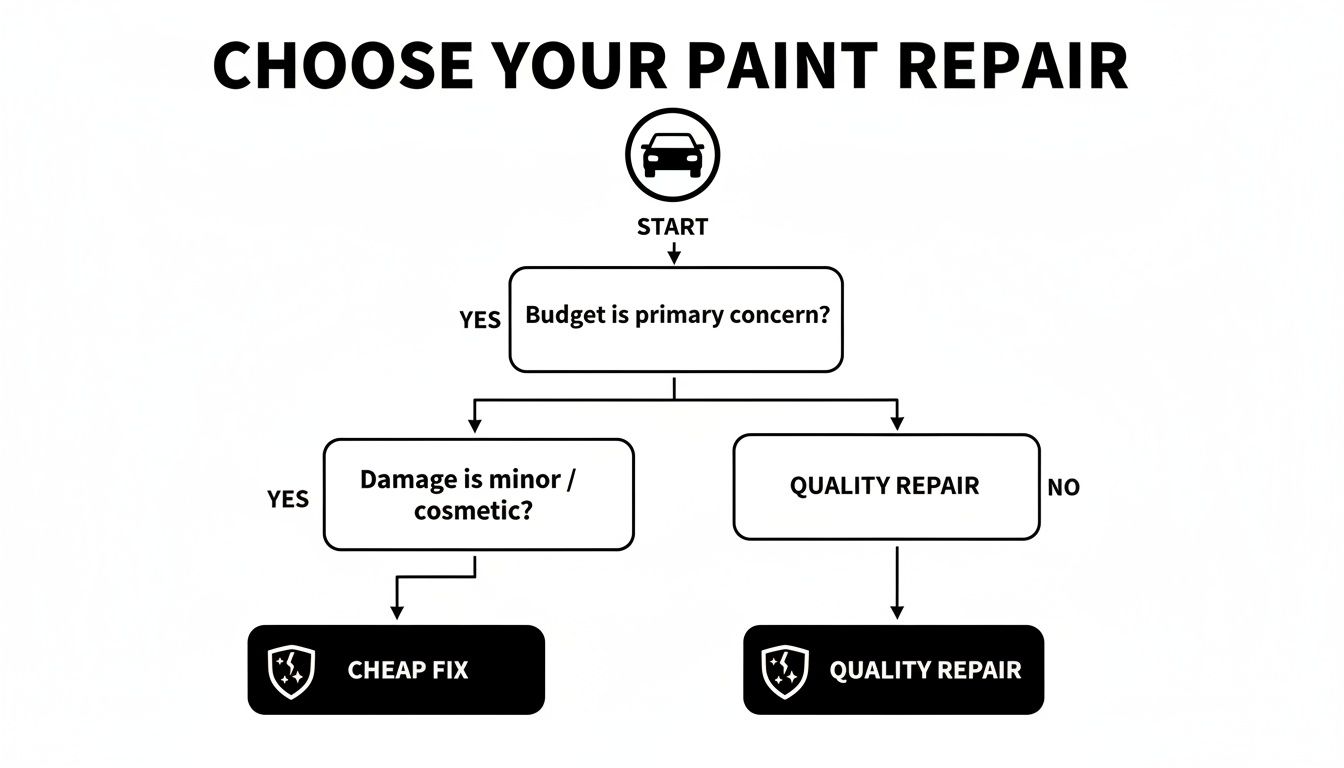
As you can see, while a cheap touch-up might look okay for a week, only a proper, professional repair delivers long-term protection and value. This is especially true for those frustrating rock chips from highway driving, which almost always need more than a simple dab of touch-up paint. Correctly identifying the damage from the start ensures you get a flawless, factory-quality finish that stands the test of time.
How To Find And Vet The Best Local Repair Shops
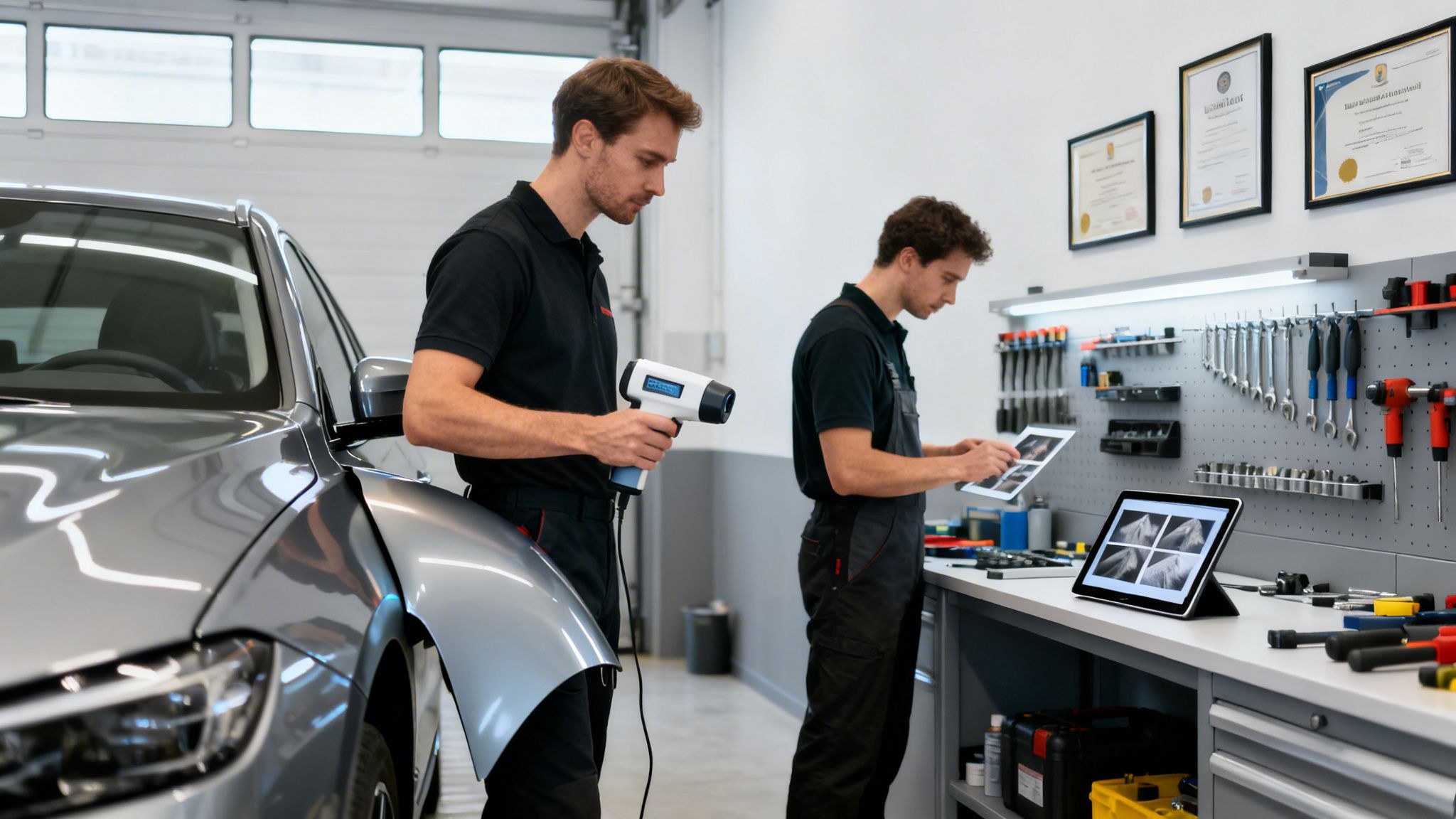
Finding the right shop to trust with your vehicle’s paint is easily the most important step in the whole process. Typing “automotive paint repair near me” into Google will flood you with options, but the real gems are rarely the first result. To separate the true artisans from the rest, you have to think like an insider.
Forget the generic searches. Get specific right away. If you own a luxury German car, for instance, searching for "certified Audi paint shop Durham" or "collision repair Whitby" is going to connect you with shops that have invested in the specialized training and equipment your vehicle demands.
Scrutinizing Their Online Presence
With a shortlist in hand, it’s time to do some digital digging. A shop’s online footprint tells you almost everything you need to know before you even pick up the phone. Don't just glance at the star rating on Google or Yelp—the real story is in the details of the reviews.
Are people leaving specific, detailed comments? Look for mentions of a perfect colour match, excellent customer service, or the professionalism of the staff. Pay close attention to how the owner or manager responds to feedback, especially the negative reviews. A calm, professional reply to a complaint is a fantastic sign of a business that cares.
Next, head over to their website and social media channels to see their work for yourself.
- Before-and-After Galleries: A confident shop will have a portfolio bursting with high-resolution photos. You want to see clear images that show off their ability to create a seamless colour blend and a flawless, factory-like finish.
- The Cars They Work On: Take note of the types of vehicles in their gallery. If you see they’re consistently trusted with brand-new, classic, or high-end cars, it’s a strong signal that they have a reputation for top-tier quality.
A shop's digital portfolio is its resume. If they don't have clear, high-quality photos of their paint work, it’s a major red flag. They should be eager to show you what they're capable of.
The In-Person Inspection
Once you’ve narrowed your list down to your top two or three choices, it’s time to pay them a visit. The vibe you get the moment you walk through the door speaks volumes. A clean, organized front office and a tidy, professional workshop show a commitment to precision and attention to detail that usually carries over into their work.
While you're there, ask them about their qualifications. An I-CAR Gold Class certification is the gold standard in our industry, proving their technicians are trained on the latest materials and repair techniques. This isn't just a plaque on the wall; it’s a serious commitment to quality.
You should also ask about their paint-matching process. Do they use modern technology like a spectrophotometer to get an exact digital reading of your car’s colour? Finally, ask about the warranty they offer on their paint repairs. Their answer will tell you how much they stand behind their own work.
Finding the right expert ensures your vehicle’s repair is a lasting investment, not just a quick fix. For more tips, check out our complete guide on what to look for when selecting a car repair shop near you.
What Separates A Good Paint Job From A Great One
Alright, so you've narrowed down your list of potential shops. Now comes the part where you separate the good from the truly great. Anyone can make a scratch disappear, but a top-tier shop delivers a repair so flawless it looks like it never happened.
The difference isn't just skill—it's a deep investment in technology, precision, and proven expertise.
A real pro shop doesn't cut corners on materials. The first question you should ask is what kind of paint they use. The best shops have moved to modern waterborne paints. Not only are they better for the environment, but they're also what most manufacturers use on the factory line. It's a huge part of the global automotive refinish coatings market, which was valued at $9.8 billion in 2023. You can see more industry stats on how technology is driving changes at Gitnux.org.
The Science Of Colour Matching
Next, dig into their colour-matching process. Here’s a pro tip: if they just ask for your factory paint code and call it a day, walk away. A great shop knows that a paint code is only a starting point.
They’ll use a handheld spectrophotometer to get a precise digital reading of your car’s actual colour. This accounts for any slight fading from sun exposure or variations from the factory batch. That data is then used to mix a custom formula for a perfect match.
Without a spectrophotometer, a technician is just guessing. An exact digital measurement is the only way to guarantee the new paint will be indistinguishable from the original, even under direct sunlight.
Proof Of Mastery
Finally, look for credentials. I’m not just talking about a business licence; I mean proof of ongoing, high-level training.
The gold standard is manufacturer certifications. When a shop is certified by brands like Audi, BMW, or Ford, it means something. These aren't easy to get—they require the shop to invest in specific, factory-mandated equipment and to pass rigorous, continuous training directly from the automaker.
This tells you the shop has been vetted to repair vehicles to the exact same standard as when they were built. A team with these credentials treats automotive paint repair as the craft it is.
Once you have that perfect repair, you'll want to keep it that way. To explore your options for protecting the new finish, check out our guide on the best car paint protection.
Now, Let’s Protect That Perfect New Paint Job
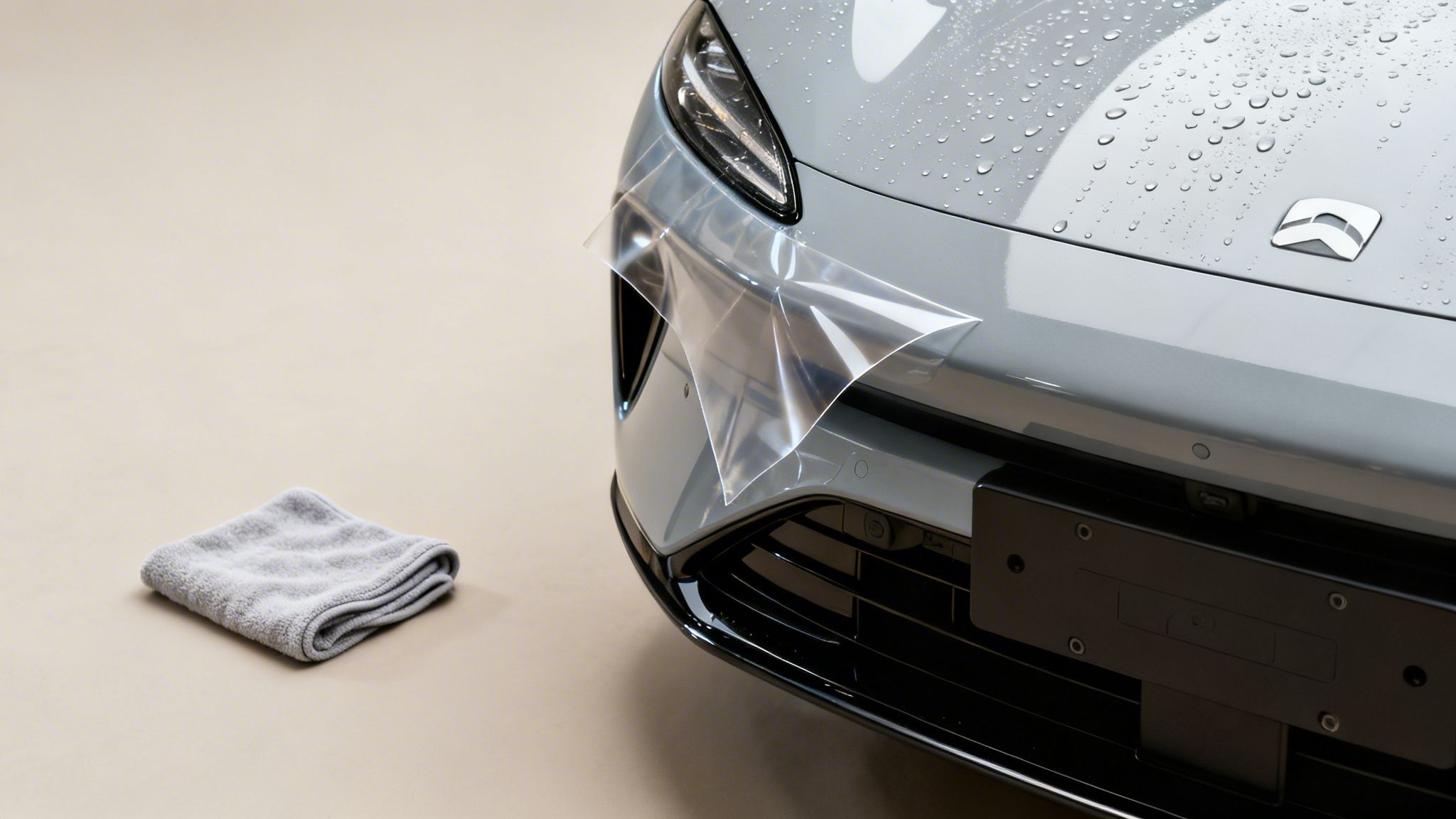
Getting that flawless finish back on your car is a great feeling. But the job isn't truly done until you have a plan to keep it that way. Instead of just waiting for the next stone chip or scuff mark, you can be proactive and shield your investment from the moment you drive away from the shop.
Modern protective solutions are the key here. They shift you from a reactive cycle of constant repairs to a proactive state of preservation, locking in that fresh-from-the-bodyshop shine long after the automotive paint repair is complete.
Defend Your High-Impact Zones
Take a look at the front of your car—the bumper, the leading edge of the hood, and your side mirrors. These areas take a beating. They’re a magnet for rock chips, bug splatter, and all sorts of road debris, especially if you spend any time on highways like the 401. This is exactly where Paint Protection Film (PPF) proves its worth.
PPF is a tough, transparent urethane film that gets applied directly over your paint. Think of it as body armour for your car. It acts as a physical shield, absorbing the impacts that would normally leave nasty chips and scratches. The best part? Many modern films even have self-healing properties, meaning minor scuffs and swirls can actually vanish with a little bit of heat from the sun.
Applying PPF to your freshly painted bumper is like putting a screen protector on a new phone. It’s an invisible shield that takes the hit so your valuable finish doesn’t have to.
Boost the Gloss and Keep It Clean
For the rest of the car, you want protection that also makes the paint pop. That's where a professional-grade ceramic coating comes in. A ceramic coating is a liquid polymer that creates a chemical bond with your vehicle's clear coat, forming a hard, glossy, and incredibly slick layer of protection.
This isn't just about looks; it offers real-world benefits:
- UV Defence: It acts like a powerful sunblock for your paint, preventing the sun’s rays from causing oxidation and fading over time.
- Serious Shine: The coating adds incredible depth and clarity, giving your paint a rich, wet look that’s hard to beat.
- Effortless Cleaning: Water beads up and rolls right off the hydrophobic surface, taking dirt and grime along for the ride. Washing your car becomes faster and easier.
For the ultimate one-two punch in paint preservation, combine PPF on the high-impact areas with a full ceramic coating over the entire vehicle. It's the best strategy out there to keep your car looking perfect.
Common Questions About Automotive Paint Repair
When your vehicle needs professional paintwork, it’s completely normal to have a few questions. In my experience, getting clear, honest answers is the most important part of finding a repair partner you can trust. Let's walk through some of the most common queries we hear from car owners every day.
So, how long will you be without your car? The timeline really comes down to the nature of the damage. For something minor, like touching up a few small rock chips or a single light scratch, we can usually have it ready in one to two days. That gives us just enough time for meticulous prep, paint application, and proper curing.
If the job is more involved—say, we're repairing a dent and then repainting an entire door or quarter panel—you should plan for a bit longer. A repair of that scale typically takes three to five days. That extra time is crucial for the bodywork, multiple stages of priming and painting, and the final polishing needed to get that seamless, factory-fresh look.
Achieving A Perfect Paint Match
This is probably the biggest concern for most people: will the new paint actually match the rest of the car? When you work with a top-tier shop, the answer is an absolute yes. Any reputable technician will be using computerized paint-matching technology to get a finish that's virtually undetectable.
This isn't just guesswork. We use a specialized device called a spectrophotometer to scan your car's exact colour and shade. A skilled painter then takes that data, mixes a custom formula, and carefully blends the new paint into the surrounding panels. This process even accounts for the subtle fading your original paint may have from sun exposure.
It's this level of detail that makes all the difference. The goal is always a flawless finish that looks perfect under any light, not an obvious patch-up job. To learn more about keeping that new finish pristine, our guide on paint protection film cost is a great resource.
The Value Of Repairing Minor Damage
Is it really worth the hassle to fix a few small scratches or chips? I get this question a lot, and my answer is always the same: absolutely. What seems like a small cosmetic flaw is actually a serious weak point in your vehicle's defenses.
- Rust Prevention: Any break in the paint exposes the metal panel underneath to moisture and air—the perfect recipe for rust. A quick touch-up is a small investment that prevents a much bigger and more expensive rust repair problem down the line.
- Maintaining Resale Value: There's no doubt about it—a car with immaculate paint commands a higher price. It sends a clear signal to potential buyers that the vehicle has been cared for properly.
Even after getting a professional repair done, you might worry about your car's value, especially if the damage was from an accident. If that's the case, you may be able to file a diminished value claim to help recover the difference in your vehicle's market worth.
At Carmedics Autowerks Inc, we bring together expert craftsmanship and state-of-the-art technology to deliver flawless paint repairs that truly last. Protect your investment and give your car the attention it deserves. Visit us at https://carmedicsautowerks.com to schedule your consultation.