That sinking feeling when your car starts making a weird clunk or rattle is all too familiar. Your first instinct is probably to grab your phone and search for "auto repair near me," but a little strategy here can save you a lot of grief later. The best way to start is by casting a wide net online, then narrowing it down with some good old-fashioned local intel.
How to Find Trustworthy Local Mechanics
Before you even think about getting a quote, your first job is to build a solid shortlist of potential shops. This isn't about finding the cheapest option right away; it's about finding the right options—shops that people in your community genuinely trust.
Start Your Search Online
The easiest place to begin is right on your phone or computer. Fire up your favourite mapping app and see what's nearby. You'll instantly get a bird's-eye view of local garages, complete with star ratings and customer reviews. It’s the quickest way to get a feel for the local landscape.
Here's what a typical search on Google Maps might pull up.
This isn't just about finding the closest shop. Pay attention to the star ratings and, more importantly, the number of reviews. A garage with a 4.8-star rating from 500 reviews tells a much different story than one with a perfect 5.0 from just three.
Tap into Local Know-How
Online reviews are a great starting point, but they don't beat a recommendation from a real person. This is where you need to lean on your community.
- Ask friends, family, or coworkers. A referral from someone you trust is gold. They can give you the unfiltered truth about their experience, from customer service to pricing.
- Check local social media groups. Your neighbourhood Facebook or Reddit group can be an incredible resource. People are usually more than happy to share their go-to mechanics or warn you about places to avoid. Just search for past threads or post a new question.
This blend of digital searching and word-of-mouth is crucial, especially in a place like California. The auto repair market here is massive—worth an estimated $10.9 billion—which means you have a ton of choices. In a county like Orange, for example, you're looking at over 56 shops for every 100,000 people. Getting local feedback helps you cut through the noise. You can dig into more of California's auto repair industry statistics on IBISWorld.
How to Vet Potential Auto Repair Shops
Okay, so you've got a short list of local mechanics. Now comes the crucial part: digging a little deeper to separate the truly great shops from the merely okay ones. A bit of homework at this stage can save you a world of headaches and unexpected bills later on. It’s all about looking past the shiny star ratings and really verifying their credibility.
A professional, easy-to-use website is often the first good sign. It tells you the shop cares about its customer experience. I always look for clear information on the services they offer, the warranties they provide, and any specialities they have, like being experts in European models or handling fleet vehicles.
The infographic below shows the basic flow from starting your search to narrowing down your options.
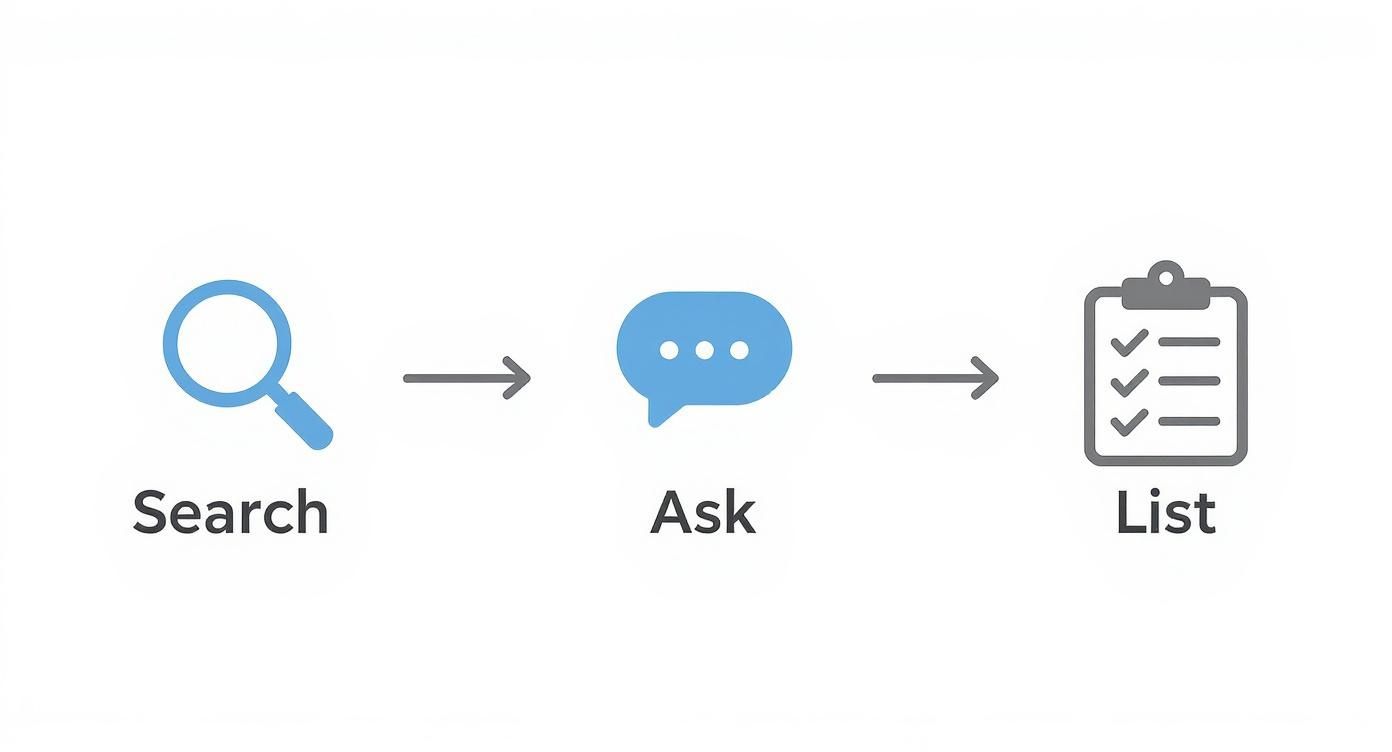
Following this path helps you cut through the noise and create a solid list of shops worth a closer look.
Check for Certifications and Licensing
In the auto repair business, credentials aren't just fancy pieces of paper—they're a direct measure of a mechanic's training and dedication to their craft.
One of the most important things to look for is the ASE (Automotive Service Excellence) certification. To get this, a technician has to pass some tough exams and prove they have hands-on experience. When a shop makes a point of hiring ASE-certified staff, it’s a clear signal they're serious about quality work.
Checking a shop's credentials isn't just about making sure they have the right technical skills. It's about confirming they're operating legally and are accountable to professional standards, which gives you a vital layer of protection as a customer.
Here in California, you should also check a shop’s standing with the Bureau of Automotive Repair (BAR). This is the government agency that keeps the industry in check and protects consumers like you and me. To give you an idea of their scope, by September 2025, the BAR had licensed over 62,000 automotive dealers, technicians, and smog check stations. This system helps ensure the auto repair services near you are playing by the rules. You can dive into the specifics of the BAR's role in consumer protection from their official statistics.
Read Between the Lines of Online Reviews
Now, circle back to those online reviews, but this time, put on your detective hat. The overall rating is one thing, but the real story is in the comments.
- Look for patterns: Are multiple people raving about the shop's honest pricing and great communication? Or are there repeated complaints about surprise fees and shoddy work? Consistent feedback, good or bad, is telling.
- Filter for recent reviews: A shop can change a lot in a year. I always focus on reviews from the past six months to get a real sense of how they're operating right now.
- See how the owner responds: Pay attention to how the shop owner handles feedback. A thoughtful, professional response to a negative review—or a genuine thank you for a positive one—shows they value their reputation and actually care about making things right. That kind of engagement is a huge green flag.
Asking the Right Questions Before You Commit
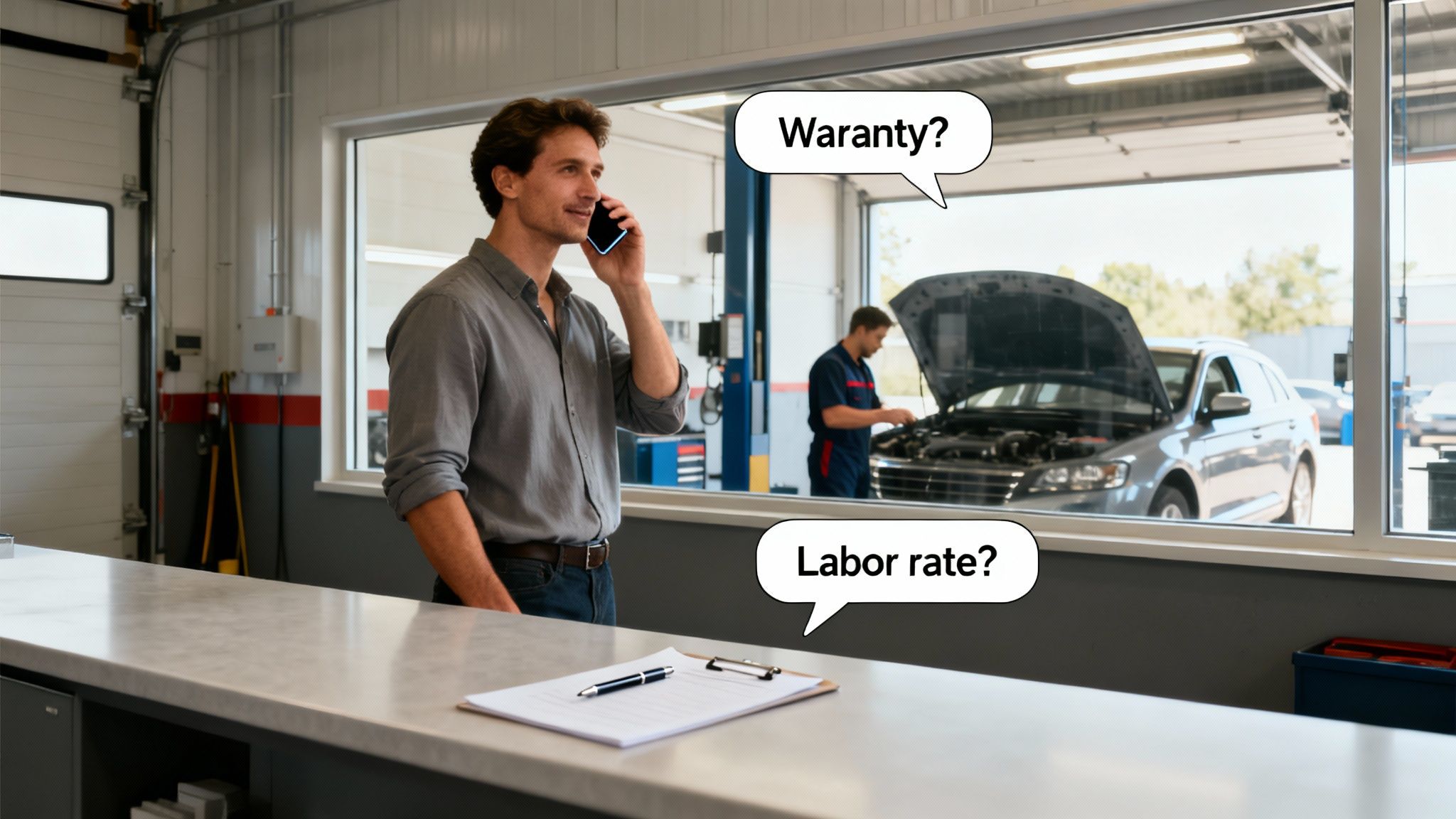
That first phone call or visit to a potential mechanic is a lot like an interview—you’re the one doing the hiring. The job? Keeping your vehicle safe and reliable. Walking in prepared with a few smart questions can tell you everything about their expertise, honesty, and how they treat their customers.
Honestly, a good shop will be happy to answer your questions. If you get vague responses, or if they seem rushed or annoyed, that’s a big red flag. Trust your gut and be ready to walk away. You're looking for a partner in your car's care, not just a parts-changer.
Pinpointing Their Expertise and Policies
Before you even get into the specifics of what’s wrong with your car, it’s a good idea to ask some general questions about how they run their business. This helps you get a feel for their professionalism and avoid any nasty surprises later on.
For example, if you drive a less common European brand or a specialized vehicle, ask if they have experience with your specific make and model. A mechanic who works on Hondas all day might not be the best fit for your vintage BMW.
Getting clarity on their policies is just as important. Here are a few must-ask questions:
- Diagnostic Fees: "How much is your diagnostic fee, and is it waived if I get the repair work done here?" Some shops charge a flat fee no matter what, while others apply it to the final bill.
- Labour Rates: "What's your hourly labour rate?" This number is a key piece of the final cost puzzle, and they should be upfront about it.
- Parts and Labour Warranty: "What kind of warranty do you offer on your work?" Be specific. Ask about the duration in both months and kilometres, and confirm that it covers both the parts and the labour. A solid warranty means they stand behind their work.
To make this easier, I've put together a quick checklist of questions to run through during that initial contact.
Table: Key Questions for Your Initial Contact with a Repair Shop
This table breaks down what you should ask, why it matters, and what kind of answers you should be listening for. It's your cheat sheet to finding a trustworthy shop.
| Question Category | Specific Questions to Ask | What to Listen For |
|---|---|---|
| Experience & Specialization | "Do you specialize in any particular makes, like [Your Car's Make]?" | Confidence and specific examples. A "we work on everything" answer isn't always the best. |
| Estimates & Authorization | "Will you provide a detailed written estimate before any work begins?" "Will you call me for approval if you find anything else that needs fixing?" | A clear "yes" to both. They should never perform unauthorized work. |
| Warranty & Guarantees | "What is your warranty on parts and labour? How long does it last?" | Specifics (e.g., "24 months / 40,000 kilometres"). Vague promises are a warning sign. |
| Parts | "Do you use OEM (Original Equipment Manufacturer), aftermarket, or reconditioned parts?" | Transparency. A good shop will explain the pros and cons of each and let you choose. |
Having this conversation upfront sets the tone for your relationship with the shop. It shows them you're an informed customer and helps you gauge their transparency right from the start.
Remember, you should never feel pressured to say "yes" on the spot. A professional shop will give you a detailed written estimate and the time you need to think it over. No hassle, no rush.
Getting straightforward answers to these questions is how you build a foundation of trust. It’s the best way to ensure the shop you choose values your business and respects you as a customer—which is exactly what you need when searching for reliable auto repair services near me.
Comparing Quotes and Understanding Repair Costs
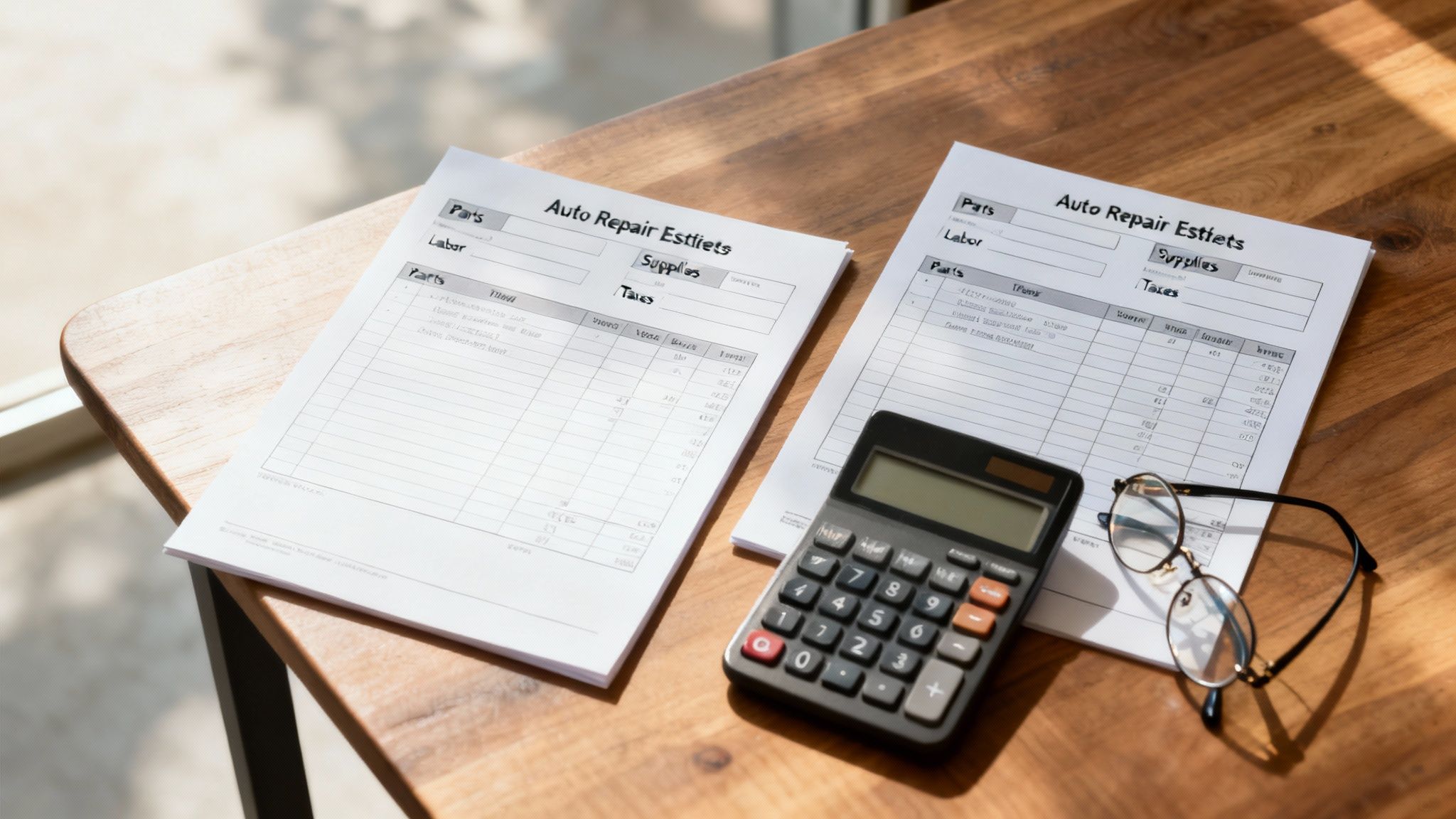
Alright, you've got a few estimates in hand. The natural instinct is to jump on the lowest price, but that can be a costly mistake. What you really need to do now is an "apples-to-apples" comparison to figure out what you're actually getting for your money.
A good estimate is more than just a number scribbled on a notepad. It should be a clear, itemized breakdown of the entire job. This kind of transparency is a huge green flag for a trustworthy mechanic.
Here’s what you should see clearly laid out:
- Parts: What specific parts are they using? The brand and quality make a massive difference in how long the repair lasts.
- Labour: How many hours do they expect it to take, and what’s their hourly rate?
- Shop Supplies: Small charges for things like lubricants or rags are normal, but they shouldn't be a significant cost.
- Taxes: All taxes should be listed separately.
A detailed, written estimate protects everyone. It sets clear expectations for the work and the cost, which means no nasty surprises when it’s time to settle the bill.
Decoding the Parts and Labour
The two biggest line items on any repair bill are always parts and labour. These are where you'll see the most variation between quotes, so you need to dig a little deeper.
Ask each shop what kind of parts they intend to use. Understanding the differences between OEM and aftermarket parts is key here, as it affects both the price tag and your warranty. A quote that uses top-tier, original equipment manufacturer (OEM) parts is naturally going to be higher than one using generic aftermarket alternatives.
Labour costs also swing wildly. Factors like regional operating expenses and the local cost of living play a big role. On top of that, vehicle maintenance costs have jumped by nearly 25% nationwide from 2022 to mid-2024. This means you can see completely different labour rates just one town over.
At the end of the day, you're searching for the best value, not just the rock-bottom price. A slightly more expensive job that uses better parts and comes with a solid warranty is often the smarter financial move in the long run. It buys you peace of mind and can save you from another repair bill a few months down the road.
Guiding the Repair Process Like a Pro
Alright, you’ve done your homework and picked a promising shop. Now comes the part where you manage the actual repair. Getting this right is all about clear communication from the moment you hand over your keys.
Don't let a single wrench turn without getting a detailed, signed estimate in your hand. This isn't just a piece of paper—it's your best defense against surprise charges. It should clearly break down the cost of parts, the estimated labour, and any other shop fees. Think of it as a contract that sets the ground rules for the entire job.
Keep the Reins in Your Hands
You need to be crystal clear about authorization. Tell the service advisor straight up: "Please call me for approval before doing any work that isn't on this estimate." This one sentence puts you firmly in control.
If—or more likely, when—they call about an unexpected problem, don't just say yes. It's time to ask a few smart questions:
- Can you explain exactly what the new problem is and why it needs to be addressed now?
- What’s the itemized cost for this extra work?
- Is this a critical safety issue, or can it safely wait until my next service?
This kind of back-and-forth isn't about being difficult; it's about being an informed customer. It keeps everyone on the same page and avoids that sinking feeling when you see the final bill.
When it's time to pick up your car, don't just pay and run. Take a minute to compare the final invoice line-by-line with the original estimate you signed. A good, honest shop will have no problem walking you through any discrepancies. If you asked them to save the old parts, now's the time to inspect them.
This final once-over is your last chance to ensure everything is transparent and fair. It’s what lets you drive away feeling good not just about the repair, but about the price you paid for it.
Common Questions About Finding a Good Local Mechanic
When you're searching for a reliable place to get your car fixed, a few questions always seem to pop up. Let's tackle some of the most common ones I hear from drivers so you can feel more confident handing over your keys.
Should I Go to the Dealership or an Independent Shop?
This is the classic dilemma. It really boils down to what you need done.
Dealerships are the specialists—they have factory-trained technicians and use original equipment manufacturer (OEM) parts. This is great, but that expertise usually comes with a higher price tag. If your car is still under warranty or has a really complex, model-specific issue, the dealership is often your safest bet.
On the other hand, a good independent shop is often the smarter choice for routine maintenance and common repairs. You'll typically find better value and a more personal touch. My advice? Try building a relationship with a local mechanic on smaller jobs, like an oil change or brake check. See how they operate before you need them for something major.
What Are the Red Flags of a Bad Repair Shop?
Knowing what to avoid is just as important as knowing what to look for. Trust your gut—if something feels off, it probably is.
Here are a few warning signs I've learned to spot over the years:
- High-pressure sales tactics: Are they pushing you to approve expensive, non-urgent repairs on the spot? A good mechanic explains the issue and gives you time to think.
- Vague or missing estimates: Always get a detailed, written estimate before any work begins. If they're hesitant to provide one, walk away.
- Cash-only payments: This can be a sign that they aren't operating above board.
- A disorganized environment: A messy, chaotic shop can sometimes reflect the quality of the work.
- Lack of transparency: If they can't clearly explain the problem or refuse to show you the old parts they replaced, that’s a major red flag.
Building a long-term relationship with a good mechanic is an investment in your vehicle's health. It starts with trust, which is built over time through clear communication, fair pricing, and consistent, quality work.
Of course, the best way to avoid major repairs is to stay on top of regular servicing. For a great starting point, check out these essential car maintenance tips. Proactive care can save you a lot of headaches and money down the road.
For professional auto repair, maintenance, and cosmetic services you can trust, contact Carmedics autowerks inc. Visit us online to book your appointment at https://carmedicsautowerks.com.com today.