

Gone are the days of the simple neighbourhood garage filled with just wrenches and grease. Today, auto repair is a sophisticated, high-tech field that deals with the incredibly complex systems running your vehicle. Think of a modern shop less like a garage and more like a specialized clinic for your car, with highly trained technicians acting as its doctors.
What Modern Auto Repair Really Means
A physician uses advanced tools to see what's happening inside a patient, and a skilled technician does the same, using sophisticated diagnostic computers to talk directly to your car's onboard network. These tools can pinpoint issues in the engine, transmission, and complex safety systems with pinpoint accuracy. This is crucial because modern cars aren't just machines anymore—they're rolling computers.
From Wrenches to Laptops
The biggest shift in the auto industry has been the move from purely mechanical fixes to digital diagnostics. A typical modern vehicle has over 30 different computer systems controlling everything from your fuel injectors and emissions to the airbags and cruise control. When a warning light pops up on your dash, it's more than a simple alert; it's a specific data point telling you something requires an expert's interpretation.
This is where a certified professional's expertise is so important. They understand the complex network of sensors and control modules, preventing a small electronic glitch from snowballing into a major mechanical failure. The goal isn't just to fix the broken part anymore; it's to find the root cause of the problem, which is often hidden deep within the vehicle's software.
A Holistic Approach to Vehicle Health
Modern auto repair is also about looking at the big picture of your vehicle's health. It’s not just about reacting to problems as they happen, but about proactive maintenance that keeps your car running longer and protects its value. This approach blends traditional mechanical skills with a deep understanding of today's automotive software and electronics.
The golden rule of quality auto repair is prevention. Sticking to a maintenance schedule and catching small issues early is the best way to avoid the majority of costly, unexpected breakdowns and keep your car safe for the long haul.
This comprehensive strategy makes sure every part of your vehicle is working together as it should. For drivers who want this level of care, finding a shop that offers a full range of certified auto repair in Whitby is the secret to keeping their car in top shape. At the end of the day, modern auto repair is all about combining expert craftsmanship with technology to give you safety, reliability, and total peace of mind on the road.
Decoding Your Mechanic: A Guide to Common Auto Repair Services
Walking into an auto repair shop can feel intimidating, especially when you’re hit with a barrage of technical terms. What exactly is a "transmission service," and why does your "suspension" need work? Let's pull back the curtain on some of the most common services your car will need, translating the jargon into plain English.
Think of it this way: your car is a complex machine with different systems that need specialized care, much like the human body. You wouldn't see a cardiologist for a broken bone. Getting familiar with the basics empowers you to have a clear, confident conversation with your technician about what’s best for your vehicle.
The chart below breaks down modern auto repair into three main pillars: the engine, the electronics, and the safety systems.
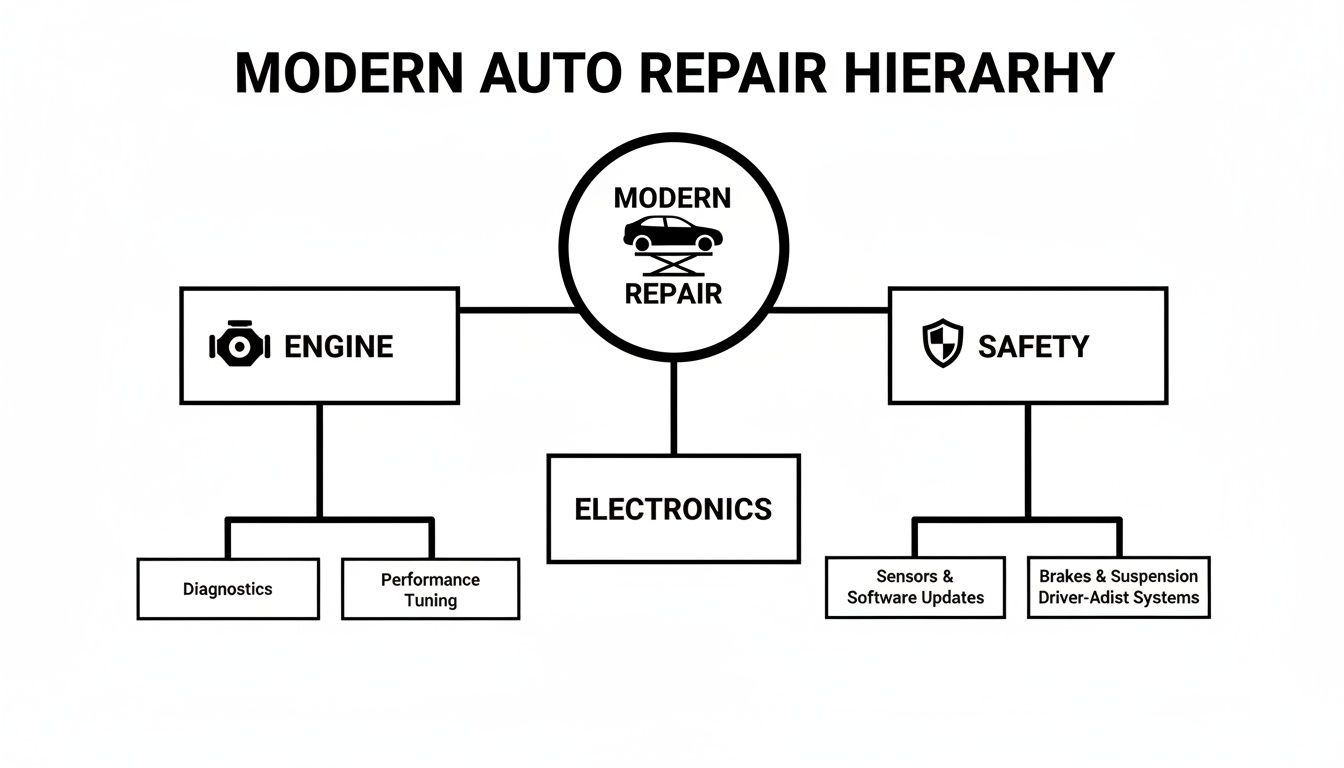
This shows just how interconnected everything is. A glitch in one system can easily create problems elsewhere, which is why a thorough diagnostic approach is so critical.
Engine and Powertrain Services
The engine is your car’s heart, and keeping it in top shape is everything. These services cover all the components that make your car move.
- Oil Changes: This is easily the most crucial piece of maintenance you can do. Clean oil acts as the lifeblood of your engine, lubricating moving parts, preventing overheating, and cleaning out gunk. Skipping it is like trying to run a marathon without water—it will inevitably lead to a total breakdown. You can learn more about the importance of routine oil changes in Whitby to keep your engine running smoothly.
- Engine Diagnostics: That dreaded "Check Engine" light is your car's way of telling you something's wrong. Technicians plug a specialized computer into your car to read specific error codes. This isn't just about switching the light off; it's a diagnostic tool that points directly to the source of the problem, whether it's a simple sensor failure or something more serious.
- Transmission Repair: The transmission is what channels power from the engine to the wheels, essentially acting as your car’s gearbox. If you feel a jolt between gears, hear grinding sounds, or smell something burning, your transmission is crying for help. The fix could be as simple as a fluid flush or as complex as a full rebuild.
Brakes and Suspension Systems
If the engine is all about "go," the brakes and suspension are all about control, safety, and a smooth ride.
Your brakes aren't just about stopping power; they are your car's most important safety feature. Think of it like replacing the worn-out treads on your running shoes—you need that grip and stability for when it matters most.
A study found that worn brakes can increase your stopping distance by over 25%. In an emergency, that extra distance can be the difference between a close call and a serious accident.
Suspension work, on the other hand, is all about how your car feels on the road.
- Shock and Strut Replacement: These parts are designed to absorb bumps and keep your tires glued to the road. Is your car feeling extra bouncy or swaying uncomfortably around turns? Your shocks and struts are likely worn out and due for a replacement.
- Wheel Alignment: This isn't about your steering wheel; it's about adjusting the angle of your tires so they are perfectly aligned with each other and the road. A proper alignment stops your tires from wearing out unevenly, can improve your gas mileage, and makes sure your car drives straight and true.
Electrical System Repairs
Today's cars are more computer than machine, with intricate electrical systems managing everything from the radio to critical engine functions.
Your car’s electrical system is its central nervous system, shooting power and data to every component. A tiny fault in a wire or sensor can cause a chain reaction of bizarre, seemingly unrelated issues.
Here are a few common electrical jobs:
- Battery and Alternator Service: The battery provides the initial jolt to start your car, and the alternator keeps it charged as you drive. If your engine is slow to turn over or your headlights look dim, one of these two is usually the culprit.
- Starter Repair: The starter is a small but powerful motor that gets the engine spinning when you turn the key. The classic sign of a failing starter is a loud clicking sound without the engine actually cranking.
- Wiring and Sensor Issues: Your car contains hundreds of metres of wiring and dozens of sensors monitoring everything from fuel mixture to wheel speed. A technician’s expertise really shines here, as they patiently trace shorts or identify faulty sensors that could be tanking your fuel economy or even disabling your airbags.
What Goes into the Cost of a Good Auto Repair?
Seeing a final auto repair bill can be a bit of a shock if you don't know what you're looking at. But once you break it down, you start to see where the value is. The total cost isn't just for a new part; it’s a mix of a mechanic's time and skill, the quality of the parts themselves, and the surprising complexity of the car you drive every day.
Think of it less as an expense and more as an investment in keeping your vehicle safe and reliable for the long haul.
The biggest chunk of any repair bill is almost always labour. This isn't just someone's hourly wage. It pays for a technician's years of training, specialized certifications, and the thousands of dollars the shop has invested in advanced diagnostic tools. A good technician is part detective, using their experience and that high-tech gear to figure out what's really wrong, which saves you from paying for guesswork.
The Price of a Job Done Right
Labour rates can swing quite a bit depending on where you are and the type of work being done. Right now, there's a nationwide shortage of qualified technicians, and that's pushing costs up. For example, in California, the average labour rate is $176 per hour, which is quite a bit higher than the national average of $142.82.
This isn't surprising when you learn that 31% of shops in the U.S. say the technician shortage is their single biggest headache. You can read more about these auto repair industry trends in MOTOR magazine's report. Paying for professional labour means the job gets done right the first time—and a small problem doesn't turn into a recurring nightmare.
Parts Quality: The OEM vs. Aftermarket Debate
Next up are the parts. When something on your car wears out or breaks, you've usually got two main options, and your choice will definitely affect the final bill.
- Original Equipment Manufacturer (OEM) Parts: These are the exact same parts your car was assembled with at the factory. You're guaranteed a perfect fit and the performance you'd expect, but they typically cost more.
- Aftermarket Parts: These are made by other companies, not the car manufacturer. They're often easier on the wallet, and many are excellent quality. However, the fit and performance can sometimes be a bit of a gamble.
The best choice really depends on the repair, your car, and your budget. If you want to get into the weeds on this, we have a complete guide that breaks down the pros and cons of OEM vs. aftermarket parts.
A quality auto repair shop will always be transparent about the parts they recommend and why. They should explain the pros and cons of each option, empowering you to make an informed decision that aligns with your needs and budget.
Why Modern Cars Cost More to Fix
Finally, today's cars are just incredibly complex, and that complexity adds to the cost. A modern vehicle is basically a rolling network of computers, sensors, and software. What used to be a simple job—like replacing a side mirror—can now mean having to recalibrate cameras and sensors that are part of your car’s safety systems.
Because everything is so interconnected, a task that was once purely mechanical now requires specialized diagnostic tools and software know-how. The more advanced the system, the more time and expertise it takes to make sure everything is working together perfectly again. When you understand these three pillars—labour, parts, and complexity—the cost of a quality auto repair starts to make a lot more sense.
Preventing Major Repairs with Proactive Car Care
The best auto repair is the one you never need. While you can't predict every issue, you have more power over your vehicle’s health than you might realize. Think of proactive care as preventative medicine for your car—it keeps everything running smoothly and stops minor hiccups from turning into major mechanical failures.
Rather than waiting for a dashboard light to pop on or a strange noise to start, a bit of regular attention can save you a world of money and stress. Many of the most expensive and frustrating repairs are a direct result of simple, neglected maintenance. By staying on top of it, you can add years to your vehicle's life and keep it dependable.
A Little Prevention Goes a Long Way
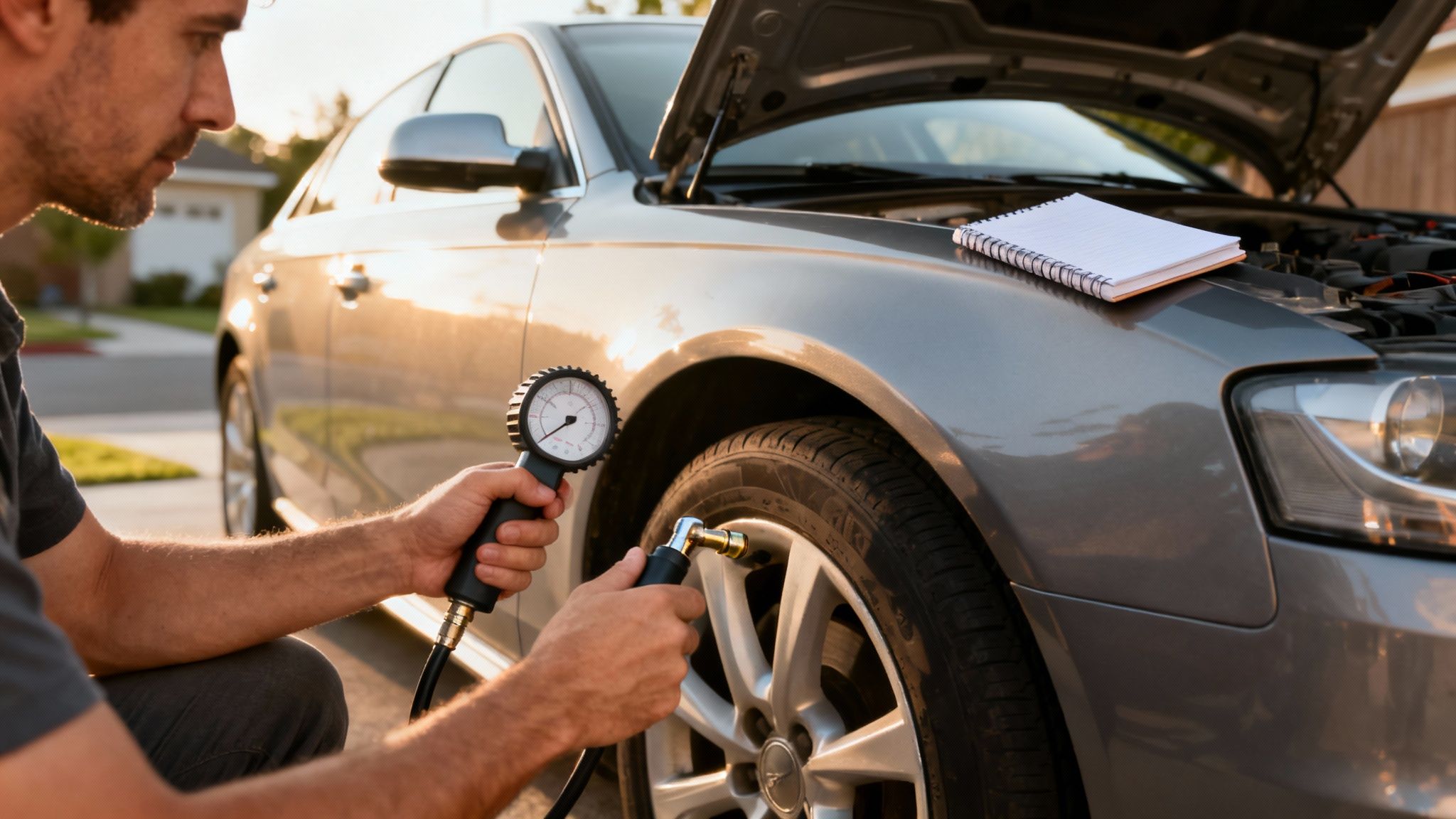
You don't have to be a mechanic to keep your car in good shape. A few simple, regular checks can make all the difference, helping you catch problems early before they become expensive headaches. Here’s a quick checklist of things you can easily do at home.
| Check | Frequency | Why It's Important |
|---|---|---|
| Tire Pressure | Monthly | Ensures proper handling, fuel efficiency, and even tire wear. |
| All Fluid Levels | Monthly | Catches leaks early and keeps critical systems like your engine and brakes working correctly. |
| Lights & Signals | Monthly | A burnt-out bulb is a safety risk. This quick check ensures you can see and be seen. |
| Wiper Blades | Seasonally | Guarantees clear visibility in rain or snow, which is non-negotiable for safe driving. |
| Tire Tread | Monthly | Worn tires are dangerous. A quick visual inspection can tell you if it's time for a new set. |
Doing these quick inspections doesn’t mean you have to diagnose the issue yourself. It's about spotting something that doesn't look right so you can give your technician a clear heads-up. That simple step leads to a faster and more accurate auto repair.
Don't Ignore Your Owner's Manual
While your own checks are a great first line of defence, the single best way to avoid major repairs is to follow the service schedule laid out by your vehicle's manufacturer. Tucked away in your owner's manual is a carefully planned roadmap for keeping your car healthy for its entire lifespan.
This schedule is your guide. It tells you exactly when to take care of critical services like:
- Replacing the timing belt
- Changing transmission fluid
- Swapping out spark plugs
- Flushing the coolant system
Ignoring these key milestones is a gamble. You might feel like you're saving money in the short term, but you could be setting yourself up for a massive, unexpected bill down the road.
Why Scheduled Maintenance Is the Smartest Investment You Can Make
Sticking to the manufacturer's schedule isn't just an expense—it's an investment in your vehicle's longevity and reliability. It allows a professional technician to spot and replace wearing parts before they fail, preventing a chain reaction that could damage other expensive components.
For example, a timing belt that snaps can cause catastrophic engine damage, often costing thousands of dollars to fix. A scheduled replacement, on the other hand, is a routine and far more affordable job that completely avoids that disaster. This proactive approach is the core of modern vehicle care.
To learn more about how a structured plan protects your car, check out our in-depth guide to preventive maintenance for vehicles. At the end of the day, consistent care keeps your car on the road where it belongs, not in the shop for an emergency auto repair.
How to Choose a Trustworthy Auto Repair Shop

Finding a mechanic you can trust is probably one of the most important decisions you'll make for your car. Let's be honest, with so many shops out there, it can feel like you're looking for a needle in a haystack. The trick is knowing what to look for and what questions to ask.
A great auto shop does more than just fix cars—they build a relationship with you based on honest work and clear communication. This decision doesn't just affect your bank account; it's about your safety on the road. Taking a little time now to find a reliable technician is a smart investment that will pay off with peace of mind for years to come.
The sheer number of options can be overwhelming. In California alone, there were over 34,483 licensed Automotive Repair Dealers as of the first quarter of the 2025-2026 fiscal year. That’s a lot of choices, which makes it even more critical to do your homework and vet your options properly.
Start With Research and Recommendations
The best time to find a great mechanic is before you actually need one. Don't wait until your car is on the side of the road to start frantically searching for help. When you're not in a rush, you can make a much better decision.
Kick things off by asking people you trust. Chat with friends, family, or coworkers who are particular about their vehicles. Their real-world experiences can give you insights you’ll never find in an online review. A glowing personal referral is often the best sign you've found a winner.
From there, head online. Look for shops with a consistent pattern of positive, detailed reviews on sites like Google or Yelp. Pay close attention to how the shop owners respond to feedback, both good and bad. A professional and helpful response to a negative review is a huge green flag. Understanding the bigger picture of services available for auto repair shops and dealerships can also give you a sense of what to expect from a professional operation.
Look for Signs of Professionalism
Once you have a shortlist, it’s time for a visit. You can tell a lot about a business just by walking through the door. A clean, organized, and professional-looking shop is usually a sign of a well-run business that cares about its customers and its work.
Keep an eye out for these key signs:
- ASE Certifications: Look for a sign or patch showing the technicians are ASE (Automotive Service Excellence) certified. This is proof that they’ve passed tough exams and know their stuff.
- A Tidy Workspace: Sure, fixing cars is a messy job, but a good shop keeps its service bays organized. A chaotic, cluttered space can sometimes point to chaotic, cluttered work.
- Welcoming Staff: The people at the front desk should be friendly, listen to your concerns, and be able to explain complicated car problems in simple terms you can actually understand.
A trustworthy auto repair shop will never pressure you into making a decision on the spot. They should give you a clear, written estimate and the space to think about it before any work starts.
Ask the Right Questions
Before you hand over your keys, have a few important questions ready. The answers you get will tell you volumes about the shop’s transparency and how they treat their customers.
- Do You Offer a Warranty? Any shop worth its salt will stand behind its work. Ask about the warranty on both parts and labour. A 12-month or 20,000-kilometre warranty is pretty standard, but great shops often offer even better coverage.
- How Do You Handle Diagnostics? Find out if they charge a diagnostic fee to pinpoint the problem. Professional shops use this fee to cover the technician’s time to properly trace the issue, which means you're not paying for guesswork.
- How Will You Keep Me Updated? Good communication is everything. Ask them how they'll let you know what they find and if they’ll get your go-ahead before doing any work that wasn't on the original estimate.
Finding a top-tier mechanic in Whitby who checks all these boxes means you’ve found a true partner for your vehicle’s health. At the end of the day, trust your gut. If a shop feels right and has all these qualities, you’ve likely found a keeper.
More Than Just Fixes: Specialized Auto Services
A great auto shop does more than just fix what's broken. The best ones offer services that protect your car, improve its look and feel, and keep it running smoothly for the long haul. Think of it as a complete car care philosophy, one that safeguards your investment.
These services aren't your typical oil change or brake job. They're about future-proofing your vehicle, whether that means keeping a new car's paint job pristine or making sure a company's fleet of vans stays on the road, making money.
Protecting Your Investment
For most of us, a car is a huge purchase. So, it only makes sense to protect it from the daily abuse of driving. That’s where specialized protective services come in, helping maintain your car's condition and, ultimately, its resale value.
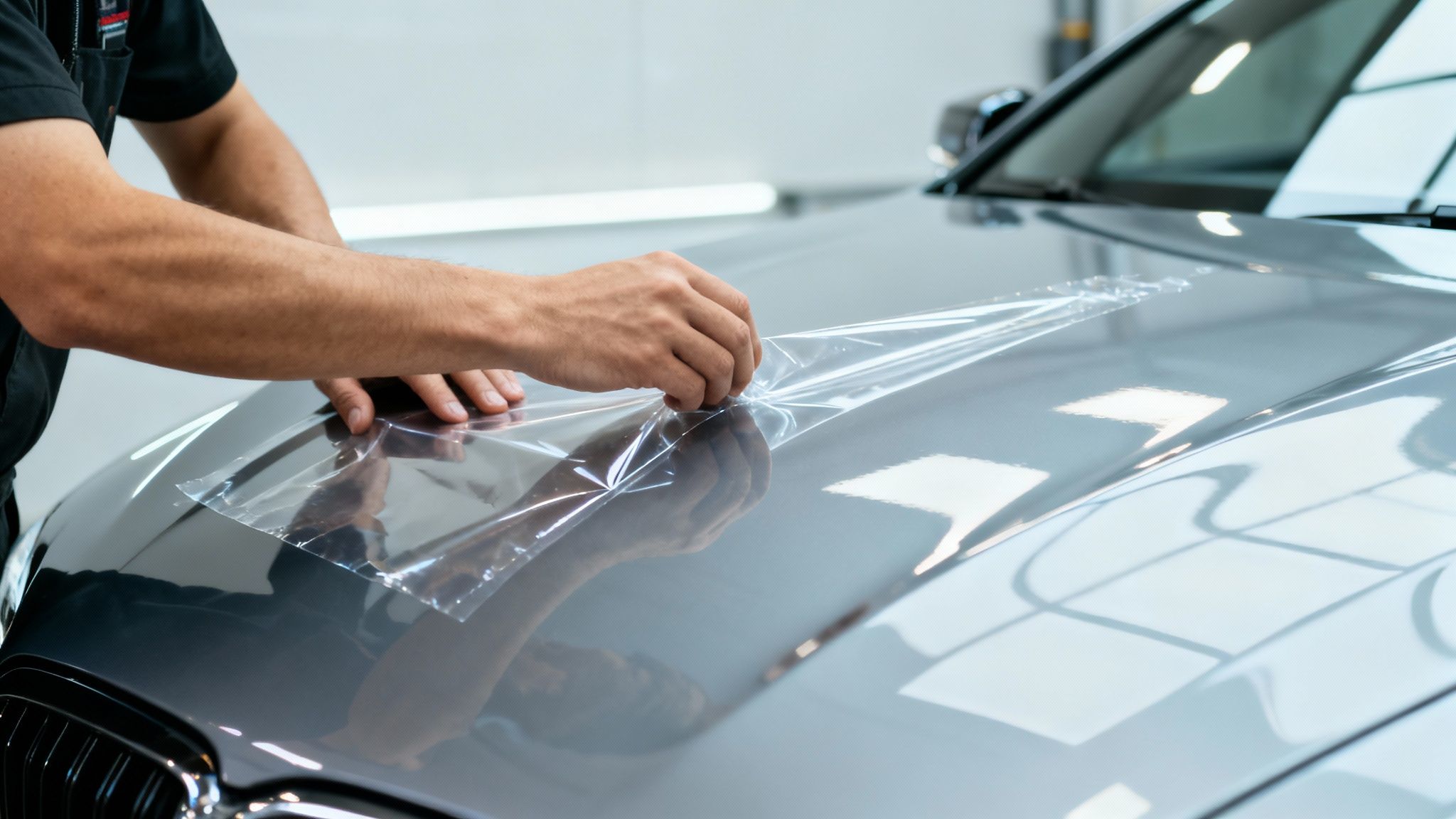
- Paint Protection Film (PPF): You might have heard this called a "clear bra." It's a tough, transparent film applied right over your car's paint. It acts as an invisible shield against all the little things that ruin a finish—rock chips, bug guts, and minor scuffs.
- Window Tinting: This isn't just for looks. A professional tint blocks up to 99% of damaging UV rays, preventing your dashboard and seats from fading and cracking over time. It also cuts down on heat and glare, which makes your drive safer and a lot more comfortable.
Think of PPF like a screen protector for your phone. You wouldn't carry around a brand-new smartphone without one, right? The same logic applies to your car's expensive paint job.
Putting a little into these services now is a smart way to prevent cosmetic damage and keep your vehicle looking its best for years.
Specialized Fleet Maintenance
When you run a business, your vehicles are more than just a way to get around—they're vital tools. If a work truck is sitting in the shop, it's not earning you money. This is exactly why specialized fleet maintenance is so important.
A good fleet program is all about minimizing downtime. It provides priority service and focuses on preventative care to spot potential problems before they lead to a breakdown. It's about keeping your company vehicles safe, reliable, and ready to go at a moment's notice.
Comprehensive Collision Repair
Accidents are a fact of life. When one happens, you need a shop that can handle the whole job, not just the mechanical stuff. True collision repair is both an art and a science, aiming to restore your vehicle perfectly to its pre-accident condition—structurally, mechanically, and visually.
The work involves everything from fixing dents and replacing body panels to meticulous paint matching and ensuring the vehicle's frame is perfectly straight. It’s also more complex than ever, with modern cars full of advanced electrical systems. This is especially true for hybrids and electric vehicles, where shops must follow strict electrical safety guidance (NFPA 70E).
At the end of the day, a proper collision repair makes your car look great again, but more importantly, it makes it safe to be back on the road.
Your Auto Repair Questions, Answered
Let's face it, walking into a repair shop can feel intimidating. There are a lot of moving parts (literally!), and it's easy to feel out of your depth. We get it. That's why we've put together answers to some of the questions we hear most often.
Our goal is to pull back the curtain on car care. A little knowledge goes a long way in making you feel confident and in control when it comes to your vehicle's health.
How Often Should I Get My Car Serviced?
This is probably the most common question in the auto world, and the most reliable answer is sitting in your glove box: your owner's manual. The folks who built your car laid out the perfect maintenance schedule to keep it running smoothly. Sticking to it is the best way to dodge major repair bills later on.
As a general guideline, many newer cars can go 8,000 to 12,000 kilometres between oil changes. But that's just a starting point. If your daily commute is mostly stop-and-go traffic or you live in a harsh climate, you'll likely need to come in sooner.
Do I Have to Go to the Dealership for Service?
Nope! This is a big myth. You have the freedom to choose your own trusted, independent repair shop for all your maintenance needs, even if your vehicle is still under warranty. The law protects your right to choose, as long as the shop follows the manufacturer's recommended procedures and uses the right parts.
Just be sure to keep a good paper trail. A professional independent shop will give you detailed invoices for every service. This documentation is your proof that you’ve been taking proper care of your vehicle, keeping your warranty perfectly intact.
What's the Difference Between an Estimate and a Quote?
Knowing the difference here is key to avoiding those dreaded surprise bills. They might sound similar, but they mean very different things when it comes to your final cost.
- An Estimate is an educated guess. It's the mechanic's best assessment of the cost based on what they can see initially. The final bill could change once they dig in and see the full picture.
- A Quote is a firm price for the job. It's a promise to do the specified work for that exact amount. A quote is binding, and the shop can't charge you more unless you authorize additional repairs.
Always ask for a written estimate before a wrench is turned. Any honest shop will call you for approval if they find something that will push the final cost well beyond that initial estimate. No one likes a surprise on their invoice.
At Carmedics Autowerks Inc, we're all about clear communication and expert work you can trust. If you've got more questions or your car needs a check-up, find us online at https://www.carmedicsautowerks.com.com to book an appointment.