


Think of your car's air conditioning service as a wellness check for its cooling system. It's a series of inspections, tests, and if needed, a recharge to make sure everything is working as it should. The easiest way to picture your car's AC is like a mini-fridge for your vehicle; it uses a special gas-liquid called refrigerant to absorb heat from inside the cabin and dump it outside, leaving you with that crisp, cool air.
Getting a handle on this basic concept makes it much easier to spot when something’s not right and needs a professional eye.
How Your Car's Air Conditioning Really Works
Your car's AC system is a clever bit of engineering, but it works on a surprisingly simple principle: it doesn't create cold, it removes heat. The whole process hinges on a closed-loop cycle where refrigerant constantly changes from a liquid to a gas and back again. Let's break down exactly what’s happening behind your dash.
Because it's a closed-loop system, the same refrigerant gets used over and over. It's a team effort between a few key parts, all working in sync. If one component starts to struggle, the whole system feels it, which is why a little maintenance goes a long way in keeping you cool.
The Heart of the System: The Compressor
Everything kicks off at the compressor. You can think of it as the heart of the AC system. It’s driven by a belt connected to your engine, and its one job is to take low-pressure refrigerant gas and squeeze it. This compression packs the molecules together, which dramatically raises the refrigerant's temperature and pressure, getting it ready for the next step.
It’s a lot like using a hand pump for a bicycle tire. As you force air into the tire, the pump gets warm from the pressure—the compressor does the exact same thing, but to refrigerant.
Releasing the Heat: The Condenser
This super-hot, high-pressure gas now moves to the condenser. You'll find this part at the very front of your car, usually sitting right in front of the radiator. It looks like a thin radiator itself, and its job is to shed all that heat and turn the refrigerant back into a liquid.
As you drive, air rushes over the condenser's fins (or a fan pulls air through when you're stopped). This airflow whisks away the heat that the refrigerant picked up from your cabin, causing it to condense back into a high-pressure liquid. This is the moment where all that unwanted interior heat gets released into the outside air.
This diagram shows how the refrigerant cycles through the main components of your car's AC.
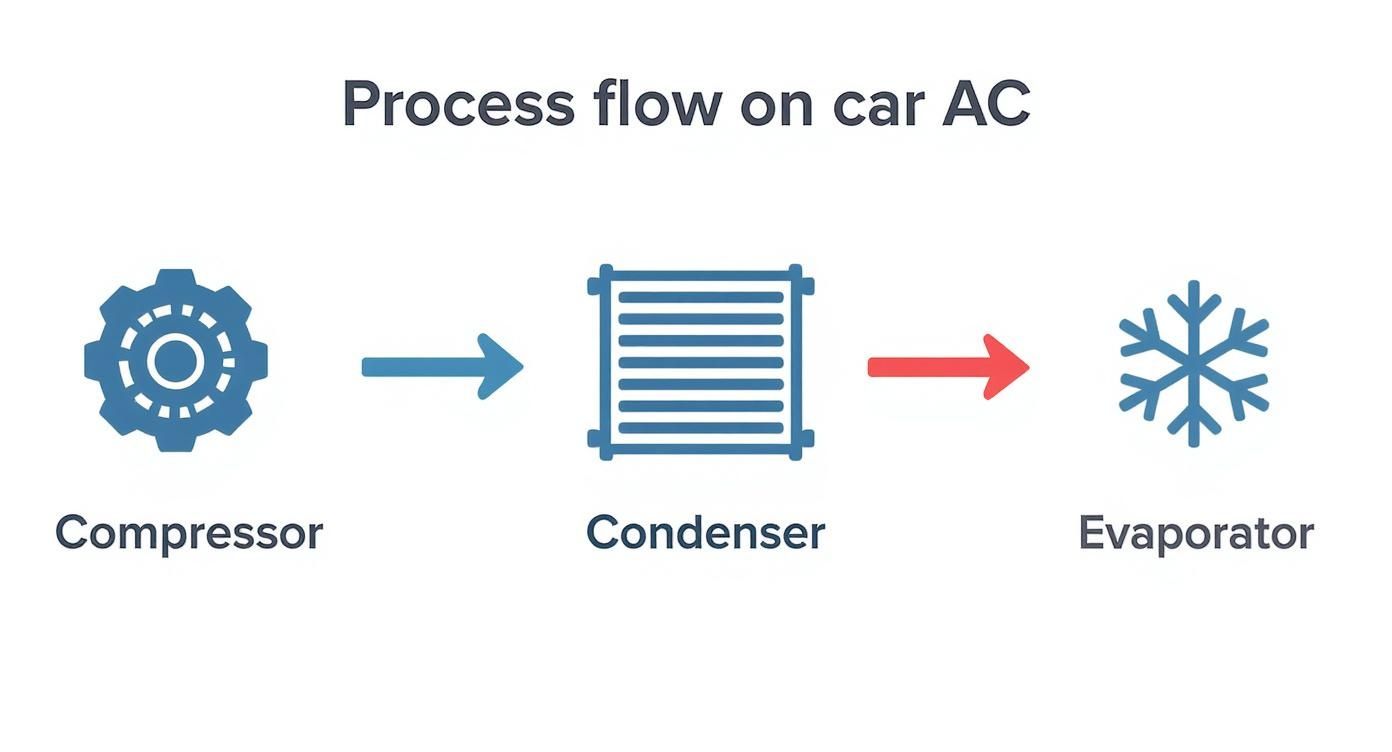
You can clearly see how it transforms from gas to liquid and back again as it carries heat out of the car.
The Chilling Effect: The Evaporator
Now a cool, high-pressure liquid, the refrigerant makes its way to the evaporator, a component tucked away deep inside your dashboard. Right before it gets there, it’s forced through a tiny nozzle called an expansion valve. This causes its pressure to plummet instantly, which, in turn, makes the refrigerant intensely cold.
As this super-chilled liquid flows into the evaporator, it starts to boil and revert to a low-pressure gas. This phase change absorbs an incredible amount of heat from the air in the cabin. Your blower fan then pushes this air across the frosty evaporator fins, and what comes out of your vents is that refreshingly cold, dry air you're looking for.
Key Takeaway: Your car's AC doesn't make cold air—it's a heat mover. The refrigerant is like a sponge, soaking up heat inside the car and wringing it out outside.
This whole cycle runs on a continuous loop for as long as your AC is switched on. Since this technology became mainstream after 1939, it has become a must-have feature, and today, refrigerant leaks are far and away the most common reason for system failures. You can learn more about how car systems have changed and what that means for maintenance by checking out the history of automotive advancements.
Signs Your Car AC Is About to Fail
Your car's air conditioner rarely just dies without a fight. It almost always sends up warning flares—some subtle, some not-so-subtle—before it completely quits on a sweltering July afternoon. Learning to spot these clues is the key to catching a small problem before it becomes a massive, expensive repair.
It's about more than just noticing your car is blowing warm air. Just like a homeowner might wonder whether your A/C will make it through the summer, paying attention to your vehicle's cooling performance can save you a lot of sweat and money down the road.
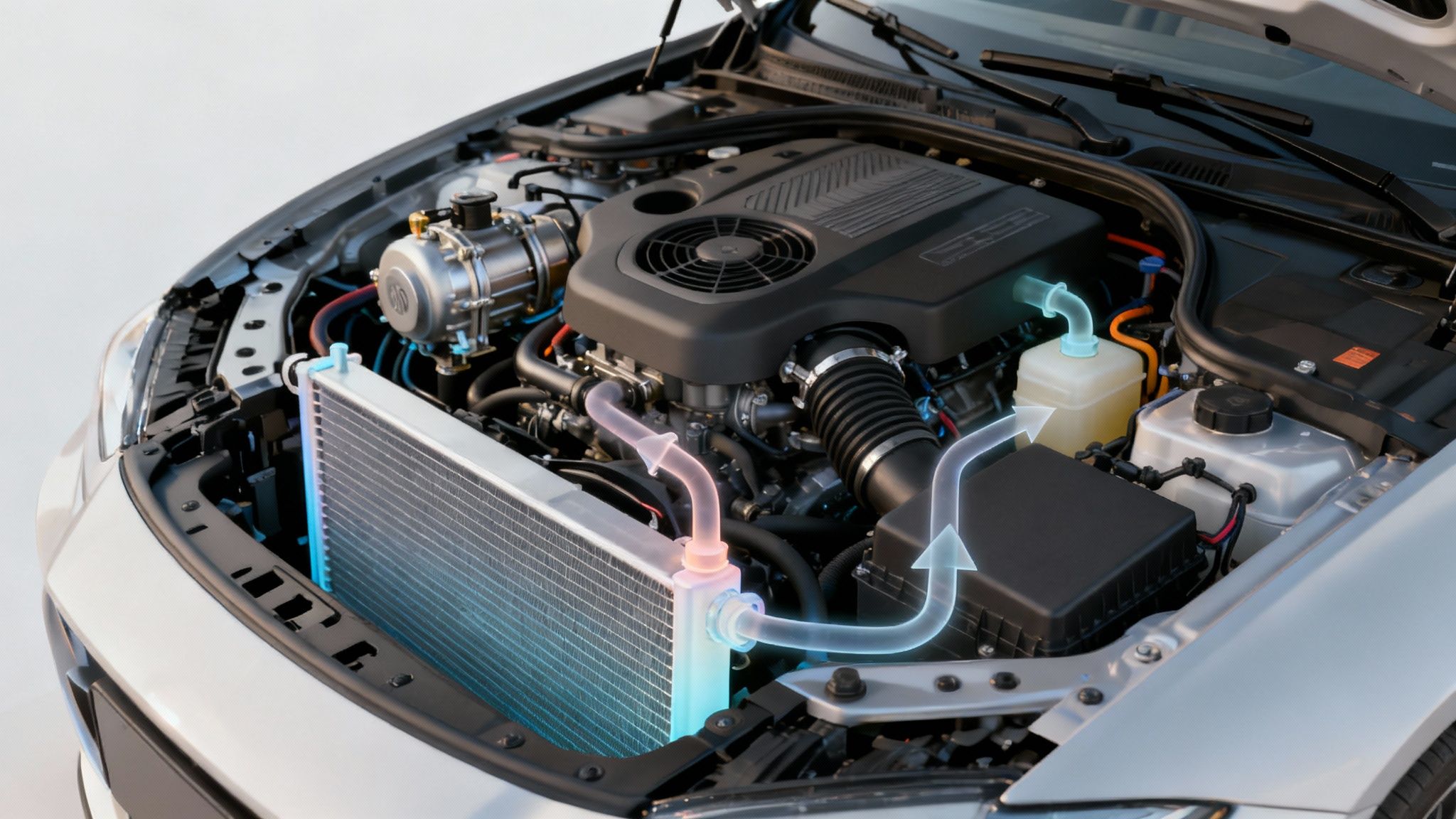
Weak or Inconsistent Airflow
One of the very first signs of trouble is when the air coming from your vents just doesn't have the same punch it used to. You crank the fan to max, but all you get is a lukewarm whisper that does next to nothing to cool the cabin.
This could point to a few different things. On the simple end, it might just be a clogged cabin air filter that’s suffocating the system—an easy fix. But it could also signal a more serious issue like a failing blower motor, mould buildup blocking the evaporator core, or even a loose hose. If the airflow sputters—strong one minute, weak the next—you might be looking at an electrical gremlin.
Strange Noises When the AC Is On
Your A/C should be a background hum, not a garage band practice session. Any new sound that pops up only when you hit that A/C button is your car's way of telling you something's wrong. Pay close attention to the specific sound; it can often point you in the right direction.
To help you diagnose what's going on, we've put together this quick reference table matching common A/C sounds and symptoms to their likely culprits.
| Symptom | What It Sounds or Feels Like | Most Likely Cause |
|---|---|---|
| Squealing or Grinding | A high-pitched squeal or a metallic grinding noise that starts when the A/C is turned on. | Often a sign of a failing compressor or a worn-out serpentine belt. This is a serious one. |
| Rattling Under the Dash | A chattering or rattling sound, like something is loose inside the vents. | Usually debris (leaves, twigs) that has been sucked into the blower motor fan. |
| Persistent Clicking | A rapid clicking sound that cycles on and off repeatedly. | The compressor clutch is trying to engage but can't, often due to low refrigerant or an electrical fault. |
| Hissing Sound | A steady hissing from the dash area, even after you've shut the car off. | This typically indicates a refrigerant leak somewhere in the system. |
This table is a great starting point, but remember that a professional diagnosis is the only way to be certain.
Expert Tip: Never ignore a grinding noise from your A/C. That's the sound of the compressor, the heart of your system, eating itself alive. Shut the A/C off immediately to prevent catastrophic (and very expensive) damage.
Musty or Unpleasant Odours
Ever turn on your A/C and get hit with a smell like a damp, forgotten gym bag? That funky, musty odour is a classic sign of mould and bacteria having a party on your evaporator core, which is tucked away deep behind the dashboard.
This dark, damp environment is the perfect breeding ground for mildew. When you turn on the fan, you're just blowing those spores right into the cabin. It’s not just unpleasant; it can be a real problem for anyone with allergies or breathing issues. A proper air conditioning service for cars will include a treatment to clean and disinfect the system, killing the source of the smell. Don't just try to mask it with an air freshener—get it cleaned out.
A Look Inside a Professional AC Service

Bringing your car in for an air conditioning service can feel like a bit of a mystery. You know it’s not working right, but what actually happens behind those service bay doors? At Carmedics Autowerks, we’re big believers in transparency. So, let's pull back the curtain and show you exactly what our expert technicians do to bring back that ice-cold air.
This is a whole lot more than just a "top-off" with a can of refrigerant from the auto parts store. A professional service is a detailed, step-by-step process designed to find the real problem, fix it, and recharge your system properly for performance that lasts. Every step is crucial to the health of your car's AC.
The Initial Performance Check
Before we even think about connecting our equipment, the whole process starts with a thorough performance check. This gives us a baseline—a snapshot of how your system is (or isn't) working right now. It's more than just putting a hand to the vent.
We will:
- Measure Vent Temperature: We use a digital thermometer to get a precise reading of the air coming out of your centre vents. This gives us a hard number to compare against what the manufacturer says it should be.
- Check System Pressures: We hook up a special set of gauges to the high-side and low-side service ports. These pressure readings tell us a story about what’s going on inside the system. We can see if it’s low on refrigerant, if there's a blockage, or if the compressor is struggling to do its job.
- Conduct a Visual Inspection: Our technicians give the whole system a once-over, looking at the compressor, belts, hoses, and condenser for obvious signs of trouble like oily residue (a tell-tale sign of a leak), physical damage, or debris blocking airflow.
This initial diagnosis is key. It helps us zero in on the likely culprit before we start turning wrenches.
Advanced Leak Detection
If the pressure check points to a refrigerant leak, finding it is the next critical step. Just dumping more refrigerant in is a temporary fix at best—like trying to fill a bucket that has a hole in it. You’re just wasting money and delaying the inevitable.
Here in our Whitby shop, we use modern methods to track down even the tiniest, most elusive leaks. This usually involves injecting a special UV-reactive dye into the AC system. After you run the AC for a bit, we go over every inch of the system with a blacklight. The dye glows brightly right at the source of the leak, leaving no room for guesswork. This precision ensures we fix the problem right the first time.
Refrigerant Recovery and System Evacuation
Once we’ve figured out the problem and made any necessary repairs, we get to the service itself. First, we use a specialized recovery machine to safely remove all the old refrigerant. This is an essential environmental step, as venting refrigerant straight into the atmosphere is illegal and harmful.
Next comes what might be the single most important part of the job: the vacuum process. Our machine pulls the entire system into a deep vacuum for at least 30 minutes. This does two vital things:
- It sucks out every last bit of air and, more importantly, moisture.
- It literally boils away any water trapped inside. Moisture is the arch-nemesis of an AC system.
Why This Matters: Rushing or skipping the vacuum process is a common shortcut that leads to disaster down the road. When moisture mixes with refrigerant, it creates a corrosive acid that eats away at expensive components like the compressor from the inside out.
The Precise Recharge
With the system clean, dry, and sealed, it's finally time to recharge it. This is where professional equipment and expertise really make a difference. Every single vehicle requires a specific amount of refrigerant and compressor oil, measured down to the gram. Overcharging or undercharging, even by a little, can wreck your cooling performance and damage the compressor.
We use our advanced AC service machine to inject the exact manufacturer-specified charge of refrigerant, along with the correct type and amount of compressor oil. This precision is the key to getting optimal performance and a long life out of your system. The industry for heating, ventilation, and air conditioning equipment is a massive, multi-billion dollar sector, and it's always evolving. This drives the need for precise service tools, especially for handling modern refrigerants like R-1234yf, which are better for the environment but require expert handling.
To finish things off, we run one more performance test. We check the vent temperatures to make sure they're frosty, and we look at the pressure readings to confirm everything is stable and operating in the green. This comprehensive approach is how we ensure you drive away with an AC system you can rely on. Knowing these steps helps you understand the value you get from all the professional auto repair services we provide.
Breaking Down Car AC Service and Repair Costs
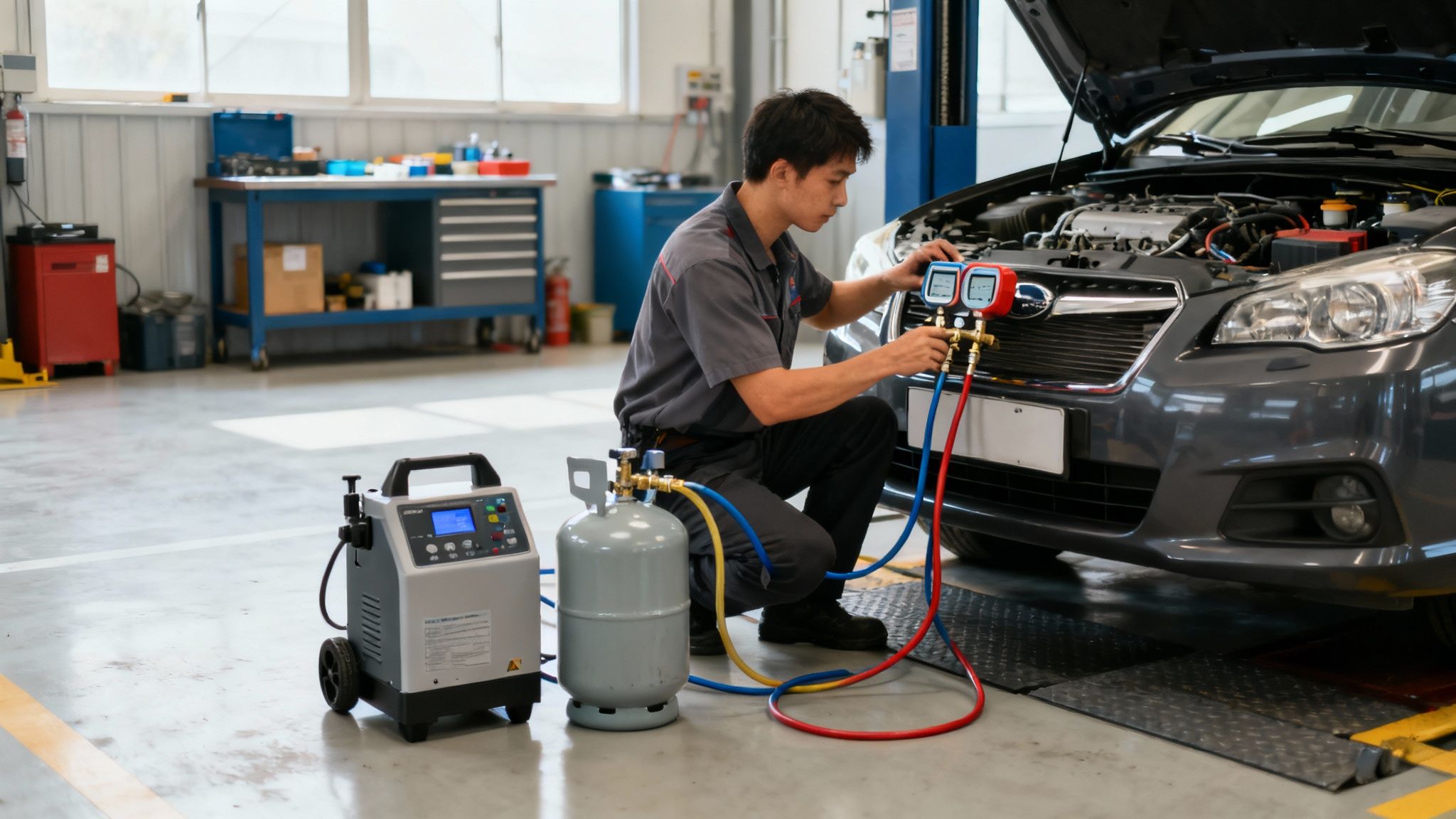
So, let's talk about the bottom line. Knowing what to expect for an air conditioning service for cars helps you budget properly and understand what you're paying for. The final bill can swing quite a bit, but it almost always boils down to your vehicle’s make and model, the specific parts required, and the type of refrigerant in the system.
A simple AC performance check and a refrigerant top-up sit at the lower end of the price range. On the other hand, replacing a major component like the compressor is a much bigger investment. We want to set realistic expectations, so let's break down what goes into the final cost.
What Influences the Final Bill?
No two AC repairs are ever the same. The price you pay is a direct result of the parts needed, the labour involved, and your car's specific design. A luxury European SUV, for instance, will almost always have pricier parts than a common domestic sedan.
Here are the main things that move the needle on cost:
- Vehicle Make and Model: Parts for high-end or European vehicles are often more expensive and can be buried deep in the engine bay, which means more labour time.
- The Specific Problem: Fixing a tiny, accessible o-ring leak is a world away from replacing a seized compressor that has contaminated the entire system with metal shavings.
- Labour Rates: A skilled technician's time is a significant part of any repair bill, from the initial diagnosis to the final system check.
- Refrigerant Type: This is a bigger deal than most people think, and it deserves its own explanation.
The Refrigerant Factor: R-134a vs. R-1234yf
One of the biggest variables in the cost of an AC recharge is the kind of refrigerant your car uses. Think of it like fuel—different cars need different grades, and the prices are far from equal.
Most cars built before 2015 use a refrigerant called R-134a. It's been the industry standard for years and is pretty affordable. However, newer vehicles use a much more environmentally friendly—but also significantly more expensive—refrigerant called R-1234yf. The cost per pound for R-1234yf can be up to 10 times higher than for R-134a, which has a huge impact on the final price of a service.
This shift is happening across a massive industry. The market for AC components like valves alone is valued at $2.7 billion and is expected to grow. This reflects the constant need for services like leak detection, compressor repairs, and refrigerant management—all essential for keeping us cool on the road. As you can discover more insights about the growing automotive service market on cncda.org, these industry-wide trends ultimately affect repair costs for everyone.
Estimated Cost Range for Common Car AC Repairs
To give you a clearer idea of what to budget for, we've put together a table with some ballpark figures for common AC repairs here in Canada. Just remember, these are estimates. The final cost will depend on the factors we've just covered.
| Repair or Service | Estimated Cost Range (CAD) | Factors Influencing Cost |
|---|---|---|
| AC Inspection & Diagnosis | $75 – $200 | Includes pressure tests, leak detection dye, and a thorough visual inspection. |
| AC Recharge (R-134a) | $150 – $300 | The cost depends on how much refrigerant is needed to top up the system. |
| AC Recharge (R-1234yf) | $300 – $800+ | The much higher cost of the refrigerant itself is the main driver here. |
| Compressor Replacement | $800 – $2,500+ | A major repair. The cost varies widely by car model and if a full system flush is needed. |
| Condenser Replacement | $400 – $1,200 | Price depends on how hard it is to access the part and the make of the vehicle. |
These numbers can seem high, but they reflect the complexity and precision required for modern AC systems.
A Note on Quality: It's always tempting to go for the cheapest quote, but investing in quality parts and professional service from a trusted shop like Carmedics Autowerks is the smartest move. A repair done right the first time saves you money, stress, and another trip to the garage down the road.
Simple DIY Checks to Prevent Costly Repairs
You don't need to be a certified technician to keep an eye on your car's A/C health. A few simple checks in your own driveway can help you catch trouble early, stopping small issues from turning into expensive, complicated repairs. Think of it as first aid for your car's climate control.
These quick tips are all about empowering you as a car owner. By spotting problems before they get serious, you can extend the life of your A/C system and save a good chunk of change on future air conditioning service for cars.
Perform a Quick Visual Inspection
Let's start with the easiest check: just using your eyes. Pop the bonnet and find the condenser. It looks like a thin radiator and is usually mounted right at the front of the vehicle, ahead of the engine's main radiator. Because of its location, it's a magnet for road debris.
Here's what to look for:
- Debris: Leaves, bugs, dirt, and even plastic bags can get stuck here, blocking airflow and making your A/C struggle to cool effectively.
- Damaged Fins: The condenser has delicate aluminum fins that can easily get bent by pebbles or other debris. Carefully straightening them can make a real difference.
- Oily Residue: Scan the A/C hoses, fittings, and components for any signs of a greasy film. This is a tell-tale sign of a refrigerant leak, as the lubricating oil in the system escapes along with the refrigerant.
Use Your Ears to Detect Issues
Your ears are another fantastic diagnostic tool. On a quiet day, start your engine, crank the A/C to its highest setting, and just listen. Any strange new sounds are your car's way of telling you something is wrong.
Pay close attention to any loud grinding or squealing that starts up when the A/C compressor engages. This often points a finger at a failing compressor clutch or a worn-out serpentine belt. Letting this go can lead to total compressor failure—one of the priciest A/C repairs you can face.
Pro Tip: Don't let your A/C hibernate all winter. Try to run it for about 10 minutes at least once a month, even when it's cold outside. This simple step circulates the refrigerant and oil, which keeps the seals and gaskets lubricated and prevents them from drying out, shrinking, and causing leaks.
Integrate AC Checks into Your Routine
Tacking these quick checks onto your regular car care schedule is a brilliant move. It's not just about the A/C; consistent upkeep is the secret to preventing all sorts of automotive headaches. For a broader overview, this comprehensive car maintenance checklist provides a fantastic guide to your car's overall health.
In fact, keeping an eye on your A/C is one of the 5 essential car maintenance tips every driver needs to know to keep things running smoothly. If you notice any of these red flags—from a strange noise to an oily spot—it’s the perfect time to bring your car to us at Carmedics Autowerks for a professional look. Catching it early is always the best strategy for a simple, affordable fix.
Your Car AC Service Questions Answered

Even after getting the rundown on how your car's AC works and what a service might cost, a few questions are probably still bouncing around in your head. That’s completely normal. The world of automotive air conditioning is packed with myths and half-truths, so we're here to clear the air.
Let's dive into some of the most common questions we hear from drivers right here in our Whitby shop. Getting straight answers will help you make smarter, more confident decisions about your vehicle's care.
How Often Should I Get My Car AC Serviced?
Think of your car's AC service as a preventative health check-up. As a general rule of thumb, having a professional look things over every one to two years is a smart move. This gives a technician the chance to catch small problems—like a minor leak or a tired-looking belt—before they snowball into a catastrophic compressor failure.
If you’re in a climate where the AC runs pretty much non-stop all summer, bumping that up to an annual check is an even better idea. That said, the moment you feel the air isn't as cold as it used to be, don't wait for your next scheduled visit. Get it checked out. Catching issues early is always the cheapest way to deal with them.
Is It Normal for a Car AC to Lose Refrigerant?
This is one of the biggest myths in car care, and the answer is a hard no. Your vehicle's air conditioning is engineered as a hermetically sealed system. If you're low on refrigerant, it means one thing and one thing only: you have a leak somewhere. Period.
It's true that an absolutely minuscule amount of refrigerant might permeate through the hoses over many, many years, but any drop in performance you can actually feel points to a real problem that needs a proper repair.
Simply "topping off" the refrigerant is just a band-aid, not a fix. The new gas will just leak out through the same hole, wasting your money and harming the environment. The right way to do it is to find the leak and fix it for good.
Can a DIY AC Recharge Kit Damage My Car?
Yes, they absolutely can, and we see the expensive aftermath all the time in the shop. These kits are marketed as a cheap and easy fix, but they carry huge risks that can lead to some of the priciest repairs you can face with your AC system.
The number one danger is overcharging the system. Pumping in too much refrigerant creates dangerously high pressure that can literally destroy your compressor—the heart of the entire AC system and its most expensive component.
What's more, these DIY kits completely skip the most critical step of a proper service: removing moisture. Here's what they can't do:
- Remove Moisture: A pro service uses a vacuum pump to boil away any water in the lines. Moisture is the ultimate enemy; it mixes with refrigerant to create a corrosive acid that eats away at components from the inside out.
- Add the Right Oil: The kits often have the wrong type or amount of compressor oil, which can starve the compressor and cause it to seize up.
- Diagnose the Real Problem: A recharge can can't tell you why you were low on refrigerant in the first place, leaving the original leak to continue.
For a safe, accurate, and long-lasting repair, always trust a professional. A proper air conditioning service for cars is the only way to ensure the job is done right.
Why Does My Car AC Smell Musty?
That stale, "old gym socks" smell is a dead giveaway that you've got mould and bacteria growing on your evaporator core. This part is hidden deep behind your dashboard, and its job is to get ice-cold. That process naturally creates condensation, turning the dark, enclosed space into a perfect breeding ground for mildew.
When you turn on the fan, you're just blowing those smelly spores right into the cabin. It’s not just unpleasant—it can be a real issue for anyone with allergies or respiratory problems.
A professional AC service can include an anti-bacterial cleaning that sanitizes the evaporator and the entire ventilation system. This eliminates the source of the odour, giving you fresh, clean air to breathe. It’s a crucial part of keeping your vehicle in top shape, which is the cornerstone of responsible ownership. For more on this, check out our guide on preventive maintenance for vehicles.