


We’ve all been there. It’s the first truly scorching day in Whitby, you jump in your car, crank the AC, and get hit with a blast of lukewarm air. It's more than just annoying; it’s a clear sign your car is trying to tell you something. A professional air conditioning service for your car is what’s needed—a thorough process to diagnose the problem, check the refrigerant, and make sure every part is working together to bring back that sweet, cool relief.
Why Your Car AC Is More Than Just a Comfort Feature

Most of us only think about our car’s air conditioner when the summer heat becomes unbearable, treating it like a simple luxury. But its job goes way beyond just keeping you comfortable. Your AC system is actually a critical part of your vehicle's overall safety and operation, playing a huge role in clear visibility and the quality of the air inside your car.
It helps to think of the AC system as your car's own respiratory system. The compressor is the heart, pumping refrigerant (the system's lifeblood) through a closed loop of hoses and components. This cycle doesn't just make the air cold; it also pulls a ton of humidity out of it.
The Safety Factor: Defogging and Air Quality
That dehumidifying action is a lifesaver for driver safety, especially during those damp, cool days we get here in Ontario. When your windshield fogs over, the quickest way to clear it is by turning on the AC. The dry air it pushes out literally sucks the moisture off the glass, restoring your vision much faster than just blasting the heat.
Beyond just visibility, your AC system is a gatekeeper for in-car air quality. It works with your cabin air filter to catch dust, pollen, and other gunk from the road before you and your passengers breathe it in. When it's maintained well, the air inside your car is simply cleaner.
A properly functioning AC system is not just about comfort; it's a key part of your vehicle's safety equipment. It ensures clear visibility by effectively defogging windows and helps filter out airborne contaminants for a healthier driving environment.
When this system starts to fail, it's not just your comfort on the line. A compressor that’s struggling has to work harder, putting extra strain on your engine and sometimes even hurting your fuel economy. Realizing that an air conditioning service for your car is about both comfort and safety helps put its maintenance into perspective. It’s all about staying cool, clear-headed, and safe on the road.
Telltale Signs Your Car AC Needs Professional Service
Your car’s air conditioning system rarely just gives up the ghost overnight. It almost always sends out warning signs first—some subtle, some not so much. Learning to pick up on these clues is the key to catching a small problem before it snowballs into a complete system failure, saving you from a sweaty drive and a much bigger repair bill.
The most obvious red flag, of course, is air that just isn't cold. If you crank up the AC and all you get is lukewarm or even warm air from the vents, something’s definitely wrong. This is usually the first thing people notice and often points to low refrigerant, which almost always means there’s a leak somewhere in the system.
Listening to Your AC System
Beyond just the temperature, your ears are one of your best diagnostic tools. A healthy AC should operate with a quiet, gentle hum. When new, strange noises start popping up, it's time to listen closely.
- Rattling or Banging: A rattling sound that kicks in when you turn on the AC could be a sign of a failing compressor clutch or other internal parts that are on their way out.
- Squealing or Grinding: A high-pitched squeal often points to a worn-out serpentine belt, which is responsible for driving the compressor. A deeper grinding noise, on the other hand, might signal a much more serious problem, like a failing compressor bearing.
Ignoring these sounds is a risky bet. A failing component can throw tiny metal shavings throughout the entire system, turning what could have been a simple part swap into a costly full system flush and repair. Getting a professional air conditioning service for your car booked at the first sign of trouble is always the smartest move.
Remember: Your car's AC is a closed-loop system. Any weird noises, funky smells, or a lack of cold air are direct messages telling you that a critical part is struggling. Catching it early can prevent a single faulty component from causing a domino effect of damage.
Smells, Drips, and Weak Airflow
Other symptoms can be just as revealing. A musty, old-gym-sock smell blowing from the vents is a classic sign of mould or mildew building up on the evaporator coil. This doesn't just smell bad; it can seriously impact your cabin's air quality.
Another clear indicator is weak airflow. If you have the fan blasting on high but the air is barely trickling out, the issue could be as simple as a dirty, clogged cabin air filter or something more involved like a failing blower motor. For a deeper dive into general AC diagnostics, it can be useful to look at guides on troubleshooting RV air conditioner issues, as many of the fundamental principles overlap.
Finally, keep an eye out for leaks. A small puddle of clear water under your car on a hot day is just normal condensation. But if you spot an oily or greasy film on or around the AC components under the hood, that's a telltale sign of a refrigerant leak that needs to be fixed right away.
What a Professional Car AC Service Actually Involves
Ever wondered what really happens when you take your car in for an AC service? It often feels like a bit of a black box. You drop it off with lukewarm air sighing from the vents and, a few hours later, you pick it up with a refreshing, arctic blast. So, what’s the magic that happens in between? It’s a detailed, systematic process that goes way beyond just squirting a can of refrigerant into the system.
A proper, professional service always kicks off with a thorough diagnostic check. A good technician doesn't guess; they gather evidence. They'll start with a performance test, using specialized thermometers to see exactly how cold (or not cold) the air from your vents is. At the same time, they'll hook up a set of gauges to the system's service ports to read the pressure on both the high and low sides. Think of it like a doctor taking your vital signs—these numbers give an immediate and crucial snapshot of your AC system's health.
After that initial data-gathering, it's time for a hands-on visual inspection. The technician will meticulously look over all the accessible AC parts—the compressor, belts, hoses, and all the little seals—searching for tell-tale signs of trouble. They're on the lookout for anything from obvious cracks and brittle hoses to the greasy, oily residue that’s a dead giveaway of a refrigerant leak.
The flowchart below shows the common red flags that tell you it's time to see a pro.
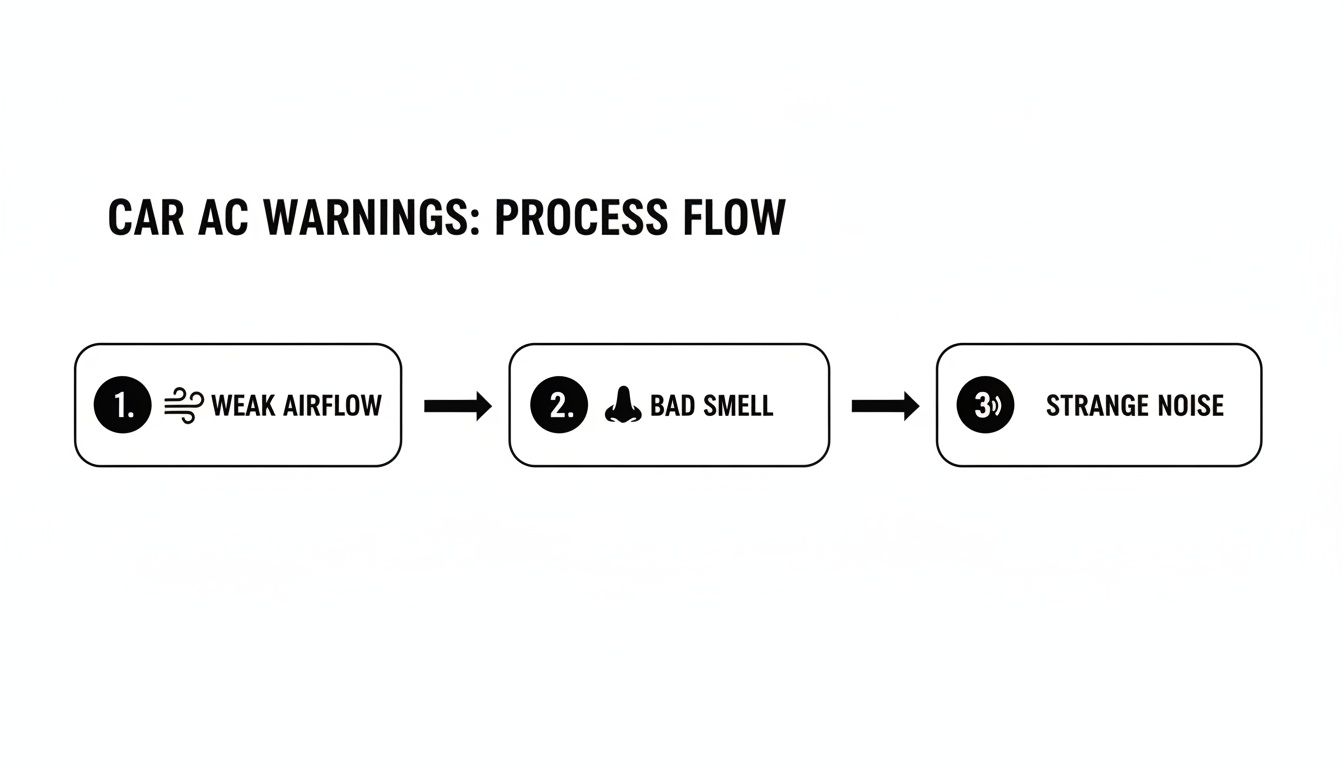
From weak airflow to funny noises, these are your car's way of asking for a check-up before a small issue becomes a big, expensive problem.
Evacuation and Precision Recharging
If the diagnostics point to low refrigerant, the next step is an evacuation and recharge. This is the single biggest difference between a professional service and a DIY can from the auto parts store. Simply "topping up" the system is a band-aid fix at best. Worse, it traps existing air, moisture, and other contaminants inside, which can lead to internal corrosion and serious damage over time.
A professional evacuation and recharge is the gold standard. The process involves removing every last bit of the old refrigerant and then pulling the system into a deep vacuum. This vacuum actually boils off any trapped moisture—the number one enemy of an AC system. Only then is it refilled with the exact weight of pure, fresh refrigerant specified by your car’s manufacturer.
That precision is key. Too little refrigerant, and you get weak cooling. Too much, and you can create dangerously high pressures that can destroy the compressor, which is the expensive heart of the entire system.
Advanced Leak Detection Methods
Since low refrigerant almost always means there's a leak somewhere, finding the source is the next critical task. Technicians have some pretty cool tools to hunt down even the tiniest, most hidden leaks.
- UV Dye Injection: A special fluorescent dye is added to the refrigerant. As it circulates, it will seep out of any crack or pinhole leak. The technician then scans the entire system with a UV light, and any escaped dye will glow brightly, pinpointing the exact source of the problem.
- Electronic Leak Detectors: These handheld devices are essentially electronic "sniffers" calibrated to detect the specific chemical compounds found in refrigerants. The tech slowly traces the probe along all the AC lines and components, and an alarm will sound as soon as it detects any refrigerant vapour in the air.
By finding and fixing the root cause of the refrigerant loss, a professional service delivers a solution that lasts. This meticulous approach is central to any quality air conditioning repair for your car and it's what ensures your system works reliably when you need it most—all summer long.
Decoding the Costs of Car AC Repair and Service

When your car's AC starts blowing warm air, the first question that pops into your head is usually, "How much is this going to set me back?" It's a simple question, but the answer for an air conditioning service for your car can be all over the map.
The final bill really hinges on what your system actually needs. A basic AC recharge, where we just top up the refrigerant, sits at the lower end of the cost spectrum. But let's be honest, a simple "top-up" is often just a band-aid solution. Low refrigerant almost always means there's a leak somewhere that needs a proper fix.
Key Factors Influencing Your Repair Bill
So, what determines that final number on the invoice? Several key things will drive the cost up or down. Getting a handle on these helps you understand where your money is going and why a quality, long-lasting repair is worth it.
- Vehicle Make and Model: It's no surprise that luxury or European cars often have more intricate AC systems. Their parts can be tougher to get and more expensive to replace than those in your average domestic vehicle.
- Refrigerant Type: The kind of refrigerant in your car is a big one. Most cars built before 2015 use R-134a, which is pretty affordable. Newer models, however, use R-1234yf. It's much better for the environment but comes with a significantly higher price tag.
- The Specific Repair Needed: Fixing a leaky hose is a world away from replacing a failed compressor. The complexity of the job—how much of your dashboard we have to take apart—plays a huge role in the final labour cost.
The sometimes-wild price fluctuations for AC components are often tied to bigger issues in automotive supply chain management. This can affect not just the price but also how quickly we can get the parts your car needs.
Common Repair Costs at a Glance
To give you a better idea and help avoid any sticker shock, here are some typical price ranges for common AC repairs. Just remember, these are ballpark figures. The final cost will depend on your specific vehicle and our local labour rates here in Whitby.
A straightforward AC diagnostic or performance check will likely run you between $75 and $150. Think of this as a smart first step. It pinpoints the exact problem, so you don't waste money on repairs you don't need and ensures we get it right the first time.
When it comes to replacing major parts, the costs can climb:
- AC Compressor Replacement: This is the heart of your AC system, and it's often the most expensive fix. You can typically expect a range from $500 to over $1,200 for parts and labour.
- Condenser Replacement: The condenser sits right at the front of your car, making it vulnerable to damage from road debris. Replacing it usually costs somewhere between $400 and $900.
- Evaporator Replacement: Now this is a labour-intensive one. The evaporator is buried deep inside the dashboard, which means a lot has to come apart to get to it. Expect this repair to cost anywhere from $600 to $1,500 or more, with a big chunk of that being the cost of labour.
Knowing these potential costs helps you have a more informed conversation with your technician. It also helps you see that investing in a thorough diagnosis and a quality repair from a shop you trust is really an investment in your comfort and your car's long-term health.
Proactive Steps to Keep Your Car AC Running Smoothly

The best kind of car AC service is the one you don't need. A few simple, proactive habits can go a long way in extending the life of your air conditioning system, helping you dodge common failures before they even start. It’s all about consistent care instead of crisis management.
One of the most effective tips is one most people overlook: run your AC regularly, even during the cold months. It might sound a bit strange to blast the cold air during a Whitby winter, but trust me, it’s a critical step for your system's health.
Try to run your car’s air conditioner for about 10-15 minutes at least once a week, all year long. This simple habit keeps the refrigerant and its lubricating oil circulating through the entire system.
Think of it like a quick workout for your AC. This circulation keeps all the important seals and gaskets from drying out, shrinking, and cracking, which is one of the most common causes of slow refrigerant leaks. It ensures all the moving parts, especially the compressor, stay in good shape and are ready to perform when summer hits.
Simple DIY Checks You Can Do
While a full diagnostic is a job for the pros, there are a couple of things any car owner can—and should—do themselves. These small checks can make a surprising difference in your AC's performance and the air quality inside your car. It’s a key piece of the bigger picture of preventive maintenance for your vehicle.
Your first, and easiest, task is to keep an eye on your cabin air filter. This little filter is the unsung hero that stops dust, pollen, leaves, and other road gunk from getting blown into your face.
- Why a Clogged Filter is Bad News: When this filter gets dirty, it’s like trying to breathe through a cloth. It severely restricts airflow, forcing the system’s fan to work overtime. This strain not only weakens your AC's cooling power but can also lead to the fan motor burning out prematurely.
- When to Replace It: Check your owner's manual for the official schedule, but a good rule of thumb is to inspect it annually or every 20,000 to 25,000 kilometres. If you often drive on dusty gravel roads, you’ll want to check it more frequently.
Swapping out the cabin filter is usually a quick, tool-free job done through the glove box. A fresh filter doesn't just improve airflow; it dramatically cleans up the air you're breathing on every drive.
Frequently Asked Questions About Car AC Service
Even after walking through the process, you might still have a few questions rattling around. That’s perfectly normal. To help you feel more confident about your car’s AC, we’ve put together answers to some of the most common questions we hear at the shop.
How Often Should I Get My Car AC Serviced?
There isn't a hard-and-fast rule that applies to every single vehicle, but a great rule of thumb is to get your AC system professionally checked out every one to two years. Think of it as preventative care for your car's comfort system.
During one of these check-ups, a technician can catch small issues like a tiny leak or a bit of wear on a component. Finding these early is the key to preventing them from snowballing into a massive headache, like a seized compressor or another costly system-wide failure. A little investment now can save you a lot of trouble when the summer heat really hits.
Is It Normal for My Car to Drip Water When the AC Is On?
Yes, absolutely! Seeing a small puddle of clear, odourless water under your car after you've been running the air conditioner is not only normal—it's actually a good sign. Your AC system cools your car by pulling heat and, just as importantly, humidity out of the cabin air.
That moisture has to go somewhere. It condenses on the cold evaporator core (think of how a glass of ice water "sweats" on a hot day) and then harmlessly drains out through a small tube underneath your car. If you see it dripping, it means the system is doing its dehumidifying job perfectly.
What Is the Difference Between an AC Recharge and a Repair?
This is a really important one. An AC recharge is simply the act of topping up the system with refrigerant to the level recommended by the manufacturer. But here's the catch: your car’s AC is a closed-loop system, so if the refrigerant is low, it almost always means there's a leak somewhere.
A proper AC repair, on the other hand, starts with diagnosing and fixing the root cause of the problem—that leaky hose, a bad seal, or a cracked O-ring—before adding any new refrigerant. Just recharging a leaky system is throwing money away; it’s a temporary band-aid, and that new refrigerant will escape just like the old stuff did.
Can a Failing AC System Affect My Fuel Economy?
You bet it can. The AC compressor is run by the engine's serpentine belt. When the AC system isn't working right—maybe it’s low on refrigerant or the compressor itself is on its last legs—it has to work much harder, putting a greater strain on the engine.
That extra load forces your engine to burn more fuel to maintain its performance, which you'll definitely notice at the pump. Getting your AC fixed isn't just about comfort; it's also about keeping your car running as efficiently as possible.
Why Trust Carmedics Autowerks for Your AC Service in Whitby?
So, you've learned the ins and outs of your car’s air conditioning system. Now comes the most important part: choosing the right hands to fix it. When you're looking for a reliable AC service here in Whitby, picking a local expert who truly knows their stuff makes all the difference.
At Carmedics Autowerks, we combine cutting-edge diagnostic tools with the irreplaceable skill of experienced, certified technicians. It’s this blend of technology and hands-on expertise that lets us accurately find and fix any AC problem, whether it's a simple refrigerant top-up or a complex compressor replacement.
We’re committed to being completely upfront with you about our process and pricing. Our goal is to keep you cool and comfortable through every humid Durham Region summer, with workmanship you can count on.
We believe in fixing it right the first time. Our thorough diagnostic process ensures we address the root cause of the problem, providing a lasting solution, not just a temporary fix.
Our team doesn't just work in this community; we live here. We understand the local driving conditions and are dedicated to being the neighbours you can trust to keep your vehicle running perfectly. For a full picture of what we can do for your car, you can learn more about our general auto repair services in Whitby, Ontario.
Ready to get back to a cooler, more comfortable drive? Trust Carmedics Autowerks for expert care. Schedule your AC service with us today.