So, what’s the bottom line on auto inspection costs in Ontario? For a basic Safety Standard Certificate (SSC), you can expect to pay somewhere between $120 and $150. If you're looking for a more comprehensive check, like a pre-purchase inspection (PPI), the price typically lands in the $150 to $250 range, sometimes more depending on the car.
What an Auto Inspection Really Costs You
It helps to think of an auto inspection like a visit to the doctor. A quick check-up for a specific symptom is one thing, but a full physical is a much deeper dive. The same idea applies here—the cost of an auto inspection really comes down to how thorough you need it to be.
At the end of the day, you're paying for a technician's time, their expertise, and the specialized equipment they use to give your vehicle a clean bill of health. This isn't just about meeting a legal requirement; it’s about making sure you, your family, and everyone else on the road are safe.
To give you a clearer picture, here’s a quick breakdown of what you can generally expect to pay for different types of inspections in Ontario.
Estimated Auto Inspection Costs in Ontario (2026)
| Inspection Type | Typical Cost Range (CAD) | Primary Purpose |
|---|---|---|
| Safety Standard Certificate (SSC) | $120 – $150+ | Required for transferring vehicle ownership; meets MTO standards. |
| Pre-Purchase Inspection (PPI) | $150 – $250+ | In-depth check for used car buyers to find hidden issues. |
| Annual Inspection (Commercial) | $100 – $200 | Mandatory yearly check for commercial vehicles and trucks. |
Keep in mind these are estimates. The final cost can always be influenced by the vehicle's age, make, and whether any repairs are needed to pass.
Understanding Different Inspection Tiers
In Ontario, different inspections serve very different purposes, and that’s reflected in the price. The two main ones you’ll run into are:
- Safety Standard Certificate (SSC): This is the mandatory inspection you need to get when selling a used car or transferring ownership. It’s a pass/fail assessment focused strictly on whether the vehicle’s key safety systems meet the Ministry's minimum standards. You can get all the details in our guide to the annual safety inspection sticker in Ontario.
- Pre-Purchase Inspection (PPI): This one is your choice, but we always recommend it if you’re buying a used vehicle. A good PPI goes far beyond the basics of an SSC to hunt for hidden mechanical problems, signs of past accidents, and things that might need expensive repairs down the road.
The higher cost of a PPI is an investment, plain and simple. Spending $200 upfront could easily save you thousands in surprise repairs on a car that looked great on the surface. It's one of the smartest moves any used car buyer can make.
Ultimately, the cost is a trade-off for confidence. A basic safety check gets you the legal paperwork you need, while a full pre-purchase report gives you true peace of mind and some serious bargaining power.
Comparing Different Types of Car Inspections
When you hear the term "car inspection," it's easy to think it's a one-size-fits-all service. The reality is quite different. The right inspection for you depends entirely on what you're trying to accomplish, whether that's legally selling your car or making a smart used car purchase.
Think of it this way: one type of inspection is like a simple pass/fail exam to prove a car is safe enough for the road. Another is a deep-dive investigation, like a full medical workup, to uncover a car's complete history and current health. They both have their place, but they serve very different purposes.
This graphic gives you a quick look at the two main paths a car owner will take.
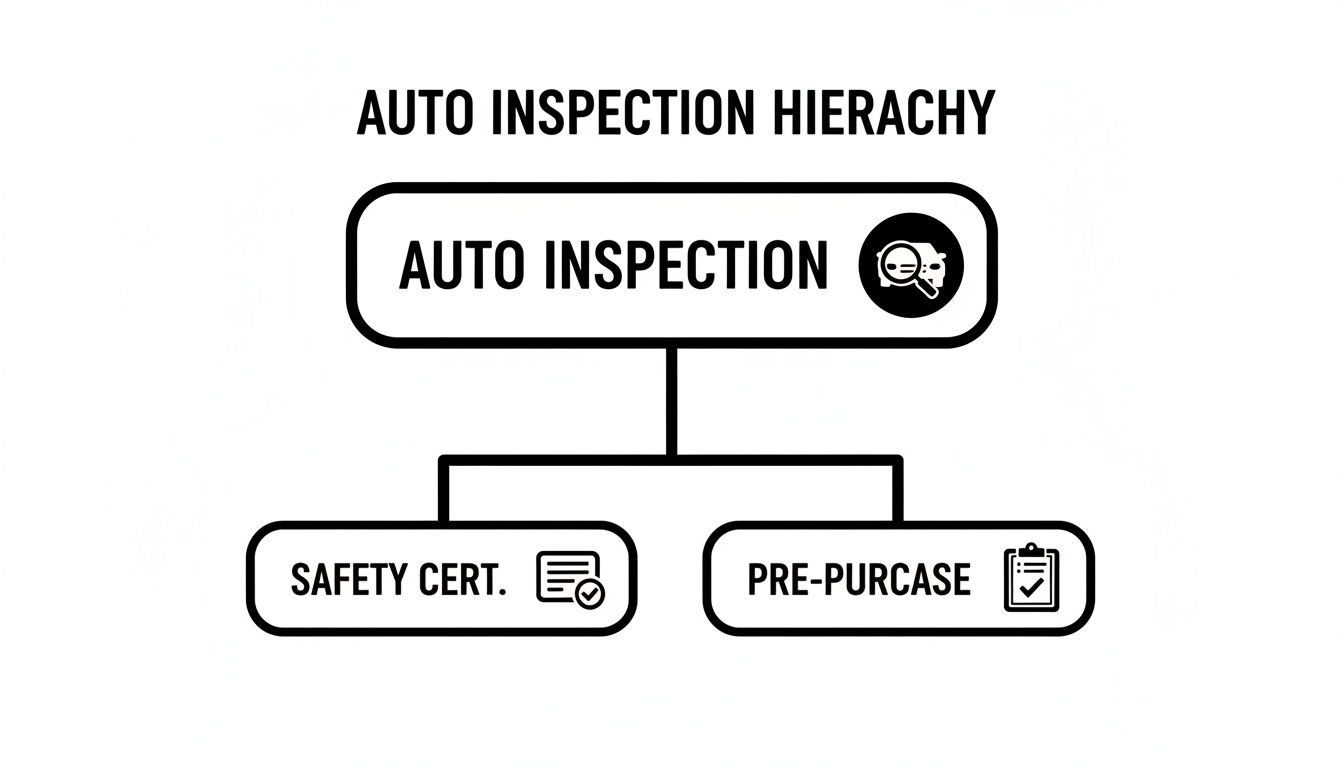
As you can see, both fall under the "auto inspection" umbrella, but their goals—getting a legal certificate versus getting a detailed buyer's report—are worlds apart.
The Mandatory Safety Standard Certificate
In Ontario, you can't just sell a car or transfer it to a new owner (unless it's your spouse) without proving it's safe. That's where the Safety Standard Certificate (SSC) comes in. It's required by the Ministry of Transportation (MTO) and confirms that a vehicle meets the province's minimum safety requirements.
A licensed technician will run through a specific checklist of essential systems, including:
- Braking systems
- Steering and suspension
- Tires and wheels
- Powertrain components
- Lights and electrical systems
- The vehicle's body and frame integrity
The point here isn't to nitpick every cosmetic flaw or minor issue. The goal is simple: to make sure the car is fundamentally safe to be on the road with everyone else. If it passes, you get the certificate you need to finalize the ownership transfer.
The Pre-Purchase Inspection
While an SSC is a legal hoop you have to jump through, a pre-purchase inspection (PPI) is a choice—and it's one of the smartest choices you can make when buying a used car. A PPI has nothing to do with government checklists; it's all about protecting you and your wallet.
A pre-purchase inspection is your best defence against buying someone else’s hidden problems. Spending a couple of hundred dollars on a thorough PPI can easily save you from thousands in unexpected repair bills on a seemingly perfect used car.
During a PPI, a technician plays detective. They’re actively hunting for signs of previous accidents, potential mechanical failures, fluid leaks, and weird electronic glitches that would never show up on a basic safety test. This detailed report gives you a massive advantage—you can either negotiate the price down based on the findings or have the confidence to walk away from a potential money pit.
Specialized Vehicle Inspections
Beyond the two most common types, there are also inspections designed for very specific situations.
- Post-Collision Safety Checks: Even after a minor fender-bender, it's a good idea to get a post-collision inspection. It verifies that the car's structural integrity and critical safety systems, which may have been compromised, were repaired correctly and are working as they should.
- Fleet Inspections: For any business running a fleet of vehicles, regular inspections are a lifeline. They're key for ensuring driver safety, maintaining vehicle reliability, and catching small problems before they lead to expensive downtime.
- Trailer Inspections: Trailers need to be road-safe, too. From the brakes to the lights and frame, they have their own set of safety standards. You can find out more about what a professional trailer safety inspection covers and why it’s so important.
Key Factors That Influence Your Final Inspection Bill
So, why isn’t there a single flat fee for a car inspection? The final cost on your bill isn't just a random number; it's a direct reflection of a few key factors. No two used cars are exactly alike, and neither are the inspections they need, which is why prices can vary quite a bit.
The biggest variable, right off the bat, is the car itself. A basic inspection on a popular, straightforward model like a Honda Civic is usually a much quicker job than a deep dive on a high-end European import like an Audi or BMW.
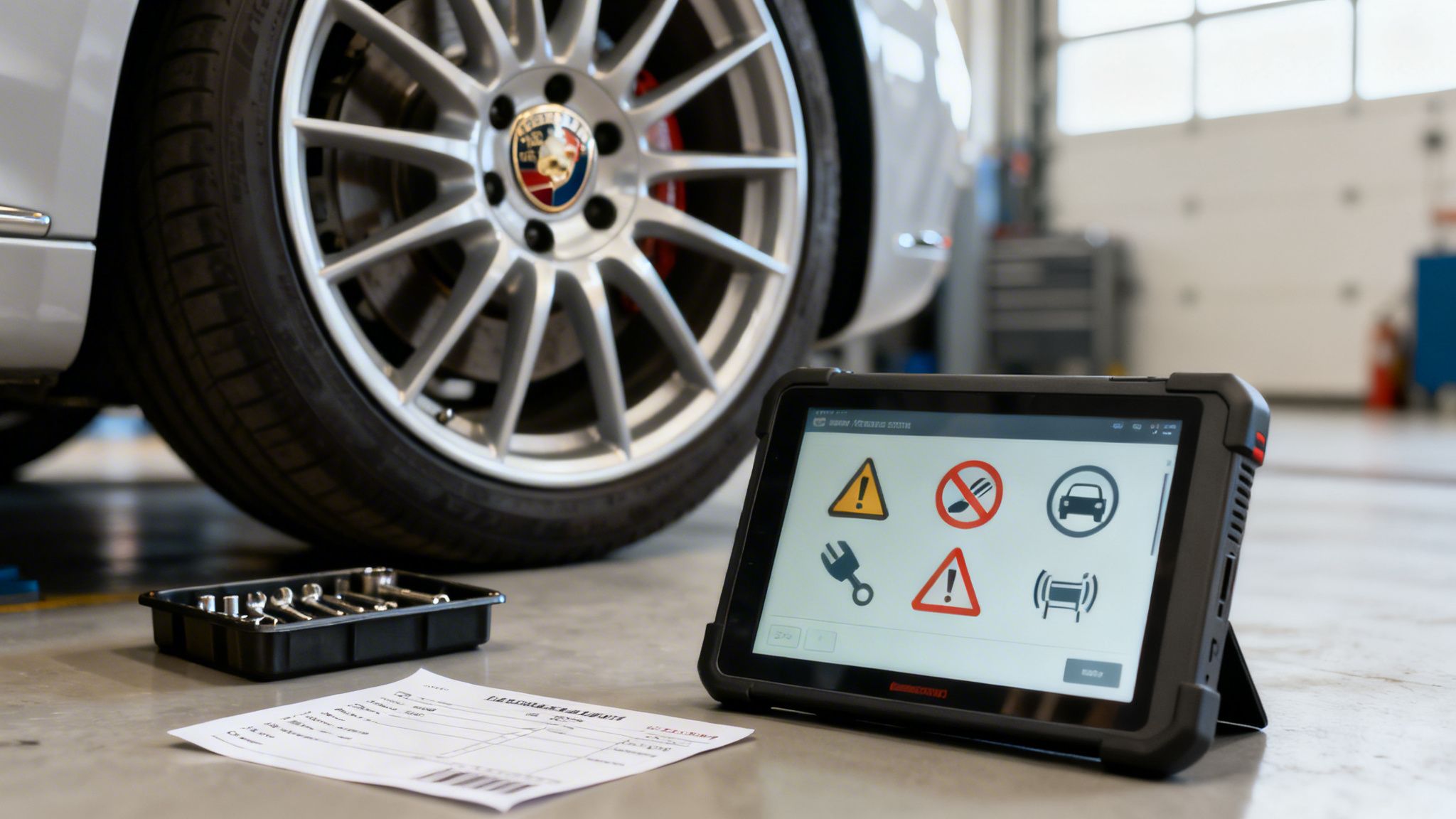
Newer vehicles tend to sail through, but older cars with more mileage and potential wear often need a much closer look. Specialized vehicles simply require more time, specific tools, and a technician with advanced training, all of which naturally shapes the final price.
Inspection Depth and Diagnostics
Beyond the car itself, the type of inspection you’re getting plays a huge role. A mandatory Safety Standard Certificate, for instance, is mostly a pass/fail check against a government-defined list. Its job is to confirm the vehicle meets the absolute minimum requirements to be on the road.
A pre-purchase inspection, on the other hand, is a whole different ball game. It’s far more investigative and designed to give you a complete picture of the vehicle's health.
This deeper check often involves:
- Computer Diagnostics: We plug in and scan the car’s brain for any hidden error codes that haven't triggered a warning light yet.
- Detailed Component Checks: We take a closer look at parts that might be wearing out but haven't failed a safety standard—yet.
- Road Testing: We take it for a spin to feel how the engine, transmission, and suspension handle in real-world conditions.
If a technician spots a potential issue, like a faint engine noise or a flickering light, they might need extra diagnostic time to pinpoint the exact cause. That extra labour adds to the total auto inspection cost, but it gives a potential buyer priceless information. You can see how this detailed approach applies to specific systems, like those we check during a professional brake repair service.
Regional and Facility Differences
Finally, where you get the work done matters. A dealership service centre often has a different pricing model than an independent shop like Carmedics Autowerks. This isn’t just an Ontario thing; you’ll find cost differences in every region.
Think of your final inspection bill as a summary of three things: the type of car being checked, how deep the technician needs to dig for answers, and where the work is being done. Each element plays a part in the total cost.
For a great example, look at California's smog check program. Prices there can range from $20 to $70, with shops in major cities often charging more to cover higher operating costs. As you can discover in more detail about evolving inspection costs, things like the vehicle’s age and specific model also change what's required, which adds another layer to the pricing.
No one likes to hear the words, "Your car failed its inspection." Your stomach might drop for a second, but it's important to remember this isn't a penalty—it's a safety net that just did its job. A failed inspection means a trained technician found an issue that could compromise your safety, or even lead to a catastrophic failure on the road.
While the initial inspection cost is usually a predictable $150 to $250, the real financial unknown is what comes next. The required repairs are where costs can quickly escalate, turning a routine check-up into a much larger investment.
Think of it this way: things like an illuminated check engine light are practically a guaranteed fail. If you see a warning light on your dash, getting it diagnosed before the official inspection is always your best bet.
From Minor Fixes to Major Overhauls
The cost to get your vehicle road-ready again can span a massive range. On one end, you might have a simple fix like a burnt-out taillight bulb that you can replace for just a few dollars. On the other extreme, a mechanic might discover a dangerously rusted frame, which could mean the car is unfortunately beyond economical repair.
Thankfully, most necessary repairs fall somewhere in the middle. Here are a few common failure points we see all the time and what they might cost to set right:
- Worn Brake Pads or Rotors: This is a classic. A full brake job can run anywhere from a few hundred dollars to well over a thousand, depending on the make and model of your vehicle.
- Tires Below Minimum Tread Depth: If your tires are bald, you’ll need a new set. Be prepared for a bill that can easily top $800 for quality, safe tires.
- Exhaust Leaks or Damaged Catalytic Converters: Fixing emissions components is never cheap. Repairs involving catalytic converters, for example, can sometimes exceed $1,500.
- Suspension or Steering Issues: Problems with ball joints, tie rods, or other steering parts are serious safety hazards. Fixing them typically costs several hundred dollars.
What Real-World Repair Costs Look Like
To give you a concrete idea of how much these post-inspection repairs can vary, we can look at some real-world data. The following numbers illustrate the wide range of costs drivers face after failing an inspection.
| Repair Cost Category | Number of Vehicles | Average Repair Cost (CAD) |
|---|---|---|
| Minor Repairs | 15,248 | $98.50 |
| Moderate Repairs | 9,876 | $455.20 |
| Substantial Repairs | 5,312 | $1,478.12 |
| Overall Average | 30,436 | $677.90 |
Table: Sample Repair Costs After a Failed Inspection. This table illustrates the wide financial range of potential repairs needed to pass a safety inspection, based on real-world data.
As you can see, while many cars get by with minor fixes, a significant number—in this sample, almost 18% of vehicles—require substantial work to become road-worthy again.
Ultimately, a failed inspection gives you a clear, professional game plan. It pinpoints exactly what your vehicle needs to be truly safe, allowing you to invest in its long-term reliability and, most importantly, your own peace of mind.
How to Prepare Your Car and Save Money on Inspections
Failing an auto inspection is frustrating—and it can get expensive. But here’s the good news: with a little prep work, you can dramatically shift the odds in your favour. The absolute best way to lower your overall auto inspection cost is to dodge the dreaded re-inspection fee entirely.
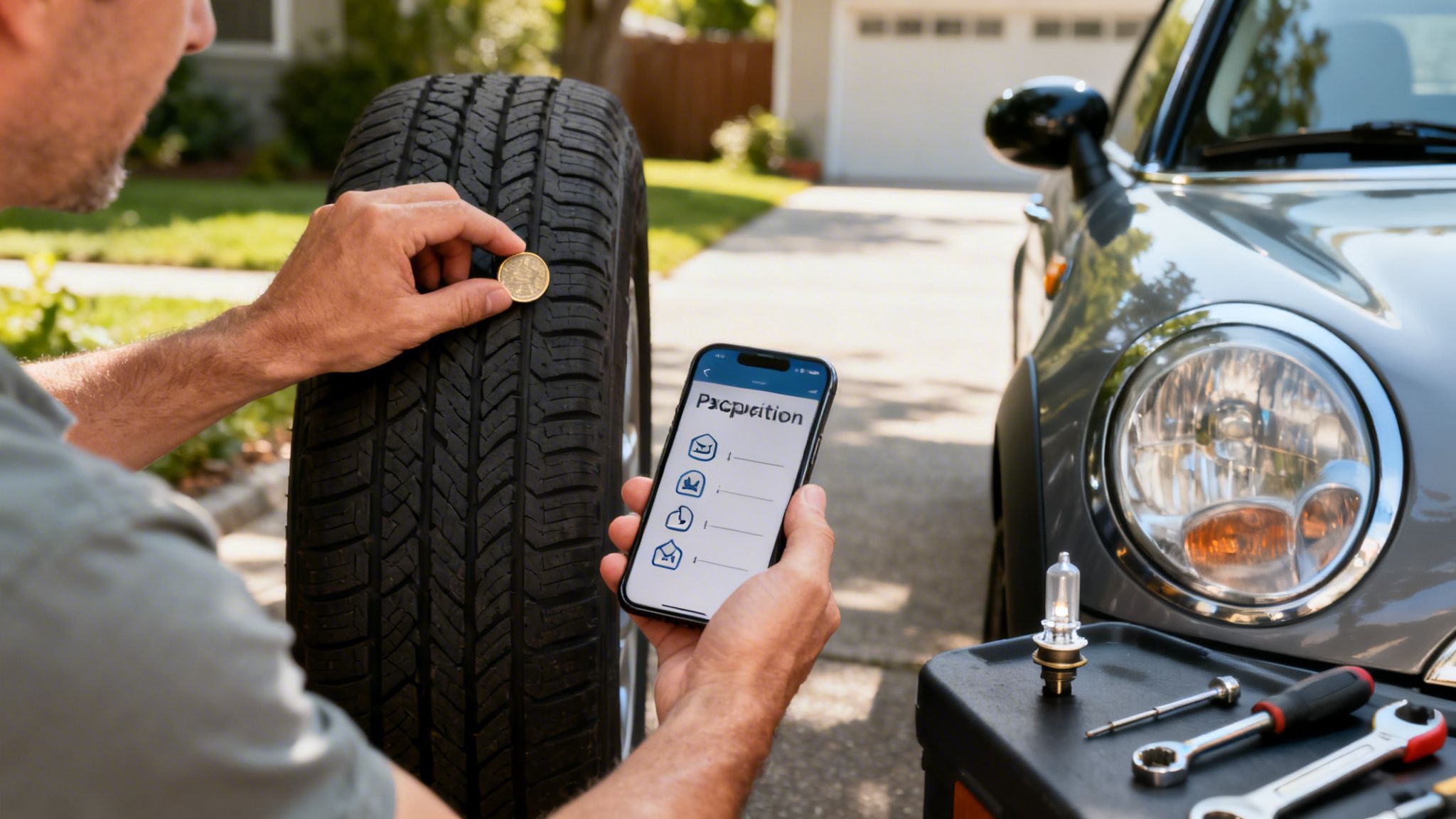
A simple 10-minute check in your own driveway can catch most of the common reasons for failure before a technician even lays eyes on your car. Think of it as proofreading your vehicle before turning it in. You don’t need to be a mechanic to spot the obvious stuff, and fixing it yourself is almost always cheaper than paying for shop time. Swapping out a burnt-out bulb might cost you a few dollars and five minutes, but a shop has to charge for the part, the labour, and often, a re-test fee.
Your Pre-Inspection Checklist
Before you even book your appointment, grab a friend and a toonie and run through this quick list. It could save you a real headache.
- Lights: This is a big one. Have your friend stand outside while you check every single light—headlights (both high and low beams), taillights, brake lights, all four turn signals, and even the little licence plate light.
- Horn: Easy. Give it a quick toot. If it makes noise, you’re golden.
- Wipers and Fluid: Turn on your wipers. Do they clear the glass without streaking or skipping? Check the blades for tears. Make sure your washer fluid is topped up and sprays properly.
- Tires: This is where the toonie comes in handy. Stick it in the tread with the bear facing you. If the tread doesn't cover the silver part above the Queen's head, your tires are likely too worn and will be an automatic fail. While you’re down there, look for any obvious cracks or bulges in the sidewalls.
Passing an inspection isn't about luck; it's about being proactive. These small checks shift the power back to you, helping you pass the first time and keep more money in your pocket.
The Long-Term Savings Strategy
A quick pre-check is fantastic for passing this inspection, but the real secret to keeping costs low year after year is consistent care. Routine maintenance is the single most effective way to prevent the kind of expensive, surprise failures that inspections are designed to catch in the first place.
It's an investment in your vehicle’s health that absolutely pays for itself over time. Things like regular oil changes, brake checks, and fluid top-ups keep your car's most critical systems in great shape. This drastically reduces the chance of getting hit with an unexpected—and costly—failure notice.
Building a solid maintenance routine is simpler than you might think; explore our full guide on preventive maintenance for vehicles to get started. By staying ahead of wear and tear, you're not just preparing for one inspection; you're setting yourself up for years of safe, reliable driving.
Your Trusted Inspection Partner in Whitby
When it comes to vehicle inspections, having a local shop you can actually trust makes all the difference. At Carmedics Autowerks, we're not just a garage—we're your neighbours here in Whitby, dedicated to making sure every car we see is safe, reliable, and ready for the road.
We know the auto inspection cost is more than just a number on an invoice; it's an investment in your safety and peace of mind. Our team specializes in the exact types of inspections we’ve covered in this guide. We believe in being upfront and honest, so you’ll always understand what your vehicle needs and why, without any confusing jargon.
Your Go-To Experts in the Durham Region
Drivers from all over the Durham Region rely on us for thorough, expert vehicle care. Whether you're selling a car and need a mandatory Safety Standard Certificate (SSC) or buying one and want a detailed pre-purchase inspection, our goal is to give you a clear, honest assessment.
Our inspection services include:
- Mandatory Safety Certifications for transferring vehicle ownership.
- In-depth Pre-Purchase Inspections to help you buy with confidence.
- Post-Collision Safety Checks to ensure your vehicle's frame and systems are sound.
- Comprehensive Fleet Inspections for our local business community.
At Carmedics, your safety is our bottom line. We bring together deep technical knowledge with a genuine commitment to our community, ensuring you get a fair, accurate, and trustworthy evaluation every single time.
We're proud to be a hub for total vehicle care. You can learn more about what makes us a top choice for certified auto repair in Whitby and see our commitment to quality for yourself. We're here to help you navigate your vehicle's needs with clarity and confidence.
Frequently Asked Questions About Car Inspections
When it comes to car inspections, a lot of questions can pop up. Getting clear answers helps cut through the confusion, especially around things like the auto inspection cost and what happens after the check is done.
Here are a few of the most common questions we hear from drivers around Whitby and the rest of Ontario, with some straight-talking answers from our team.
How Long Is an Ontario Safety Certificate Valid?
This is a big one, especially for anyone buying or selling a car privately. An Ontario Safety Standard Certificate (SSC) is valid for exactly 36 days from the day the vehicle passes the inspection.
That short timeline is there for a reason—it ensures the car's condition hasn't changed much between the mechanic's sign-off and the new owner's registration. If you're selling, you'll want to get the inspection done right before you plan to close the deal. For buyers, it’s your assurance that the safety check is fresh.
If that 36-day window closes before the ownership is transferred, the certificate is no good. You’ll have to start over with a brand-new inspection.
Can I Drive My Car If It Fails a Safety Inspection?
We get this question a lot. If your vehicle fails its safety inspection, you’re generally allowed to drive it from the inspection centre back home, or directly to another shop for the required repairs. That’s about it, though.
You can't just keep driving a car that a licensed technician has officially deemed unsafe. A "fail" isn't just a suggestion; it's a formal notice that your vehicle has one or more critical issues. Driving it on public roads is not only a risk to you and everyone else but could also land you with fines if you're stopped. The only way forward is to get the problems fixed and have the vehicle re-inspected to earn its pass.
A failed inspection isn't a punishment; it's a critical warning. It identifies real safety issues that need your immediate attention before you can legally and safely get back on the road.
Is a Pre-Purchase Inspection Really Worth the Cost?
Absolutely. It might feel like an optional expense, but a pre-purchase inspection (PPI) is one of the smartest investments any used car buyer can make. Think of it this way: you wouldn't buy a house without getting it inspected for a cracked foundation, right? The same logic applies to a car.
A standard safety certificate just confirms the vehicle meets the bare minimum standards to be on the road. A proper PPI, on the other hand, is a deep dive. It's designed to uncover the hidden stuff—like early signs of transmission failure, poorly repaired accident damage, or looming electrical gremlins.
Spending $150 to $250 on a comprehensive PPI can easily save you from a car that needs thousands in surprise repairs. It gives you powerful leverage to negotiate the price down or, just as importantly, the confidence to walk away from a lemon.
At Carmedics Autowerks Inc, our expert technicians provide honest, thorough inspections to give you complete peace of mind, whether you're buying, selling, or just ensuring your vehicle is safe. Book your inspection with a team you can trust by visiting us at https://www.carmedicsautowerks.com.