Finding the best automotive repair shop is about more than just a quick Google search. It’s about building a shortlist of shops that prove their expertise before you even walk through the door. Think of it as a bit of detective work that pays off in the long run.
Starting Your Search for the Right Repair Shop
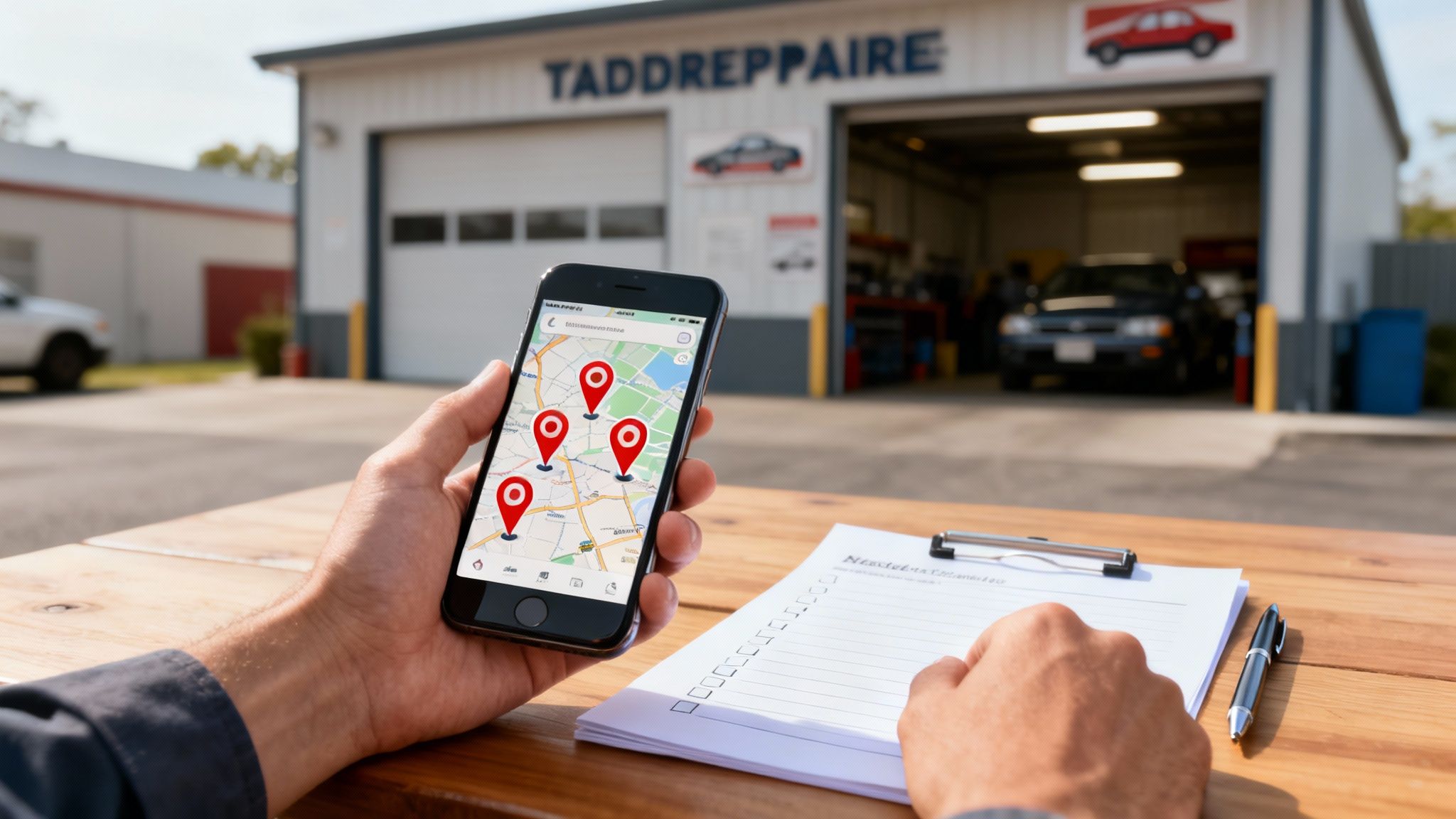
We've all been there—staring at a long list of search results, wondering which mechanic to trust. But the most reliable leads often come from real people who have firsthand experience, especially those who are just as passionate about cars as you are.
Look Beyond a Basic Search
Instead of just punching "mechanic near me" into your phone, dig a little deeper. Where do the real car enthusiasts in your area hang out, both online and off? Local car club forums or dedicated social media groups for brands like BMW or Audi are absolute goldmines. The members there are usually meticulous about their vehicles and are brutally honest about their experiences, good and bad.
And don't forget the old-school approach. Ask a coworker or neighbour who drives a similar car where they take it for service. Nothing beats a personal recommendation from someone you already trust.
Evaluate Their Digital Footprint
Once you have a few names, it's time to check out their online presence. A professional, modern website is a great sign that the business is well-run and cares about its customer experience.
Here’s a quick rundown of what to look for on their site:
- Clear Service Descriptions: Do they spell out what they do best? Whether it’s European imports, truck maintenance, or collision work, their specialties should be front and centre.
- Photos of the Shop: Look for pictures of the workspace. A clean, organized shop often translates to a methodical and professional approach to repairs.
- "About Us" Page: The best shops are proud of their team. They’ll often share information about their technicians' experience, training, and certifications.
A shop's website is its digital storefront. If it looks neglected, outdated, or unprofessional, it makes you wonder how much care and attention they'll actually give your vehicle.
This table provides a simple checklist to use as you start narrowing down your options.
Quick Vetting Checklist for Potential Repair Shops
Use this checklist to quickly evaluate and compare automotive repair shops during your initial search.
| Evaluation Criteria | What to Look For | Why It Matters |
|---|---|---|
| Online Reviews | A high volume of recent, positive reviews on Google, Yelp, etc. | Shows consistent customer satisfaction and an active business. |
| Website Quality | Professional design, easy navigation, and clear contact information. | Reflects professionalism and a commitment to customer service. |
| Service Specialization | Clear mention of expertise with your vehicle's make or type of repair. | Ensures they have the right tools, knowledge, and parts for the job. |
| Shop Photos | Clean, organized, and well-lit service bays. | A tidy workspace often indicates a detail-oriented and careful approach. |
This initial vetting process helps you quickly weed out shops that aren't the right fit, saving you time and frustration. By focusing on shops with a strong community reputation and a polished digital presence, you can build a high-quality shortlist. If you want more tips on finding a local expert, check out our guide on locating a premier automotive service centre near me.
What to Look for in Certifications and Technician Skill
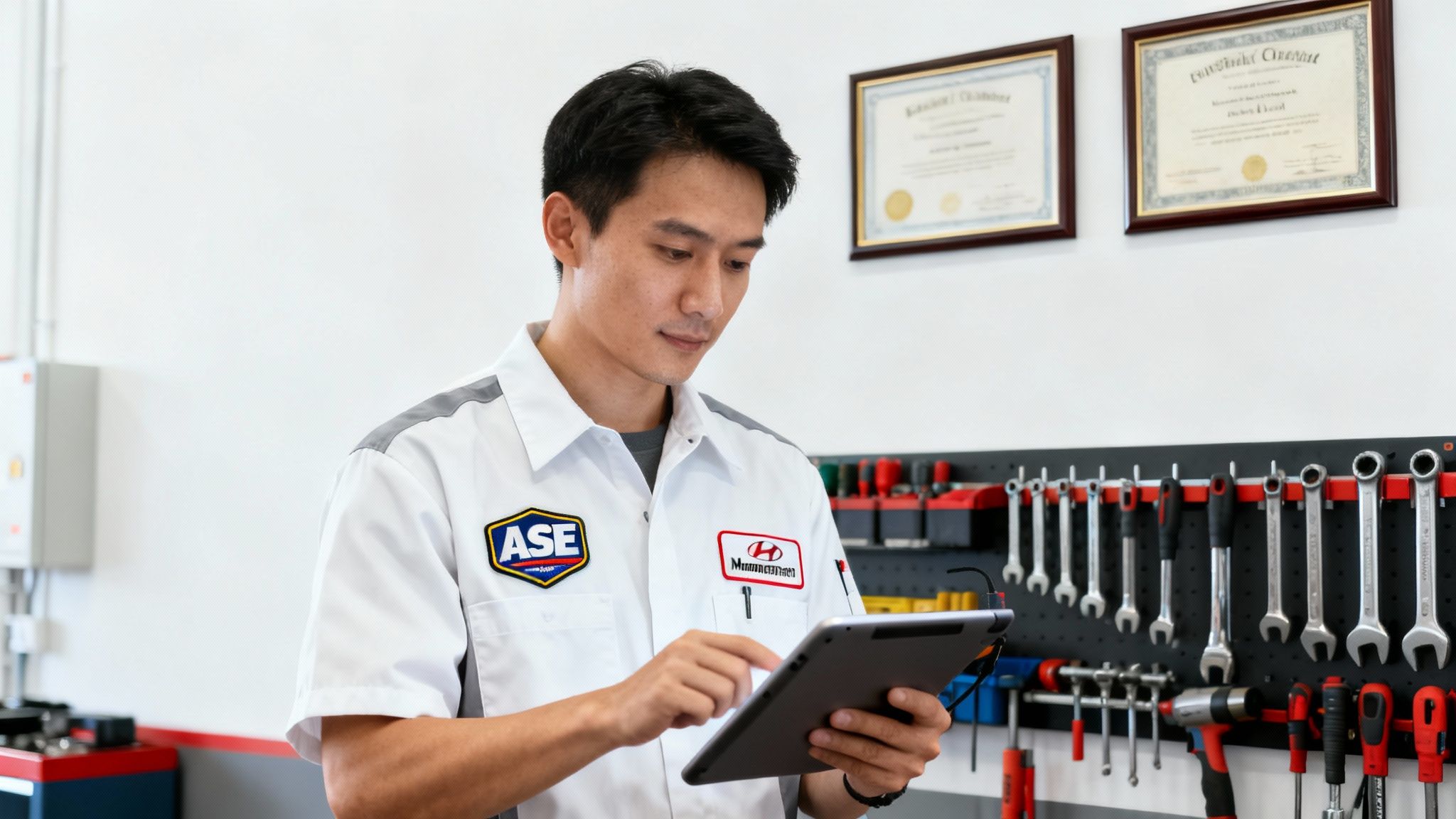
You’ve got a short list of potential shops. Now it’s time to dig deeper and look past the slick website or fancy sign out front. What really matters is the skill of the people who will actually have their hands on your car.
The certificates hanging on the wall are more than just decoration. They’re proof of a shop's commitment to quality, representing countless hours of training, tough exams, and a real dedication to keeping up with the auto industry. A shop that invests in its team's education is a shop that will deliver better, more accurate repairs.
The Real Deal in Certifications
When you walk into a potential repair shop, keep an eye out for the ASE (Automotive Service Excellence) Blue Seal of Excellence. This isn't just a participation trophy. It's a serious indicator of quality, showing that at least 75% of the technicians are ASE-certified and the shop has a certified pro for every type of service they perform.
Here are the credentials that truly matter:
- ASE-Certified Technician: This is the industry standard. It proves a technician has passed a specialized exam and has a minimum of two years of real-world experience.
- ASE Master Technician: This is the next level. A Master Technician has passed a whole series of eight specific exams, covering everything from engine repair to complex electrical systems.
- Manufacturer-Specific Training: For newer cars, this is a game-changer. If you drive a modern Mercedes-Benz or Volkswagen, you need a mechanic who has been trained directly by the manufacturer. They'll know your car’s unique systems inside and out and have the right diagnostic tools for the job.
You wouldn't ask your family doctor to perform open-heart surgery, right? The same logic applies here. You want a specialist who genuinely understands the quirks and complexities of your specific car.
Don’t Be Afraid to Ask Questions
Any good shop will be proud of their team and happy to talk about their qualifications. Don’t be shy—asking direct questions is one of the best ways to gauge their expertise and commitment to transparency.
Try asking a few simple questions:
- How much experience do your mechanics have with my car’s make and model?
- What kind of ongoing training do your technicians take to stay current?
- Is the person working on my car an ASE Master Technician or factory-trained?
Their response tells you everything you need to know. A shop that invests in continuous training is far better prepared to handle the sophisticated computer systems and advanced technology in modern vehicles.
To learn more about what this means for your vehicle, you can explore the benefits of certified auto repair in Whitby and see how it guarantees a higher standard of service. Knowing your vehicle is in truly capable hands provides unbeatable peace of mind.
Reading the Tea Leaves: What Customer Reviews and Reputation Really Tell You

Online reviews are your best friend when you're hunting for the best automotive repair shop, but you have to learn how to read between the lines. A simple star rating only scratches the surface. The real gold is found in the patterns—the specific things customers say over and over again.
As you comb through feedback on Google or Yelp, keep an eye out for recurring themes. Are multiple people raving about the shop’s amazing communication? Maybe they mention a mechanic who actually took the time to explain the problem in plain English. That’s a huge green flag. On the flip side, if you see several complaints about surprise charges or a final bill that ballooned from the original quote, consider it a serious warning.
Dig Into the Details
Vague, one-word reviews like "Great!" or "Terrible" are practically useless. The reviews that truly matter are the ones where people share the nitty-gritty of their experience.
Look for comments that mention things like:
- Honesty and Transparency: A review saying, "They showed me the worn-out part and explained exactly why it failed," points to a shop that values transparency over upselling.
- Real Diagnostic Skill: Did they solve a tricky, intermittent problem that stumped another mechanic? That’s a sign of a team with serious problem-solving chops.
- Top-Notch Customer Service: Little things matter. Positive mentions of a friendly person at the front desk, a clean waiting room, or a convenient shuttle service show a business that genuinely cares about its customers.
These specifics paint a much clearer picture of what it’s actually like to do business with them. It gives you a feel for the shop’s culture, not just their technical skills. What separates a truly great mechanic in Whitby from the rest often comes down to this consistent attention to detail.
Look Beyond the Usual Suspects
Google and Yelp are good places to start, but they shouldn't be your only stops. To get a truly unfiltered view, you need to check out the communities where real car people hang out.
Don't get hung up on the star rating. The most valuable feedback often comes from those detailed, three-paragraph stories that walk you through the entire experience, from the first phone call to driving the car home.
Niche forums dedicated to your car’s make, like a BMW or Audi forum, are an incredible resource. The folks on these sites are often deeply knowledgeable and won't pull any punches when sharing their opinions on local shops. A glowing recommendation from a fellow enthusiast there is worth its weight in gold.
By piecing together what you learn from mainstream review sites and these dedicated communities, you build a much more reliable picture of a shop's true reputation. It helps you see past the polished marketing and find a mechanic who has genuinely earned the trust of the people they serve.
Matching a Shop's Specialties to Your Vehicle's Needs
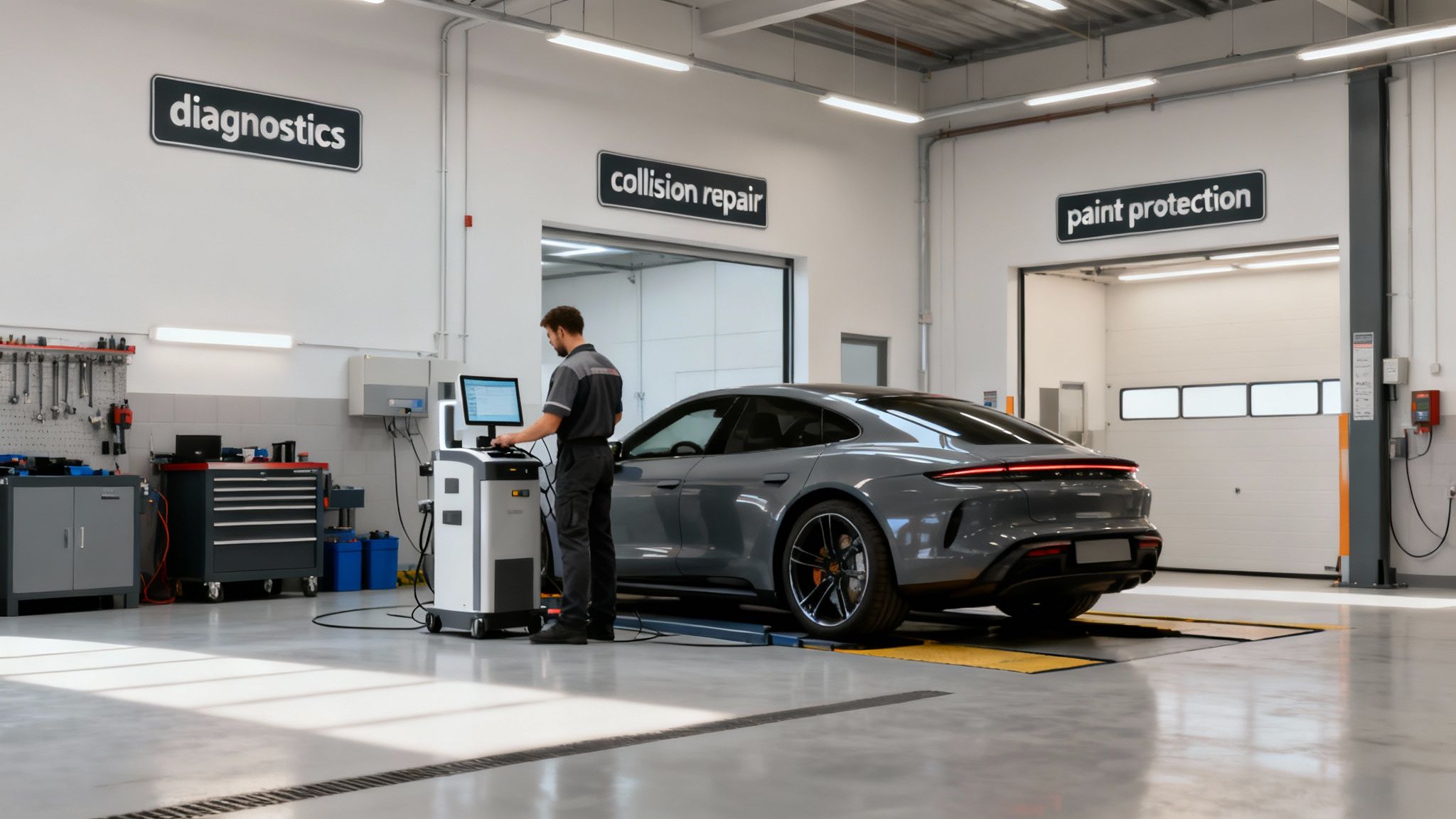
Not every mechanic is the right fit for every car. It’s a simple truth, especially with today's complex vehicles. The general repair shop that’s brilliant with domestic trucks might not have the specialized tools or training to properly service your high-performance European import. Finding the best automotive repair shop is really about matching their unique skills to what your car actually needs.
Think of it like this: you go to your family doctor for a check-up, but you'd see a cardiologist for a heart issue. The same logic applies to your vehicle. If you drive a brand-new SUV, you'll want a shop that’s up to speed on services like paint protection film (PPF) and advanced driver-assistance system (ADAS) calibrations. On the other hand, if you manage a commercial fleet, you need a partner who gets the demands of routine maintenance at scale.
This is a big deal here in Ontario. In 2023, the province's repair and maintenance sector pulled in a massive 35.1% of Canada's total operating revenue. That shows just how high the demand is. With the average age of vehicles in Canada climbing, shops that specialize are the ones that really thrive. You can dig into the numbers in this automotive industry report from Statistics Canada.
Look for Specialized Equipment and a Tidy Workspace
A shop’s physical space tells you a lot about its capabilities. Modern cars are basically computers on wheels, and fixing them takes a lot more than a good set of wrenches. When you visit a potential shop, keep an eye out for a clean, organized workspace with modern diagnostic equipment in plain sight.
Here’s what to look for when you walk in:
- Modern Diagnostic Tools: Are there up-to-date scanners and computer systems? A shop that invests in the latest tech is going to be far better at figuring out what’s actually wrong with your car.
- A Clean and Organized Shop: A greasy, cluttered floor and messy toolbenches can be red flags. A tidy shop usually points to a detail-oriented approach to repairs, which is exactly what you want.
- Dedicated Service Bays: Shops that handle specialized services—like alignments, collision repair, or PPF installation—often have specific, well-equipped areas just for that kind of work.
A top-tier shop invests heavily in its tools and technology because it knows that's the only way to correctly service modern vehicles. If the shop looks like it hasn't been updated since the 1990s, it's unlikely they can handle your 2024 SUV's intricate electronics.
Assess Their Expertise in Key Service Areas
Don’t just take their word for it; look for proof of their specialty. If a shop says they're collision repair experts, they should have a professional paint booth and frame-straightening equipment on-site. If they claim to be pros at complex electronic work, their technicians should be able to confidently explain their experience with your vehicle’s specific systems.
For instance, understanding a shop's ability to perform accurate engine diagnostics in Whitby is critical. A misdiagnosed check engine light can easily lead to a string of expensive and totally unnecessary repairs. By taking a little extra time to match a shop’s real-world capabilities to your car’s needs, you ensure your vehicle gets the expert care it deserves.
Understanding Estimates and Repair Warranties
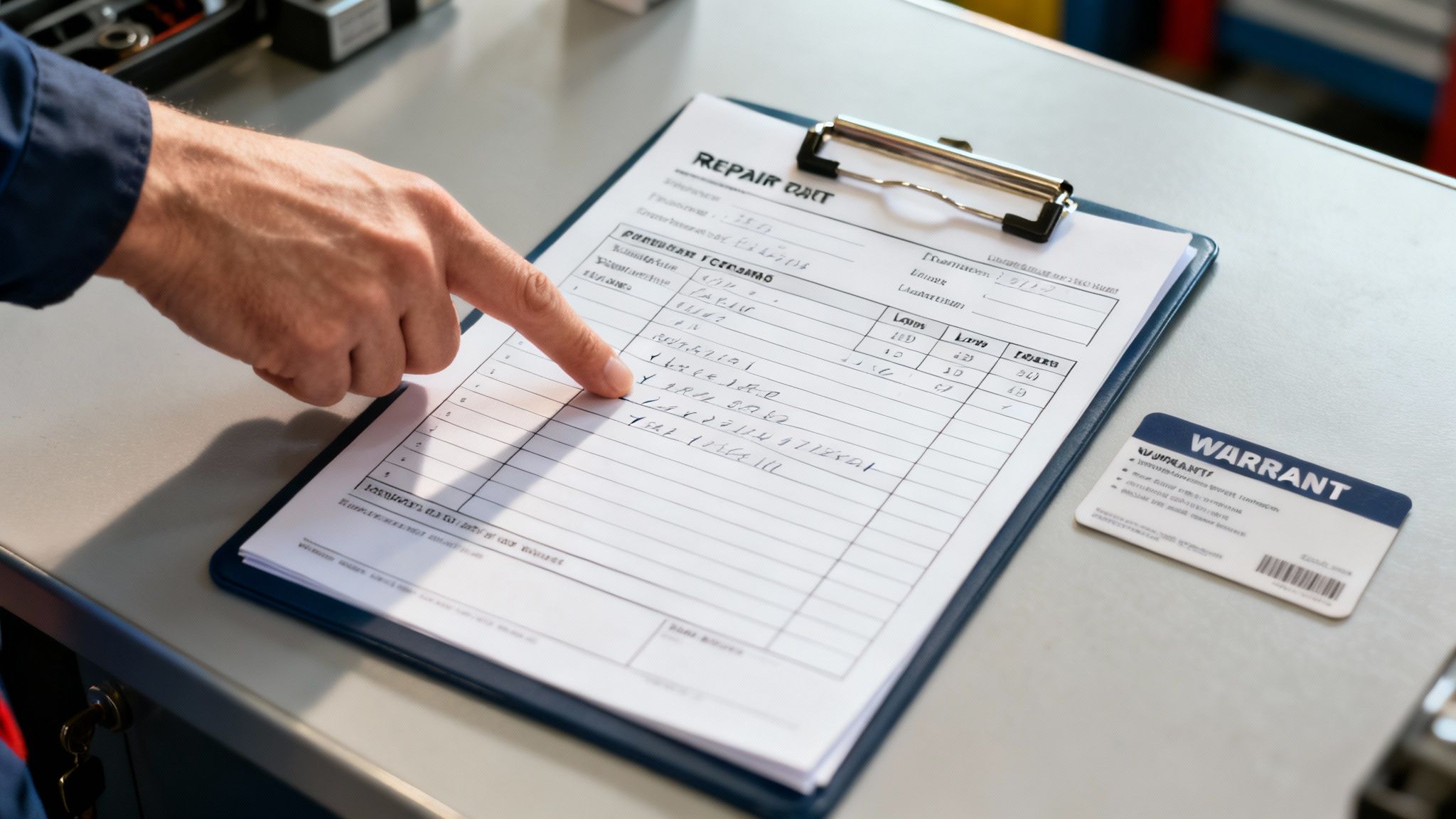
Let's be honest, the cheapest quote is rarely the best deal. When you're trying to find the best automotive repair shop, the real value is hidden in the details of the estimate and what happens after the job is done. A suspiciously low price can feel like a win, but it often means you're getting subpar parts or a technician who's still learning the ropes.
A shop worth your business will hand you a detailed, itemized quote that breaks down the cost of parts and labour separately. This isn't just good practice; it's a sign of transparency. It empowers you to see exactly where your money is going and ask the right questions before any work begins.
Deconstructing the Repair Estimate
When that estimate is in your hands, resist the urge to just skip to the total at the bottom. Take a minute to really look it over and ask for clarification on a few key things. This simple habit can save you a world of headaches and surprise charges later on.
A solid estimate should always include:
- A Parts Breakdown: Each part should be listed, along with its price. It should also specify if the parts are OEM or aftermarket.
- Clear Labour Costs: You should see the estimated hours for the job multiplied by the shop's hourly rate.
- Shop Fees: Any extra charges, like for disposing of old fluids or other environmental fees, should be listed clearly.
This isn't too much to ask. It's the standard for any honest, professional business. If a shop just gives you a single, round number with no explanation, that’s a big red flag. Understanding the difference between OEM vs. aftermarket parts is also crucial, as this choice directly impacts your final bill and your vehicle's performance.
A vague estimate often means one of two things: the shop isn't confident in its diagnosis, or they're leaving room to tack on extra fees later. A true professional can explain and justify every single line item on that quote.
The Importance of a Solid Warranty
A crucial part of evaluating any estimate is understanding the repair warranties that come with it. A warranty is more than just a piece of paper—it’s the shop’s promise to stand behind their work. Don't be shy; ask directly about the terms. What's the duration (12 months? 24 months?), and what exactly does it cover?
The Canadian automotive service market is growing fast and is expected to hit $392 billion by 2035, with Ontario leading the charge. With more competition, the best shops use strong warranties to set themselves apart. It’s how they prove their commitment to quality and build trust in a crowded field.
When a shop offers a clear, comprehensive warranty, they're showing you they have confidence in their technicians and the parts they use. That guarantee is your peace of mind, proving they’re invested in keeping you safely on the road long after you've paid the bill.
Making Your Final Choice and Building a Lasting Relationship
You've done the legwork, and now it's time to make a decision. After all the calls, quotes, and research, it often comes down to a simple gut feeling. Which shop felt right? Who listened to your concerns and explained things clearly, without making you feel pressured or confused?
The best shop isn’t just about the tools and certifications; it’s about finding a team that values your trust.
Take Them for a Test Drive
Before you hand over your keys for a major, expensive repair, why not start small? Think of it as a trial run. Book a minor service like an oil change, tire rotation, or a seasonal inspection.
This is a low-stakes way to see how they operate firsthand. Pay attention to the details:
- How do they communicate with you?
- Is the shop clean and organized?
- Do they finish the work on time?
- Is the final bill consistent with the estimate?
This simple "test drive" can tell you everything you need to know about what a bigger, more stressful repair experience might look like.
Starting Off on the Right Foot
A truly great auto shop isn't looking for a quick one-off repair; they're looking to build a long-term relationship. They know their success depends on earning your confidence for years to come.
This approach is all about seeing the bigger picture. In fact, understanding how to retain customers and build real loyalty is what separates the average shops from the exceptional ones. They'll invest in that relationship by giving you honest advice, even if it means a smaller bill today.
Remember, your goal isn't just to solve today's car trouble. It's to find a reliable partner you can count on for the entire life of your vehicle.
When you've carefully vetted your options, you can finally make that choice with confidence. You’re not just picking a mechanic; you’re finding a trusted professional dedicated to keeping you and your car safely on the road.
Your Questions About Choosing a Mechanic, Answered
Finding the right mechanic can feel like a maze. You've got questions, and that's a good thing. Let's clear up some of the most common ones that come up when you're trying to find a trustworthy shop.
Dealership vs. Independent Shop: Which is Better?
This is a classic question, and honestly, there's no single right answer—it depends on your needs.
Dealerships are the specialists for their specific brand. They live and breathe those cars, using only original equipment manufacturer (OEM) parts. This makes them the obvious choice for any work covered under warranty or for those really tricky, model-specific problems. The downside? That specialization can sometimes come with a higher price tag for everyday repairs.
Independent shops, on the other hand, often feel more personal and can be more competitive on price. Since they service all sorts of makes and models, they have the flexibility to source different parts, which can be a real money-saver.
How Can I Tell if a Repair Quote is Fair?
A fair quote should never be a mystery. It needs to be itemized, breaking down the costs for both parts and labour so you know exactly what you're paying for. Getting a second opinion from another reputable shop is always a smart move to get a sense of the going rate.
Be wary of a quote that seems too good to be true. A rock-bottom price might mean the shop is cutting corners with cheap parts or putting a less experienced technician on the job. That kind of "deal" can end up costing you a lot more down the road.
A good mechanic won't just hand you a piece of paper. They'll walk you through the estimate, point things out, and explain why a certain repair is necessary. If they get defensive or brush off your questions, that’s your cue to walk away.
Should I Insist on OEM Parts or are Aftermarket Ones Okay?
This is a big one. The choice between OEM and aftermarket parts really comes down to the repair itself and your budget. Let's break it down.
- OEM (Original Equipment Manufacturer) Parts: These are the exact same parts your car was built with at the factory. You get a perfect fit and guaranteed performance, but they are almost always the more expensive option.
- Aftermarket Parts: These are made by other companies and can be fantastic, budget-friendly alternatives. Many high-quality aftermarket brands meet or even beat the original specs.
A mechanic you can trust will lay out the pros and cons for your specific situation. They might recommend a reliable aftermarket brand for a simple fix but explain why an OEM part is critical for a complex electronic component. It's all about giving you the information to make a smart choice that balances quality with cost.
At Carmedics Autowerks Inc, we're all about giving our customers clear, honest information so they can feel confident in their decisions. Whether it's a routine oil change or a major collision repair, our team is here to deliver top-notch service.
Visit us online to book an appointment or to see how we can keep your car running its best.