

For a lot of drivers, the best window tint for cars is a high-quality ceramic film. It's the top choice for performance and longevity because it offers fantastic heat rejection, 99% UV protection, and crystal-clear visibility, all without messing with your electronic signals.
Why Quality Window Tint Is a Smart Investment
Picking a window tint is about so much more than just giving your vehicle that sleek, private look. It's a genuinely practical upgrade that pays you back in comfort, safety, and the long-term health of your car's interior.
Think of it less like an accessory and more like a protective shield. The right film works around the clock to defend your car from the sun's daily beating and keep wandering eyes out.
It’s an investment that tirelessly safeguards both you and your vehicle every single time you get behind the wheel.
Protecting Your Car and Yourself
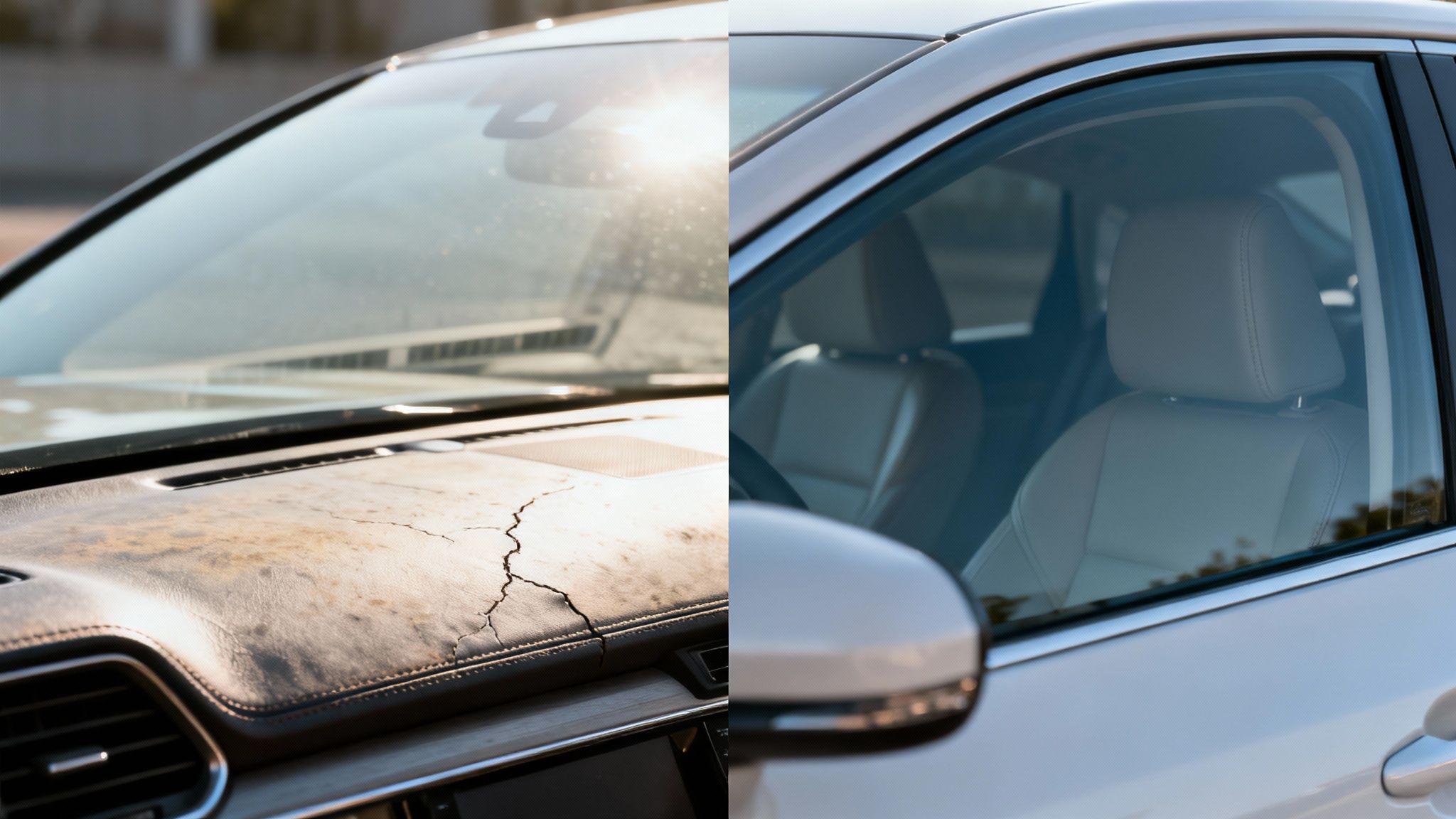
One of the biggest wins you get from a good tint is a powerful defence against the sun. High-performance films are specifically designed to block over 99% of harmful ultraviolet (UV) rays.
Those are the very rays that cause your dashboard, seats, and interior trim to fade, crack, and look old before their time. By stopping them at the glass, you're directly preserving your car's value and keeping the inside looking fresh.
This UV protection is just as important for you and your passengers. Constant exposure to the sun, even through a car window, can lead to skin damage over the years. A quality tint is like applying a layer of sunscreen to your car, making every trip a little bit safer.
Enhancing Comfort and Driving Safety
Beyond just blocking UV rays, the best window tint for cars makes your drive way more comfortable. Modern films are brilliant at rejecting solar heat, which keeps your car's interior significantly cooler on those scorching hot days.
This means your air conditioning doesn't have to struggle nearly as hard to cool the cabin down. That can even help with your fuel efficiency over the long run.
Tint also cuts down on that blinding glare you get from the sun, snow, or even other cars' headlights. This really reduces eye strain and makes driving safer, especially when the sun is low on the horizon. To get a deeper dive into how this works, you can explore the benefits of ceramic window tinting and see just how far the technology has come.
Understanding Different Types of Window Tint
Choosing the right window tint for your car is a bit like picking a jacket. You could grab a simple windbreaker for basic protection, or you could invest in a high-tech GORE-TEX shell for serious weather. Window tints work the same way—each type offers a different level of performance, comfort, and protection.
The world of window tint can seem a little overwhelming at first, with options ranging from simple dyed films to advanced nano-ceramic technology. But once you break it down, it's actually pretty straightforward. Each type has its own pros and cons that affect everything from how cool your car stays to whether your phone's GPS works properly.
Dyed Window Tint: The Entry-Level Choice
Dyed window tint is the most common and affordable option out there, making it the go-to for many car owners just starting out. It's made by adding a layer of dye to an adhesive film, which then absorbs sunlight to keep some of the heat from getting into your car.
The main draw here is the dark, non-reflective look that gives you great privacy. The downside? Because it only absorbs heat, it's the least effective at actually keeping your car cool. Over time, the sun will also break down the dye, causing that familiar purple, bubbly look you sometimes see on older cars. This means you'll likely be replacing it sooner than you would other types.
Metalized Window Tint: Reflecting the Heat
A step up from dyed film is metalized tint. This type has microscopic metal particles woven into the film. Instead of just absorbing the sun's energy like a sponge, it acts like a mirror, reflecting the heat away from your car before it ever gets inside.
This reflective property makes it much better at rejecting heat and blocking UV rays. It's also incredibly tough and scratch-resistant. The one major catch is that those same metal particles can play havoc with electronic signals. That means your mobile phone, GPS, and radio reception could all take a hit.
Carbon Window Tint: Performance Without Interference
Carbon window tint is a fantastic all-around performer and a big upgrade from dyed and metalized films. This film is infused with tiny carbon particles that are amazing at blocking infrared light, which is the kind of light that really makes you feel the heat.
What's great is that you get excellent heat rejection without any of the signal-blocking issues you find with metalized tints. Carbon tint also has a sleek, matte-black finish that looks fantastic and won't fade or turn purple. It's the perfect middle-ground, giving you a serious boost in performance and durability.
To get a better feel for the different looks, you can check out a range of automotive window tint films and see what fits your car's style.
Ceramic Window Tint: The Ultimate in Protection
Sitting at the very top of the ladder is ceramic window tint. This is the absolute best-performing film you can get, hands down. It uses advanced nano-ceramic particles that are so small they're invisible, yet they are incredibly powerful at stopping heat. A good ceramic film can block 50% or more of total solar heat without having to be dark or reflective.
Ceramic tint is the "GORE-TEX" of the tint world. It delivers the highest levels of heat rejection, UV protection, and glare reduction without compromising visibility or electronic signal clarity.
Because it contains no metal, dye, or carbon, ceramic film gives you the best of everything:
- Maximum Heat Rejection: Keeps your interior cooler than any other technology.
- Crystal Clear Signals: Zero interference with phones, GPS, or radio.
- Superior Durability: It will never fade, change colour, or bubble.
While it is the most expensive option upfront, its unmatched performance and longevity make it the best investment for drivers who want the ultimate in comfort and protection.
Comparing Window Tint Film Technologies
To make the choice clearer, let's put these four technologies side-by-side. This table breaks down how each one stacks up in the areas that matter most: performance, clarity, durability, and cost.
| Tint Type | Heat Rejection | UV Protection | Clarity & Glare | Signal Interference | Durability | Average Cost |
|---|---|---|---|---|---|---|
| Dyed | Low | Good | Good | None | Fair | $ |
| Metalized | Good | Excellent | Good | High | Good | $$ |
| Carbon | Better | Excellent | Excellent | None | Excellent | $$$ |
| Ceramic | Best | Excellent | Excellent | None | Best | $$$$ |
As you can see, there's a clear trade-off between price and performance. While a basic dyed film provides privacy and some UV protection, investing in a carbon or ceramic tint delivers a massive upgrade in comfort and longevity that most drivers find well worth it.
How to Choose the Right Tint for Your Needs
Now that you've got a handle on the technology behind different window films, picking the right one is all about what matters most to you. There's no single "best" tint out there—only the best tint for you.
The whole process boils down to balancing four things: how dark you want it, how well it performs, how it looks, and how long it will last. Let's walk through each one so you can make a choice you'll be happy with for years to come.
Understanding Tint Darkness or VLT
The first thing most people think about is darkness. This is measured in Visible Light Transmission (VLT), which is just a fancy way of saying how much light the tint lets through.
It's simple: a lower VLT number means a darker tint. For example, a 5% VLT is what you'd see on a limousine—it’s super dark. On the flip side, a 70% VLT is so light you’d barely notice it's there. This choice is a trade-off between privacy and how well you can see out, especially at night. To really see the difference, it helps to learn more about choosing the right window tint percentage for what you're trying to achieve.
Balancing Performance and Budget
Next up, what do you need your tint to do? Are you trying to survive a sweltering Ontario summer, or are you just looking to stop the sun from fading your interior?
- Heat & UV Rejection: If keeping your car cool and protecting the dash is your main goal, a high-performance ceramic film is the undisputed champion. It can block over 50% of the total solar heat coming through your windows.
- Cost-Effectiveness: If you're more focused on getting that sleek look and blocking basic UV rays without breaking the bank, a quality carbon film is a fantastic middle ground. It's a huge step up from dyed film but doesn't have the premium price tag of ceramic.
Think of it like buying a winter coat. A basic hoodie (dyed tint) gives you a bit of warmth. But a technical, insulated jacket (ceramic tint) is what you need to handle a truly bitter cold snap.
This graphic gives you a great visual of how the different tint types stack up.
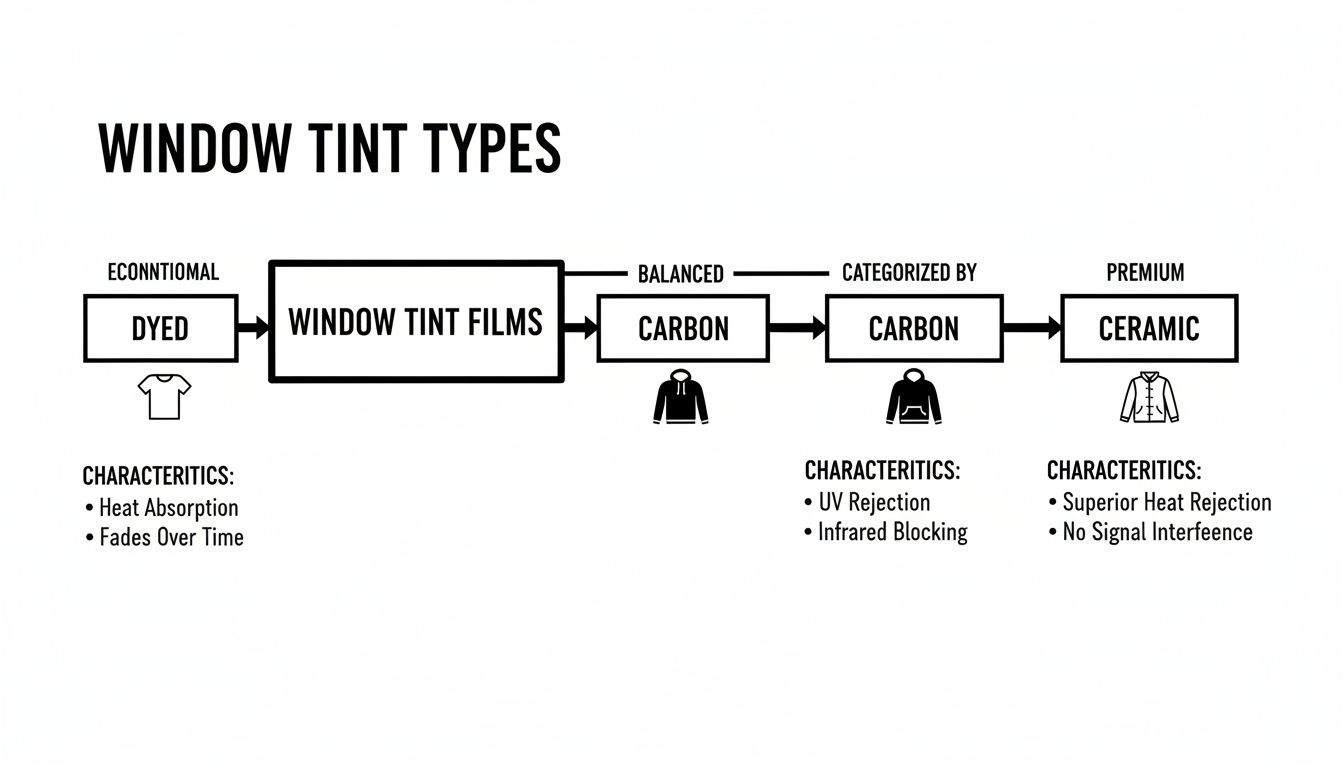
You can see the clear progression from a basic dyed film to the superior protection you get with a high-end ceramic.
Considering Appearance and Style
Let's be honest, how the tint looks is a big deal. Are you going for that deep, blacked-out look, or do you prefer something more understated? The technology inside the film actually changes its appearance.
A carbon film, for example, gives you a true, deep matte-black finish that holds its colour. Some ceramic films might have a slightly different hue from the outside, but the trade-off is often better clarity when you're looking out from inside. The best way to decide is to see samples in person, right next to your car's paint.
Prioritizing Durability and Warranty
Finally, a good tint job is an investment. It needs to last. Cheap dyed films are notorious for bubbling, peeling, or turning that ugly purple colour after just a couple of years in the sun.
A professional installation of a high-quality carbon or ceramic film is an investment in your vehicle's longevity. It's the difference between a temporary cosmetic fix and a lasting functional upgrade.
Always ask for a film that comes with a lifetime warranty covering things like fading, bubbling, and peeling. When you pair that with a professional installation, you can be confident your tint will look and work perfectly for as long as you own the car. That kind of guarantee is the ultimate peace of mind.
Navigating Ontario Window Tinting Laws

It’s easy to get caught up in choosing the perfect film for style and heat rejection, but that's only half the story. The best window tint is one that also keeps you on the right side of the law.
Here in Ontario, the rules are laid out in the Highway Traffic Act. Knowing them is key to avoiding a nasty ticket and making sure your car is safe and legal to drive. These regulations aren't arbitrary; they’re in place to ensure you can see out clearly and that law enforcement can see in. Getting that balance right means you can enjoy the comfort and look of your tint without any legal worries.
What Is Allowed on Ontario Roads
The rules for tinting in Ontario are pretty specific, with a major focus on the front of your vehicle. The law essentially boils down to preventing any film that significantly darkens your view or hides the car's interior from the outside.
Here’s a quick breakdown of what you can and can’t do:
- Front Windshield: This is a no-go zone. You can't put any film on the main part of your windshield. The only exception is a small strip across the top—usually about 15 cm (or 6 inches)—to cut down on sun glare.
- Front Side Windows: This is where the rules get really strict. The windows for the driver and front passenger can't have any aftermarket film that makes them darker. They need to stay at the factory level, which is typically around 70% VLT (Visible Light Transmission).
- Rear and Back Side Windows: You have a lot more freedom here. For any windows behind the driver, including the back windshield, you can pretty much go as dark as you want.
The most important thing to remember is this: in Ontario, applying any film that makes the front driver and passenger windows darker than they came from the factory is illegal. Fines can be steep, so it’s something you definitely want to get right.
Why Local Laws Are So Important
Window tinting laws can be wildly different depending on where you are. We're talking about Ontario's rules here in Whitby, but it’s a perfect example of why you always need to check your local regulations. What's legal here could get you a ticket somewhere else.
At Carmedics Autowerks, we make sure every single tint job we do complies with Ontario's legal standards, so you can leave our shop with total peace of mind. For a deeper dive into the specific rules, check out our complete guide to Ontario's tinted windows law. It’s the best way to ensure your new tint looks great and keeps you street-legal.
Why Professional Tint Installation Is Essential
You can pick the absolute best window tint on the market, but if it’s installed poorly, you’ve basically thrown your money away. It’s a bit like buying a beautiful, expensive can of paint for a weekend project; without a pro’s steady hand and technique, you’re likely to end up with drips, uneven coats, and missed spots. The exact same idea applies to window tint film.
A professional installation is the only way to get that flawless, factory-finish look and ensure the tint performs as it should for years to come. It’s the critical final step that turns a simple roll of high-tech film into a lasting, functional upgrade for your vehicle.
The Pitfalls of DIY Tint Kits
Sure, those DIY window tint kits you see online might seem like a great way to save a few dollars. But trust me, they often lead to a ton of frustration and a look you won't be proud of. Even the tiniest mistake can ruin the entire sheet of film.
Here’s what we often see with DIY jobs:
- Ugly Bubbles and Creases: Trapped pockets of air and water are the classic tell-tale sign of a DIY tint, creating a bubbly, unprofessional look.
- Peeling Edges: If the edges aren't sealed perfectly, they’ll start to lift, curl, and collect dirt in no time.
- Trapped Contaminants: A single speck of dust or a stray hair trapped under the film is there forever. You can't get it out.
- Film Damage: It's incredibly easy to accidentally crease or tear the delicate film while you’re trying to position it.
These issues aren't just cosmetic, either. Bubbles can actually obstruct your vision, and peeling edges mean the film is no longer doing its job of blocking heat and UV rays.
The Professional Difference
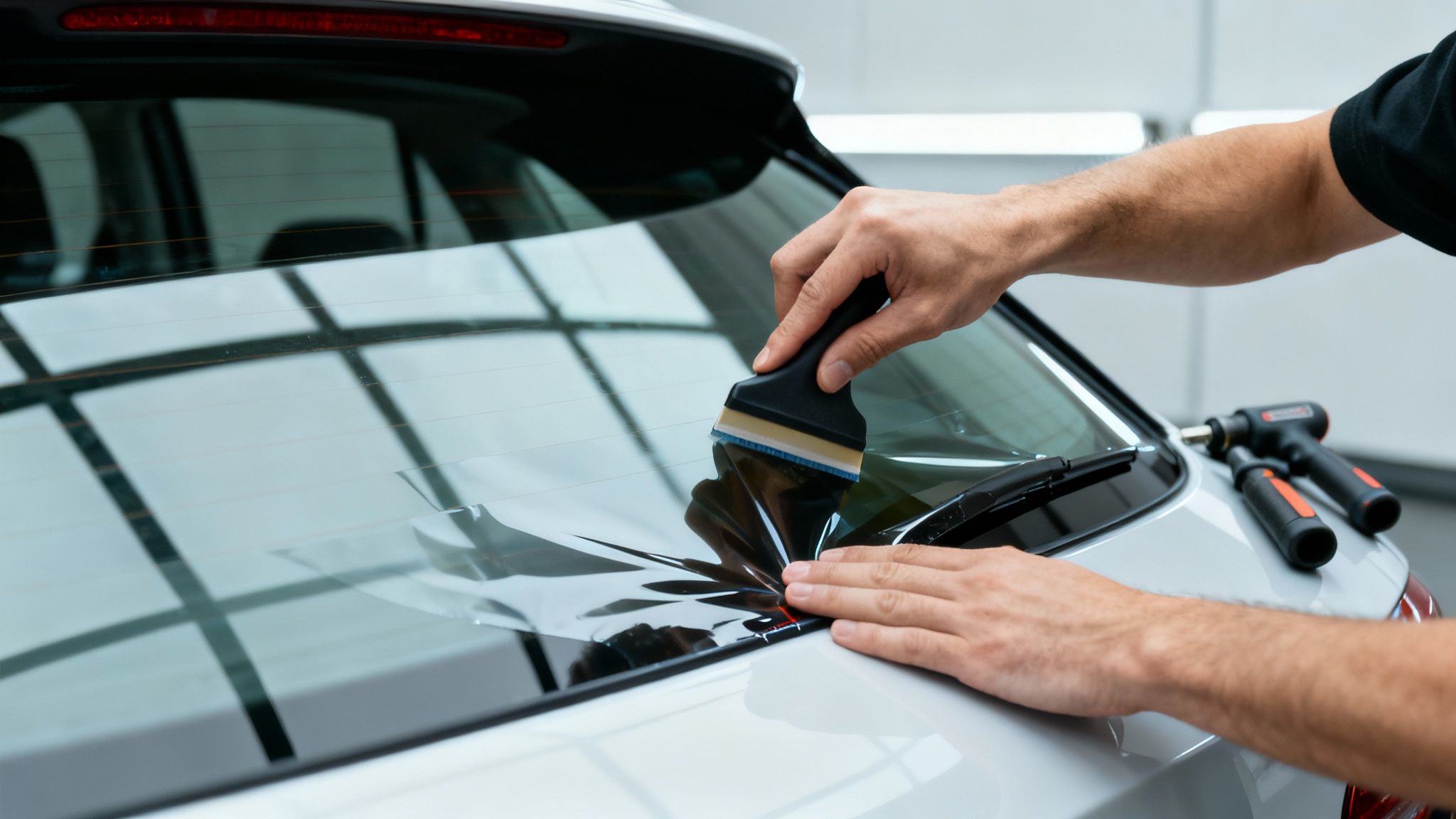
A professional installer, on the other hand, comes equipped with specialized tools and, more importantly, years of hands-on experience. They work in a meticulously clean, controlled environment to make sure no contaminants get trapped under the film.
A professional tint installation isn’t just a service; it’s an insurance policy for your investment. It’s the guarantee that the high-performance film you chose will deliver on its promises for years, all backed by a solid warranty.
One of the most crucial skills a pro brings to the table is heat forming. This is where they carefully heat the film, allowing them to shrink and mould it to the exact curves of your car’s windows—especially tricky ones like the rear windshield. This technique creates a seamless, perfect fit that you simply can't achieve with a DIY kit.
Ultimately, finding the best car tinting service near you connects you with experts who use premium materials and know the local regulations inside and out. It’s the best way to protect your investment and ensure your tint looks flawless and performs at its peak for the life of your vehicle.
Your Car Window Tinting Questions Answered
Alright, so we've covered the different types of tints and the legal side of things. But you probably still have a few real-world questions bouncing around in your head. That's completely normal. Knowing the specs is one thing; understanding how a tint will perform day-to-day is another.
Let's dive into some of the most common questions we get from drivers right here at our Whitby shop. We'll give you clear, honest answers to help you feel good about whatever you decide.
How Long Does Window Tint Last?
The lifespan of your window tint really boils down to two things: the quality of the film itself and how well it was installed. A cheap, basic dyed film might look okay at first, but after a couple of years under the Ontario sun, you'll likely see it start to fade, bubble, or get that dreaded purple hue.
On the other hand, a high-quality carbon or a professional-grade ceramic tint is a totally different story. These films are built to last. When a skilled technician puts them on, they can easily last for the entire life of your vehicle. That's why they almost always come with a lifetime warranty that covers defects like peeling, bubbling, or discolouring. Think of it as a one-and-done investment for your car.
Can You Remove Old Window Tint?
Absolutely. Old or damaged window tint can definitely be removed, but this is one of those jobs you should leave to the pros. It's not as simple as just peeling it off like a sticker. Removing tint properly requires special tools, like steamers, to soften the old adhesive without scratching the glass.
Trying to remove tint yourself can quickly become a sticky, frustrating nightmare. Worse, you could easily damage the delicate defroster lines on your rear windshield, and that’s an expensive repair you really want to avoid.
A professional can strip the old film off cleanly, leaving no residue behind. This preps the glass perfectly for a new application, ensuring your new tint sticks flawlessly and looks great.
How Do You Care For Tinted Windows?
Taking care of your new window tint is actually pretty easy. The most important part is right after the installation. You’ll need to keep your windows rolled up for about three to five days. This gives the adhesive enough time to cure properly and form a strong bond with the glass.
Once it's cured, there's just one golden rule for cleaning: never use ammonia-based cleaners. Ammonia is the enemy of window tint; it will break down the adhesive and protective layers, causing the film to fail way sooner than it should.
For regular cleaning, all you need is:
- A soft, clean microfibre cloth to avoid any scratches.
- An ammonia-free glass cleaner, or even just a simple mix of mild soap and water.
That's it. With just a little bit of care, your tint will look fantastic and perform at its best for years to come.
Does Ceramic Tint Really Keep Your Car Cooler?
Yes, without a doubt. It’s the single biggest reason ceramic is often called the best window tint for cars when performance is the top priority. This isn't just marketing speak; it’s all about the science.
Ceramic tints are made with tiny, non-metallic ceramic particles. These particles are amazing at blocking infrared radiation, which is the specific part of sunlight that you feel as heat. A good ceramic film can block over 50% of the total solar heat from getting into your car. On a hot summer day, you will feel a massive difference. Your car’s cabin will be much cooler, your AC won't have to work as hard, and your drive will be way more comfortable.
Ready to experience the ultimate in comfort and protection? The team at Carmedics Autowerks Inc specializes in professional window tinting using premium films that last. Visit us online to get a quote and find the perfect tint for your vehicle.