


That bumpy, jarring ride you've been putting up with? It's more than just a minor annoyance. It's your car's way of telling you something is wrong and that it needs a professional's touch. For drivers looking for suspension repair in Whitby, learning to recognize these early warning signs is the first step toward staying safe and avoiding a much bigger repair bill down the line.
Is Your Car Telling You It Needs Suspension Repair?

Think of your car's suspension system as its running shoes. When they're in good shape, they soak up all the bumps and impacts from the road, giving you a stable and comfortable ride. But once they're worn out, you start feeling every single crack and pothole. It's a rough ride, and you don't feel nearly as steady on your feet. A worn-out suspension does the exact same thing to your car, transforming a smooth drive into a clunky, uncontrolled mess.
Putting off repairs is like trying to run a marathon in those busted shoes. Not only is it uncomfortable, but you're also setting yourself up for bigger problems. A bad suspension puts extra stress on other parts of your car, leading to more wear and tear. That's why listening to what your car is telling you is the smartest, most budget-friendly approach.
The Top 5 Warning Signs
Your vehicle has ways of communicating, and it's usually not subtle. By paying close attention to how it feels on local roads like Taunton or Thickson, you can catch suspension issues before they get out of hand. Here are the five most common red flags:
- Excessive Bouncing After Bumps: Does your car feel like a pogo stick after hitting a speed bump or one of Whitby's infamous potholes? If it keeps bouncing instead of settling right away, your shocks or struts are likely shot.
- Drifting or Pulling During Turns: When you take a corner, does the car feel like it’s leaning too hard or trying to pull away from the turn? That's a classic sign the suspension can no longer keep the vehicle stable against cornering forces.
- One Corner Sits Lower: Park your car on a flat surface and take a step back. If one corner looks like it’s sagging or is noticeably lower than the others, you probably have a broken spring or a blown strut.
- Unusually Difficult Steering: A struggling suspension system can make your steering feel heavy and sluggish. It might feel like you’re wrestling with the wheel, especially when you’re driving slowly or parking.
- Uneven Tire Wear: Have a look at your tires. If you see bald spots or a "cupped" pattern where the tread is wearing down unevenly, it's a dead giveaway that your suspension isn't holding the tires flat against the road like it should.
To make it even clearer, here's a quick guide to what these symptoms often mean for your vehicle and your safety.
Suspension Warning Signs and What They Mean for Your Car
| Symptom You Experience | What It Likely Indicates | Why It's a Safety Concern |
|---|---|---|
| Car keeps bouncing after bumps | Worn-out shocks or struts | Reduced tire contact with the road, increasing braking distance. |
| Pulling or drifting in turns | Failing shocks, struts, or sway bar links | Loss of stability and control, especially during sharp turns or evasive maneuvers. |
| One corner of the car is low | Damaged spring or worn strut assembly | Misaligned wheels, leading to poor handling and premature tire wear. |
| Steering feels stiff or heavy | Worn ball joints or tie rod ends | Can lead to a sudden loss of steering control, which is extremely dangerous. |
| Uneven or "cupped" tire wear | Damaged shocks, struts, or alignment issues | Poor traction, especially in wet or slippery conditions, and a higher risk of tire blowouts. |
Catching these issues is about much more than just a smooth ride—it's a critical part of keeping you and your passengers safe.
A compromised suspension can seriously affect your braking distance and your ability to control the car in an emergency. Don't ignore the signs.
Getting into the habit of proactive checks is always a good idea. For a deeper dive, a comprehensive used car inspection checklist has plenty of points that apply to regular vehicle upkeep. You can also brush up on the basics with our guide on the 5 essential car maintenance tips every driver needs to know.
How Your Car's Suspension System Works
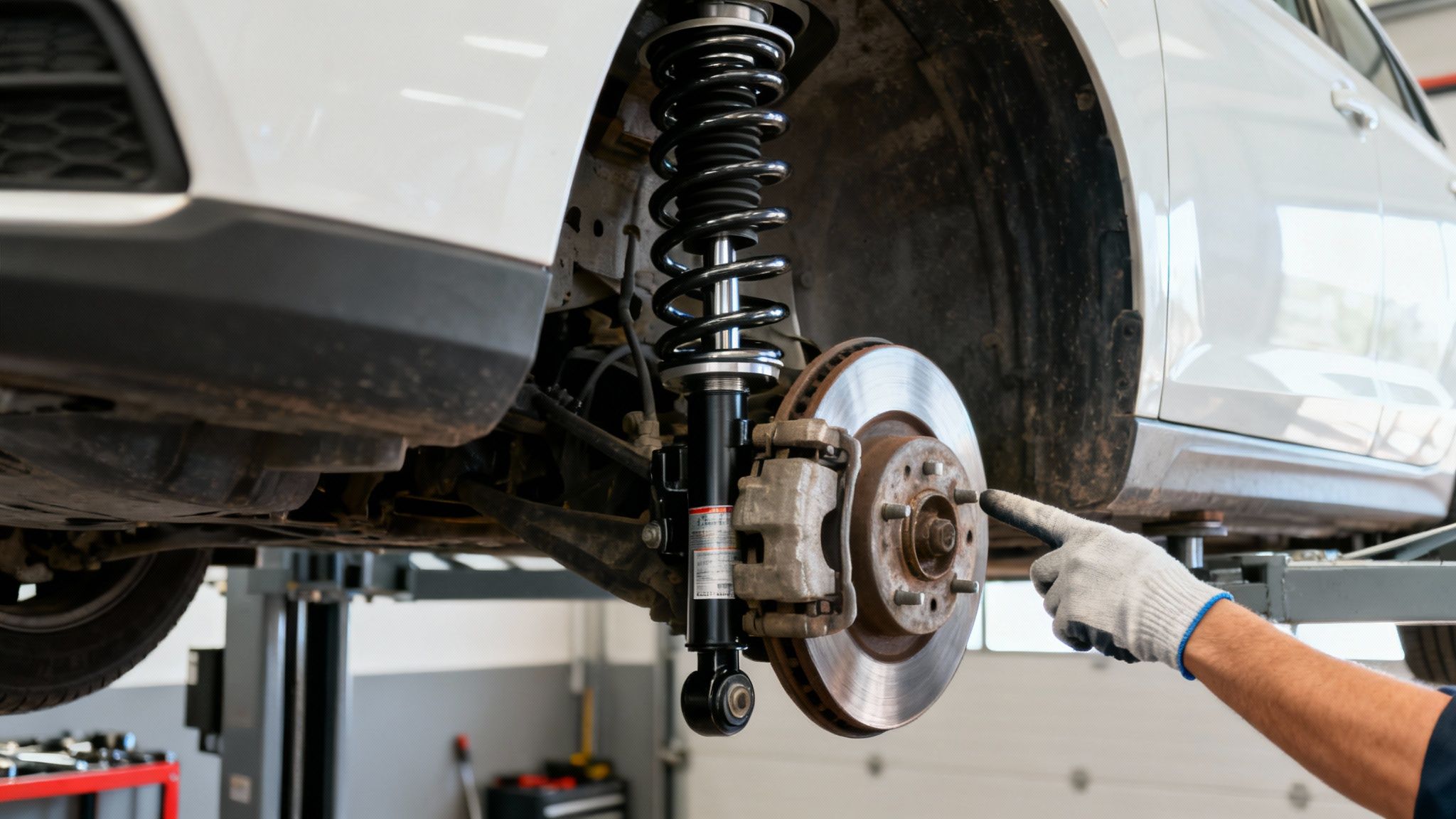
Your car’s suspension is an intricate system of parts, all working together to do one main job: keep your ride smooth and your tires glued to the road. It’s a lot like an athlete’s legs—a smart mix of bones, muscles, and joints that absorb shock, keep you stable, and let you move with control. Without a good suspension, every drive would be a bumpy, jarring, and frankly, dangerous mess.
The entire system is a constant balancing act. It has to manage the force of the road pushing your wheels up while also dealing with the car's own weight pushing down. Every part has a role to play. When one component starts to fail, the others have to pick up the slack, which causes a domino effect of wear and tear. That's why catching a small problem early is so important for avoiding a much bigger, more expensive suspension repair in Whitby.
The Core Components and Their Roles
Let's stick with our athlete analogy to break down the key players that make up your car's suspension system.
- Shocks and Struts (The Muscles): These are your car's primary shock absorbers. They're designed to control the bouncing motion of the springs. Think of how an athlete’s muscles absorb the impact of a jump—your shocks and struts do the same for your car, soaking up vibrations from potholes and bumps to keep the ride comfortable.
- Coil Springs (The Tendons): These heavy-duty springs hold up the weight of your vehicle and take the first hit from any bumps in the road. They compress and expand, letting the wheels move up and down, much like how tendons stretch and contract to allow for movement.
- Control Arms (The Bones): These are the sturdy links connecting your wheels to the car’s frame. They act like the bones in a leg, creating a solid connection point while letting the wheels pivot up and down in a controlled way.
- Bushings (The Joints): You'll find these little rubber or polyurethane cushions at every connection point in your suspension. They’re like cartilage, absorbing vibrations and preventing metal-on-metal grinding to keep things moving smoothly and quietly.
- Sway Bar (The Core Stabilizer): Also known as an anti-roll bar, this part connects the left and right sides of the suspension to keep your car from leaning too much when you take a corner. It functions like an athlete’s core muscles, providing stability and balance.
Every single one of these parts needs to work in perfect sync. Even one worn-out bushing or a leaky strut can throw the whole system out of alignment, which can mess with your steering, braking, and overall safety.
Having a basic grasp of this system helps you notice when something doesn't feel right. A professional technician can give it a thorough inspection to find the root cause of the problem. Knowing about the different auto repair services available also helps you have a more productive chat with your mechanic. At the end of the day, a healthy suspension gives you the control and stability you need to handle whatever Whitby’s roads throw at you.
The Most Common Suspension Repairs for Whitby Drivers
When your mechanic starts talking about suspension work, it can sound a bit intimidating—and expensive. But most of the time, the trouble comes down to a few key parts that simply wear out, especially with the kind of roads we have around Whitby. Knowing what these common fixes are can take the mystery out of the process and help you feel more confident about what your car needs.
Think of it like this: your car's suspension is a team of parts working together. When one component gets tired and worn, the others have to pick up the slack, which can lead to bigger problems down the road. Fixing the specific worn-out part is always the best way to get your car's ride quality and safety back on track.
Shock and Strut Replacement
More often than not, a suspension job involves replacing worn-out shocks and struts. These are the workhorses that absorb bumps and keep your car from bouncing all over the place. A bad strut is like trying to run on a sprained ankle—your stability is shot, and every step sends a jolt through your body.
Getting them replaced is like giving your car a new set of legs. It restores its proper ride height and gets rid of that floaty, boat-like feeling you get after hitting a dip. This is a critical repair for keeping control and making sure your tires stay glued to the road where they belong.
Control Arm and Ball Joint Repair
Control arms are the strong links connecting your wheels to the car's frame. At the ends of these arms, you’ll find ball joints, which act as flexible pivot points—kind of like the ball-and-socket joint in your hip. All that turning, stopping, and starting eventually takes its toll.
When a ball joint is on its way out, you’ll often hear a distinct "clunk" when you go over bumps. You might also feel a bit of looseness or a wobble in the steering wheel. Worn-out bushings on the control arm can cause similar noises and make your handling feel unpredictable. Fixing these is a big deal for safety; a total failure could cause a wheel to separate from the car, leading to a complete loss of control.
A healthy suspension system isn't just about comfort—it's a non-negotiable safety feature. Worn components can dramatically increase your braking distance and reduce your ability to make emergency manoeuvres safely.
Bushing Replacement
Think of bushings as the unsung heroes of your suspension. These small rubber or polyurethane cushions sit anywhere two metal parts connect, soaking up vibrations and stopping that harsh metal-on-metal grind. They're basically the cartilage in your car's joints.
Over time, these bushings dry out, crack, and fall apart. That's when you start hearing all sorts of creaks, groans, and squeaks, and the ride gets noticeably harsher. Replacing them can be a bit of a job, but it makes a night-and-day difference in how smooth and quiet your car feels, and it protects more expensive parts from wearing out too quickly.
The Essential Wheel Alignment
Here’s a crucial final step: after almost any major suspension work, a wheel alignment isn't just a good idea—it's absolutely necessary. An alignment makes sure your wheels are set perfectly straight, pointing in the right direction according to your car's specific design.
If you skip it, you'll undo all the good work you just paid for. Your tires will wear out quickly and unevenly, and your car will likely pull to one side. It’s the finishing touch that locks in the benefits of your suspension repair in Whitby and makes sure your car drives straight and true. When discussing repairs, it's also helpful to understand the pros and cons of different components; you can learn more about choosing between OEM vs. aftermarket parts in our detailed guide.
A Look Inside the Suspension Repair Process
Bringing your car in for a suspension repair in Whitby can feel a bit mysterious if you're not sure what to expect. Let's pull back the curtain on how a professional shop tackles these jobs, so you know exactly what’s happening every step of the way. It’s a methodical process designed to get it right the first time, ensuring your car drives just like it should.
It all starts the moment you walk in. A service advisor will listen closely to what you've been experiencing. Are you hearing strange clunks driving over bumps on Rossland Road? Does your car drift to one side on the 401? These details are gold for our technicians. Next, one of our mechanics will usually take your car for a quick test drive to feel and hear the problem for themselves.
The Inspection and Diagnosis Phase
Once we've got a handle on the symptoms, your car goes up on a hoist in the service bay. This gives the technician a clear, unobstructed view of the entire suspension system and undercarriage. They'll perform a thorough visual inspection, checking every key component—shocks, struts, control arms, ball joints, bushings—for any sign of leaks, damage, or excessive wear.
This hands-on check is where expertise really shines. A vague noise could come from a few different places, so pinpointing the exact cause is crucial. A proper diagnosis means you're only paying to fix what's actually broken. For more complex issues, we might use advanced tools, much like we do for in-depth engine diagnostics in Whitby.
From Estimate to Final Test Drive
After the diagnosis, we'll draw up a clear, detailed estimate for you. It will break down everything: the specific parts that need replacing, the labour cost, and any related services like a wheel alignment. We'll walk you through it, explaining why each item is necessary so you can make an informed decision without any pressure.
Once you give us the go-ahead, the real work begins. Our technicians will get to it, using specialized tools and high-quality parts to carry out the repair.
This diagram shows a common workflow, starting with replacing major components and finishing with that all-important alignment.
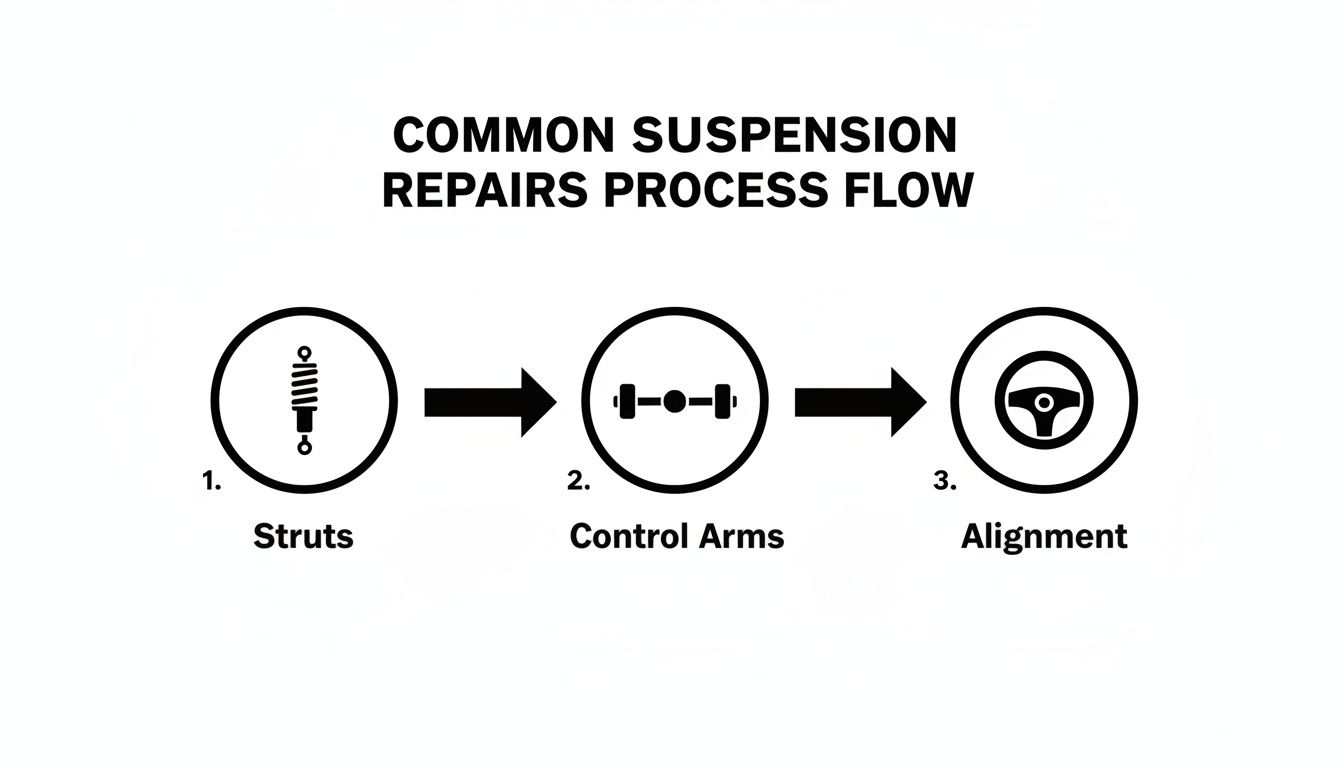
As you can see, the repairs are often linked. The alignment isn't just an add-on; it's the final piece of the puzzle that ensures all the new parts work together perfectly.
A professional repair isn’t complete until the vehicle has undergone a post-service wheel alignment. This crucial step ensures your tires are perfectly angled, preventing premature wear and guaranteeing your vehicle drives straight.
To wrap things up, we always perform a final test drive. This is our quality check to confirm the original problem is gone and your car handles precisely as it should. It’s our way of making sure the job was a success before handing you back the keys.
How to Choose the Right Whitby Suspension Repair Shop

Choosing where to get a suspension repair in Whitby is a pretty big deal. Let's be honest, not all auto shops are created equal, especially when it comes to something as intricate as your vehicle’s suspension. Finding the right place isn’t just about hunting for the lowest price; it’s about making sure your car is safe, reliable, and in the hands of genuine pros.
Making a smart choice here really protects your investment and, more importantly, gives you peace of mind. A good, trustworthy shop will be upfront, use quality parts, and stand behind their work. Think of it like picking a surgeon—you want someone with proven skills, the right tools, and a history of success.
Look for Licensed Technicians and Specialization
Your car’s suspension is definitely not the place for on-the-job training. You should always look for a shop with licensed, experienced technicians who truly understand the ins and outs of suspension systems. A general mechanic might be fantastic for oil changes and brakes, but suspension work demands specialized knowledge to nail the diagnosis and get the repair just right.
A shop that invests in continuous training for its team is always a good sign. It shows they take their craft seriously and stay current with the ever-changing technology in modern vehicles. Our guide to finding certified auto repair services in Whitby has a few more tips on what to look for in a qualified mechanic.
A great technician doesn't just swap out parts. They see the big picture and understand how the entire system works together. That holistic approach is what leads to a lasting repair, not just a quick patch-up.
Prioritize Shops with Transparent Pricing
Nothing ruins a repair experience quite like a surprise on your final bill. A reputable repair centre will always give you a detailed, written estimate before they even pick up a wrench. This quote should clearly itemize all the parts, their individual costs, and the estimated labour charges.
This kind of transparency lets you ask informed questions so you know exactly what you’re paying for. If a shop seems cagey about providing a clear cost breakdown, that’s a major red flag. Honest, open communication is the bedrock of trust between you and your mechanic.
Verify Part Quality and Warranty Policies
The quality of the parts going into your car has a direct impact on how long the repair lasts and how well your vehicle performs. Don't be shy—ask the shop if they use OEM (Original Equipment Manufacturer) parts or high-quality aftermarket equivalents from brands they trust. Using cheap, low-grade parts is a common corner-cutting tactic that almost always leads to more problems down the road.
On top of that, always ask about the warranty. A shop that’s confident in its work will back it up with a solid guarantee on both the parts and the labour. That warranty is your safety net. It means if something related to the repair goes wrong, you're covered. As the demand for professional suspension work grows, making sure a shop has the essential equipment for a quality auto repair shop and a commitment to quality service is more important than ever.
Answering Your Suspension Repair Questions
It's completely normal to have questions when you're facing a car repair. For drivers here in Whitby, getting clear answers about suspension work is the first step toward feeling confident in your decisions. We've put together some straightforward answers to the questions we hear most often at the shop.
How Much Does Suspension Repair Cost in Whitby?
The cost of a suspension repair in Whitby really depends on what your car needs and what you drive. A simple job, like swapping out a pair of rear shock absorbers, could be a few hundred dollars. On the other hand, a major front-end job on a larger SUV—think new struts, control arms, and bushings—could easily run over a thousand dollars.
There are just too many variables to guess. That's why a professional inspection is the only way to get a real number. A technician can get their eyes on the problem, see exactly which parts are worn, and give you a detailed quote before any work starts. No surprises, just clear information.
How Long Will a Suspension Repair Take?
The time it takes is tied directly to how complex the job is.
- Simple Repairs (1-2 hours): Things like replacing a set of rear shocks are usually pretty quick. We can often get this done in an hour or two.
- Moderate Repairs (Half a day): Swapping out front struts is more involved. Since a wheel alignment is almost always needed afterward, you're typically looking at about half a day.
- Extensive Repairs (Full day or more): If we're tackling multiple control arms or fighting with seized, rusty bolts, your vehicle might need to be with us for the whole day. This is especially true if we have to special-order parts.
Any good shop will give you a solid time estimate right alongside your quote, so you can make plans and aren't left wondering.
Can I Drive My Car if the Suspension Is Bad?
Technically, you might be able to drive with some suspension issues, but we strongly advise against it. A faulty suspension messes with your car's handling, makes your braking distance longer, and hurts overall stability. This gets incredibly risky in a sudden-stop situation or during the slick, wet weather we get around Whitby.
Driving on a bad suspension creates a domino effect. It causes uneven, premature tire wear and strains other components, which can quickly turn one problem into a much bigger, more expensive repair.
If you hear a loud clunk or suspect a major failure like a broken spring, don't risk it. The safest move is to have your vehicle towed straight to the shop.
What Is the Difference Between Shocks and Struts?
This is probably the most common question we get, and it's a great one! Both shocks and struts are dampers—their job is to absorb bumps and keep your car from bouncing all over the road. The real difference is how they fit into the bigger picture of your suspension.
A shock absorber is a simple, standalone part. Its only job is to control the movement of the spring.
A strut, however, is a much bigger deal. It's a structural part of the suspension and steering system. It's a whole assembly that usually includes the coil spring and serves as a pivot point for turning the wheels. Because struts are built into the steering and alignment geometry, they are a far more critical component than shocks, which are mainly there for ride comfort.
For a professional diagnosis and a clear, honest estimate for your suspension repair in Whitby, you can trust the team at Carmedics Autowerks Inc. We’re here to deliver top-quality service that keeps you and your family safe on the road. Schedule your inspection today by visiting us at https://www.carmedicsautowerks.com.com.