
So, you're wondering what it costs to get paint protection film in Canada. Let's get straight to it: you can expect to pay anywhere from $900 for basic front-end coverage to over $6,000 for a full-body wrap. The final price tag really boils down to your vehicle's size, the quality of the film you select, and how much of the car you want to cover.
Understanding the Investment in Your Vehicle's Finish
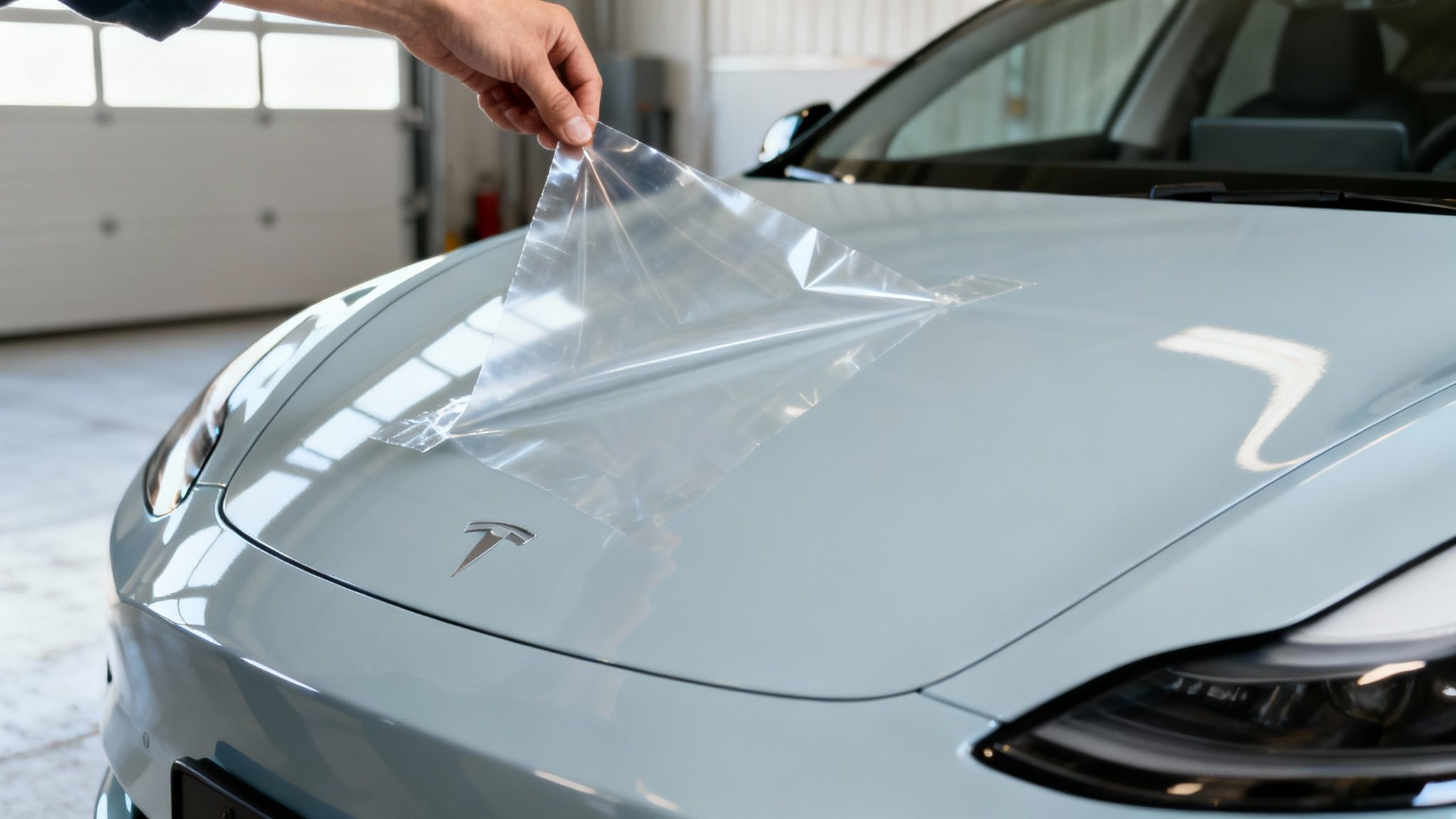
Think of Paint Protection Film (PPF) as invisible armour for your car. It’s a tough, self-healing urethane film that acts as a high-tech shield, taking the daily abuse your paint would otherwise suffer. From rock chips kicked up on the highway to scuffs in a tight parking garage, PPF is your first line of defence.
Yes, the initial cost is an investment, but it's one designed to save you a lot of headaches and money down the road. A single deep rock chip can easily lead to a full panel repaint, which can set you back $1,500 to $3,000 or more.
Compare that to a partial front PPF package, which shields the most vulnerable areas—like the bumper, hood, fenders, and mirrors—for between $900 and $1,500.
The real value of PPF is in preservation. By keeping your vehicle’s factory finish pristine, you’re directly protecting its long-term resale value and dodging costly cosmetic repairs.
Key Benefits of Investing in PPF
This upfront investment pays off in several powerful ways that go far beyond just a shiny look. When you see what you're getting, the cost makes a lot more sense.
- Preserves Factory Paint: It keeps the original, highest-quality finish your car will ever have, which is a huge factor when it comes time to sell.
- Self-Healing Technology: Most modern films have a cool trick up their sleeve—they can "heal" minor scratches and swirl marks with a bit of heat, keeping your car looking flawless.
- UV and Chemical Resistance: PPF acts like sunscreen for your car, shielding the paint from sun-induced fading. It also protects against damage from bird droppings, bug guts, and road salt.
- Peace of Mind: You can just relax and enjoy the drive, knowing your paint is guarded against the hazards of daily life, especially on rough Canadian roads.
When you look at the PPF cost vs. repainting your car, it becomes clear that prevention is almost always the smarter, more affordable choice.
Estimated Paint Protection Film Costs in Canada
To give you a clearer picture, here’s a quick overview of what you can expect to pay for common PPF packages in the Canadian market.
| PPF Coverage Level | Average Cost Range (CAD) | Common Areas Protected |
|---|---|---|
| Partial Front | $900 – $1,500 | Front bumper, partial hood, partial fenders, side mirrors. |
| Full Front | $2,000 – $3,000 | Full front bumper, full hood, full fenders, side mirrors. |
| Full Car | $6,000+ | Every painted exterior surface of the vehicle. |
Keep in mind these are estimates. The final price can change based on the installer's expertise, the specific film brand used, and the complexity of your vehicle's design. This guide will break down exactly what goes into the price, helping you choose the right level of protection for your vehicle and budget.
What Really Drives the Price of a PPF Installation?
That number you see on a PPF quote isn't pulled out of thin air. It’s a carefully calculated sum based on four key things. Once you understand them, it's easy to see why protecting a complex sports car costs more than, say, a family SUV.
Think of it like getting a custom suit made. A simple, off-the-rack jacket is one thing, but a bespoke tuxedo for a professional athlete requires a whole different level of material, time, and skill. The same idea applies here. The final price is a blend of the installer's time, the quality of the film, how much of the car you're covering, and the prep work needed to get a perfect finish.
Let's break down exactly what goes into that final number.
The Car's Design and Complexity
When it comes to applying PPF, no two cars are the same. The unique shape and design of your vehicle is the single biggest factor influencing the cost—it can easily make up up to 70% of the total price.
Why? It all comes down to labour.
A vehicle with big, flat surfaces, like a truck or a large SUV, is relatively straightforward. The installer can lay down large, smooth sheets of film without much fuss.
But a modern performance car? That's a completely different ball game. All those aggressive curves, sharp angles, deep air vents, and aerodynamic wings demand incredible precision.
A vehicle’s complexity dictates the labour. A curvy sports car with intricate vents is a bespoke tailoring job, whereas a flat-paneled truck is more like a simple hemming project. Each requires a different level of skill and time.
An installer has to patiently stretch and mould the film around every single contour, making sure there are no air bubbles, stress lines, or distortions. This isn't just work; it's craftsmanship. It takes more time, a higher level of skill, and naturally, that means higher labour costs.
The Quality of the Film Itself
The next big piece of the puzzle is the film you choose. Just like with car tires or engine oil, there’s a whole spectrum of quality out there. You can go for a basic, entry-level film to save a few dollars, but you'll miss out on the advanced tech that makes premium films such a smart investment.
Top-tier films from respected brands like XPEL or 3M come with incredible features that justify their price:
- Self-Healing Properties: They have a special top coat that can literally heal itself. Minor scratches and swirl marks vanish with a bit of heat from the sun or a heat gun.
- Hydrophobic Coatings: This makes the surface slick and water-repellent. Water beads up and rolls right off, taking dirt and grime with it, which means your car stays cleaner, longer.
- Flawless Clarity: A high-quality film is practically invisible. It won’t turn yellow or get cloudy over time, so your paint’s true colour always shines through.
- Durability and Warranty: Premium films are built to last. They often come with a 10-year manufacturer's warranty covering any cracking, peeling, or yellowing, giving you real peace of mind.
Going with a cheaper film might feel like a win at first, but it can lead to problems like premature peeling or discolouration down the road.
How Much of the Car You Cover
This one’s pretty simple: the more real estate you want to protect, the more it will cost in both materials and labour.
You can choose a "Partial Front" package, which focuses on high-impact zones like the bumper, headlights, and the first part of the hood. Or, you can go for a "Full Front" or even a "Full Vehicle" wrap for complete protection. Your choice here really just depends on your budget and how much risk you want to guard against.
Don't Forget the Prep Work
Finally, the condition of your car’s paint before the film is applied is a huge factor in the final paint protection film cost.
Think about it: applying PPF over existing scratches, rock chips, or swirl marks is like putting a screen protector on a dirty phone. You're just trapping all those imperfections underneath.
For that truly invisible, glass-like finish, the paint has to be perfect first. This often means a professional paint correction is needed—a detailed, multi-stage polishing process that removes any and all defects from the clear coat. This prep work is absolutely essential for a flawless result, but it's a separate service that adds to the overall project cost.
Choosing the Right Coverage for Your Car
Figuring out the right paint protection film package really comes down to balancing protection with your budget. It’s all about matching the coverage to how you actually use your car.
A daily driver that sees a lot of stop-and-go traffic has different needs than a prized show car that only comes out on weekends. Let’s break down the three most common PPF levels—Partial Front, Full Front, and Full Vehicle—to help you see which one makes the most sense for you.
- Partial Front: Think of this as your essential, high-impact zone coverage. It typically runs between $900 – $1,500.
- Full Front: This is a big step up, covering the entire front end of your vehicle for around $2,000 – $3,000.
- Full Vehicle: For those who want zero compromises, a complete wrap protects every painted surface and starts at $6,000+.
Partial Front Protection
If you’re a city commuter or mostly stick to local roads, a Partial Front package is a smart, budget-friendly choice. It’s designed to shield the areas that take the most abuse from everyday driving.
This package focuses on the most vulnerable spots: the front bumper, the leading edge of the hood, front portions of the fenders, and the side mirrors. It’s the first line of defence against rock chips, bug splatter, and minor scrapes that happen in parking lots and heavy traffic.
A simple Partial Front PPF can easily save you thousands in future repaint costs from those inevitable little chips and dings.
While it's a fantastic value, remember that it leaves the rest of your vehicle's panels exposed. It’s a targeted solution for the most common problem areas.
Full Front Protection
Ready for more peace of mind? The Full Front package offers much more comprehensive coverage for your car's most forward-facing surfaces.
This level wraps the entire hood, the full front bumper, both front fenders, headlights, and mirror caps. By eliminating the visible film edge that can appear on a partial hood, it delivers a seamless, nearly invisible look. At a cost of around $2,000 – $3,000, it’s a popular option for good reason.
This is the ideal setup if you spend a lot of time on the highway or frequently drive on roads where gravel and debris are a constant threat.
- Perfect for highway commuters who deal with high-speed impacts from road debris.
- Offers a clean, aesthetic finish with no visible lines on the hood or fenders.
Complete Vehicle Wrap
For the true enthusiast, the collector, or anyone who simply wants the absolute best protection money can buy, nothing beats a Complete Vehicle Wrap.
This is the ultimate in paint preservation. Every single painted panel—from the roof and doors to the rocker panels and trunk lid—is meticulously covered. This top-tier service protects your car from just about everything: rock chips, deep scratches, chemical stains, and environmental fallout.
Pricing for a full wrap starts at $6,000 and can climb from there, especially for larger vehicles or exotic cars with complex body lines. It’s a serious investment, but it’s the only way to ensure your paint remains in pristine, factory-fresh condition for years.
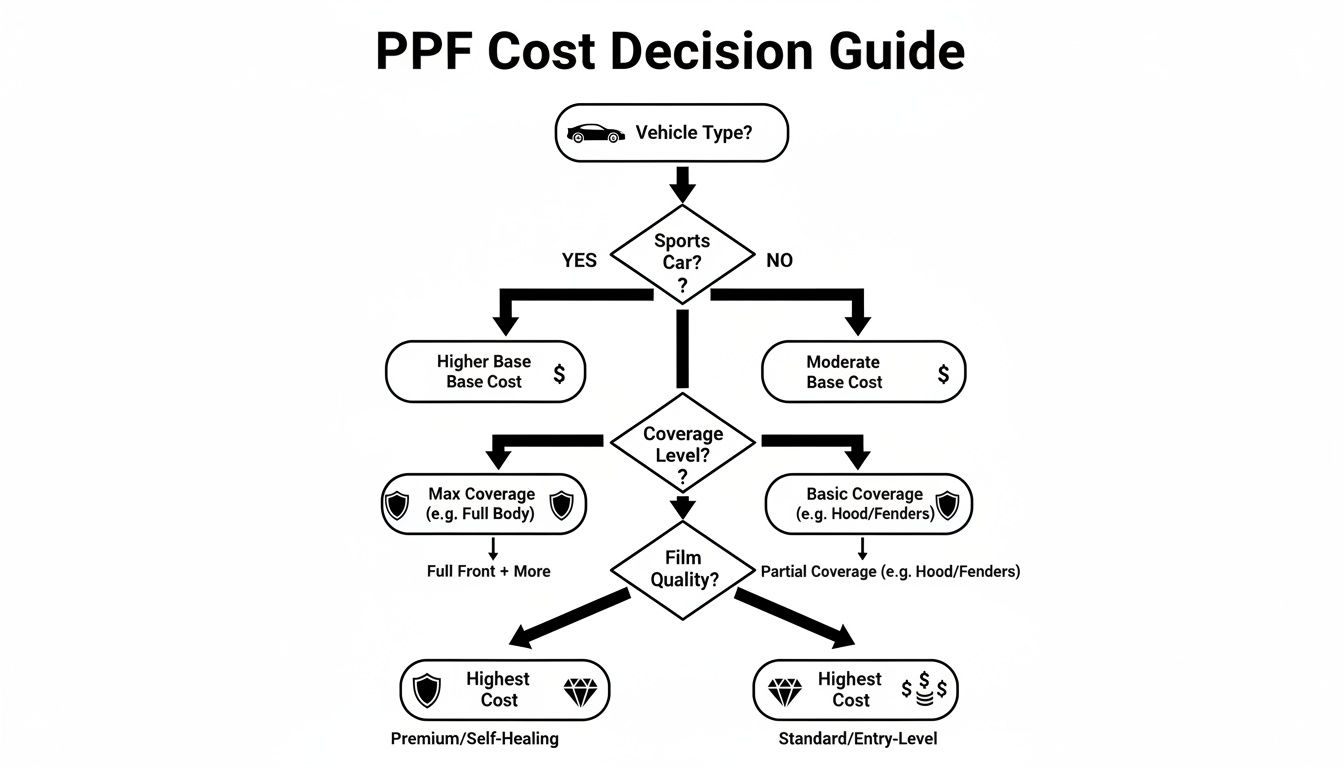
This flowchart gives you a great visual on how your driving habits, your vehicle, and the quality of film you choose all play a role in the final cost. As you can see, your personal risk tolerance is a huge factor in the decision.
Speaking of total vehicle care, you might also find our guide on the Best Rust Prevention for Cars helpful for keeping your ride protected from the inside out.
Ultimately, choosing the right coverage is about finding that sweet spot between protection and price that lets you enjoy your drive without worry.
The Value of Prep Work and Protective Add-Ons
A flawless paint protection film installation is about so much more than just the film. The real artistry happens before a single piece of PPF touches your car, and it all starts with the condition of your vehicle’s paint. A top-tier job means creating the perfect canvas, and while that adds to the final paint protection film cost, it’s absolutely critical for getting a result you’ll love.
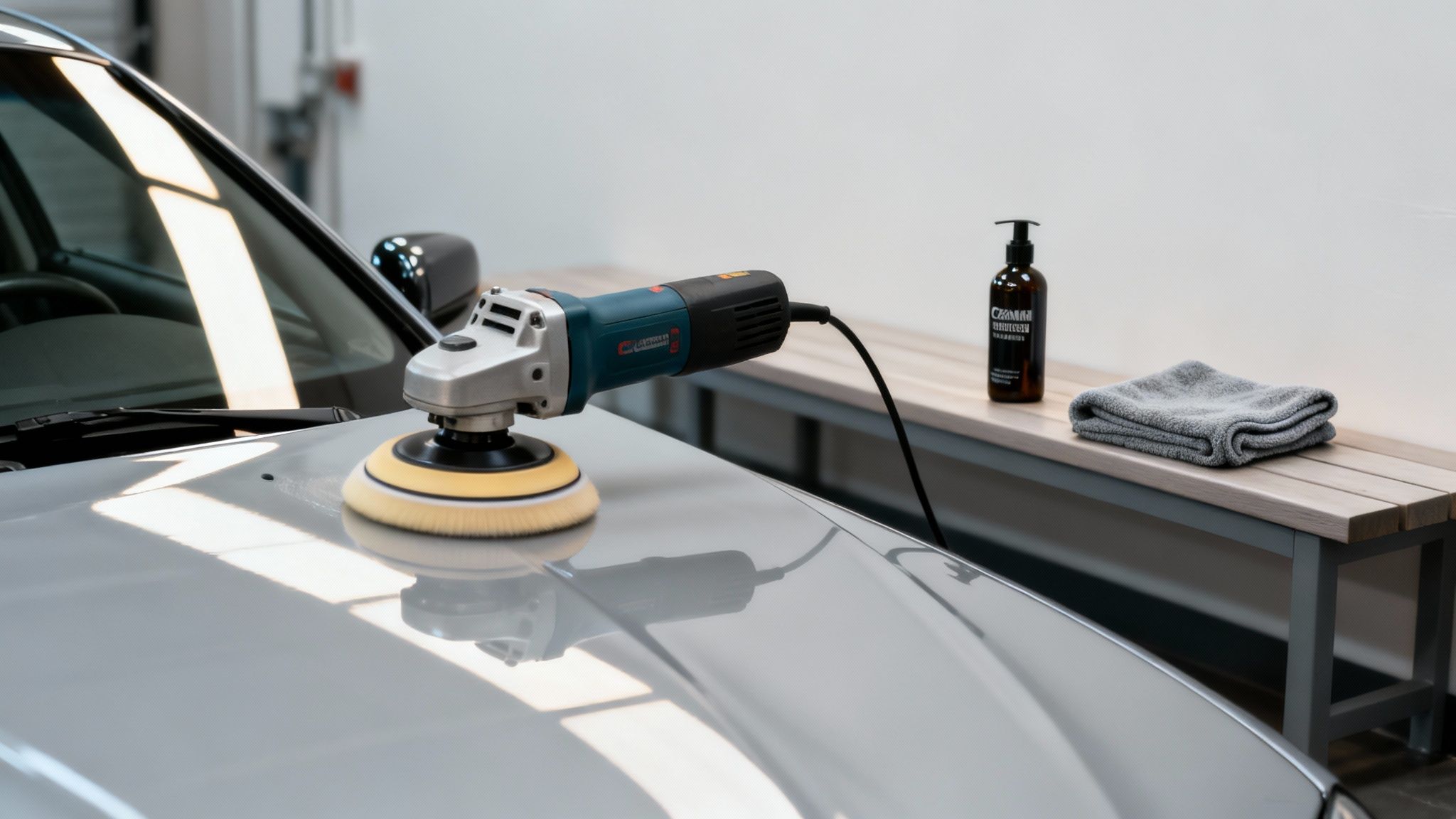
Think about it—applying PPF over existing scratches, swirl marks, or rock chips is like putting a screen protector on a dusty phone. It doesn't hide the flaws; it just seals them in for everyone to see. For the film to look truly invisible and bond perfectly, the paint underneath has to be immaculate. This is where professional paint correction enters the picture.
Why Paint Correction Is Non-Negotiable
Paint correction is an incredibly detailed, multi-stage polishing process that carefully removes defects from your car’s clear coat. Even a car fresh from the dealership can have minor imperfections from transport and handling. This service is all about ensuring your paint is perfectly smooth and glossy before it gets locked in under the film.
Here’s an easy way to think about it: you wouldn't frame a beautiful photograph if there was dust trapped under the glass. Paint correction cleans that "glass"—your clear coat—so the artwork underneath looks its absolute best for years.
Skipping this step to save a few dollars means you're just paying to protect flawed paint. It's a shortcut that cheapens the final result. Any installer who truly cares about their craft will insist on a properly prepared surface. The same principles of careful surface prep hold true for similar applications, like applying vinyl wrap for a flawless finish.
Elevating Protection with a Ceramic Coating
Once your PPF is perfectly installed, you can take its performance to a whole new level by adding a ceramic coating right on top. This is the ultimate power couple in vehicle protection. The PPF provides that tough, physical shield against impacts, while the ceramic coating adds an incredibly slick, water-beading layer.
This dynamic duo offers some serious perks:
- Insane Gloss: A ceramic coating deepens the shine of the film and the paint below, giving your car that jaw-dropping, wet look.
- Effortless Cleaning: The hydrophobic surface makes water, dirt, and grime slide right off. Washing your car becomes faster and way less of a chore.
- Extra Defence: It adds another barrier against UV rays, bird droppings, and other harsh environmental gunk.
While this service does add another line item to the invoice, it’s a smart move that maximizes your investment. It simplifies maintenance and extends the life and look of your film. And don’t forget, protection isn't just for paint. It's always worth looking into options like XPEL windshield protection film to safeguard other vulnerable parts of your car. These extra steps ensure you walk away with the best possible result and long-term value.
Is Paint Protection Film a Smart Investment?

We've talked a lot about the numbers behind the paint protection film cost. Now, let's step back and look at what PPF is actually worth. It's easy to see it as just another expense, but that's missing the point. A better way to think about it is as a savvy investment in your vehicle's future and your own peace of mind.
Think about it: your car's factory paint is the best it will ever look. It’s the highest quality finish it will ever have, and keeping it that way is key. Every little rock chip, every swirl mark from the local car wash, every scratch—they all slowly eat away at its appearance and, more importantly, its resale value.
Protecting Your Car's Resale Value
When you go to sell your car, a vehicle with pristine, original paint will always fetch a higher price than one that’s covered in little nicks and scratches. It's just a fact. Studies show that a car’s cosmetic condition can swing its resale value by as much as 10-20%. For a $50,000 vehicle, that’s a potential loss of $5,000 to $10,000.
This is where PPF becomes your secret weapon. It acts like a shield, taking all the hits so your factory paint doesn't have to. When it's time to sell, you can show off a car with a finish that looks practically brand new, letting you ask for top dollar. Suddenly, the cost of that full front PPF package is often completely recouped—and you might even come out ahead.
PPF isn't just about stopping damage; it's about holding onto your equity. By protecting your car's original paint, you're actively preserving a huge part of its financial worth. That means a much better return when it's time to sell or trade in.
The Invaluable Peace of Mind
Let's look beyond the money for a second and think about the daily driving experience. Do you flinch every time you hear gravel pinging against your bumper on the highway? Do you get anxious about road salt during our harsh Canadian winters or a runaway shopping cart in a packed parking lot?
This is where the real, intangible value of PPF shines. It gives you the freedom to just enjoy your car. You can drive it without constantly worrying about every little thing that could damage the paint. For anyone who truly loves their car, that kind of peace of mind is priceless. To put the investment into perspective, it helps to weigh it against other ongoing car expenses, like the average cost for car insurance.
When you consider both the physical protection and the financial security, the decision gets a lot easier. Of course, choosing the right protection can be tricky, which is why a detailed breakdown of ceramic coating vs. PPF can help you figure out what's best for you. At the end of the day, PPF is so much more than a car care product; it’s a powerful way to protect the beauty and value of one of your biggest assets.
How to Find a Trusted PPF Installer
Let's be clear: even the best, most expensive paint protection film is practically worthless without a skilled installer. The technician’s experience is the final, most critical piece of the puzzle. It’s their hands that turn a simple roll of film into an invisible shield for your car, making sure your investment pays off.
Think twice if you get a quote that seems too good to be true. A surprisingly low price is often a major red flag, pointing to a few potential problems: an inexperienced installer, a cheap and unreliable film, or rushed prep work. Any of these can lead to ugly air bubbles and peeling edges down the road. Remember, you're not just buying a product; you're paying for meticulous craftsmanship.
Checklist for Vetting Installers
When you're shopping around for a professional, keep an eye out for these clear signs of quality and reliability.
- Brand Certifications: Top-tier installers are almost always certified by the big film manufacturers like XPEL or 3M. This certification isn't just a piece of paper; it means they've passed rigorous training and are held to a very high standard.
- A Strong Portfolio: Don't be shy—ask to see their work, especially on cars similar to yours. A great installer will be proud to show you what they can do and will have plenty of examples on hand.
- Clean and Controlled Environment: Take a look at the shop itself. A professional setup will be spotless, well-lit, and dedicated to PPF installation. This is crucial for preventing tiny dust particles and debris from getting trapped under the film and ruining the finish.
The installer’s workspace tells you everything you need to know about their work. A pristine, dedicated bay shows a serious commitment to a flawless, contaminant-free application—and that's non-negotiable for a perfect result.
By using these points to vet potential shops, you can find a true professional who will treat your vehicle with the care it deserves. For those looking for a trusted collision repair and detailing expert, learn more about what a top-tier auto body shop in Whitby can offer.
Got Questions? We've Got Answers
Even after breaking down all the costs and details, you probably still have a few things you're wondering about. That's totally normal. Let's tackle some of the most common questions people ask, so you can feel completely confident about your decision.
How Long Does Paint Protection Film Last?
You can expect a professionally installed, top-tier PPF to last for 10 years or even longer. Think of it as a decade of worry-free protection. The best brands back their films with a manufacturer's warranty that covers issues like yellowing, cracking, or bubbling, giving you real peace of mind.
Of course, the film's lifespan really comes down to three things: the quality of the film itself, the skill of the installer, and how you look after it. Just regular washing and staying away from harsh chemicals will go a long way in making sure it lasts.
Can PPF Be Removed Without Damaging the Paint?
Yes, and this is one of its biggest selling points. High-quality PPF is designed to be completely removable without leaving a trace. When it's time for a change, a professional installer will use a combination of gentle heat and proper technique to peel it away safely.
The original paint underneath will look just as good as the day the film was put on. This is huge for protecting your car's resale value down the road.
How Should I Care For My Car After PPF Is Installed?
Looking after a car with PPF is incredibly straightforward. You can wash it just like you normally would, but it's a good idea to wait about a week after the installation. This gives the adhesive time to fully cure and set properly.
Hand washing is always the gold standard, but a touchless automatic car wash is also a safe bet. The only real thing to watch out for is high-pressure sprayers—try to avoid aiming them directly at the edges of the film, as the force can cause them to lift over time.
Plus, most modern films have a self-healing top coat. Minor scuffs and swirl marks literally disappear on their own with a little bit of heat from the sun, making your job even easier.
Ready to give your vehicle the invisible armour it deserves? At Carmedics Autowerks Inc, our certified experts provide flawless paint protection film installations that preserve your car’s value and beauty. Visit us online to explore our packages and get a personalized quote.