

The best way to stop rust in its tracks is with a two-pronged attack. You need a professional underbody treatment, like an annual oil spray or a durable wax coating, combined with solid exterior protection, like Paint Protection Film (PPF). This strategy protects your vehicle from all angles, safeguarding its value, structure, and safety from the elements.
Your Guide to Complete Car Rust Prevention
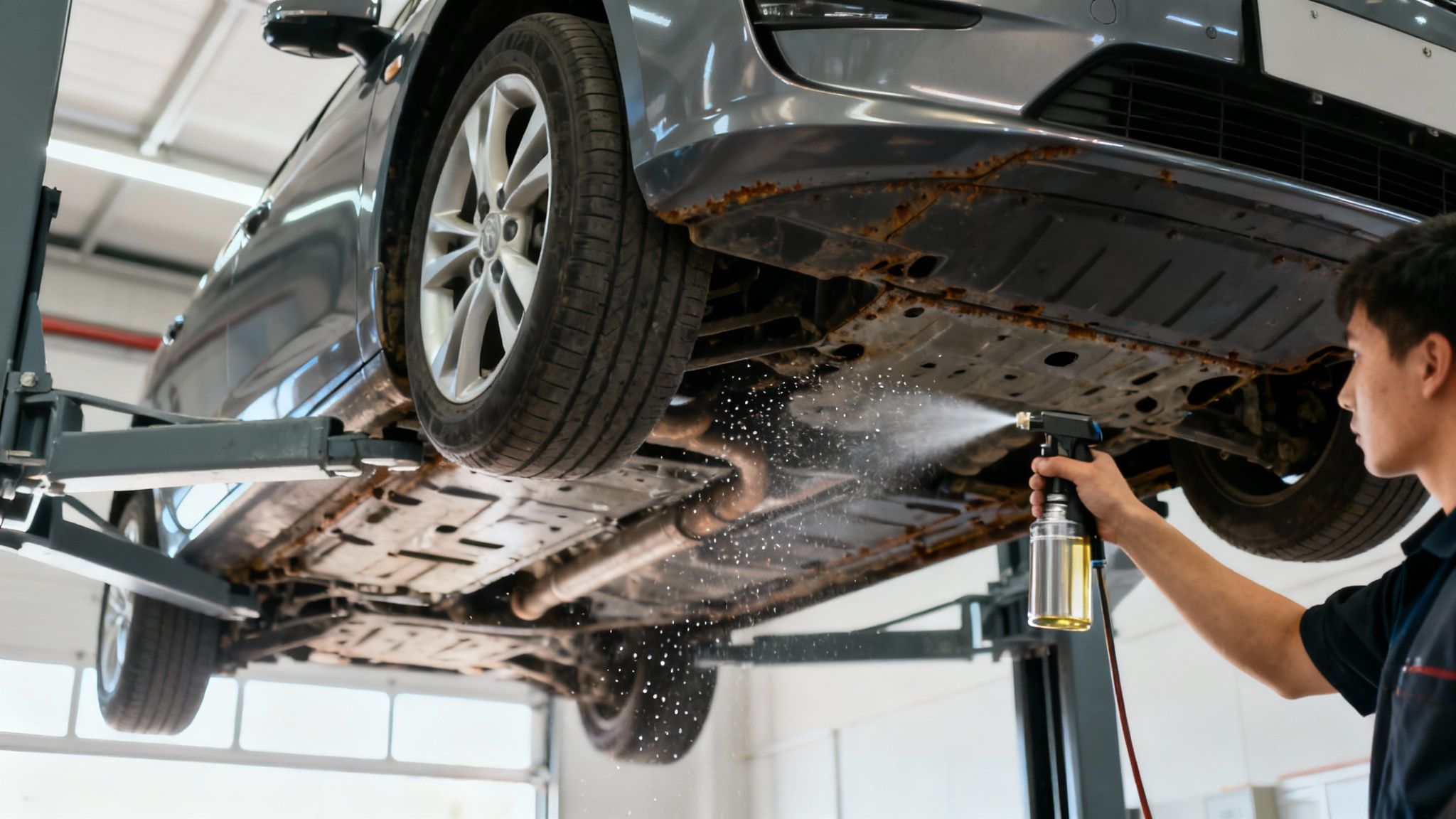
Seeing that first orange fleck of rust on your car feels like the start of a battle you're destined to lose. But that little spot is just a warning. It’s a sign of a much bigger problem creeping in underneath the surface, threatening not just how your car looks, but its core safety and structural integrity. For anyone driving in Whitby and across Ontario, rust isn't just a possibility—it's practically inevitable without the right defence.
The combination of winter road salt, relentless moisture, and oxygen is a brutal team, working 24/7 to eat away at your car’s metal. Think of your vehicle's frame and body panels as its skeleton. Rust is the disease that weakens that skeleton from the inside out, often starting in spots you can’t even see until the damage is serious.
A Proactive, Multi-Layered Strategy
A truly effective plan involves more than just a trip through the car wash. It demands a proactive, two-front approach: protecting your car from underneath and safeguarding its painted surfaces. A comprehensive strategy is the only way to get real, long-term peace of mind.
This guide is your complete roadmap to fighting back against corrosion. We'll break down everything you need for a successful rust prevention plan:
- Underbody Treatments: We’ll dive into options like oil-based sprays and tough wax coatings that shield the most vulnerable parts of your car—the frame, subframe, and all those hidden nooks and crannies.
- Exterior Protection: We'll cover how solutions like Paint Protection Film (PPF) and ceramic coatings act like a suit of armour for your paint, stopping rust before it even has a chance to start.
The biggest mistake we see car owners make is thinking the factory rust-proofing is enough. While manufacturers do provide a basic layer of protection, it’s rarely up to the challenge of a harsh Canadian winter, especially after a few years on the road.
By combining professional-grade treatments with smart, consistent maintenance at home, you can build a powerful shield against corrosion. This guide cuts through the noise and explains each method clearly, so you can put together a defence plan that works for you. Following these steps won't just keep your car looking great; it will preserve its resale value and, most importantly, ensure it stays safe and reliable for years to come.
So, How Does Rust Actually Attack Your Vehicle?
Ever spot a tiny, innocent-looking orange bubble on your paint and wonder where it came from? That little blemish is the first warning sign of a powerful chemical reaction quietly eating away at your car's metal. Getting a handle on how this happens is the first step to protecting your ride, especially for those of us driving through the salty winters here in the Durham Region.
Rust isn’t just a cosmetic issue; it’s an electrochemical process called oxidation. The easiest way to think about it is like a tiny, destructive battery forming right on your car's steel panels. To get going, this "rust battery" only needs three things:
- Iron: The main ingredient in your car's body and frame.
- Oxygen: It's everywhere in the air around us.
- An Electrolyte: This is the real troublemaker that kicks the whole process into overdrive. Plain water works, but saltwater is like pouring gasoline on a fire.
When these three get together on an unprotected piece of metal, a chemical reaction starts. The iron begins to break down and bond with the oxygen, creating iron oxide—what we all know as rust.
The Problem With Factory Coatings
You’d think a brand-new car would be totally sealed and safe, but that’s not quite the case. Factory coatings are good, but they're not perfect. The assembly line process simply can't get a perfect coat of protection into every single nook and cranny of your vehicle's complex structure.
This is where the real damage starts. Moisture and road salt sneak into these hidden spots, get trapped, and create the perfect storm for rust to start, completely out of sight.
- Welded Seams: The intense heat from welding can weaken the metal's protective layers, leaving tiny, vulnerable gaps along the joints.
- Frame Rails and Cavities: Those hollow parts of your car's frame are notorious for trapping damp, salty air. This is where rust loves to form from the inside out.
- Door Bottoms and Rocker Panels: The drain holes in these areas are meant to let water out, but they easily get clogged with leaves and dirt. When that happens, you've got a pool of water sitting right up against the metal.
These are the places where serious structural damage begins, long before you see a single bubble on the paint. By the time you notice rust on a rocker panel, the metal behind it is often in very bad shape.
How Road Salt Puts Rust on Fast-Forward
Here in Ontario, road salt is public enemy number one for our vehicles. It’s a lifesaver for winter driving, but it’s absolutely brutal on metal. And the stuff they use today is far more aggressive than the old-school rock salt.
Most municipalities now use a liquid salt brine, a sticky mixture of salt and water that often contains calcium or magnesium chloride. This stuff is engineered to cling to the road surface, which is great for melting ice. The downside? It also clings stubbornly to every part of your car’s undercarriage.
This corrosive film keeps your car’s metal components constantly soaked in a potent electrolyte. It turns a slow, natural process into a high-speed attack on your vehicle's frame, suspension, and brake lines.
Research from Canadian corrosion experts backs this up. In salt-belt regions like ours, a car without any extra protection can show significant underbody rust in just 3 to 5 winters. Key parts like brake lines, fuel lines, and subframes are especially vulnerable. This isn't just about looks; AAA has pointed out that severe rust damage can lead to costly repairs and even serious safety failures.
For us here in Whitby, with the constant cycle of freezing, thawing, and salting from November to March, getting professional rust protection isn't a luxury—it's essential maintenance. If you want to get into the nitty-gritty of corrosion science, you can explore detailed studies on rust formation and prevention.
A Head-to-Head Look at the Best Rust Prevention Methods
Walk into any shop, and you'll get a dozen different opinions on the best way to stop rust. With so many sprays, coatings, and technologies out there, it’s tough to know what actually works and what’s just hype. Let's cut through the noise.
We’re going to break down the most popular and effective rustproofing treatments you'll find today. We'll look at the good, the bad, and the messy with annual oil sprays, dripless wax coatings, and those heavy-duty permanent undercoats. By the end, you'll have a clear idea of what your car really needs to survive a Whitby winter.
This simple chart shows exactly how the enemy works. All it takes is bare metal, a little moisture, and some salt to get the process started.
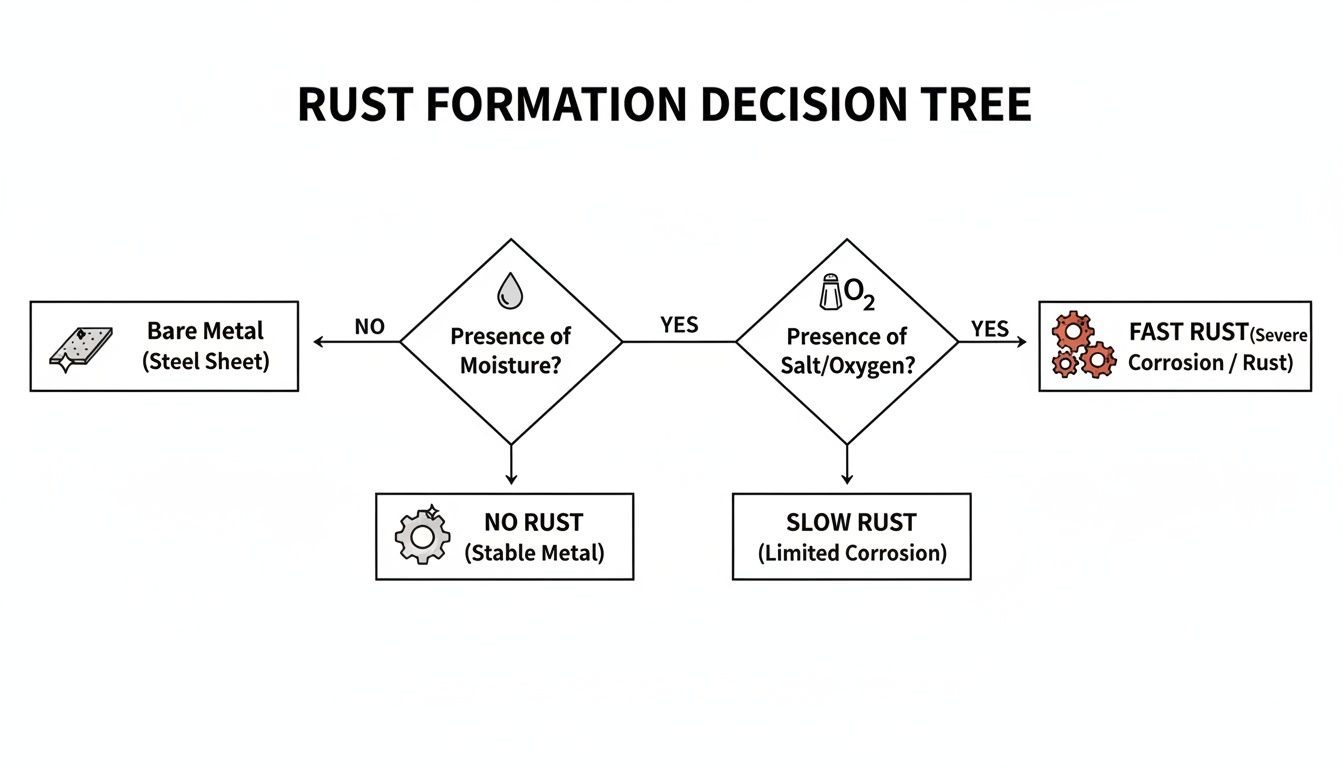
The key is to create a barrier that keeps one of those ingredients away from your car’s steel. That's what all these treatments are designed to do.
Annual Oil-Based Sprays
The classic oil spray is a go-to for a reason, especially around here. It involves misting a light, drippy oil into every possible corner of your car's undercarriage—think inside the frame, behind body panels, and along door seams.
The real magic of this method is its ability to "creep." That oil doesn't just sit there; it slowly migrates into tiny crevices and welded seams that thicker coatings can't touch. As it spreads, it pushes out any trapped moisture, stopping rust before it even has a chance to form.
Pros and Cons of Oil Sprays
- Pro: Gets into all the hidden spots where rust loves to start.
- Pro: The coating stays "live" and can self-heal over small nicks and scrapes.
- Con: It’s messy. Expect some dripping for a day or two, so maybe avoid parking on your brand-new driveway right after.
- Con: It’s an annual job. You have to reapply it every year to keep the protection strong.
This approach is fantastic for both new and older vehicles because it can actually stop existing surface rust in its tracks while protecting clean metal.
Dripless Wax-Based Coatings
If the thought of oil drips makes you cringe, a dripless wax-based coating is a great alternative. This stuff is applied as a liquid but quickly cures into a tough, dry, waxy film. The result is a clean, solid seal over your car's underbody.
Because it doesn't drip, the finish is much neater from the get-go. It's also a bit more resilient against being washed away by road spray. The trade-off? Wax doesn't have the same "creeping" or self-healing ability as oil.
Think of a wax coating as a hard shell for your car's underside. It’s excellent at deflecting gravel and road grime, but if that shell gets chipped, the metal beneath is left exposed.
That’s why yearly inspections are a must to touch up any dings or scrapes. Even if a brand promises multi-year protection, a quick check-up each fall is just smart practice in a salt-heavy region like Ontario.
Permanent Tar-Based Undercoatings
You’ve probably seen this thick, black coating on heavy-duty truck frames. Permanent tar or rubberized undercoatings provide the toughest physical barrier you can get, standing up incredibly well to rocks and abrasion.
But there's a huge catch. If this hard shell is applied incorrectly, or if it cracks over time, it can become a rust trap. Moisture and salt can sneak in through a tiny chip and get locked against the metal, causing serious corrosion that you won't see until it’s a major structural issue.
These permanent solutions are generally best for brand-new vehicles where the metal is perfectly prepped and clean. The principles are similar to other protective industrial painting processes, where surface preparation is everything.
To help you decide, here’s a quick-glance table comparing these professional rust prevention methods side-by-side.
Comparison of Professional Rust Prevention Treatments
| Method | Type | How It Works | Typical Cost | Longevity | Best For |
|---|---|---|---|---|---|
| Annual Oil Spray | Oil-Based Liquid | Creeps into seams and crevices, displaces moisture, and self-heals minor abrasions. | $130 – $200 | 1 Year | All vehicles (new and used); stopping existing surface rust. |
| Dripless Wax Coating | Wax-Based Sealant | Forms a clean, dry, hard barrier that resists wash-off and physical abrasion. | $150 – $250 | 1 Year (annual inspection recommended) | Drivers wanting a less messy application on new or rust-free cars. |
| Permanent Undercoating | Tar/Rubberized | Creates a thick, permanent, hard shell for maximum rock and abrasion protection. | $500 – $1,200+ | 5+ Years (with inspections) | Brand-new vehicles, truck frames, and heavy-duty applications. |
Ultimately, any reputable aftermarket treatment is a smart move here in Ontario.
The Verdict on Protection Methods
Let's be blunt: in Canada, rust is a financial and safety nightmare. Here in Ontario, our cars are bathed in salt for months on end. A study referenced by Transport Canada confirmed that professional rust treatments lead to a major reduction in corrosion, especially on critical parts like brake lines and rocker panels. Those are the kinds of failures that can get a car taken off the road.
Beyond safety, there’s your wallet. Rust damage can vaporize a car’s resale value by as much as 20%. On a $45,000 SUV, that’s a $9,000 loss purely from corrosion. For anyone in Whitby investing in a new vehicle, an annual rustproofing service is one of the wisest financial decisions you can make.
While undercoating handles the bottom, don't forget about the top. The first line of defence is your paint. Understanding your options for protecting it is key to a complete strategy. Check out our guide on choosing between ceramic coating vs PPF to see how you can stop the chips and scratches where rust often gets its start.
Protecting Your Paint From Chips and Scratches
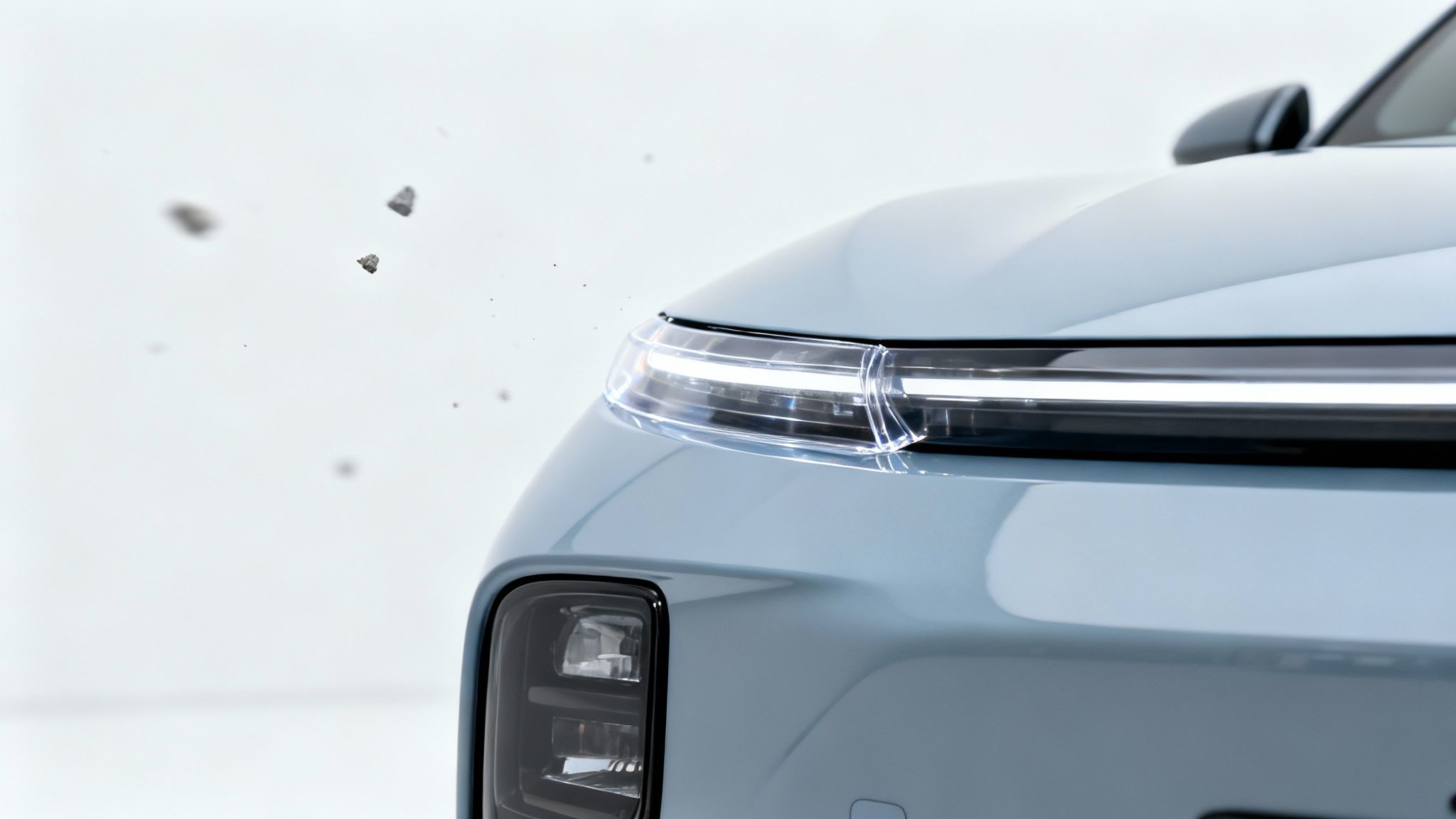
While treating your car’s underbelly is vital, don't forget about its most visible line of defence: the paint. Think of your vehicle's paint and clear coat as a sealed shield. All it takes is one stone kicked up on the 401 to breach that shield, exposing the bare metal to moisture, salt, and the elements.
That tiny chip is exactly where corrosion gets its foothold. So, reinforcing this outer shield isn't just a suggestion—it's a critical part of a complete rust prevention strategy. Today's solutions go way beyond a simple coat of wax, offering serious, long-term protection against the daily abuse our cars face on the road.
Keeping your vehicle's exterior in top shape isn't just about looking good. It’s about stopping rust before it ever has a chance to start by preserving the integrity of the metal panels themselves.
Paint Protection Film: The Invisible Armour
When it comes to safeguarding your car’s finish, Paint Protection Film, or PPF, is arguably the most effective weapon in the arsenal. It’s a transparent, incredibly tough urethane film that we professionally apply to the high-impact areas of your vehicle.
Think of it as a clear, invisible suit of armour for your car. It’s engineered to absorb the impact from flying road debris—stones, gravel, you name it—preventing them from chipping or scratching the paint underneath.
We see the most damage in a few key areas, which is why we recommend applying PPF to:
- The Front Bumper: It’s the leading edge, taking the brunt of every drive.
- The Full Hood and Fenders: Stones and debris kicked up by trucks almost always land here.
- Side Mirrors: They’re prime targets for small rocks and even bug splatter.
- Rocker Panels: The lower sides of your car get blasted by debris from your own tires.
One of the coolest features of modern PPF is its self-healing ability. Minor scuffs and light scratches on the film can actually vanish when exposed to a bit of heat, like the warmth from the sun or your engine. This technology is a game-changer and a key part of the best rust prevention for cars that see a lot of highway miles. You can dive deeper into its benefits in our ultimate guide to Paint Protection Film.
Ceramic Coatings: The Hydrophobic Shield
Another powerful tool in our paint protection lineup is a professional-grade ceramic coating. This isn't your grandfather's car wax. Unlike a wax that just sits on top of the paint, a ceramic coating is a liquid polymer that chemically bonds with your car’s clear coat, creating a super-durable, hardened layer of protection.
Its biggest claim to fame is its incredible hydrophobicity. In simple terms, it makes water run for the hills. Water beads up instantly and sheets right off the surface, taking dirt, salt, and grime along with it.
A professionally applied ceramic coating makes washing your car incredibly easy. Corrosive gunk like road salt and bird droppings has a tough time sticking to the slick surface, which means it has less time to eat into your clear coat.
While a ceramic coating doesn't have the impact resistance of PPF, it creates a tough barrier against chemical etching and UV damage. And the side benefit? It delivers a deep, candy-like gloss that old-school waxes just can't touch.
The Power of a Consistent Wash Routine
Your vehicle’s paint is its first defence, but it can’t do the job alone, especially here in Ontario. Rust formation slows way down when humidity is below 55%, but around Whitby, we’re often way above that, particularly in the spring and fall.
What does that mean for your car? Any chip or scratch that exposes bare metal can start to oxidize almost immediately once moisture and salt enter the picture.
This is why a consistent wash routine is so critical. We always tell our clients to wash their vehicles weekly during the salt season. Pay special attention to the wheel wells and undercarriage, where that salty slush loves to hide. A fresh layer of wax or sealant every month also helps maintain a water-repellent surface.
For those who go the extra mile by combining PPF on high-impact zones with a diligent wash schedule, the reward is a car that not only looks incredible but also holds significantly more of its resale value down the road.
A Year-Round Rust Prevention Checklist
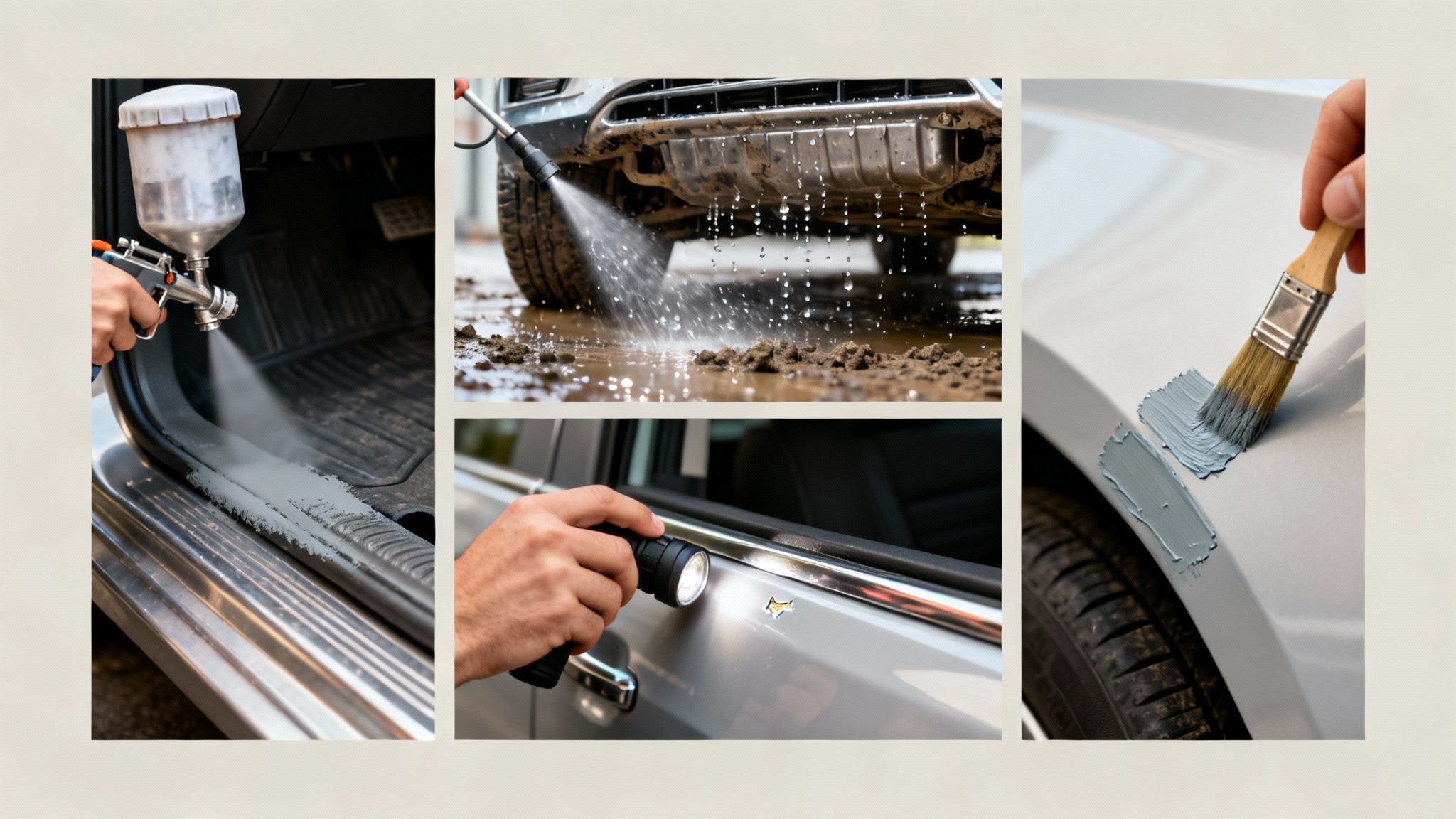
Keeping your car rust-free isn't a one-shot deal. It's an ongoing commitment, a bit like keeping yourself in shape. You wouldn't expect one trip to the gym to last a lifetime, and the same goes for protecting your vehicle from corrosion.
This simple, season-by-season checklist makes it easy to stay on top of things. By matching your car care to the time of year, you can proactively fight off rust before it even thinks about starting. Think of these habits as the perfect backup for any professional rustproofing you've had done—together, they create a nearly unbeatable defence.
Fall: The Pre-Winter Preparation
If you live in Ontario, fall is crunch time for rust prevention. Before the first salt truck even rolls out, your car needs to be ready for battle. This is your window to get its armour in place.
Your number one job is to create a tough barrier against the slush and salt that are just around the corner. A professional undercoating or oil spray is the single most important thing you can do. It's what shields your car's exposed underbelly from the winter onslaught.
- Schedule Professional Undercoating: Seriously, book it now. Whether you choose an oil-based or wax-based treatment, this is a must-do for driving in the Durham Region.
- Clear Out Debris: Get all those wet, decaying leaves out of the cowl (the area under your windshield wipers), door jambs, and trunk seals. They're notorious for trapping moisture right up against the metal, which is a recipe for rust.
- Inspect and Touch Up Paint: Give your car a good walk-around. Find every little paint chip and scratch from the past year and seal them with a touch-up pen. It’s a small job that prevents big problems once winter moisture arrives.
Winter: The Salt Defence Season
During the winter, you’re playing defence. Your only mission is to fight back against the relentless attack of road salt. The liquid brine they spray on roads these days is nasty stuff—it clings to everything and is incredibly corrosive. That means you have to be obsessive about washing it off.
Don't let that salty grime build up on your vehicle. A weekly wash is your best friend during winter. A clean car is a protected car.
Consistent cleaning is how you survive the season without your car turning into a rust bucket. You'll want to focus on the spots where all that slush and salt love to hide.
- Wash It Often: Head to the car wash at least every 7-10 days. Always pick the option with a high-pressure undercarriage spray. You have to blast that salt off the frame, suspension, and brake lines.
- Check the Wheel Wells: Snow and ice get packed into your wheel wells and act like a sponge, holding salt directly against the metal fenders. Kick it out or spray it clean every chance you get.
Spring and Summer: The Clean-Up and Inspection
Once the snow melts and the salt trucks are parked for the season, it’s time for a deep clean and a thorough inspection. Spring is your chance to wash away the last of winter's grime and see if it left behind any battle scars.
This is the perfect time for a good hand wash, where you can get up close and see every inch of your car. Look for new paint chips from road gravel and sand. A regular visual check is a key part of any good preventive maintenance for vehicles plan. Then, use the dry summer weather to handle any touch-ups or more serious paint repairs.
Choosing Your Partner for Rust Prevention
When it comes down to it, the best way to stop rust isn't about a single magic product. It’s about building a smart, layered strategy. Think of it as a one-two punch: a professional-grade treatment combined with your own consistent care at home. Together, they create a powerful shield against corrosion.
Professional services like undercoating or Paint Protection Film (PPF) are your frontline defence. They seal off the most vulnerable, hard-to-see parts of your vehicle from the constant attack of moisture and road salt. Your part of the deal is to keep that shield strong with regular washing and quick inspections, especially during our tough Ontario winters.
This is where having a trusted expert in your corner really pays off. You need a partner who gets the challenges of driving here and can point you toward the right solutions for your specific car and how you use it.
Your Local Whitby Rust Prevention Experts
For drivers in and around Whitby, that's us. At Carmedics Autowerks, we offer a full range of services designed to protect your investment. We don't believe in one-size-fits-all fixes; we work with you to build a protection plan that actually makes sense.
Here's how we can help:
- Expert PPF Installation: We meticulously apply high-quality Paint Protection Film to guard your paint against the stone chips and scratches that give rust its first foothold.
- Collision and Rust Repair: If corrosion has already started, our team has you covered. As a top auto body shop in Whitby, we have the skills to properly repair rust damage and bring back your vehicle’s strength and good looks.
A proactive plan is always easier and cheaper than reacting to damage later. Protecting your car from the start is the best way to preserve its value, safety, and appearance for years to come.
Your vehicle is a huge investment. Let us help you protect it with a professional, long-term strategy that gives you real peace of mind. Don’t wait for that first rust bubble to appear. Get in touch with the Carmedics Autowerks team today for a personalized consultation, and let's build a rust prevention plan that keeps your car looking great.
Common Questions About Car Rust Prevention
When you're trying to protect your vehicle, a lot of questions can pop up. Especially when it comes to rust, getting straight, honest answers helps you make the right call for your car. Here are a few of the most common questions we get from drivers right here in Whitby.
Is It Too Late to Rust Proof an Older Car?
Not at all. It's a common myth that once a little rust shows up, the fight is over. While it's always best to start protecting a car when it's new, rust-proofing an older vehicle is one of the smartest things you can do to keep it on the road longer.
First, a professional technician will power wash the undercarriage to get rid of any dirt, grime, and loose rust scale. After that, they'll apply a rust-inhibiting treatment like an oil spray. This stuff is designed to creep into seams and crevices, neutralize the existing surface rust, and stop it from spreading. It's how you keep a small spot from turning into a major structural headache.
How Often Should My Car Be Rust Proofed?
For any car that sees a salty Ontario winter, an annual treatment is the gold standard. Oil-based sprays are made to be reapplied every 12 months. This yearly top-up makes sure the protective barrier stays active and can continue to work its way into all the hidden, hard-to-reach spots.
Even if you opt for a thicker wax or tar-based coating that claims to last longer, getting an annual inspection is still a great idea. A technician can check for any chips or scrapes from road debris and touch them up. Just think of it as an annual check-up for your car's frame.
Simply put, consistency is key. An annual application maintains a complete, unbroken shield against moisture and salt, which is crucial in a region with heavy road brine usage.
Are DIY Rust Proofing Spray Cans Effective?
Those aerosol cans from the auto parts store have their uses, but they can't replace a professional job. They're handy for tiny touch-ups, like hitting a rock chip you just fixed on your hood.
But a spray can simply can't provide the same deep-down coverage. A professional shop uses high-pressure wands that "fog" the rust-proofing liquid inside frame rails, rocker panels, and other hidden cavities. These are the places where rust loves to start, completely out of sight, and you just can't get to them with a can. If you're already facing some corrosion, understanding effective rust removal methods is a good first step before applying any protection.
Keeping the outside of your car protected is just as important, too. If you want that perfect showroom shine, take a look at our guide on finding the best wax for black cars and other dark finishes.
At Carmedics Autowerks Inc, we provide professional solutions to keep your vehicle protected year-round. From advanced paint protection to expert advice, we're here to help you preserve your investment. Visit us at https://www.carmedicsautowerks.com.com to book your consultation today.