


When your car won’t start, the first question on your mind is usually, "How much is this going to cost me?" In Whitby, the average car battery replacement cost usually falls somewhere between $225 and $400+, once you factor in the new battery, labour, and taxes.
That price has definitely crept up over the last decade, thanks to rising material costs and the increasing complexity of modern vehicles. The final number on your invoice really boils down to your specific car and the type of battery it needs to run properly.
Your Guide to Car Battery Replacement Costs
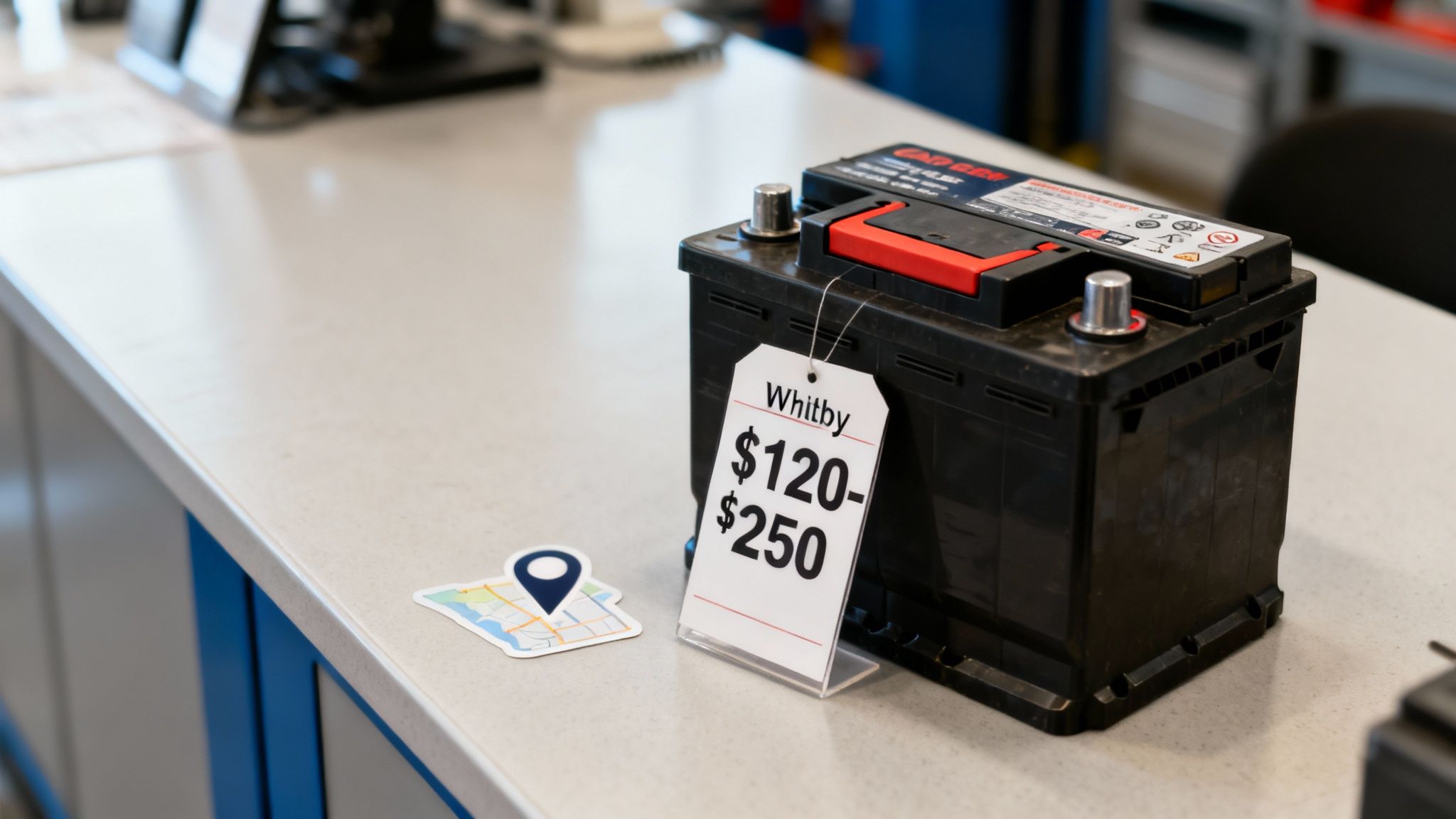
We've all been there—you turn the key, and instead of the engine roaring to life, you get that dreaded click… click… silence. It’s the tell-tale sign of a dead battery. While your immediate problem is just getting the car going, the next thought is always about the repair bill.
Understanding the cost isn’t about a single magic number. It's about knowing what you’re actually paying for.
Think of it like buying a pair of winter boots. A basic, no-frills pair will keep your feet dry, but a high-performance, insulated pair designed for extreme cold is going to cost quite a bit more. Car batteries work the same way. A simple battery for your trusty 2008 sedan will be far less expensive than a specialized AGM (Absorbent Glass Mat) battery needed for a brand-new SUV loaded with start-stop technology and a dozen computers.
The Shifting Price Landscape
It wasn't that long ago that a new battery was a fairly small expense. But as cars have evolved, so have the costs to maintain them.
Back around 2014, a professionally installed 12-volt battery might have set you back about $120 to $150. Fast forward to today, and the national average for a standard car battery has jumped to the $225–$300 range. For newer vehicles that demand premium AGM batteries, that price tag often climbs to $320–$400, especially here in the GTA where skilled labour rates reflect the complexity of the job.
This jump in price is exactly why a battery replacement should be seen as a critical service, not just a simple part swap. A proper installation protects all the sensitive electronics in your car and includes checks to make sure other parts, like your alternator, are doing their job. This comprehensive approach is a huge part of our philosophy on preventive maintenance for vehicles.
Your car's battery is the heart of its electrical system. Investing in a quality replacement and professional installation isn't just about starting your car; it's about protecting the intricate network of computers and sensors that keep your vehicle running safely and efficiently.
Knowing what to expect makes the whole process less stressful. In the next sections, we'll break down exactly what goes into the final cost—from the battery itself to the detailed steps our technicians at Carmedics Autowerks take to get it done right.
What Goes Into the Final Price of a New Car Battery?
Trying to pin down the cost of a new car battery can feel a bit like guesswork. Your neighbour might mention one price, while a quick online search shows something completely different. That’s because not all car batteries are the same—far from it. Several key factors determine the final number on your invoice.
Knowing what these factors are puts you in the driver's seat. It helps you understand what you're paying for and ensures you get the right battery for your car's specific needs. Let's pull back the curtain on the four main things that shape the cost.
Battery Chemistry: The Tech Inside Matters Most
The single biggest factor driving the price is the technology built into the battery itself. Think of it like buying running shoes. A simple pair is fine for a walk around the block, but if you're training for a marathon, you need something far more advanced. It’s the same with car batteries.
-
Flooded Lead-Acid Batteries: These are your classic, no-frills "running shoes." They've been around forever, are very reliable for older cars with fewer electronics, and sit at the most affordable end of the price range.
-
Absorbent Glass Mat (AGM) Batteries: This is the high-performance gear. Modern cars are packed with power-hungry features—start-stop technology, huge touchscreens, and dozens of sensors. AGM batteries are designed to handle that massive electrical load, but all that advanced engineering comes at a cost, often 50% to 100% more than a standard battery.
You can't just pick the cheaper option. Putting a standard battery in a car that needs an AGM is a recipe for disaster; it will fail quickly, leaving you with another replacement bill way sooner than you expected.
A car battery isn't a one-size-fits-all part. It's a critical component engineered to match your vehicle's electrical demands. Using the right type is non-negotiable if you want your car's systems to run reliably.
Group Size: Getting the Right Fit
Next up is the battery group size. This is just a standard code for the battery’s physical dimensions—its length, width, and height—and where the positive and negative posts are located.
Your car’s battery tray was built to hold one specific group size. You can't just wedge a bigger one in there or let a smaller one rattle around. The terminals have to line up perfectly with your car's cables.
While bigger batteries often cost more, the real price driver here is how common that size is. A group size made for millions of Honda Civics will always be cheaper than a specialty size for a low-volume European sports car. It's a classic case of supply and demand, and a great example of how OEM vs. aftermarket parts affect repair costs.
Cold Cranking Amps: Power for a Whitby Winter
Anyone living in Whitby knows what a frigid January morning feels like. That's where Cold Cranking Amps (CCA) become incredibly important. This number tells you how much power the battery can deliver to start your engine when it's truly cold (at -18°C, to be exact).
The higher the CCA rating, the better your car will turn over on those brutal winter days. A battery with a higher CCA has more lead plates and a beefier internal design, which costs more to produce. You always have to meet your car's minimum CCA requirement, but grabbing a battery with a little extra CCA is cheap insurance against getting stranded in a cold snap.
Warranty Length: You're Paying for Peace of Mind
Finally, the warranty tells you a lot about the battery's quality. A manufacturer offering a 5-year full replacement warranty has built a much more durable product than one that only comes with a 1-year guarantee.
Of course, a longer warranty means a higher upfront price. But think of it as an investment. That premium battery might cost more today, but it could easily outlast two cheaper ones. When you factor in the hassle, towing bills, and lost time from a dead battery, paying a bit more for a solid warranty starts to look like a very smart move.
What Happens During a Professional Battery Replacement
When you bring your vehicle to a professional shop like ours, you're paying for more than just a new battery. The labour portion of your car battery replacement cost covers a careful, multi-step process that protects your car’s sensitive electrical systems and makes sure the new battery performs perfectly for years to come. It’s the difference between just swapping a part and performing a complete system service.
The process starts the moment your car rolls into our bay. A technician's first job isn't to rip out the old battery, but to play detective and figure out why it failed in the first place.
This chart breaks down the key factors—like chemistry, size, and power—that a technician considers when picking the right battery for your specific vehicle.
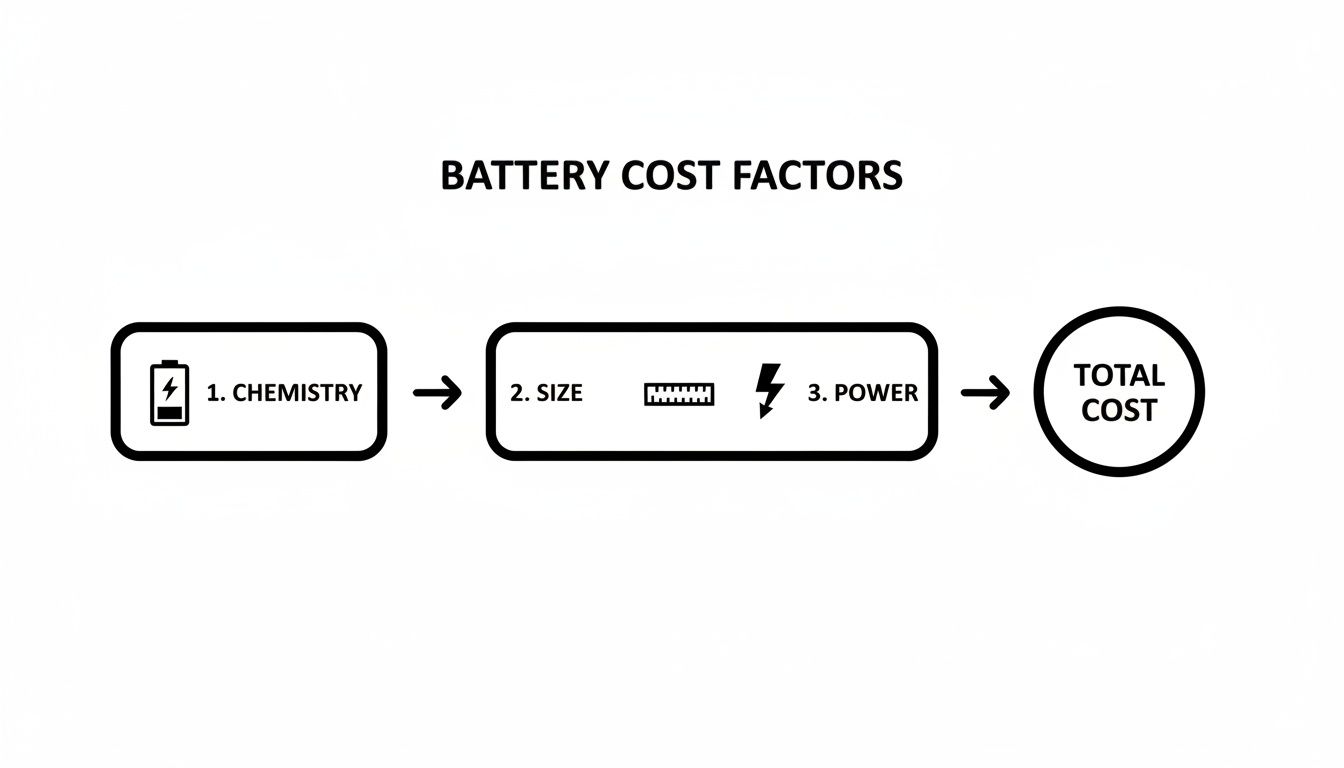
Each one of these details plays a huge part in matching the battery's capabilities to what your car needs, which directly impacts the final price.
Comprehensive System Diagnostics
Before a single wire is touched, a certified technician runs some crucial diagnostic checks. A dead battery is often just a symptom, not the root cause of the problem. If we don't fix what’s really wrong, your brand-new battery could fail way too soon, leaving you stranded all over again.
This diagnostic phase usually includes:
- Alternator Testing: The tech will check if your alternator is putting out the correct voltage. A weak alternator can't properly charge the battery, leading to its early demise.
- Starter Draw Test: We'll also test the starter motor to make sure it isn’t drawing too much power. An excessive draw can drain a new battery and points to a separate mechanical issue.
- Parasitic Drain Test: This test is like a stakeout, hunting for any sneaky components that might be drawing power even when the car is off, slowly killing the battery overnight.
These checks are fundamental to any reputable service. Finding the right automotive service centre near me means finding a team that looks at the whole picture, not just the obvious part.
The Installation Process Done Right
Once the electrical system gets a clean bill of health, the physical replacement begins. Trust me, this is way more involved than just loosening a couple of clamps.
Technicians will often connect a temporary power source to your vehicle's computer. This vital step, often called using a "memory saver," stops your car from losing important settings for the radio, seats, and even critical data for the engine and transmission.
Next, the old battery is carefully taken out. The battery terminals and cable ends are then scrubbed clean to get rid of any corrosion—that white or greenish powder that acts as an insulator, preventing a solid connection and proper charging. After cleaning, we apply a special anti-corrosion spray or grease to protect the new connection points.
The Critical Final Step: Battery Registration
For most modern vehicles, the job isn't finished once the new battery is secured. The final, and arguably most important, step is battery registration, also known as a BMS (Battery Management System) reset.
Think of it this way: your car’s computer is smart. It learns to adjust its charging strategy as the old battery gets weaker, sending more power over time to compensate. If you just drop in a new battery without telling the computer, it will keep overcharging it, which can drastically shorten its lifespan.
A BMS reset uses specialized diagnostic tools to tell the vehicle's computer, "Hey, I have a new, healthy battery. Please reset the charging system back to its original factory settings." This one step can be the difference between a battery lasting five years or failing in less than one.
This is exactly where the value of professional service shines. It’s not just about muscle; it’s about having the right tools and technical know-how to properly introduce the new battery to your vehicle’s sophisticated electronic brain. That’s what justifies every dollar of the labour cost.
DIY vs Professional Service: Which Is Right for You?
When your battery gives up the ghost, the first question many drivers ask is, "Can I just do this myself?" On paper, it seems like a simple way to sidestep labour fees and save on the total car battery replacement cost. And for some older cars, it can be.
But modern vehicles are a different story. The decision isn't just about saving a few bucks anymore. It’s a serious trade-off between cost, convenience, safety, and the very real risk of causing expensive damage to your car’s sensitive electronics. Before you even think about grabbing a wrench, let's break down what each path really involves.
The Appeal and Pitfalls of a DIY Replacement
The biggest motivation for a DIY battery swap is obvious: saving money. You buy the battery, you provide the labour, and you pocket the difference. If you're working on an older, mechanically simple car and you're comfortable under the hood, this can be a perfectly reasonable weekend project.
The problem is, the risks have grown significantly over the years, especially with newer cars packed with technology. One wrong move can turn a simple fix into a thousand-dollar headache.
Here's what can go wrong:
- Risk of Electrical Damage: It’s shockingly easy to accidentally touch a metal wrench to the wrong terminal. That little spark can send a power surge through your vehicle, potentially frying the main computer (ECU) or other expensive control modules.
- Loss of Vehicle Memory: Simply disconnecting the old battery can wipe out everything from your radio presets to critical data your engine and transmission use to run smoothly. You'll need a special memory-saver tool to prevent this.
- Physical Challenges: Car batteries are heavy, clumsy, and often wedged into tight, awkward spaces. Lifting one incorrectly is a great way to hurt your back, and dropping it can create a dangerous, corrosive acid spill.
For most modern vehicles, replacing a battery isn't just a mechanical swap anymore. It’s an electronic procedure that requires the right tools and knowledge to tell the car's computer systems that a new battery has been installed.
The Value of Professional Service
When you bring your car to a trusted shop, you're not just paying someone to trade out a part—you're paying for expertise and peace of mind. A certified technician does so much more than a simple swap. They run a whole series of checks to protect your vehicle and make sure the new battery will perform reliably for years to come.
This is where the real value is. A professional service safeguards your car's complex systems and confirms the battery was truly the root of the problem. The experience of a qualified mechanic in Whitby ensures every step, from the initial diagnosis to registering the new battery with the car's computer, is done right.
Comparing DIY vs Professional Battery Replacement
Deciding between doing it yourself and calling in the pros can be tough. This side-by-side comparison should help you figure out which approach makes the most sense for you and your vehicle.
| Factor | DIY Replacement | Professional Service (Carmedics Autowerks) |
|---|---|---|
| Cost | Lower upfront cost (parts only). | Higher cost (parts + labour), but prevents expensive mistakes. |
| Time | Can take 1-3 hours, depending on experience and vehicle complexity. | Typically under an hour for a quick, efficient, and correct installation. |
| Safety | Risk of electric shock, acid spills, and damage to vehicle electronics. | Performed by trained professionals using proper safety gear and procedures. |
| Correctness | High risk of skipping critical steps like BMS reset or terminal cleaning. | Guarantees proper installation, system diagnostics, and battery registration. |
| Warranty | Parts warranty only; no guarantee on your labour or any resulting damage. | Full warranty on both the battery and the installation workmanship. |
| Disposal | You are responsible for properly and legally disposing of the old, hazardous battery. | We handle the environmentally safe disposal of your old battery for you. |
In the end, it's your call. If you've got an older car and you know your way around an engine bay, a DIY replacement might work out. But for most drivers with modern vehicles, the expertise, safety, and guaranteed correct installation from a professional service is worth far more than the cost of labour.
The Different Cost of Hybrid and EV Batteries
When we talk about car battery replacement cost, the conversation changes completely when we move from regular petrol cars to hybrids and Electric Vehicles (EVs). It's a whole different ball game.
Yes, every car, including hybrids and EVs, has a standard 12-volt battery to power things like your radio and lights. But hybrids and EVs also have a massive, high-voltage traction battery pack that actually makes the car go. It's really important to know these two are not the same.
Think of it this way: the 12-volt battery is like the small battery in your TV remote. The high-voltage traction battery? That's the power station for your entire neighbourhood. The difference in cost and complexity is just as big.
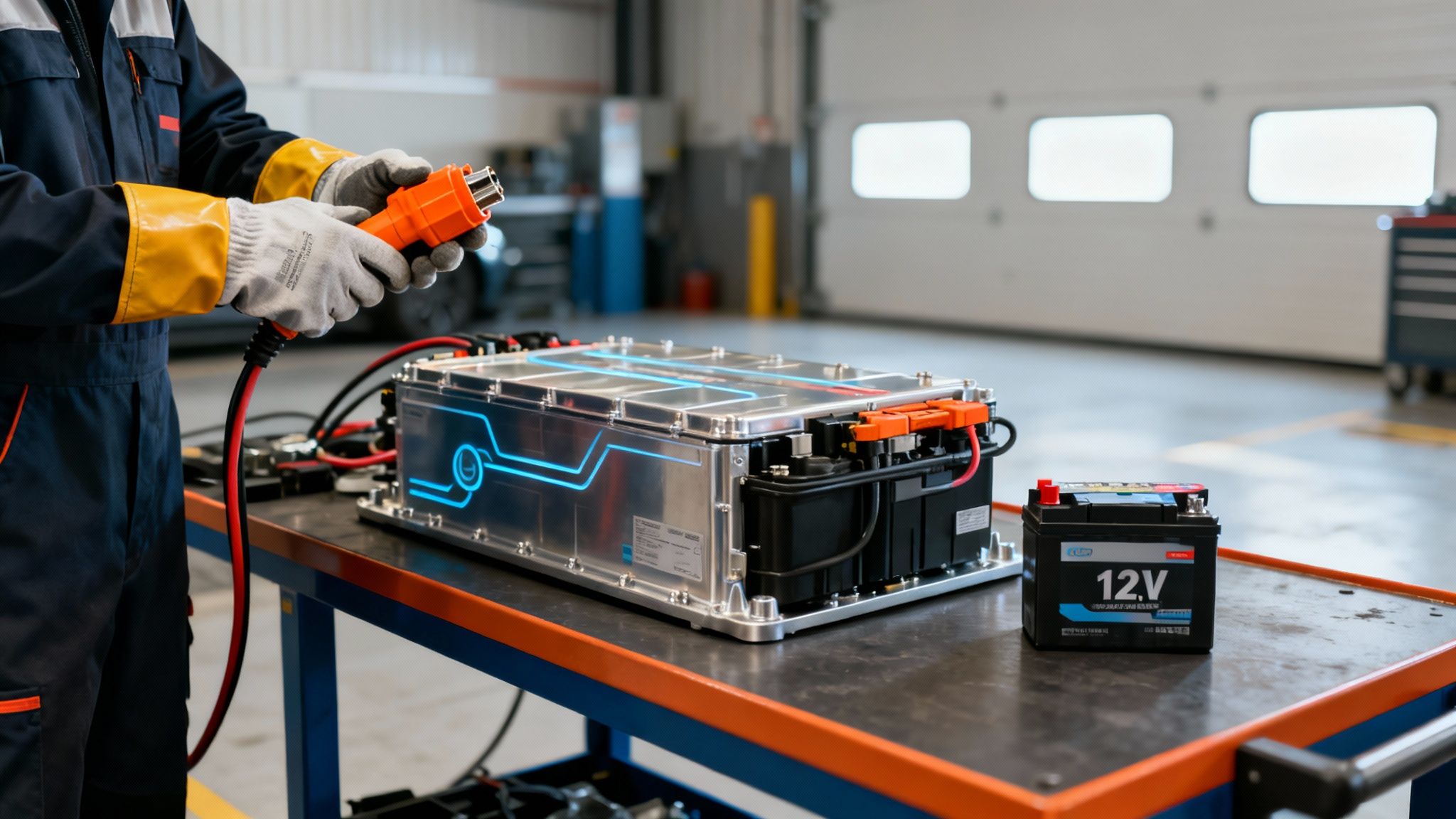
Why Are EV and Hybrid Batteries So Expensive?
The sticker shock is real when it comes to replacing a high-voltage battery. The price tag boils down to a few key things: the incredible technology packed inside, the specialized labour needed to handle it, and the high cost of the raw materials.
These aren't just simple lead-acid boxes. We're talking about sophisticated lithium-ion energy systems made up of hundreds, sometimes thousands, of individual cells. They have complex cooling systems and are run by intricate software that manages everything.
The traction battery in an EV or hybrid is the single most expensive and technologically advanced component in the entire vehicle. Replacing it is a major repair, not a simple maintenance task like swapping a standard battery.
On top of that, the work itself demands highly trained technicians certified to work safely with high-voltage systems. This is definitely not a DIY job for the weekend. It requires special tools, safety gear, and a deep understanding of your vehicle's complex electrical system. That expertise and all the safety measures are a big part of the final bill.
Realistic Cost Expectations for Traction Batteries
So, what kind of numbers are we actually looking at? For drivers here in Ontario, replacing a high-voltage traction battery can be a serious expense.
Based on data from Canadian dealerships and EV specialists, you can expect replacement quotes anywhere in the CAD $5,000–$20,000 range, depending on the car. For popular EVs like a Tesla Model 3 or Model S, the total cost for a new pack often climbs past CAD $15,000 after you factor in parts, labour, and taxes.
With specialized EV labour rates in urban Ontario running between CAD $180–$250 an hour, the labour alone can easily add $1,000–$2,500 to the bill.
The good news? These replacements are incredibly rare. Most manufacturers provide a warranty that covers the traction battery for at least eight years or 160,000 kilometres. It also helps to understand the typical electric car battery life expectancy to see just how long they last. While the replacement cost is high, the durability of these batteries means it's a bill most EV owners will never have to worry about.
So, Why Bring Your Car to Us in Whitby?
All these details about car battery replacement cost can seem like a lot to juggle, but it really boils down to something simple: you need the right parts installed by people who know what they're doing. Getting a handle on everything from battery types to professional diagnostics is what helps you make a smart call for your car. This isn't just about getting your car to start tomorrow; it's an investment in its long-term reliability.
Here at Carmedics Autowerks in Whitby, that's a responsibility we don't take lightly. We’re focused on providing solutions that last, built on clear communication, top-quality parts, and doing the job right the first time.
It's More Than Just Swapping a Battery
When you bring your vehicle to our shop, you're getting a team that sees the whole electrical system, not just the dead battery. A simple swap is easy, but it’s often not the complete fix.
Our technicians run full diagnostics to make sure your alternator is charging properly and your starter is in good shape. Why? Because a faulty alternator can kill a brand-new battery in no time, and we don't want you coming back for the same problem. This meticulous approach is central to all our certified auto repair services in Whitby.
We only install high-quality batteries that are perfect for your vehicle’s needs, so you can count on reliable starts and a long service life.
At Carmedics Autowerks, our aim is to give you genuine peace of mind. A proper battery installation does more than just get you back on the road—it protects your car’s sensitive electronics and ensures you won't be stranded again in a few months.
Your Local Go-To for Honest Auto Care
We blend our technical know-how with a real commitment to keeping you in the loop. We’ll show you what we find, explain your options clearly without any high-pressure sales tactics, and give you a straightforward quote before we pick up a single tool. Think of us as your trusted partner for keeping your car safe and running smoothly.
Don’t get stuck guessing what’s wrong or what it’ll cost. For an accurate, honest quote that’s specific to your car, give Carmedics Autowerks a call today. We’re here to give you and your vehicle the professional care you deserve.
Got Questions About Car Battery Replacement? We’ve Got Answers.
When it comes to car maintenance, the battery seems to spark a lot of questions. To help you out, we’ve put together answers to the most common queries we hear from drivers right here in our Whitby shop. Think of this as your quick guide to understanding what’s going on under your hood.
How Long Does a Car Battery Typically Last in Ontario?
Here in Ontario, our weather really puts car batteries through their paces. Between the bone-chilling winters and sweltering summer heat, a battery has a tough life. Generally, you can expect a new car battery to last somewhere between three and five years.
Extreme temperatures are the real killer. Cold makes your engine oil thick and syrupy, forcing the battery to work much harder to get things started. On the flip side, intense summer heat can actually accelerate the chemical reactions inside, causing it to wear out faster. That's why regular checks are so important in our climate.
What Are the Early Warning Signs of a Failing Battery?
Your car is pretty good at giving you a heads-up before the battery completely dies. Learning to spot these clues can be the difference between a quick trip to the shop and a long wait for a tow truck.
Keep an eye out for these tell-tale signs:
- Slow Engine Crank: Does your engine sound tired or lazy when you turn the key? If it’s taking longer than usual to start, your battery is probably losing its punch.
- Dimming Lights and Electrical Gremlins: Have you noticed your headlights dimming when you start the car or flickering at a stoplight? That’s a classic sign of a weak battery struggling to keep up with the electrical demand.
- The Dreaded Dashboard Light: That little battery-shaped warning light is your car's way of telling you something's wrong with the charging system. Don't ignore it!
- Corrosion Buildup: See any white, blueish, or chalky fluff around the battery terminals? That’s acid corrosion, and it can stop the electricity from flowing properly. It needs to be cleaned off right away.
Think of these signs as your car's way of asking for help. A slow start or a flickering light might seem minor, but it's often the first step toward a much bigger headache if you ignore it.
Is the Most Expensive Battery Always the Best Choice?
Not at all. The "best" battery isn't about the price tag; it's about finding the right fit for your specific vehicle. Sure, a top-of-the-line AGM battery with a massive warranty is a fantastic piece of equipment, but it’s total overkill for an older, basic car with few electronics.
On the other hand, trying to save a few bucks by putting a standard, budget battery into a modern vehicle loaded with start-stop technology and a dozen computers is a recipe for disaster. The trick is to match the battery’s technology (like AGM vs. a standard flooded battery), group size, and Cold Cranking Amps (CCA) to what your manufacturer designed the car for. Sometimes paying a bit more for a higher CCA or a longer warranty is a wise move, but the real key is choosing the right battery, not just the most expensive one.
Still have questions, or want a professional to check your battery's health? The expert team at Carmedics Autowerks Inc is always here to help. Get in touch with us online or give us a call for honest advice and a clear, upfront quote for your specific vehicle. Learn more at https://www.carmedicsautowerks.com.com.