


That first blast of hot, stuffy air from your car's vents on a summer day isn't just uncomfortable—it's a clear signal that something's not right. When your car needs an air conditioning repair, it usually points to one of a few common problems. It could be something as simple as needing a refrigerant top-up, or it might be a sign that a key component has failed.
Knowing a bit about what's going on under the hood can make a world of difference, helping you get the right fix without the runaround.
Why Your Car's AC Is Your Best Friend in Whitby
Let's be honest, driving around Whitby during a summer heatwave with no AC is brutal. A properly working air conditioner isn't a luxury; it's essential for a comfortable and safe drive. It keeps you cool, sure, but it also helps you stay alert and focused behind the wheel.
When your AC gives out, it's more than just a sweaty inconvenience. It can impact the air quality inside your car and sometimes even hint at other mechanical issues that need a closer look.
This guide will walk you through your car's air conditioning system, not as some black box of complex machinery, but as a system you can actually understand. We'll cover everything from the early warning signs of a problem to what you can realistically expect to pay for repairs. The goal is to give you the confidence you need when you talk to a technician.
What You Will Learn
Think of this as your practical, no-nonsense guide to your car's climate control. We put it together to help you make smart decisions, whether you're a hands-on car enthusiast or just someone who wants to stay cool on the way to work.
Here’s a quick peek at what's ahead:
- How It All Works: We’ll break down your AC system in simple, easy-to-understand terms.
- Spotting the Signs: Learn to recognize the subtle hints of trouble before a total system failure.
- The Usual Suspects: We'll cover the most common reasons why car AC systems fail.
- Checks You Can Do Yourself: A few simple things you can inspect at home before heading to the shop.
Ultimately, our aim is to take the mystery out of the car air conditioning repair process. We'll introduce you to the team at Carmedics Autowerks, the go-to experts in Whitby, and show you what it takes to get that cool air flowing again. With this knowledge, you'll be prepared for any AC issue that comes your way, keeping your drives through Whitby comfortable all year long.
How Your Car's AC System Really Works
Your car's air conditioning system is a brilliant piece of engineering. Think of it less like a machine that "creates" cold air and more like a heat pump. Its real job is to grab the heat from inside your cabin and dump it outside, leaving you with that refreshingly cool air on a hot day. It’s a closed-loop system, meaning every part has to work in perfect harmony.
The magic ingredient is a special refrigerant, which acts like a sponge for heat. Its whole purpose is to absorb heat from the air inside your car and release it into the atmosphere. This is why a perfectly sealed system is so crucial for any effective air conditioning repair for a car—even a tiny leak can throw everything off.
The Heart of the System: The Compressor
Everything kicks off with the compressor. You can think of it as the engine of your AC system. When you hit that AC button, the compressor squeezes the refrigerant, which starts as a low-pressure gas, and transforms it into a hot, high-pressure gas. This step is what gets the entire heat-transfer cycle moving.
From there, this super-hot gas travels to the condenser. You'll find this part right at the front of your car, usually sitting in front of the radiator. Its job is simple: cool down the hot refrigerant. As you drive, or when the cooling fan kicks on, air rushes over the condenser's fins, pulling the heat away. This process forces the refrigerant to change from a gas back into a high-pressure liquid.
Key Takeaway: Your car's AC doesn't make cold air; it moves heat. It uses refrigerant to pull warmth out of your cabin and transfer it outside, which is why the air coming out of your vents feels so cool.
Completing the Cooling Loop
Now we have a cooled, high-pressure liquid refrigerant. It's on its way to the expansion valve (or orifice tube). This little component acts like a spray nozzle, causing a massive and sudden drop in pressure. This rapid depressurization makes the refrigerant intensely cold, turning it into a fine, low-pressure mist.
This freezing cold mist finally flows into the evaporator, a component tucked away deep inside your dashboard. The blower motor pushes the warm, stuffy air from your cabin across the evaporator's fins. The refrigerant inside absorbs all the heat from that air, and just like that, the air blowing from your vents is nicely chilled. In the process of soaking up all that heat, the refrigerant boils and turns back into a low-pressure gas, ready to head back to the compressor to start the journey all over again.
This graphic breaks down the journey from identifying symptoms to understanding potential costs and solutions.
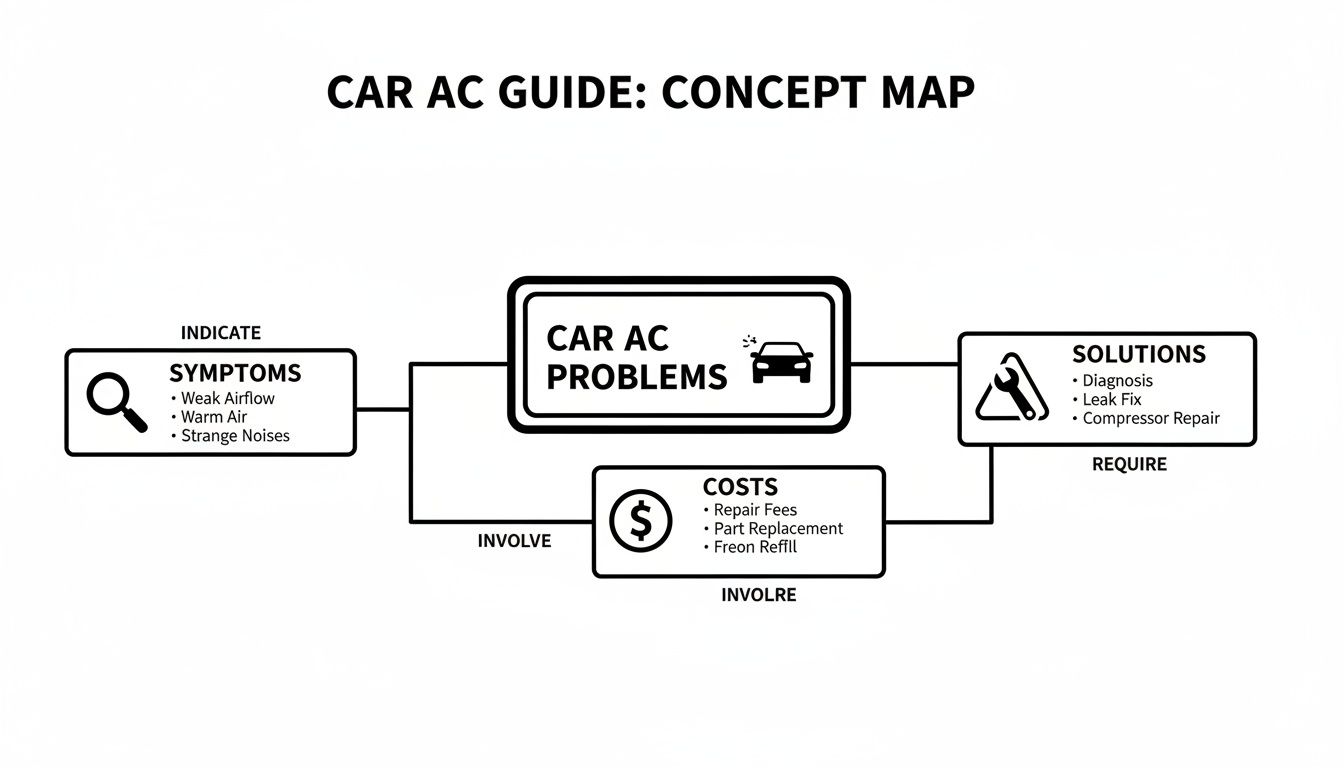
Once you understand this cycle, it’s easier to see how a single problem—like a refrigerant leak or a failing compressor—can bring the whole system to a grinding halt.
Telltale Signs Your Car AC Needs Professional Repair
Your car has a way of telling you when something’s wrong, and the air conditioning system is no different. Learning to pick up on these early warnings is the best way to sidestep a sweltering drive and a much bigger repair bill down the road. What starts as a minor quirk can quickly snowball, so it pays to be in tune with your vehicle's performance.
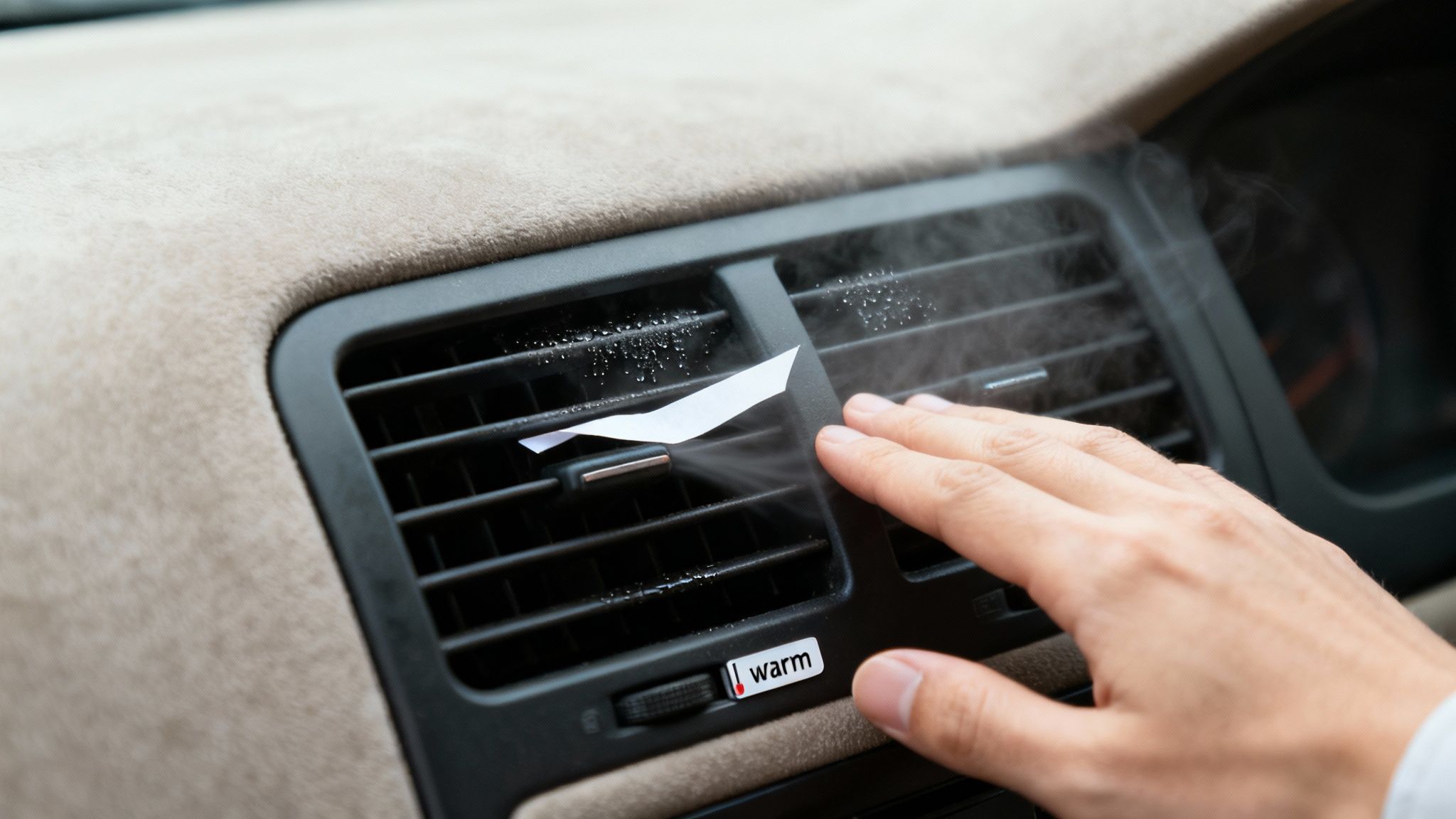
The most obvious red flag? The air just isn't cold. When you turn the AC on full blast during a hot Whitby afternoon and all you get is lukewarm air, you know there’s a problem. Most of the time, this points directly to low refrigerant, which almost always means there's a leak somewhere.
Listen for Unusual Noises
Beyond just the temperature, your ears are surprisingly good diagnostic tools. The next time you switch on the AC, turn the radio down and just listen for a moment. A failing part will often make its presence known with a distinct sound.
- Squealing or Grinding: A high-pitched squeal often points to a worn-out serpentine belt, which is responsible for turning the compressor. A deeper, more persistent grinding noise, however, usually signals a more severe problem like a failing compressor clutch or serious internal damage.
- Clicking or Rattling: If you hear rapid clicking, it could be the compressor clutch struggling to engage properly. A rattling sound might be something as simple as a loose mounting bolt, but it could also mean there's debris caught somewhere it shouldn't be.
Ignoring these sounds is a real gamble. A compressor that’s on its last legs can send tiny metal shards through the entire AC system. That turns a straightforward component swap into a complex and much more expensive air conditioning repair car service.
Pay Attention to Smells and Airflow
Another common symptom is a sudden drop in airflow. If the air coming from your vents feels weak, even on the highest fan setting, something is definitely off. It might be a simple fix like a clogged cabin air filter, but it could also indicate a dying blower motor or a blockage deep within the ducts.
And then there's the smell. If you're hit with a musty, mildew-like odour—often described as dirty gym socks—you’ve likely got mould and bacteria growing on the evaporator core. This isn't just unpleasant; it's also terrible for your in-car air quality.
AC issues are a major source of frustration for drivers. To give you an idea, California's Bureau of Automotive Repair enforcement statistics for Q1 of Fiscal Year 2025-2026 logged 109 complaints under 'Air Conditioning / Heat'. That’s a significant chunk of the 866 total complaints in that repair category. You can see how common these issues are in their full enforcement report.
Finally, a quick look under the hood can be very revealing. If you spot a greasy, oily film on any of the AC hoses or connections, you've probably found your refrigerant leak. The system's lubricant is mixed in with the refrigerant, so an oily residue is a dead giveaway that both have been escaping.
To help you connect the dots, here's a quick diagnostic chart.
Car AC Problem Diagnostic Chart
| Symptom | Potential Cause | Recommended Action |
|---|---|---|
| Air is not cold | Low refrigerant (leak), bad compressor, clutch issue | Get a professional leak test and system inspection. |
| Weak airflow | Clogged cabin air filter, failing blower motor | Check/replace the cabin filter first, then have the blower motor tested. |
| Musty/foul smell | Mould/bacteria on evaporator core | Professional cleaning of the AC system is needed. |
| Squealing noise | Worn serpentine belt or tensioner | Inspect the belt for wear and tear; replace if needed. |
| Grinding/rattling | Failing compressor, loose components | Stop using the AC immediately. Get a professional diagnosis. |
| Visible oily residue | Refrigerant/oil leak from a hose or seal | Pinpoint the leak source for repair; system will need to be evacuated and recharged. |
This table is a great starting point, but an AC system is complex. If you're experiencing any of these issues, a thorough inspection by a qualified technician is the best way to get a definitive answer and avoid further damage.
What Went Wrong? Common AC Failures and What They Cost to Fix

Knowing your AC is on the fritz is one thing, but figuring out why is the key to getting it fixed right. Most AC problems boil down to a handful of common culprits, each with its own path to repair and a different price tag. Let's break down what could be happening under your hood so you have a better idea of what to expect.
By far, the most common issue we see is a refrigerant leak. Think of all the rubber hoses, seals, and O-rings that make up your AC system. Over years of heat cycles and vibration, they can dry out, crack, and let that crucial refrigerant gas escape. It’s usually a slow process—your AC gets a little weaker each summer until it just blows warm air.
Getting a Diagnosis and an Estimate
The AC compressor is another major weak point. It’s the powerhouse of the whole system, constantly working under high pressure. Eventually, internal parts can wear out, the clutch can stop engaging, or a lack of refrigerant can cause it to run without proper lubrication. If a compressor seizes up, it can be a big deal, sometimes sending tiny metal shards through the entire system and leading to a much more complicated and expensive repair.
Here’s a look at some typical AC problems and what you might expect to pay for repairs here in the Whitby area:
- Refrigerant Leak Repair & Recharge: This is our most frequent job. We'll track down the source of the leak (usually a worn seal or a cracked hose), replace the bad part, and then fully evacuate and recharge the system. Depending on how hard the leak is to find and fix, this usually runs between $250 and $700.
- Condenser Replacement: The condenser sits right at the front of your car, making it a prime target for rocks and road debris. One good hit can cause a major leak. Swapping it out involves replacing the unit and recharging the system, typically costing between $500 and $1,200.
- Compressor Replacement: This is one of the bigger-ticket items. A new compressor, plus the labour to flush out any potential contamination and recharge the system, can range from $900 to over $2,000. The final cost depends heavily on your vehicle and whether you opt for original manufacturer or aftermarket parts. We break down the pros and cons in our guide to OEM vs. aftermarket parts.
- Electrical Gremlins: Sometimes, you get lucky. The issue might just be a blown fuse, a faulty relay, or a bad pressure switch. These are usually quick and relatively inexpensive fixes, often landing in the $100 to $300 range.
Did you know refrigerant leaks are a big deal for the environment? It’s not just about comfort. In California, a state-run program now provides nearly $1.2 million in subsidies to help drivers fix leaking AC systems, covering up to 90% of the cost. The program's goal is to stop potent greenhouse gases from escaping into the atmosphere, which just goes to show how important it is to fix those leaks promptly.
Knowing these potential costs upfront helps take the sting out of the repair bill. It gives you a clear picture of what to expect when you bring your car in for a professional air conditioning repair.
Simple DIY Checks You Can Do Before Calling a Mechanic
Before you book a professional air conditioning repair car service, there are a few quick and safe checks you can do yourself. This isn't about diving into a complex repair—it's about becoming a more informed car owner. A little bit of knowledge goes a long way and can help you have a much clearer conversation with your technician, which might even save some time and money on diagnostics.
First, just use your eyes and ears. Start the car, crank the AC to full blast, and just listen. A healthy system makes a steady, quiet hum. If you hear any squealing, grinding, or loud clicking, that’s your first major clue that something mechanical is unhappy.
A Quick Under-the-Hood Look
Wait for the engine to cool down, then pop the hood. You don't need to be a pro to spot some of the more obvious culprits. Here’s a simple checklist to run through:
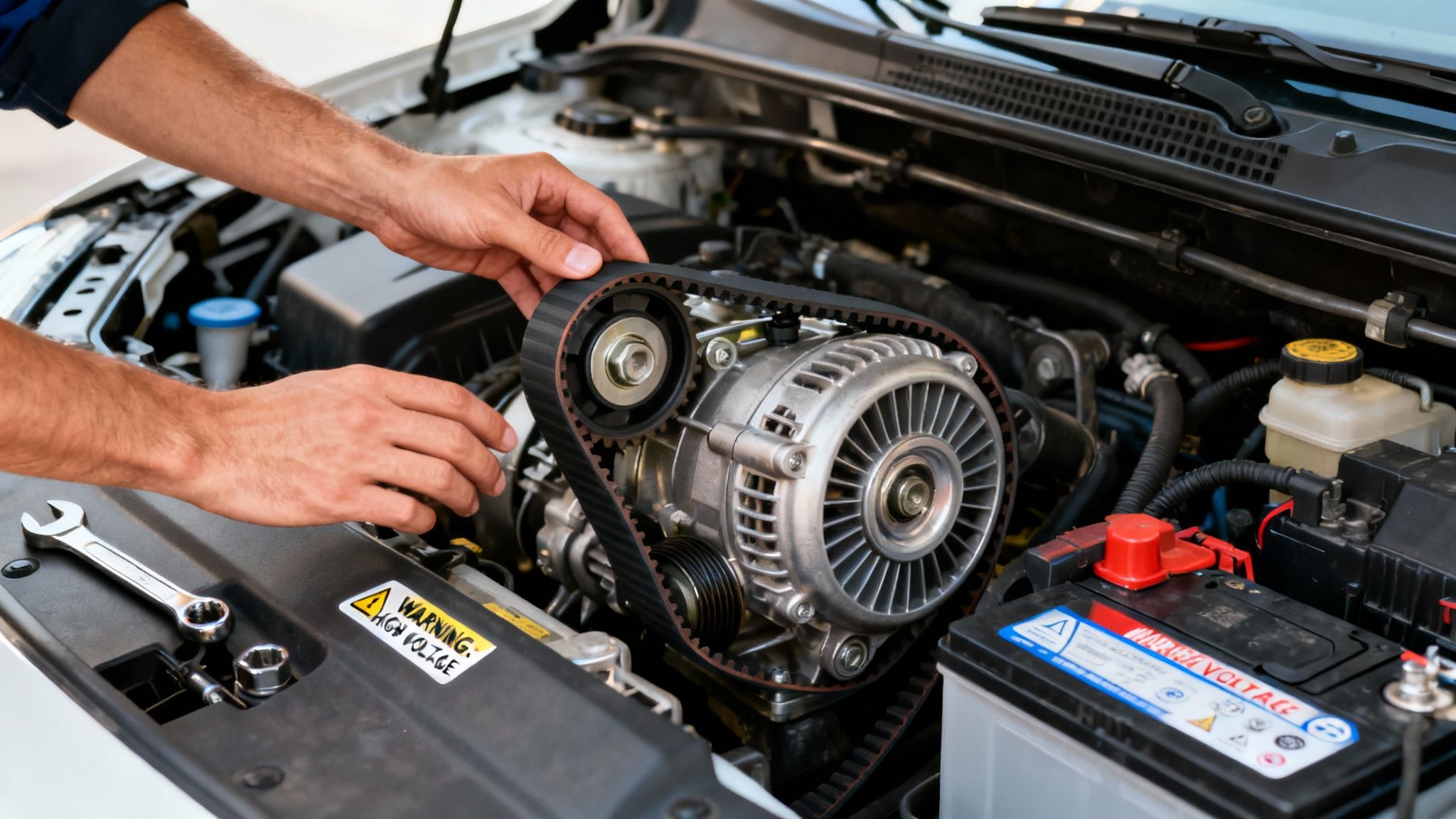
- Inspect the Serpentine Belt: Find that long rubber belt that winds its way around several pulleys at the front of the engine. Is it cracked, frayed, or shiny-looking? A worn-out belt can slip, which means it can't turn the AC compressor properly.
- Check the Condenser: This looks like a thin radiator and it's usually mounted right at the very front of the vehicle. Make sure it isn't clogged with leaves, bugs, or road grime. A blocked condenser can’t get rid of heat, and that will shut down the whole cooling process.
- Look for the Compressor Clutch: This one is easiest with a helper. While you watch from a safe distance, have someone in the car turn the AC on and off. You should see the very centre of the compressor's pulley click into place and start spinning with the belt. If it just sits there, you’re likely looking at an electrical problem.
Good diagnostics are everything. Down in Fresno, California, where the summer heat is relentless, a state program once provided over $789,000 for 622 vehicle A/C repairs. They even offered free diagnostic testing just to help drivers figure out what was wrong. It just goes to show how critical finding the root cause is. To see how much of a difference it made, you can learn more about the program's impact.
These simple checks can give you some valuable clues. If you spot one of these issues, or if everything seems fine but your AC still isn't blowing cold, that’s your cue to let the experts take over. For a deeper dive into what a professional diagnosis involves, our guide on air conditioning service for cars is a great next step.
Why Trust Carmedics Autowerks with Your AC Repair
Choosing the right shop for your car’s air conditioning repair isn’t a decision to take lightly. Your vehicle's AC is a high-pressure, sealed system, and frankly, it demands a special kind of expertise. It requires specialized tools, precise knowledge, and a meticulous touch. A shoddy repair doesn't just waste your money—it can cause even more expensive damage down the road or release environmentally harmful refrigerants.
At Carmedics Autowerks, we see every AC job as a puzzle to be solved with technical mastery and a genuine passion for cars. We’re not just here to swap out parts. Our technicians are highly trained professionals who use state-of-the-art diagnostic equipment to get right to the heart of the problem. This means we find the exact cause of the failure, whether it's a tiny, hidden leak or a complex electrical fault, so we can fix it right the first time.
More Than Just Mechanics
At our core, we're car enthusiasts. That means we treat every single vehicle that rolls into our Whitby shop with the same care and respect we give our own. It’s this commitment to quality that sets us apart and has made us a trusted partner for drivers across the region. We get it—a reliable AC system is absolutely essential for a comfortable and safe drive, especially during those hot and humid Ontario summers.
Your peace of mind is our top priority. We believe in transparent communication, fair pricing, and delivering results that stand the test of time. We fix it once, and we fix it properly.
This dedication to excellence goes well beyond AC repairs. We are your complete vehicle enhancement and protection centre, offering premium services like Paint Protection Film (PPF) and professional window tinting to keep your ride looking its absolute best. Our team is equipped to handle everything from routine maintenance to complex collision work, making us the true one-stop auto repair shop in Whitby for drivers who demand the best.
Don't let a faulty AC system ruin another drive. Come and experience the Carmedics difference for yourself.
Your Car AC Questions, Answered
When your car’s AC starts acting up, it’s natural to have a few questions. To help you get a better handle on things, we’ve put together some straightforward answers to the questions we hear most often from drivers right here in Whitby.
How Often Does My Car AC Need a Recharge?
This is probably the biggest misconception out there. Your car's air conditioning is a closed-loop system, which means it shouldn’t need a “recharge” unless something has gone wrong. If you notice the air isn't as cold as it used to be, it’s not because the refrigerant was simply "used up"—it's because it has leaked out.
The real solution isn’t just topping it off; it’s finding and fixing the source of the leak first.
The bottom line is simple: if your system is low on refrigerant, it has a leak. Simply adding more is a temporary fix at best and ignores the root cause of the problem.
Are Those DIY AC Recharge Kits a Good Idea?
While the convenience of a DIY kit from the auto parts store is tempting, they can be a recipe for disaster. It's incredibly easy to overcharge the system, which can cause far more damage than you started with and potentially ruin expensive parts like the compressor.
Plus, those kits don't actually fix the leak that caused the problem in the first place. A professional service ensures the system is properly vacuum-tested, the leak is repaired, and the exact amount of refrigerant is added according to your vehicle's specifications.
Why Does My AC Smell Like a Gym Bag?
That unpleasant, musty odour you're smelling is almost always caused by mould and bacteria growing on the evaporator core. This part is buried deep inside your dashboard, and its job is to get very cold. Condensation naturally forms on it, creating the perfect damp, dark environment for smelly microbes to thrive.
The most effective fix is a professional AC system cleaning. This service disinfects the system, getting rid of the source of the smell and drastically improving your cabin's air quality. It's not just about comfort—it's about the air you and your passengers are breathing.
Is It Safe to Keep Driving with a Busted AC?
For the most part, yes, driving with a non-working AC is safe, just uncomfortable. There is one major exception, though: a failing compressor. If you hear loud grinding or squealing noises when you turn the AC on, turn it off immediately.
A seizing compressor can cause the serpentine belt to snap. Since that one belt often powers your alternator, water pump, and power steering, a break can lead to much bigger problems like overheating or losing your power steering. If you hear those noises, get it looked at right away.
Don't let AC troubles put a damper on your drive. For a professional diagnosis and a repair that lasts, you can trust the experts at Carmedics Autowerks Inc. Book your appointment with us today and get back to enjoying the comfort of a perfectly chilled cabin.