

So, you're thinking about tinting your car's windows and wondering what it's going to cost. The short answer is you can generally expect to pay somewhere between $200 and $600 for a professional job on a full vehicle.
But that's a pretty wide range, right? The final price tag really boils down to two main things: the size of your car and the type of tinting film you choose. A basic dyed film will land you on the lower end of that scale, while a premium ceramic film will be closer to the top.
How Much Should You Expect To Pay For Car Window Tinting?
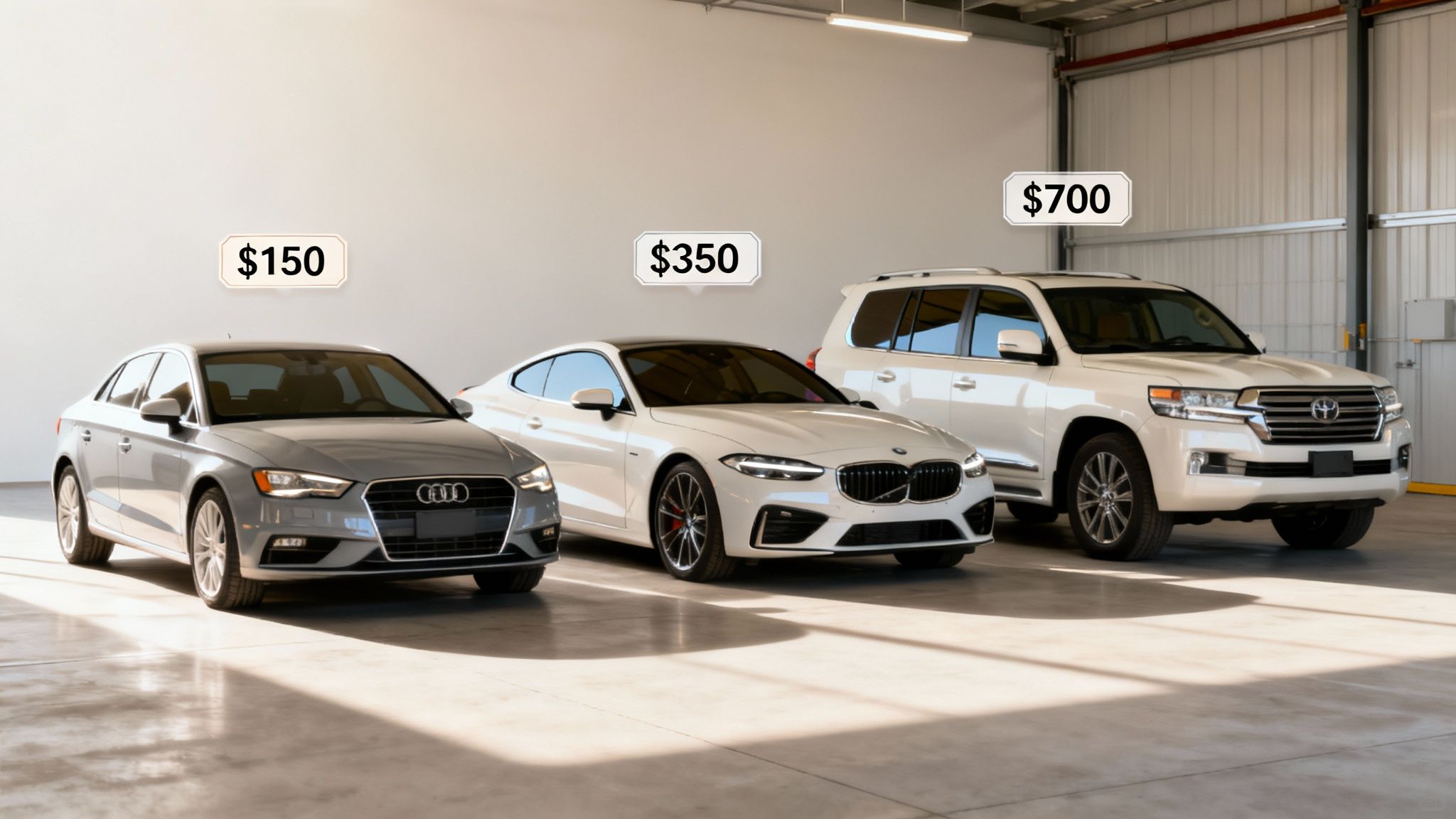
Getting a handle on the typical price range is the first step to making a smart investment in your car. Think of it less like a fixed price and more like buying a new set of tires. You could go for a budget-friendly set that gets the job done, or you could invest in high-performance options that offer superior grip, a quieter ride, and longer life. Window tinting is much the same.
The cost reflects the quality of the materials, the expertise of the installer, and, of course, the vehicle you drive. To give you a better idea of what to expect when you start shopping around, let's break down the general costs.
Average Costs By Vehicle And Film Type
The biggest factor influencing the price is simply how much glass needs to be covered. A two-door sports coupe has a lot less window area than a big SUV with a third row and extra quarter panels. More glass means more film and more time for the technician, which naturally bumps up the price.
The technology packed into the film itself is just as important. Different films offer different benefits, from simple privacy to advanced heat-blocking capabilities that can make a huge difference on a hot summer day.
- Small Vehicles (Coupes, Sedans): For a smaller car, you're looking at a starting point of around $200 for a basic dyed film. If you step up to a premium ceramic tint, that price could climb to $450 or more.
- Medium Vehicles (Small SUVs, Crossovers): This is the sweet spot for many drivers. Costs for these vehicles usually fall between $250 for entry-level tints and $550 for high-performance films.
- Large Vehicles (Trucks, Large SUVs, Vans): With their massive glass surfaces, these vehicles require the most material and labour. Expect prices to range from $300 to over $600.
To make this even clearer, here’s a quick table breaking down the estimated costs based on vehicle size and the three main types of tint film you'll encounter.
Estimated Car Window Tinting Prices By Vehicle Type
| Vehicle Type | Dyed Film (Basic) | Carbon Film (Mid-Grade) | Ceramic Film (Premium) |
|---|---|---|---|
| Coupe/Sedan | $200 – $300 | $300 – $400 | $400 – $550+ |
| Small SUV/Crossover | $250 – $350 | $350 – $450 | $450 – $600+ |
| Large SUV/Truck/Van | $300 – $400 | $400 – $500 | $500 – $650+ |
As you can see, the jump in price reflects a real jump in performance.
It's important to remember these are just ballpark figures. The real value isn't just in the price, but in understanding why they differ. It all comes down to the film's technology and the quality of the installation—two things we'll dive into next.
Ultimately, picking the right package is about balancing your budget with what you want to achieve. Are you just going for a sleek, dark look, or is your top priority blocking that intense summer sun? Answering that question will help you find the perfect tint for your ride.
What Really Determines Your Window Tinting Price?
Ever get two quotes for a tint job that are miles apart? It can be confusing, but when it comes to the price of tinting your car's windows, the final number is never just pulled out of thin air. It’s a calculated sum based on the technology you choose, the time it takes, and the unique layout of your vehicle. Once you understand these core pieces, you can see past the price tag and know exactly what you're paying for.
Think of it like buying a winter coat. You could grab a basic jacket that does the job, or you could invest in a high-tech parka made with advanced materials for superior warmth, waterproofing, and breathability. They’re both coats, but the technology inside makes a world of difference in performance and price. Window tinting is no different.
The Film Itself: The Biggest Price Driver
By far, the biggest factor in your final quote is the type of tint film you select. Each tier of film is built differently, using different materials that directly impact how it performs—and what it costs.
Let's break down the main players on the market.
- Dyed Film: This is your entry-level option. It uses layers of dye to soak up solar heat and give you that classic darkened look. It's a great choice for privacy and cutting down glare on a budget, but its heat rejection is pretty minimal. Over a few years, you'll also notice the colour can fade to a purplish hue from sun exposure.
- Carbon Film: A fantastic mid-range choice, carbon film uses tiny carbon particles instead of dye. This gives it a true black, matte finish that holds its colour and won't fade. More importantly, those carbon particles are great insulators, so this film blocks a lot more infrared heat than a dyed film, keeping your car noticeably cooler.
- Ceramic Film: This is the top-of-the-line, high-performance stuff. It’s made with non-metallic, non-conductive ceramic nanoparticles that are absolute powerhouses at blocking infrared and UV rays. And because it's non-metallic, it won’t mess with any of your electronics like GPS, satellite radio, or your cell phone signal. It offers the best heat rejection and optical clarity, making it the premier choice for comfort and protection.
At the end of the day, you're paying for the technology built into the film. A basic dyed film is mostly for looks, while an advanced ceramic film is a powerful thermal barrier that actively manages your car's interior climate.
Your Vehicle's Unique Characteristics
Right after the film type, the next biggest factor is your car itself. From an installer's point of view, no two vehicles are the same, and these little differences directly affect the labour and material needed for a perfect job.
The size and shape of your car play a huge role. A little two-door coupe has way less glass to cover than a big three-row SUV or a minivan. More windows don't just mean more film; it means more time for the installer to prep, cut, apply, and finish every single pane of glass.
This is exactly why a large SUV will always have a higher tint windows for cars price than a small sedan, even if you're using the very same film.
The Complexity of The Glass
It’s not just about the number of windows—their shape and how easy they are to get to matter a ton. Modern cars are full of tricky, heavily curved rear windshields or tiny, awkward quarter glass windows.
Those challenging shapes force a skilled technician to pull out a heat gun and meticulously shrink the flat tint film, moulding it to the glass's compound curves. This is a real art form that takes a ton of precision and patience. A simple, flat side window on an old truck might take just a few minutes, but a modern sports car’s curved back glass could easily take an hour or more to get just right.
- Number of Windows: More glass means more material and more time.
- Window Size: Bigger panes, like on a truck or van, obviously use up more film.
- Glass Curvature: Seriously curved windows demand more skill and time to tint properly.
- Accessibility: Those small, tight windows (like corner or vent glass) are often the most difficult and time-consuming parts of the job.
Labour: The Skill Behind The Finish
Finally, the cost of labour is a crucial part of any quote. You aren't just buying a sheet of film; you're paying for an expert's time, their specialized tools, and the pristine environment needed for a flawless, bubble-free, and dust-free installation.
A professional shop invests in a clean, controlled installation bay to keep dust and other contaminants from getting trapped under the film. They also use specialized software for precise, computer-cut patterns and high-quality tools to get the job done right.
On top of that, if your car already has old, failing tint that’s bubbling or peeling, it has to come off first. That removal process is a job in itself, often involving steamers and solvents to carefully strip the old film and adhesive without damaging your glass or the delicate rear defroster lines. This service will always add to the total cost. By understanding all these moving parts, you can better see what goes into a professional quote and make a smart decision that balances your budget with your desire for a quality, long-lasting result.
Choosing The Right Tint Film For Your Needs
Picking the right tint film is easily the biggest decision you'll make when getting your windows tinted. It’s what drives the final tint windows for cars price, determines how comfortable your car feels on a hot day, and dictates how long your new tint will actually last. Think of it like choosing tires—are you looking for a basic, all-season option for daily driving, or a high-performance set for superior grip and handling?
Every type of film is engineered with a different goal and budget in mind. To make the best choice, you have to look past the shade of darkness and really understand the technology working for you. Let's break down the three main players to help you find that sweet spot between performance and price.
Dyed Film: The Entry Point
Dyed window tint is the most budget-friendly and widely available option out there. It’s made by adding layers of dye to the film, which absorb solar energy to block light and give you that classic tinted look. If you’re mainly after privacy and cutting down on harsh glare without breaking the bank, this is a solid starting point.
But that reliance on dye is also its biggest drawback. Over the years, constant sun exposure breaks down the dye, leading to that tell-tale purple hue you've probably seen on older cars. And because it mostly absorbs heat instead of reflecting it away, its cooling power is pretty limited.
- Best for: Car owners who prioritize privacy and style on a tight budget.
- Pros: The most affordable option, provides good privacy and reduces glare.
- Cons: Fades to purple over time and offers minimal heat rejection.
Carbon Film: The Durable Performer
Take a step up, and you’ll find carbon film—a major upgrade from dyed tint. This film delivers a true-black, matte finish that is built to last. Instead of dye, it’s infused with microscopic carbon particles that are incredibly stable. The result? It will never fade or change colour.
The real win with carbon film is its performance. Those tiny carbon particles are fantastic at blocking infrared light, which is the part of the solar spectrum you feel as heat. A car with carbon tint stays noticeably cooler, meaning your A/C doesn't have to work nearly as hard. It's a fantastic middle-ground choice that balances durability, performance, and cost.
As the chart below illustrates, the film you choose, the specifics of your vehicle, and the installation labour are the three core factors that determine your final price.
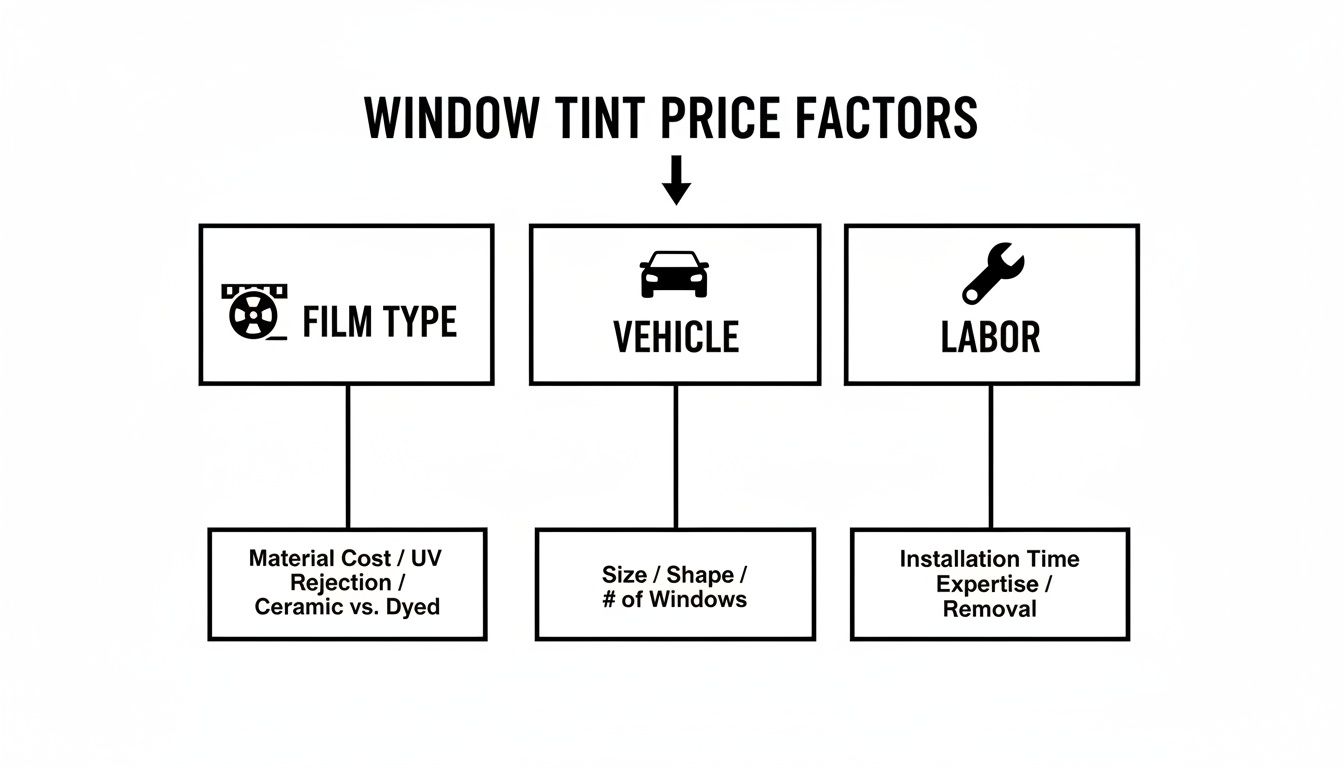
As you can see, your film selection sets the entire foundation for the cost.
Ceramic Film: The Ultimate Choice
At the top of the line, we have ceramic film, which is the most advanced tinting technology you can get. This film uses non-metallic, non-conductive ceramic nanoparticles. These tiny particles are phenomenal insulators, capable of blocking an incredible amount of infrared heat—up to 90% with some films—without having to be super dark.
Because it’s completely metal-free, ceramic film is guaranteed not to mess with any of your car's electronics. GPS, satellite radio, keyless entry, and your cell phone signal will all work perfectly.
You get the absolute best UV protection, crystal-clear optical clarity, and maximum heat rejection. While it does come with a higher upfront cost, the investment pays for itself every single time you step into a cool car on a sweltering summer day. You can dive deeper into the tech behind these materials by exploring our guide to the automotive window tint films we install.
- Best for: Drivers who want the absolute best heat rejection, UV protection, and clarity without any signal interference.
- Pros: Superior heat and UV blocking, exceptional clarity, no signal issues, and will never fade.
- Cons: The highest initial cost.
To help you visualize the differences, here’s a quick comparison:
Window Tint Film Comparison Chart
This chart breaks down how Dyed, Carbon, and Ceramic films stack up against each other in the categories that matter most.
| Feature | Dyed Film | Carbon Film | Ceramic Film |
|---|---|---|---|
| Heat Rejection | Low | Good | Excellent (Highest) |
| UV Protection | Good (99%) | Excellent (99%+) | Superior (99%+) |
| Glare Reduction | Good | Excellent | Superior |
| Durability | Fair (Prone to fading) | Excellent (Colour-stable) | Superior (Colour-stable) |
| Signal Interference | No | No | No |
| Price Point | $ | $$ | $$$ |
Ultimately, choosing the right film comes down to what you value most. If your main goal is adding privacy and a sleek look for the lowest cost, dyed film is a great starting point. If you want a long-lasting tint with solid heat rejection that won't fade, carbon film is an excellent all-around performer. But if you're seeking the ultimate in-car comfort and protection from the sun, the superior technology of ceramic film is well worth the investment.
Navigating Legal Tint Limits and Warranty Protection

Getting a great price on a window tint is a good start, but it's only half the story. To truly protect your investment, you need to make sure your new tint is both legal and backed by a solid warranty. It’s easy to overlook these details in the excitement of upgrading your car, but they are absolutely crucial for avoiding headaches down the road.
Think of it like this: installing an illegally dark tint is like buying a beautiful sports car you can’t legally drive. It might look amazing, but it’s going to cause trouble. A tint job without a real warranty is just as risky—if it starts bubbling or peeling a year later, that initial "deal" you got will be long forgotten.
Understanding Tint Laws in Ontario
Every province has its own rules for window tinting, and Ontario is no different. The key term you'll hear is Visible Light Transmission, or VLT. It’s just a percentage that measures how much light can pass through the window film. The lower the VLT percentage, the darker the tint.
In Ontario, the rules are very specific, and not following them can lead to fines and an order to have the tint removed.
- Front Windshield: You can't apply any film here, with one small exception: a strip along the top of the windshield that's no more than 15 cm wide is allowed.
- Front Side Windows (Driver & Passenger): This is where most people get tripped up. The tint on these windows cannot block more than 30% of light. That means they need to have a final VLT reading of at least 70%.
- Rear Side & Back Windows: You have a lot more freedom here. Generally, you can go as dark as you want on any windows behind the driver.
It's crucial to remember that your car's factory glass isn't perfectly clear; it already has a slight tint. A professional installer knows this and will factor it in, ensuring the combined VLT of the glass and film stays within that legal 70% limit for your front windows.
Why a Manufacturer's Warranty Matters
A quality tint job should last for years, but genuine peace of mind comes from a manufacturer's warranty. This is more than just a piece of paper; it’s a direct promise from the company that made the film, guaranteeing it won't fail. Be cautious of shops that only offer their own "shop warranty"—it's only as good as the business that's offering it.
A lifetime manufacturer's warranty, which is standard with premium ceramic and carbon films, is your shield against product defects. It protects your investment from common issues that can completely ruin the look and performance of your tint.
So, what does a good warranty actually cover?
- Bubbling and Peeling: This is the most obvious sign of a failed adhesive and should always be covered.
- Discolouration: High-quality films are colour-stable. A warranty protects you if your tint fades or turns that awful shade of purple you sometimes see on older cars.
- Cracking and Crazing: The film itself should never break down or crack from normal sun exposure.
Nearly every manufacturer's warranty requires professional installation to be valid. A skilled technician applies the film correctly, which prevents the exact problems the warranty is designed to cover in the first place. You can learn more about the different shades and their legal implications in our detailed guide on window tinting levels. A professional shop won’t just give you a flawless installation; they'll help you choose a VLT that looks great, performs well, and keeps you on the right side of the law.
How To Find A Quality Tint Shop And Get A Fair Quote
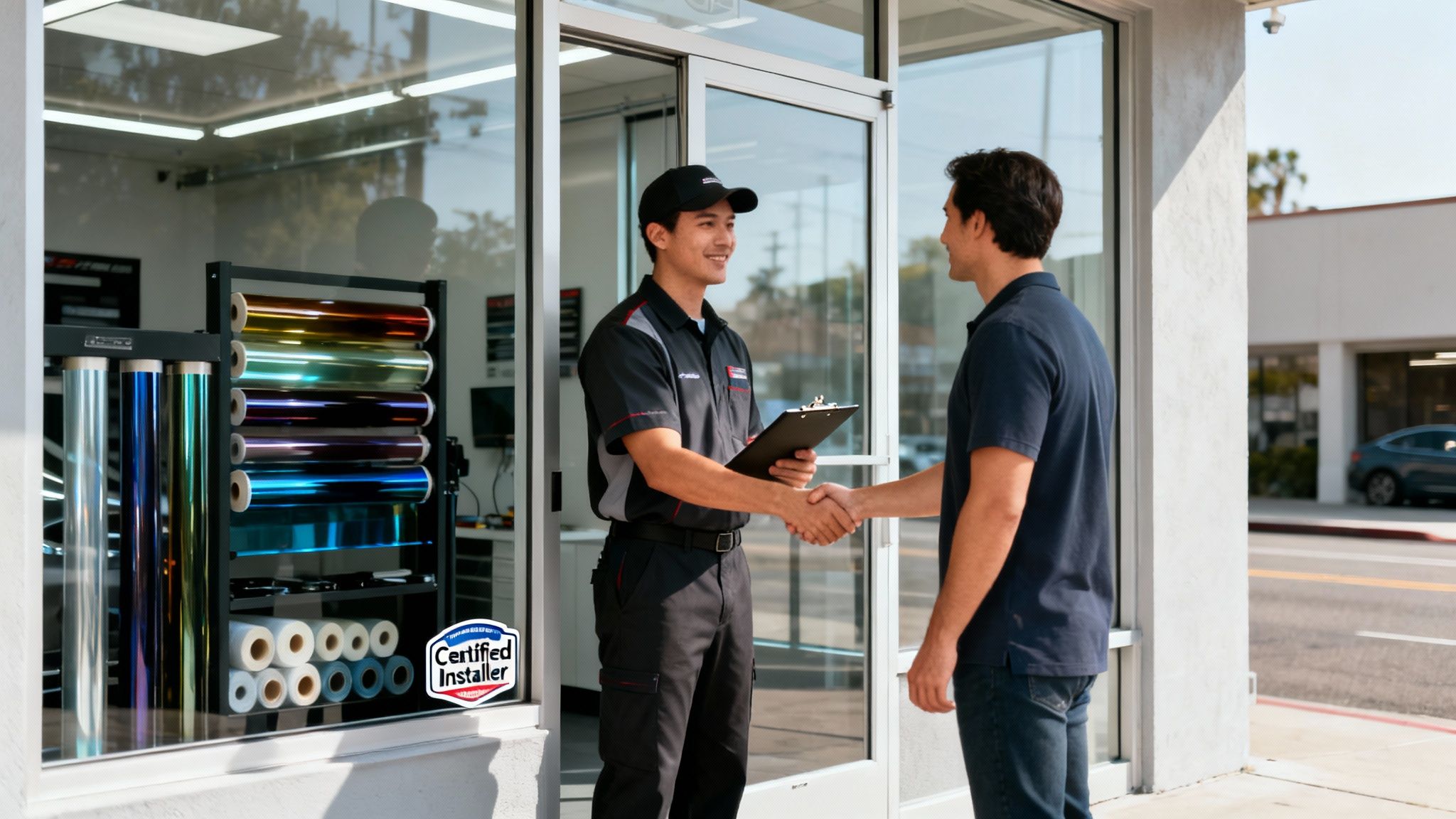
All the fancy technology packed into a high-quality tint film is completely wasted if the installation is sloppy. At the end of the day, the installer’s skill is just as crucial as the film itself. A flawless, long-lasting tint job demands precision, the right tools, and a clean, controlled environment—all hallmarks of a true professional.
Picking the right shop can seem daunting, but it's the best way to protect your investment. A great shop isn’t just selling a service; they’re providing expertise and peace of mind. They stand behind their work because they have the experience to get it right, every single time.
What To Look For In A Reputable Installer
Not all tint shops are on the same level. Finding a top-tier pro means knowing what to look for, much like hiring any other skilled tradesperson. You'll want to see their work, hear what past customers have to say, and feel confident in their expertise.
A quality installer will be open and honest about their process and the products they use. They should easily explain the real-world differences between film types, helping you pick one that fits both your budget and your goals.
Here’s a simple checklist to help you out:
- Years of Experience: A shop that's been around for a while is usually a good sign. Longevity often means they're doing consistently good work and will be there to honour their warranties down the road.
- Portfolio of Work: A proud installer will always have a gallery of finished projects. Ask to see photos of their work on vehicles like yours to get a feel for their quality.
- Trusted Film Brands: Reputable shops partner with industry-leading film manufacturers. Using premium brands shows a commitment to quality and guarantees you get a product with a solid warranty.
- Genuine Customer Reviews: Check out what people are saying on Google. Look for consistent, positive feedback about the craftsmanship, customer service, and how they handle any problems that crop up.
Spotting Red Flags
Just as there are signs of quality, there are also some major red flags to watch out for. The biggest one? A tint windows for cars price that seems way too good to be true. Everyone loves a deal, but an unusually low quote often means they're cutting corners somewhere.
This could mean the shop is using cheap, low-grade film that will bubble, fade, and fail in no time. Or, it could mean the installers are rushing the job, which leads to imperfections like trapped dirt and peeling edges. For more tips on finding a local expert, check out our guide on the best car tinting near me.
A suspiciously low price is often a short-term saving that leads to long-term costs. Paying a little more upfront for a professional installation with premium materials will save you the headache and expense of having to replace a failed tint job down the line.
How To Get A Detailed And Accurate Quote
Once you've zeroed in on a promising shop, the final step is to get a detailed, written quote. A verbal "it'll be about this much" just doesn't cut it. You need a clear document that breaks down every part of the job to avoid any nasty surprises later.
A professional quote should clearly state:
- The exact film being used: It should name the brand and the specific line (e.g., Ceramic, Carbon).
- The VLT levels for each window: This confirms the shades you chose and ensures everything is legal.
- The total cost: This number should be all-in, including labour and materials, with no hidden fees.
- Warranty information: It should outline both the manufacturer's warranty on the film and the shop's own guarantee on their labour.
With a detailed quote in hand, you can move forward with confidence, knowing exactly what you're paying for and the quality you can expect.
Answering Your Top Questions About Tinting Costs
As you get closer to making a decision, a few last-minute questions always seem to pop up. That's completely normal. Understanding the finer details of the tint windows for cars price is what gives you confidence that you’re making a smart investment. Here, we’ll tackle the most common questions we hear from car owners every day, giving you straight, honest answers to help you lock in your choice.
We’ll cover everything from whether premium films are really worth the money to the nitty-gritty of installation and aftercare. Think of this as the final piece of the puzzle, giving you the clarity you need to move forward.
Is Expensive Ceramic Tint Really Worth It?
This is easily the question we get asked the most, and for good reason. Ceramic film definitely has a higher price tag, but its value is something you can literally feel. It’s not just about making your windows darker; it’s about strategically blocking the invisible infrared rays that actually heat up your car.
A quality ceramic tint can reject up to 90% of infrared heat, which makes a huge difference on a sweltering summer day. Your car’s interior stays noticeably cooler, meaning your AC doesn’t have to work overtime just to keep you comfortable. Over the long haul, that can even translate to slightly better fuel economy.
Beyond comfort, ceramic tint offers the best UV protection you can get. It’s like sunscreen for your car's interior, stopping the dashboard and upholstery from fading and cracking over time. For drivers who want the absolute best in comfort and long-term protection, the investment in ceramic pays for itself every time you get behind the wheel on a sunny day.
How Long Does a Professional Tint Installation Take?
Window tinting is a job that demands precision, not speed. For a typical sedan or coupe, we usually tell customers to plan for about two to four hours from drop-off to pickup.
Of course, larger vehicles or cars with tricky windows will naturally take a bit longer.
- Vehicle Size: An SUV or a minivan simply has more glass, so it’s going to require more time than a two-door sports car.
- Window Complexity: That big, curved rear windshield on some cars or those tiny, awkward quarter windows require extra care to heat-shrink the film and apply it perfectly.
- Old Tint Removal: If we need to strip off old, bubbling tint first, that’s a whole separate process. Removing the old film and cleaning the adhesive residue can easily add another one to two hours to the job.
A reputable shop will never rush the work. We take the time needed to prep the glass properly and ensure a clean, flawless application that’s built to last.
What Is the Best Way to Care for Newly Tinted Windows?
Proper aftercare is super simple, but it’s crucial for making sure your new tint cures perfectly and looks great for years. The number one rule is to avoid rolling down your windows for at least three to five days after installation. This gives the adhesive time to fully dry and create a strong bond with the glass.
Right after the install, you might notice a bit of a hazy look or a few tiny water pockets. Don't worry—this is a normal part of the curing process as the last bits of moisture evaporate. It will clear up on its own within a few days to a couple of weeks, depending on how much sun it gets.
Once it's fully cured, cleaning is easy. Just remember these simple tips:
- Use Ammonia-Free Cleaners: Ammonia is the enemy of window tint; it can break down the adhesive over time and cause it to fail. A simple mix of gentle soap and water or a cleaner made specifically for tinted windows is all you need.
- Use Soft Microfibre Cloths: Never use abrasive paper towels or scrubby sponges. Two soft microfibre cloths—one for washing, one for drying—will give you a perfect, streak-free shine.
- Be Gentle: Your tint is tough, but it's not scratch-proof. Be careful with rings, keys, or ice scrapers to avoid accidentally gouging the film.
Following these easy steps will keep your window tint looking as good as the day it was installed for the life of your vehicle.
Ready to get the perfect tint for your vehicle? The team at Carmedics autowerks inc has the expertise to deliver a flawless, long-lasting finish. Get in touch with us today for a detailed quote and expert advice.