


There’s nothing worse than turning on your car's A/C on a sweltering Whitby afternoon, only to be blasted with warm, muggy air. It’s a frustrating moment we’ve all experienced. When this happens, it's a clear signal that something in the system has given up. The most common culprits are usually low refrigerant from a leak, a compressor that's decided to retire, or a simple electrical glitch.
Let's walk through what’s likely happening under your hood.
Why Your Car A/C Is Suddenly Blowing Hot Air
That sinking feeling is universal. You’re expecting a refreshing wave of cold air, but instead, you get a puff of what feels like the outside, only warmer. This sudden change is your car's way of telling you that a crucial part of its cooling system has failed. To really get why, it helps to know a little about the team of parts working together to keep you cool.
Think of your car's A/C as a clever heat-moving machine. It’s a closed-loop system with a few key players that need to work in perfect sync.
The Core Components of Your A/C System
The heart of the whole operation is the compressor. You can think of it as a pump, powered by your engine's serpentine belt. Its one job is to squeeze a special chemical called refrigerant, pressurizing it and turning it into a hot gas.
This hot gas then flows to the condenser, which looks like a small radiator and usually sits right at the front of your car. Air flowing over the condenser (from driving or a fan) pulls the heat out, causing the refrigerant to cool down and turn back into a high-pressure liquid.
Finally, that liquid makes its way to the evaporator, tucked away inside your dashboard. As it passes through a tiny valve, the pressure plummets, and the refrigerant instantly becomes intensely cold as it turns back into a gas. Your blower motor pushes cabin air across this frosty evaporator, and voilà—cold air comes out of your vents.
Key Takeaway: Your A/C doesn't actually create cold; it moves heat out of your cabin. If any part of this heat-transfer cycle breaks down—whether it's the compressor, the condenser, or the refrigerant flow—the whole process grinds to a halt.
Common Reasons for A/C Failure
When that cycle breaks, it’s almost always due to one of a few usual suspects. By far the most common problem we see is a refrigerant leak. Over time, the rubber seals and hoses in the system can become brittle and crack, letting that vital refrigerant escape. Without enough of it, the system simply can't build the pressure needed to get cold.
Another frequent point of failure is the compressor itself. If you hear a grinding or squealing noise the moment you turn on the A/C, that's a dead giveaway the compressor is either struggling or has completely failed. Unfortunately, this is often the most expensive component to replace.
A few other issues can also be to blame:
- A Clogged Condenser: Since it sits at the front, the condenser can get clogged with road debris, leaves, and dirt. This blocks airflow and prevents the refrigerant from cooling down properly.
- Electrical Problems: Sometimes the fix is surprisingly simple. A blown fuse, a bad relay, or a faulty pressure switch can stop the compressor's clutch from engaging, meaning the whole system never even starts.
- A Dirty Cabin Air Filter: This one won't cause hot air, but a severely plugged filter can choke the airflow from your vents so much that it feels like the A/C is barely working.
To make it easier to diagnose what's going on, here's a quick reference table.
Common Car A/C Problems and Their Symptoms
Use this chart to match what you’re experiencing with the most likely cause. It can help you figure out what your next move should be.
| Symptom | Potential Cause | Next Step |
|---|---|---|
| Air is slightly cool, not cold | Low refrigerant level, often due to a small leak. | This is a classic sign you're low on refrigerant. A top-up might work temporarily, but finding the leak is the real fix. |
| Loud grinding or squealing noise | Failing or seized A/C compressor. | Turn off the A/C immediately to prevent further damage and have the compressor inspected by a professional. |
| A/C works while driving, but not at a stop | Cooling fan issue or clogged condenser. | Check for debris blocking the condenser at the front of the car. If it's clear, the fan may not be working correctly. |
| No air (hot or cold) comes from vents | Blown fuse or faulty blower motor. | Check the fuse box first. If the fuse is good, the blower motor or its resistor has likely failed. |
| Musty or damp smell from vents | Mould or mildew buildup in the evaporator. | This is a common issue. An A/C system cleaning or deodorizing service can usually solve it. |
This table should give you a solid starting point. Knowing what to look for makes it much easier to have an informed conversation when you bring your vehicle in for professional air conditioning repair for your car.
Simple DIY Checks You Can Perform at Home
Before you pick up the phone to book a service, it’s worth playing detective yourself. You'd be surprised how many A/C problems leave clues you can spot without any fancy tools. A few minutes under the hood can give you a much better idea of what’s going on, which makes for a clearer conversation when you do need professional help.
Your car’s A/C system is essentially a heat mover. It uses a special refrigerant in a closed loop to pull heat out of your cabin and dump it outside. This diagram gives you a great visual of how that refrigerant flows between the key players to get you that cool air.
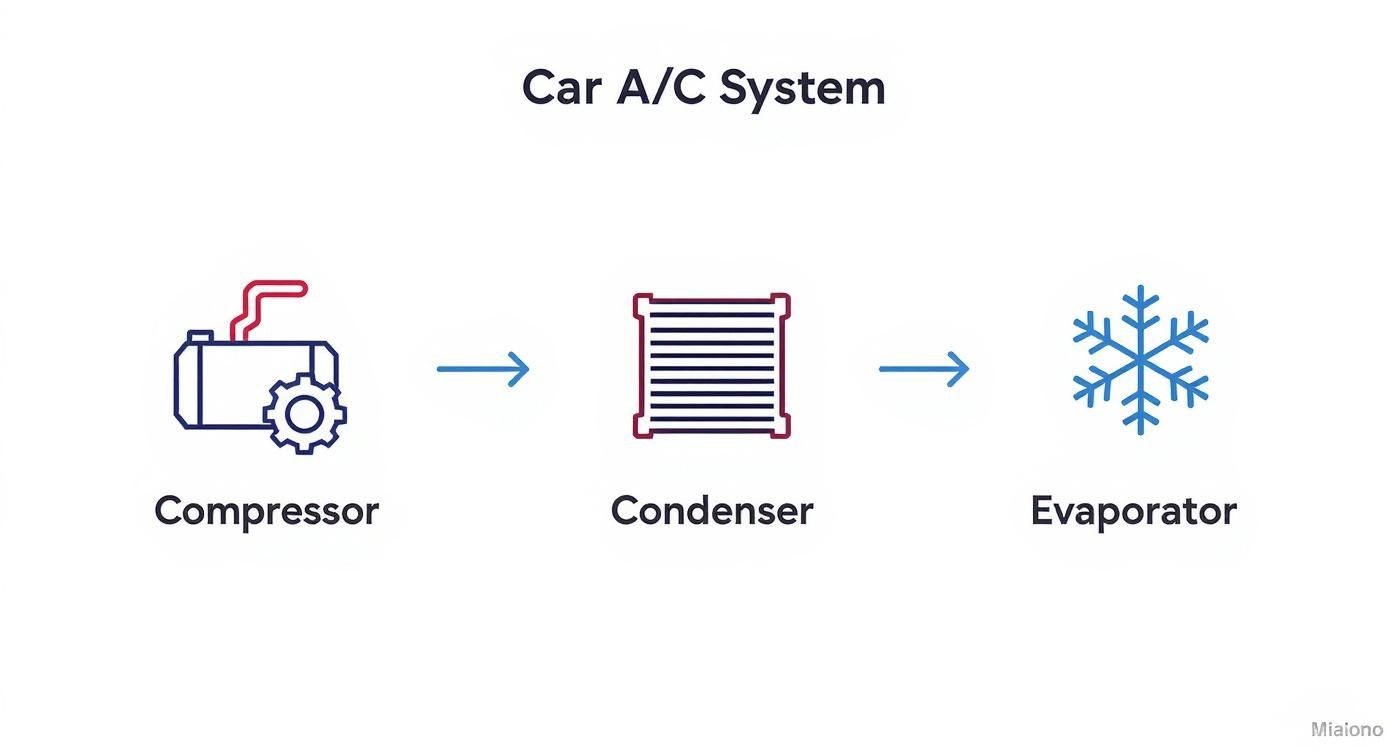
As you can see, if any one of those components—the compressor, condenser, or evaporator—has a problem, the whole cooling cycle grinds to a halt.
Visually Inspect the Compressor
First things first, pop the hood and find the A/C compressor. With the engine off and completely cool, just give it a good look. Then, get a friend to start the car and crank the A/C to full blast while you watch from a safe distance.
The part you're watching is the clutch, which is the centrepiece of the compressor's pulley. You should see it get sucked in and start spinning right along with the pulley. If it just sits there, or if it clicks on and off like a faulty light switch, that’s your first big clue. It often points to low refrigerant or an electrical problem that's stopping it from kicking in.
Listen for Unusual Noises
Your ears are an amazing diagnostic tool. The moment you switch the A/C on, listen carefully for any new or strange sounds coming from under the hood.
- A loud grinding or squealing: This is a big one. It’s a classic sign of a compressor that's failing internally. If you hear this, shut the A/C off immediately. You want to prevent bits of metal from contaminating the entire system, which turns a single part replacement into a much bigger, more expensive job.
- A hissing sound: A steady hiss from the engine bay or even from behind the dashboard is often the sound of refrigerant escaping from a leak.
These sounds are your car’s way of telling you exactly where it hurts. Keeping an ear out for them is a key part of good vehicle ownership, something we cover in more detail in our guide to preventive maintenance for vehicles.
Pro Tip: A happy, healthy A/C system should be pretty quiet. You’ll hear the fan blowing and a soft click when the compressor clutch engages, but that's it. Anything more dramatic needs a closer look.
Look for Obvious Leaks
While refrigerant is an invisible gas, it’s mixed with a special lubricant oil that definitely isn't. When the refrigerant leaks out, so does the oil. This oil then acts like a magnet for dirt and grime, leaving a telltale sign.
Take a good look at all the A/C lines, hoses, and the spots where they connect. Are there any greasy, dirty-looking areas? An oily film is a dead giveaway for a leak.
Check the Cabin Air Filter
Finally, never forget the simple stuff. One of the most common reasons for weak airflow is a completely clogged cabin air filter. Its job is to clean the air coming into your car, and over time it gets packed with dust, pollen, leaves, you name it.
On most cars, you can find it right behind the glove box, and it’s usually pretty easy to access. If that filter is choked with debris, it can block airflow so badly that you’ll think the A/C is broken, even when it’s making plenty of cold air. Swapping it out is a fast and cheap fix that can make a world of difference.
The Real Cost of Professional Car A/C Repairs

When your car's A/C gives out, your first thought is probably about the repair bill. It’s a valid concern, and the truth is, the cost for a professional air conditioning repair for your car can swing pretty widely. There's no single price tag because the final cost hinges on your vehicle's make and model, which specific part has failed, and the going labour rates in our area.
A simple A/C performance check and recharge will sit on the lower end of the spectrum. On the other hand, a full compressor replacement is one of the more significant investments you can make in your vehicle's climate control system.
The biggest mistake we see is people ignoring a small issue, like a minor refrigerant leak. It seems harmless, but that slow leak makes the compressor work overtime with less lubricant, which almost always leads to a catastrophic failure and a much higher repair cost down the road.
Breaking Down Common Repair Costs
So, what can you actually expect to pay? Let’s break it down with some real-world examples. The most common starting point is a refrigerant recharge, sometimes called a regas service. This isn't just a top-up; it involves professionally vacuuming out the old refrigerant, running a check for major leaks, and refilling the system to the precise level your car's manufacturer specifies.
If the problem is more serious, we're looking at replacing parts. A leaking condenser is a frequent culprit, often because it sits at the front of the car and gets pummelled by road debris. Fixing that means discharging the system, physically swapping the part, and then doing a full recharge. The most involved job, however, is replacing the A/C compressor—the heart of the entire system.
The parts we use also make a difference in the final invoice. If you're curious about your options, we've put together a guide on OEM vs. aftermarket parts that can help you decide what's best for your car and budget.
Budgeting Tip: Always ask for a detailed estimate that breaks down the cost of parts and labour separately. This transparency helps you see exactly where your money is going and avoids any nasty surprises on the final bill.
While thinking about A/C costs, it’s a good time to consider overall vehicle upkeep. For those driving newer cars, understanding overall electric vehicle maintenance costs offers a useful comparison for long-term financial planning.
To give you a clearer picture of what to expect here in the Whitby area, we've put together a table of common A/C jobs and their typical costs.
Estimated Costs for Common Car A/C Repairs
This table gives you a general idea of what to budget for when you bring your vehicle in for A/C service.
| Repair Service | Estimated Cost Range (CAD) | Typical Time Required |
|---|---|---|
| A/C Diagnostic & Inspection | $100 – $180 | 1 – 1.5 hours |
| Refrigerant Evacuate & Recharge | $150 – $300 | 1 – 2 hours |
| Condenser Replacement | $450 – $900+ | 2 – 4 hours |
| Compressor Replacement | $800 – $2,000+ | 3 – 6 hours |
Keep in mind, these are estimates and the final cost can vary depending on your specific vehicle. Still, this gives you a solid baseline and really shows why it pays to catch A/C problems early before they snowball into something much more expensive.
The Hidden Dangers of DIY A/C Recharge Kits
We’ve all seen them at the auto parts store: those tempting cans of A/C refrigerant that promise a quick and cheap fix. When your air conditioner is just blowing hot air on a sweltering day, a $50 can seems like a brilliant solution. But trust me, as someone who’s seen the aftermath, this “easy fix” often creates much bigger, and far more expensive, problems.
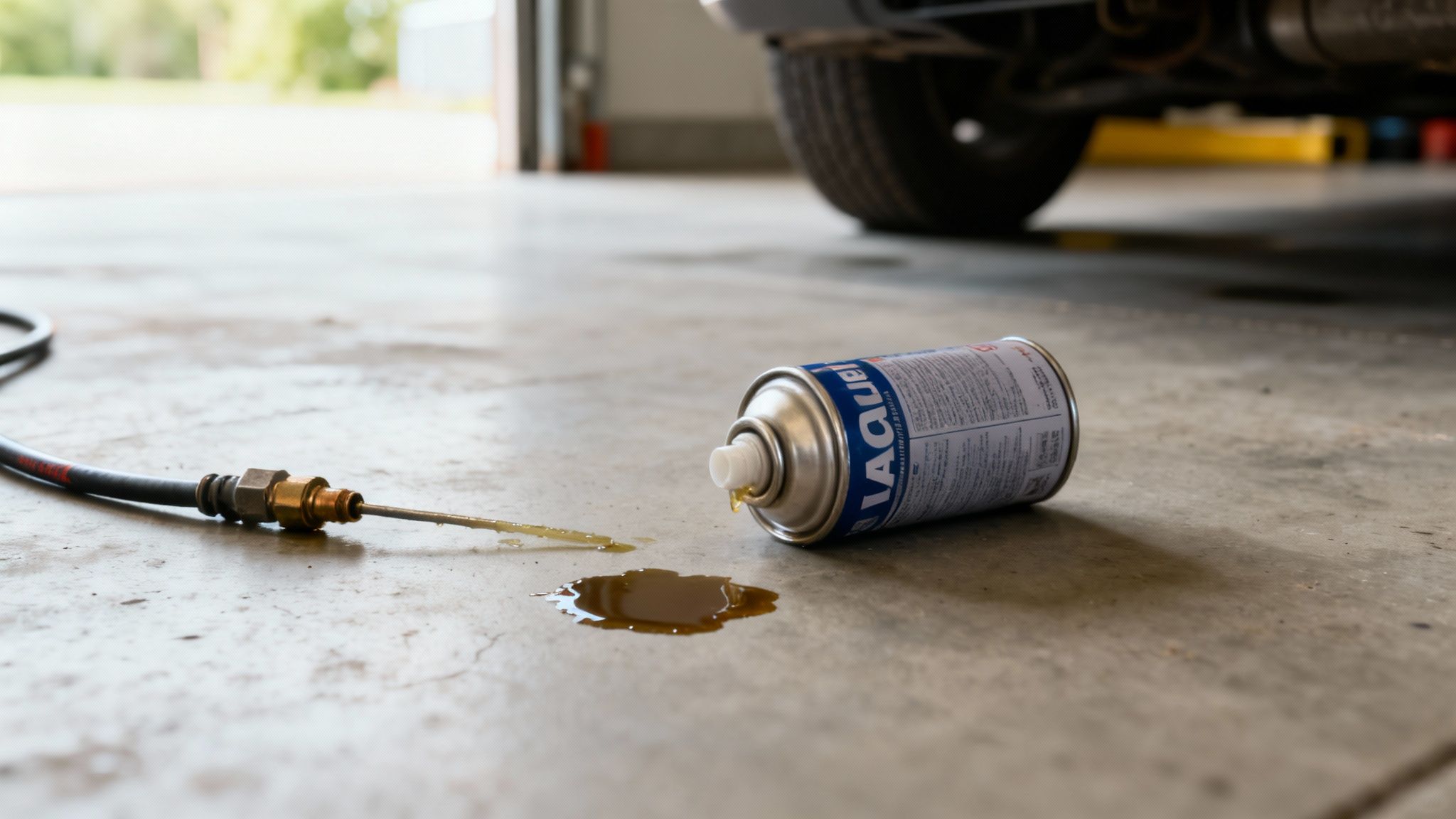
The number one risk with a DIY recharge is overcharging the system. Your car’s A/C is a sensitive, high-pressure system that needs a very specific amount of refrigerant to work correctly—measured precisely by weight, not just pressure. Without professional gauges, you’re just guessing.
Adding too much refrigerant sends the pressure inside the lines skyrocketing. This puts a massive strain on every component, especially the compressor. An overcharged system forces the compressor to work against impossible pressure, causing it to overheat and fail. Suddenly, what might have been a small leak turns into the most expensive air conditioning repair for your car: a full compressor replacement.
You're Only Treating the Symptom, Not the Cause
Even if you get lucky and don't overcharge it, the kit isn't solving the real issue. If your system is low on refrigerant, there's only one reason why: it has a leak. A recharge can is just a band-aid. You're pouring expensive refrigerant into a system that's just going to let it seep out again.
To make matters worse, many of these kits contain "leak stop" sealants. In theory, they're supposed to plug small holes. In reality, these gunky additives can clog up the most sensitive parts of your A/C, like the expansion valve or receiver-drier, choking the whole system.
A Word of Warning from the Shop: Using a DIY kit with sealant can contaminate your entire A/C system. If you later bring it to a professional, that gunk can destroy our very expensive recovery and recycling equipment. This often means you'll face extra charges just to decontaminate our machines before we can even start your repair.
What a Professional A/C Service Really Involves
When you bring your car to a shop like Carmedics Autowerks, we do a lot more than just top off the refrigerant. Our process is designed to fix the problem correctly and for good.
- Evacuation: First, we use a powerful vacuum pump to pull every last bit of old refrigerant and air out of the system. More importantly, this removes any moisture that’s gotten in through the leak. Moisture is the ultimate enemy—it mixes with refrigerant to form a corrosive acid that eats your A/C from the inside out.
- Leak Detection: Before adding a single drop of new refrigerant, we run a pressure test or use a special UV dye to find the exact source of the leak. Fixing the leak is the only way to guarantee a lasting repair.
- Precise Recharging: We then refill the system with the exact weight of refrigerant your car's manufacturer specifies. No guesswork. This ensures your A/C runs efficiently and safely.
That cheap can of refrigerant is a gamble. While it might give you a few days of cool air, the potential for causing hundreds, or even thousands, of dollars in damage just isn’t worth the risk.
Knowing When to Call a Professional Mechanic
You’ve done the basic checks—listened for odd sounds, peeked under the hood, and maybe even swapped out the cabin air filter. But if warm air is still wafting from your vents or you've found something that just doesn't look right, it's time to put the tools down. Some jobs simply aren't suited for a driveway fix, and that’s where the pros with the right training and equipment come in.
Properly diagnosing and fixing a modern A/C system requires specialized gear and a deep understanding of how these complex systems work. Pushing forward without that expertise can easily turn a minor issue into a major, expensive headache.

There are a few tell-tale signs that scream "call a technician." A loud, screeching or grinding noise the moment you turn on the A/C is a huge red flag. That’s often the sound of a compressor on its last legs. If you keep running it, you risk sending metal fragments through the entire system, contaminating every component and turning a straightforward part replacement into a massive repair bill.
Another clear signal is any sign of an oily residue on the A/C hoses or components. That’s not just oil; it’s refrigerant mixed with lubricant, and it means you have a leak. A professional won't just top it off—they'll find the source of the leak and repair it correctly so you're not back in the same situation next month.
The Benefits of Professional A/C Service
Bringing your vehicle to a trusted shop like Carmedics Autowerks in Whitby gives you more than just a quick fix; it gives you confidence the job was done right. Our certified technicians use advanced diagnostic equipment to get to the root of the problem, whether it's a tricky electrical fault, a tiny hidden leak, or a failing sensor.
We also handle refrigerant the way it's supposed to be handled—legally and safely. It’s a controlled substance for good reason. Our specialized equipment ensures the old refrigerant is recovered, recycled, and the system is recharged to the exact specifications set by your vehicle's manufacturer. This not only protects the environment but also safeguards the long-term health of your A/C system. Taking the time to find a reliable automotive service centre near you is the first and most important step.
Expert Insight: A professional repair is about more than just making the air cold again. It’s about restoring the whole system's integrity. We perform a full evaluation, checking for moisture contamination, verifying high and low-side pressures, and making sure the entire loop is working as a team. This comprehensive approach is what prevents other components from failing prematurely down the road.
Supporting Local and Economic Health
Choosing professional repairs also has a positive ripple effect on the local economy. For example, some regional programs that subsidize vehicle air conditioning repairs do more than just help drivers financially; they're a massive boost for local businesses. In certain areas, these initiatives have paid out over $2 million to local repair shops, funding thousands of A/C jobs. This keeps residents cool and comfortable while directly supporting the community. You can learn how they support local auto shops and see the positive economic impact firsthand.
When your DIY troubleshooting hits a dead end, don't guess. Making the call to a professional is the smartest, safest, and most effective path to getting back on the road with icy-cold air. Think of it as an investment in both your comfort and your car’s longevity.
Answering Your Car A/C Questions
When your car’s A/C starts acting up, it’s natural to have a few questions. As the go-to A/C specialists in Whitby, we hear them all the time. Here are some of the most common ones, along with some straight-up answers from our team.
How Often Should I Get My Car's A/C Serviced?
This is a great question. Unlike an oil change, there’s no rigid schedule for your A/C. That said, a good rule of thumb is to have a professional look at the system every one to two years. Think of it as a wellness check.
This kind of preventative maintenance can spot tiny refrigerant leaks or catch early signs of compressor wear before they snowball into a huge, expensive headache. A quick inspection lets a technician check the system's pressures and performance, making sure it's ready to go when that first heatwave hits.
Our Pro Tip: Try to run your defrost setting for about 10 minutes once a month, even in the dead of winter. The defroster actually uses the A/C compressor, which circulates oil and keeps the system’s seals from drying out. It's a simple trick that can save you a lot of trouble down the road.
What's Causing That Musty Smell From My Vents?
Ah, the dreaded "wet sock" smell. That mouldy odour is almost always from bacteria and mildew growing on the evaporator core, which sits deep inside your dashboard. Moisture condenses on it during normal operation, creating a perfect breeding ground for smelly stuff.
Your first move should be to check the cabin air filter. If it's clogged and dirty, swapping it out might just solve the problem. If the smell sticks around after a filter change, you’ll likely need a professional evaporator cleaning. We use special treatments to eliminate the gunk at its source and get your cabin smelling fresh again.
Can I Damage My Car By Running a Faulty A/C?
It really depends on what's wrong. If you’re just a bit low on refrigerant, the system won't cool well, but you’re probably not causing any serious damage. The compressor might cycle more often or just refuse to turn on.
However, if you hear any loud grinding, squealing, or knocking noises the moment you hit the A/C button, shut it off immediately. Those are classic signs of a compressor that's about to die. If you keep running it, the compressor can seize up and blast tiny metal shards through the entire system. That turns a simple compressor swap into a massive, costly flush and overhaul of every single component.
Why Does My A/C Always Seem to Die After Winter?
We see this all the time. Your A/C sits dormant for months during the winter, and the rubber O-rings and seals throughout the system can start to dry out and get brittle. They lose their flexibility and can no longer create a perfect seal.
Then, on the first truly warm day of spring, you crank the A/C. The system pressurizes, and those hardened seals just can't hold it. The refrigerant finds the weak spots and leaks right out, leaving you with warm air. This is exactly why running the defroster in winter is such a smart move—it keeps everything lubricated and ready for summer.
If any of these problems sound familiar, or if you just want the peace of mind of a professional check-up, the team at Carmedics autowerks inc is here to help. Our certified techs have the right tools and real-world experience to nail the diagnosis and get you cool again.
Book your A/C service with us today and drive comfortably all summer long. https://carmedicsautowerks.com.com