


Sooner or later, most car owners find themselves needing to remove old window tint. Whether it's bubbling, peeling, turning that dreaded shade of purple, or you’ve got a "fix-it" ticket from local law enforcement, the job has to be done. The trick is getting that old film and all the sticky adhesive off without leaving a mess or, worse, damaging your glass. It’s definitely a job you can tackle yourself, but the right approach makes all the difference.
Why Bother Removing Your Window Tint?
Before you break out the tools, it helps to understand why the old film has to go. Pinpointing the reason can help you choose the best removal method and underscores why a clean, complete job is so important.
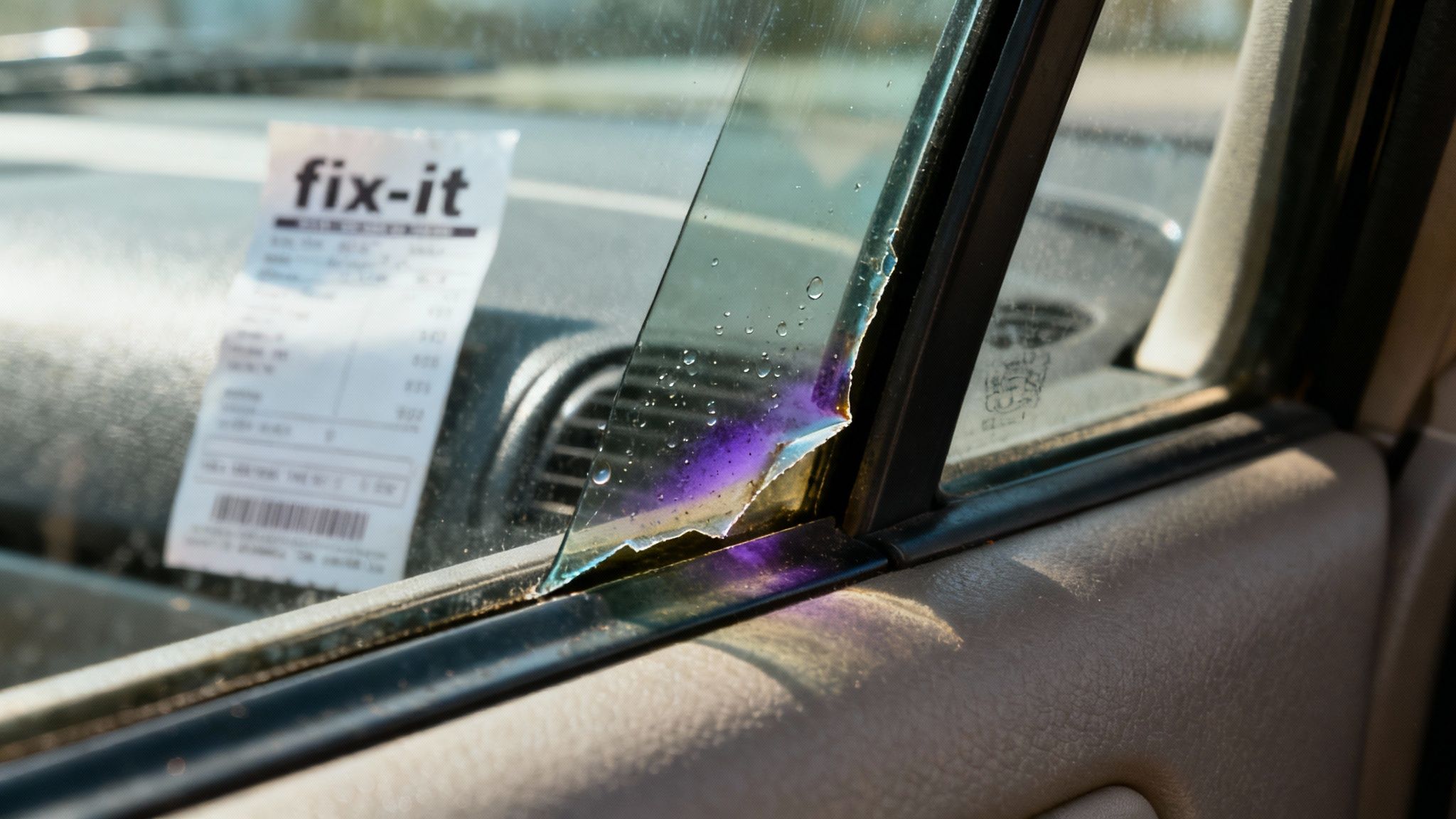
Sometimes, the choice isn't yours. A ticket for illegally dark tint is a pretty clear sign it's time for a change. Window tinting rules can be confusing because they vary so much from place to place. To make sure you're on the right side of the law, check out our guide on local https://carmedicsautowerks.com/window-tinting-laws/.
The Telltale Signs of Failing Tint
Legal issues aside, the film itself might be the real problem. Even the best tint doesn't last forever. Here are the most common reasons people decide it’s time to strip it off:
- Bubbling and Peeling: This is a classic. Air gets trapped, or the adhesive gives up, creating ugly bubbles and lifted edges that just get worse over time.
- Turning Purple: We’ve all seen it. Older, cheaper dye-based films react to UV rays and eventually fade into a strange purple hue, which kills your car's look and hurts visibility.
- Poor Visibility: The film can get scratched, hazy, or just worn out, making it genuinely tough to see through, especially when driving at night.
In fact, a survey from the California Automotive Trade Association found that 68% of drivers who removed their tint did so to comply with the law. Another 22% said their main driver was simply to improve visibility and feel safer on the road.
When your tint starts bubbling or turning purple, it’s not just a cosmetic problem anymore—it's a safety hazard. If you can't see the road clearly, it's absolutely time to get that old film off.
Getting Ready for a Sale or Just a Fresh Look
Of course, sometimes you just want a change. If you're selling your car, removing the tint can give it a clean, factory look that appeals to a wider range of buyers.
Or maybe your style has just evolved, and you're ready for something new. Perhaps you want to upgrade to a higher-quality film or find the best window film for privacy to suit your needs better. No matter the reason, doing a proper removal is the essential first step.
Assembling Your Tint Removal Toolkit
Trying to tackle a window tint removal job without the right gear is a recipe for frustration. It's the difference between a smooth, satisfying project and a sticky, infuriating mess that has you wishing you'd never started. Taking the time to gather everything you need before you start is the single best thing you can do to ensure success.
A well-stocked toolkit is your best defense against brittle, tearing film and stubborn, gooey adhesive.
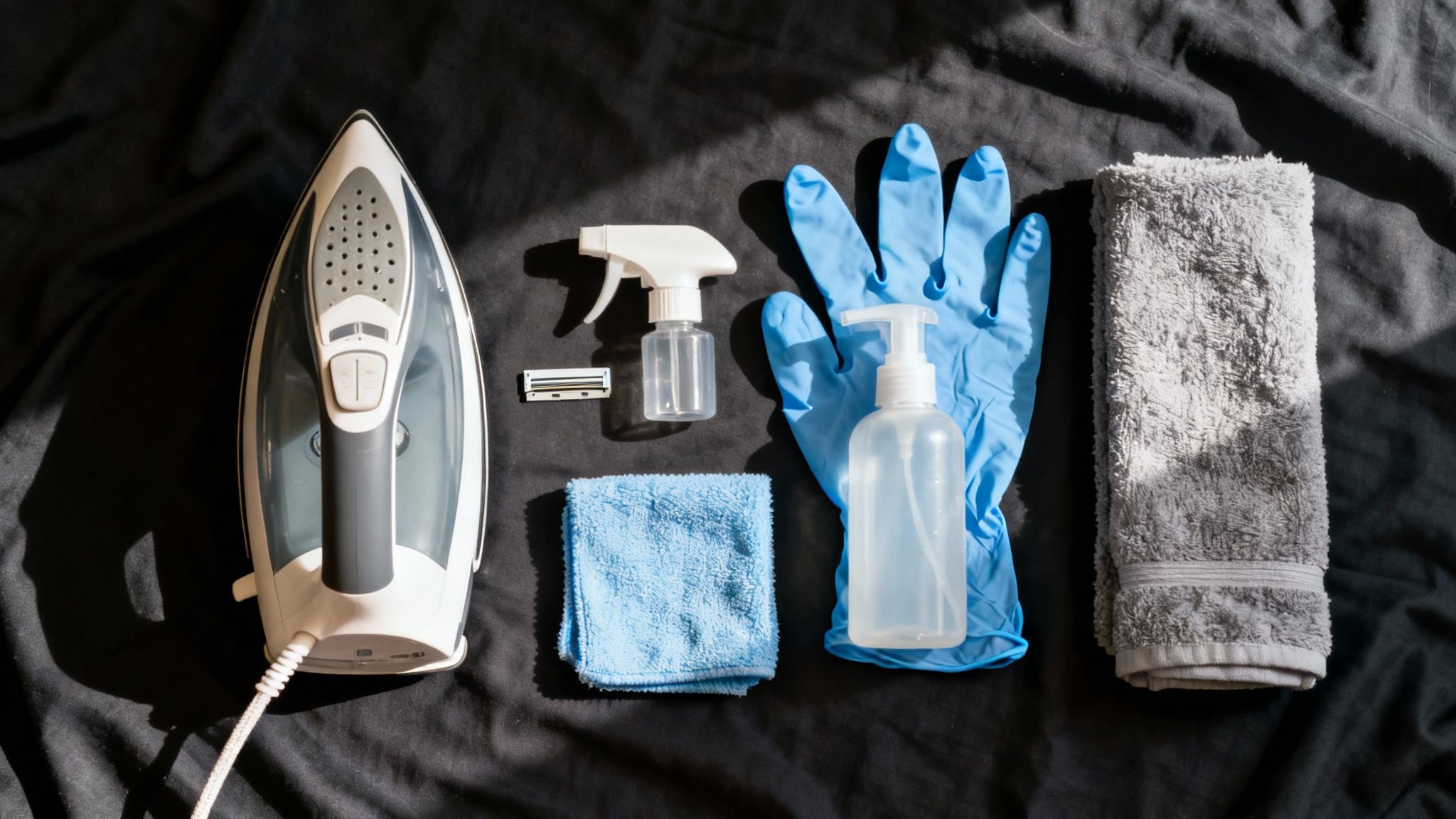
This isn’t just about having tools; it’s about knowing what they’re for. Your mission is to gently heat the old film, peel it off in one large piece (if you're lucky!), and then meticulously clean every trace of adhesive without leaving a single scratch on your glass.
To make sure you're properly equipped, here’s a breakdown of the essentials you'll want on hand.
Essential Toolkit for Window Tint Removal
| Tool Category | Essential Items | Pro-Tip and Best Use |
|---|---|---|
| Heat Sources | Fabric Steamer or Heat Gun | A fabric steamer is the safest bet for DIYers; it provides moist heat that’s less likely to damage glass. If you use a heat gun, keep it on a low setting and always in motion. |
| Scraping Tools | Plastic Razor Blades & Scraper Handle | Never use metal razors on automotive glass. They will scratch the surface and destroy rear defroster lines. Plastic blades are a non-negotiable part of this kit. |
| Cleaning Agents | Soapy Water, Adhesive Remover, Rubbing Alcohol | A spray bottle of soapy water is your go-to lubricant. For the really stubborn goo, a dedicated adhesive remover is worth its weight in gold. |
| Wiping & Drying | Microfiber Towels | You can never have too many. They are essential for cleaning and drying without leaving lint or streaks behind. |
| Protective Gear | Gloves, Tarps or Old Towels | Protect your hands from the chemicals and your car's interior from spills. A little prep here saves a lot of cleanup later. |
Having these items ready to go means you can work methodically without having to stop and search for something mid-peel.
Heat Sources for Loosening Adhesive
Heat is your absolute best friend in this process. It’s the secret to weakening the adhesive’s grip on the glass, making the film pliable instead of brittle. The right application of heat dramatically reduces the chance of the tint shredding into a million tiny, frustrating pieces.
Your main options are:
- Fabric Steamer: This is my top recommendation, especially if you're new to this. A steamer provides consistent, gentle, moist heat that is far more forgiving than a heat gun. It softens the glue beautifully and makes the film much easier to peel away in large sections.
- Heat Gun: A powerful tool, but it demands respect and a steady hand. If you hold a heat gun in one spot for even a few seconds too long, you risk cracking the glass. Always use it on its lowest setting and keep it moving across the window.
Scraping and Peeling Tools
Once you’ve heated the adhesive, you need the right tools to get under the film's edge and scrape away what's left behind. The golden rule here is simple: absolutely no metal blades. A metal razor will permanently scratch your glass and can easily sever the delicate defroster lines on your rear windshield.
Your most important tool for this stage is a pack of plastic razor blades. They are tough enough to lift the film and scrape off adhesive but soft enough that they won't gouge or scratch the glass. Honestly, don't even think about starting the job without them.
Pair the blades with a good scraper handle. It will save your fingers and give you much better leverage for tackling stubborn spots.
Cleaning Solutions and Protective Gear
After the film is off, you’re left with the final challenge: the sticky residue. This is where your cleaning agents and protective gear come into play, ensuring a spotless finish without making a mess of your car's interior.
Your cleaning arsenal should include:
- Spray Bottle with Soapy Water: A simple mix of water and a few drops of dish soap is the perfect lubricant for scraping and helps with the initial cleanup.
- Adhesive Remover: For the tacky, stubborn gunk that soap and water can't handle, a quality adhesive remover is a must. Citrus-based products often work great and are less harsh than industrial solvents.
- Rubbing Alcohol: This is great for cutting through certain types of adhesive and helps give the glass a final, streak-free wipe-down.
- Microfiber Towels: Stock up on these. You’ll need a bunch for applying cleaners, wiping away residue, and drying the glass.
- Gloves and Towels: A simple pair of gloves will protect your hands, and laying down old towels or plastic sheeting over your door panels and dashboard will prevent any drips from causing damage.
Using Heat and Steam for a Clean Peel
When it comes to getting old tint off your windows, heat is your best friend. Seriously, this is the trick the pros use, and with a little patience, you can get the same clean results right in your own driveway. A good fabric steamer or a heat gun will soften up that stubborn adhesive, making the film pliable enough that you have a real shot at peeling it off in one satisfying sheet.
The idea isn't to cook the window. You're just applying enough consistent warmth to convince the glue to let go. This one step can turn a frustrating job of scraping tiny, brittle flakes into a smooth, straightforward process.
Why Steam Is Usually the Better Choice
For most people tackling this at home, a fabric steamer is the way to go. It gives you a gentle, moist heat that’s fantastic at breaking down old adhesive without putting your glass at risk. Unlike the concentrated blast from a heat gun, steam gets into every nook and cranny, loosening the film and glue evenly.
A heat gun works, but it's a tool that demands respect. If you hold it in one spot for just a few seconds too long, you can cause a thermal shock and crack the glass. That's a costly mistake nobody wants to make. If a heat gun is all you have, keep it on the lowest setting and always keep it moving.
My Two Cents: If you have the choice, grab the steamer. The margin for error is huge, and I've found the damp heat works wonders on tint that's been baked on for years.
Mastering the Heating Technique
The real secret here is finesse, not force. If you rush it, the film will just tear into a hundred little pieces, leaving you with a sticky mess.
Focus on heating one manageable section at a time. Don't try to heat the whole window at once—you'll never keep up. Work in smaller zones, especially on a big piece of glass like the rear windshield.
Here’s the game plan:
- Start at a Top Corner: Pick a corner and start heating it. Hold your steamer or heat gun about 15-20 centimetres away from the glass.
- Keep It Moving: Slowly sweep the heat source back and forth. You're aiming for an even warmth, so never let it sit in one spot.
- Look for the Signs: As the glue softens, you’ll see a change. The film might look like it’s “sweating” or lifting ever so slightly at the edges. That's your cue.
The Art of the Perfect Peel
Once a corner is warm and ready, it's go time. This is where your patience will really pay off. The angle and speed you pull at are everything.
Gently use a plastic razor blade to lift the corner you just heated. All you need is a little tag you can grab with your fingers. Once you've got a good grip, start peeling.
- Go Low and Slow: Pull the film down and away from the glass at a really sharp, low angle—almost like you're trying to fold it back on itself. If you pull straight out at 90 degrees, it’s almost guaranteed to tear.
- Feel the Tension: Use a slow, steady motion. If you feel it start to fight you, stop pulling. That's the film telling you the adhesive ahead isn't warm enough yet.
- Heat As You Go: This is the most critical part. As you pull the film back with one hand, keep applying heat with the other, staying just ahead of where you're peeling. This creates a moving "wave" of softened glue right where you need it, helping the film release cleanly.
This two-handed rhythm—peel and heat, peel and heat—is what separates a pro job from a frustrating afternoon.
Tackling Tricky Spots and Staying Safe
Some areas will put up more of a fight. Corners and the edges right against the rubber seals are notorious for hanging on. Give them an extra blast of heat before you try to lift the film. And be extra careful on the rear windshield—those defroster lines are delicate. Heat that area gently and never, ever attack them with a scraper.
Don't forget about safety and prep work, either.
- Protect Your Interior: Throw some old towels or a plastic sheet over your door panel and seats. Steam is water, and you don’t want it dripping all over your car's interior.
- Wear Gloves: The steam can get hot, and the edge of the film can be surprisingly sharp. A simple pair of work gloves can save your hands.
- Get Some Airflow: It’s just steam, but it’s always smart to work in a well-ventilated space, especially since you'll likely be using some chemicals to clean up the last bits of adhesive.
Follow this heat-and-peel method with a bit of care, and you’ll be left with nothing but clear, clean glass.
When Heat Isn't an Option: Alternative Tint Removal Techniques
While a heat gun is the star player for most tint removal jobs, it’s not the only tool in the playbook. What happens when you’re working outside on a breezy day, or you simply don’t have one handy? Or what about that stubborn, ancient tint that’s become brittle and just won't cooperate?
Don't worry, you're not out of luck. Sometimes, a bit of patience and some clever chemistry can succeed where heat fails. These methods take a little more prep, but they're incredibly effective for those really tough jobs.
This image shows the ideal scenario—using heat to get a clean peel. But when your reality looks less like this and more like a flaky, sticky mess, it's time to switch tactics.
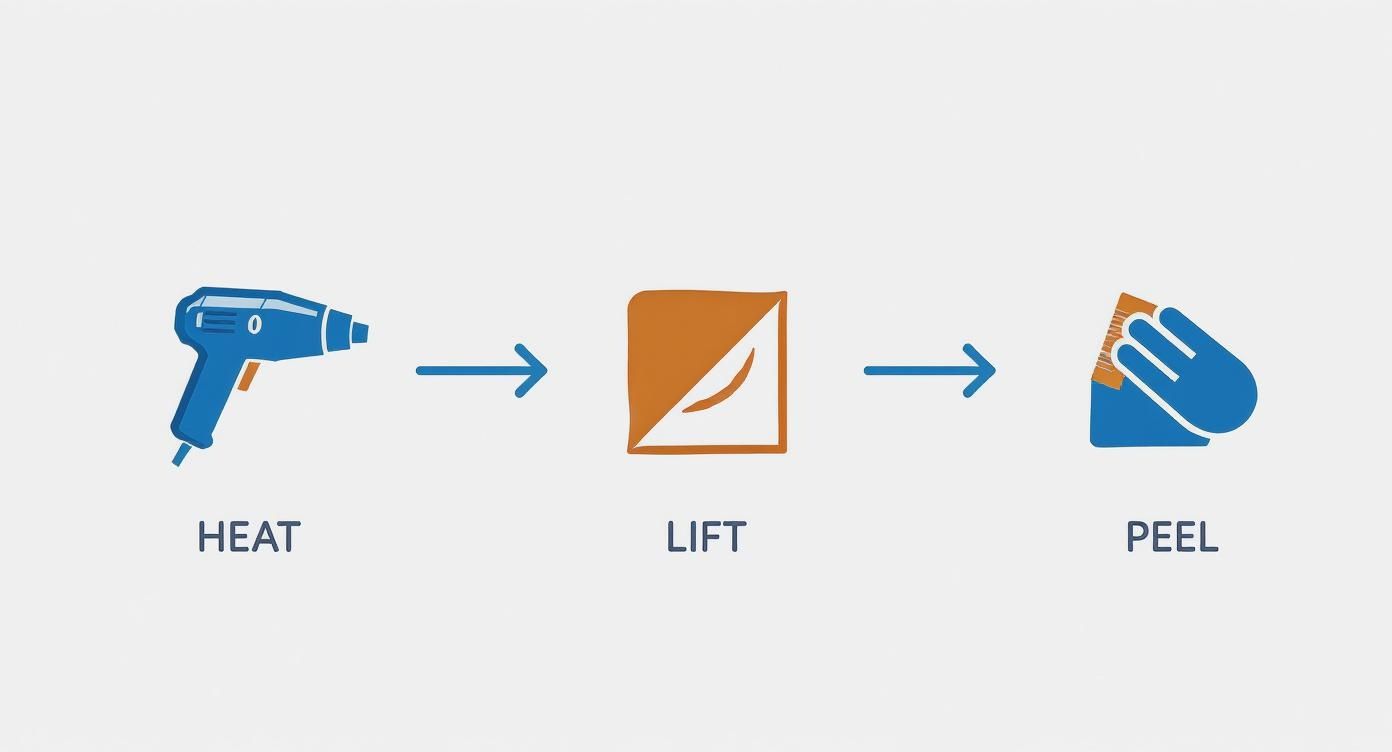
When the film fights back, the alternative methods below become your new best friends.
The Ammonia and Sunshine Method
This is an old-school trick that works surprisingly well, especially on rear windshields where you have to be careful around those delicate defroster lines. The idea is to use ammonia and the sun’s natural heat to break down the adhesive, making the tint practically fall off the glass. It sounds a little weird, but trust me, it can be a lifesaver.
A serious word of caution, though: ammonia fumes are powerful and harmful. This is not a job for the garage. You absolutely must do this outdoors or in a very well-ventilated space, and always wear a respirator and gloves.
Here’s how to do it safely:
- Protect Your Interior: First things first, cover everything inside. Ammonia can discolour and damage upholstery, plastics, and speakers. Lay down plastic sheeting and old towels over the parcel shelf, seats, and any nearby trim.
- Soak the Tint: Get a spray bottle and generously spray undiluted ammonia all over the inside of the window. You want the glass completely saturated.
- Trap the Fumes: While it’s still wet, cover the window with a large, black trash bag. Cut the bag roughly to the shape of your window and press it flat against the wet ammonia. It should stick in place.
- Let the Sun Do the Work: Park the car in direct sunlight. The black bag will absorb heat, creating a hot, steamy, ammonia-filled sauna that aggressively attacks the tint’s adhesive. Leave it to bake for at least an hour on a sunny day.
After an hour or two, the tint and adhesive should be so soft that you can peel the film away in one large sheet with very little effort.
The ammonia method is a game-changer for rear windows. It lets the chemicals do the hard work so you don’t have to risk scraping those fragile defroster lines. Just double-check that your car’s interior is completely protected before you start.
The Soap and Scrape Method
If you're up against tint that's so old it shatters into a million tiny pieces the second you touch it, the soap-and-scrape method is your most reliable option. This technique is less about finesse and more about methodical patience. It’s perfect for side windows where there are no electronics to worry about.
The absolute key to this method is lubrication. You have to keep the window wet the entire time to avoid scratching the glass.
Why You Must Use a Plastic Blade
I can't stress this enough: never use a metal razor blade on automotive glass. You will leave permanent scratches and can easily damage any sensitive components in the window. A plastic razor blade is non-negotiable here. It’s sharp enough to get under the film but soft enough that it won’t damage the glass surface.
The process itself is pretty straightforward:
- Lube It Up: Mix a very soapy solution of dish soap and water in a spray bottle. The more suds, the better. Liberally spray down a section of the window.
- Get Scraping: Grab your plastic razor blade and start scraping at a low, shallow angle to lift the film.
- Keep It Wet: This is critical. As you work, constantly re-spray the area with your soapy water. If the surface dries out, you’ll have a much harder time scraping and risk scratching the glass.
- Work in Small Sections: Don't try to be a hero and tackle the whole window at once. Focus on a small, manageable area, scraping away both the film and the gunk underneath as you go.
This approach definitely requires more elbow grease, but for tint that has completely given up the ghost, it’s often the only way forward. With enough soapy water and a steady hand, you'll get that glass back to being crystal clear.
Conquering Stubborn Adhesive Residue
Getting the old tint film off the glass feels like a huge win, but hold on—the job isn't quite done. You're now facing the final boss of any tint removal project: the sticky, hazy adhesive left behind. This stubborn gunk is what separates a clean, professional-looking job from one that leaves your windows looking worse than before you started.
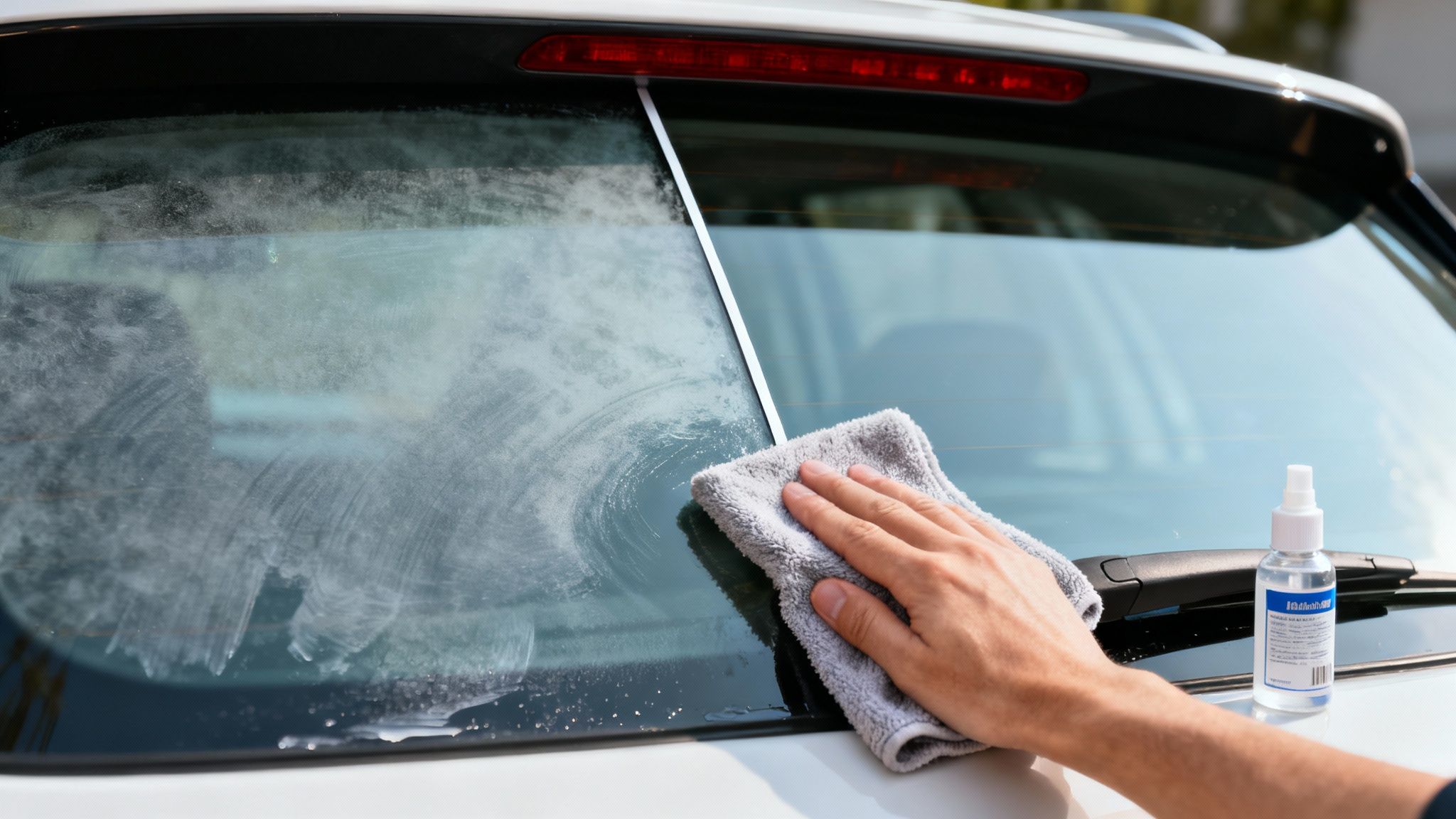
You can't just scrub at this stuff; that will only smear the mess around. The key to a crystal-clear finish is having the right cleaning solutions, the right tools, and the right technique.
Choosing Your Adhesive-Fighting Solution
Not all adhesive residue is the same. The age of the tint, its original quality, and even the method you used to peel it off all play a role in how much goo is left on the glass. You’ll need to match your cleaner to the mess you're facing.
Here's a breakdown of your options, from the gentlest to the most heavy-duty:
- Soapy Water: For very light, fresh residue, you might be surprised what a simple mix of dish soap and warm water in a spray bottle can do. It acts as a lubricant and helps break down minor stickiness.
- Rubbing Alcohol (Isopropyl Alcohol): This is a step up from soapy water. Rubbing alcohol is a great solvent that can cut through more moderate adhesive without being too harsh.
- Commercial Adhesive Removers: For the really tough, baked-on glue, a dedicated adhesive remover is your best friend. Look for products with citrus oil, as they tend to be effective without being overly aggressive.
My advice? Always start with the mildest solution first. You'd be surprised how often soapy water and a bit of elbow grease are enough. Only move on to stronger chemicals if the gentler methods aren't cutting it.
Mastering the Application and Removal Process
Once you've picked your cleaner, how you use it is just as important as what you're using. The goal is to let the solution dissolve the adhesive, not just push it around.
Start by liberally spraying your chosen solution over a small section of the window. Now, just let it sit for a few minutes. This dwell time is critical—it gives the chemicals a chance to penetrate and break down the glue, which does most of the hard work for you.
Next, it's time to lift the softened gunk. A plastic razor blade is perfect for this. You can gently scrape the residue into a pile without any risk of scratching the glass. Follow up immediately with a clean microfiber cloth to wipe away what you've loosened. Be prepared to go through several cloths; using a dirty one will just re-smear the adhesive everywhere.
Protecting Your Rear Defroster Lines
The rear windshield needs a bit more care. See those delicate horizontal lines? That’s your defroster grid, and it's incredibly easy to damage with aggressive scraping. Never, ever use a razor blade—plastic or metal—directly on these lines.
Instead, you have to rely on chemical action and a gentle touch. Apply your adhesive remover and give it plenty of time to soak. Then, use a soft, non-scratch pad or microfiber cloth to wipe with the lines (horizontally), not against them. It’ll take more time and patience, but it's the only way to make sure your defroster still works when you need it.
The condition of the old tint often predicts how tough this final step will be. Research shows that 42% of vehicles getting their tint removed have films over five years old, which dramatically increases the odds of leaving behind a stubborn adhesive mess. In fact, a study by the California Auto Detailers Association found that 15% of tint removal jobs required extra repairs because of leftover gunk or damage from a previous bad removal attempt. You can read more about these window tinting statistics and their implications.
To wrap things up, give the glass a final clean with a quality glass cleaner. This will get rid of any last streaks and leave you with perfectly clear, residue-free windows.
Knowing When to Call a Professional
There's a special kind of pride that comes from a successful DIY project, no doubt about it. But when it comes to stripping old window tint, sometimes the smartest move is knowing when to hang up the heat gun and call in a pro. Making that call can save you a world of frustration, a lot of time, and even protect you from some pretty costly damage.
Sometimes, the tint itself tells you everything you need to know. If you're dealing with ancient film that's been baking in the sun for a decade, it can get incredibly brittle. Instead of peeling off in a satisfying sheet, it might just shatter into a million tiny, sharp flakes. Trust me, trying to scrape that mess off without scratching your glass is a nightmare. That’s a classic sign you need the specialized tools and experience of a professional.
Assessing the Complexity
Not all car windows are straightforward. The difficulty of the job should be a major factor in your decision to DIY or call for backup.
Here are a few situations where letting an expert handle it is the wiser, safer bet:
- Tricky Curves: Think about aggressively sloped rear windshields or the complex curves of some side windows. Getting even heat and steady pressure on these surfaces is tough for a novice, which dramatically increases the risk of tearing the film or, worse, damaging the glass itself.
- Delicate Electronics: The rear windshield is the trickiest spot on any car. Professionals have the practiced techniques to work around those delicate defroster lines and embedded antennas. One wrong move with a razor blade and you could be looking at a very expensive repair.
- High-End and Luxury Cars: If you're driving a luxury or high-performance vehicle, the stakes are just plain higher. The cost to replace a specialized piece of glass on one of these cars will make the price of professional tint removal seem like a bargain.
It really boils down to risk versus reward. If you're staring at a rear window with a web of defroster lines under a brittle, ancient film, the potential for causing permanent damage with a DIY attempt is sky-high.
In California, you can expect professional tint removal to cost anywhere from $75 to $150 per vehicle. That price tag buys you their expertise, speed, and the peace of mind that comes with a damage-free guarantee. With the California tint removal market sitting at around $12 million annually, it’s obvious that plenty of drivers see the value in professional service.
If the job turns out to be more than you bargained for, or you run into other window-related problems, it helps to know when to call a professional window washing company for more general advice.
And remember, if you're planning on getting new tint applied after the removal, you absolutely want a perfectly prepped surface. Starting fresh with a professional job is key. You can learn all about the benefits of ceramic window tinting in our guide to make sure your next tint job is a lasting investment.
Answering Your Top Tint Removal Questions
When you're gearing up to strip old tint off your car, you're bound to have a few questions. I've been there, and getting the right answers upfront can save you a world of hurt later.
The number one concern I hear is about the rear defroster. People ask, "Will I wreck my defroster lines if I take the tint off?" The honest answer is yes, you absolutely can if you get careless. Those little grid lines are incredibly delicate. If you go at them with a metal scraper, you're almost guaranteed to slice through one, killing your defroster for good. This is precisely why steam or a gentle chemical approach is the only way to go for the back glass.
Can I Reuse Old Window Tint?
It's a fair question, but unfortunately, the answer is a hard no. Once you peel that film off, the adhesive is shot. The film also stretches and warps as it comes off, so trying to stick it back on is a recipe for a bubbly, creased disaster. Think of it as a one-way trip—the old tint is destined for the bin.
If there's one piece of advice to remember, it's this: match your method to the window. Steam is your best friend for the rear defroster. For side windows, stick with plastic razor blades to avoid any chance of scratching the glass.
Another thing people always underestimate is the time it takes. If you've never done this before, be realistic. Set aside one to two hours for each side window. For the rear windshield, which is a much trickier job, you could easily be looking at three to four hours. Rushing is the enemy here; patience is key.
Finally, is it worth paying a pro? My take is this: if your tint is ancient, flaking into a million little purple pieces, or if the thought of accidentally destroying your defroster keeps you up at night, then yes, calling a professional is money well spent. And if you're planning on getting new tint anyway, getting an expert opinion from the best auto tinting near me guarantees the job is done right, from removal to reapplication.
Ready to skip the hassle and ensure a flawless finish? The expert team at Carmedics Autowerks Inc. specializes in professional, damage-free window tint removal and installation. Visit us online to book your appointment!