

Yes, you absolutely can install a remote starter on a manual transmission car. It just requires a specific type of system packed with critical safety features that aren't necessary for an automatic. The secret lies in a clever shutdown procedure that ensures the car is safely in neutral before you can even think about starting it remotely.
The Myth of Manual Transmission Incompatibility
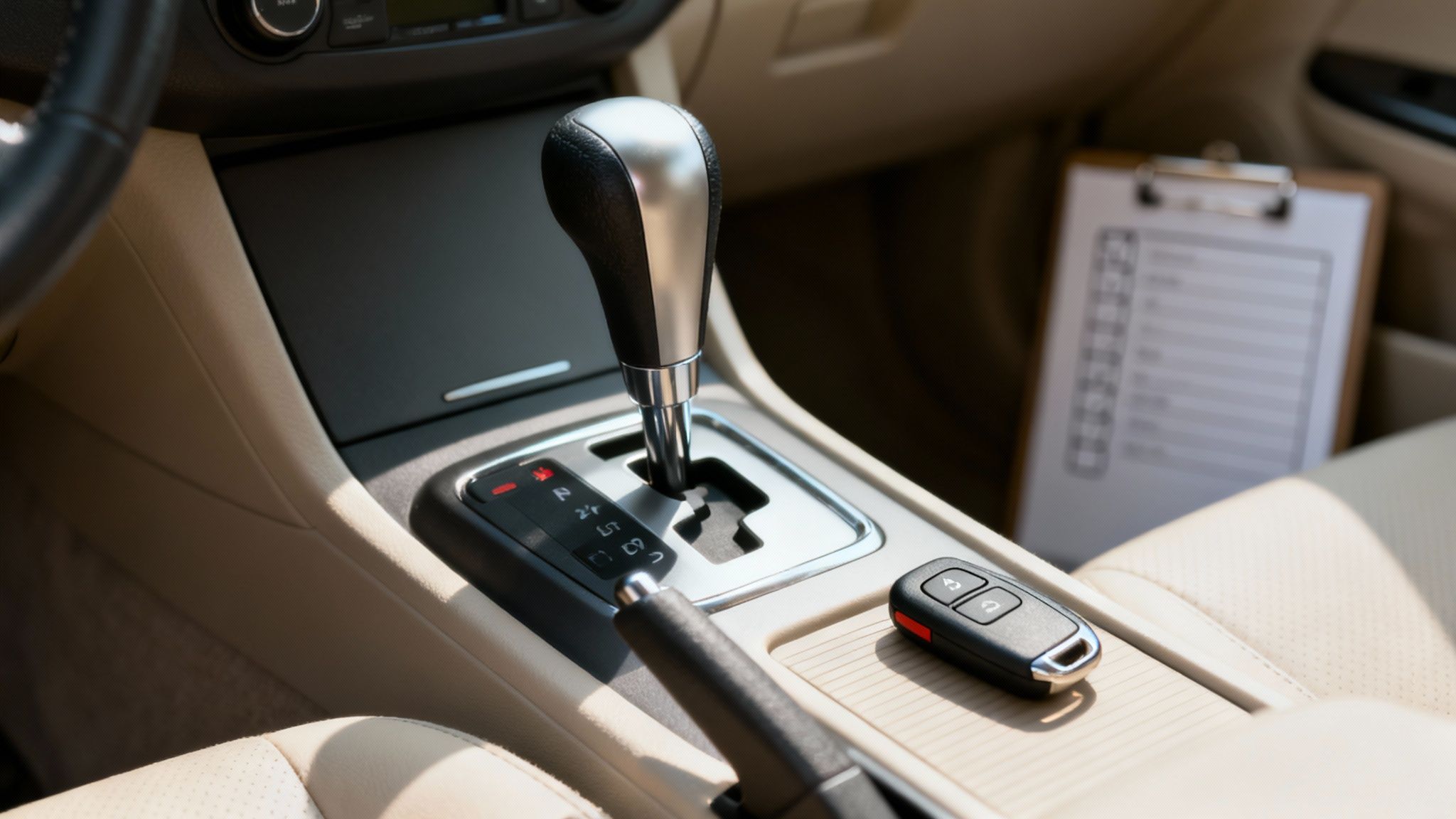
There’s a long-standing rumour that remote starters are strictly for automatics. This comes from a very legitimate concern: firing up a manual car’s engine while it’s still in gear. Without the right safeguards, the vehicle would lurch forward or backward, creating a serious risk of damage or injury.
Thankfully, modern technology has made that fear a thing of the past. Today's advanced remote start systems designed for manual cars are built with multiple, redundant safety protocols to make sure that never happens.
How Safety Is Built In
Think of the safety system as a pilot's pre-flight checklist. It’s a required sequence of steps you have to perform every time you park to "arm" the system for a future remote start. This process, often called "reservation mode," is how the system guarantees the vehicle is left in a safe state.
While the exact steps can vary by brand, the core logic is always the same:
- The parking brake must be fully engaged.
- The system needs to confirm the transmission is in neutral.
- You have to exit the vehicle following a specific sequence that locks the doors and officially arms the system.
Break the sequence at any point—say, by opening a door after it's armed—and the remote start capability is instantly cancelled. This fail-safe logic makes it physically impossible for the engine to turn over if the car is in gear.
A properly installed manual remote starter system is built on a foundation of verification. It doesn't guess or assume the car is in neutral—it confirms it through a strict, user-activated procedure every single time.
The demand for this feature has climbed steadily. Industry experts now estimate that 10-15% of all remote starter installations are for manual transmission vehicles. This growth is a testament to how reliable the safety tech has become, a fact explored in detailed reports about modern remote starter capabilities. You can find more helpful insights on manual transmission remote starters over at bestcaraudio.com.
This intelligent approach means you can finally enjoy the comfort of a pre-warmed or pre-cooled car without ever sacrificing safety.
Manual vs Automatic Remote Starter Key Differences
To put it simply, installing a remote starter on a manual is all about verifying safety, whereas on an automatic, the system can inherently trust the "Park" position. This table breaks down the core distinctions.
| Feature | Automatic Transmission Starter | Manual Transmission Starter |
|---|---|---|
| Safety Prerequisite | The vehicle must be in "Park." The starter system can electronically verify this position. | The vehicle must be in neutral with the parking brake engaged. This state is confirmed through a manual "reservation mode" sequence set by the driver. |
| Installation Complexity | Simpler installation. The primary safety check is a direct connection to the neutral safety switch or gear position sensor. | More complex. Requires additional connections to the parking brake and door pins, and careful programming to manage the reservation mode logic. |
| User Interaction | No special shutdown procedure is needed. Just park the car, turn it off, and you're done. | A specific exit procedure (reservation mode) must be followed every time you park to enable the remote start feature for the next use. |
| Fail-Safe Mechanism | The starter will not engage if it doesn't receive a "Park" or "Neutral" signal. | If the reservation mode sequence is broken (e.g., a door is opened), the remote start function is disabled until the sequence is completed again. |
Ultimately, while both systems achieve the same goal, the journey to get there is fundamentally different, with the manual system placing a heavy emphasis on a user-verified safety routine.
How the Core Safety Technology Works
The thought of your manual car starting itself while you’re not in it might sound a bit unnerving. But the technology behind a remote car starter for a manual transmission is built entirely around strict, verifiable safety. It’s not a gamble; it's a clever, step-by-step process designed to make absolutely certain the car can't move an inch on its own. The whole system is built on a single, crucial concept: reservation mode.
Think of it like setting a bank vault before you leave for the night. You can't just close the heavy door and hope for the best. You have to follow a specific sequence—turning keys, spinning dials—to engage the locks properly. Reservation mode does the same thing for your car, creating a confirmed "reservation" for a safe remote start later.
The system never assumes your car is safe. It makes you prove it every single time.
The Reservation Mode Sequence
While the exact button presses might vary a bit between brands like Compustar or Viper, the fundamental logic is always the same. This process forces the car into a state where the remote starter's brain can be 100% certain the transmission is in neutral.
Here’s what that looks like every time you park:
- Stop and Pull the Handbrake: With the engine still on, bring the car to a full stop and pull the parking brake up firmly. This is the first, non-negotiable step.
- Shift to Neutral: Put the gear shifter squarely in the neutral position.
- Start Reservation Mode: You'll typically press a function button on your remote starter fob. The system will then take over, keeping the engine running even after you take the key out of the ignition. It’s a strange feeling the first time!
- Get Out and Lock Up: This is the final piece of the puzzle. Once you're out of the car and you shut the last door, the system automatically shuts down the engine and locks the doors.
That's it. Reservation mode is now set. The remote starter has its proof: the handbrake was engaged, and the car was left in neutral.
The Unseen Guardians: Your Car's Sensors
This whole sequence is watched over by a network of electronic sentries—sensors that are the system’s eyes and ears. They work together to make sure the safety protocol is never, ever broken. If anything disrupts the sequence, remote start is immediately cancelled.
- Parking Brake Sensor: This sensor confirms the handbrake is physically pulled. If it's not, the system won't even begin the reservation sequence.
- Door Pin Sensors: These are critical. They watch to see if any door is opened after you've set reservation mode. Opening a door instantly breaks the sequence because the system can no longer guarantee someone didn't get in and put the car in gear.
- Neutral Safety Switch/Tachometer Sensor: The remote starter's control module monitors the engine's tachometer signal. This helps it confirm the engine isn't under load from being in gear during the shutdown process.
Together, these sensors create an unbreakable chain of trust. The system will only attempt a remote start if every single one of these conditions has remained untouched since the moment you armed it.
This robust system of checks and balances is what gives you complete peace of mind. It also integrates seamlessly with modern vehicle security, which you can learn more about by understanding how a modern anti-theft system for a car operates. It's this intelligent layering of technology that makes a remote starter for your manual car both a fantastic convenience and incredibly safe.
The Professional Installation Process Explained
While the idea of a "reservation mode" seems simple enough, getting it to work safely and reliably is a whole other ball game. Installing a remote car starter for a manual transmission isn't just a matter of connecting a few wires. It's a precise integration of a complex system into your car's specific electrical layout—think less like plugging in a toaster and more like performing delicate surgery.
A qualified technician starts by carefully getting into your vehicle's wiring, which is usually tucked away under the dashboard. This is far from a simple "red-to-red, black-to-black" hookup. They use vehicle-specific diagrams to pinpoint the exact wires for the ignition, starter, parking brake, door pins, and tachometer signal. One wrong connection here can lead to some serious electrical headaches down the road.
Integrating the Safety Components
After making the core connections, the installer turns their attention to the parts that keep everything safe. This means tapping into the parking brake wire so the system knows for sure that the brake is on. They also connect to the door triggers, a critical step that cancels reservation mode the moment a door is opened.
The most important step for a manual car, though, is handling the clutch interlock. By design, your car won't start unless you push the clutch pedal down. To get around this for a remote start, the system needs to bypass that circuit, but only temporarily.
A professional installer uses a dedicated bypass module or relay that tricks the car into thinking the clutch is pressed—but only during the remote start sequence. This keeps your factory safety feature completely intact for when you're starting the car normally with the key.
This diagram breaks down the safe starting sequence that a professional installation makes possible.
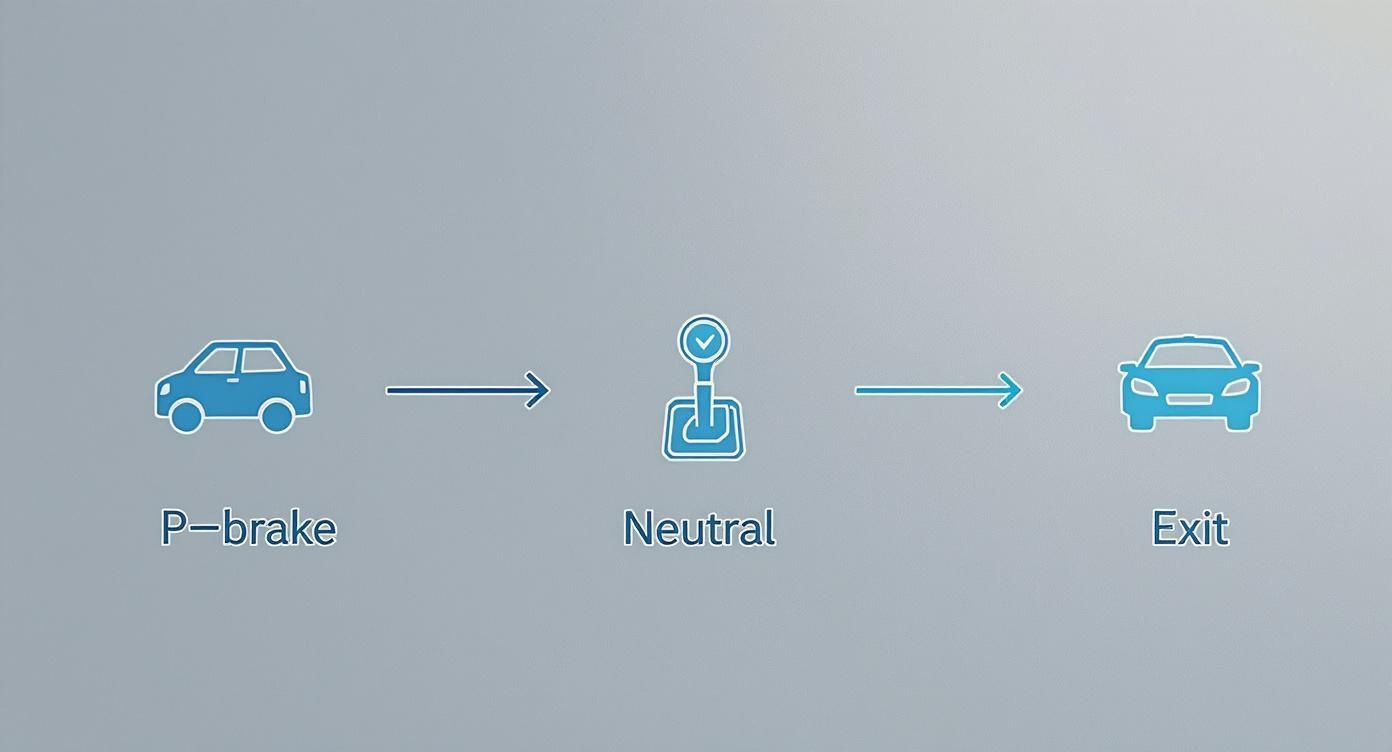
As you can see, the whole process is built on a series of checks and balances, making it impossible for the engine to fire up in an unsafe state.
Final Programming and Testing
Once all the hardware is securely in place, it's time to program the control module—the "brain" of the remote starter. The technician configures it specifically for a manual transmission, setting the options for sensing engine RPMs and pairing the new remotes.
Then comes the most important part: testing, and testing again. A thorough check includes:
- Verifying Reservation Mode: The technician will set the system over and over to make sure it arms correctly every single time.
- Testing Fail-Safes: They'll deliberately try to break the sequence, like opening a door after reservation mode is set, to confirm the remote start feature immediately cancels.
- Checking Normal Operation: Finally, they make sure the car still starts and drives perfectly with the key, confirming the factory clutch interlock is still doing its job.
This meticulous process is exactly why a DIY job is such a bad idea. For a system you can count on, it’s always best to find trusted auto remote starter installers near you who have the right tools and deep experience. Their expertise is your guarantee of enjoying the convenience without ever sacrificing safety.
Comparing the Best Remote Starter Systems
Alright, so you're sold on the idea of getting a remote car starter for your manual transmission. Now comes the fun part: picking the right one. It's easy to get bogged down by brand names like Compustar, Viper, and iDatastart, but the best way to choose is to focus on what the system actually does for you.
At the end of the day, what matters most is how you'll use it. The biggest differences between systems come down to the remote's range, how it communicates with your vehicle, and whether you want the ability to control it from your phone. Figuring these things out first will help you have a much clearer conversation with your installer about what you really need.
One-Way Versus Two-Way Communication
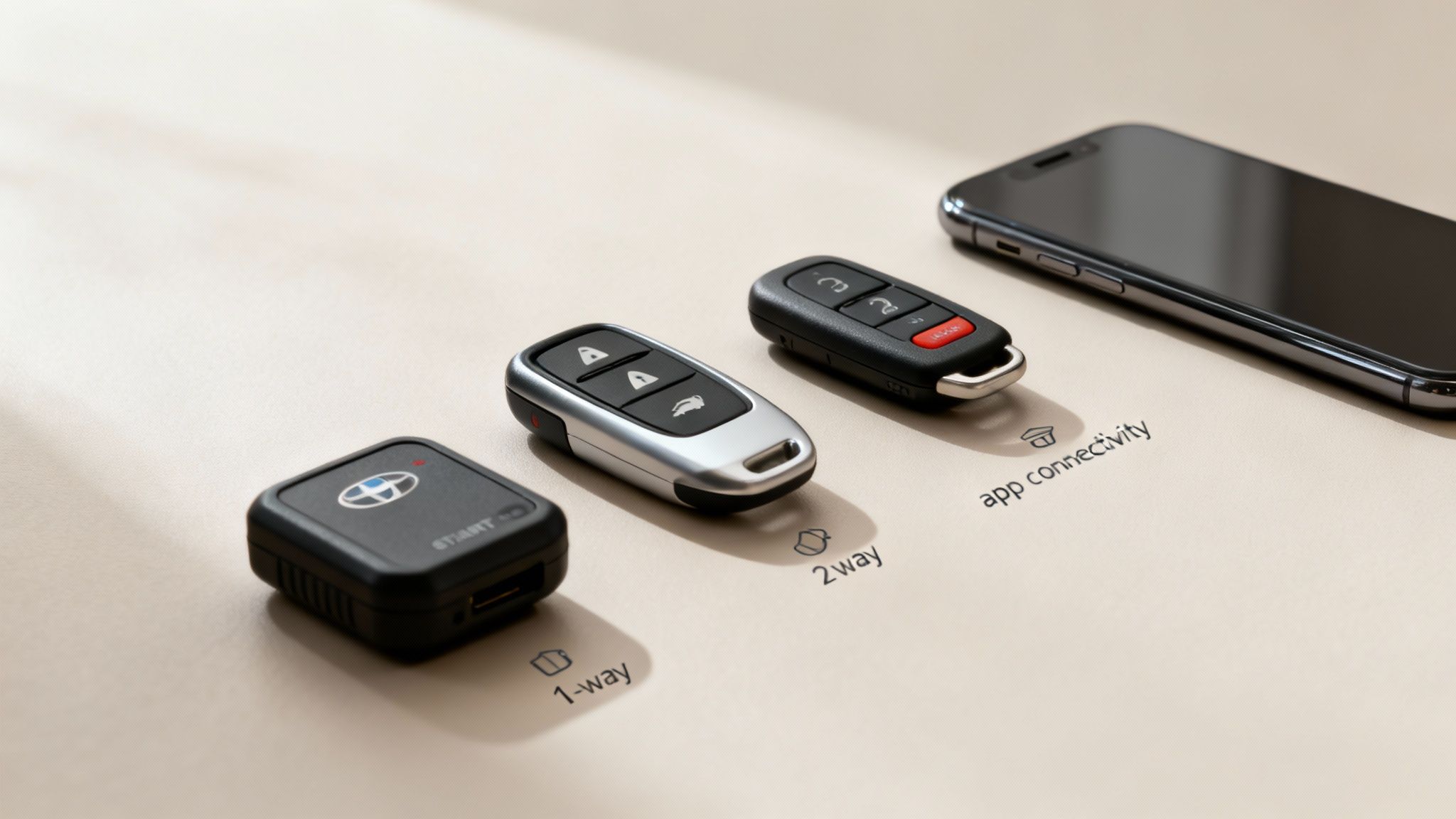
The first choice you'll likely face is between a 1-way and a 2-way system. The difference is simple but makes a huge impact on your daily use. Think of it like sending a text message and hoping it went through versus getting a "read" receipt.
-
1-Way Systems: These are your basic, no-frills starters. You press the button on the remote, it sends a command to your car, and that's it. You have to be close enough to see the lights flash or hear the engine turn over to be sure it worked. They get the job done and are usually more budget-friendly.
-
2-Way Systems: This is where the real convenience kicks in. You press the start button, and not only does your car receive the signal, but it sends one back to your remote. Your fob will then light up, beep, or display a confirmation on its little screen to tell you the engine is running.
That two-way feedback is a game-changer. It gives you complete peace of mind, especially when your car is parked down the street or in a large lot where you can't see it. No more guessing if your car is actually warming up on a frigid morning.
Range and Smartphone Integration
Next up is range. How far away will you typically be when you want to start your car? While you might see some systems advertising massive ranges, the reality is that buildings, trees, and other interference in urban areas can cut that down. Most people find that a standard range of 600 to 800 feet is more than enough for starting their car from their home or office.
In fact, over 70% of remote starters sold are standard-range models that work perfectly for everyday situations. Of course, if you park far away or need to start your car from inside a large building, long-range models are available that can reach a mile or more. You can learn more about these trends and how remote starter technology is advancing to see what's out there.
The ultimate upgrade, though, is a system that integrates with your smartphone. Brands like Compustar's DroneMobile or Viper's SmartStart use a cellular module inside your car. This gives you practically unlimited range. As long as your car and your phone have a cell signal, you can start, lock, or even locate your vehicle from anywhere on the planet. It’s a premium feature, but the convenience is undeniable.
As you weigh these choices, it’s also good to know the difference between what the factory might offer versus a high-quality aftermarket system. If you're curious, we have a great guide that breaks down the pros and cons of OEM vs. aftermarket parts.
Feature Comparison of Popular Remote Starter Brands
To help you see how these features stack up, we've put together a quick comparison of what the top brands typically offer for manual transmission vehicles. Keep in mind that specific features can vary by model, but this gives you a good general idea.
| Brand Feature | Compustar | Viper | iDatastart |
|---|---|---|---|
| Manual Transmission Support | Yes (CM-7200 & 7300 modules) | Yes (with specific safety protocols) | Yes (designed for safe MT use) |
| Reservation Mode | Yes (required for safe start) | Yes (required for safe start) | Yes (required for safe start) |
| 2-Way Communication | Yes (Pro & Prime series) | Yes (most Responder models) | Yes (multiple fob options) |
| Smartphone Control | Yes (DroneMobile add-on) | Yes (SmartStart add-on) | Yes (iDatalink Maestro add-on) |
| Security Features | Starter kill, alarm, shock sensors | Stinger DoubleGuard, Failsafe Starter Kill | Full alarm system integration |
| Longest Range (Max) | Up to 3 miles (PRO T13) | Up to 1.5 miles (Responder HD) | Up to 1 mile (TR2350AC) |
Ultimately, choosing the right system is all about matching its capabilities to your daily routine and budget. Whether you need a simple one-way remote for your driveway or a full-featured smartphone system you can control from another city, there’s a solution that will work for you and your stick-shift.
Understanding the Costs and Potential Risks
So, how much is this all going to cost? When you're looking at a remote starter for a manual car, it's best to think of it as a total investment, not just the price of the parts. You're paying for the hardware, of course, but a big chunk of that final price tag is for the specialized labour needed to get it right.
The starter kit itself might run anywhere from a couple of hundred dollars for a simple one-way remote to much more for a fancy two-way system with a smartphone app. But here’s the key difference: the installation cost for a manual is almost always higher than for an automatic. This isn't just a shop trying to upsell you; it's a direct reflection of the extra time and care required to wire in all those critical safety measures, like the handbrake sensor, door triggers, and the clutch bypass.
Breaking Down the Investment
When you get a quote, the total cost will be a blend of these two things:
- Hardware Cost: This is all about the features you want. Are you okay with a basic remote, or do you need long-range, 2-way communication, and the ability to start your car from an app?
- Labour Cost: This covers the installer's time, their specific knowledge of your car's wiring, and the delicate work of integrating the safety system so it's foolproof for a stick-shift.
Because of how complex this is, professional installation is the only way to go. I can't stress this enough. The risks of a DIY or sloppy installation are just too high to justify saving a bit of cash upfront. An incorrectly wired remote starter can open a Pandora's box of problems that will cost you far more in the long run.
The Dangers of Improper Installation
A failed installation isn't just a hassle—it's downright dangerous. The biggest fear, and the most common failure, is the car starting while it's still in gear. If that happens, your vehicle can lurch forward or backward, crashing into another car, your garage door, or something much worse. This single, terrifying possibility is why professional systems are packed with so many redundant safety checks.
A professional installation is your insurance policy against catastrophic failure. That extra labour cost is a direct investment in protecting your property and preserving your vehicle's complex electrical system.
Beyond the immediate physical danger, a botched job can create all sorts of electrical gremlins. You could end up with a constantly drained battery or, in a worst-case scenario, fried onboard computers. On top of that, if an electrical issue pops up later and the dealership traces it back to a shoddy aftermarket install, they can (and often will) deny warranty claims for the repairs. You’ll be left holding the bill.
Choosing a certified, reputable installer is the only way to ensure your new convenience doesn't come at the expense of your safety or your car's warranty.
Common Questions About Manual Remote Starters
It's one thing to understand how the technology works, but it's another to feel completely confident about putting it in your own car. That's perfectly normal. We get it—your vehicle is a big deal, and you want to be sure you're making the right call.
To help clear up any lingering doubts, we've put together answers to the questions we hear most often from drivers with a manual transmission. Think of this as the final checklist to tackle those "what if" scenarios and give you total peace of mind.
Will a Remote Starter Void My Car Warranty?
This is easily one of the biggest worries for owners of newer cars. The good news is, the answer is almost always no. Consumer protection laws in Canada mean a manufacturer can't just void your entire vehicle warranty because you installed an aftermarket part like a remote car starter for manual transmission.
There is, however, a small but important detail. If the remote starter itself—or a shoddy installation job—directly causes something to break, the manufacturer doesn't have to cover that specific repair under warranty.
This is exactly why getting it done professionally is a must. A certified technician uses the right parts and proven methods to make the system a seamless part of your car. This approach dramatically cuts down any risk to your vehicle's electronics and is the best way to protect your warranty.
What Happens If I Accidentally Leave the Car in Gear?
With any properly installed, modern remote start system, this scenario is simply not possible. The entire "reservation mode" safety procedure is built specifically to prevent this from ever happening. The system physically cannot arm itself if the car is left in gear.
Think back to the sequence we talked about: the handbrake has to be on, the gear shifter must be in neutral, and you have to exit the car in a specific order. If you forget and leave it in first gear, the sequence just won't complete. The remote start feature will be disabled, and it won't even try to turn the engine over. No lurching, no accidents, no problem.
Are Any Manual Cars Incompatible with Remote Starters?
The vast majority of modern manual vehicles are perfectly compatible. That said, a few exceptions do exist. Very old vehicles with purely mechanical systems (think pre-computer era) or some high-performance exotic cars with heavily encrypted computer systems can pose a real challenge.
The only way to be 100% certain is to talk to a professional installer. They have access to constantly updated databases from the manufacturers that confirm what works for your vehicle's exact make, model, and year. It’s how they ensure the right modules and wiring are used for a safe and successful installation.
Can I Get a Remote Starter for a Manual Diesel Truck?
Absolutely. In fact, high-quality remote start systems are a fantastic addition for manual diesel owners, especially here in Canada.
When installed on a diesel, the system is programmed with a "wait-to-start" delay. This is a critical feature that intelligently copies what you would do manually. After you hit the button on your remote, the system automatically waits for the glow plugs to heat up before it cranks the engine. This built-in pause ensures a healthy, low-stress start every time, even on the most frigid winter mornings. It’s the perfect way to get your powerful engine warmed up and ready to go without you having to brave the cold.
Ready to bring modern convenience to your manual transmission vehicle? The experts at Carmedics autowerks inc have the experience and precision to install your remote starter safely and correctly, giving you peace of mind and comfort all year round. Find out more about our professional installation services and get a quote today.